WCC ignores public opinion and pushes to break rate cap
The Terrier – Carol Altmann
LAST DRINKS: Tonight (25/2/19) the W’Bool City Council voted 5/2 to try and raise rates above the cap because we are apparently in deep financial do-do.
It is just three months since W’bool City Council CEO Bruce Anson retired – he spent 11 years at the helm, passing each performance review with flying colours, and earning a salary package that toward the end was close to $320,000 a year.
You earn this kind of money for a reason – to keep the ship in shape.
We are now being told we can’t afford to renew our infrastructure, basic things like bridges and footpaths. We are being told we might need to cut services, because we are ‘aspirational’ and want things like a new library and a better sports oval.
There has been so, so much waste and it has happened on Mr Anson’s watch.
Loud applause to Cr Peter Hulin and Mayor Tony Herbert for voting against this rate rise, in favour of a forensic audit of council spending and costs.
An audit is so long overdue.
I hope the Essential Services Commission – which has to approve the rate rise above the cap – sends this strong message to the council too: you can’t keep asking ratepayers for more, when you have wasted so much along the way.
The time for reckoning has come.
The Terrier is taking a closer look at how we went from budget stability to a budget emergency. It is a slog through some pretty dry data, but worth it. Stay tuned for updates.
WCC rate rise and the Hill that is bleeding us all
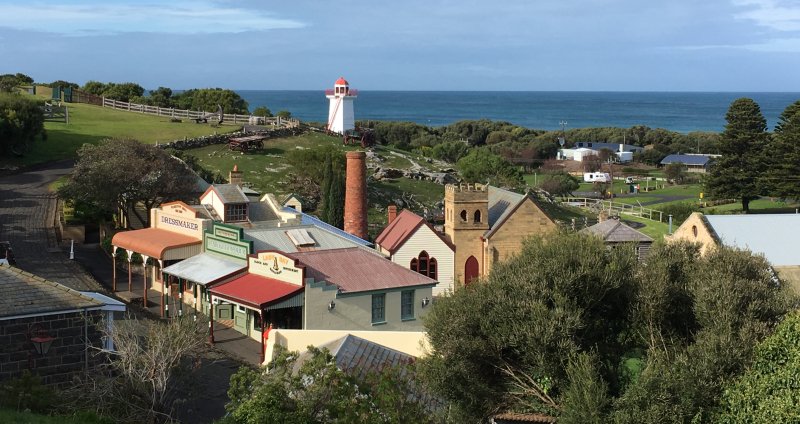
The W’bool City Council needs to save $700,000 a year and Flagstaff Hill will cost $600,000 this year, yet is never mentioned as part of the cost-cutting to keep rates down.
Carol Altmann – The Terrier
How to save $700,000 in seven days: the final instalment.
Two words: Flagstaff Hill.
I have been writing since 2014 about the steady decline of Flagstaff Hill and the picture never gets any better – it costs ratepayers at least $500,000 a year to sustain.
This year, the deficit will be higher than last year, and is expected to be at least $600,000.
The Warrnambool City Council says it must save around $700,000 a year from its budget, yet Flagstaff Hill is costing it $600,000. Am I missing something?
At least $6 million of ratepayers’ money has been used to prop up the maritime village since it began dying around 10 years ago, but it is not mentioned in any of the council’s material about rate rises and service cuts.
It isn’t going well and we shouldn’t take that personally: tourists tastes have changed and they changed a long time ago.
What we should take personally is the complete lack of any accountability for the huge amount of taxpayer and ratepayer money that has been thrown into Flagstaff Hill, all on false promises.
The lights are on but…. a new sound and light show has failed to turnaround falling visitor numbers to Flagstaff Hill.
In 2017, the Warrnambool City Council sunk another $1 million into a $3 million taxpayer-funded revamp which included a new sound and light show, a re-styled entrance and changes to some of the exhibits.
The promised spike in tourists didn’t happen and visitor numbers have gone backward, so far backward that, this past summer, Flagstaff Hill volunteers were urged to invite family members to the sound and light show, just to help plump up the crowd.
Despite all of this, nobody has been made accountable for the decision to throw good money after bad.
Not one person within the WCC has stood up and said, sorry, we really got that wrong and this is what we plan to do about it.
Not all council-funded facilities have to make a profit, of course, because they serve a greater good, like libraries, art galleries, museums, playgrounds and recreation centres.
But Flagstaff Hill is a tourism operation that is owned and managed by the council and, as a tourism operation, it should be turning a profit, surely. It used to, but that was many years ago.
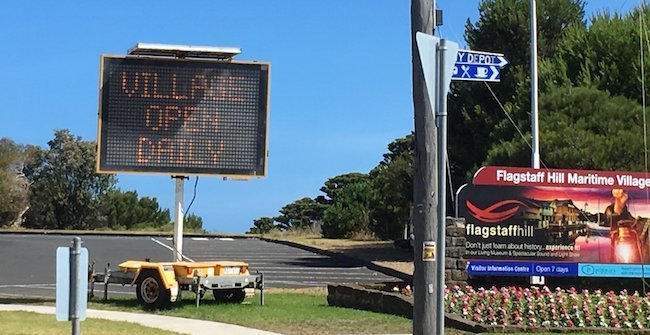
Despite a $3 million upgrade just two years ago, Flagstaff Hill still needed a mobile flashing sign to lure visitors over summer.
So what is the council’s plan for the future of Flagstaff Hill, other than to keep expecting ratepayers to foot the growing deficit?
Mayor Tony Herbert told the February 4 council meeting that the council was “monitoring the situation” and looking “quite stringently” at its options, which might sound comforting, but tells us nothing.
He then went on to reassure us that Flagstaff Hill still made a significant impact on the economy by encouraging overnight stays in Warrnambool.
Really? I thought people stayed overnight in Warrnambool because they were tired from the long drive down the Great Ocean Road.
And so on it goes, around and around, with no real answers and no obvious plan.
If the council presses ahead with its bid to break the rate cap of 2.5% or cut essential services, then it must explain to ratepayers how Flagstaff Hill fits into the picture.
WCC rate rise and May Racing Carnival corporate tent
The W’bool City Council’s corporate tent at the May Racing carnival has been a permanent fixture in its budget for at least 15 years. Image: Vinfolio
Carol Altmann – The Terrier
How to save $700,000 in seven days, instalment #6:
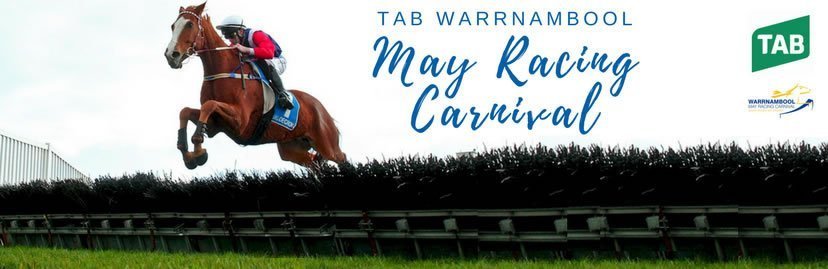
Today is another reminder rather than a revelation: for at least the past 15 years, the Warrnambool City Council has hosted a marquee at the final day of the May Racing Carnival at a total cost to ratepayers of around $225,000.
I am still waiting for a response on how much the council paid last year for this corporate networking tent, but in 2014 it spent more than $17,000.
For one day.
If we tally this up over 15 years, at an average, conservative cost of around $15,000 each time, we are suddenly up around a quarter of a million dollars.
This money has gone into hiring the marquee, the catering staff, the chairs, tables, decorations, hors d’oeuvres, alcoholic and non-alcoholic drinks, member’s reserve entry tickets and wristbands.
Ratepayers even paid for the race books.
I first wrote about this marquee in 2014, when it emerged the guest list was largely made up of members of council and their partners, local MPs, local executives, representatives from the council’s Melbourne law firm, Maddock’s, a couple of associates of then-councillor Brian Kelson, and current Mayor Tony Herbert, who was invited as the then chair of Commerce Warrnambool.
So much for it being a networking opportunity.
Networking is supposed to involve connecting with people you don’t already know.
The final day of the May Racing carnival is seen by the council as a networking opportunity. Image: Only Melbourne.
Cr Peter Hulin has long challenged the justification for the marquee, but it remains firmly in place.
Indeed when Cr Hulin again questioned its relevance in 2015, then Cr Jacinta Ermacora said the marquee was an important part of the council “supporting the local racing industry”.
This made thoroughbred horse racing sound like some form of charity rather than part of a multi-billion dollar enterprise based on gambling.
I am pretty sure the council could find far more needy causes who are out turning sausages in the carpark at Bunnings each Saturday.
And this is the bigger problem, because while $17,000 a year is not much in an $89 million council budget, it is still a lot of money to a majority of people: this is what the council loses sight of.
It can drop $17k of our money on one afternoon’s entertainment without batting an eyelid or producing one shred of evidence as to its value.
Because it is all about “networking”.
In this case, however, the networking is not working, especially now the council is asking ratepayers to either pay more in rates, above the 2.5% State Government cap, or face service cuts.
The final instalment tomorrow.
If you would like to see The Terrier keep digging up, sniffing out and chewing on local issues, please make a small contribution below.
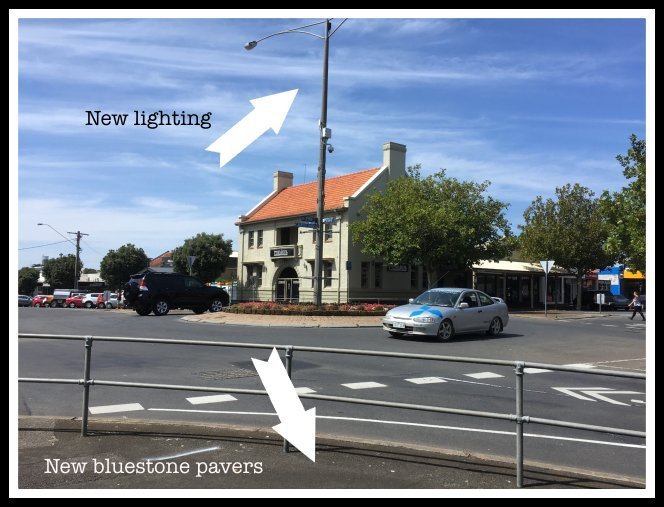
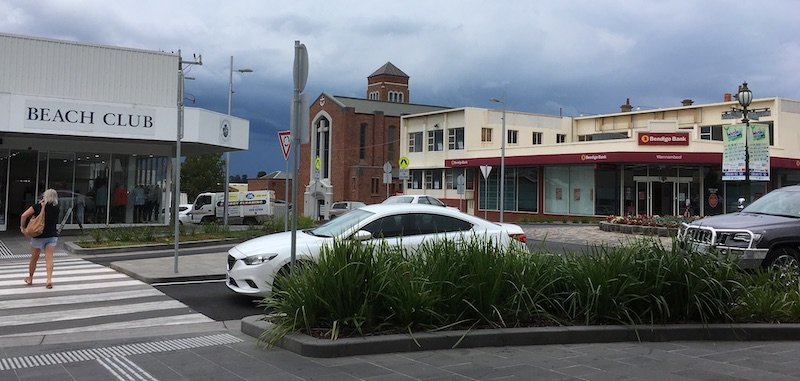
The Kepler St-Koroit St roundabout is in line for a $450,000 makeover later this year, in addition to new zebra crossings like those now operating in Liebig St.
Carol Altmann – The Terrier
How to save $700,000 in seven days, instalment #5:
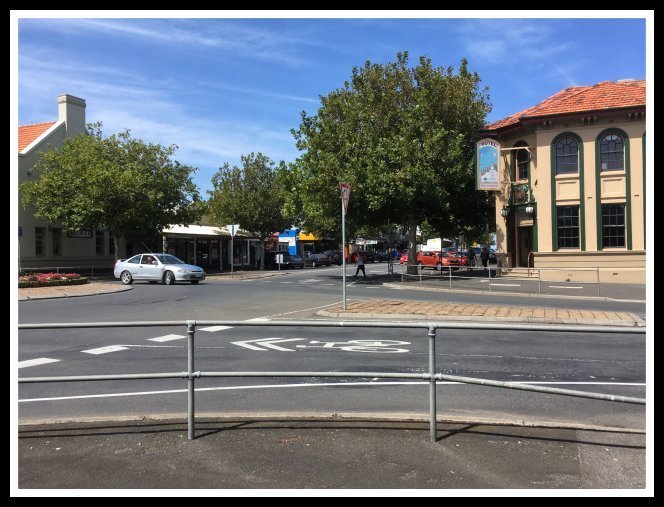
On the same night Warrnambool City councillors decided to explore breaking the rate cap – on December 3 last year – they also agreed to spend $450,000 to spruce up a single city roundabout.
That’s almost half a million dollars to beautify just one roundabout – at the corner of Kepler and Koroit streets – and they did it without a hint of irony.
Not one of the five councillors who supported potentially raising rates above 2.5% (Cr Peter Hulin voted against and Cr David Owen was absent) seemed concerned that they expect ratepayers to choose between paying more for services, or having services cut, while they plunge money into non-essential projects.
Like dressing up a roundabout.
Mayor Tony Herbert was a strong supporter of the upgrade, saying Kepler St was the most important CBD street after Liebig St. Image: WCC
The council will draw $450,000 from the city parking fund – putting that fund into deficit – to upgrade the roundabout by the end of this year.
This is the busy roundabout outside the Warrnambool Hotel and Ishka etc, which is no doubt unfriendly to pedestrians in its current state.
But improving pedestrian safety (more about that in a moment) and a $450,000 makeover are two separate issues here.
Mayor Tony Herbert was particularly enthusiastic about the improvements because, he says, Kepler St is “the next most important” CBD street after Liebig St.
“It doesn’t matter who occupies businesses there, but I believe that is the next street to get the work done,” he told the meeting.
As it happens, Mr Herbert does occupy a business there, with his office smack bang in the middle of Kepler St, in the Wyton’s cafe precinct.
The $450,000 makeover at the Kepler St intersection will include bluestone pavers on each corner and new lighting in the centre of the roundabout.
Until last year, this intersection wasn’t even part of the city renewal plan, but it is now.
Now it will have bluestone paving wrapped around each corner foothpath and central lighting poles that allow for banners and decorations. (See the plan here).
The council calls this “high end aesthetic treatment” and there is no doubt it will be swish compared to boring old bitumen and basic lighting, but is it really necessary in a cost-cutting environment?
It’s a bit like fixing the electrical wiring in your house – for safety – and digging into your savings to replace all the light shades at the same time.
Because what started the momentum for this makeover was money from the Transport Accident Commission (TAC) to make the CBD safer for pedestrians.
The TAC will fund almost half of a $1.67 million upgrade to three CBD intersections, including the Kepler St/Koroit St roundabout.
The council will use that money to replicate those painful zebra crossings that are now in Liebig St and which make drivers give way to pedestrians as they enter and exit a roundabout.
Love ’em or hate ’em, you’re getting more of them. The same style zebra crossings in Liebig St will be replicated at the Kepler/Koroit streets intersection and two others around the CBD.
Having secured money to build the crossings, the council decided to go one step further.
It rummaged around behind the couch and found a neat $450,000 to throw into beautifying the Kepler St/Koroit St roundabout.
Importantly, such a makeover would also create a distraction from the fact the council has run out of money for Stage 3 of the CBD renewal along Koroit St, which is not surprising given the other two stages blew out by more than $3 million.
So from not being part of the CBD renewal, the Kepler/Koroit intersection now has star billing.
In fact it will probably be all that happens along Koroit St between Kepler and Liebig St for some time.
Even so, can new pavers and lamps really be a priority when the council says it must save $700,000 a year from its budget?
It’s too late to ask that question because the beautification is going ahead.
Your input, via the council’s online consultation that opened last Friday, is to decide what else you might like to see added to the works and when you would prefer the 12-week project to start.
There is no option to say, um, we don’t want that style of fender-bender zebra crossing and, by the way, can we also save the $450,000 for something more important?
There is actually no mention of the $450,000 cost of the “high end aesthetic treatment”.
This figure remained buried inside the council agenda and minutes: until now.
More tomorrow.
If you would like to see The Terrier keep digging up, sniffing out and chewing on local issues, please make a small contribution below.
The W’bool City Council paid more than $300,000 than it needed to for a part of the Simpson St drainage project, according to local developer Graeme Rodger.
Carol Altmann – The Terrier
How to save $700,000 in seven days, instalment #4:
Today’s instalment is not a revelation, but a reminder.
It’s a reminder of a story I ran last November where developer and former councillor Graeme Rodger revealed the Warrnambool City Council could have saved at least $328,000 on a tender for part of the Simpson St drainage and tunnel project.
That is another $328,000 that could have been shaved and saved off council’s spending in 2018-19.
To recap: Mr Rodger’s company, Rodger Constructions, put in two tenders for the multi-million dollar job last August: one “conforming” and one “non-conforming” which basically means one that stuck to the letter of the tender, and one that suggested a cheaper option.
The council went on to award the tender to another company for a higher price than both options put forward by Rodger Constructions.
Warrnambool developer and former councillor Graeme Rodger.
The council said the bid by Rodger Constructions, which was short-listed, had a number of flaws.
Mr Rodger said all of these could have been worked out with a simple, face-to-face meeting that was never offered.
The council said such a meeting was optional and it chose not to take up this option for a number of reasons.