Ex Lyndoch finance chief raises alarm over Lyndoch’s viability

The proposed $20-plus million medical clinic planned for Lyndoch Living has raised fears that it will send Lyndoch into deep financial trouble. Image: Marchese Partners.

Carol Altmann – The Terrier

The former Acting Chief Financial Officer of Lyndoch Living has gone public with serious concerns over its proposed $22 million medical clinic and broader concerns about Lyndoch’s viability.

Allan Conway, who was acting CFO from March last year until last month, has confirmed he formally raised a number of serious concerns about the medical clinic project to Lyndoch Chief Executive Officer Doreen Power in the final days of his contract.

He has heard nothing since.

It’s of enormous public interest when Lyndoch’s most senior finance officer waves a red flag about a major project that is due to start any day and which could potentially cripple Lyndoch.

It’s not known, however, if Ms Power has passed Mr Conway’s concerns in full to the board, or how the board has responded.

I contacted Mr Conway after hearing that he had raised alarm bells internally about the proposed medical clinic and asked that, if true, whether he could detail these same, specific concerns publicly.

A very cautious (but brave) Mr Conway was able to say the following:

He confirmed that, “from the information available to him, he had formally advised Lyndoch CEO Ms Power that he did not support the construction of the new medical centre as currently proposed”.

Mr Conway has had no contact from Ms Power or the board since his contract was completed in early March.

In his position as a former Acting CFO, Mr Conway did not wish to comment further.

But as a long-term local resident, a former corporate services manager and local business owner, he commented that he was “concerned for Lyndoch’s future viability”.

I contacted Ms Power, Lyndoch Living chair Sue Cassidy, vice-chair Kerry Nelson, Treasurer Kane Grant and all other board members last Friday with a number of questions in response to the red flags raised by Mr Conway, but have received no reply.

Those of you who have followed The Terrier’s reporting on Lyndoch Living will know that it is litigious and we all have to pick our way very carefully.

At the same time, Mr Conway’s bright red flag cannot pass without full scrutiny: we all owe it to our elderly and vulnerable, and those who care for them.

If Lyndoch gets this wrong, it could face financial ruin.

So the first question we must ask is how will the three-level clinic be funded?

Where is the $22 million coming from?

I originally thought a large slice could come from again dipping into the refundable deposits (RADs) paid by residents as they enter Lyndoch.

RADs were used to pay for the $15 million Swinton Wing expansion.

By law, however, RADs cannot be used for buildings that are not related directly to care for the residents.

The medical clinic will have no direct benefit to the residents of Lyndoch.

It’s a commercial, for-profit entity that, as a first priority, needs to cover its own costs.

Whatever is left over may, one day, trickle into Lyndoch itself.

So, to be super clear, every dollar of Lyndoch funds that goes toward building and paying off the clinic is one less dollar available to our parents and grandparents in Lyndoch, or toward hiring staff to care for them.

There is no public information about how the clinic will sustain itself and when it expects to make a return back to Lyndoch Living.

What we do know from Lyndoch’s 2020 Consolidated Financial Statements, however, is that Lyndoch has limited surplus funds, and there is no government funding for this project.

This leaves Lyndoch with very few funding options and leads to more questions:

To build this clinic, will Lyndoch rely on a large, commercial bank loan that leaves it exposed to interest rate hikes?

Will the clinic make enough money to cover these loan repayments?

Will Lyndoch also use entry fees from the Waterfront Living apartments?

Perhaps, but this money was to improve Lyndoch facilities for residents – not a new building for GPs, a dentist, a radiographer, chemist and a cafe.

Will Lyndoch be dipping into other reserves, such as money set aside for staff long service leave or holiday pay?

And, above all, has the board undertaken its own due diligence for this project and the return on investment to Lyndoch?

We need answers – urgently –  and someone needs to step up beyond this page to find them.

Mr Conway is unable to say much, but he has said enough to expose the risks of remaining silent.

One more question for me remains: is the board still the voice of the community or has it lost its voice altogether?

If the silence of the board continues in the face of Mr Conway’s revelations, we will have the answer.


Long-serving Lyndoch Living board member resigns

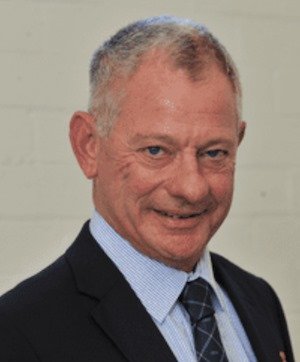
Long-time Lyndoch board member Percy Eccles.

Carol Altmann – The Terrier

Long-standing Lyndoch Living board member Percy Eccles has resigned.

Mr Eccles, who has been a Lyndoch board member for nearly 10 years, said in a brief comment today that he resigned because he didn’t “feel I could have any more input, other than what I have already done”.

He declined to comment further.

Mr Eccles’ resignation comes as Lyndoch prepares to launch into building a $20-million-plus medical clinic on the former Tomlinson site that will house up to 20 GPs, a dentist, radiologist and education centre.

The ambitious project will be entirely funded by Lyndoch, including via bank loans and borrowing from Residential Aged Care bonds (as is currently allowed under federal aged care laws).

Mr Eccles’ resignation also comes as Lyndoch prepares to announce its new Chief Financial Officer, which will be its third CFO in five years, following the departures of David Knight and, later, Katie Wright who did not return from maternity leave.

Acting CFO Allan Conway – who filled in for Ms Wright – did not apply for the position and has also recently left Lyndoch.

Since Lyndoch first announced its $100 million masterplan in 2016, there has been growing concern over its ability to fund its rollout and the risks involved, particularly around the medical clinic which is due to open in 12 months.

A smaller, interim medical clinic is already under construction at Lyndoch, on the ground floor of the new Swinton Wing.

From what I am being told, there is a growing belief inside and outside of Lyndoch that the smaller medical clinic would be a far less risky investment and the larger medical clinic should be put on hold, if built at all.

In the meantime, we will have to wait and see if the board vacancy is advertised, or if a replacement for Mr Eccles will be appointed behind the scenes, as happened with the appointment of Prof Rob Wallis to replace former racing club CEO Peter Downs.


Tomlinson crashes down: will Lyndoch finances follow?

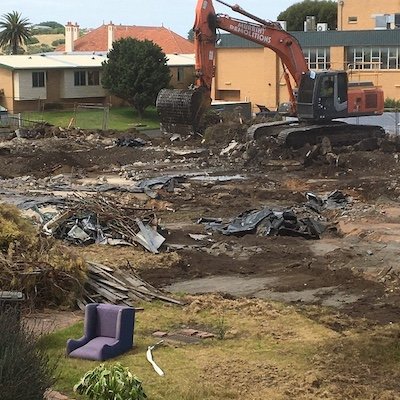
Lyndoch Living’s Tomlinson Wing has been razed to make way for a new $20m-plus medical clinic.

Carol Altmann – The Terrier

Oh a picture paints a thousand words.

Those of us who live or work near Lyndoch Living have this past week watched – and heard – Tomlinson Wing being razed right down to the last lounge chair left lying on its back in the rubble to make way for a multi-million dollar medical clinic.

Such is the secrecy around our community owned nursing home these days, we don’t know how much this clinic will cost – the last figure I saw published by an engineering firm was $24 million, but the plans have changed several times since then.

This clinic will house up to 20 GPs from the Warrnambool Medical Clinic, which Lyndoch now owns, and – presumably – by hiring GPs from elsewhere. It will also have a dentist, an x-ray and an acute care service.

To date, there has been no public discussion on how the business plan stacks up for such a huge investment, or the risks involved for Lyndoch, or the benefits it will bring to Lyndoch residents.

We are being asked to take it all on trust.

And trust is, frankly, in short supply around Lyndoch right now. That is what happens when you stop talking to the public and instead rely on spin.

Spin is how you turn a deficit into a surplus.

It’s how you get away with sponsoring a horse race and a corporate marquee at the May Races.

And it’s how you gouge up to 44% of a person’s home care package in admin fees.

So far, this gouging has helped Lyndoch build up a nice little nest egg of $3 million in cash.

No wonder Lyndoch is desperate to pump up its home care package clients: they are taxpayer-funded cash cows.

But is it sustainable? Is this really how home care packages are intended to work?

And, worse, is it a house of cards just waiting to crash, especially as the federal govt moves to close these loopholes?

Which brings me to this:

Last financial year, Lyndoch received almost $2 million more in taxpayer funds to pay for home care packages to help people stay in their own homes.

Did it spend almost $2 million more on supplying services?

No, it didn’t.

It spent almost exactly the same amount as the year before.

So where did this extra $2 million in taxpayer funds go?

Good question!

This was among the questions I asked Lyndoch yesterday in the ever-optimistic hope of a reply.

In the absence of any reply, I have perused Lyndoch’s figures and it appears this $2 million has been invested, which helps Lyndoch’s bottom line look better than it is.

The “surplus” for home care packages shot up from $234,398 in 2019 to $2.5 million in 2020.

A ten-fold increase in just 12 months.

The problem is, it’s smoke and mirrors.

This surplus is not Lyndoch’s money: it’s taxpayers’ money, given to Lyndoch, to provide home care packages.

It’s not supposed to be sitting around in a bank, earning interest and plumping up bottom lines.

It’s supposed to be helping people to bathe, or have their gardening done, or buy a new bed, or to supply hot meals, and if it is not being used for those purposes, then something is terribly wrong.

Fortunately the fed govt knows the system is buggered and is making long-overdue changes that it is rolling out as we speak.

A major change is that the home care money will no longer be paid in advance to places like Lyndoch.

It will be in arrears.

And by September, if new laws go through, the funds will only be paid for what has actually been spent, not sitting there waiting to be spent.

In other words, there will be no $2 million swashing around in Lyndoch’s bank account.

Given the demolition of Tomlinson, Lyndoch has a chance to reassure us that none of the changes planned by the fed govt (home care is just one of them) will make a jot of difference to its financial stability and it can plough on with its $100 million masterplan like there is no tomorrow.

If it doesn’t, or it can’t, then we should listen, very carefully, for the sound of the Queen of Hearts falling.

[Note: Lyndoch is about to hire a new Chief Financial Officer: its third CFO in five years.]

Sign up for new post alerts to your inbox. 

Tip Jar


Inquiry into aged care a chance to break the fear and silence

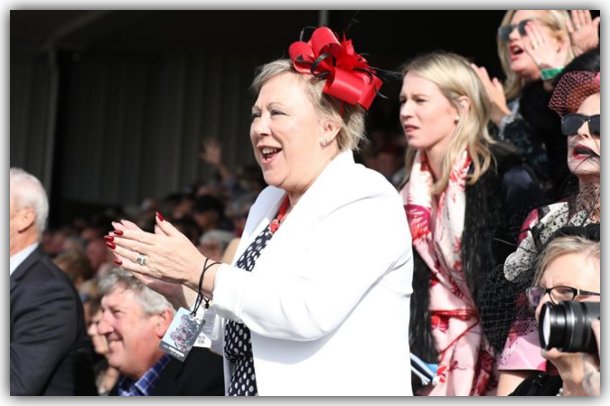
Lyndoch Living CEO Doreen Power cheering on from the stands during the 2019 May Racing Carnival. Image: Lyndoch Living/ Racing Victoria.

Carol Altmann – The Terrier

This week will be a reckoning for aged care across Australia and I can hope it blows the lid right off what is a national disgrace.

We only have to look at our own neck of the woods to see how little official outrage there is to what should be unacceptable.

It’s more than two months since The Terrier revealed an outbreak of scabies within Lyndoch Living, our much-loved, community-owned aged care home in Warrnambool.

When whistleblowers revealed scabies in a Whyalla nursing home last November, A Current Affair and a South Australian MP were on the doorstep demanding answers.

It’s also more than a year since I wrote about staff tearing up sheets and towels to use as facewashers, and more money being spent on consultants and lawyers than on food for residents.

More than a year has passed since I revealed a family member of a resident was sleeping on the floor next to her mother for seven days because her mother had had a series of falls and there was not enough staff to keep an eye on her.

At the same time, Lyndoch senior staff, right up to the CEO, and senior board members, were attending the May Races.

It’s also a year since a leaked copy of a staff survey revealed serious allegations of bullying and intimidation at Lyndoch that went right to the very top.

It’s well over a year since I first wrote about the steady stream of staff who were leaving Lyndoch, sometimes after decades of service, because of alleged bullying, being “targeted”, or given little option to resign and – if they are lucky – given a payout to sweeten the blow. I call it “keep quiet” money.

Is that sort of thing still happening? Yes.Yes, it is.

It’s eight months since we learned two architects from Melbourne were visiting Lyndoch Living despite the “ring of steel” Covid-19 lockdown in that city.

Lyndoch denied they were even from Melbourne.

It’s 18 months since we learned that the community was no longer welcome to become members of Lyndoch: every single membership application from the general community has been rejected, including that of our now Mayor Vicki Jellie.

Board member positions are no longer advertised.

The annual general meeting is no longer advertised.

Has there been an outcry from the board at this lack of inclusion? No.

Regardless, we have still unpicked the fact that Lyndoch has recorded a series of deficits these past five years and will borrow money from residential bonds (as the current laws allow it to do), to fund its $100 million masterplan.

We also recently learned, thanks to two former Lyndoch workers who peeled back the lid, that Lyndoch was gobbling up to 44 per cent in management fees for home care packages.(Again, the laws currently allow these fees.)

And this still doesn’t touch on what I haven’t been able to publish, because Lyndoch is litigious and I have to pick my way through a minefield to report even this much.

Our local political leaders know about most –  if not all – of the above. Some of them have even met personally with those directly affected.

And yet, perhaps despite the best of intentions, nothing has come of it.

That may change after this week.

This week will see the public release of the findings of the Royal Commission into Aged Care and the federal government’s initial responses.

The sad and infuriating story of what people are expected to “put up with” – as aged care residents, aged care staff, the residents families and the wider community – will be laid bare.

It will no doubt emphasise the need for better staffing ratios, better pay, better training and working conditions, better scrutiny of those in positions of responsibility, greater transparency around funding and fees, and why aged care residents should never been seen as “customers”.

But I also hope this inquiry exposes why so many people connected to aged care feel disempowered from speaking up and out about what they know, because they fear the repercussions.

I can tell you that fear and silence around Lyndoch Living is very real, even if not everyone is touched by it.

I know it, several GPs around Warrnambool know it, several lawyers around Warrnambool know it. Our local MPs know it. The families and friends of those directly affected know it.

The release of the Royal Commission findings is our chance as a whole community to speak up for those who can’t do so themselves.

This was the promise the community made to Lyndoch when it was first built more than 60 years ago: first and foremost it would protect and care for the elderly and frail, and those who look after them.

Now is the time to make good on that promise.

New posts straight your inbox? Free here.


Ex-Lyndoch staff go public on “outrageous” home care fees

Elderly and infirm people on home care packages around Warrnambool are losing up to 44 per cent in management fees, with providers allowed to charge what they like. Image: Shutterstock.

Carol Altmann – The Terrier

Two ex-Lyndoch Living senior staff have gone public on astronomical fees being charged for some home care packages used by elderly and infirm people across Warrnambool and the south-west.

The pair recently set up their own small, home care business in response to what they describe as “outrageous” management charges, saying clients can lose up to 44% of their package in admin costs.

Tricia O’Keefe and Meridith McKinnon don’t name an employer on their website (La Bella Life home care), but they indicate that they resigned from their workplace after becoming “increasingly uncomfortable” with the management fees.

“We were recently employed by a local, South West Victorian Home Care Package Service Provider.

​”We became increasingly uncomfortable with our clients losing up to 44% of their funds in management fees. Quite frankly, we felt this was outrageous,” the website says.

In launching their own business last week, these two women have shone a light on the potential for elderly and infirm people to be ripped off by a system that allows providers to set their own fees.

A bit of background: home care packages are funded by the Federal Govt to help keep elderly and infirm people in their own homes.

If they are lucky, clients are allocated between $9000 a year for a Level One package, through to $52,000 a year for a Level Four.

This money is then available for a range of services, from meals-on-wheels, to shopping, gardening, nursing care and the like, with the Federal Govt paying the provider, such as Moyne Health, Baptcare or Lyndoch Living, directly.

But there’s a nasty catch.

On top of the hourly cost set by the provider for nursing, gardening or shopping etc, there is also a management fee made up of two parts – “package” and “care” – and this combined fee can be as high as a kite.

There is no cap.

The onus, instead, is on the client to “shop around” for the best deal, as you do when you are elderly, isolated, or infirm, or don’t own a computer, or a smartphone.

Yesterday I “shopped around” on the complicated My Aged Care website, trying to work out the average total management fees charged by Lyndoch Living, Moyne Health, Cobden Health and Baptcare Health.

It took two hours, but it was worth it.

This bit of research confirms that Lyndoch Living and Baptcare Health charge like wounded bulls for managing home care packages – Baptcare sits around 35% and Lyndoch between 36% and 42% in fees.

Moyne Health and Cobden Health are much cheaper and charge, on average, between 22% and 27%. (As an aside, La Bella Life will charge a flat 26%).

[I have included more detail of this fee comparison at the end of this piece].

So, for example, a client with a Level 2 package worth $15,750 a year will lose 42% in fees to Lyndoch Living – or around $6669.

Ouch.

And a Level 4 package of $52,000 will see around $19,000 disappear in fees charged by both Baptcare and Lyndoch.

For what, exactly?

Of course individual packages need to be tailored and adjusted (this is the “care” fee), plus there are broader, compulsory admin tasks (this is the “package” fee), but for every ten clients on a Level 4, some providers are raking in around $190,000 a year.

Again, for what, exactly?

As it stands, some local providers charge up to $100 and $150 an hour as the “care” fee.

I doubt very much the staff involved are earning $100 to $150 per hour.

Worse, all this back-office gouging means less money in the kitty for a client to use for help at home.

National reporters like the ABC’s Anne Connolly are on to this rort and the Federal Govt has admitted it needs to change the system, which is now part of the Royal Commission into Aged Care, but proposed new laws remain on hold.

I asked Lyndoch Living on Tuesday for a comment on how it sets its management fees. There was no response.

I also contacted Meridith and Tricia for a comment on what will be different with their business. This was their response:

“From July 2015, all new home care packages were required to be delivered on a ‘consumer directed care’ basis. Unfortunately, not all providers have been successful in moving to a model where their fees, and the value of their services, is communicated to their clients in a format they understand.

It’s difficult for a client to ‘direct their own care,’ if they aren’t fully aware of the services they can fund with their package, or how much they are paying to have their packaged managed.

We intend to change that.

Our website…explains in detail the range of supports and services a client may be able fund from their Home Care Package. We also publish our management fees in a format that is easy to understand…our clients can access their Package Funds Statement online, at any time of the day.

This ensures our clients know exactly how much they have available to spend.  We do this because we firmly believe the funds belong to the client, not us.”

[If you have a home care package story to share, send me a message via FB or the website.]

Average management fees deducted:*

Package Level 1: $9000 

Lyndoch Living 40%; Moyne Health 25%; Cobden Health 22%; Baptcare 35%.

Package Level 2: $15,750

Lyndoch Living 42%; Moyne Health 26%; Cobden Health 27%; Baptcare 35%.

Package Level 3: $34,250

Lyndoch Living 37%; Moyne Health 26%; Cobden Health 27%; Baptcare 35%.

Package Level 4: $52,000

Lyndoch Living 36%; Moyne Health 26%; Cobden Health 27%; Baptcare 35%.

* For general use only. This is a selection of four home care package providers that service Warrnambool and the south-west. There are others. Please refer to the My Aged Care website for full details.