WCC rate rise and spending more than $900k on consultants

The Warrnambool City Council spent more than $900,000 on consultants in 2017-18, but whether this figure is higher or lower than previous years remains unknown. Image: Fidelis.

Carol Altmann – The Terrier

How to save $700,000 in seven days, instalment #2:

When Warrnambool Mayor Tony Herbert revealed last December, without a hint of irony, that up to $30,000 would be spent on consultants to test how ratepayers felt about a rate rise, it raised an obvious question: how much does the Warrnambool City Council spend each year on consultants?

The answer for 2017-18 is close to a million dollars, or $927,000 to be precise.

Unfortunately that is about as precise as I can be, as the council has not provided any significant detail on what these consultancies entailed or how this figure compares to other years.

What this means is I can’t tell you if $927,000 is normal in one year, or lower, or much higher than for other years.

I am going to take a punt that other years would not be lower, based on the number of council reports, masterplans and projects that have been rolled out in recent years.


The only breakdown provided for the $927,000 was this from council spokesman Nick Higgins:

“Examples of consultants used in 2017-2018 include: valuation of the Warrnambool Art Gallery collection (necessary for insurance), participation in the Community Satisfaction Survey (required by the State Government), arterial road assessment (for advocacy to improve roads managed by VicRoads), heritage advice and for the management of the community solar bulk buy program.”
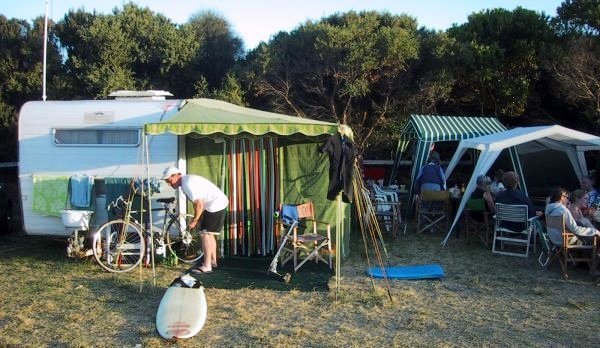
Consultants were hired to prepare a plan for the future use of the Warrnambool foreshore caravan parks. Image: Camping Victoria.

I had a line-by-line look at the council’s annual report for 2017-18, and learned consultants were also hired to prepare a strategic plan for the foreshore caravan parks, prepare the kerbside recycling contract, and for a valuation of the council’s land and buildings.

Mr Higgins said via email – quite correctly – that all councils use consultants.

“Warrnambool City Council’s use of consultants and the expenditure on consultants would be unexceptional,” he added.

This may be true, but in an environment where ratepayers are being asked what services they are prepared to see cut to avoid a rate rise, I think we could do with some more detail, don’t you?

At a state and federal government level, spending on consultants is included in the annual Auditor General’s report and is picked over by political journalists to determine where the dollars are going.

No such transparency is enforced at the local government level.
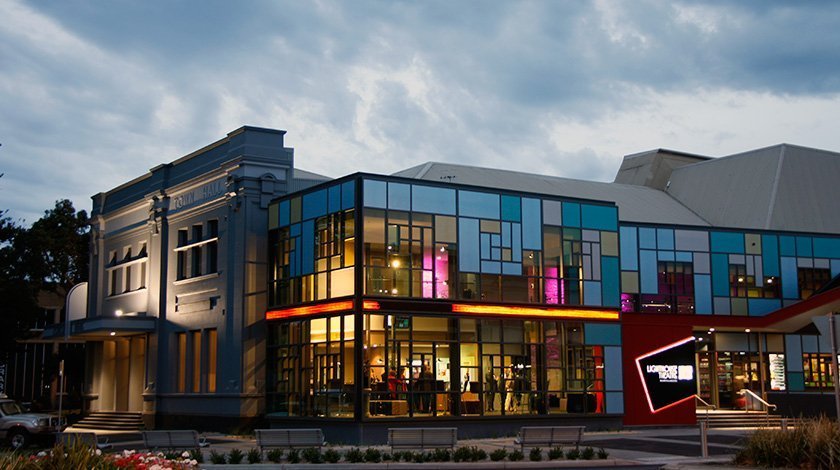
Consultants were also used to provide a valuation of council owned land and buildings like the Lighthouse Theatre. Image: Basso Project Management.

It may well be, as Mr Higgins explained, that “consultants are used because they have specific expertise or knowledge that council does not have” and hiring short-term consultants is cheaper than permanent staff.

(It is worth remembering that there are 731 people working at Warrnambool City Council – full time, part time and casual – and last financial year the cost to ratepayers was $31.5 million.)

Again, however, we have no way of being able to make that assessment or, to be frank, keeping an eye on how much is spent each year in total.

It is a figure that is simply not reported in any of the council’s financial statements or annual reports.

Instead, the $927,000 for this year is treated as an unavoidable expense and one that, I note, didn’t make it into the ratepayer survey that closed earlier this month.

Is there any fat to be trimmed on that figure? Do we, for example, really need a consultant to tell us what to do with our caravan parks? And how many consultants’ reports end up going no further?


Before there is any attempt to push rates above the rate cap, these questions deserve to be answered.

More tomorrow.


A follow up: I tried to get a further breakdown on the $775,610 cost of the two public toilet blocks I wrote about yesterday, but the council says such a breakdown is commercial-in-confidence.

A builder contact, however, said while he wasn’t sure about that particular tender, which he agreed seemed high, there were often less obvious costs with construction work including:

architect fees 20-40k, engineer 15-30k, feasibility study 10k, land surveyor 10k, legal fees 10-20k, traffic engineer 5-10k, fire engineer 5-10k, town planning 5-10k, building permits 10k, Wannon Water fees $50-$80k, council project management 30-60k, Aboriginal heritage study 30-40k, demolition 10-20k, associated paths 50-80k, landscaping 20-20k, safety management plan 5-15k, site safety 15-25k, traffic control 10-20k.


As to how many of these actually applied to the toilets in the botanic gardens and Swan Reserve, we will never know but I am still at a loss as to how they could cost more than a whole new home.

If you would like to see The Terrier keep digging up, sniffing out and chewing on local issues, please make a small contribution below.
Donate


W’bool City Council rate rise and the Taj Mahal of toilets

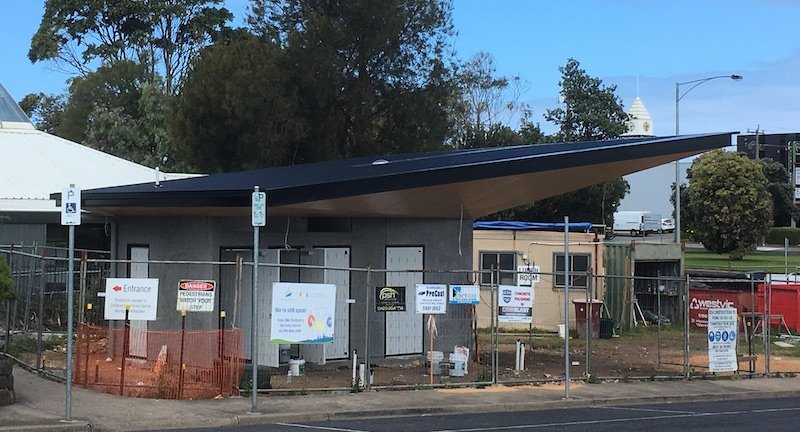
Your rates at work: the Swan Reserve toilets are one of two new toilet blocks that are costing the Warrnambool City Council more than $770,000.

Carol Altmann – The Terrier

The Warrnambool City Council says it must cut $700,000 a year from its budget for the next three years to avoid a rate rise, so I am going to find $700,000 in savings in just seven days – starting with toilets.

Not just any toilets, mind you, but the Taj Mahal of toilets that is being built near what was once the Tourist Information Centre at Swan Reserve, on the corner of Raglan Parade and Kepler St.

This is one of two new public toilet blocks in the city – the other is near the giraffe swing at the Warrnambool Botanic Gardens – which are costing the council a total of $775,610 including GST.

There was no doubt the run-down old toilets at the gardens and Swan Reserve both needed replacing, but how do two toilet blocks cost more than three quarters of a million dollars?

Does anybody know?


I have emailed a couple of builders this question today, and hopefully they will be able to explain the secret, but to me it seems over the top.

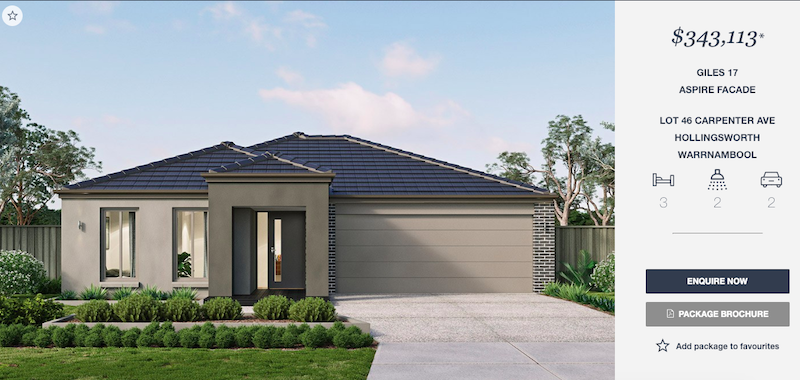
A three-bedroom, two-bathroom Metricon house and land package costs less than the toilet blocks. Image: Metricon Homes.

By way of comparison, for $775,000 you could buy not one, but two house and land packages from Metricon homes.

A neat $343,113 (excluding landscaping) can buy you the Giles design, featuring an “Aspire” facade, on a 602sq/m block at Lot 46 Carpenter Avenue, that comes complete with two bathrooms, three bedrooms, a two-car garage, concreted driveway, all carpets, stainless steel appliances and a 20mm stone benchtop in the kitchen!

(You would even have money left over for some landscaping plants from Bunnings.)

So, again, how does it cost an average of $387,000 for just one toilet block, even if it features a dramatic ski-slope roof on top of the cast concrete?

It might make sense if an entire new sewerage system had to be installed, but there were toilets already in place about 15m from the new block at Swan Reserve and the Botanic Gardens location was also chosen because it was close to the existing underground pipes.

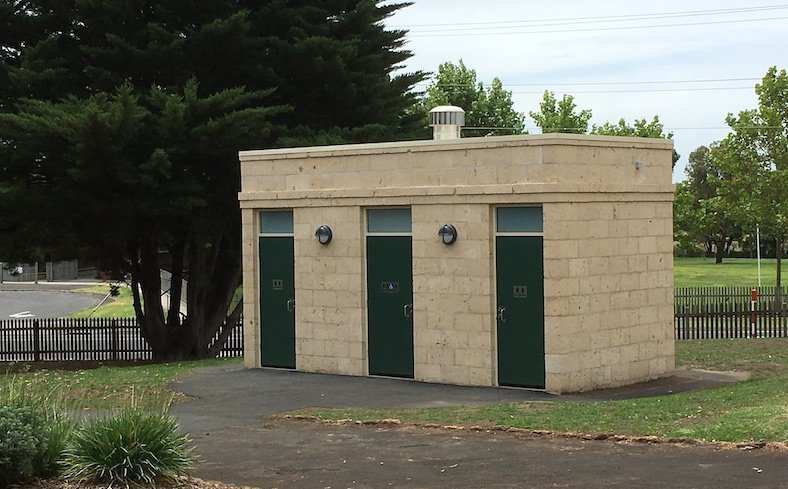
The three-cubicle sandstone toilet block recently completed at the Warrnambool Botanic Gardens for around $350,000.

Funnily enough, when the council hired a consultant to put together its public toilet plan in 2013 (yes, such a document does exist), the estimated cost for the two toilet blocks at Swan Reserve and the Botanic Gardens was around $764,500 (including GST), but again with no explanation as to why.

Five years later, the winning tender was around $600,000 (including GST) before that tender fell through and the council had to go with the second tender of $775,610.

I am not an expert on tendering, but why does a council put a price tag on a project before it seeks tenders?

Wouldn’t it be better to start like we all do when we are doing home renovations and say to a tradie, I would like a big new beautiful bathroom, what do you think it is going to cost? Woah, that much!  Okay, forget the super-sized bath and porcelain hand basin, what can you do for $15,000?

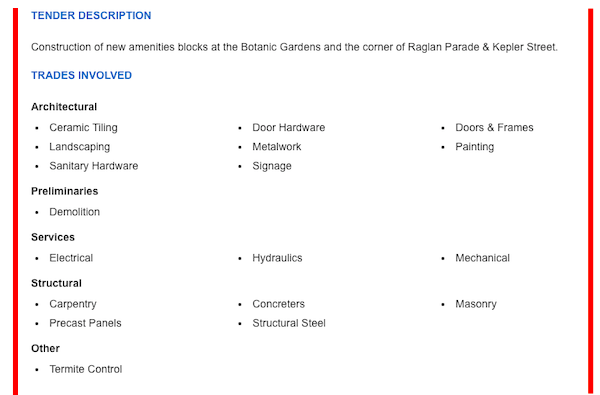
This seems to make so much more sense than saying, we have $350,000 to spend, what can you come up with? (See below for the unremarkable tender details for the two toilet blocks).

Given times are apparently tight and the council wants to break the rate cap, I can’t help but wonder what a $250,000 toilet block at Swan Reserve would have looked like, or a $150,000 model for the Botanic Gardens. There are more toilets that need upgrading, so perhaps it is time to revisit the template.

Even the ever-optimistic Mayor Tony Herbert was quoted by the paper as saying he was stunned at the final cost, but added that at least the builders were local and it was “going to activate that part of the gardens”.

That certainly is one way to put it. Another might be to ask just how much bang we are getting for our buck.

More tomorrow.

If you would like to see The Terrier keep digging up, sniffing out and chewing on local issues, please make a small contribution below.
Donate


Hi Tony, maaaaaate: the ties between the WCC and racing

Warrnambool City Council Mayor and Liberal Party member Tony Herbert. Image: WCC

Carol Altmann – The Terrier

News today about the ructions within the local Liberal Party branch was interesting on all sorts of levels, including the fact it exposes – yet again – the thick ties between the Warrnambool City Council and the Warrnambool Racing Club.

Let’s check the count so far. If you have been reading The Terrier:

Cr  Kylie Gatson: We already know that Cr Kylie Gaston ran for the Labor Party at the last state election and Labor Racing Minister Martin Pakula was the main force behind ensuring the Warrnambool Racing Club got what it wanted from the council in accessing Levy’s beach for large-scale racehorse training

Cr Peter Hulin: We already know that Cr Hulin, who supports the Levy’s move, was a former Liberal Party member but handed out how-to-vote cards at the last state election for former MP and racehorse owner James Purcell, whose son, Aaron, is a local racehorse trainer.

Cr Sue Cassidy: We already know Cr Cassidy, who supports the Levy’s move, is married to David Cassidy who operates sign company, Cassign, that sponsors races at the Warrnambool Racing Club. Liberal Party member Peter Herbert, the mayor’s brother, is a mate of David’s and not very happy about the “plover lovers” – as he likes to call them – who are opposed to racehorse training at Levy’s because the endangered Hooded Plover nests there.

Mayor Tony Herbert: We already know Cr Herbert, who supports the Levy’s plan, chairs the council’s Visitor Economy Advisory Committee that includes Warrnambool Racing Club CEO Peter Downs.

And now, in today’s story, we have Mayor Herbert also turning up as a rusted-on member of the Liberal Party where the chairman of the Warrnambool Racing Club, Nick Rule, is a significant player.

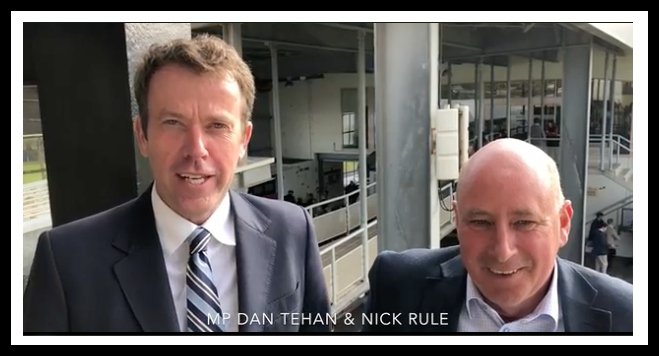
Mr Rule owns a racehorse with Federal Liberal MP Dan Tehan.

In his maiden speech in Federal Parliament, Mr Tehan thanked Mr Rule for being part of the Liberal fundraising team that saw him elected to the seat of Wannon.

Wannon MP Dan Tehan and Warrnambool Racing Club chairman Nick Rule share a racehorse, and political allegiances. Image:

Now Mr Rule, as chairman of the Warrnambool Racing Club, has to deal directly with the council – and Mayor Herbert in particular – to get the approvals that are still required to allow racehorse training at Levy’s Beach.

The fact they already share a connection, through the local Liberal Party branch, might explain the letter sent by Mr Rule to the Mayor on January 16 this year.

This was an important letter.

It was asking the council to provide consent for the racehorse training and assurances to the Environment Minister that this was in line with all coastal and marine management plans and policies.

It also asked for the council executive staff to be given the power to issue training licences.

These were both “critical” requirements, Mr Rule said.

Despite the importance of this letter, Mr Rule didn’t even bother to sign it or put it on Warrnambool Racing Club letterhead.

It arrived, unsigned, from Hammonds Paints, where he is managing director.


“Hi Tony…..As per our discussion earlier today…..

Kind regards, Nick.”

There is such a lack of formality, such an expectation of being heard without having to be all official about it, that all that is missing is “maaaaaatttteeeee”. (You can see the full letter here).

Lo and behold, the letter was tabled and dealt with by the council just 17 days after it arrived. (By contrast, the residents in south Banyan St lobbying to have street trees planted have been waiting about four years.)

The same fast-tracking happened last December.

Mr Rule wrote a letter to Mr Herbert on December 10 – this time it was signed and on WRC letterhead – saying the club had asked the Planning Minister to change the planning rules so racehorses could train at Levy’s. If the change went ahead, the club wanted the council’s support as well, the letter said.

“This is a matter of great urgency,” Mr Rule wrote.

No problem! Kazaam!

The council called a special meeting and gave almost unanimous support (vote: 6/1) on December 21 – just 11 days later.


I remember, in 2014, I needed council permission to place a scissor lift and five witches hats near the Robert Ullman whale mural, in East Warrnambool, which was being restored over a weekend.

The little permit took more than a fortnight to be processed.

Like the people waiting for their street trees in Banyan St, I obviously don’t have the right connections.

If you would like to see The Terrier keep digging up, sniffing out and chewing on local issues, please make a small contribution below.
Donate 


With disgraced Weir gone, the game is up

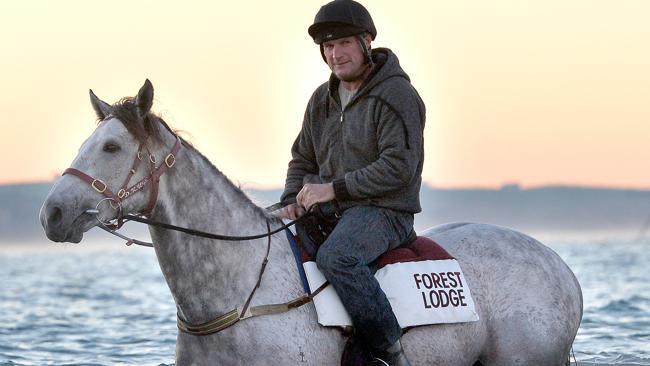
Former trainer Darren Weir on board former champion Puissance De Lune at Lady Bay during Melbourne Cup preparations in 2013. Image: News Ltd/DailyTelegraph.

Carol Altmann – The Terrier

Now that the hammer has fallen on disgraced trainer Darren Weir, the arse has fallen out of the argument to allow 800 racehorses a week to train on a wild beach in the Belfast Coastal Reserve – because this was always about Weir.

Regardless of how the Warrnambool Racing Club, Warrnambool City Council or State Government try to spin it, ramming up the training numbers at Levy’s Beach to industrial levels was all about appeasing Weir.

Racing Minister Martin Pakula said as much in his very public face slap to the council last October:

“Council really needs to decide whether it wants a commercial horse training industry in the City of Warrnambool or it does not…If it doesn’t, it should just say so, because trainers like Darren Weir – and others – have plenty of options.” Warrnambool Standard, Oct 30, 2018


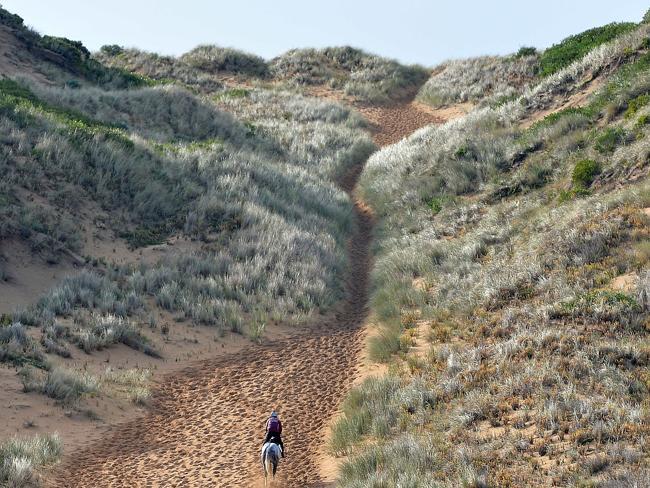
Mr Pakula has never actually detailed these other “options”, because there is no other beach in Australia where racehorses can run up and down the dunes en masse. There is a simple reason for this – dunes damage easily.

But who cares about that minor detail, the blackmail message was clear: No Weir, no Warrnambool racing industry.

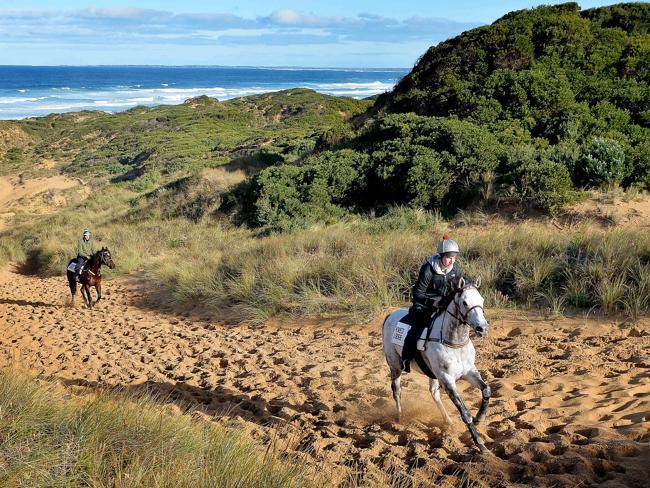
A Weir horse training illegally on so-called “Hoon Hill” at Levy’s Beach in 2013, before the permit system was introduced. Original image Nicole Garmston, Herald Sun.

Parks Victoria originally thought 65 racehorses a day across the whole 22km stretch of the Belfast Coastal Reserve might be a reasonable number.

This was the number it came up with in 2016, before the Belfast Coastal Management Reserve Plan was developed in 2018.

It turns out Parks Victoria was hopelessly naive.

As of last year, Warrnambool had about 250-300 racehorses in training: of those, Weir trained about 100 and counting.

A total of 65 horses training across the whole reserve was never going to cut it for Weir’s mega-stable.

It wasn’t even close.


So when the Belfast Coastal Reserve Management Plan hit the decks last July, the daily number had suddenly more than doubledto 160 – and all of the racehorses (apart from some ‘historic’ trainers near Killarney) would be poured into Levy’s Beach, just 10 minutes from Weir’s Warrnambool stables.

The stretch of wild beach with its threatened Hooded Plover population and fragile dune system had become the sacrificial lamb to Weir’s ambitions.

Weir horses training illegally on so-called “Hoon Hill” at Levy’s Beach in 2013, before the permit system was introduced. Original image Nicole Garmston, Herald Sun.

Weir the Invincible. Mr Magic. Mr Superstar who won $33 million in prize money in just 12 months.

And now we know behind all of the “magic” was something terrible and cruel.

There was no secret tonic in the dunes.

They found three tasers in Weir’s bedroom.


Weir’s demise has exposed the rotten core to a career that no doubt began with hard work and heart, but which veered dangerously off course.

Because the tasers – and the criminal charges that may be yet to come – follow a string of convictions against Weir under the rules of racing, especially around the illegal use of anti-inflammatories and pumping horses pre-race with bi-carb soda in a practice known as “tubing”.

But such was Weir’s dazzling success, everybody looked the other way, even when his rapid rise seemed to pass the realms of the explainable.

“No Weir, no Warrnambool racing industry”: that was the only message.

And now there is no Weir.

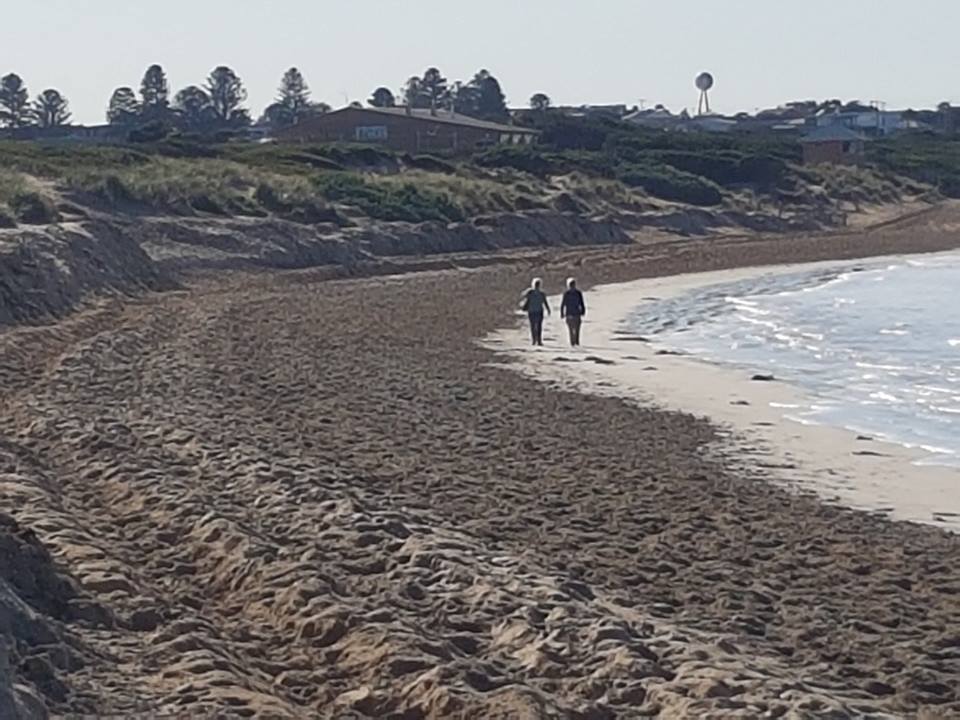
The end result of a major racehorse training workout at Lady Bay, Warrnambool, where up to 96 horses a day were permitted to run.

So what does this mean for our dunes and our wild beach?

Is it business as usual, keep moving, nothing to see here?

Surely not.

Surely the game is up. Surely now, as Cr Michael Neoh hinted last week, Levy’s is not needed and allowing local trainers to continue to access the ever-shrinking beach at Lady Bay is more than enough? 


We no longer need the carpark graders to move into Levy’s and Spookies, do we?

We no longer need to keep explaining that 800 horses a week running along a stretch of beach (including 200 up and down a dune) in a coastal reserve will destroy it, do we?

The Warrnambool Racing Club and Racing Victoria are no longer going to rely on a great lie – rather than environmentally stringent plans – to sustain our local racing industry, are they?

If the answers to these last three questions are yes, yes and yes, then our local racing industry really is doomed and it has nothing to do with Weir this time, but our own collective stupidity at letting it happen.

If you would like to see The Terrier keep digging up, sniffing out and chewing on local issues, please make a small contribution below.

Donate


Weir scandal offers WCC a chance to ditch Levy’s plan

Melbourne Cup winner and racing king pin Darren Weir is facing multiple charges which should prove a game changer for the racehorse training at Levy’s plan. Image: Fox News

Carol Altmann – The Terrier

The Weir-McLean scandal gives the Warrnambool City Council the perfect “out” from the disastrous plan to allow 160 racehorses a day at Levy’s Beach.

As it happens, the council will meet tomorrow night (4/2) to give its consent to another part in the approval process.

This time it must give assurances to the Environment Minister, via a letter to the Warrnambool Racing Club, that the horse training is “consistent” with all coastal and marine management plans and policies for the Levy’s area.

This could be awkward, because as far as I know, nobody has yet produced any evidence to say that it is “consistent”. In fact it appears to be the complete opposite.

This fact is just one more inconvenient truth in a whole string of inconvenient truths which the council has had to overlook and tie itself in knots about.

The entire mess has all come about because of political pressure from the Victoria Racing Club, the Warrnambool Racing Club and Racing Minister Martin Pakula to primarily accommodate the once-powerful Mr Weir, but – like Mr Weir’s career – it could end tomorrow.


The council can stop the charades, dust itself off and start healing an increasingly diverse community that was co-existing quite nicely until it was torn apart by totally unnecessary greed.

Here are 10 more reasons why it should do so:

1. Darren Weir has been winning despite not having access to Levy’s beach since late 2016. (He won more than $31m in 2017-18 alone).

2. Jarrod McLean has been winning despite not having access to Levy’s beach since 2016. (He won the $2 m Mackinnon Stakes last November.)

3. Their claims that access to Levy’s and the dunes gave them an “edge” look doubtful in light of the allegations they are now facing, including the use of electric shocks as part of training.

4. Weir had 77 horses training in W’bool in 2016. He now has more than 100, despite not having had access to Levy’s beach since 2016.

5. All trainers can still apply for access to run and swim their horses at Lady Bay beach from March right through to December. Swimming is all year round.

6. Former MP and racing supporter James Purcell, whose son is a trainer, said in 2017 that no beach dunes should be used for training, anywhere in the reserve.

7. There is no environmental impact study and no “baseline” study of what it looks like now.

8. There is no economic impact statement, showing how the move will increase jobs or the local economy above what racing already provides.

9. Local indigenous people are devastated by the move and senior elders – including 2018 Victorian Senior of the Year Rob Lowe – are fighting to save the reserve.

10. Millions have been spent building a sand track and other facilities at the Warrnambool racecourse.

So much has been written about this ill-advised plan. So many arguments have been raised. And now the racing industry itself is dealing with a scandal of unprecedented proportions.

Surely, surely, tomorrow night offers a chance for this plan to ride off into the sunset and we can then direct our energies into building a sustainable environment and a sustainable, ethical, local racing industry – based on truths and substance.

If you would like to see The Terrier keep digging up, sniffing out and chewing on local issues, please make a small contribution below.
Donate