Consultants, lawyers and admin soak up Lyndoch millions

Consultants, lawyers and administration costs continue to soak up millions at Lyndoch Living. Image: Forbes

Carol Altmann – The Terrier

Lyndoch Living spent $1.2 million on consultants and lawyers in 2020, and at least another $3 million on its ever-expanding administration.

A deeper dive into the 2020 financial figures reported to the Australian Charities and Not for Profit Commission show Lyndoch has spent at least $1 million a year for the past three years – a total of $3.34 million – on legal fees, consultancies and auditors.

That $3.34 million over three years is more than the food budget for the 200 to 240 residents, but more on that shortly.

Behind the scenes at Lyndoch, a steady stream of consultants has been working on the $100 million masterplan, including – as I understand it – around $99,999 and 99 cents paid to one consultant for the business plan for the medical clinic that will be built on site later this year.

We haven’t seen that business plan, but we can only trust that it’s a good one, because Lyndoch is going into the uncharted waters of borrowing big to finance the estimated $23 million cost.

At the same time, Lyndoch’s administration costs are now more than $3 million a year, compared to $2.5 million in 2015.

The admin budget is hard to follow from year to year, because it keeps bouncing around the balance sheet like a bee in a bottle.

In 2018, it was $3.3m.

In 2019, it suddenly fell to $1.94m after an adjustment or “restatement”.

In 2020, it was back up to $3.07m.

While the figures are subject to the vagaries of various accounting methods, one thing we do know is that the number of admin staff at Lyndoch has gone up.

As has already been reported here, admin staff at Lyndoch shot up from 37 in 2016 to around 60 in 2018, and several other, highly paid souls have joined since.

(Since 2018, Lyndoch no longer publishes a staff breakdown of how many people work in each area.)

In addition to these costs, just under another $1 million has been spent in the past three years on advertising and marketing, including Lyndoch’s sponsorship of the grand annual jumps race at the Warrnambool May Races.

This sponsorship, which was renewed in 2019 and now runs until 2022, was designed to promote its Waterfront Living apartments.

I am yet to hear of anyone buying one of the apartments because they were at the races, but perhaps in between punts they were persuaded.

As it happens, the last of the apartments were sold at heavily discounted prices late last year so Waterfront could finally reach full occupancy.

But enough of the fascinators and corporate suits, what of the budget for residential care?

This brings us back to the kitchen.

I always like to check how much is being spent on food, given this – unlike the races – really is the core business of an aged care home.

In 2019, Lyndoch spent $1.2m on food for around 200 residents, or about $16.50 per resident, per day.

In 2020, this had risen to $1.44m, which looks good on paper, but Lyndoch has also since bought the May Noonan Hostel in Terang, so the number of residents has also increased to around 240.

This means the food budget works out to be the same – around $16.50 per resident, per day.

That is around $6000 in food per resident, per year.

(I suspect the various legal battles funded by Lyndoch against The Terrier have cost the equivalent of that per month.)

Again, I provide this information so the community, which owns Lyndoch, can keep an eye on its direction and priorities behind the marketing and public relations. If you wander over to the Australian Charities and Not for Profit Commission, you can check it all out for yourself.

In the meantime, we keep digging.

More soon.



Lyndoch borrows big for $100m masterplan as deficit rises

Despite successive deficits, Lyndoch Living is borrowing big to fund its $100m masterplan. Original image: Disney.

Carol Altmann – The Terrier

Lyndoch Living, having recorded a fifth deficit in six years, is digging into residential bonds to fund its $100m masterplan.

And a warning – figures ahead, lots of figures – as we dive again into the swirling financials of Lyndoch Living.

One, two, three…jump!

When you bob up you will see that figures lodged by Lyndoch Living last week show an even greater loss – a $2.4 million deficit – than was reported at last October’s AGM (the one we were not invited to Zoom, but could watch later on YouTube).

The annual information statement lodged last week with the Australian Charities and Not for Profit Commission reveals a $600,000 increase on the $1.88 million loss reported at the AGM and in Lyndoch’s full financial statements to the commission.

The $2.4 m is the loss recorded by Lyndoch without taking into account the profit from the Warrnambool Medical Clinic, which it bought in 2019. Either way, it is the fifth deficit for Lyndoch in six years.

This doesn’t seem to trouble the board.

As reported here last November, Lyndoch’s overall asset base (assets minus its liabilities) also continues to slide and is now $47.6m down from $69m in 2015.

This doesn’t seem to trouble the board either.

There is a lot to digest in the 60-page financial statement, so I am going to break it into bite-sized chunks tonight and in follow-up pieces.

First, the report shows us that Lyndoch has funded at least part of its $13 million Swinton Wing expansion by doing something it has never done before, which is borrow money.

It has visited the bank and also borrowed a big chunk out of the $26 million it holds in residential bonds paid by residents.

From this $26 million in bonds, Lyndoch has thus far extracted $10,944,323.

By law, as long as an aged care provider can cover its residential bond refunds for the next 12 months, it can dig into the rest and repay it down the track.

If an aged care home defaults, the Federal Govt will pick up the tab, so it’s kind of a taxpayer-backed Ponzi scheme that relies on an aged care home doing the right thing.

It’s also cheap, interest-free money, but concerns about how these bonds are being used is one reason (among many) that the whole bond scheme is now under review as part of the Royal Commission into Aged Care.

The loans, of course, will need to be repaid at some point, including fairly substantial interest on the bank loans, despite low interest rates.

In 2018, Lyndoch paid zero interest on any loans.

In 2019, it paid $62,420.

In 2020, it paid $372,669.

As of 7 July 2020, Lyndoch signed up for another loan from the NAB for $3,386,000 which is due to be repaid by June 2022.

This was needed to fund the “redevelopment of a residential building” which, I assume, was the blowout in cost of the Swinton Wing.

That project, where residents are not allowed to hang any pictures on the walls despite paying huge bonds which helped fund it, grew from a budget of $10 million to $13 million.

Relying big on borrowed money is new territory for Lyndoch, which once upon a time used to spend only what it had, what the government gave it, and what it raised from the public.

But Lyndoch, as we know, is now a long way from those comfortable shores as it sails into a $100 million masterplan under the captaincy of a CEO and board that firmly believes you must spend money to make it.

This is why in 2019 Lyndoch bought the Warrnambool Medical Clinic, Health Spot and May Noonan Hostel, in Terang, for around $3.3 million.

(Lyndoch also recently hired JB Were – who will charge fees accordingly – to look after its complicated investment portfolio. We are not in Kansas anymore, Toto.)

The Warrnambool Medical Clinic last year turned over $3.8m in revenue, but had $2.8m in expenses.

According to the financials, the clinic returned a final profit of $539,249 to Lyndoch Living in 2020 which is not to be sneezed at… but $372,000 of this will be spent this year paying out the original owners of the clinic as the final instalment of the sale contract. Achoo!

The WMC was pretty much break even for last year.

As for this year, well this is when things get interesting, because Lyndoch has the wire fencing up and around its now-vacant Tomlinson Wing (built in 1991 with help from a generous donation from the Tomlinson family), all set for demolition to make way for a new, two-storey Lyndoch medical clinic to replace the existing WMC.

This clinic will have acute care, dentistry, an x-ray machine, up to 20 GPs, allied health, education rooms, a cafe, a chemist and no doubt wonderful indoor plants and a red-and-white colour scheme.

The cost? An estimated $24 million. Where is that money coming from?

The bigger question, however, is will Lyndoch Living thrive or dive under this grand expansion and multi-million dollar spend up? Time will tell.

More soon.


Union action sees scabies outbreak confirmed at Lyndoch

Lyndoch Living has a confirmed outbreak of scabies in its Audrey Prider Centre.

Exclusive

Carol Altmann – The Terrier

I am technically taking a break, but some stories can’t wait until the new year, and this is one of them – a confirmed outbreak of scabies in the Audrey Prider Centre at Lyndoch Living.

What a Christmas gift to residents in APC, which is a high-care dementia wing and home to some of the most vulnerable people in Lyndoch aged care.

The scabies diagnosis confirms what Lyndoch nursing staff and some residents’ families have long suspected, with a nasty rash coming and going through APC for months and months.

Lyndoch management finally brought in skin specialist Dr Werner Sinclair on 5 December and he has since issued a formal diagnosis of scabies for at least two residents.

I understand that up to eight residents are now potentially affected by what is a highly contagious infestation.

But this diagnosis by Dr Sinclair didn’t just happen.

It followed an intervention by the Australian Nursing and Midwifery Federation on behalf of nursing staff who were sick to death of being fobbed off.

As reported by The Terrier, the union wrote a letter to Lyndoch on 27 November demanding answers on whether there had been any suspected or confirmed cases of scabies in APC in the past six months and, if so, what had been done about it.

Some of its members, the union wrote, had been “actively treated” for suspected scabies, as had some residents, but nursing staff were “of the view” that they were not to talk about it with residents’ families, or each other.

The ANMF was also told by its members that “minimal infection control measures” had been put in place.

If what the union says is correct, this is pure damage control, if not a cover up.

One thing is certain, and that is that it took the union to put a rocket up the backside of Lyndoch about this outbreak and to bring in the experts.

This begs the bigger and more important question of why?

Why must it take the intervention of a union to see the immediate welfare of residents and staff in Audrey Prider Centre shoot to the very top of Lyndoch’s priorities?

And if the union had not intervened, would the outbreak have ever been formally diagnosed and responded to? Or would the itch just go on?

The families of some of those infected are absolutely furious by what has unfolded.

Their stories are ones of confusion and misinformation.

One woman said she learned of her mother’s scabies via a phone call from Lyndoch last Monday – December 14 – by which time her family had been to visit her mother several times and been potentially exposed.

In another case, a family member of an APC resident who is being treated for scabies, has scabies.

While scabies is not deadly, it causes an intense, almost maddening itch from tiny, burrowing mites that get under the victim’s skin.

Treatment is via either oral medication or an external lotion applied all over the body.

According to a document sent to me, Lyndoch is using the services of an infection control consultant – Victorian Infection Prevention Services – to help manage its outbreak.

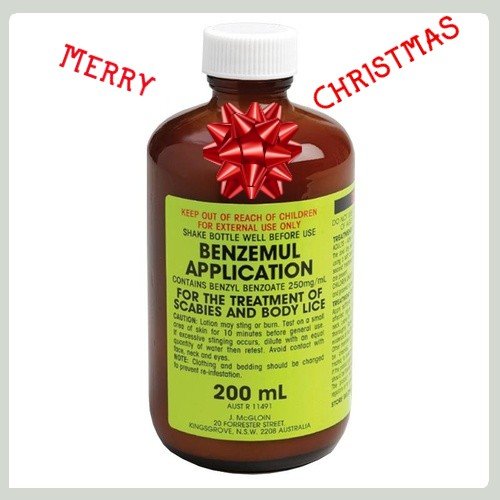
Bulk supplies of one lotion, Benzemul, have been brought it to protect APC nursing staff, who were urged to start applying the lotion to themselves as of last Monday, 14 December.

It’s understood residents are also being treated with a lotion.

To contain the outbreak, APC staff must also wear long sleeves and gloves when dealing with infected residents, wash their hands after every resident contact, and dispose of all used linen immediately into a laundry skip rather than carrying it.

Scabies, to put it bluntly, is a bastard of a thing to catch, and to contain.

And all of this comes to light as the Lyndoch Living executive gathers tonight for its Christmas break up. I hope they are having a good time, because those with the scabies are certainly not.

I emailed the Lyndoch CEO Doreen Power, chair Susan Cassidy, and the Lyndoch media unit at 11am this morning for comment. I will update this piece if any comment is provided.


Lyndoch: red spots, black spots, cold walls and lights out

Carol Altmann – The Terrier

As the year comes to a close, I wish I could do more for those who contact me about Lyndoch Living.

Whenever I write about Lyndoch aged care, I get a stream of messages from readers, most of whom thank me for just listening, even if I can’t help.

People care about Lyndoch and its residents, including the staff who have to go to extraordinary lengths just to get a message to me, for fear of being “caught” talking to The Terrier, but also the families of residents, and friends of residents.

I find so many of these messages heartbreaking and I feel powerless, because I can’t fix it.

All I can do is tell you – the wider community – what I have learnt and what I have investigated and hope that you, like me, won’t look away.

Like this message from a reader about the new $13 million Swinton Wing extension:

“..residents from (Tomlinson) have now been moved to the second floor of the new “dementia building” (my words). This means that all ambulant dementia residents are now “trapped” upstairs with no free access to an outside area where they can feel the breeze or sun on their face, walk on a “return” path through an enclosed garden area, and see birds hopping around.

“They now have no chickens to care for and secured outside areas for unsupervised activities are now nonexistent. ….. the new building is very impressive and state of the art, but soulless and clinical.

“Whoever thought that this was an improvement to the quality of residents’ lives has no understanding of the ageing and their needs. My alarm bells are going off and I feel this needs further investigation. Please.”

Please.

This is the new Lyndoch, I have learned, where pictures are not allowed on the new walls of the new rooms and the new TV that comes with the new room is the one a resident MUST use, even if they don’t know how to work the freakin’ new remote control.

And then there are the messages about “the rash”.

I have had so many messages about a “rash” that has been coming and going through the Audrey Prider Centre at Lyndoch for six months and I can – at last – write about it because the Australian Nursing and Midwifery Federation (ANMF) has taken up the issue on behalf of their members – the nursing staff on the front line.

In a letter to Lyndoch last week, the ANMF has asked the question up front: is this rash scabies? And if it is, what is being done about it, and what has been done to support residents and staff?

The union has asked for a response by tomorrow (Dec 4).

If this rash is not scabies – I have since heard that it ISN’T – then what is it?

It is enough to have staff and family of some residents demanding more answers.

Another worry that has filtered through to The Terrier these past weeks is the mobile “black spots” within Lyndoch that means families calling after-hours to check on sick loved ones are finding the phones are either not answered (because nursing staff are in a black spot) or the call drops out.

All of those millions spent on expanding Lyndoch – and adding an IT specialist to the executive team – and the phone system is unreliable.

Perhaps instead of worrying about awards and nominations and getting its name up in fairy lights, Lyndoch needs to make sure it responds to these concerns – and I am only able to share a few of them here.

Speaking of lights, the big, new, illuminated, illegal corporate logo on Swinton Wing will be approved retrospectively by the WCC, but will not be lit up.

The lighting breaks the planning laws, but it took neighbours to tell them that.

Given the WCC head of planning is on the Lyndoch board, we can only assume that he had no idea this sign was going ahead.

I really hope Lyndoch receives a refund on the LED.

And I really hope that those who have concerns and fears and worries about Lyndoch will keep speaking up and find the strength to stand up, to light up, knowing that we – the community – has their back.

On we go.

[This is my last post for 2020. Thankyou so much to all of the terriers who have helped The Terrier to keep going in more ways than one. You are the voices behind this voice and I couldn’t do any of it without you.]


Cherry picker on the job at Lyndoch, as gardening staff cut

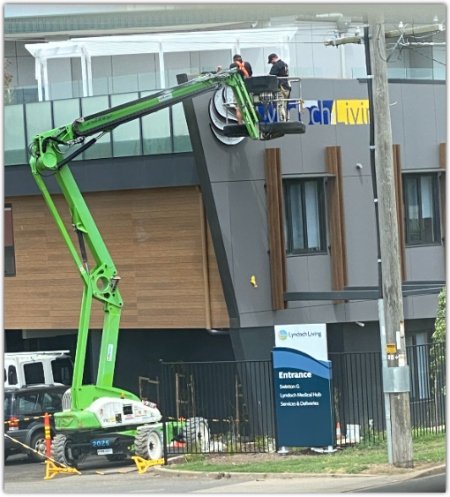
The Cassign team installing new signage today on the Swinton Wing expansion at Lyndoch Living.

Carol Altmann – The Terrier

Well blow me down if the Cassign team was not back at Lyndoch Living today installing a huge, illuminated sign on the front of the new Swinton Wing.

Just last night, as you know, I wrote about the perceived conflict of interest between Cassign and Lyndoch chair Sue Cassidy, who is married to the owner of Cassign, David Cassidy.

I wonder if Lyndoch put this latest slice of non-essential corporate branding out to tender, because this sign is not a little A-frame at risk of blowing over in the Warrnambool wind – it needed a cherry picker and three guys to install.

We will most likely never know, because Lyndoch no longer tells the community such things.

But what I can confirm is, as flagged last night, the Lyndoch at-home gardening team is being dismissed as of late January because they are costing Lyndoch money.

These are the hard-working men and women who visit people’s homes to mow lawns, whipper snip, and edge garden beds with a skilful eye well beyond my own.

They are now dispensable to Lyndoch, even if they were indispensable to those who used the service.

The home gardening team costs Lyndoch around $100,000 a year, and so they are out.

Be gone ye faithful gardeners, Lyndoch has snazzy signs to install via a cherry picker!

I was thinking we could offer some suggestions as to where Lyndoch could whipper-snip its costs to save the gardeners, and we could start with the number of executives.

As I wrote last night, a brand new executive position has just been filled and, as it turns out, another two will be advertised in January:

– Operations Manager: Organisational Development

– Organisational Development Consultant

Good grief.

An organisational consultant to assist the organisational manager who reports to another manager, who reports to the CEO…

At last count, Lyndoch had around 60 administrative staff.

The good people of Seymour know all about top-heavy administration, which unfolded at their hospital some years ago, and was one of several upsets challenged by the local community that led to a complete upheaval in 2012.

The CEO of Lyndoch was the CEO of Seymour Health at the time.

Lyndoch also sponsors the Grand Annual Steeplechase horse race, which was ostensibly in the hope that such advertising would help sell the waterfront apartments.

It didn’t work.

The last of these apartments was flogged off recently in a fire sale for $100,000 less than the listed price in 2014.

Lyndoch also hosts a corporate marquee for three days at the May Racing Carnival – at a cost of around $40,000 –  and would have done so again this year had it not been for Covid-19.

And yet the gardening staff are being cut.

We see what is happening here. We all see it. And we are not looking away.

If you are reading this and would like to support The Terrier, please throw something in the tip jar below. 

The Tip Jar