Consultants, lawyers and admin soak up Lyndoch millions
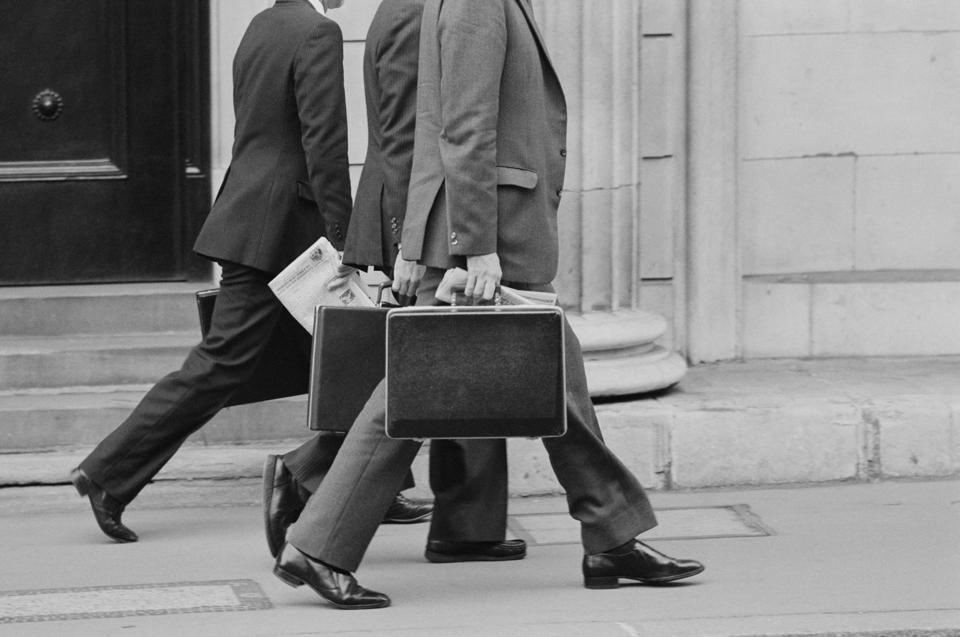
Consultants, lawyers and administration costs continue to soak up millions at Lyndoch Living. Image: Forbes

Carol Altmann – The Terrier

Lyndoch Living spent $1.2 million on consultants and lawyers in 2020, and at least another $3 million on its ever-expanding administration.

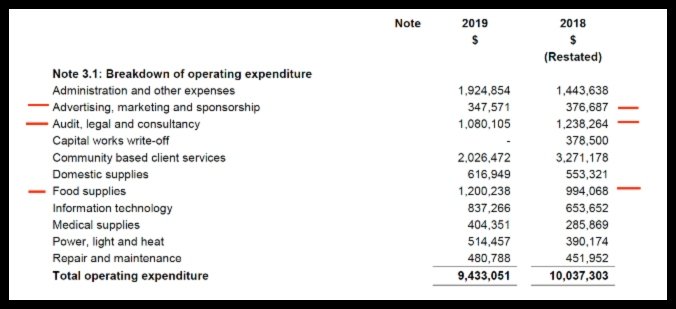
A deeper dive into the 2020 financial figures reported to the Australian Charities and Not for Profit Commission show Lyndoch has spent at least $1 million a year for the past three years – a total of $3.34 million – on legal fees, consultancies and auditors.

That $3.34 million over three years is more than the food budget for the 200 to 240 residents, but more on that shortly.

Behind the scenes at Lyndoch, a steady stream of consultants has been working on the $100 million masterplan, including – as I understand it – around $99,999 and 99 cents paid to one consultant for the business plan for the medical clinic that will be built on site later this year.

We haven’t seen that business plan, but we can only trust that it’s a good one, because Lyndoch is going into the uncharted waters of borrowing big to finance the estimated $23 million cost.

At the same time, Lyndoch’s administration costs are now more than $3 million a year, compared to $2.5 million in 2015.

The admin budget is hard to follow from year to year, because it keeps bouncing around the balance sheet like a bee in a bottle.

In 2018, it was $3.3m.

In 2019, it suddenly fell to $1.94m after an adjustment or “restatement”.

In 2020, it was back up to $3.07m.

While the figures are subject to the vagaries of various accounting methods, one thing we do know is that the number of admin staff at Lyndoch has gone up.

As has already been reported here, admin staff at Lyndoch shot up from 37 in 2016 to around 60 in 2018, and several other, highly paid souls have joined since.

(Since 2018, Lyndoch no longer publishes a staff breakdown of how many people work in each area.)

In addition to these costs, just under another $1 million has been spent in the past three years on advertising and marketing, including Lyndoch’s sponsorship of the grand annual jumps race at the Warrnambool May Races.

This sponsorship, which was renewed in 2019 and now runs until 2022, was designed to promote its Waterfront Living apartments.

I am yet to hear of anyone buying one of the apartments because they were at the races, but perhaps in between punts they were persuaded.

As it happens, the last of the apartments were sold at heavily discounted prices late last year so Waterfront could finally reach full occupancy.

But enough of the fascinators and corporate suits, what of the budget for residential care?

This brings us back to the kitchen.

I always like to check how much is being spent on food, given this – unlike the races – really is the core business of an aged care home.

In 2019, Lyndoch spent $1.2m on food for around 200 residents, or about $16.50 per resident, per day.

In 2020, this had risen to $1.44m, which looks good on paper, but Lyndoch has also since bought the May Noonan Hostel in Terang, so the number of residents has also increased to around 240.

This means the food budget works out to be the same – around $16.50 per resident, per day.

That is around $6000 in food per resident, per year.

(I suspect the various legal battles funded by Lyndoch against The Terrier have cost the equivalent of that per month.)

Again, I provide this information so the community, which owns Lyndoch, can keep an eye on its direction and priorities behind the marketing and public relations. If you wander over to the Australian Charities and Not for Profit Commission, you can check it all out for yourself.

In the meantime, we keep digging.

More soon.



Lyndoch: more spent on lawyers and consultants than food

Would you like a lawyer with that? Figures reveal Lyndoch has spent less on food in the past two years than on expert advice. Image: Shutterstock

Carol Altmann – The Terrier

In the past two years, Lyndoch Living spent more on lawyers, consultants and accountants than it did on food for residents.

In 2018 and 2019, Lyndoch shelled out an astonishing $2.318 million on accountants, lawyers and consultants, while it spent $2.194 million on food supplies.

In 2018, the gap between the two was especially stark, with less than $1 million spent on food supplies – $994,068 – compared with $1.238 million on accountants, lawyers and consultants.

Chew on that for a moment and I suspect you will feel the same sense of indigestion that came over me.

These unpalatable facts are among the many that fall out when you take a close look at Lyndoch’s financial statements – and a lot of terriers are now taking a good, hard look at the figures, both old and new.

This is how we know that in 2013 the food bill was $992,516, which is not that far off the $994,068 that was spent five years’ later.

Did I miss something? Has the cost of groceries gone down?

I can tell you that what residents pay to live in a nursing home has certainly not gone down nor stayed the same for the past five years.

If you are going to cut costs, surely as an aged care home you don’t start with the food bill?


Judging by the 2019 financials, there is plenty of fat to trim elsewhere, starting with administration costs and the ever-growing number of staff  in the corporate area (59 and counting).

Not surprisingly, the cost of food vs lawyers/consultants/auditors was not mentioned at the Lyndoch Living annual general meeting last October and we can only make the comparison now because of two things:

The full figures have finally been released via the Australian Charities and Not-for-Profits Commission, and, for the first time, legal fees and consultants’ fees have been published in the audited statements.

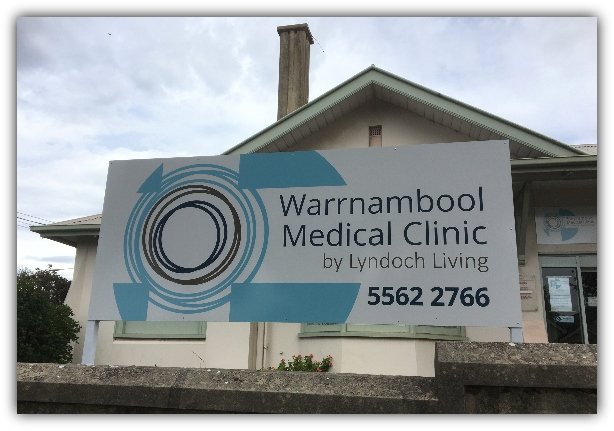
Lyndoch Living bought the Warrnambool Medical Centre business for $1.3 million and plans to relocate it to a new building at Lyndoch.

Speaking of auditors, wow, has that bill shot through the roof.

Last year, Lyndoch’s auditing costs tripled from $13,950 in 2018 to $48,500 in 2019, which is five times what Lyndoch paid for auditing in 2013 ($9800).

Lyndoch changed auditors from local firm McLaren Hunt (which used to be Coffey Hunt) and replaced them with RSM Australia.

Perhaps a stack more number crunching needed to be done because Lyndoch decided to become a company limited by guarantee, buy two medical centres and also the May Noonan nursing home in Terang (I will write more about the medical centres soon).

But even the auditors were paid small beans compared with the $2.25 million spent on lawyers and consultants in the past two years.

$2.25 million.

Oh my goodness, I really am in the wrong business.


This $2.25 million would include hiring consultants for the $100 million masterplan and to write the (secret) business plan for the new medical centre that Lyndoch intends to start building soon, even though it’s still not sure how much money it needs to borrow to pay for it.

The lawyers, I assume, would also have been hired to guide the masterplan, to set up Lyndoch Healthcare Pty Ltd, and to oversee how Lyndoch now operates as a company limited by guarantee.


There are also the less obvious fees, such as the solicitor “retained” to provide advice to the company secretary, who doesn’t have legal or accounting qualifications.

All of this – millions of dollars in consulting, legal, accounting and administration bills – is such a long, long way from where Lyndoch started as a much-loved, community owned facility for our aged to see out their final years in comfort.

Back in the beginning, people donated their time and their own money to make sure Lyndoch found its feet and this is why there remains such a strong, emotional connection between Warrnambool and our iconic aged care home.

The board needs to get that.

Lyndoch has to grow and keep up with the times, we all get that, but how it is growing – and at what cost – remains at the heart of this investigation and we will keep going.

More soon.

If you would like to see The Terrier keep digging, click on the link below to throw something in the tip jar.


WCC rate rise and spending more than $900k on consultants

The Warrnambool City Council spent more than $900,000 on consultants in 2017-18, but whether this figure is higher or lower than previous years remains unknown. Image: Fidelis.

Carol Altmann – The Terrier

How to save $700,000 in seven days, instalment #2:

When Warrnambool Mayor Tony Herbert revealed last December, without a hint of irony, that up to $30,000 would be spent on consultants to test how ratepayers felt about a rate rise, it raised an obvious question: how much does the Warrnambool City Council spend each year on consultants?

The answer for 2017-18 is close to a million dollars, or $927,000 to be precise.

Unfortunately that is about as precise as I can be, as the council has not provided any significant detail on what these consultancies entailed or how this figure compares to other years.

What this means is I can’t tell you if $927,000 is normal in one year, or lower, or much higher than for other years.

I am going to take a punt that other years would not be lower, based on the number of council reports, masterplans and projects that have been rolled out in recent years.


The only breakdown provided for the $927,000 was this from council spokesman Nick Higgins:

“Examples of consultants used in 2017-2018 include: valuation of the Warrnambool Art Gallery collection (necessary for insurance), participation in the Community Satisfaction Survey (required by the State Government), arterial road assessment (for advocacy to improve roads managed by VicRoads), heritage advice and for the management of the community solar bulk buy program.”

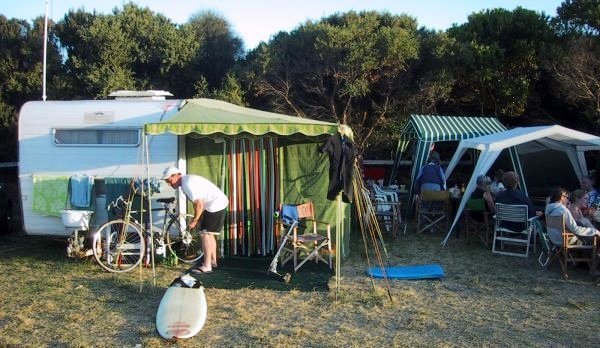
Consultants were hired to prepare a plan for the future use of the Warrnambool foreshore caravan parks. Image: Camping Victoria.

I had a line-by-line look at the council’s annual report for 2017-18, and learned consultants were also hired to prepare a strategic plan for the foreshore caravan parks, prepare the kerbside recycling contract, and for a valuation of the council’s land and buildings.

Mr Higgins said via email – quite correctly – that all councils use consultants.

“Warrnambool City Council’s use of consultants and the expenditure on consultants would be unexceptional,” he added.

This may be true, but in an environment where ratepayers are being asked what services they are prepared to see cut to avoid a rate rise, I think we could do with some more detail, don’t you?

At a state and federal government level, spending on consultants is included in the annual Auditor General’s report and is picked over by political journalists to determine where the dollars are going.

No such transparency is enforced at the local government level.

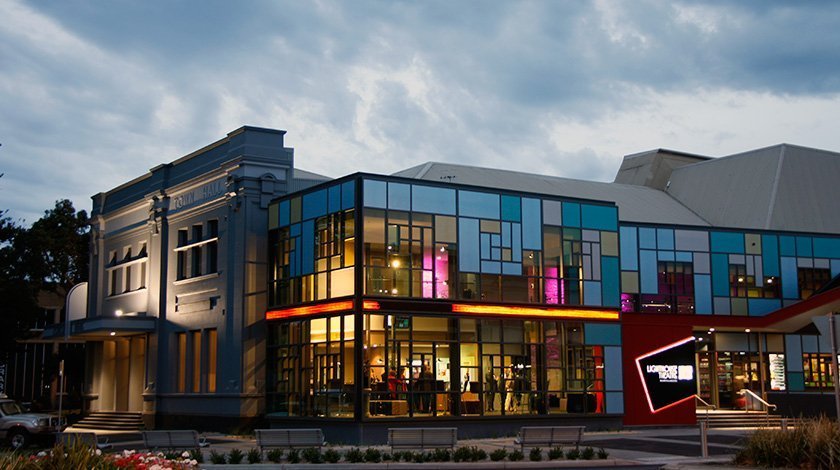
Consultants were also used to provide a valuation of council owned land and buildings like the Lighthouse Theatre. Image: Basso Project Management.

It may well be, as Mr Higgins explained, that “consultants are used because they have specific expertise or knowledge that council does not have” and hiring short-term consultants is cheaper than permanent staff.

(It is worth remembering that there are 731 people working at Warrnambool City Council – full time, part time and casual – and last financial year the cost to ratepayers was $31.5 million.)

Again, however, we have no way of being able to make that assessment or, to be frank, keeping an eye on how much is spent each year in total.

It is a figure that is simply not reported in any of the council’s financial statements or annual reports.

Instead, the $927,000 for this year is treated as an unavoidable expense and one that, I note, didn’t make it into the ratepayer survey that closed earlier this month.

Is there any fat to be trimmed on that figure? Do we, for example, really need a consultant to tell us what to do with our caravan parks? And how many consultants’ reports end up going no further?


Before there is any attempt to push rates above the rate cap, these questions deserve to be answered.

More tomorrow.


A follow up: I tried to get a further breakdown on the $775,610 cost of the two public toilet blocks I wrote about yesterday, but the council says such a breakdown is commercial-in-confidence.

A builder contact, however, said while he wasn’t sure about that particular tender, which he agreed seemed high, there were often less obvious costs with construction work including:

architect fees 20-40k, engineer 15-30k, feasibility study 10k, land surveyor 10k, legal fees 10-20k, traffic engineer 5-10k, fire engineer 5-10k, town planning 5-10k, building permits 10k, Wannon Water fees $50-$80k, council project management 30-60k, Aboriginal heritage study 30-40k, demolition 10-20k, associated paths 50-80k, landscaping 20-20k, safety management plan 5-15k, site safety 15-25k, traffic control 10-20k.


As to how many of these actually applied to the toilets in the botanic gardens and Swan Reserve, we will never know but I am still at a loss as to how they could cost more than a whole new home.

If you would like to see The Terrier keep digging up, sniffing out and chewing on local issues, please make a small contribution below.

Donate