Red zone: Lyndoch posts $1.9m deficit, assets slide by $20m
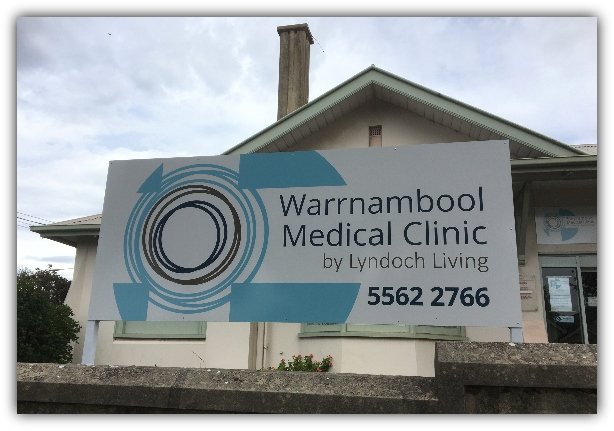
Despite a 2019 spending spree which included buying the Warrnambool Medical Clinic, Lyndoch’s overall asset base is going south.

Carol Altmann – The Terrier

Lyndoch Living last financial year recorded a $1.88 million loss – its fifth deficit in five years – and its bottom line has gone backwards by $20 million since 2015.

This, unlike what was reported in the local paper after last Tuesday’s invitation-only Annual General Meeting, is the reality behind the spin.

Here is the nub: Lyndoch is not growing, but going backwards, and we need to know why, especially as it pushes on with a $100 million masterplan funded mostly through loans.

We also need to ask why, in the face of such losses, Lyndoch continues to hire more executives on executive salaries, but more about that later.

First to the numbers, which are so easy to spin.

What Lyndoch pushed in the newspaper, and in a piece of puffery it produced for the AGM called a “Community Report”, was a measure called an “underlying profit” of $2.18m.

As has been pointed out by Deloitte, underlying profit is one measure that can be “useful” to judge financial performance, but can also be “misleading if used to mask bad news”.

And Lyndoch had some bad news.

The thing is that Lyndoch’s $2.18m “underlying profit” doesn’t take into account expenses such as interest on loans, depreciation, under-performing investments, and taxation.

These are real costs and when these costs are factored in, Lyndoch’s “profit” vanishes.

In fact these costs chewed up more than $4 million and Lyndoch ended the financial year not in surplus, but $1.88 million in the red.

This is the figure we should be looking at.

This is the  “total comprehensive income” – and it is not good news.

Even more troubling, however, is the slow and steady decline in Lyndoch’s bottom line (its net assets) over the past five years.

This has fallen by a staggering $20 million from $69m in 2015 down to $48m in 2020.

Despite Lyndoch last year buying the Warrnambool Medical Clinic, the Health Spot clinic and the May Noonan hostel in Terang for a cost of around $3.3m, its asset base has not improved, but gone backward.

As one learned accountant said to me last week, “this is a company that is diminishing, not growing”.

Again, this is not good news.
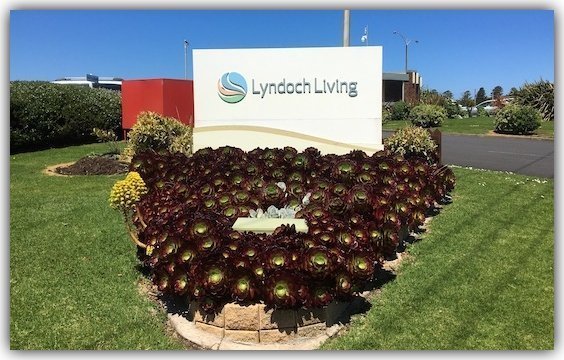
Like last year, we will have to wait until late January to see the line-by-line figures reported by Lyndoch to the Australian Charities and Not-for-Profits Commission, because these days Lyndoch provides just a simple snapshot at its AGM.

Only by seeing the line-by-line figures will we see the full picture.

Nobody asked a single question at the AGM (test: try and find the video buried on its website here), which is not surprising, given Lyndoch does not allow any outsiders to become members let alone board members.

To me, the fact Lyndoch now has a new, fast-tracked president in hairdressing salon owner Sue Cassidy, who has no experience or qualifications in health, disability or aged care, is troubling.

But the lack of any open and robust accountability around Lyndoch in real-time is frightening.

I do, however, know this: just three days after posting a $1.88m deficit, Lyndoch advertised for yet another high-paid executive to join its ever-expanding executive team.

This newly created position for a “Director of Enterprise, Research and Education” is being advertised internally only and applications close in less than two weeks, which suggests someone is already being lined up for the role.

(My tip is the Acting Director of People and Resilience, Julie Bertram, a retired director of South-West TAFE, who has been filling a maternity leave position.)

It’s a powerful role and includes acting as CEO when the CEO is on leave, which previously fell to the Director of Nursing.

Five years ago, when Lyndoch hired its new CEO Doreen Power, Lyndoch had 37 people in administration. By 2019 it had 59.

All indications are that it is now above 60.

I wonder how the nurses and personal care workers and “hands-on” staff caring for the residents across Lyndoch feel about that?

As always, I wait for the board or our local MPs to ask the hard questions on our behalf and, in the meantime, we all just keep chipping away.

If you would like to support the work of The Terrier, please consider a small monthly tip into the tip jar.


Terrier Tip Jar


Lyndoch Living: does bullying and intimidation just vanish?

My favourite slogan from a new-media inspiration, ProPublica, which refuses to just walk away from wrong doing. Image: ProPublica.

Carol Altmann – The Terrier

Does bullying and intimidation just disappear?

It’s seven months since a leaked staff survey at Lyndoch Living revealed poor staff morale and serious allegations of intimidation and bullying that went right to the very top – nothing has been heard of it since.

Was anything done within Lyndoch to address these allegations, and to lift poor staff morale?

This is another question to add to the list for tomorrow’s (27/10) Annual General Meeting, which we cannot attend as it’s by invitation-only Zoom (Lyndoch says a recording will be uploaded later to its website).

It’s a question that should concern us all.

Long-term readers will know that The Terrier has written a series of stories questioning why more than 80 staff had left the aged care home in the past two years, amid allegations of staff being targeted, bullied and devalued.

The special survey was held in response to these stories and the results leaked in March confirmed the toxic environment.

A majority of respondents raised issues of being overworked and under-valued, and claimed management favoured some staff over others.

Two-third of respondents said Lyndoch did not uphold its values, starting from the CEO down.

The survey then went on to report this bombshell:

“A small sample of around 10-15 respondents stated that the CEO’s culture of intimidation, manipulation and bullying greatly impacted their safety, health and wellbeing.

They said they witnessed her bullying others and making decisions in regard to her own self-interests and not the organisation as a whole.”

Sadly none of the allegations in the survey came as a surprise to me, as by March I had spoken to dozens of people who all told the same heartbreaking and terrible stories of being managed out, pushed out, demeaned, isolated, or cut loose.

Lyndoch’s culture, like that of the Warrnambool City Council, had gone bad.

South-West MP Roma Britnell who sought a meeting with Lyndoch Living over the staff survey results. Image: Liberal Party Victoria.

South-west MP Roma Britnell, a former nurse, had been similarly contacted by people seeking her intervention and in March she demanded a meeting with the CEO and Lyndoch board.

Then Covid-19 hit.

And the meeting between Ms Britnell and Lyndoch never happened.

So, I have to ask again, does bullying, intimidation and low staff morale just disappear?

Of course it doesn’t.

As of today, I have never had a response from Lyndoch to requests for a comment on this staff survey, the allegations, or what actions it has taken to address the allegations, but CEO Doreen Power told the local newspaper at the time that she would “take on board” the findings.

Ms Britnell, in a statement, said she continues “to have discussions with Lyndoch Living on a range of matters”, which – I guess – is hopeful.

In the meantime, Lyndoch is about to launch another anonymous staff survey – this one is held every two years – to again take the pulse on staff wellbeing and whether everyone is heading “in the same direction”….rather than, perhaps, out the door.

“I encourage you to be completely honest,” Ms Power has written in an email to staff.

Well, yes, but what happens after the staff are honest, as they were the last time they were surveyed?

That’s what I am hungry to know, as are all those who have left Lyndoch these past five years in less than happy circumstances.

Allegations of bullying and intimidation at Lyndoch Living were revealed in a special staff survey leaked in March.

This next survey is being run by Alignment Partners, owned by a fellow named Michael Webb, who has worked in the past with Lyndoch on management-type issues.

So many surveys.

I made a promise to those who entrusted me with their stories that I would not look away until the issues and allegations were addressed and we, as the community who owns Lyndoch, could take comfort that they were being addressed.

It’s the same promise I made to Warrnambool City Council staff who filled out survey after survey for a decade and saw nothing change…until everything blew open.

We may not be able to Zoom in on the Lyndoch AGM tomorrow, but we are watching.

Would you like to support the work of The Terrier? Please consider a small monthly contribution to the tip jar.

Terrier Tip Jar


Plenty more: digging into the back story of Lyndoch’s CEO

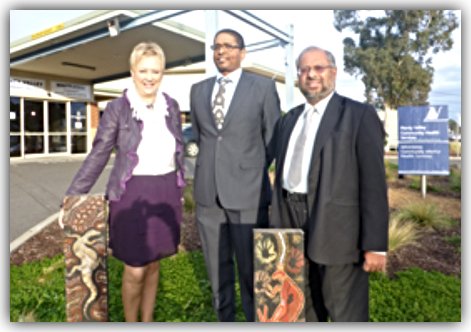
Lyndoch CEO Doreen Power in her former role as CEO of Plenty Valley Community Health, a position she held for just 18 months before leaving. Image: PVCH.

Carol Altmann – The Terrier

Tonight I am digging into the second chapter of where Lyndoch Living CEO Doreen Power worked before being chosen in late 2014 to lead our much-loved aged care home.

To me, Ms Power’s back story is important in the context of what is happening at Lyndoch now:

an extraordinary number of staff that have left since 2015, including a string of senior managers and managers,

allegations of a toxic work environment and;

evidence of staff shortages and equipment shortages for our aged and frail.


As I wrote on Monday, Ms Power was in charge of Seymour hospital for five years from 2007 to 2012, before resigning in the face of a virtual uprising within the town over allegations of a toxic workplace, high staff turnover and extremely low staff morale.

Seymour is almost a mirror image of the concerns now leaking out of Lyndoch.

The back story, however, doesn’t end there.

After Seymour, Ms Power became CEO of Plenty Valley Community Health, in Melbourne’s northern suburbs, but resigned and was replaced by an interim CEO after only 18 months.

Why?

After Plenty Valley, Ms Power was appointed Director of Nursing and Manager of the Clinical Team at the Tweddle Child and Family Health Service – her last position before coming to Warrnambool – but, again, she resigned after a few months.

Why?

I have dug deep into these questions and spoken to many people about this period in Ms Power’s career, and a troubling pattern has emerged.

That pattern centres around a particular management style which results in the same allegations: a toxic workplace, low staff morale, high staff turnover and, in the aftermath, the need for a major overhaul and refocus on the organisation’s people and core purpose.

For various reasons I am, unfortunately, unable to quote any sources directly for this piece, but I can tell you that up to 60 staff left Plenty Valley Community Health during 2012-2013.

I can also tell you that the issues left behind for the health centre to deal with were complex and draining.

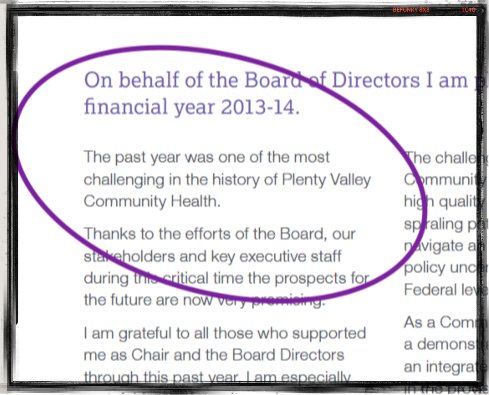
Former Plenty Valley health board director Marcia O’Neill sums it up in her opening line from the 2013-14 annual report, written six months after Ms Power’s resignation:

“The past year was one of the most challenging in the history of Plenty Valley Community Health.

“Thanks to the efforts of the Board, our stakeholders and key executive staff during this critical time, the prospects for the future are now very promising,” she writes.


Ms O’Neill goes on to say that the appointment of a new CEO (Phillip Bain) saw a sound foundation of executive management and loyal staff and a move back to “business as usual”.

Phillip Bain also gave a blunt assessment in the 2014-15 annual report of what Plenty Valley health looked like when he took charge:

“The Plenty Valley that I joined in early August was a much less confident organisation than the one we see today.

“We had a backlog of productivity, infrastructure and policy issues to address.

“We also had very low levels of staff morale arising from changes in senior management, and had missed out on many opportunities for growth or building partnerships in the years prior.”


One source told me that when Mr Bain took over, it was like Plenty was “being liberated”.

Mr Bain goes on to list 25 main areas of change under his watch, including a new strategic plan, a review of financial reporting, and a “dramatic improvement” in staff morale, absenteeism and staff retention.

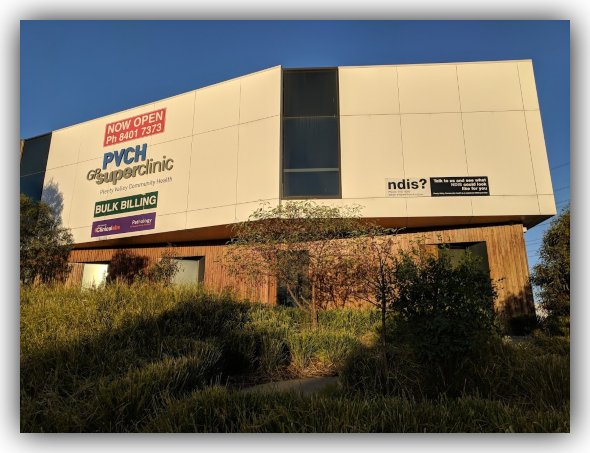
The Plenty Valley Community Health ‘super clinic’ that opened during Ms Power’s time with the centre. A similar medical centre is planned for Lyndoch Living. Image: PVCH

Did the Lyndoch board, as it was in 2014 when Ms Power was appointed, know about any of this?

If it did, what impact, if any, did it have on the board’s choice of Ms Power as the best person to guide Lyndoch into the future?

Apparently Ms Power was chosen from 20 applicants, but I am not sure who was on the selection panel. (I emailed chair Kerry Nelson about all this today, but she is on leave until 19 December.)

Lyndoch Living is a very different place under Ms Power’s reign and there is no doubt some changes to Lyndoch were necessary, but what has also happened is a growing culture of silence, with staff too scared to speak up and the public not encouraged to ask questions.

On the ground, the Lyndoch staff have been threatened with disciplinary action if they make any comments on social media that are considered unacceptable by management, and especially if they comment on The Terrier.

I have heard a list of names has been taken, which explains the lack of comments from Lyndoch staff on anything I write (don’t worry, I see you).

The lack of information at the last Lyndoch AGM also showed the disregard for wider community input into Lyndoch’s direction.

I am starting to wonder if Lyndoch, which was started by the community, supported by the community and is still accountable to the community, is turning into Leningrad.

How this has happened, and what we can do about it, is where this story goes next.

More soon.

 Thankyou to everyone who supports The Terrier. If you would like to be a part of it, please consider a contribution to the tip jar.

Terrier Tip Jar