Lyndoch marks National Anti-Bullying Day with…bullying?
Carol Altmann – The Terrier

Today is National Anti-Bullying Day and Lyndoch Living has marked the occasion with a petition to shore up support for its CEO…who has been accused of bullying, intimidation and manipulation.

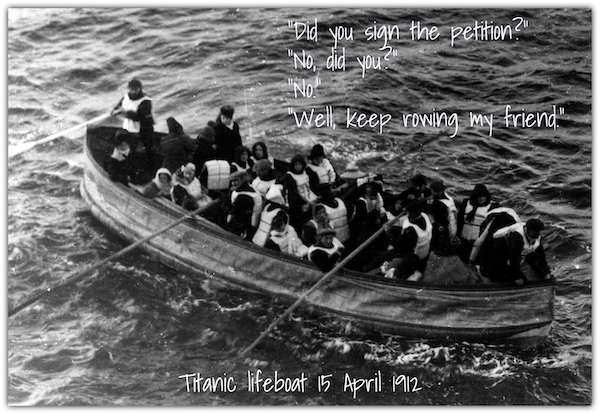
Having read last night’s Terrier piece which revealed the explosive bullying claims against the CEO, Lyndoch staff arrived at work this morning to find a petition being circulated from the CEO’s inner circle.

The petition didn’t encourage staff to demand action on the claims, but, instead, pledge allegiance to the CEO and ask the Lyndoch board to publicly acknowledge the staff’s fear love and isolation support.

Well of course! Pass the pen!
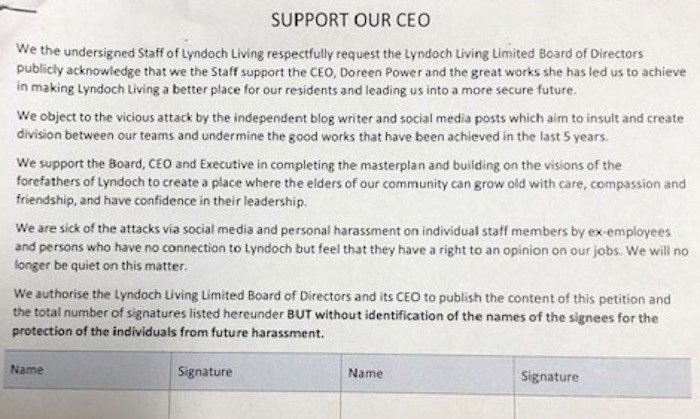
The poor staff – many of whom have already spilled their guts in the anonymous staff survey – didn’t know what to do.

Should they sign it – and declare a false allegiance – or shouldn’t they, and face being the next pinball to be metaphorically bounced off the walls until their head hurts?

If this is not bullying, then I have lost my judgment. I doubt this is even legal, but it is most definitely desperate.

Very desperate. 

Speaking of legal, if anyone within Lyndoch was gathering material for a compensation claim against bullying and harassment, I suspect they would have photocopied this petition and added it straight to their file.

Because the Lyndoch staff have already spoken up against bullying as best they can.

More than 140 staff filled out an anonymous staff survey that was ordered via Lyndoch’s very expensive lawyers, K&L Gates, and compiled by a Melbourne consultancy called ‘Working Together’. (Ka-ching! $$ Ka-ching!)
The damning survey results were sent to the Lyndoch CEO in January and given to the Lyndoch board in February: they have read them, and done nothing.

As I wrote last night, 15 people in that survey said that:

“the CEO’s culture of intimidation, manipulation and bullying greatly impacted their safety, health and wellbeing. They said they witnessed her bullying others and making decisions in regard to her own self-interests and not the organisation as a whole.”


That is mind-blowing, but there is more.

Here is another snippet:

“Two thirds of (the 147) respondents said that in their opinion, Lyndoch’s values are not upheld within the organisation.

…there were issues in regard to the CEO specifically not upholding Lyndoch’s values, with a couple of respondents stating they have been directed by the CEO to ignore behaviour that is inconsistent to the values and for employees to just ‘deal with it’.”


So the CEO allegedly doesn’t uphold the values of Lyndoch and says the staff should ‘deal with it’.

Okaaay….

And here is another:

“Just under a quarter of respondents said that Corporate staff were not welcoming, that some Corporate staff would not help unless it benefited them and there was an ‘us and them’ mentality that impacted on all of Lyndoch’s values…This was seen to be behaviours from the CEO that filtered down.”


So the corporate staff have to “kiss up and kick down”. (thankyou, JD, for that line)

And one more:

“Comments were made in regard to people who were beneficial to the organisation being ‘pushed out’ due to the mismanagement of bullying behaviour they had either witnessed or endured. A few employees stated that there was a culture where individuals who reported bullying were ostracised and created a target on their back with upper management”.


All cheery stuff. Pass me the petition!

You get the picture and maybe one day the inner sanctum of Lyndoch Living might release the whole document so you can get the whole picture, but I doubt it.

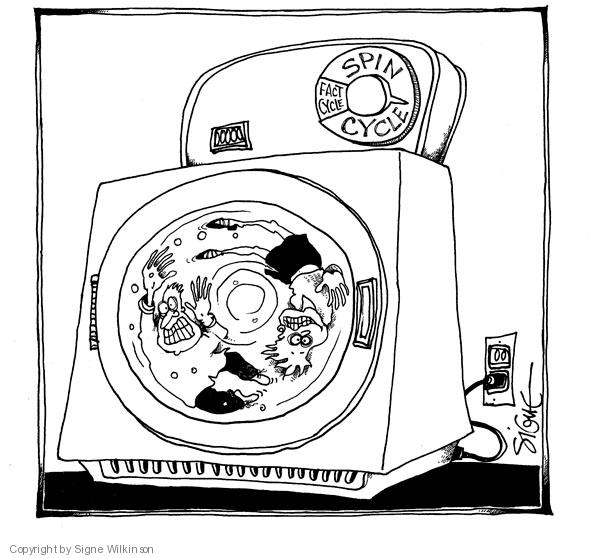
They have more important things to do, like draw up petitions and hire a consultant to soak-rinse-wash-bleach-and-spin all of the bad news into good news, leaving the Lyndoch power base sparkly clean and stain free.

(A favoured consultant from out of town was seen leaving the Lyndoch building again today. I wonder why they were there?)
When there is a steady flow of the same allegations, things inevitably start to stick and it all, eventually, comes unstuck.

Now that powerful people are taking note, including MPs Roma Britnell and Dan Tehan, many people feel that day is fast approaching and, for the sake of our wonderful Lyndoch, I hope they’re right.

Happy National Anti-Bullying Day.

#nomorebullying #standup #speakout #staystrong

Do you follow The Terrier? If so, join those who have thrown something in the tip jar to help with the digging. 
The Tip Jar


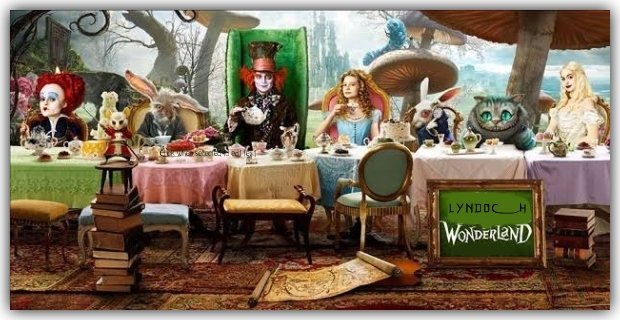
Deficit: down the rabbit hole into Lyndoch Wonderland

Carol “Alice” Altmann – The Terrier
Take my hand and follow me into the strange, alternative world of Lyndoch Living Wonderland, a sparkly world with a lovely colour palette, and where a deficit is “a good result”.

Lyndoch has just posted its fourth deficit in the past five years, but according to those who sit at the big table, there is no need for concern.

(Caterpillar: I don’t know what they’re smokin’ over there in the boardroom, but I want to try it!)

What’s more, Lyndoch CEO Doreen Power, who was appointed in 2015, has announced – without so much as a twitch of an eye – that we can expect our largest, fully-booked aged care home to run at a loss for another two to three years.

This means that by 2022, Lyndoch will have run at a loss for six or possibly seven years out of the past eight.

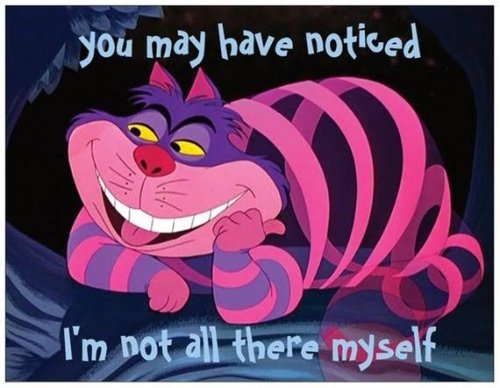
(Cheshire Cat: keep smiling everyone, keep smiling! Oh blast, here comes Alice with her practical facts…)

In 2014, the year former CEO Rhys Boyle retired, Lyndoch was comfortably in the black and recorded a $901,214 surplus, which came on top of surpluses in 2012 and 2013.

Here are the figures since:

2015: $208,707 deficit

2016: $130,037 deficit

2017: $846,563 surplus

2018: $1,573,98 deficit 

2019: $398,356 deficit


I think this tells us pretty clearly that Lyndoch is living beyond its means – each year it is spending more than it makes – but somehow an almost $400,000 loss like last year is a “good result”.

No it isn’t. It’s a bad result.

(Mad Hatter: Oh Alice, anyone knows a good result is better than a bad result which is better than a worserer result. Pour me some tea!)

If we push aside the spin and boil it down to the absolute basics, Lyndoch has one important job to do, which is to care for our elderly and infirm, for which it receives money from the Federal Government, the State Government, live-in residents, clients and its own investments.

From all these things, Lyndoch last year received a total income of $38.9 million.

It spent $39.3 million, in other words, it went over its budget…again.

On top of this, Lyndoch also confirmed a slightly awkward piece of news, which The Terrier flagged back in October, which was $11.3 million was wiped off its assets after certain, unnamed buildings were re-valued using a different method that, from what I can see, used market prices.

This is like owning a house you thought was worth $12 million, only to be told it is actually worth $1 million.

(Mad Hatter: Oh who cares? $1 million, $12 million, it’s only on paper! Tear it up and start over! More tea?)

Have a big sip of whatever you are drinking, because now we wade deeper into the forest of figures in search of the bottom line.

In 2015, Lyndoch had total assets of $96.5 million – this is whole shopping cart: the properties, the cash, the residential bond money, the investments, the cups and saucers, cutlery and cars.

At the same time, it had expenses, or liabilities, of $27.7 million, leaving it with a bottom line of $68.7 million.

By 2019, Lyndoch had total assets of $98.9 million – (White Rabbit: clap, clap, wonderful, magnificent! Well done!) – but….it also had liabilities of $47.7 million, leaving it with a bottom line of $51.1m.

This means Lyndoch’s overall bottom line has fallen from $68.7 million to $51.1 million in just five years.

(White Rabbit: Oh. But the cash, dear Alice, what about the cash?)

Lyndoch has plenty of cash: $48.7 million in cash and other investments, except they can’t touch most of it – around $30 million from my reckoning – because it is tied up in residents’ bonds.

(White Rabbit: So I can’t spend it on a shiny new pocket watch? Damn.)

As we know, other things have changed dramatically in the past five years too, including just about every member of the executive team being replaced, from the Director of Nursing, to the Chief Financial Officer, to the Human Resources head, with more than 80 staff having gone elsewhere.

I have since been told by a strong source that my figures are wrong and it’s closer to 120 staff, but I can’t verify this.

(Queen of Hearts: At last, at last, my walk on part…Off with their heads, I say! Off with their heads! Strike up the trumpets!)

No wonder the board wasn’t keen to trumpet all of this news at the annual general meeting last October, where written questions from the public were ignored, because they were not members of Lyndoch.

Anyone who has since tried to become a member has been rejected.

(Queen of Hearts: Close the gates! Don’t let the rabble in!)

And the crazy making thing is that despite these worrying figures, Lyndoch is not tightening its belt, but going on a spending spree: a $100 million masterplan that includes buying two medical clinics for a cost of $1.6 million, including $1.3 million for the Warrnambool Medical Clinic, so it can move them to a medical clinic that it will build.

(Mad Hatter: And don’t forget the horse race! We want to go to the races, so we bought the race! Giddyup Dormouse!)

I am worried, dear citizens, that we who own Lyndoch are being dragged deep into this wonderland and we won’t be able to find our way out, which is why we have to keep going.

(Caterpillar: Ah, chill baby and pass me the pipe.)

If you would like to support the Terrier, you can throw something in the tip jar below. 

The Tip Jar


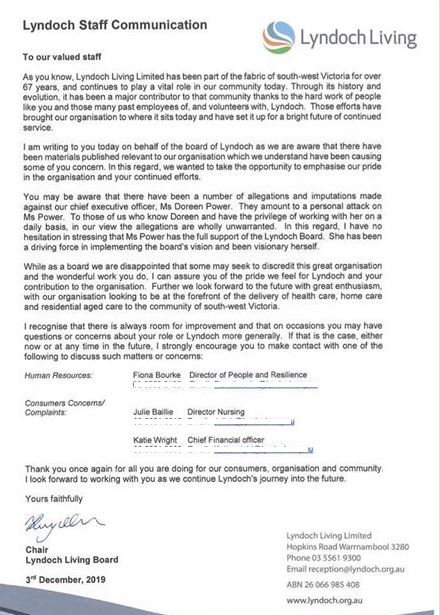
Lyndoch Living chair issues statement to staff

Lyndoch Living company secretary Lyanne Vinecombe, chair Kerry Nelson, CEO Doreen Power and Director of Nursing, Julie Baillie. Image: Lyndoch Living annual report 2018-19.

Carol Altmann – The Terrier

The chair of Lyndoch Living, Kerry Nelson, has issued a statement to staff to try and allay any concerns surrounding Lyndoch management.

You can read the statement in full below, or download it here:

Ms Nelson is yet to respond to any of my questions.


Plenty more: digging into the back story of Lyndoch’s CEO

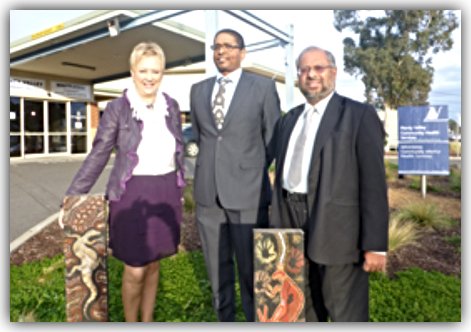
Lyndoch CEO Doreen Power in her former role as CEO of Plenty Valley Community Health, a position she held for just 18 months before leaving. Image: PVCH.

Carol Altmann – The Terrier

Tonight I am digging into the second chapter of where Lyndoch Living CEO Doreen Power worked before being chosen in late 2014 to lead our much-loved aged care home.

To me, Ms Power’s back story is important in the context of what is happening at Lyndoch now:

an extraordinary number of staff that have left since 2015, including a string of senior managers and managers,

allegations of a toxic work environment and;

evidence of staff shortages and equipment shortages for our aged and frail.


As I wrote on Monday, Ms Power was in charge of Seymour hospital for five years from 2007 to 2012, before resigning in the face of a virtual uprising within the town over allegations of a toxic workplace, high staff turnover and extremely low staff morale.

Seymour is almost a mirror image of the concerns now leaking out of Lyndoch.

The back story, however, doesn’t end there.

After Seymour, Ms Power became CEO of Plenty Valley Community Health, in Melbourne’s northern suburbs, but resigned and was replaced by an interim CEO after only 18 months.

Why?

After Plenty Valley, Ms Power was appointed Director of Nursing and Manager of the Clinical Team at the Tweddle Child and Family Health Service – her last position before coming to Warrnambool – but, again, she resigned after a few months.

Why?

I have dug deep into these questions and spoken to many people about this period in Ms Power’s career, and a troubling pattern has emerged.

That pattern centres around a particular management style which results in the same allegations: a toxic workplace, low staff morale, high staff turnover and, in the aftermath, the need for a major overhaul and refocus on the organisation’s people and core purpose.

For various reasons I am, unfortunately, unable to quote any sources directly for this piece, but I can tell you that up to 60 staff left Plenty Valley Community Health during 2012-2013.

I can also tell you that the issues left behind for the health centre to deal with were complex and draining.

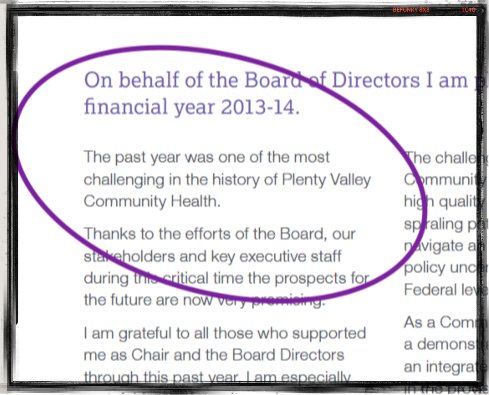
Former Plenty Valley health board director Marcia O’Neill sums it up in her opening line from the 2013-14 annual report, written six months after Ms Power’s resignation:

“The past year was one of the most challenging in the history of Plenty Valley Community Health.

“Thanks to the efforts of the Board, our stakeholders and key executive staff during this critical time, the prospects for the future are now very promising,” she writes.


Ms O’Neill goes on to say that the appointment of a new CEO (Phillip Bain) saw a sound foundation of executive management and loyal staff and a move back to “business as usual”.

Phillip Bain also gave a blunt assessment in the 2014-15 annual report of what Plenty Valley health looked like when he took charge:

“The Plenty Valley that I joined in early August was a much less confident organisation than the one we see today.

“We had a backlog of productivity, infrastructure and policy issues to address.

“We also had very low levels of staff morale arising from changes in senior management, and had missed out on many opportunities for growth or building partnerships in the years prior.”


One source told me that when Mr Bain took over, it was like Plenty was “being liberated”.

Mr Bain goes on to list 25 main areas of change under his watch, including a new strategic plan, a review of financial reporting, and a “dramatic improvement” in staff morale, absenteeism and staff retention.

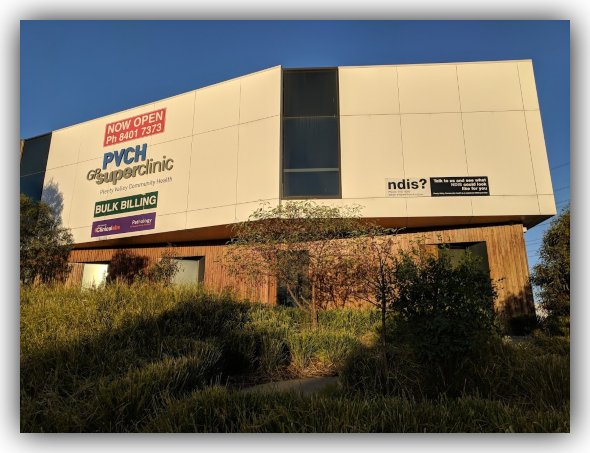
The Plenty Valley Community Health ‘super clinic’ that opened during Ms Power’s time with the centre. A similar medical centre is planned for Lyndoch Living. Image: PVCH

Did the Lyndoch board, as it was in 2014 when Ms Power was appointed, know about any of this?

If it did, what impact, if any, did it have on the board’s choice of Ms Power as the best person to guide Lyndoch into the future?

Apparently Ms Power was chosen from 20 applicants, but I am not sure who was on the selection panel. (I emailed chair Kerry Nelson about all this today, but she is on leave until 19 December.)

Lyndoch Living is a very different place under Ms Power’s reign and there is no doubt some changes to Lyndoch were necessary, but what has also happened is a growing culture of silence, with staff too scared to speak up and the public not encouraged to ask questions.

On the ground, the Lyndoch staff have been threatened with disciplinary action if they make any comments on social media that are considered unacceptable by management, and especially if they comment on The Terrier.

I have heard a list of names has been taken, which explains the lack of comments from Lyndoch staff on anything I write (don’t worry, I see you).

The lack of information at the last Lyndoch AGM also showed the disregard for wider community input into Lyndoch’s direction.

I am starting to wonder if Lyndoch, which was started by the community, supported by the community and is still accountable to the community, is turning into Leningrad.

How this has happened, and what we can do about it, is where this story goes next.

More soon.

 Thankyou to everyone who supports The Terrier. If you would like to be a part of it, please consider a contribution to the tip jar.

Terrier Tip Jar


Where did you go? Crunching the numbers on Lyndoch staff

Foxy takes a close look at the Lyndoch financial reports to flush out what is happening with staffing numbers.

Carol Altmann – The Terrier

I was lucky enough to have my Mum cared for by the fabulous staff of Lyndoch Living for 10 years before she died there in April (at the ripe old age of 94.9), but so many of the faces I used to see during those 10 years are no longer there.

Where did they all go?

One source told me between 70 and 80 people have left Lyndoch in the past couple of years.

Some retired, some retired early, some moved on to other jobs, some now work for themselves, and some, well, some allegedly left for reasons which indicate an “interesting” workplace culture and I have to tread carefully as I slowly unpick that picnic.

But I am unpicking it, piece by piece, having had dozens of people contact me over the past nine months.

Today, as part of my slow, deep dive into the changing world of Lyndoch, I have called on Foxy the Fact checker to crunch the staff numbers.

First, have 70 to 80 staff left Lyndoch in the past few years? I can’t say for sure, but I have sent that figure off to Lyndoch CEO Doreen Power and board president Kerry Nelson for confirmation and will see if a response is forthcoming.

What has definitely happened, however, is the Lyndoch staff mix is changing.

Let’s start at the top.

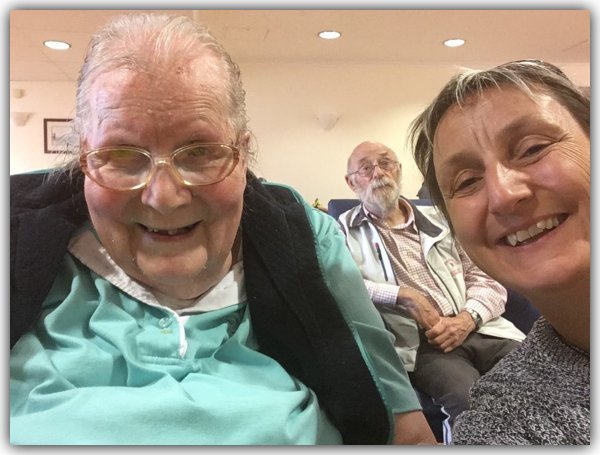
A very random photo of my Mum and I, with a lovely gent in the background, taken at Lake Lodge, Lyndoch in 2018.

The first thing Foxy found was a big jump in Lyndoch administration.

In 2016, there were 37 people in admin, in 2017 there were 41, and by last year it had grown to 59 – 19 more people than in 2016.

At the same time, the cost of “administration and other expenses” jumped by almost $1 million in 12 months, from $2.4m in 2017 to $3.31 million in 2018.

While admin numbers have gone up, the number of allied health workers employed by Lyndoch has gone south. (Q: What’s an allied health worker? A: Clever people who do things like occupational therapy and physiotherapy).

In 2016 there were 28 allied health professionals on staff at Lyndoch, but last year that dropped to just 12.

Allied health has largely been – oh, I dislike this word – “outsourced” and a Melbourne-based agency called Agestrong is the boss of the “outsourced” physio and o/t workers. (Agestrong, by the way, is owned by a private company called Designacare. Good grief.)

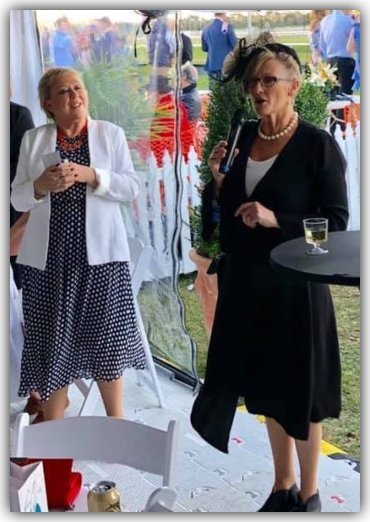
Lyndoch CEO Doreen Power and board chair Kerry Nelson at the 2019 Warrnambool May Racing Carnival. Photo: Lyndoch Living Facebook page.

What about the nursing staff, you ask? What is happening there? After all, these are the hard-working people at the very coalface of feeding, washing, dressing, nursing and cheering up the residents.

Well, using the numbers dug out from Lyndoch financial reports and Lyndoch annual reports, the picture from 2016 to 2018 looks like this:

the number of registered nurses (RN, senior nurses) has flatlined, from 32 in 2016 to 30 in 2018;

the number of enrolled nurses (EN, other qualified nurses) has climbed by 13% from 90 to 102;

the number of personal care workers (PCW) shot up 34% from 109 to 147;

a lot of these staff, especially PCWs, are part-time or casuals;

overall, the number of full-time-equivalent staff took a dive from 280 to 230 between 2017 and 2018.


What does this all say to a humble fact checker like Foxy?

It says that PCWs, the lowest paid workers, are picking up a lot of the workload for what can be a very tough gig.

At the same time, it suggests that the RNs and ENs must be working their backsides off with pretty much the same numbers that they had two years’ ago.

(As we speak, Fair Work Australia is nutting out a dispute between Lyndoch and the nurses’ union over proposed cuts to senior nursing levels.)

To be super clear, I am not suggesting Lyndoch Living is breaking any rules.

Indeed Ms Power told the local paper in July that Lyndoch Living “aligned with the Safe Patient Care Act and nursing ratios” and was working to increase full-time-equivalent numbers.

I also know that all nursing staff work very hard to make the residents’ lives comfortable and enjoyable and that this is their absolute first priority.

But what is filtering down to me from the 30-plus people I have now heard from is that Lyndoch is finding it tough to find and keep senior nursing staff, that there are often roster shortages that need to be filled at short notice, and that many people are starting to feel exhausted.

I take all this as a cry for help.

I am listening.

We, as a community, need to listen because we own and we love Lyndoch.

I have put a series of questions to Ms Power and Ms Nelson for a piece I am planning for Sunday.

See you for the next instalment then.

[The Lyndoch Living AGM is next Tuesday 29 October at 4pm at Lyndoch.]

If you would like to support the work of The Terrier, please consider throwing something in the tip jar.

Terrier Tip Jar