Question time: Lyndoch opens its AGM to the public

Carol Altmann – The Terrier

Well blow me down: Lyndoch Living has opened up its annual general meeting to the community it serves.

If you haven’t heard already, people who sent emails asking for a link to the AGM via Zoom on Tuesday 14 December have recently been sent a reply saying that they will receive a link and an agenda on Monday 13 December.

This is a breakthrough.

Lyndoch has finally realised, it seems, that it has obligations both as a charity and as a community owned organisation.

As a charity, it must – by law – maintain public confidence in its operations.

Blocking the public out of an AGM does not instil confidence: it crushes it.

In terms of accountability as a charity, it would be a big fat fail.

And as a community owned organisation, Lyndoch has a moral obligation to allow the community it serves to join its AGM as observers.

We have every right to watch the chair, Sue Cassidy, deliver the annual report and to hear how Lyndoch is travelling financially.

We also have a right to see who, if anyone, has been approached for the two board positions which have remained vacant since May and who from the current board will be elected again.

This is pretty basic stuff and for Lyndoch to have tried to slam the door shut and make the AGM a select, invitation only event was sending it down a perilous path that I am almost certain would make an interesting case for the Australian Charities and Not-for-Profit Commission.

But while the door has opened slightly, it is far from being flung off its hinges.

None of us can ask questions at the AGM, we can only watch.

We can’t ask questions unless we are members of Lyndoch and we know how that works: nobody is allowed to join unless hand-picked.

I have a number of questions I would like asked at the AGM and perhaps you do too.

But we can’t ask them, because we have all been denied membership to Lyndoch.

Bugger that. Let’s ask them anyway.

If you have a question, please email it to me (TerrierCarol@protonmail.com) or DM via Facebook and I will make sure they are sent to the chair by next Friday, 9 December.

Here are a couple of questions on my list:

Is the $22 million medical clinic fully tenanted?

What is the contingency plan if unable to fill it?

What is the debt strategy of Lyndoch?

How many staff have left the organisation in the past 18 months and how much has this cost?

What is the strategy to retain experienced staff?

Why are there no copies of previous annual reports on the Lyndoch Living website?

Has the board checked the figures presented to the AGM? How was this done?

What feedback, if any, has the board had regarding staff satisfaction at Lyndoch?

Has the board reviewed Lyndoch’s business partnerships and sponsorships and how are these performing?

What is the financial position of the Waterfront Living apartment complex? Is it fully sold?

…over to you.

(If you would like to join the Zoom, email ceo@lyndoch.org.au by 9 December.)
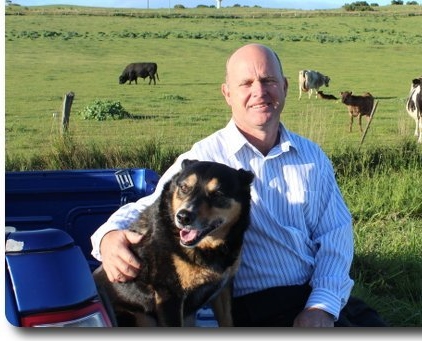


VCAT agrees to hear challenge to Lyndoch membership rejection

Warrnambool veterinarian Dr Michael McCluskey is challenging Lyndoch Living’s refusal to accept his membership.

Carol Altmann – The Terrier

Warrnambool vet Dr Michael McCluskey has secured a significant first step in challenging Lyndoch Living’s refusal to allow him to become a member, with VCAT accepting his case.

As reported here in early October, Dr McCluskey lodged a complaint with VCAT arguing that the decision by the Lyndoch board to reject his application was discriminatory and illegal under the Victorian Equal Opportunity Act.

VCAT (Victorian Civil and Administrative Tribunal) has since formally responded to Dr McCluskey to confirm his case has been assessed and accepted.

According to Dr McCluskey, the tribunal has also notified Lyndoch Living about its decision to hear the case.

Dr McCluskey says he has indicated to VCAT and Lyndoch Living that he is happy to attend a mediation session as the first listing of the matter.

At this stage, Dr McCluskey will attend the first listing without legal representation, which underscores the David v Goliath fight ahead, as Lyndoch Living has access to top Melbourne lawyers, K&L Gates, for its legal battles.

Once again, I am astonished that I have to write the words “legal battle” between Lyndoch and the community.

But as we know, Dr McCluskey is among more than 120 people who have had their membership applications knocked back by the Lyndoch board in the past 18 months.

Under its Constitution both past and present, Lyndoch has had the power to do this.

Never, however, has it used that power with such blunt force.

At no time has the gate been closed so firmly by Lyndoch against the community that created it. Even our local MPs can’t get straight answers as to why.

The mounting concerns around Lyndoch Living that have been exposed by this page have always been two-fold:

the loss of so many experienced staff and the decline in care to the point where Lyndoch is now, for the first time, failing national standards;

the shutting out of the community from becoming members or board members.

I see these two issues as being closely related.

The first issue – staff resignations and standards of care – is now in the hands of the federal authorities and they have the power to act.

We are all waiting to see what they do and if Lyndoch Living will face sanctions before its reaccreditation falls due next February.

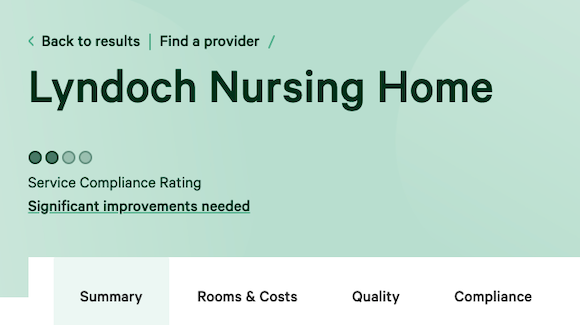
At the moment, the Lyndoch nursing home is ranked two out of four stars and in need of “significant improvement”.

I often wonder how many members of the Lyndoch board or executive would feel comfortable having their loved ones in the care of a nursing home that has dropped to two out of four stars, unlike any other aged care home in Warrnambool?

The second issue – the shutting out of the community – well, this is our issue to fix.

Lyndoch can only be stolen from under our noses if we don’t push back.

Dr McCluskey is among all of those pushing back and while he may be the “David” in the battle ahead, he has a big slice of the community right behind him.


Near fatality exposes call system black spots inside Lyndoch

The potentially catastrophic failings of the internal nurse communication system at Lyndoch Living was exposed when a resident required CPR. Image: Stockfile

Carol Altmann – The Terrier

This time a year ago, a personal care worker at Lyndoch Living faced a nightmare scenario – a resident suffered a cardiac arrest and the nurse call system failed.

The care worker desperately tried to contact the on-duty Registered Nurse, who was in another part of Lyndoch – the new Swinton Wing – but the calls failed to go through.

The nurse-to-nurse comms system hit a black spot; a wireless dead zone that has plagued parts of Lyndoch for two years.

It was only when the RN moved out of the black spot that the frantic emergency calls came piling in from the care worker.

Fortunately, in the meantime, the care worker was helped by other staff to administer CPR and the resident survived.

Twelve months on, and the nurse-to-nurse call system is still failing. It is still not 100 per cent reliable across Swinton Wing and neither is the resident call bell system, or mobile phones.

All three are different systems, and all three suffer from the wi-fi black spots that can affect calls coming into Swinton Wing, going out of Swinton Wing, or between people inside Swinton Wing.

While the near fatality is the most serious incident that I am aware of from the past 12 months, there have been other red flags in more recent times.

In one case, a resident was left on a toilet for more than 40 minutes after the call bell failed to alert a nurse.

It’s hard to believe a nursing home is allowed to operate without a 100 per cent reliable call system for nurses and residents, but Lyndoch does.

It’s even harder to believe that the area with the black spots, Swinton Wing, re-opened last year after a $13 million makeover that, my sources tell me, failed to include an IT expert in the planning.

As of today, staff are still lodging ‘black spot’ complaints.

Part of the problem, apparently, is that a key piece of wireless equipment was destroyed by a lightning strike in 2019 and has not yet been replaced because it would cost around $500,000.

There are also compatibility issues between old technology and new technology across the different wings of Lyndoch.

Added to this is what has been a tumultuous time in Lyndoch’s IT department, including its Director of Technology, Strategy & Transformation, Dr Ed Rhode, resigning in April after less than two years, and the loss of two other staff more recently.

Before these resignations, there was some progress early this year when it was announced a new nurse-to-nurse call system would be rolled out from June to December although, according to one report, there were “no guarantees it will work”.

There were “no guarantees” because the new system could suffer the same issues as the old system, unless the underlying problems were resolved.

The roll-out hasn’t happened.

First the excuse was a supply problem.

Then the delay was blamed on Covid-19 preventing experts coming on site to install the equipment, even though it;s classed as an essential service.

But sources believe – and I am trying to confirm this from Lyndoch – that things have ground to a halt because Lyndoch is not prepared or is unable to spend the money.

A proper fix must include “back end” upgrades, equipment upgrades and ongoing maintenance, and all of that costs money.

And right now, Lyndoch is plunging its money and bank loans into the $22 million medical clinic being built just 100m from Swinton Wing.

A medical clinic that will have no discernible impact on improving the safety of the residents.

It’s not surprising that Lyndoch care staff are frustrated and angry.

As one put it, they are “sick of fighting for the basics, while they continue to pour money down the drain on this medical centre”,

Others are frightened, knowing they are unwilling players in a game of Russian roulette where the consequences for a resident could be fatal.

Again, this is not scaremongering, this is real and I, for one, find it both disturbing and frightening.

I asked Lyndoch and its chair Sue Cassidy for comment on these issues today. If any is forthcoming, I will publish it in full.


Lyndoch staffing slides backwards in wake of audit failings

Two months after being audited by the national watchdog, staff shortages at Lyndoch are reaching crisis point.

Carol Altmann – The Terrier

I know we are all still digesting the distressing fact that Lyndoch Living has slipped further in its duty of care to look after the elderly, but this is important:

Before breaking that story yesterday, I had planned to post these roster shortages for the Audrey Prider Centre and Lake Lodge – the two, high-care areas that make up what is called the “nursing home”.

These are the very same areas that were the focus of yesterday’s bombshell that Lyndoch had failed four more national standards of care.

These are the areas that were found by the Aged Care Quality and Safety Commission to be under stress from severe staff shortages.

That was based on the commission looking closely at Lyndoch in September.

September.

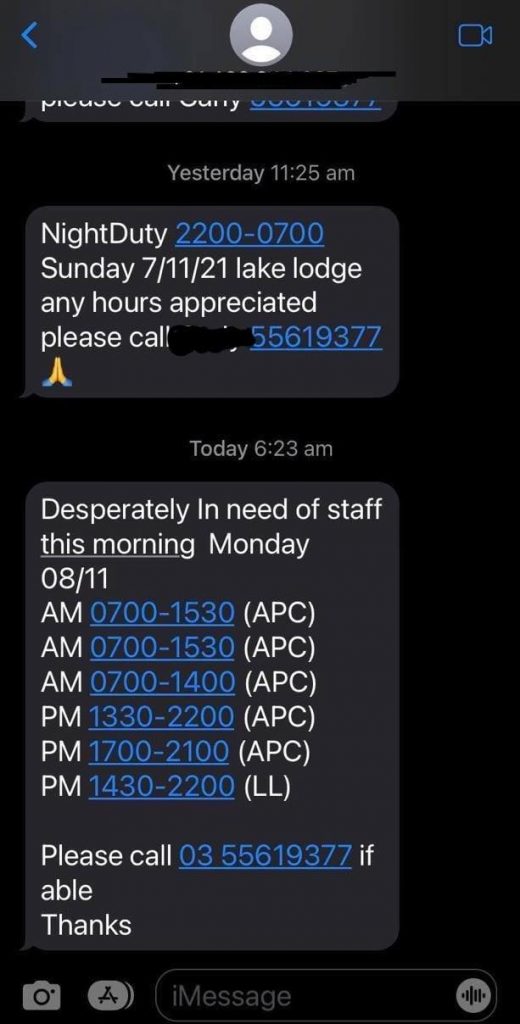
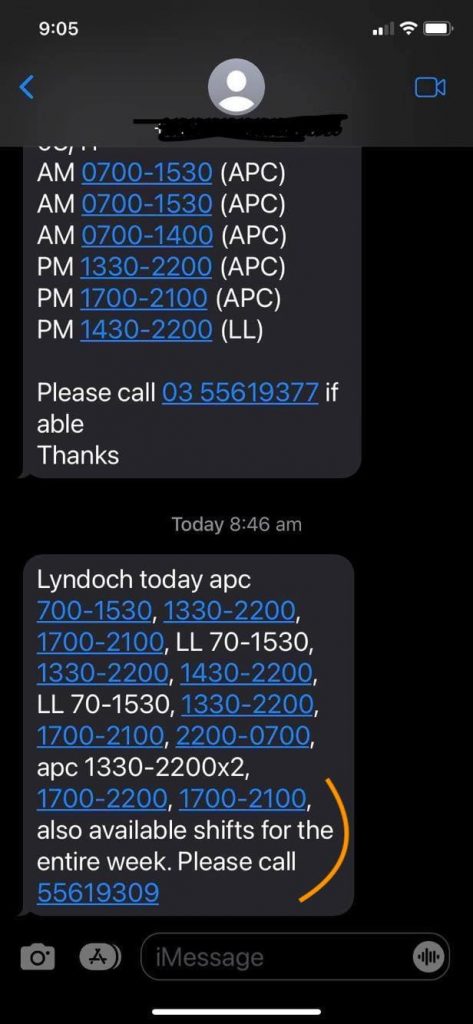
Yet here we are, and nothing has changed. These are the shift shortages for the past couple of days: it is dire.

So if things were grim in September, I can only imagine what the commission would report if it turned up now.

And I hope they do turn up, unannounced, very soon because this cannot wait until the reaccreditation at the end of February. The commission has the power to do this. It can apply sanctions at any time.

Roster call-outs reveal chronic shortages in the high-care areas of Lyndoch Living.

Our local Federal member Dan Tehan gave a statement to the local paper today which says the commission is still deciding what to do in response to the latest failings.

I hope they intervene, because these rosters show that we cannot hope that things will miraculously improve. They won’t.

A stream of experienced staff have gone on sick leave, stress leave or resigned since the commission’s last audit in September. They want to work at Lyndoch, but they can no longer tolerate what is going on.

This has nothing to do with national staff shortages, Covid, or the Royal Commission. It has everything to do with the Lyndoch culture and priorities.

We know it, the staff know it, and surely the commission is starting to catch on.

Yet while the walls crumble around them, Lyndoch once again shows no contrition or remorse for these failings. It once again tells the paper that it has “an action plan”. It said the same thing earlier this year.

Clearly, that action plan is not working and Lyndoch is going backwards, from failing one standard, to now failing four.

My hope is the commission does not wait for it to deteriorate even further before taking action, because at the centre of all this are real people, elderly, vulnerable people, beautiful people from our local community, who are not able to smile and laugh for the Lyndoch Facebook page, but who are instead in need of our help. We are there for them, and those who care for them.

Thankyou to every single one of you who is prepared to stay the course and fight this fight.


Crisis point: Lyndoch Living again fails aged care standards

The Lyndoch Living nursing home in Warrnambool has failed a second time this year to meet aged care standards.

Exclusive

Carol Altmann – The Terrier

The Lyndoch Living nursing home has again failed a string of care standards set down by the national aged care watchdog.

In another damning report released online today by the Aged Care Quality and Safety Commission (ACQSC), the nursing home has again failed to meet key measures in personal care and clinical care, staffing, and also governance. [Download the report here.]

The nursing home area is made up the two high-care units: the Audrey Prider Centre, for dementia residents, and Lake Lodge.

An ACQSC audit from September 8 to 15 revealed poor wound management, poor pain management, a lack of monitoring and documentation after resident falls, and inadequate staffing, with unfilled rosters, and remaining staff being unable to cope with the workload.

The extent and impact of understaffing at Lyndoch is graphically highlighted by the report.

It found the nursing home is unable to demonstrate that its current mix and qualifications of its workforce could deliver and manage safe and quality care and services.

“Rosters evidence that not all care shifts are filled when staff are deployed elsewhere within the service or when staff call in sick,” the report says.

“Personal care staff interviewed advised they do not always complete all tasks allocated to them.”

The report says Lyndoch management described how they are in the process of recruiting more nursing and care staff to cover current vacancies, but this has done little to address the concerns of residents and their families.

“Whilst the service was able to evidence improvements, four out of five consumer representatives expressed ongoing dissatisfaction with staffing levels within the service,” the report says.

Short staffing was also raised in regard to poor wound and pain management.

“(Lyndoch) did not demonstrate best practice clinical care in relation to wound and pain management,” the report says.

In particular, the commission found:

– Wound management plans did not always reflect wound reviews including dressing changes, photography and measurements.

– Inconsistent wound photographs and wound measurements are taken and recorded.

– The healing progress of each wound is not clearly demonstrated.

Nursing staff told the commission that staff shortages limited the ability of staff to attend to wounds as required, and to reposition residents to reduce pressure.

“Clinical staff described how wound care is impacted by staff shortages including delayed dressing and repositioning of consumers,” the report says.

The report also outlines failings in monitoring residents who had suffered falls.

Unwitnessed falls were not always documented in reports and a sample found that three out of four residents who had fallen were not effectively monitored afterward, including neurological observations and pain monitoring.

Not surprisingly, the nursing home also failed on risk management.

“The service did not demonstrate systems are in place to prevent harm from high impact or high prevalence risks such as falls,” the report says.

Despite hiring an adviser to help with its governance activities, the service “has not demonstrated current systems and processes are adequate in identifying and managing high impact or high prevalence risks”.

It is the second time this year that the Lyndoch nursing home has failed a ACQSC audit.

In July this year May Noonan Hostel in Terang, bought by Lyndoch in 2018, also failed seven out of the eight aged care standards.

The ACQSC is the peak federal body for assessing and accrediting aged care homes.

I will seek comment from Lyndoch this afternoon and update this story if or when a comment is received. In the meantime, I stand with the care staff and the poor residents.