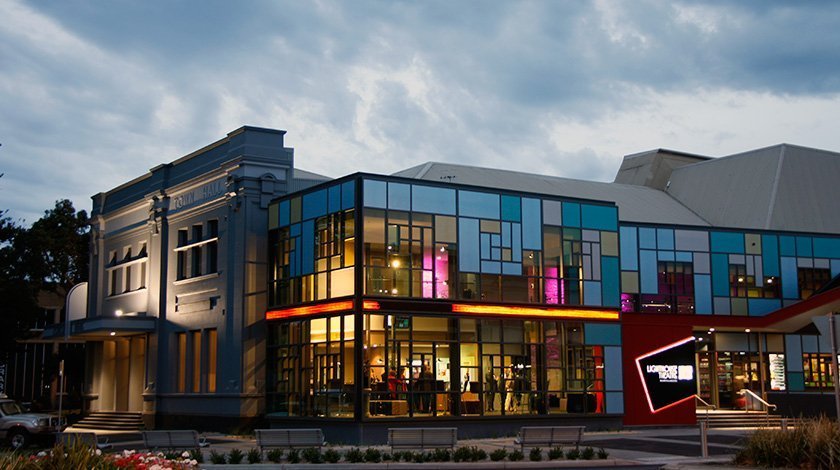
Lyndoch posts record loss as it ploughs on with masterplan
Lyndoch Living aged care is sailing into un-charted waters with big borrowing, big spending and a sharp decline in its overall equity.
Carol Altmann – The Terrier
Lyndoch Living’s full financial figures dropped late today and here is a quick snapshot:
Lyndoch last year posted a record loss of $4.029 million – almost $2 million up on the loss of the previous year.
In 2020, it posted a loss of $2.4 million.
In 2019, it posted a loss of $1.88 million.
In 2018, it posted a loss of $1.77 million.
In 2017, it posted a $846,000 surplus.
Er, is this supposed to be how a not-for-profit operates? Not breaking even, but running at continual losses?
More importantly, Lyndoch’s net worth has dropped to $40 million in 2021, down from $48 million in 2020 and $69 million in 2015.
This net worth/equity figure comes from adding up all of Lyndoch’s assets (around $100m), and subtracting all of its liabilities.
Lyndoch’s assets have hovered around the $100 million mark for several years now.
What has changed are the liabilities – they keep going up, up and up.
In 2018, Lyndoch’s liabilities were $37 million
In 2020, Lyndoch’s liabilities were $47 million.
In 2021, they were up to $60 million.
All of this cuts deep into Lyndoch’s overall financial position.
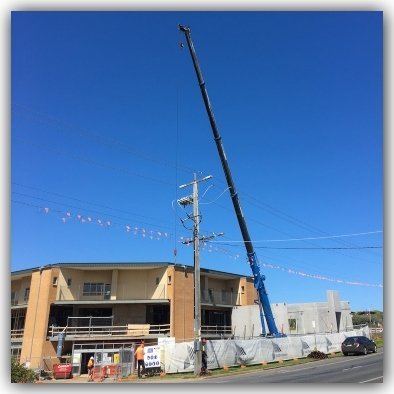
Lyndoch is borrowing big, it is taking risks, it is investing in a $22 million medical centre that is due to be finished mid-year, ploughing ahead with its $100m masterplan and somewhere in all of that is a whole lot of hope – by us – that it will all work out.
Shrinking or growing? Crunching the numbers on Lyndoch
Carol Altmann – The Terrier
Lyndoch Living is definitely getting bigger, but is it getting better? The numbers say no.
The reason I keep writing a lot about our community-owned aged care home is to put on the public record what is happening under the change of leadership and change of direction since 2015.
It’s important that we – as the community who own Lyndoch – keep track of what is going on, because nobody else is telling us.
We are the custodians of Lyndoch and the community will be here way past whoever happens to be in charge, so yes, we need to keep track of what is going on.
We owe it to Lyndoch, the residents, the staff, and those who helped create Lyndoch more than 50 years ago.
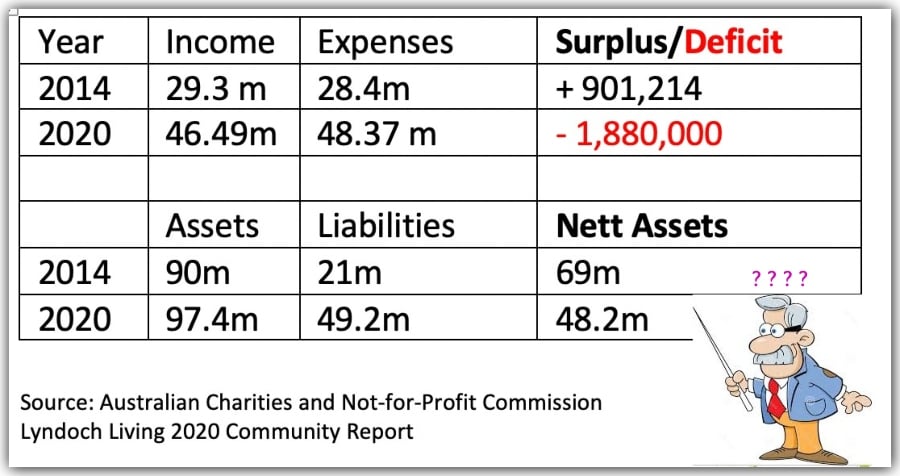
This is why tonight I am running this little chart, because it captures how Lyndoch is travelling financially.
It shows that before 2015, Lyndoch ran at a small profit/surplus or was break even.
This year, it posted its biggest loss – close to $2 million.
Lyndoch has run at a loss for five of the past six years. From my research, this is unprecedented in recent times.
At the same time, its assets have gone up, but so have expenses – they have more than doubled.
This has meant a $20m cut to its net assets in just six years.
Is this visionary? It is sustainable? And why, when it comes to cost cutting, do we hear of cuts at the coalface, and not in the corporate?
Speaking of which, it’s worth remembering that the very first thing to happen under the $100m masterplan now being rolled out by Lyndoch was an upgrade of the corporate area.
Out with former CEO Rhys Boyle’s old wooden furniture and in with the fingerprint resistant glass table.
We still don’t know how much that corporate re-vamp cost but it was an early sign of the shifting priorities.
We still don’t know, exactly, how much the Swinton Wing re-vamp and extension cost, but estimates are it blew out by $2m to $13 million.
And coming up next is a new two-storey medical clinic to be built next to Scoborio Reserve with, it is said, radiology, pathology, acute care and educational facilities alongside up to 20 GPs.
Lyndoch will bulldoze Tomlinson Wing and its gardens to make way for more glass and cement.
How much will that all cost to build and set up? We don’t know.
Is this all necessary? Is it all sustainable?
These are the questions I would like to ask the board – our eyes and ears at the table – and I am sure you would like to ask too.
In the face of their silence, we just keep pressing.
Deficit: down the rabbit hole into Lyndoch Wonderland
Carol “Alice” Altmann – The Terrier
Take my hand and follow me into the strange, alternative world of Lyndoch Living Wonderland, a sparkly world with a lovely colour palette, and where a deficit is “a good result”.
Lyndoch has just posted its fourth deficit in the past five years, but according to those who sit at the big table, there is no need for concern.
(Caterpillar: I don’t know what they’re smokin’ over there in the boardroom, but I want to try it!)
What’s more, Lyndoch CEO Doreen Power, who was appointed in 2015, has announced – without so much as a twitch of an eye – that we can expect our largest, fully-booked aged care home to run at a loss for another two to three years.
This means that by 2022, Lyndoch will have run at a loss for six or possibly seven years out of the past eight.
(Cheshire Cat: keep smiling everyone, keep smiling! Oh blast, here comes Alice with her practical facts…)
In 2014, the year former CEO Rhys Boyle retired, Lyndoch was comfortably in the black and recorded a $901,214 surplus, which came on top of surpluses in 2012 and 2013.
Here are the figures since:
2015: $208,707 deficit
2016: $130,037 deficit
2017: $846,563 surplus
2018: $1,573,98 deficit
2019: $398,356 deficit
I think this tells us pretty clearly that Lyndoch is living beyond its means – each year it is spending more than it makes – but somehow an almost $400,000 loss like last year is a “good result”.
No it isn’t. It’s a bad result.
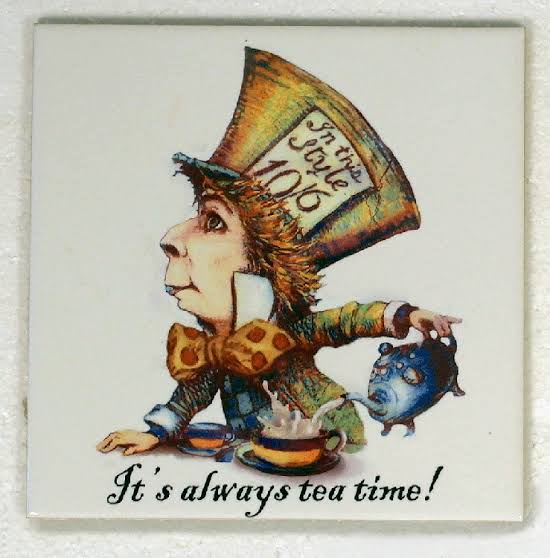
(Mad Hatter: Oh Alice, anyone knows a good result is better than a bad result which is better than a worserer result. Pour me some tea!)
If we push aside the spin and boil it down to the absolute basics, Lyndoch has one important job to do, which is to care for our elderly and infirm, for which it receives money from the Federal Government, the State Government, live-in residents, clients and its own investments.
From all these things, Lyndoch last year received a total income of $38.9 million.
It spent $39.3 million, in other words, it went over its budget…again.
On top of this, Lyndoch also confirmed a slightly awkward piece of news, which The Terrierflagged back in October, which was $11.3 million was wiped off its assets after certain, unnamed buildings were re-valued using a different method that, from what I can see, used market prices.
This is like owning a house you thought was worth $12 million, only to be told it is actually worth $1 million.
(Mad Hatter: Oh who cares? $1 million, $12 million, it’s only on paper! Tear it up and start over! More tea?)
Have a big sip of whatever you are drinking, because now we wade deeper into the forest of figures in search of the bottom line.
In 2015, Lyndoch had total assets of $96.5 million – this is whole shopping cart: the properties, the cash, the residential bond money, the investments, the cups and saucers, cutlery and cars.
At the same time, it had expenses, or liabilities, of $27.7 million, leaving it with a bottom line of $68.7 million.
By 2019, Lyndoch had total assets of $98.9 million – (White Rabbit: clap, clap, wonderful, magnificent! Well done!) – but….it also had liabilities of $47.7 million,leaving it with a bottom line of $51.1m.
This means Lyndoch’s overall bottom line has fallen from $68.7 million to $51.1 million in just five years.
(White Rabbit: Oh. But the cash, dear Alice, what about the cash?)
Lyndoch has plenty of cash: $48.7 million in cash and other investments, except they can’t touch most of it – around $30 million from my reckoning – because it is tied up in residents’ bonds.
(White Rabbit: So I can’t spend it on a shiny new pocket watch? Damn.)
As we know, other things have changed dramatically in the past five years too, including just about every member of the executive team being replaced, from the Director of Nursing, to the Chief Financial Officer, to the Human Resources head, with more than 80 staff having gone elsewhere.
I have since been told by a strong source that my figures are wrong and it’s closer to 120 staff, but I can’t verify this.
(Queen of Hearts: At last, at last, my walk on part…Off with their heads, I say! Off with their heads! Strike up the trumpets!)
No wonder the board wasn’t keen to trumpet all of this news at the annual general meeting last October, where written questions from the public were ignored, because they were not members of Lyndoch.
(Queen of Hearts: Close the gates! Don’t let the rabble in!)
And the crazy making thing is that despite these worrying figures, Lyndoch is not tightening its belt, but going on a spending spree: a $100 million masterplan that includes buying two medical clinics for a cost of $1.6 million, including $1.3 million for the Warrnambool Medical Clinic, so it can move them to a medical clinic that it will build.
(Mad Hatter: And don’t forget the horse race! We want to go to the races, so we bought the race! Giddyup Dormouse!)
I am worried, dear citizens, that we who own Lyndoch are being dragged deep into this wonderland and we won’t be able to find our way out, which is why we have to keep going.
(Caterpillar: Ah, chill baby and pass me the pipe.)
If you would like to support the Terrier, you can throw something in the tip jar below.
Lyndoch’s big spend-up powers on despite $1.77m deficit
Lyndoch Living last year recorded its third and most significant deficit in the past four years. The latest financial results will be released next Tuesday at its 2019 AGM.
Carol Altmann – The Terrier
Here’s a little figure that slipped by without too many people noticing: last year Lyndoch Living aged care recorded a deficit of $1.772 million – its largest loss in recent years.
You won’t find this figure in the Lyndoch 2018 annual report online, nor will you find it any media reports, but it can be sifted from a federal website that collects the financial records of charities. Such is my reading list.
It was here I learned that Lyndoch went from an $846,563 surplus in 2017, to a $1.772 million deficit in 2018. It is the third deficit in the past four years under CEO Doreen Power and her board.
To be clear, Lyndoch Living is a not-for-profit, publicly funded body that is not designed – thankfully – to record fat surpluses on the back of caring for our infirm and elderly.
But nor is it intended to run at a loss without a detailed explanation.
As it happens, the 2019 Lyndoch AGM is next Tuesday (Oct 29), so I wanted to dive into last year’s figures before we find out how Lyndoch is faring this year.
And before I go any further, I also want to make it super clear that Lyndoch Living is full of terrific, hard-working staff who are devoted to making the lives of residents the best they can be. (Hello to you, staff! I know many of you read The Terrier, but are unable to comment. That’s okay, I see you.)
Lots of great stuff happens at Lyndoch.
But it is also blindingly obvious that Lyndoch Living is changing, and Ms Power has, since taking over in January 2015, had her foot to the pedal with big-buck projects and a very different management style.
Aiming high: A $100 million masterplan is now being rolled out at Lyndoch, but where is the money coming from?
In the past 12 months in particular, Lyndoch Living has been on a buying spree.
It bought the May Noonan Hostel in Terang, and the Warrnambool Medical Clinic practice, and the Health Spot practice in Warrnambool, and in the next couple of years, plans to build a new “super clinic” on Hopkins Rd as part of a full-blown, $100 million masterplan to be rolled out over the next eight years.
(Ms Power has a liking for “super clinics”, having overseen an $8 million one in her last job, at Plenty Valley.)
I’m all for a spruce up, but $100 million is serious money.
Lyndoch’s corporate area was first in line for an upgrade – funny how that happens – and now work on Swinton Wing is in full swing, at an expected cost of $11 million.
The simple question behind this head-spinning, full-throttle expansion is: where is the money coming from?
I want to be reassured, as I am sure others do, that this is not yet another case of corporate grandstanding, with big-ticket, capital works projects blitzing the basics like having enough qualified staff looking after our old folk.
(Watch the short Lyndoch Living video below for the full masterplan shebang.)
The Lyndoch Waterfront Living apartments, which are now five years old, are proof of where glamorous projects can stall.
Stage two of that multi-million dollar project has been put on ice after stage one failed to sell out and several apartments on the south side, facing Marfell Rd, remain empty.
Which brings me back to the deficit.
The deficit is just one part of Lyndoch’s big financial picture, but it is also a keyhole for us to peek through, to see what else is happening to our much-loved Lyndoch that has been a part of the local landscape for more than 60 years.
Here is some of what I have been able to unpick so far:
One of the reasons behind the $1.77 million deficit was the cost of “community based client services” going up by almost a third, or $1.2 million.
I emailed Ms Power and the Lyndoch board president, Kerry Nelson, last Wednesday for more detail about these services and the reason for the cost increase. I didn’t get a response.
It begs the question though, with growing demand for home-based care, why spend a fortune on a “super-clinic” and not these services?
Another reason for the deficit was a drop in the value of a Lyndoch building by $1.75 million.
I asked Ms Power and Ms Nelson more about this too, but there was no response.
Overall, Lyndoch last year had assets valued at a whopping $99.7 million – including $6.6 million in cash – and its liabilities were $36.9 million, leaving its overall position at $62.7 million.
That is a nice, fat cushion, but it is also the lowest bottom line in the past five years – in 2014, the total equity was $4 million higher at $68.9 million.
Sorry for so many figures, but it is the only way to pull this apart.
Lyndoch CEO Doreen Power has been all guns blazing since taking over in January 2015. Image: Lyndoch Living.
Here is one more interesting stat: the amount spent by Lyndoch each year on food for clients and residents.
In 2014, Lyndoch spent $1.021 million on food and in 2015 and 2016 it fell below the $1 million mark.
Last year, it spent $1.003 million on food, which is still less than it was five years ago in 2014. Why?
Has a contract changed? The cost of bulk groceries gone down? Are they being bought from elsewhere? Are chia seeds cheaper than homemade chicken soup?
(I was going to put these questions to Ms Power and Ms Nelson as well, but after not receiving any answers thus far, it seemed pointless.)
I will leave aside staffing figures, staff changes and staff morale for now – that is a whole separate story to come shortly – but having pored over a swag of Lyndoch financial reports and deficits, I still don’t know the answer to my simple question:
Where is the money for the $100 million masterplan coming from?
I did ask Ms Power and Ms Nelson this question, but there was no response.
Unfortunately I am going to be away on Terrier duties and unable to attend the Lyndoch AGM at 4pm next Tuesday, but perhaps someone will throw up their hand and ask this question because remember, Lyndoch belongs to us, the south-west community.
In the meantime, I am going to take a punt and say “the bank”, which means “loans”, which means “debt”.
If so, is wading into deep debt a good idea and will it vastly improve the daily lives of those in Lyndoch’s care? That, Terrier readers, is the $100 million question.
If you would like to support the work of The Terrier, please consider throwing something in the tip jar.
WCC rate rise and spending more than $900k on consultants
The Warrnambool City Council spent more than $900,000 on consultants in 2017-18, but whether this figure is higher or lower than previous years remains unknown. Image: Fidelis.
Carol Altmann – The Terrier
How to save $700,000 in seven days, instalment #2:
When Warrnambool Mayor Tony Herbert revealed last December, without a hint of irony, that up to $30,000 would be spent on consultants to test how ratepayers felt about a rate rise, it raised an obvious question: how much does the Warrnambool City Council spend each year on consultants?
The answer for 2017-18 is close to a million dollars, or $927,000 to be precise.
Unfortunately that is about as precise as I can be, as the council has not provided any significant detail on what these consultancies entailed or how this figure compares to other years.
What this means is I can’t tell you if $927,000 is normal in one year, or lower, or much higher than for other years.
I am going to take a punt that other years would not be lower, based on the number of council reports, masterplans and projects that have been rolled out in recent years.
The only breakdown provided for the $927,000 was this from council spokesman Nick Higgins:
“Examples of consultants used in 2017-2018 include: valuation of the Warrnambool Art Gallery collection (necessary for insurance), participation in the Community Satisfaction Survey (required by the State Government), arterial road assessment (for advocacy to improve roads managed by VicRoads), heritage advice and for the management of the community solar bulk buy program.”
Consultants were hired to prepare a plan for the future use of the Warrnambool foreshore caravan parks. Image: Camping Victoria.
I had a line-by-line look at the council’s annual report for 2017-18, and learned consultants were also hired to prepare a strategic plan for the foreshore caravan parks, prepare the kerbside recycling contract, and for a valuation of the council’s land and buildings.
Mr Higgins said via email – quite correctly – that all councils use consultants.
“Warrnambool City Council’s use of consultants and the expenditure on consultants would be unexceptional,” he added.
This may be true, but in an environment where ratepayers are being asked what services they are prepared to see cut to avoid a rate rise, I think we could do with some more detail, don’t you?
At a state and federal government level, spending on consultants is included in the annual Auditor General’s report and is picked over by political journalists to determine where the dollars are going.
No such transparency is enforced at the local government level.
Consultants were also used to provide a valuation of council owned land and buildings like the Lighthouse Theatre. Image: Basso Project Management.
It may well be, as Mr Higgins explained, that “consultants are used because they have specific expertise or knowledge that council does not have” and hiring short-term consultants is cheaper than permanent staff.
(It is worth remembering that there are 731 people working at Warrnambool City Council – full time, part time and casual – and last financial year the cost to ratepayers was $31.5 million.)
Again, however, we have no way of being able to make that assessment or, to be frank, keeping an eye on how much is spent each year in total.
It is a figure that is simply not reported in any of the council’s financial statements or annual reports.
Instead, the $927,000 for this year is treated as an unavoidable expense and one that, I note, didn’t make it into the ratepayer survey that closed earlier this month.
Is there any fat to be trimmed on that figure? Do we, for example, really need a consultant to tell us what to do with our caravan parks? And how many consultants’ reports end up going no further?
Before there is any attempt to push rates above the rate cap, these questions deserve to be answered.
A builder contact, however, said while he wasn’t sure about that particular tender, which he agreed seemed high, there were often less obvious costs with construction work including:
architect fees 20-40k, engineer 15-30k, feasibility study 10k, land surveyor 10k, legal fees 10-20k, traffic engineer 5-10k, fire engineer 5-10k, town planning 5-10k, building permits 10k, Wannon Water fees $50-$80k, council project management 30-60k, Aboriginal heritage study 30-40k, demolition 10-20k, associated paths 50-80k, landscaping 20-20k, safety management plan 5-15k, site safety 15-25k, traffic control 10-20k.
As to how many of these actually applied to the toilets in the botanic gardens and Swan Reserve, we will never know but I am still at a loss as to how they could cost more than a whole new home.
If you would like to see The Terrier keep digging up, sniffing out and chewing on local issues, please make a small contribution below.

 Carol “Alice” Altmann – The Terrier