Fight4Lyndoch Living community rally: the speeches
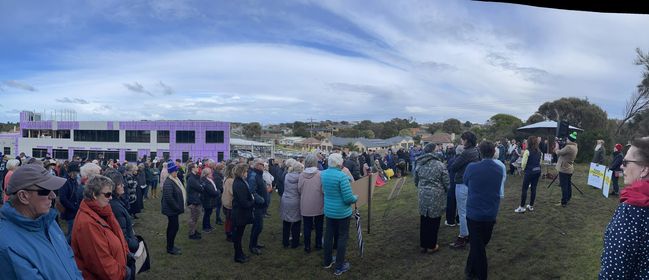
More than 400 people gathered on Scoborio Reserve, next to Lyndoch Living, to rally for greater transparency around the aged care home. Image supplied.
Carol Altmann – The Terrier
For those who couldn’t make it to the Fight4Lyndoch rally last Sunday, here are links to speeches and statements from:
Member for South-West Victoria Roma Britnell also gave a terrific speech, but unfortunately a hard copy was only in dot point form, so I have not included it here.
I also wish to repeat the simple statement of support offered to the rally by former Lyndoch CEO RhysBoyle.
Rhys guided Lyndoch for 20 years until his retirement in 2014:
“I support a re-evaluation of the facts to ensure that meaningful and informed decisions are being made that secure the future of Lyndoch,” he wrote.
More than 350 people turned out for the rally on Scoborio Reserve last Sunday, to stand in support of residents, their families and staff, and to hear for themselves the concerns around Lyndoch Living.
Those concerns come down to three main issues:
1. Declining residential care standards, staff shortages and staff resignations;
2. The financial viability of Lyndoch and, in particular, the sustainability of the $22 medical clinic;
3. The cutting out of the community from Lyndoch, including the end of community/general memberships.
While we await to hear whether the Aged Care and Safety Commission will re-accredit Lyndoch in August, the community fight continues.
For while the commission can act on the first point – residential care – it doesn’t deal with the other two points.
It’s up to us, as the community which owns Lyndoch, to make sure Lyndoch remains transparent and accountable to the community.
After the enormous response to the rally on Sunday, despite the freezing morning, our resolve has only strengthened.
Jess Chatfield: fighting for Framlingham forest
The Terrier – Carol Altmann
Young Gunditjmara woman Jess Chatfield speaks from the heart about her fight to save Framlingham forest and the Hopkins River from a bluestone quarry that is proposed for land nearby.
This 8min work was created by Jess under the guidance of Warrnambool’s best digital storyteller, Colleen Hughson, who is an extraordinary teacher.
This digital storytelling mentorship was funded by the Judith Neilson Institute for Journalism and Ideas, who generously supported an idea put forward by The Terrier and which has now come to life.
Jess is a natural storyteller and it has been a privilege to be a part of this mentorship and to learn so much from Jess and her family along the way. I am going to miss our Fridays, but this will not be the last you hear from Jess, I just know it.
Flushing out the truth about Wannon Water’s fatberg failure
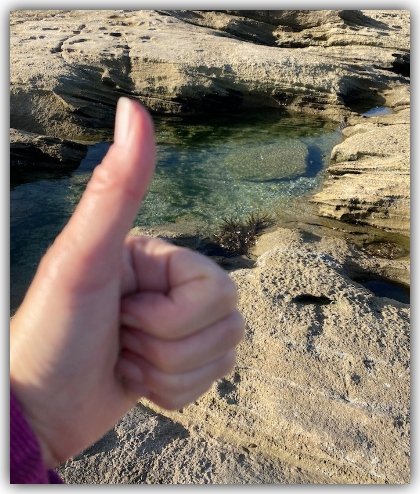
The Shelly Beach rockpools have been the cleanest they have been in years thanks to sustained pressure for better screening at the Wannon Water treatment plant. Image: Pick Up Sticks FB page.
Carol Altmann – The Terrier
That is eco-activist Colleen Hughson’s thumb and that is one very clean rock pool at Shelly Beach, near Thunder Point and both are worth a special mention tonight.
I want to acknowledge a small moral victory by Colleen, (who doesn’t know I am writing this, but who is surely one of the most determined people on this planet), and the diligent beach clean up crew who have been pushing for years for Wannon Water to clean up its act.
Ever since zillions of plastic nurdles landed in the ocean via the sewerage system in 2017 by some assbob who has never been held to account, Colleen and other like-minded souls have been pressing Wannon Water to lift its game.
This is because it wasn’t only nurdles, but a whole pile of other gunk that was making its way through the Wannon Water treatment plant and out into the ocean.
Cotton buds, tossed down the toilet by other, unthinking assbobs, are one major offender.
Another is a delightful thing called a fatberg, which is a stinky, smelly, fatty, hairy blob that forms in the scum of the Wannon Water treatment plant and – if not caught – ends up floating in the rockpools of Shelly Beach.
The Pick Up Sticks and Good Will Nurdle Hunting crew knew this stuff must have been coming via Wannon Water, but Wannon Water ducked and weaved and pretty much denied it was doing anything other than an exemplary job at catching the smelly gunk before it was flushed out to sea.
Wannon Water’s take on it was that fatbergs and any other gunk showing up at Shelly Beach must have been from elsewhere or it was “old” stuff being flushed back to shore. (Spin, rinse, repeat).
Rarely did their screening system fail, they said, when I toured the plant last October.
Except Colleen and the beach clean-up crew knew it was failing.
They could see the screens failed when they became completely blocked and overflowed (just like any sieve or kitchen drain).
And it failed every time the two screens, including a fine screen, had to each be taken out manually, scraped into a wheelbarrow or vacuumed, and put back again.
How such a clunky system involving a wheelbarrow and a vacuum cleaner was ever considered good enough in the 21st century is beyond me, but it was, for years and years.
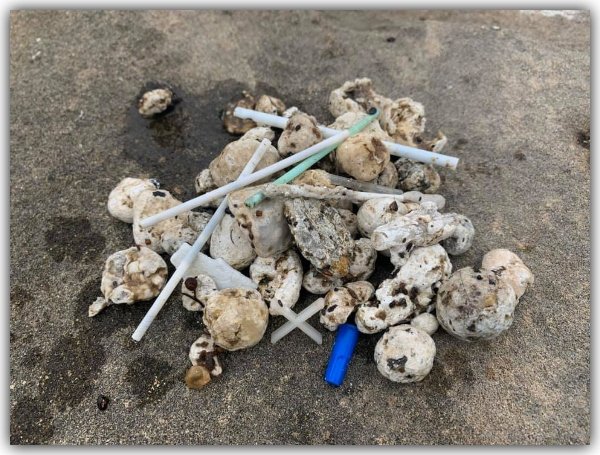
Some of the fatbergs, plastics, cotton buds and other assorted junk collected from Shelly Beach in February this year, before the new screens were added to the Wannon Water plant. Image: Pick up Sticks FB page.
After the nurdle spill in November 2017, Wannon Water announced plans to improve the screening system as part of its plant upgrade, but these changes were slow in coming.
A second, manual fine screen was finally added earlier this year, and a fully automated, $1.1 million screen was installed in April …. and no wonder.
Because what happened in between times was a big, fat pollution abatement notice was issued to Wannon Water by the EPA in February.
This notice confirmed what was always suspected: the manual screens were not always doing their job.
In fact when the EPA visited the treatment plant last November, the screens were 100% blocked and effluent, it said, may have flowed over the top.
Whats more, the EPA went back to the plant in January this year and actually saw the effluent overtopping the screens.
Not only that, the EPA visited the rock pools at Shelly Beach that same day and, guess what?
They found five fat balls and many smaller pieces of fat in just one rockpool: slam dunk proof of a failing system.
This is a story that I wanted to write two months ago, but it got bumped in the Covid 19 news whirl.
But it’s an important vindication of the hard work and pressure and activism by Colleen and the dozens of other activists who form the clean up crews: they were right all along, and now the EPA notice proved it.
The EPA notice ordered Wannon Water to fix its screening system by no later than 15 June this year, which it has done, and the Shelly Beach rockpools are the cleanest they have been in years.
There is no doubt in my mind that the sustained pressure of Colleen and the beach clean up crew has helped this to happen.
And yet, even now, Wannon Water can’t quite bring itself to say just that.
“The manual screening system, installed in November 2017, has performed extremely well and has been very effective,” managing director Andrew Jeffers said to me via email.
No, actually, it didn’t perform “extremely well” and it should have been improved years ago.
The fight to clean up our beaches from plastics and pollution goes on, but the small victories and vindications are worth celebrating and so, as Rod Stewart would say, tonight’s the night.
Change up: next generation of journos heading our way
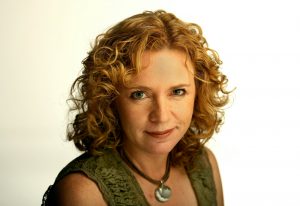
Journalist and writer Jo Chandler is leading a team of journalism masters students from Melbourne University who are heading to Warrnambool to report on climate change. Image: Joy.org.au
Carol Altmann – The Terrier
Now for a letter of a different kind.
This letter is from one of Australia’s top journalists and writers, Jo Chandler (ex The Age), who is bringing 16 of the next generation of journalists to Warrnambool next week to take a close look at climate change – the biggest issue facing our planet.
Jo is now part of the University of Melbourne’s Centre for Advancing Journalism.
How fabulous that Jo and her team have chosen our neck of the woods for their intensive investigation, the fruits of which I plan to publish on The Terrier.
Read on to see how you can be a part of it:
Dear People of Warrnambool and Port Fairy districts,
I’m a lecturer in journalism at the University of Melbourne’s Centre for Advancing Journalism (CAJ), and editor of our digital publication, The Citizen.
Next Tuesday and Wednesday (September 3-4) we will be bringing a crew of 16 masters students from our journalism program for an intensive reporting field trip to Warrnambool and Port Fairy. Our ambition is to do some deep, useful reporting on important issues playing out in your region, and also to encourage the next generation of reporters to gain skills and experience telling the stories of regional and rural communities.
In this project, our reporters will be conducting research and interviews on stories that all one way or other connect with the issue of climate change, and the impacts it is having or will have across your region and community. We’re looking at the issue from all angles – what it means for agriculture and how farmers are adapting/planning; impacts on biodiversity; implications for disaster preparedness, particularly bushfires and extreme weather events; how it will affect jobs and the regional economy; the considerations for land use planning into the future; how the community is engaging and responding etc.
The project will be overseen and edited by an expert and highly experienced editorial team:
Myself, Jo Chandler, lecturer and editor of the Centre for Advancing Journalism’s digital news site, The Citizen. I worked for many years at The Age and over the past several years as a freelance reporter including for The New York Times, The Guardian, The Monthly, ABC Radio National, BBC.com, New Scientist, The Atlantic, among others. You can find out more about me and my reporting archive here.
Dr Andrew Dodd, Director of CAJ. Associate Professor Dodd has worked across radio, television, print and online platforms for more than 30 years.
Jack Banister, a CAJ alumni and now cadet on The Citizen.
The stories we collect will be published on our digital news site, The Citizen, and co-published on The Terrier. We are also planning to co-publish some of these with mainstream publications. We have a strong track record of co-publishing Citizen reports with The Guardian, The Age, ABC Regional and other publications. You can find links to a previous rural project we did in Gippsland, which was co-published in part by ABC Gippsland, here.
Over the next week, our reporters and editors will be reaching out to people across your communities who have some insight or expertise on the issues we will be exploring. And while we’ve done our best to locate the best characters, experts and storylines to explore, we’re sure to have missed something! So please feel free to get in touch with your ideas and suggestions. And if you would like to be part of this project, or have some contribution by someone else you would like us to consider highlighting, we would also love to hear from you:
I acknowledge the Traditional Owners of the land where I live and work, the Wurundjeri people of the Kulin Nations, and pay my respects to the Elders both past and present
Taking a stand: “But Carol, where will it end?”
No small irony: Large posters promoting the #16Days of Activism to end violence against women on prominent display at the Lighthouse Theatre, Warrnambool, which also houses a Rolf Harris mural.
I met two unforgettable people last week while collecting signatures to erase the mural by sexual predator Rolf Harris at the Lighthouse Theatre in Warrnambool.
Both of them, one a man, the other a woman, were survivors of child sexual abuse and were, as they described it, “finding their voice” to talk about such a personal atrocity and do everything they could to ensure that no other child would suffer what they had.
They talked quietly, often looking into the middle distance, because the middle distance is a safe space when re-visiting a place of such hurt, such confusion and such silence.
The silence. The being told – constantly – that you must not say anything, that you must not cause trouble, that you must not ruin things, or make things uncomfortable for others by speaking up and out.
But as the man said to me, “you just want to be heard and for someone to do something”.
He was doing something.
That very day as he signed the petition on a wobbly card table on the Civic Green, the Royal Commission into Institutional Responses to Child Sexual Abuse delivered its final report.
This was a devastating report that has been five years in the making and to which this man had given hours of evidence.
Despite having made a contribution to this highest level of investigation, this man still turned up during his lunch hour to sign a little petition to remove a small mural in Warrnambool because he is not done yet.
None of us should be done yet.
And this was how the woman who told me her story, a story she is only now starting to fully articulate, went from talking to me about why removing the Rolf Harris mural didn’t really make a difference, to deciding that it did.
She had come to the Civic Green not to sign the petition, but to explain why she felt covering it up was enough.
We talked about the symbolism of covering things up, about the hard-to-hear argument of separating the sexual abuser from the person, and about this mural – this mural – being a chance for our council to follow the lead of others who painted over their Harris murals right after his conviction two years ago.
After 20 minutes or so she said “I am going to sign”, and she did.
These are the strong faces I see in my mind when people roll out the arguments as to why the mural must stay.
“But Carol, where will it end?” they say.
Apparently if we erase a Rolf Harris mural in Warrnambool, soon we will be pulling down churches and trashing Caravaggios and banning people from watching films and throwing all manner of books, artworks and music onto a giant pyre, because if we don’t, well, we are being insincere and inconsistent.
Ironically, this fear-mongering and muddying of the waters is what the “yes” voters endured during the same-sex marriage debate.
A simple question – can two people of the same sex marry – descended into a frenzy about ending freedom of speech, people marrying goats, and children being taught in primary school how to use sex toys.
If you said yes to same sex marriage, you were saying yes to all these things too – get it?
Fortunately most of us in Warrnambool were smarter than that.
But we, as a city, own a Rolf Harris mural and it is through this mural we can again make and take a stand. We must make a choice. We either own it fully, and pull down that Perspex, or we roll over it as a symbolic gesture that we stand with survivors 100 per cent: not 50 per cent or 20 per cent.
“But Carol, where will it end?”
Well, I can tell you that for the survivors of predators like Rolf Harris, who use their power and position to abuse children, it never does.
And as the women and men now speaking out around the globe have shown, we are not done yet.
In fact we are just getting started.
The physical petition has closed with more than 100 signatures in five days, which was my goal. The online petition also closed on Wednesday 13/12 at 9am.
The petition will go to Warrnambool City Council for consideration at its first meeting for 2018 in February.