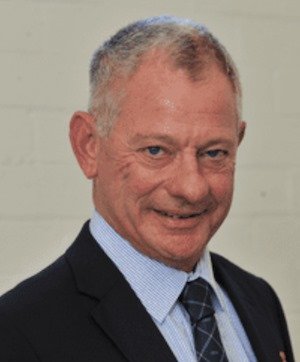
Long-standing Lyndoch Living board member Percy Eccles has resigned.
Mr Eccles, who has been a Lyndoch board member for nearly 10 years, said in a brief comment today that he resigned because he didn’t “feel I could have any more input, other than what I have already done”.
The ambitious project will be entirely funded by Lyndoch, including via bank loans and borrowing from Residential Aged Care bonds (as is currently allowed under federal aged care laws).
Mr Eccles’ resignation also comes as Lyndoch prepares to announce its new Chief Financial Officer, which will be its third CFO in five years, following the departures of David Knight and, later, Katie Wright who did not return from maternity leave.
Acting CFO Allan Conway – who filled in for Ms Wright – did not apply for the position and has also recently left Lyndoch.
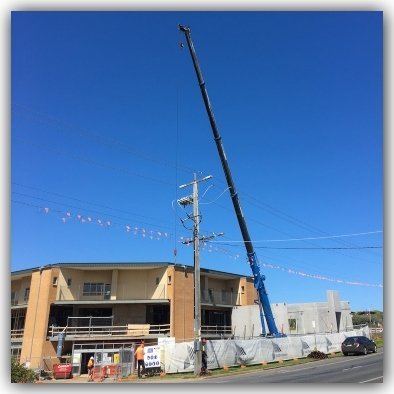
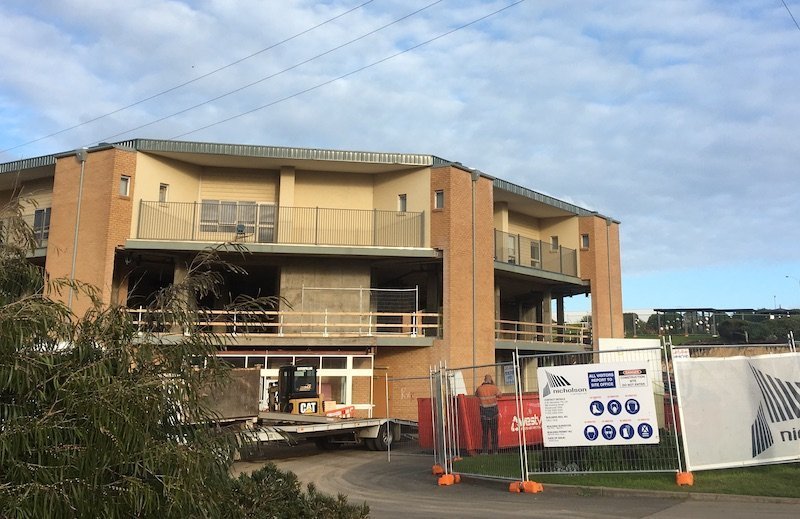
A smaller, interim medical clinic is already under construction at Lyndoch, on the ground floor of the new Swinton Wing.
From what I am being told, there is a growing belief inside and outside of Lyndoch that the smaller medical clinic would be a far less risky investment and the larger medical clinic should be put on hold, if built at all.
In the meantime, we will have to wait and see if the board vacancy is advertised, or if a replacement for Mr Eccles will be appointed behind the scenes, as happened with the appointment of Prof Rob Wallis to replace former racing club CEO Peter Downs.
Tomlinson crashes down: will Lyndoch finances follow?
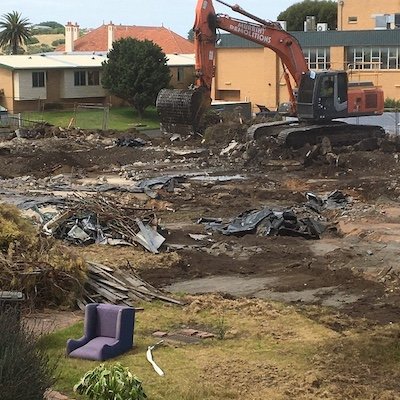
Lyndoch Living’s Tomlinson Wing has been razed to make way for a new $20m-plus medical clinic.
Carol Altmann – The Terrier
Oh a picture paints a thousand words.
Those of us who live or work near Lyndoch Living have this past week watched – and heard – Tomlinson Wing being razed right down to the last lounge chair left lying on its back in the rubble to make way for a multi-million dollar medical clinic.
Such is the secrecy around our community owned nursing home these days, we don’t know how much this clinic will cost – the last figure I saw published by an engineering firm was $24 million, but the plans have changed several times since then.
This clinic will house up to 20 GPs from the Warrnambool Medical Clinic, which Lyndoch now owns, and – presumably – by hiring GPs from elsewhere. It will also have a dentist, an x-ray and an acute care service.
To date, there has been no public discussion on how the business plan stacks up for such a huge investment, or the risks involved for Lyndoch, or the benefits it will bring to Lyndoch residents.
We are being asked to take it all on trust.
And trust is, frankly, in short supply around Lyndoch right now. That is what happens when you stop talking to the public and instead rely on spin.
It’s how you get away with sponsoring a horse race and a corporate marquee at the May Races.
And it’s how you gouge up to 44% of a person’s home care package in admin fees.
So far, this gouging has helped Lyndoch build up a nice little nest egg of $3 million in cash.
No wonder Lyndoch is desperate to pump up its home care package clients: they are taxpayer-funded cash cows.
But is it sustainable? Is this really how home care packages are intended to work?
And, worse, is it a house of cards just waiting to crash, especially as the federal govt moves to close these loopholes?
Which brings me to this:
Last financial year, Lyndoch received almost $2 million more in taxpayer funds to pay for home care packages to help people stay in their own homes.
Did it spend almost $2 million more on supplying services?
No, it didn’t.
It spent almost exactly the same amount as the year before.
So where did this extra $2 million in taxpayer funds go?
Good question!
This was among the questions I asked Lyndoch yesterday in the ever-optimistic hope of a reply.
In the absence of any reply, I have perused Lyndoch’s figures and it appears this $2 million has been invested, which helps Lyndoch’s bottom line look better than it is.
The “surplus” for home care packages shot up from $234,398 in 2019 to $2.5 million in 2020.
A ten-fold increase in just 12 months.
The problem is, it’s smoke and mirrors.
This surplus is not Lyndoch’s money: it’s taxpayers’ money, given to Lyndoch, to provide home care packages.
It’s not supposed to be sitting around in a bank, earning interest and plumping up bottom lines.
It’s supposed to be helping people to bathe, or have their gardening done, or buy a new bed, or to supply hot meals, and if it is not being used for those purposes, then something is terribly wrong.
Fortunately the fed govt knows the system is buggered and is making long-overdue changes that it is rolling out as we speak.
A major change is that the home care money will no longer be paid in advance to places like Lyndoch.
It will be in arrears.
And by September, if new laws go through, the funds will only be paid for what has actually been spent, not sitting there waiting to be spent.
In other words, there will be no $2 million swashing around in Lyndoch’s bank account.
Given the demolition of Tomlinson, Lyndoch has a chance to reassure us that none of the changes planned by the fed govt (home care is just one of them) will make a jot of difference to its financial stability and it can plough on with its $100 million masterplan like there is no tomorrow.
If it doesn’t, or it can’t, then we should listen, very carefully, for the sound of the Queen of Hearts falling.
[Note: Lyndoch is about to hire a new Chief Financial Officer: its third CFO in five years.]
Lyndoch’s big spend-up powers on despite $1.77m deficit
Lyndoch Living last year recorded its third and most significant deficit in the past four years. The latest financial results will be released next Tuesday at its 2019 AGM.
Carol Altmann – The Terrier
Here’s a little figure that slipped by without too many people noticing: last year Lyndoch Living aged care recorded a deficit of $1.772 million – its largest loss in recent years.
You won’t find this figure in the Lyndoch 2018 annual report online, nor will you find it any media reports, but it can be sifted from a federal website that collects the financial records of charities. Such is my reading list.
It was here I learned that Lyndoch went from an $846,563 surplus in 2017, to a $1.772 million deficit in 2018. It is the third deficit in the past four years under CEO Doreen Power and her board.
To be clear, Lyndoch Living is a not-for-profit, publicly funded body that is not designed – thankfully – to record fat surpluses on the back of caring for our infirm and elderly.
But nor is it intended to run at a loss without a detailed explanation.
As it happens, the 2019 Lyndoch AGM is next Tuesday (Oct 29), so I wanted to dive into last year’s figures before we find out how Lyndoch is faring this year.
And before I go any further, I also want to make it super clear that Lyndoch Living is full of terrific, hard-working staff who are devoted to making the lives of residents the best they can be. (Hello to you, staff! I know many of you read The Terrier, but are unable to comment. That’s okay, I see you.)
Lots of great stuff happens at Lyndoch.
But it is also blindingly obvious that Lyndoch Living is changing, and Ms Power has, since taking over in January 2015, had her foot to the pedal with big-buck projects and a very different management style.
Aiming high: A $100 million masterplan is now being rolled out at Lyndoch, but where is the money coming from?
In the past 12 months in particular, Lyndoch Living has been on a buying spree.
It bought the May Noonan Hostel in Terang, and the Warrnambool Medical Clinic practice, and the Health Spot practice in Warrnambool, and in the next couple of years, plans to build a new “super clinic” on Hopkins Rd as part of a full-blown, $100 million masterplan to be rolled out over the next eight years.
(Ms Power has a liking for “super clinics”, having overseen an $8 million one in her last job, at Plenty Valley.)
I’m all for a spruce up, but $100 million is serious money.
Lyndoch’s corporate area was first in line for an upgrade – funny how that happens – and now work on Swinton Wing is in full swing, at an expected cost of $11 million.
The simple question behind this head-spinning, full-throttle expansion is: where is the money coming from?
I want to be reassured, as I am sure others do, that this is not yet another case of corporate grandstanding, with big-ticket, capital works projects blitzing the basics like having enough qualified staff looking after our old folk.
(Watch the short Lyndoch Living video below for the full masterplan shebang.)
The Lyndoch Waterfront Living apartments, which are now five years old, are proof of where glamorous projects can stall.
Stage two of that multi-million dollar project has been put on ice after stage one failed to sell out and several apartments on the south side, facing Marfell Rd, remain empty.
Which brings me back to the deficit.
The deficit is just one part of Lyndoch’s big financial picture, but it is also a keyhole for us to peek through, to see what else is happening to our much-loved Lyndoch that has been a part of the local landscape for more than 60 years.
Here is some of what I have been able to unpick so far:
One of the reasons behind the $1.77 million deficit was the cost of “community based client services” going up by almost a third, or $1.2 million.
I emailed Ms Power and the Lyndoch board president, Kerry Nelson, last Wednesday for more detail about these services and the reason for the cost increase. I didn’t get a response.
It begs the question though, with growing demand for home-based care, why spend a fortune on a “super-clinic” and not these services?
Another reason for the deficit was a drop in the value of a Lyndoch building by $1.75 million.
I asked Ms Power and Ms Nelson more about this too, but there was no response.
Overall, Lyndoch last year had assets valued at a whopping $99.7 million – including $6.6 million in cash – and its liabilities were $36.9 million, leaving its overall position at $62.7 million.
That is a nice, fat cushion, but it is also the lowest bottom line in the past five years – in 2014, the total equity was $4 million higher at $68.9 million.
Sorry for so many figures, but it is the only way to pull this apart.
Lyndoch CEO Doreen Power has been all guns blazing since taking over in January 2015. Image: Lyndoch Living.
Here is one more interesting stat: the amount spent by Lyndoch each year on food for clients and residents.
In 2014, Lyndoch spent $1.021 million on food and in 2015 and 2016 it fell below the $1 million mark.
Last year, it spent $1.003 million on food, which is still less than it was five years ago in 2014. Why?
Has a contract changed? The cost of bulk groceries gone down? Are they being bought from elsewhere? Are chia seeds cheaper than homemade chicken soup?
(I was going to put these questions to Ms Power and Ms Nelson as well, but after not receiving any answers thus far, it seemed pointless.)
I will leave aside staffing figures, staff changes and staff morale for now – that is a whole separate story to come shortly – but having pored over a swag of Lyndoch financial reports and deficits, I still don’t know the answer to my simple question:
Where is the money for the $100 million masterplan coming from?
I did ask Ms Power and Ms Nelson this question, but there was no response.
Unfortunately I am going to be away on Terrier duties and unable to attend the Lyndoch AGM at 4pm next Tuesday, but perhaps someone will throw up their hand and ask this question because remember, Lyndoch belongs to us, the south-west community.
In the meantime, I am going to take a punt and say “the bank”, which means “loans”, which means “debt”.
If so, is wading into deep debt a good idea and will it vastly improve the daily lives of those in Lyndoch’s care? That, Terrier readers, is the $100 million question.
If you would like to support the work of The Terrier, please consider throwing something in the tip jar.
Lyndoch Living rolls out masterplan…and cuts nursing staff
Carol Altmann – The Terrier
I am interrupting our running story on credit cards to say there are angry stirrings at Lyndoch Living aged care which is rolling out its $100 million masterplan – and cutting nursing staff.
The Australian Nursing and Midwifery Federation has taken up the fight against plans by Lyndoch to blend its two highest acute care units, the 45-bed Audrey Prider Centre unit and the 39-bed Lake Lodge unit, even though they will remain physically separated by a room.
The union says the move will see just one full-time nurse unit manager in charge of the clinical care of 89 residents.
On top of this, the union says, there will be less associate unit managers – 7.5 full-time positions instead of 10 – that will oversee the unit when the nurse unit manager is not rostered on.
Staffing issues have been swirling around Lyndoch for months now, with many of the hard-working staff fearful of whether they will still have jobs.
There are also mounting reports of stress from the staff shortages that already exist. Unfortunately, with all the goings on at the W’bool City Council, I just haven’t had a moment to dig into it all.
I emailed Lyndoch CEO Doreen Power last Friday for a comment on the union statement, but I have had no response.
In the meantime, the first stage of the $100 million project will see the Warrnambool Medical Centre move on to the Hopkins Road site and new carpark up and running within two years.
I sense there will be much more to come on this story.