Taking a peek inside the world of assets and freebies

Carol Altmann – The Terrier

Taking a peek: How many properties our Federal MPs own, who has given them gifts, who they bank with, and what shares they hold, is always an interesting read.

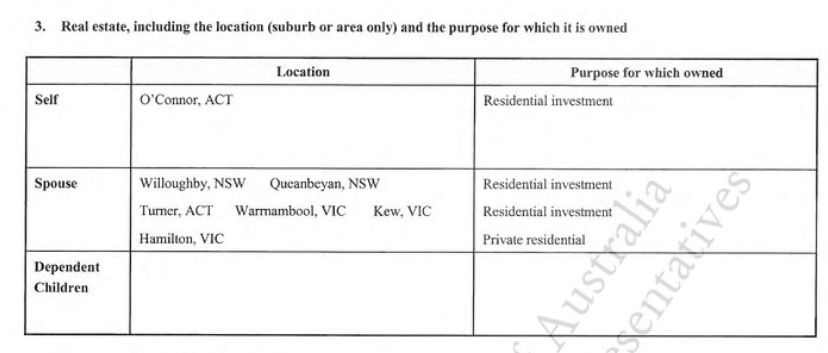
From the Register of Interests we can learn that our local federal MP for Wannon, Dan Tehan, and his spouse, between them own seven properties both as residences and as investments, including two in Canberra, two in NSW and three in Victoria – Kew, Hamilton and Warrnambool.

We can also discover that Mr Tehan received a free upgrade from business class to first class by Qantas when taking a private trip to Los Angeles in 2018.

Qantas also provided Mr Tehan with a free upgrade from Melbourne to Paris (via Dubai) and return for a business trip in 2016.

As a sports fan, Mr Tehan enjoyed two tickets to the men’s and women’s finals of the Australian Open tennis in 2017, 2018 and 2019 courtesy of Optus; had three complimentary tickets to the 2017 AFL Grand Final, and two tickets to the 2017 Melbourne Cup.

Mr Tehan also lists his part interest and “occasional earnings” from a racehorse (it is not named in the register, but it is called Wells, which he shares with, among others, Warrnambool Racing Club chairman Nick Rule).

The federal register is public, but until recently you had to physically visit Canberra to see it, which is about as useful as….

Fortunately the information has been made accessible online by a team of volunteers behind the “Burn the Register” project who scan and upload each page. The register is due to be updated again soon and is to go digital…at last.

Meanwhile, you can check on your favourite Federal MP here: http://burntheregister.com/search


Did the WCC backdate a lease to cover its backside?

Carol Altmann – The Terrier

Why did the Warrnambool City Council last July suddenly move from a handshake deal to a written lease for a council-owned flat rented by a staff member for more than 30 years?

This question needs a whole separate story, and this is it.


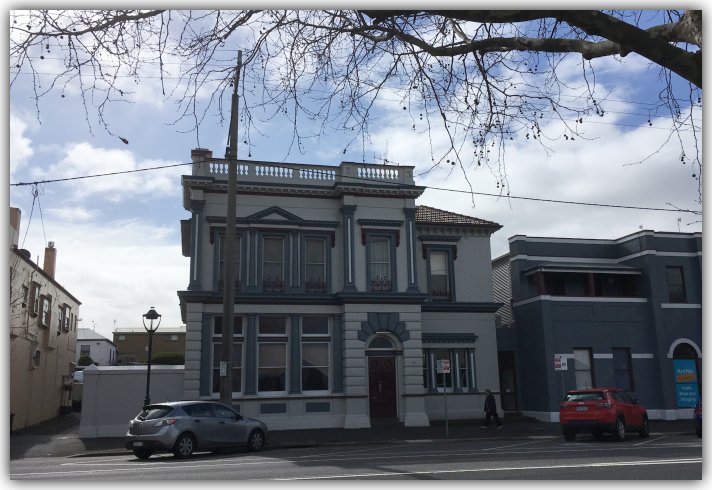
To re-cap, the property in question is attached to the Archie Graham Centre at 130 Timor St, where the senior council staffer has lived since 1987.

And as I wrote yesterday, thanks to Freedom of Information* we now know that for decades the council had nothing in writing to cover this tenancy, including rent payable, any bond, term of the lease, utilities, repairs and replacements.

The council instead relied purely on a handshake deal, until July last year.

Why July last year?

Stay with me here, because this is where things get murky.


On 30 July 2018 I asked the council my first questions about this tenancy.

On 21 August 2018, the first story was published, prompting a huge response from readers.

In the days before that story was published, the council refused to provide a copy of the lease and shut down questions by saying it had “nothing further to add” – case closed.

Not quite.


I lodged an FOI application* asking for a copy of the lease agreement. These things take time, often a long time, and a copy of the lease was finally provided in mid December 2018.

The lease provided started on 1 July 2018 and ends on 30 June 2019 (and included at least three typos – see photo below).


It was immediately obvious to me that there was something odd about this lease document.

The big red light was the start date: 1 July 2018. 

Was it just a massive coincidence that I asked questions on 30 July 2018 about an on-going lease that just happened to be put in writing – after 30 years – from 1 July 2018?


The smell of fish was getting strong, but it became overwhelming when I asked the council spokesman in April why the council suddenly decided to put the lease in writing last July.

Here is his answer in full:  “While a verbal lease agreement is legally acceptable – and was accepted by both parties to the lease – given the external interest in the property Council decided to prepare a written lease.” (my emphasis)

So the written lease was in response to questions by The Terrier.

But hang on, there’s another red light: the official council date stamp on the lease is 18 June 2018 – five weeks before I began asking questions. (See photo below).
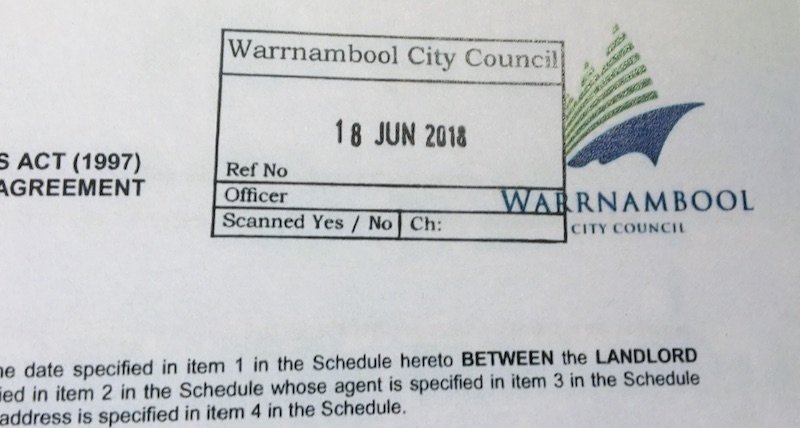
 

I went back to the council spokesman and asked if he could explain how the date stamp pre-empted my questions, and the explanation shifted.

The written lease was now the result of an internal review.

This review of council properties was apparently held in early 2018 and, blow me down, after 30 years, it zoned in on 130 Timor St.

“External advice was sought and provided and one of the actions arising from this review was the preparation of a written lease for 130 Timor Street,” the spokesman said via email.

“The lease was drawn up in June 2018 and executed by the tenant and returned to Council on June 18,” he wrote (my emphasis).

Wait a second. Which one was it? Was the written lease prompted by The Terrier’s questions in July, or by the internal review?

I again asked the council spokesman – (are you still with me?) –  and, this time, it was both:

The move to have written leases for Council residential properties – although verbal lease agreements are legally acceptable – had two drivers. 

“One was you, the other – which preceded your interest – was external advice and a review undertaken by our property manager,” the spokesman said via email on 8 May. (my emphasis).

Whichever way I look at it, this date stamp just doesn’t add up. You can’t draw up a lease in June in response to questions asked in July.

So what am I trying to say here?

Well, I am saying that I believe when The Terrier started to ask questions and asked for a copy of the lease, this written lease was hastily prepared and dated retrospectively, to make it appear as if it had always been in place.


I don’t know who was involved in the preparation of this lease, but it was ready to go when I lodged my first FOI.

I believe things came unstuck, however, when I lodged a follow-up FOI, asking for a copy of any earlier written leases for this property.

There were none and this exposed the handshake deal that had been in place for 30 years – a handshake that I don’t believe we were ever supposed to know about.

Given the conflicting explanations, all the markers point to that conclusion.

Does any of this matter?

Yes, because this whole saga strikes at the very heart of the WCC’s transparency, governance and accountability for managing our public assets: that is the nub of it.


A 30-year handshake deal for a council-owned apartment might be legal, but it is a very dubious way to run the show.

As for the possibility of manipulating date stamps on documents, well, I will leave that for you to contemplate.

And this is why I am not naming the tenant. The name doesn’t matter: what matters is that this whole situation has been sanctioned by our council for years, to the point of hurriedly drawing up a lease, and this is of serious concern to me.


This is what makes this whole story of public interest and why I have pursued it for almost a year.

A final word from the council spokesman:

“Council no longer has verbal lease arrangements in place for residential properties that have a lease of more than 12 months.”

That, at least, is a start to ending the rot.

***

This story is the Terrier Tip Jar at work. All of the above is now public because of a series of Freedom of Information applications that were paid for by supporters of The Terrier. To be part of it, click below:

Terrier Tip Jar



Nothing in writing for 30-year lease to WCC staff member

Carol Altmann – The Terrier

Almost a year ago, The Terrier revealed a senior staff member of the Warrnambool City Council had been living in a council-owned, CBD apartment for more than 30 years.

Since then, I have been trying to get a copy of the lease.

As it turns out, there wasn’t one: the deal was based on a handshake deal.

This handshake deal – a verbal lease agreement – apparently covered everything from annual rental reviews, to repairs and the $12,000 replacement of a garage.


First, a quick recap.

The council-owned apartment in question is in the old bank building at 130 Timor St, which is part of the Archie Graham complex and where the staff member has lived since 1987.

According to the council responses to my questions last July and August, the apartment is leased for $190 a week, with the rent reviewed annually.

Any repairs to the property were also included in the rental agreement, it said, including a $12,000 garage that was built for the tenant mid-last year after an old garage was demolished as part of larger works at Archie Graham.

(To get the full background, you can find my earlier stories here and here and here. You can find the council’s original response and justification for the ongoing lease here. It essentially argues that because the property is linked to the Archie Graham complex, it would be difficult to rent out to most people.)

Given the prime property is owned by the people of Warrnambool, I was keen to see a copy of the lease agreement that had covered its use for three decades.


The council refused to supply a copy, so last October I lodged a Freedom of Information* application and in December last year was given a copy of a lease.

This lease shows a start date of 1 July 2018 and and end date of 30 June 2019. (More about this document later).

I lodged a second FOI application, this time for a copy of the lease that was in place before 1 July 2018 and that is when things shifted from the unusual to the unbelievable.

This FOI revealed that there was no written lease in place for a public building, for 30 years, before the one I was given that shows a start date of 1 July 2018.


To quote the FOI officer: “I have conducted a thorough and diligent search for the document you have requested, however as a result of gaining internal advice I have been informed that the document does not exist.”

“The reason for the nonexistence of the document is that prior to the current written lease, the preceding lease was verbal,” she wrote.

Verbal lease agreements are not illegal, but for long-term leases they are rare and I would suggest in government they are virtually non-existent.

The only time a verbal lease might be used in the public service is for short-term rentals, say up to three months, while a new staff member finds their own accommodation.

When it comes to a council lease of more than 30 years, for a CBD apartment owned by the public, you would assume a written lease would be mandatory.


I doubt you would find any other council among the 79 in Victoria that would have a similar, handshake deal in place with a council staff member, or anybody else for that matter.

In fact, when I first wrote about this apartment last year, I couldn’t find any other council that rented long-term accommodation to a staff member unless it was part of their contract, like a caravan park caretaker.

So it begs the question of who at the WCC started this handshake deal in 1987?

And who has since agreed to it continuing?


Most importantly, how did the successive WCC officers in charge of managing council properties ever keep track of it?

Were the annual rent reviews and any increases jotted down on a Post-it note?

And what about responsibility for repairs and replacements – including the $12,000 garage – was that documented in writing? Was there an understanding about the use of power, gas and water? How about a bond?

Apparently all of this detail was kept in somebody’s head.


This on-going, open-ended, verbal-only arrangement came to an end last July, when a written, 12-month lease was finally put in place, which opens up another whole storyline.

To be blunt, I believe how this written lease suddenly came about smells more than a fish-cleaning bin at the Hopkins River on a hot summer’s day.

That is the next instalment and you can read it tomorrow night.

****

This story is the Terrier Tip Jar at work. All of the above is now public because of a series of Freedom of Information applications that supporters of The Terrier have funded. To be part of it, click below:

Terrier Tip Jar


Titbits: Mr Smith, Mr McLean, and the “missing” May Race Day buses

Perth-based trainer Lindsey Smith has been given permission to officially take over the Warrnambool stables of disgraced trainer Darren Weir. Image: Racenet.com

Carol Altmann – The Terrier

At the risk of turning The Terrier into a local version of punters.com, there is some interesting news around about the local racing world.

First, it is official: the highly successful Perth-based trainer Lindsey Smith is expanding to Warrnambool, after being granted a Victorian racing licence by Racing Victoria.

This means he can now take over the Warrnambool stables of disgraced trainer Darren Weir.

A spokesman for RV confirmed today that Mr Smith’s licence had been approved and this included permission to operate out of Weir’s former stables that, as has been reported, were sold earlier this year to a “mystery buyer” from north-east Victoria.

This mystery person invited Mr Smith, who was/is a friend of Weir’s, to take over the 40-stable complex that Weir had built at the Warrnambool racecourse. (Read more about Mr Smith’s connections to Weir in an earlier piece I wrote here).

In an interview earlier this month with racing.com, Mr Smith said he planned to build his Warrnambool presence slowly, with five of his horses training in Victoria now, and another 10 to come some time in the future.

A total of 15 racehorses is a far cry from the 100 or so Weir was pushing through Warrnambool and again begs the question of whether access to Levy’s Beach is now necessary to accommodate the demands of trainers, or whether Lady Bay is  – as Warrnambool City Councillor Michael Neoh is apparently investigating – more than enough.

Racing.com said Mr Smith will remain based in Perth, with his Victorian branch managed by former Weir foreman, Maddie Raymond.

* * *

Local trainer and former Weir stable foreman Jarrod McLean is still to front the Riding and Disciplinary Tribunal. Image: Racenet.com

Meanwhile…what in the world is happening with Weir and the police investigation following the January police raids in Warrnambool and Ballarat?

All I can tell you is that Victoria Police has confirmed that its investigation into Weir is still ongoing, and no criminal charges have been laid.

(Please, no comments about this investigation, as it is an ongoing and dumb comments could get The Terrier – as a publisher – into a tonne of trouble.)

Weir, for those who have been living under a rock, is serving a four-year ban from racing for a range of offences under the rules of racing, including possessing an electric ‘jigger’ that can be used to shock horses.

And other meanwhile…Weir’s foreman and local trainer Jarrod McLean is still yet to appear before the Racing and Disciplinary Board for a range of charges laid against him by racing stewards as a result of the January raids. (Mr McLean is also part of the police investigation.)

Mr McLean’s case came up for a “mention” at the RAD board last week and, according to the RV spokesman, the parties are now awaiting further orders from the RAD Board. It’s a slow road.

* * *

No buses running on May Race Day to anywhere other than the Warrnambool Racecourse led to questions about why?

To finish this wrap on racing, I have managed to get some answers to the question of why the public buses were not running in Warrnambool on May Race Day to anywhere other than the racecourse.

It turns out Transit South West (which unfortunately did not return my calls about this puzzle) has a contract with Public Transport Victoria to run the buses on normal days of the week, but it is not obliged to run buses on public holidays.

Just to confuse matters, however, the bus company can run a service on public holidays by arrangement with PTV.

And it does.

So, the buses do run on several major public holidays, including Easter Saturday, Boxing Day, New Year’s Day and Australia Day, but not on May Race Day.

On May Race Day, Transit South West runs as a “charter service” to and from the Warrnambool racecourse, for a gold coin donation.

As it happens, the bus company is owned by the Lucas family who have close connections to the Warrnambool racecourse, with Margaret Lucas being a long-standing and former chair of the Warrnambool Racing Club.

Given this, it probably makes sense that the company would offer such a service that, by all accounts, is very popular with punters and no doubt reduces drink driving.

Having said that, it is also not surprising that those who don’t go to the races and had to instead go to work, were left wondering why the bus wasn’t running, especially with so little information available and nothing on the PTV or Transit South West websites.

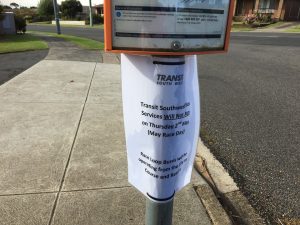
An A4 sheet stuck under some bus timetables at some bus stops was about as sophisticated as it got.

A very friendly and helpful spokesperson from Public Transport Victoria said the PTV would take the feedback on board for next year:

“We want to apologise to anyone who may not have been aware of the changes to bus services during the Warrnambool Cup Day public holiday.

“We’ll take on-board the community’s feedback when planning bus service levels on public holidays in the future.”

Would you like to support The Terrier? Why not throw something into the tip jar? 

Terrier Tip Jar


After Budj Bim, how will we justify racehorses at Levy’s?

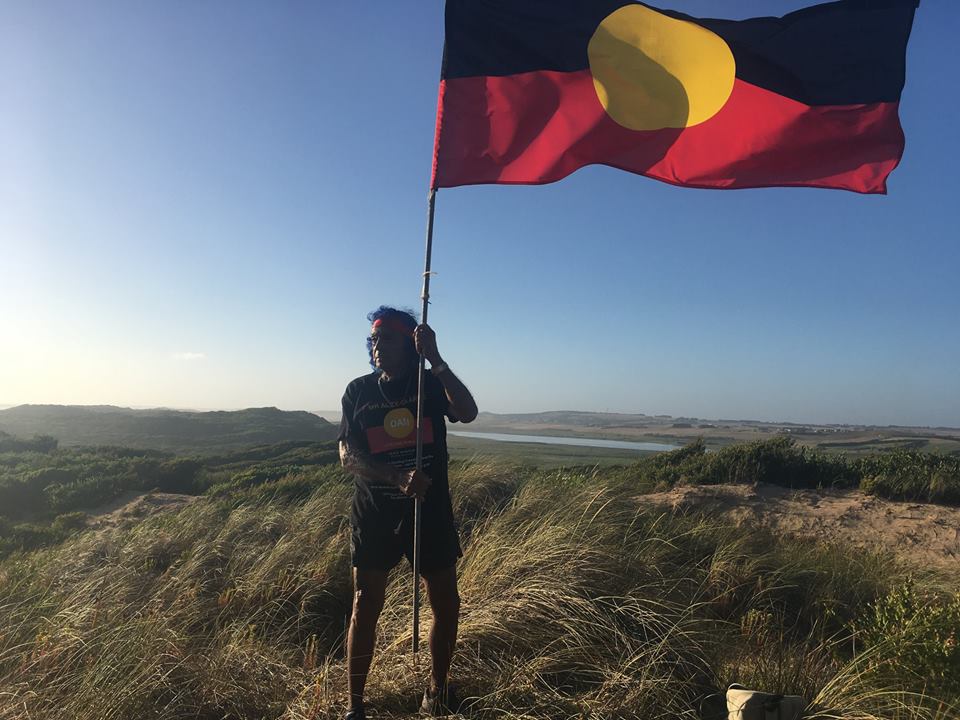
Uncle Alby Clarke, an 83-year-old marathon runner and well-known Warrnambool identity, is among the traditional owners fighting to protect Levy’s Point from racehorse training. Image: Belfast Coastal Reserve Action Group.

Carol Altmann – The Terrier

Once Budj Bim is declared a UNESCO World Heritage site, as is expected in July, how on earth will we justify large-scale racehorse training at Levy’s Beach?

What will we tell visitors from around the world who will travel – and believe me, they will come – to see our wild coastline and its incredible indigenous history, about racehorse training in a coastal reserve, as is due to happen from November?

“Oh,” they will ask quizzically, “so the traditional owners are okay with it?”

Actually, no, the traditional owners are not okay with it. They have never been okay with it, but we went ahead with it anyway.


Actually, we shall have to add, the Gunditjmara people said from day one that they did not want large-scale racehorse training at Levy’s Beach and Aboriginal elders are still fighting with all their might against it, but their voices were not enough.

In fact, we shall have to confess, the traditional owners were told they will just have to move their artefacts out of the way, as if they were a neat stack of objects lying on the surface like grandma’s best china.

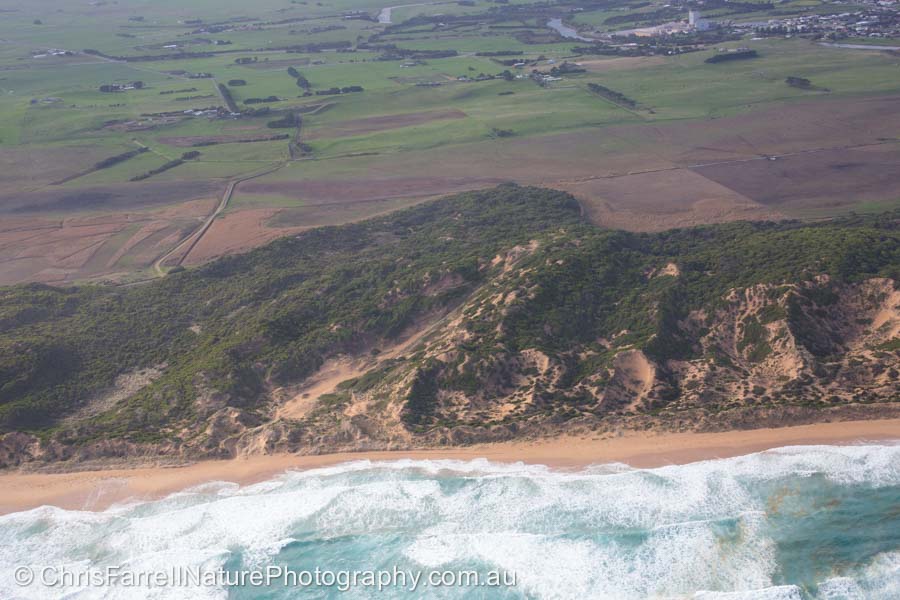
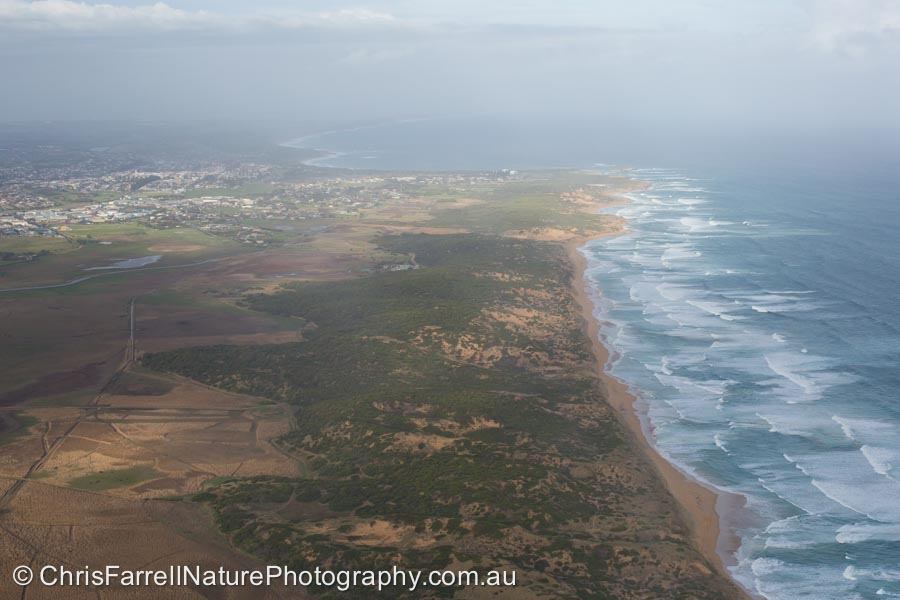
The stretch of Levy’s Beach on the Tarerer coast/Belfast Coastal Reserve, that will be open to large-scale racehorse training. This image was taken by Chris Farrell yesterday, May 25, 2019.

“Oh, but what about the spiritual and cultural connections that indigenous people have to this stretch of coast?” the curious will ask.

Well, we shall explain, they have been told to “share”, because the beach “belongs to everyone” and “sharing” has always worked so well for indigenous people in the past…

Honestly, how will we justify it? I can already feel the shame.

I am astonished that the resistance of the traditional owners to having up to 160 racehorses a day at Levy’s beach, five days a week, from this November was not enough to stop this plan dead in its tracks.


It is particularly astonishing given the Warrnambool City Council has embraced the significance of Moyjil/Point Richie, and is acutely aware of including indigenous stories in the future management of Lake Pertobe/Pirtup Killingk.

All fabulous stuff.

The WCC is also involved in developing a masterplan for the future of Tower Hill, which is yet another jewel in the rich indigenous history of our southern coastline that stretches from Moyjil, to Levy’s, to the Crags, to Deen Maar, around to Portland and the battlefields of the Eumerella wars, up to Budj Bim and Lake Condah.

We are sitting on a tourism mecca.

Make no mistake, indigenous and environmental tourism is the way of the future.

The stretch of wild Tarerer coastline that forms part of the Gunditjamra/ Eastern Maar story now receiving public recognition. Image taken yesterday, 25 May 2019, by Chris Farrell.

The UNESCO listing of Budj Bim/Mt Eccles will be a gamechanger and the State Government knows it, having allocated $5 million toward the next step before the listing is even final.

When it is confirmed, it will put Budj Bim up there with Kakadu, the Great Barrier Reef and Uluru.

And next month, coincidentally, globally celebrated indigenous opera singer and composer Deborah Cheetham will premiere a new work around the resistance wars that happened right here.

It will be Australia’s first indigenous requiem and it has been inspired by the terrible and tragic events during the colonial settlement of south-west Victoria that we are only now coming to understand.

All of this is unfolding around us in Warrnambool and yet, in Warrnambool, we are about to plonk large-scale racehorse training right in the middle, just a few miles from a beautifully kitted out racecourse and, of course, Lady Bay beach, where racehorses are already allowed.


Why?

Jobs? Really?

If that is the only justification (leaving aside the argument about the mental health benefits to the racehorses which, to me, must be the ultimate insult to traditional owners), then it is ridiculously short-sighted.

You can see racehorses and racetracks in dozens of countries around the world, but there is only one Tarerer coastline, one Levy’s, one Crags, one Deen Maar, one Moyjil.

These places are precious and irreplaceable and we are so fortunate to have them right here. They are a part of our future and what a wonderful future it could be.

The good news is that it is not too late to turn things around.

We can still ask our civic leaders to step back from making what will be a terrible mistake.


There is still time for our council, the State Government, and those in the racing industry who are pushing hard for access to Levy’s to respect the wishes of the traditional owners, to acknowledge that racehorse training can happen elsewhere, and to all work toward protecting this precious piece of coastline from further harm.

We can then hold our heads high as a part of the Budj Bim to Moyjil story – a story that goes back tens of thousands of years and is of global significance – rather than fumble for answers when we are asked to justify the unjustifiable.

So which path will we choose? Pride or shame? I know which path I want to be on.

Would you like to support The Terrier? Why not throw something into the tip jar? It all helps!

Terrier Tip Jar