Mayor Herbert swept up in WCC credit card scandal
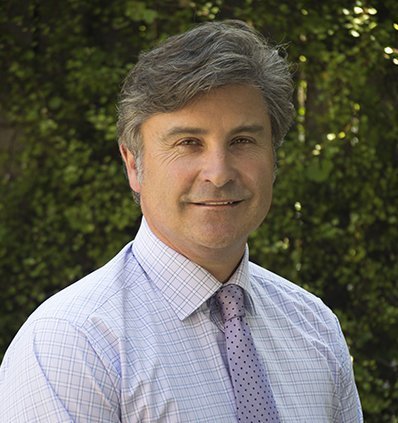
Silence: Mayor Tony Herbert is running a mile from the credit card scandal that has been exposed within council. Image: WCC.

Carol Altmann – The Terrier

Tonight I start drilling into the detail of that big fat spending on one Warrnambool City Council corporate credit card and who is supposed to be keeping an eye on things.

Because, as it turns out, three of the people who are supposed to be keeping an eye on things have also been sitting at the very tables where the breakfasts and brunches have been served.

This includes Mayor Tony Herbert.

And it includes City Growth Manager Andrew Paton, who is designated to scrutinise and authorise spending on the credit card held by Visitor Economy Manager David McMahon.

Both of these people – Mayor Herbert and Mr Paton – are on a council tourism committee (VEAC) with Mr McMahon, with Cr Herbert as co-chair.

Cr David Owen was also on the committee.

As a result of Freedom of Information and cross-checking, I can tell you that this committee held every single one of its meetings in 2017 and 2018 over breakfast at either a café or restaurant.

And, you guessed it, each time the bill was paid with Mr McMahon’s credit card.


And each time that bill was well over $100: a $165 breakfast at the Pavilion, a $161 breakfast at the Mid City Motel, a $133 breakfast at Brightbird, another $112 meeting at Brightbird…

VEAC is the only committee of the council’s seven advisory committees to do this.
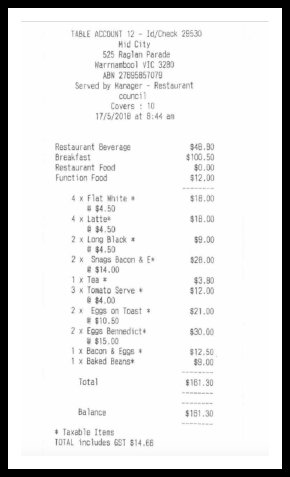
Official meet and eat: Breakfast at the Mid City Motel in May last year for $161.

All the other committees hold their meetings in council offices, probably under harsh lights and over a packet of assorted creams.

But wait, there’s more. There always is.

According to the documents released through FOI, Mr McMahon also wrote “VEAC” on a string of receipts that have nothing to do with VEAC’s official meetings.

In terms of accountability, this is the most worrisome. 


When VEAC meets, it has to take minutes and these minutes are reported to council: those are the rules set out in its terms of reference.

Yet Mr McMahon’s receipts show claims for a string of “VEAC” breakfasts and brunches for which there are no minutes, or any public record at all that I could find.
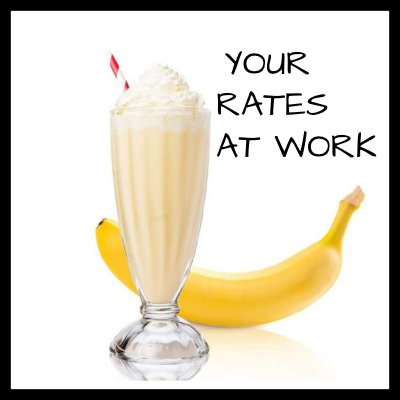
Perhaps this is because most of these meals were enjoyed in the summer holiday period and so maybe everyone was wearing shorts and nobody had a pen.

As a result, we have no idea why the gathering was held, who was there, or what was discussed.


These five summer gatherings included:

a $154 breakfast at Main Beach Kiosk on 21 December 2017,

a $51 lunch at The Pavilion on Wednesday 3 January 2018;

$13 spent at Fishtales on Saturday 6 January 2018;

an $80.50 brunch at The Pavilion on Friday 12 January 2018 and;

a $102 breakfast at Clovelly Restaurant on Thursday 15 February 2018.

Boy, that is one very enthusiastic committee, which it isn’t, because it recently fell over and pretty much had to start again, but that is another story.

Of the above, one receipt in particular leaps off the page: the $80.50 spent at The Pavilion on 12 January 2018.

This $80.50 brunch was held during school holidays and included a kid’s pancake and two milkshakes: one caramel, one banana. In the absence of any further explanation, make of that what you will.

For other meals, there was no itemised receipt at all.


Despite this, all of the receipts were approved, so you and I and every other Warrnambool ratepayer picked up the bill.
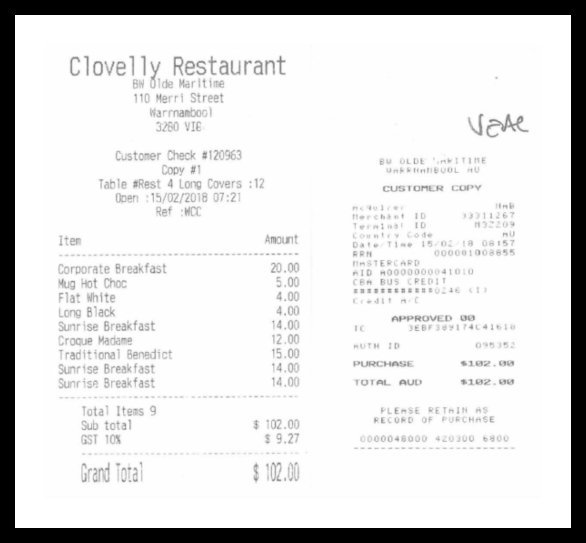
An unofficial VEAC meeting over a $102 breakfast at Clovelly Restaurant in February 2018. There is no public record of who attended or what was discussed.

Mayor Herbert has made much of the council being “transparent” and he loves to use this word when he talks about the council under his watch: it sounds impressive, noble even, but in reality it rings hollow.

As he was committee chair and is the Mayor, I sent Cr Herbert a number of questions 12 days ago about this VEAC spending, including why it was allowed, whether he knew about the “unofficial” meetings, and how it could be justified to ratepayers.

The response from Mayor Herbert has been silence.

The response from the council has been silence.

Welcome to transparency and accountability, Warrnambool City Council style.


Only Cr Owen, who as we know is battling cancer, got back to me within 30 minutes of my questions and said he was “mortified” to learn that the meals for the official VEAC meetings had been paid for by ratepayers. He offered to repay his share.

This whole scenario strikes at the heart of what this credit card saga is all about:

Can all of the spending be justified?

Is all of it scrutinised?

As we are talking about public money, these questions apply whether it is a $7 banana milkshake or $600 worth of grazing plates.

It appears at some point that someone raised a red flag, because between $5000 and $6000 was repaid on Mr McMahon’s credit card before this all became public via FOI.

That is a lot of money.  It means either the council’s credit card policy was extremely vague, or it was ignored.


We are not supposed to know about the repayments, but I will be writing more about those later.

To be super clear, the big picture here is about that dull word called governance, which is why the Victorian Auditor General’s Office has recently been all over the potential for credit card fraud by council staff.

The CEO of Strathbogie Shire Council resigned earlier this month after the Auditor General exposed credit card problems very similar to those we are seeing here.

And remember, what I am exposing is just one of the 81 credit cards in use at the WCC.

More soon.

In the meantime, I want to thank each of you for supporting The Terrier by either throwing something into The Terrier Tip Jar, which helps pay for FOIs, or sharing my stories on social media, or telling a friend, or liking the FB page…. thankyou. We are keeping the bastards honest.

On we go.

*VEAC is made up of two councillors, two senior WCC staff and five members of the community. I am not naming the community members, as they are not responsible for running the committee. Cr Peter Hulin is the new chair of VEAC and Cr Herbert is co-chair. Its first meeting for 2019 was held in offices at Flagstaff Hill.

Terrier Tip Jar


Snow White, the Seven Dwarfs and the city of WooBoo

Snow White and the seven elected members of WooBoo, including Grumpy, all working to make life better for its citizens.

Carol Altmann – The Terrier

This is a budgetary fairytale based on fact. The numbers are real, the names are not.

Once upon a time, in the town of WooBoo, there was a town leader, Snow White, who was paid more than $310,000 a year to work for the seven dwarfs who had been elected by the people of WooBoo to look after WooBoo and help it prosper.

Exciting things were happening in WooBoo under Snow White’s leadership.

There was a big, money-losing festival for children, there was a maritime museum with few boats but a new $3 million sound-and-light show that promised to lure carloads of tourists, there were parties at the racecourse, new public toilets, new parking meters, pretty roundabouts and still lots of money left over for the WooBoo Council to spend on consultants, credit cards, conferences and staff development.

Most of the seven dwarfs were ecstatic, except for Grumpy. Every council has a Grumpy, and Grumpy was seen as a troublemaker.

“Can we afford all this?” Grumpy would ask. “Does this all add up? Why don’t some of these figures make sense?”

“Of course we can,” said Doc and Happy in unison. Unlike some of the other dwarfs, they had represented the Town of WooBoo for many years and had grown fond of Snow White and her team of highly paid helpers.

Mayor Sneezy was equally as enthusiastic: “WooBoo is aspirational, sophisticated and cosmopolitan and I wish people would stop being so negative!”

The spending went on. Sometimes it was on necessary but boring things, like $5.5 million for a drainage system to avoid parts of WooBoo flooding.

The glittering, shiny upgrade of Justice von Liebig St started at $15 million…..

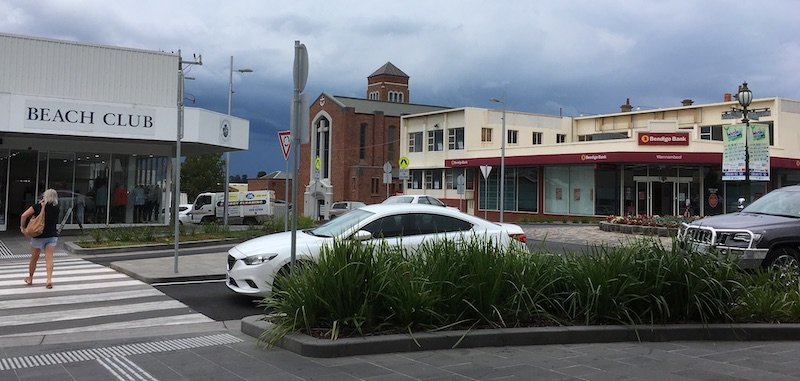
And sometimes it was for sparkly things, and the biggest of all was the $15 million upgrade of the main street of WooBoo, with shiny new pavements, new trees, new lights, drinking fountains, more flowers and planter boxes and a much narrower road with so many pedestrian crossings that WooBoo drivers could no longer take their eyes off the road for a second.

The people of WooBoo were happy to see their tired main street being given the full Ritz treatment, even if they privately wondered what was going to happen to the other town streets with their peeling buildings and broken footpaths.

Don’t worry, they were told, celebrate the rise of wonderful Justice Von Liebig St!

Meanwhile, in the MelBoo office of the chief money watcher, the Victorian Auditor-General, a little red light was flashing.

It had been flashing quietly every year since 2014-15 and it warned a “high risk” situation was developing. This high risk was that the Town of WooBoo did not have enough money of its own to fund its operations, once it removed all the one-off gifts and grants from Grandma and Grandpa Government.

In particular, the Auditor General found WooBoo might have trouble paying to repair and replace things once they wore out, like footpaths and playgrounds and bridges.

Excuse me, is that a cliff? No, surely not?

The red light blinked, but in the town chambers of WooBoo the party went on until, one day in late 2018, it stopped.

By then, Grandma Government had put her foot down and capped rates so councils could not just keep asking ratepayers for more. Instead, annual rate rises would be capped at between 2% and 2.5%.

By then, the money-losing WooBoo children’s festival had been axed abruptly. By then, it was becoming clear that the carloads of tourists were not going to the maritime museum.

The seven dwarfs had to absorb some hard truths.

One of these was that the WooBoo capital works budget for 2017-18 had blown out by a whopping $6 million from $17.6 million to $24.6 million.

A big part of this was dressing up Justice Von Liebig St, the cost of which had grown from $15 million to around $19 million, including $8 million that would need to come from the citizens of WooBoo.

The big drainage project had also been in trouble, with the first contractor going broke and the final cost still not known until it is all finished.

On top of this, recycling fees had skyrocketed, the cost of keeping a pet had shot up, parking in WooBoo was more expensive, rates would still rise, and there was still not enough money for all the old roads, pavements and playgrounds to be repaired.

Things were suddenly not so good.

Snow White at her farewell function before taking early retirement and moving to her seaside castle.

Grumpy thumped the table and yelled “I told you so!” and this time Mayor Sneezy agreed with him.

Happy and Doc, being astute in the art of public relations, told the people of WooBoo that they were committed to tackling a crisis that they had “inherited” and the only way to do this was to ask the people what they thought, ignore that, and then seek to bust the rate cap anyway.

The three other dwarfs, who were still trying to get their heads around it all, nodded in agreement.

And so, dear reader, hi-ho, hi-ho, off to the Essential Services Commission we go.

And what of Snow White?

Ah, she sensibly retired early to her castle by the seaside, from where she watches the hard-working people of WooBoo rise up and prepare to march past the empty grounds of the maritime museum, and down the glittering, gridlocked avenue of Justice Von Liebig St, named, as it so happens, for the German industrial chemist who invented fertiliser to replace cow dung.

The End.

[For those who want to go deeper, you can find the Auditor-General’s red light here on the WCC’s adjusted underlying result, page 79. The WCC 2018-19 budget is here. You can find the capital works details at item 4.5.1 on page 45.]


Adam Kempton: 12 reasons why not to break the rate cap

By Adam Kempton

Lawyer, former Liberal MLA for Warrnambool, provocateur, West Highland Terrier

1. Unfair burden: Rates are in essence a regressive tax. That means they affect people with lower incomes greater than high income earners . If you are a pensioner and the rate cost to you increases by one dollar, then the impact on you is greater than the millionaire whose rate increases by one dollar. This means the rate increase imposes a disproportionate tax penalty on low income people.

Does the council want to be a council for the rich?

This, in essence, is stealing from the poor to give to the rich.

2. There has been no increase in pensions or wages for many years, so why should council increase its revenue way ahead of the community?

3. Local council ( and other tiers of govt ) more or less have a guaranteed flow of revenue ( taxes/rates) , unlike other people and sectors of the economy.

4. The new Chief Executive needs to be given a go in finding savings in reforming council so no increase is necessary.

5. The results of the community consultation poll, which strongly opposed the rate increase, were discarded.

6. There is a federal election in May. The council does not know the positive or negative impacts of a change in Federal Government on its rate/revenue position.

7. It will be a massive embarrassment if the Minister or Essential Services Commission – to which the council applies for the increase – rejects your application for the increase.

8. The rate increase sends a bad signal to the community that says the council will always take the soft and easy approach by increasing its revenue, rather than seeking to find efficiencies.

9. Opposing a rate increase signals the council is applying the same principles that the private sector and households impose upon themselves in the same situation.

10. Is there, or has there been, a long-term (say 10 years ) strategy in which this rate increase would fit?

11. What consideration has this proposed rate rise being given in the context of the massive infrastructure proposed spend for this area? And what consideration has been given in the event that infrastructure spend does not occur?

12. What account has been taken of the economic downward pressure on the area through the milk price and cost pressure in the important dairy economy? This has serious effects right through all sectors of the local economy.

The Terrier is taking a closer look at how we went from budget stability to a budget emergency. It is a slog through some pretty dry data, but worth it. Stay tuned for updates.


WCC rate rise and May Racing Carnival corporate tent

The W’bool City Council’s corporate tent at the May Racing carnival has been a permanent fixture in its budget for at least 15 years. Image: Vinfolio

Carol Altmann – The Terrier

How to save $700,000 in seven days, instalment #6:

Today is another reminder rather than a revelation: for at least the past 15 years, the Warrnambool City Council has hosted a marquee at the final day of the May Racing Carnival at a total cost to ratepayers of around $225,000.

I am still waiting for a response on how much the council paid last year for this corporate networking tent, but in 2014 it spent more than $17,000.

For one day.

If we tally this up over 15 years, at an average, conservative cost of around $15,000 each time, we are suddenly up around a quarter of a million dollars.


This money has gone into hiring the marquee, the catering staff, the chairs, tables, decorations, hors d’oeuvres, alcoholic and non-alcoholic drinks, member’s reserve entry tickets and wristbands.

Ratepayers even paid for the race books.

I first wrote about this marquee in 2014, when it emerged the guest list was largely made up of members of council and their partners, local MPs, local executives, representatives from the council’s Melbourne law firm, Maddock’s, a couple of associates of then-councillor Brian Kelson, and current Mayor Tony Herbert, who was invited as the then chair of Commerce Warrnambool.

So much for it being a networking opportunity.

Networking is supposed to involve connecting with people you don’t already know.

The final day of the May Racing carnival is seen by the council as a networking opportunity. Image: Only Melbourne.

Cr Peter Hulin has long challenged the justification for the marquee, but it remains firmly in place.

Indeed when Cr Hulin again questioned its relevance in 2015, then Cr Jacinta Ermacora said the marquee was an important part of the council “supporting the local racing industry”.

This made thoroughbred horse racing sound like some form of charity rather than part of a multi-billion dollar enterprise based on gambling.

I am pretty sure the council could find far more needy causes who are out turning sausages in the carpark at Bunnings each Saturday.

And this is the bigger problem, because while $17,000 a year is not much in an $89 million council budget, it is still a lot of money to a majority of people: this is what the council loses sight of.

It can drop $17k of our money on one afternoon’s entertainment without batting an eyelid or producing one shred of evidence as to its value.


Because it is all about “networking”.

In this case, however, the networking is not working, especially now the council is asking ratepayers to either pay more in rates, above the 2.5% State Government cap, or face service cuts.

The final instalment tomorrow.

If you would like to see The Terrier keep digging up, sniffing out and chewing on local issues, please make a small contribution below.

Donate


WCC rate rise and a $450,000 roundabout makeover

The Kepler St-Koroit St roundabout is in line for a $450,000 makeover later this year, in addition to new zebra crossings like those now operating in Liebig St.

Carol Altmann – The Terrier

How to save $700,000 in seven days, instalment #5:

On the same night Warrnambool City councillors decided to explore breaking the rate cap – on December 3 last year – they also agreed to spend $450,000 to spruce up a single city roundabout.

That’s almost half a million dollars to beautify just one roundabout – at the corner of Kepler and Koroit streets – and they did it without a hint of irony.


Not one of the five councillors who supported potentially raising rates above 2.5% (Cr Peter Hulin voted against and Cr David Owen was absent) seemed concerned that they expect ratepayers to choose between paying more for services, or having services cut, while they plunge money into non-essential projects.

Like dressing up a roundabout.

Mayor Tony Herbert was a strong supporter of the upgrade, saying Kepler St was the most important CBD street after Liebig St. Image: WCC

The council will draw $450,000 from the city parking fund – putting that fund into deficit – to upgrade the roundabout by the end of this year.

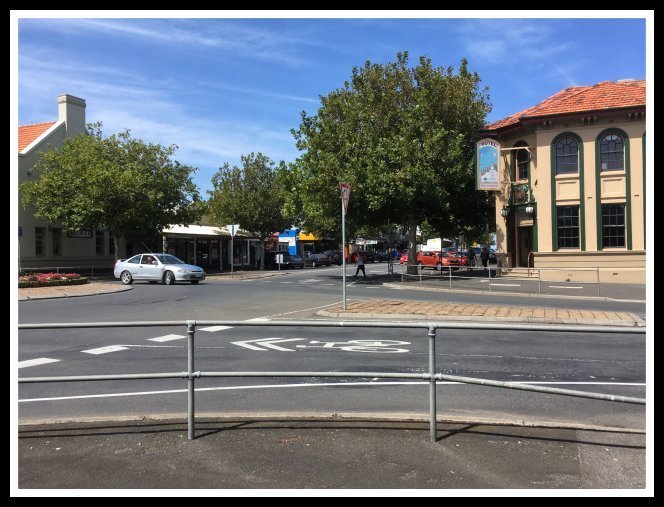
This is the busy roundabout outside the Warrnambool Hotel and Ishka etc, which is no doubt unfriendly to pedestrians in its current state.

But improving pedestrian safety (more about that in a moment) and a $450,000 makeover are two separate issues here.

Mayor Tony Herbert was particularly enthusiastic about the improvements because, he says, Kepler St is “the next most important” CBD street after Liebig St.


“It doesn’t matter who occupies businesses there, but I believe that is the next street to get the work done,” he told the meeting.

As it happens, Mr Herbert does occupy a business there, with his office smack bang in the middle of Kepler St, in the Wyton’s cafe precinct.

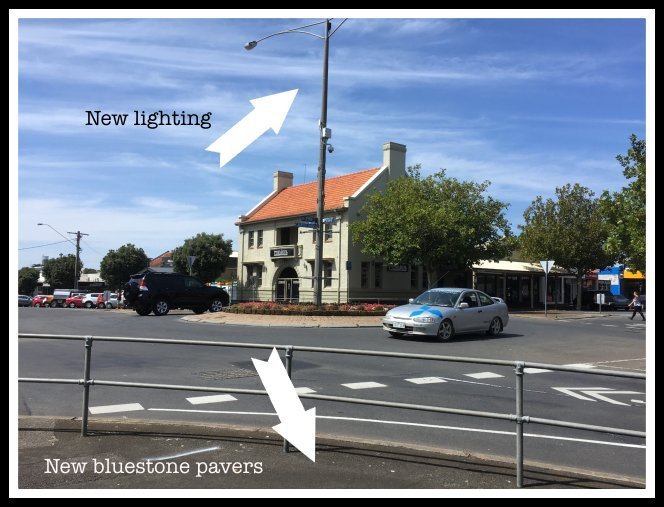
The $450,000 makeover at the Kepler St intersection will include bluestone pavers on each corner and new lighting in the centre of the roundabout.

Until last year, this intersection wasn’t even part of the city renewal plan, but it is now.

Now it will have bluestone paving wrapped around each corner foothpath and central lighting poles that allow for banners and decorations. (See the plan here).

The council calls this “high end aesthetic treatment” and there is no doubt it will be swish compared to boring old bitumen and basic lighting, but is it really necessary in a cost-cutting environment?

It’s a bit like fixing the electrical wiring in your house – for safety – and digging into your savings to replace all the light shades at the same time.


Because what started the momentum for this makeover was money from the Transport Accident Commission (TAC) to make the CBD safer for pedestrians.

The TAC will fund almost half of a $1.67 million upgrade to three CBD intersections, including the Kepler St/Koroit St roundabout.

The council will use that money to replicate those painful zebra crossings that are now in Liebig St and which make drivers give way to pedestrians as they enter and exit a roundabout.

(VicRoads, by the way, say this style of zebra crossing can work, but they also create a greater potential for rear-end accidents. But I digress…)

Love ’em or hate ’em, you’re getting more of them. The same style zebra crossings in Liebig St will be replicated at the Kepler/Koroit streets intersection and two others around the CBD.

Having secured money to build the crossings, the council decided to go one step further.

It rummaged around behind the couch and found a neat $450,000 to throw into beautifying the Kepler St/Koroit St roundabout.

Importantly, such a makeover would also create a distraction from the fact the council has run out of money for Stage 3 of the CBD renewal along Koroit St, which is not surprising given the other two stages blew out by more than $3 million.


So from not being part of the CBD renewal, the Kepler/Koroit intersection now has star billing.

In fact it will probably be all that happens along Koroit St between Kepler and Liebig St for some time.

Even so, can new pavers and lamps really be a priority when the council says it must save $700,000 a year from its budget?

It’s too late to ask that question because the beautification is going ahead.


Your input, via the council’s online consultation that opened last Friday, is to decide what else you might like to see added to the works and when you would prefer the 12-week project to start.

There is no option to say, um, we don’t want that style of fender-bender zebra crossing and, by the way, can we also save the $450,000 for something more important?

There is actually no mention of the $450,000 cost of the “high end aesthetic treatment”.

This figure remained buried inside the council agenda and minutes: until now.

More tomorrow.

If you would like to see The Terrier keep digging up, sniffing out and chewing on local issues, please make a small contribution below.

Donate