Lyndoch: time to speak up, step up, and pull back the power
Carol Altmann – The Terrier

The time has come to use our voices, stand up for Lyndoch and show that Warrnambool will not tolerate bullies, no matter who they are, where they come from, or what they promise.

I have now had contact with 33 people, including past and present Lyndoch workers, about the toxic culture and the warped priorities that have allegedly taken root within its walls. By the end of this weekend, I will have spoken to 36.

We can’t turn away and expect the victims of this culture to fix it; they can’t.

Instead we, as a community of terriers, need to get involved, to step up and hold the Lyndoch board to account for what is unfolding on its watch.

We did this with the Warrnambool City Council credit card scandal and we can do it again.

Some of Lyndoch’s most senior and experienced staff are among the 70 to 80 people who have left in the past two years and the resignations just keep coming, yet the board remains silent.

If this was happening in a primary school, or our hospital, or inside TAFE, it would be front page news.

So would some of the decisions around the use of public funds.
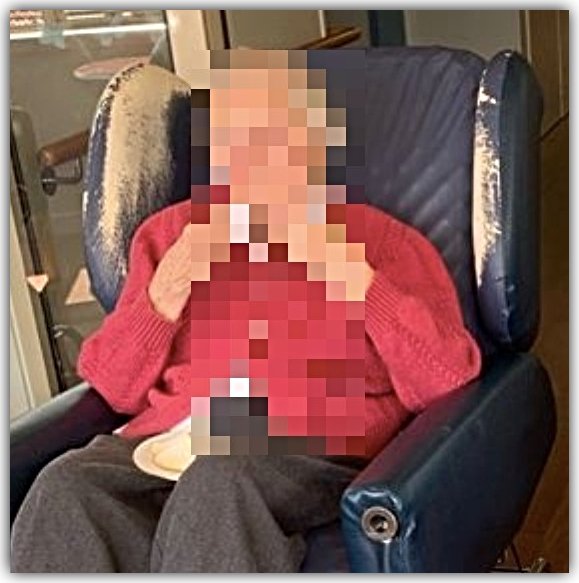
Core business: This photo, recently posted on the Lyndoch Facebook page, shows the worn condition of some of the specialised furniture used by residents. (I have pixelated the image for privacy).

As it stands, Lyndoch Living – as a registered charity – has spent more than $100,000 on gambling via sponsoring a steeplechase and hosting a corporate marquee at the May races, and somehow this passes as core business.

We also know that Lyndoch plans to spend millions of dollars to build and run a new medical centre that nobody has asked for, while at the same time it doesn’t have enough experienced nurses to fill shifts, and basic furniture needs replacing.

Enough.

I am unable to look on while personal power trips are pursued at the expense of Lyndoch staff wellbeing and, ultimately, the care of our elderly.

So this is what we can do:

contact the board: chair Kerry Nelson (knelson@mpower.org.au) or any of the other board members: Andrew Paton, Cr Sue Cassidy, Ron Page, Percy Eccles, Kane Grant, Peter Downs, Suzanne Coulson and Lorraine Mielnik via a letter to Lyndoch Living, 10 Hopkins Rd, Warrnambool.

ask the board about staff morale, staff resignations and Lyndoch’s core priorities;

contact our local MP Roma Britnell (roma.britnell@parliament.vic.gov.au) and ask her to investigate, just as her Liberal colleague Cindy McLeish did in response to the troubles at Seymour Health;

write a letter to the editor of the local newspaper which, unfortunately, no longer does investigative journalism;

– most importantly, become a member of Lyndoch: it’s free to apply, can be done by filling out a simple form, and means you can have a say on where Lyndoch is heading and who is in charge.


At the moment, Lyndoch has very few members, including the nine people on the board, two life members (Ron Patterson, David Atkinson), the CEO Doreen Power, and four senior staff.

It’s a tight little shop.
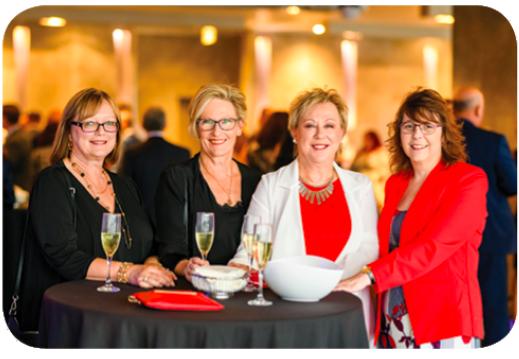
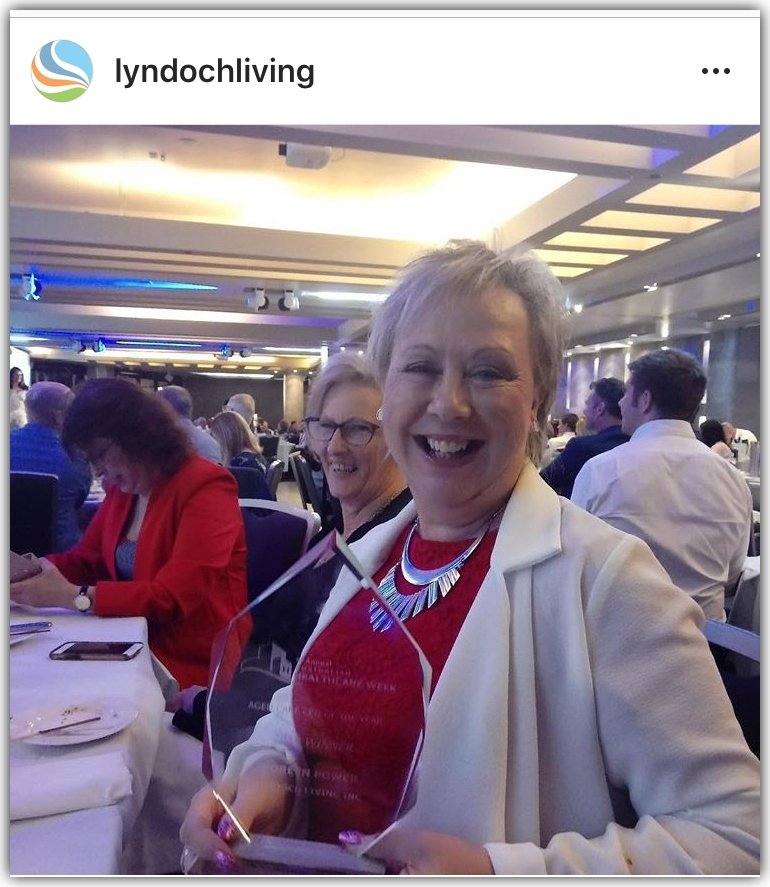
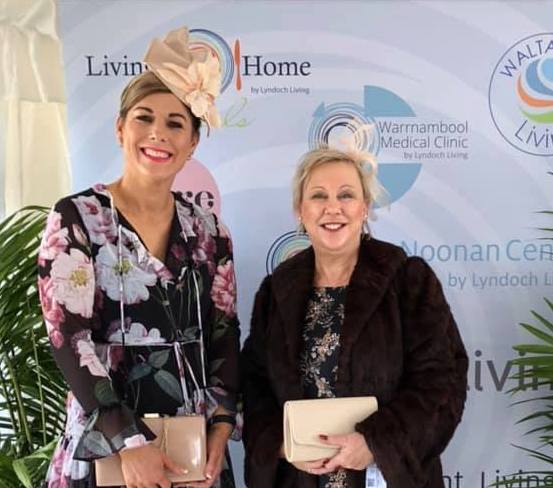
Core business: Lyndoch company secretary Lyanne Vinecombe, board chair Kerry Nelson, CEO Doreen Power and Director of Nursing Julie Baillie all flew to Sydney to see Ms Power receive an industry award. Image: Lyndoch Living.

Under the new rules of Lyndoch (last year it changed from an association to a company limited by guarantee), these members have significant powers, including standing for the board, voting for the board, and being involved in the AGM.

In fact, unless you are a member, Lyndoch has no obligation to even tell you when the AGM will be held.

This is what happened last October when, for the first time, the Lyndoch AGM was not advertised, nor were the board vacancies.

But here’s the rub: the board gets to decide who can become a member of Lyndoch, so even if you apply, you may not be accepted.

It’s open to all sorts of manipulation and perhaps explains why the current board is such a curious mix.

There are no GPs on the board. There is no lawyer.

But there is the former CEO of the Warrnambool Racing Club, Mr Downs, who now lives in Melbourne and works for Moonee Valley: if that’s not a massive conflict of interest between the board and Lyndoch’s support for racing, Barry the Bullshite Detector and I will run three times around the racecourse.

(Actually, Barry, we will need to do four laps, because Ms Power and Mr Downs also have shares in a racehorse.)

The Lyndoch company secretary – a former PA to Ms Power – also has no accounting or legal qualifications, despite now monitoring a multi-million-dollar organisation.

From all the evidence, none of these people in charge are asking the hard questions about Lyndoch’s operations, or none are asking them publicly.
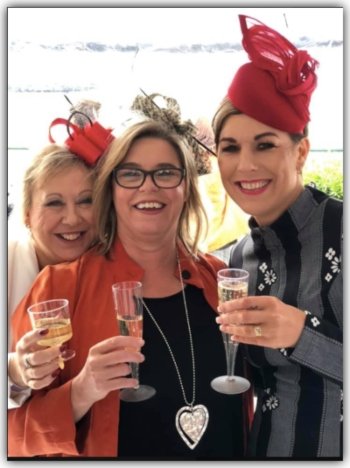
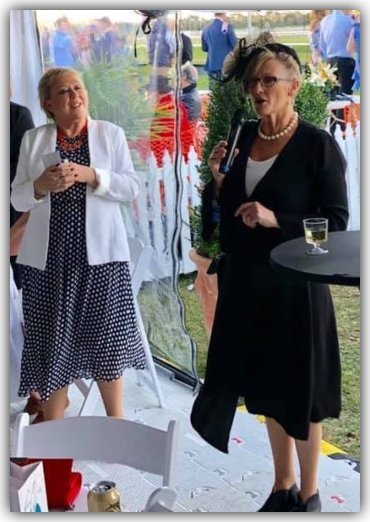
Core business: CEO Doreen Power and board member Cr Sue Cassidy enjoying drinks in the Lyndoch corporate tent at the May Races with tourism head, Liz Price. Image: Lyndoch.

Cr Cassidy, for example, has gone from being a power house to a mouse. The bold woman who stood up and exposed the games behind the council mayoral race has nothing to say about Lyndoch. She won’t return my calls.

Chair Kerry Nelson? Not a word.

They are supposed to be our eyes and ears, yet all we have is silence.

To me, the entire Lyndoch board and senior executive are accountable for the distress of every single Lyndoch person who is suffering or has suffered.

So I am going to keep exposing what I know, and I am going to also apply to become a member of Lyndoch, although I doubt I will be accepted, even though my mother was in Lyndoch for 10 years, and my late Dad, as a bricklayer, helped build some of it.

Warrnambool people started Lyndoch, we still own it, and we all have a stake in caring for its residents, its staff and its future.

What started as an important story for me is now a campaign – unashamedly – to restore a bold community voice inside Lyndoch and to stand up for those who need us to be strong.

On we go.

You can find the Lyndoch membership form here and its new constitution here.

Next: digging into the multi-million-dollar medical clinic.

If you would like to support the work of The Terrier, you can throw something in the tip jar.

Terrier Tip Jar


Lyndoch board: Seymour sounds a warning on staying silent

One of the many letters written to the local newspapers about the crisis at Seymour hospital that came to a head during the tenure of former CEO Doreen Power.

Carol Altmann – The Terrier

If we need a canary in the coal mine about what is unfolding at Lyndoch Living, it’s what happened at the Seymour hospital earlier this decade.

Seymour hospital was plagued with problems in the early 2000s, with a string of doctors resigning, a loss of birthing services, a dysfunctional board, and four official inquiries into the mess in less than two years.

Into this crisis came Doreen Power, who was appointed CEO of Seymour Health in 2007 and left in 2012, during which time the hospital saw many changes and the small town of 7000 people virtually imploded.

Ms Power, who is now CEO of Lyndoch Living, was hired by the Seymour hospital to get things done and she did: birthing services were resumed, the doctors came back to work, and the hard-working staff at the hospital continued to provide the best services that they could.

But behind the scenes of all this “success” was a human train wreck of broken, dis-spirited people, many of whom were allegedly treated so appallingly that they are only just starting to recover and some say they never will.

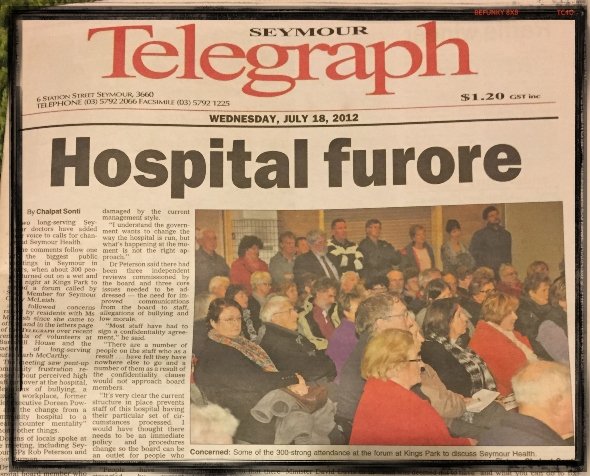
A record crowd poured into the Seymour football clubrooms in July 2012 to hear what would be done about multiple problems at the hospital.

I have spoken to many people from Seymour about this period and the same stories are repeated over and over:

staff being bullied, losing their jobs for no reason, being “marched off the premises” without warning, hounded over minor issues, feeling disempowered, afraid, depressed and having “nowhere to turn” because the board either wouldn’t listen, or wasn’t told.

This sounds frightening familiar to what is now allegedly unfolding at Lyndoch Living.

“People became severely depressed and traumatised and felt there was nobody who could help them,” said one Seymour woman who spoke on the condition of anonymity.

“There was a sense the board had been hand-picked and they wouldn’t help. You were told if you approached the board, you would be dismissed…if you wanted to keep your job, you had to shut up.”


In desperation, some staff organised a Seymour version of an underground resistance by wearing green ribbons to work as a sign that they were a “safe” person to approach if you were being bullied.

Can you imagine?

The terrible reality for these Seymour staff is nobody from the hospital board stepped up, staff were too scared to speak up, and the damage rolled on until the wider community was alerted to what was happening.

A portion of the anonymous letter drop sent to residents of Seymour in 2012.

An anonymous letter drop was circulated throughout Seymour in early 2012 and local state MP Cindy McLeish, now deputy Opposition leader, was bombarded by people pleading for her to intervene.

Ms Power resigned as CEO in May 2012, just two months before Ms McLeish organised a public meeting that was held in the local footy clubrooms before a capacity crowd of more than 300 people. Nobody from the hospital executive showed up.

Neither Ms Power or the executive, however, escaped the wrath of the crowd.

“The meeting saw pent-up community frustration released about perceived high staff turnover at the hospital, allegations of bullying, a “toxic” workplace, former chief executive Doreen Power and the change from a community hospital to a ‘bean counter mentality’ among other things,” the Seymour Telegraph reported.

Seymour GP Dr Elliot Jarman was among the passionate speakers in the audience. He was quoted by the paper as saying:

“Over 25 years Seymour Hospital has evolved to provide first-class services. I’m proud of that. What I am not proud of is staff absolutely in tears, intimidated…what’s happening is (wrong).

“I’ve been to the courts, I’ve been to Worksafe…(they’re) unable to help. I’ve been seeing patients and my fellow colleagues in tears. It’s just not right. Our services are being damaged by the current management style.”

Another Seymour GP, Dr Rob Peterson, told the meeting that three core issues needed to be addressed immediately: improved communications from the board to staff, allegations of bullying, and low staff morale. Bang, bang, bang.

By the time of the town meeting, it’s understood up to 50 staff had left the hospital, either from being pressured or being fired, and a string of Fair Work claims that followed – I believe up to 14 or 15 –  have only recently been finalised.

“It broke this town and I don’t think it has ever fully recovered,” said one Seymour source.

Seymour ultimately had an intervention, with a ministerial appointment made to the hospital board to report back to then Health Minister David Davis.

By the end of 2012, the hospital chair had resigned and most of the executive team had been cleaned out after their positions became untenable.

As a local blogger, Seymour Dreaming, wrote: “why has the board been conspicuously silent when the community expressed concerns over controversial events for which is was ultimately responsible?”

Why indeed?

And then this, a heart-felt letter to the paper from resident, Janet McKenzie, which says it all:

“The (hospital) board…and past and present executive staff need to be accountable for the shame, hurt, stress and humiliation that has been placed on these staff and their families.

They deserve so much better treatment, as do volunteers who have so generously given their time…

These staff and volunteers must receive an unconditional apology and compensation/reinstatement for the treatment they have received at the hands of (the hospital).

It is not acceptable that is ignored as these are staff and volunteers who have given many years of unblemished, caring and passionate service..

Finally, I, like many other family members of the above staff will be there to give support, assistance and much needed emotional care to those that the (hospital) has abandoned.”


The canary is coughing at Lyndoch Living and I hope the board is listening, because this management style hasn’t happened just once before, but twice.

Next: Plenty Valley.

If you would like to support the work of The Terrier, please consider throwing something in the tip jar.
Terrier Tip Jar


Inside Lyndoch Living and why we need to be worried

Just weeks after the resignation of then Seymour Health CEO Doreen Power, a record crowd of more than 300 people turned out to a public meeting held in Seymour to address the many troubles of the hospital.

Carol Altmann – The Terrier

This Lyndoch Living story has gone to places that I never expected it to go and that includes wading into the work history of CEO Doreen Power which, to be frank, is why I am so troubled by what is unfolding here.

I will write more about Ms Power’s back story in the near future, but for now I just want to lay out the context for my concern and why I am latching on to this story for the long haul.

In the seven years before Ms Power became CEO of Lyndoch in December 2014, she held three senior positions:

First as CEO of Seymour Health for almost five years before resigning in May 2012 in the face of a virtual uprising by the small town of 7000 people.

Then as CEO of Plenty Valley Community Health for less than two years, before an interim CEO was appointed in December 2013.

And, lastly, working briefly as Director of Nursing at Tweddle Child and Family Health Service until that role was taken over by another person in February 2014.

I have spent many hours researching and talking to people about Ms Power’s time at Seymour and Plenty in particular and a disturbing pattern has emerged, one which I believe is being replicated at Lyndoch:

– a culture of bullying and dismissal

– extremely low staff morale

– a compliant board or attempts to create one

– an impact on residential care and services

– a culture of secrecy and a lack of transparency


Journalists, I can tell you, don’t have either the time or inclination to go digging into people’s work history unless it is relevant to a story unfolding now.

Ms Power’s back story is absolutely relevant and it is why I am committed to writing all that I know – based on a huge amount of research and dozens of interviews – because you need to know.

We need to know because Seymour Health and Plenty Valley Community Health, in particular, are the red flags.

Both took years to recover.

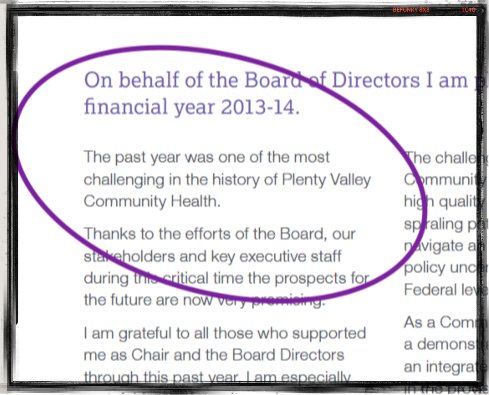
The opening sentence of the chair’s annual report to Plenty Valley Community Health, the year after Ms Power left the organisation. Ms Power was less than two years in the position.

Thanks to your help, I am going to pick apart what is happening at Lyndoch – all of it – because Lyndoch was set up by the community, to care for some of the most vulnerable in our community. Full stop, end of story.

Over the coming weeks, I am going to write about:

where Lyndoch is heading, its priorities, the breaking down of resident care, its venture into building and running a commercial medical clinic, who is paying for what, who is running what, who is in charge of what, whether Lyndoch is still primarily a charity and public benevolent institution, how the board is handling complaints, the change of the Lyndoch constitution, how the board is chosen, how the public can become members, the lack of transparency around its full financials, its support for gambling via a horse race, other sponsorship deals, potential conflicts of interest, who is involved in the new company Lyndoch HealthCare, and anything else worthy of forensic examination.

I will also be telling you much more about Ms Power’s time at Seymour Health, and Plenty Valley Community Health, and explore how she became employed by Lyndoch.

Lyndoch CEO Doreen Power having won the inaugural Aged Care CEO of the Year by Australian Healthcare Week awards in 2019. Lyndoch chair Kerry Nelson and Director of Nursing Julie Baillie also attended the Sydney event. Image: Lyndoch Living.

It’s going to be a long, slow haul, but it is an essential one.

It’s going to be tiring work, but we have done this before, you and I – the terriers and The Terrier – and we know we can make a difference.

We can be a voice for the workers (past and present) and the residents and for the Lyndoch we know and love, and together we can step up to where the majority of the board seemingly refuses to go.

If there is one thing I have learnt from my research around Seymour and Plenty Valley, it is that we need to start now.

Strap yourselves in and on we go.

More soon.

If you would like to support the work of The Terrier, please consider throwing something small in the tip jar.

Terrier Tip Jar


Lyndoch: champagne at the races, but no sheets and towels

Carol Altmann – The Terrier

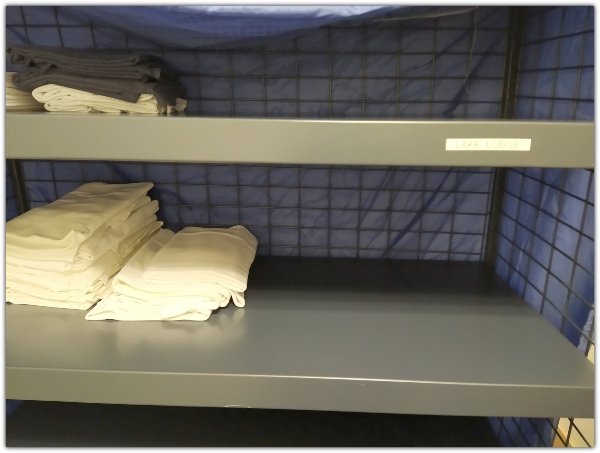
If there was ever a picture of how Lyndoch Living is losing touch with its priorities, it is this one.

This is a linen shelf that should be stacked with towels, sheets and face washers that is almost empty half way through a shift.

This is allegedly not unusual, despite Lyndoch  – a charity – getting geared up to spend millions of dollars to build a “super clinic” on its Hopkins Rd site as part of a $100 million masterplan.

Unbelievably, some nursing staff are cutting up old towels to use as flannels for showering and freshening up residents   – sorry, they are now called consumers – rather than rely on the back-up of wet wipes.

Other staff are hiding linen on Fridays so they have enough towels, sheets and face washers to get through the weekend.

Has it really come to this, you ask? Yes it has, and we need to know about it.

Lyndoch – a charity – has also just signed on to again sponsor the Grand Annual Steeplechase (at a cost of what, $70,000? $80,000?), yet a machine used to pulp cardboard urinal bottles has been out of action for months.

This means the cardboard bottles are carried by nurses across a dining room to another machine for disposal.

These are just some of the cracks that start to appear when a short-staffed system is under rising stress, and, my word, we need to know about it.

Lyndoch board member (and Warrnambool City Councillor) Sue Cassidy and Lyndoch CEO Doreen Power in the Lyndoch corporate tent at the 2019 May Races. Image: Lyndoch Living FB page.

In recent years Lyndoch has somehow lost sight of its core business, which is caring for the aged and infirm both in the nursing home and in-home care.

To most residents, this means tasty, nourishing food, having someone to talk to, and being cared for by nursing staff with the time, support and full resources to do their jobs properly.

This should be the number one and only priority for any aged care home, especially Lyndoch.

Lyndoch, we need to remember, is a not-for-profit, benevolent, charitable organisation that was set up more than 60 years ago by the Warrnambool community for the community.

We ultimately own Lyndoch, but it is run by a board on our behalf who, in turn, hire the CEO.

Lyndoch has plenty of money to fulfil its core business, receiving almost $30 million last year in government funds and another $6.1 million from client fees, with net assets worth $51.2 million.

You would think that every dollar would be directed toward the care and comfort of residents, including hiring and keeping quality nursing staff who are paid well, treated well and given all the resources they need to do their jobs well.

But no.

Instead, as I wrote last week, the staff are run off their feet and even when they do the best they can – like cut up towels for face washers – it is not enough.

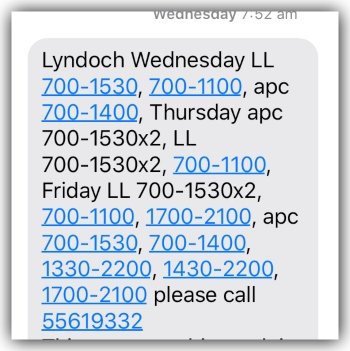
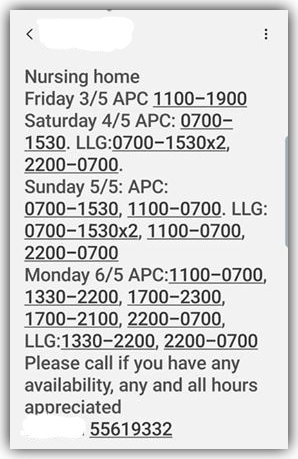
Roster shortages inside Lyndoch Living from last week.

At the same time, the Lyndoch board and CEO Doreen Power are pressing on with a $100 million masterplan, including borrowing money to build a multi-million dollar medical clinic on site for GPs, dental services and a chemist that nobody has proven is wanted or needed.

And at the same time, the number of admin staff at Lyndoch – a charity – has ballooned in the past three years from 37 to 59, with many having titles straight out of an episode of Utopia:

Director of People and Resilience; Social Inclusion and Entrepreneurial Manager; Operational Support and Improvement Manager; Project Manager Safety and Wellness.

All of those soapy titles and yet the culture is turning toxic and staff morale is sliding to rock bottom.

And then there is a revolving door of consultants who, between them, cost thousands for their expert advice.

I wish I could tell you exactly how much is being spent on consultants, but Lyndoch is yet to release its full financial figures and, given its new-found secrecy around such things, I doubt we will find the answers there.

Lyndoch Living CEO Doreen Power and Lyndoch board chair Kerry Nelson in the Lyndoch corporate tent at the 2019 May Races. Image: Lyndoch Living FB page.

Lots of really wonderful people work at Lyndoch and terrific things happen there as a result of their efforts, but I also know that so many are struggling to hold it all together.

We can either hold our head in hands, or we can actually hold the Lyndoch board to account and ask “what is being done about it?”

Chair Kerry Nelson has not responded to my questions. There is silence from all the other board members: Sue Cassidy, Ron Page, Peter Downs, Lorraine Mielnik, Percy Eccles, Kane Grant and Andrew Paton.

Are they so bedazzled by Ms Power’s “big vision” that they are not asking the tough questions? Do any board members or Ms Power ever wander down to chat with nursing staff and ask how they are managing?

As I understand it, some nursing staff have never met the CEO after almost five years.

I have never met the CEO and she will not return my calls or my emails, so – again – I can’t tell you Ms Power’s response to any of the above.

This silence is familiar territory to me, but just as with the Warrnambool City Council credit card scandal, I am slowly building a picture and the questions will keep coming because the community created Lyndoch, we care for Lyndoch and we have every right to know what is really going on.

More soon.

If you would like to support the work of The Terrier, please consider throwing something in the tip jar.

Terrier Tip Jar


Staff morale slipping to rock bottom at Lyndoch Living

Carol Altmann – The Terrier

Hear that? Alarm bells are ringing and they are coming from inside Lyndoch Living.

What follows comes from talking to dozens of people who have all expressed the same fear: the Lyndoch culture is turning toxic.

Many of the staff at Lyndoch are under so much pressure from staff shortages or low morale that they are starting to crack under the strain, or have already left. Others have been allegedly pushed out.

The images posted here are just a slice of the ‘please help’ messages of the past nine months, desperately asking for nursing staff to fill roster gaps.

Note that these gaps include during the week of the May Racing Carnival, where Lyndoch had a corporate tent and sponsored the Grand Annual Steeplechase (and has signed on again for 2020).

I have to tread very carefully here, because I know each word will be read forensically, but I believe this issue goes far deeper than the staff shortages suffered by many aged care homes across Australia.

What I am hearing is that since CEO Doreen Power took over in 2015, there has been a complete change in workplace culture that has brought an upheaval way beyond what you expect with a new chief.

This upheaval also goes further than nursing staff and into areas like catering, kitchen, supplies, maintenance, finance and administration. I am told that, as a result, up to 80 people have left Lyndoch in the past two years – an extraordinary number by any measure.

For many people, Lyndoch is no longer a very happy place, despite the “good news stories”, #hashtag slogans and Facebook snaps that would have you think otherwise.

The brave people who talked to me took an enormous risk because of fears of reprisals, but they have done so because they care deeply about the residents and for each other.

Tonight I am giving them a voice, because it seems nobody within the Lyndoch executive or on the Lyndoch board is listening.

This is what we need to hear:

So many long-serving Lyndoch staff are no longer there, with some devoting 15, 20, 30 years of their lives to Lyndoch, only to find that they were no longer wanted.

This was not how they imagined Lyndoch would treat them after such service, but their careers ended in ways that left them feeling either disillusioned or, in some cases, devastated.

Many other staff, including experienced nursing staff, have left because they could no longer tolerate the stress and how it was starting to affect their personal lives.

I know the methods that can be used: the unreasonable workload, the nit-picking, the micro-managing, the criticism, the sudden outsourcing of your job, the constant fear of dismissal, the slow wearing down of confidence.

In that environment, people choose to leave, rather than tolerate one more day.

This is allegedly what happened to many long-serving staff at Lyndoch, and to others who thought they had a career path ahead of them, only to have it suddenly fall away.

The stories I have been listening to revealed the same management pattern over and over again and I believe them.

People talked of certain staff allegedly having “targets on their backs” and the fear of who would be next, which is exactly the sort of terror that is designed to keep people silenced.

Others told of distressed staff crying in the carpark as they left work, or as they prepared to enter it.

The old Lyndoch culture, with more warmth, empathy and understanding, appears to have become collateral damage toward a big corporate, pumped-up dream that someone decided was where Lyndoch needed to go.

From the hours of interviews I have now done, I can say the new Lyndoch culture appears to be one infused with bullying, intimidation, gaslighting and a poisonous game of divide-and-rule where some people are looked after at the expense of others.

In this world, not all staff suffer, only some: there are the insiders and the outsiders.

This is how a toxic culture works and it crushes people.

Worse, it can all filter down to the most vulnerable in this story: the residents.

Staff shortages following the days of the 2019 May Racing Carnival, where Lyndoch had a corporate tent and sponsored the steeplechase.

So many people I talked to were wracked with a sense of guilt and “feeling that I let the residents down”, because even if they worked themselves to the point of exhaustion, they felt it was not enough.

It was always the residents they worried about most.

It was not that they wanted more pay, or that they wanted less hours: they just desperately wanted more help.

I have been told there is often just one Registered Nurse on night duty for the entire Lyndoch building – around 200 residents. This nurse is also phoned by staff at the Lyndoch May Noonan Hostel in Terang, when there is often no RN on night duty at all.

I understand that there are only two unit managers for all of Lyndoch: there used to be four.

This means each unit manager is overseeing the care of 100-120 residents – including those with high needs such as dementia, psychosis and schizophrenia – plus overseeing all of the nursing staff.

It’s an impossible task.

Things can get missed, or not followed up, and the leadership that used to be there to support the nurses and care workers – to allow proper shift handovers, guidance and so on – falls away.

To try and cover the gaps, some senior nursing staff in the past 12 months have worked shifts for no pay.

One senior Registered Nurse, who worked part-time, worked for free on weekends at least three times during her contract, because there was nobody else available and it became her problem to fix.

Lyndoch has again signed on as sponsor of the Grand Annual Steeplechase at the May Races. Former W’bool Racing Club CEO Peter Downs, who has relocated to Melbourne, remains on the Lyndoch board. Image: WRC.

Lyndoch says it is trying to hire more RNs and it is advertising a range of jobs, but word is now spreading that Lyndoch is not the place it used to be.

Highly qualified or experienced aged care staff can choose where they want to work, such is the demand for their skills, and many are not choosing Lyndoch.

They are, instead, choosing Moyne Health, or Mercy, or Southwest Healthcare.

I understand that four RNs hired by Lyndoch over the past 12 months each lasted barely more than a week before before moving on.

All of the above I have put to Ms Power, who, despite winning an award for aged care CEO of the year, refuses to talk to me about what is allegedly happening in the aged care facility she runs.

I have also asked questions of the board chair, Kerry Nelson, which have been similarly ignored.

This on top of its increasing secrecy makes me think that Ms Power and the nine-member board have forgotten that Lyndoch is a public institution, not a private company – at least not yet.

What is unfolding at Lyndoch is unfolding on our watch and we, as a community, need to be asking questions and demanding answers from Ms Power and the board.

To look away and just leave Lyndoch to it is not an option, so I am ringing the bell loudly and I am going to keep ringing it.

More soon.

If you would like to support the work of The Terrier, please consider throwing something in the tip jar.

Terrier Tip Jar