WCC rate rise and a $450,000 roundabout makeover
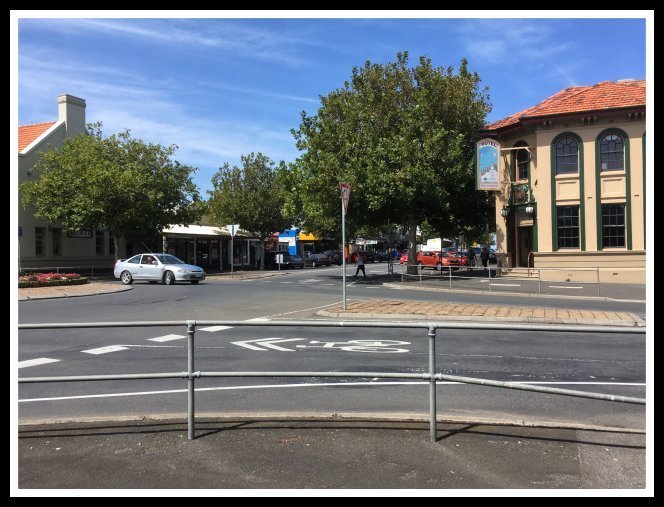
The Kepler St-Koroit St roundabout is in line for a $450,000 makeover later this year, in addition to new zebra crossings like those now operating in Liebig St.

Carol Altmann – The Terrier

How to save $700,000 in seven days, instalment #5:

On the same night Warrnambool City councillors decided to explore breaking the rate cap – on December 3 last year – they also agreed to spend $450,000 to spruce up a single city roundabout.

That’s almost half a million dollars to beautify just one roundabout – at the corner of Kepler and Koroit streets – and they did it without a hint of irony.


Not one of the five councillors who supported potentially raising rates above 2.5% (Cr Peter Hulin voted against and Cr David Owen was absent) seemed concerned that they expect ratepayers to choose between paying more for services, or having services cut, while they plunge money into non-essential projects.

Like dressing up a roundabout.
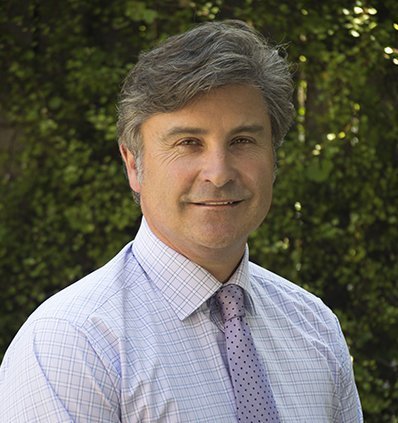
Mayor Tony Herbert was a strong supporter of the upgrade, saying Kepler St was the most important CBD street after Liebig St. Image: WCC

The council will draw $450,000 from the city parking fund – putting that fund into deficit – to upgrade the roundabout by the end of this year.

This is the busy roundabout outside the Warrnambool Hotel and Ishka etc, which is no doubt unfriendly to pedestrians in its current state.

But improving pedestrian safety (more about that in a moment) and a $450,000 makeover are two separate issues here.

Mayor Tony Herbert was particularly enthusiastic about the improvements because, he says, Kepler St is “the next most important” CBD street after Liebig St.


“It doesn’t matter who occupies businesses there, but I believe that is the next street to get the work done,” he told the meeting.

As it happens, Mr Herbert does occupy a business there, with his office smack bang in the middle of Kepler St, in the Wyton’s cafe precinct.
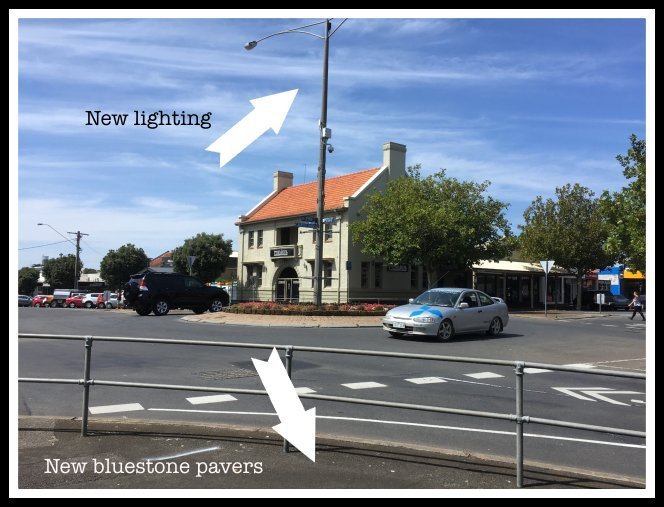
The $450,000 makeover at the Kepler St intersection will include bluestone pavers on each corner and new lighting in the centre of the roundabout.

Until last year, this intersection wasn’t even part of the city renewal plan, but it is now.

Now it will have bluestone paving wrapped around each corner foothpath and central lighting poles that allow for banners and decorations. (See the plan here).

The council calls this “high end aesthetic treatment” and there is no doubt it will be swish compared to boring old bitumen and basic lighting, but is it really necessary in a cost-cutting environment?

It’s a bit like fixing the electrical wiring in your house – for safety – and digging into your savings to replace all the light shades at the same time.


Because what started the momentum for this makeover was money from the Transport Accident Commission (TAC) to make the CBD safer for pedestrians.

The TAC will fund almost half of a $1.67 million upgrade to three CBD intersections, including the Kepler St/Koroit St roundabout.

The council will use that money to replicate those painful zebra crossings that are now in Liebig St and which make drivers give way to pedestrians as they enter and exit a roundabout.

(VicRoads, by the way, say this style of zebra crossing can work, but they also create a greater potential for rear-end accidents. But I digress…)
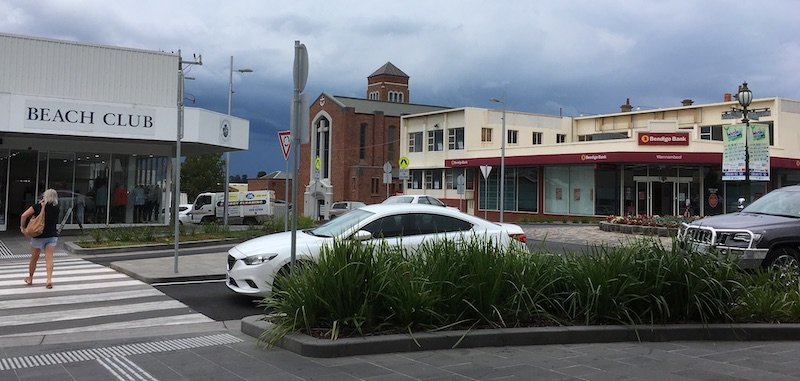
Love ’em or hate ’em, you’re getting more of them. The same style zebra crossings in Liebig St will be replicated at the Kepler/Koroit streets intersection and two others around the CBD.

Having secured money to build the crossings, the council decided to go one step further.

It rummaged around behind the couch and found a neat $450,000 to throw into beautifying the Kepler St/Koroit St roundabout.

Importantly, such a makeover would also create a distraction from the fact the council has run out of money for Stage 3 of the CBD renewal along Koroit St, which is not surprising given the other two stages blew out by more than $3 million.


So from not being part of the CBD renewal, the Kepler/Koroit intersection now has star billing.

In fact it will probably be all that happens along Koroit St between Kepler and Liebig St for some time.

Even so, can new pavers and lamps really be a priority when the council says it must save $700,000 a year from its budget?

It’s too late to ask that question because the beautification is going ahead.


Your input, via the council’s online consultation that opened last Friday, is to decide what else you might like to see added to the works and when you would prefer the 12-week project to start.

There is no option to say, um, we don’t want that style of fender-bender zebra crossing and, by the way, can we also save the $450,000 for something more important?

There is actually no mention of the $450,000 cost of the “high end aesthetic treatment”.

This figure remained buried inside the council agenda and minutes: until now.

More tomorrow.

If you would like to see The Terrier keep digging up, sniffing out and chewing on local issues, please make a small contribution below.
Donate


WCC rate rise and pushing $328,000 down a drain

The W’bool City Council paid more than $300,000 than it needed to for a part of the Simpson St drainage project, according to local developer Graeme Rodger.

Carol Altmann – The Terrier

How to save $700,000 in seven days, instalment #4:

Today’s instalment is not a revelation, but a reminder.

It’s a reminder of a story I ran last November where developer and former councillor Graeme Rodger revealed the Warrnambool City Council could have saved at least $328,000 on a tender for part of the Simpson St drainage and tunnel project.

That is another $328,000 that could have been shaved and saved off council’s spending in 2018-19.


To recap: Mr Rodger’s company, Rodger Constructions, put in two tenders for the multi-million dollar job last August: one “conforming” and one “non-conforming” which basically means one that stuck to the letter of the tender, and one that suggested a cheaper option.

The council went on to award the tender to another company for a higher price than both options put forward by Rodger Constructions.

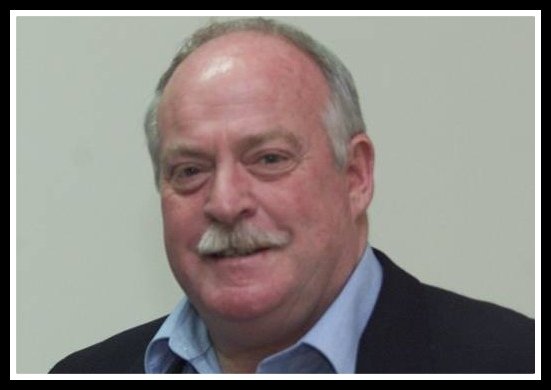
Warrnambool developer and former councillor Graeme Rodger.

The council said the bid by Rodger Constructions, which was short-listed, had a number of flaws.

Mr Rodger said all of these could have been worked out with a simple, face-to-face meeting that was never offered.

The council said such a meeting was optional and it chose not to take up this option for a number of reasons.

You can revisit the full, blow-by-blow detail in the story here.

The end result, however, is the job will cost ratepayers $328,000 more than it could have.

If the council had chosen the non-conforming option, it could have saved $424,630.


So here we are four days into the seven-day search for savings and I think we are close to the $700,000 mark already by taking a closer look at this tender, the cost of the two new toilet blocks, the cost of consultants and the spending on council corporate credit cards.

Nip, tuck, shave, save and suddenly there is no need to cut essential services or push rates up above the 2.5% cap.


But we still have three days to go.

I will be back on Monday – we can all catch our breath for a bit – for the first of the final three instalments.

Thanks for hanging in here.

If you would like to see The Terrier keep digging up, sniffing out and chewing on local issues, please make a small contribution below.
Donate


Drinks on us: W’bool City Council’s corporate credit cards

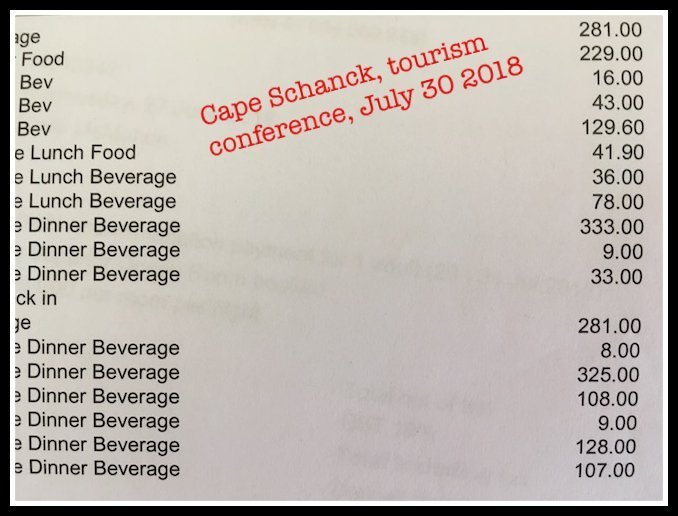
A snapshot of Warrnambool City Council corporate credit card use in action. This sample – with my words in red added – comes from a tourism conference held at Cape Schanck last year.

Carol Altmann – The Terrier

How to save $700,000 in seven days, instalment #3:

Take a good, close look at the photograph at the top of this page, because you – if you are a Warrnambool City Council ratepayer – ultimately paid for this hospitality.

It is a snapshot of one invoice from a council delegation to a Victorian tourism conference held at the RACV Cape Schanck resort last July, which I wrote about last month.

Seven council representatives attended that two-day conference, at a total cost of around $10,000.

My first thought when I saw this snapshot was how do you spend several hundred dollars on beverages in one sitting unless you are buying drinks for a lot of people, which may be the case, or drinking gallons of soft drink or juice, which I doubt, or buying expensive drinks in the first place? 

Regardless of the answer, it is your rates at work.


This sort of spending came just months before the council announced it wanted your opinion on whether it should cut services or raise rates by breaking the rate cap just three years after it was applied by the State Government.

I am still working on a much deeper investigation into council credit card usage, which I started last September, and it will be some time yet before I can publish anything in detail.

In the meantime, however, I can tell you how many corporate credit cards the council has in use: 81.

81.

I don’t know about you, but I was stunned to learn that there are 81 active credit cards in use among council staff. It seems a lot.


No cards are issued to the Mayor or councillors.

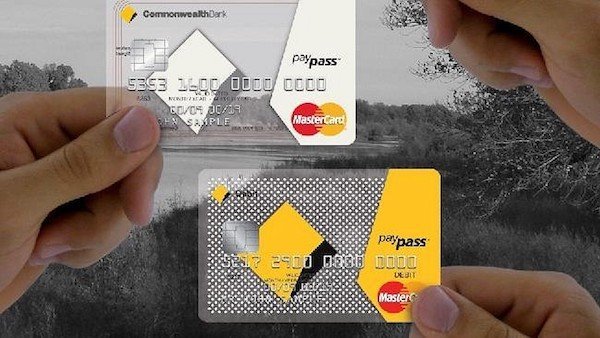
Warrnambool City Council has 81 active corporate credit cards for a full time equivalent staff of 390 people. Image: Commbank.

How on earth does the council keep track of all the transactions on 81 credit cards? Who has one and what are the annual spending limits for each?

Let me take those questions separately.

There is a system in place to prevent outright fraud – more on that in a minute – but I wondered about the items being bought in the first place.

Who approves the initial spending, such as the hundreds of dollars of drinks toted up over dinners at Cape Schanck?


Is there more of that sort of spending and for what purpose? (I lodged a Freedom of Information application in October to help answer these questions. It is still being processed – FOI can be gruelling, but thanks to those who donated to The Terrier Tip Jar, I can see it through.)

The council doesn’t have a credit card policy, but it does have a procurement policy which sets out how financial transactions are handled.

According to the council (you can read the full statement in response to my initial questions here), this policy ensures there are a series of checks and balances in place.

These include the staff member providing a tax invoice or a statutory declaration for each credit card purchase.

These are approved by a manager/supervisor, after which it is sent further up the chain to the card administrator, in the council’s Financial Services team, who makes sure it fits within the rules.

The system, which apparently saves time compared to the purchase order/invoice system which is still used for other goods, has been reviewed by the Audit and Risk Committee and, the council says, found to be working just fine.

But is it? I am hoping to answer that more fully down the track.

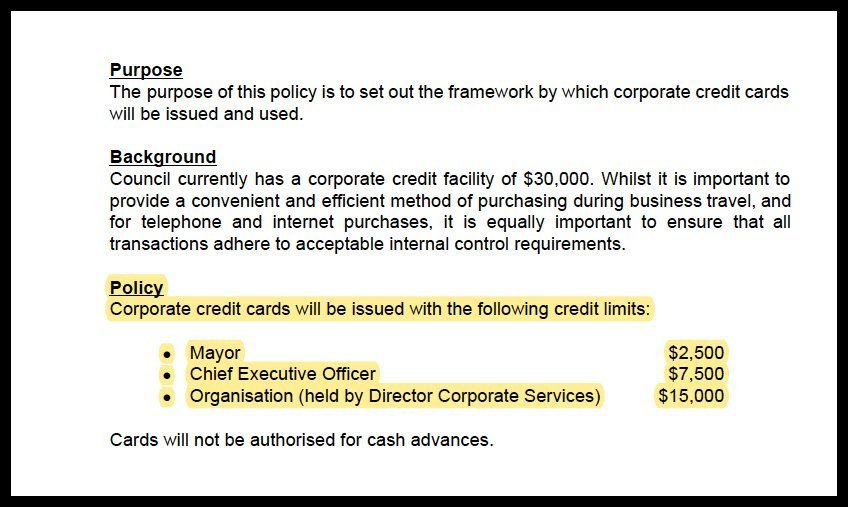
An excerpt from the Northern Grampians Shire credit card policy which clearly outlines who has corporate cards and their annual limits.

The second half of this investigation is working out which staff positions have corporate credit cards and what the credit limits are for each.

I thought this was a super simple question, especially when Northern Grampians Shire, for example, puts this information on its website for all to see.

But no.

Council spokesman Nick Higgins said today that the release of such information could lead to credit card fraud (such as that outlined in the link here).

I fail to see how you knowing that I have a $5000 limit on my credit card could lead to fraud, especially if you don’t have my card number, expiry, CCV, pin, signature or any other details.

Corporate credit card usage and expenditure isn’t included in the council’s survey on its push to break the rate cap above 2.5%: it should be.

More tomorrow.

If you would like to see The Terrier keep digging up, sniffing out and chewing on local issues, please make a small contribution below.
Donate


WCC rate rise and spending more than $900k on consultants

The Warrnambool City Council spent more than $900,000 on consultants in 2017-18, but whether this figure is higher or lower than previous years remains unknown. Image: Fidelis.

Carol Altmann – The Terrier

How to save $700,000 in seven days, instalment #2:

When Warrnambool Mayor Tony Herbert revealed last December, without a hint of irony, that up to $30,000 would be spent on consultants to test how ratepayers felt about a rate rise, it raised an obvious question: how much does the Warrnambool City Council spend each year on consultants?

The answer for 2017-18 is close to a million dollars, or $927,000 to be precise.

Unfortunately that is about as precise as I can be, as the council has not provided any significant detail on what these consultancies entailed or how this figure compares to other years.

What this means is I can’t tell you if $927,000 is normal in one year, or lower, or much higher than for other years.

I am going to take a punt that other years would not be lower, based on the number of council reports, masterplans and projects that have been rolled out in recent years.


The only breakdown provided for the $927,000 was this from council spokesman Nick Higgins:

“Examples of consultants used in 2017-2018 include: valuation of the Warrnambool Art Gallery collection (necessary for insurance), participation in the Community Satisfaction Survey (required by the State Government), arterial road assessment (for advocacy to improve roads managed by VicRoads), heritage advice and for the management of the community solar bulk buy program.”

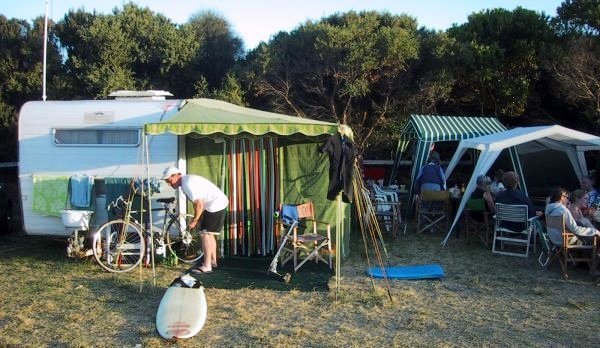
Consultants were hired to prepare a plan for the future use of the Warrnambool foreshore caravan parks. Image: Camping Victoria.

I had a line-by-line look at the council’s annual report for 2017-18, and learned consultants were also hired to prepare a strategic plan for the foreshore caravan parks, prepare the kerbside recycling contract, and for a valuation of the council’s land and buildings.

Mr Higgins said via email – quite correctly – that all councils use consultants.

“Warrnambool City Council’s use of consultants and the expenditure on consultants would be unexceptional,” he added.

This may be true, but in an environment where ratepayers are being asked what services they are prepared to see cut to avoid a rate rise, I think we could do with some more detail, don’t you?

At a state and federal government level, spending on consultants is included in the annual Auditor General’s report and is picked over by political journalists to determine where the dollars are going.

No such transparency is enforced at the local government level.

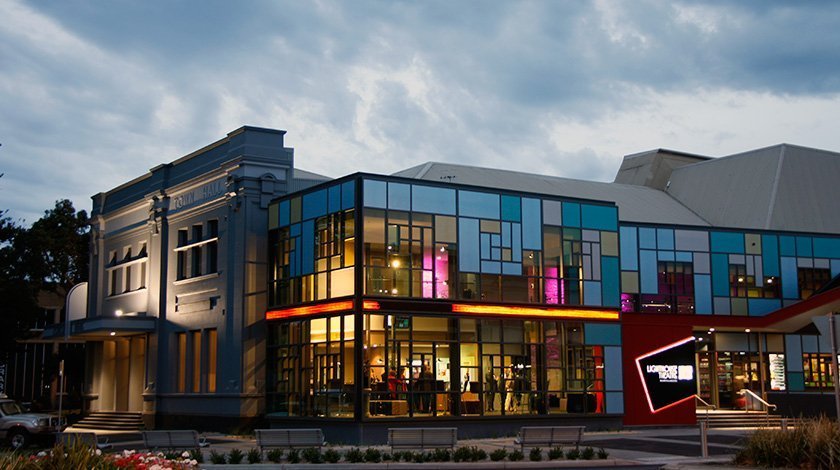
Consultants were also used to provide a valuation of council owned land and buildings like the Lighthouse Theatre. Image: Basso Project Management.

It may well be, as Mr Higgins explained, that “consultants are used because they have specific expertise or knowledge that council does not have” and hiring short-term consultants is cheaper than permanent staff.

(It is worth remembering that there are 731 people working at Warrnambool City Council – full time, part time and casual – and last financial year the cost to ratepayers was $31.5 million.)

Again, however, we have no way of being able to make that assessment or, to be frank, keeping an eye on how much is spent each year in total.

It is a figure that is simply not reported in any of the council’s financial statements or annual reports.

Instead, the $927,000 for this year is treated as an unavoidable expense and one that, I note, didn’t make it into the ratepayer survey that closed earlier this month.

Is there any fat to be trimmed on that figure? Do we, for example, really need a consultant to tell us what to do with our caravan parks? And how many consultants’ reports end up going no further?


Before there is any attempt to push rates above the rate cap, these questions deserve to be answered.

More tomorrow.


A follow up: I tried to get a further breakdown on the $775,610 cost of the two public toilet blocks I wrote about yesterday, but the council says such a breakdown is commercial-in-confidence.

A builder contact, however, said while he wasn’t sure about that particular tender, which he agreed seemed high, there were often less obvious costs with construction work including:

architect fees 20-40k, engineer 15-30k, feasibility study 10k, land surveyor 10k, legal fees 10-20k, traffic engineer 5-10k, fire engineer 5-10k, town planning 5-10k, building permits 10k, Wannon Water fees $50-$80k, council project management 30-60k, Aboriginal heritage study 30-40k, demolition 10-20k, associated paths 50-80k, landscaping 20-20k, safety management plan 5-15k, site safety 15-25k, traffic control 10-20k.


As to how many of these actually applied to the toilets in the botanic gardens and Swan Reserve, we will never know but I am still at a loss as to how they could cost more than a whole new home.

If you would like to see The Terrier keep digging up, sniffing out and chewing on local issues, please make a small contribution below.
Donate


W’bool City Council rate rise and the Taj Mahal of toilets

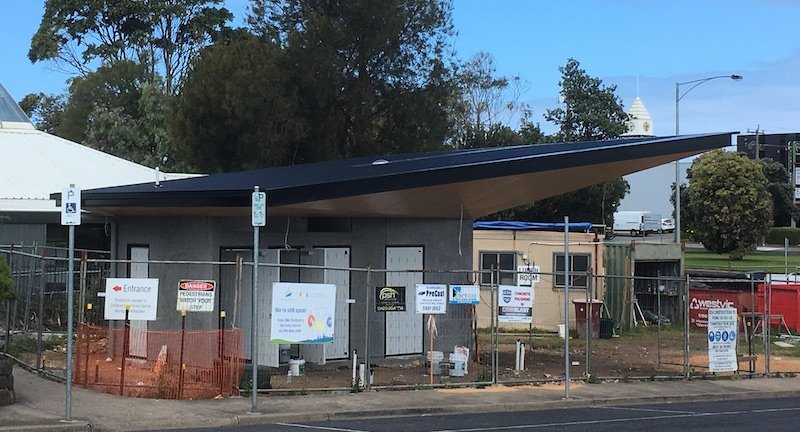
Your rates at work: the Swan Reserve toilets are one of two new toilet blocks that are costing the Warrnambool City Council more than $770,000.

Carol Altmann – The Terrier

The Warrnambool City Council says it must cut $700,000 a year from its budget for the next three years to avoid a rate rise, so I am going to find $700,000 in savings in just seven days – starting with toilets.

Not just any toilets, mind you, but the Taj Mahal of toilets that is being built near what was once the Tourist Information Centre at Swan Reserve, on the corner of Raglan Parade and Kepler St.

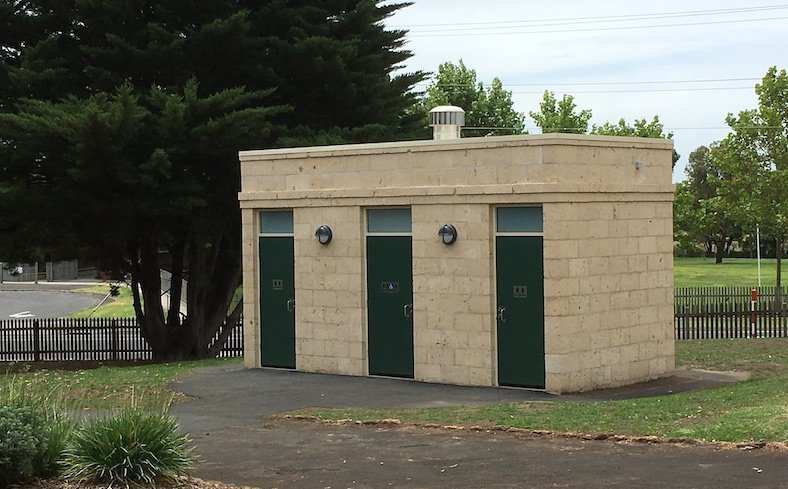
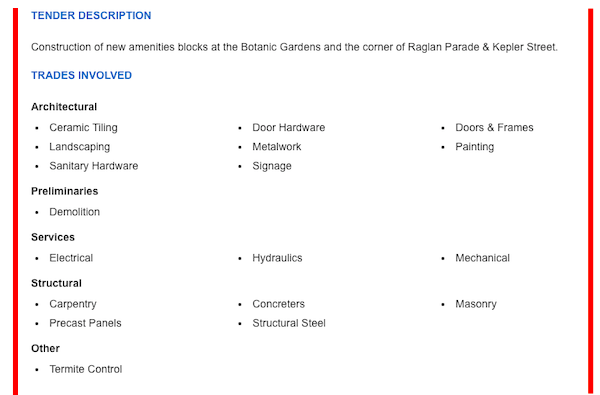
This is one of two new public toilet blocks in the city – the other is near the giraffe swing at the Warrnambool Botanic Gardens – which are costing the council a total of $775,610 including GST.

There was no doubt the run-down old toilets at the gardens and Swan Reserve both needed replacing, but how do two toilet blocks cost more than three quarters of a million dollars?

Does anybody know?


I have emailed a couple of builders this question today, and hopefully they will be able to explain the secret, but to me it seems over the top.

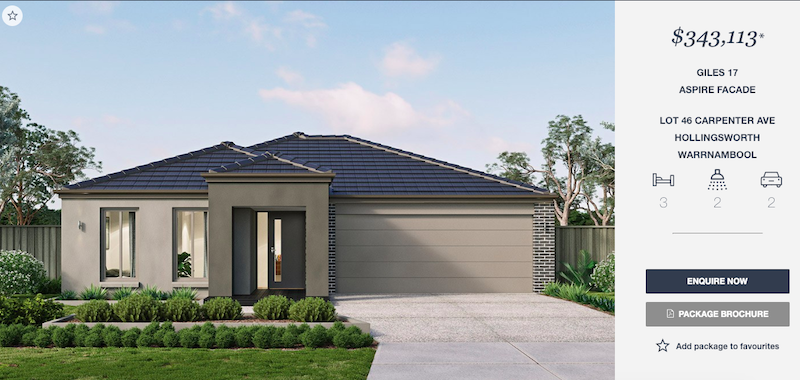
A three-bedroom, two-bathroom Metricon house and land package costs less than the toilet blocks. Image: Metricon Homes.

By way of comparison, for $775,000 you could buy not one, but two house and land packages from Metricon homes.

A neat $343,113 (excluding landscaping) can buy you the Giles design, featuring an “Aspire” facade, on a 602sq/m block at Lot 46 Carpenter Avenue, that comes complete with two bathrooms, three bedrooms, a two-car garage, concreted driveway, all carpets, stainless steel appliances and a 20mm stone benchtop in the kitchen!

(You would even have money left over for some landscaping plants from Bunnings.)

So, again, how does it cost an average of $387,000 for just one toilet block, even if it features a dramatic ski-slope roof on top of the cast concrete?

It might make sense if an entire new sewerage system had to be installed, but there were toilets already in place about 15m from the new block at Swan Reserve and the Botanic Gardens location was also chosen because it was close to the existing underground pipes.

The three-cubicle sandstone toilet block recently completed at the Warrnambool Botanic Gardens for around $350,000.

Funnily enough, when the council hired a consultant to put together its public toilet plan in 2013 (yes, such a document does exist), the estimated cost for the two toilet blocks at Swan Reserve and the Botanic Gardens was around $764,500 (including GST), but again with no explanation as to why.

Five years later, the winning tender was around $600,000 (including GST) before that tender fell through and the council had to go with the second tender of $775,610.

I am not an expert on tendering, but why does a council put a price tag on a project before it seeks tenders?

Wouldn’t it be better to start like we all do when we are doing home renovations and say to a tradie, I would like a big new beautiful bathroom, what do you think it is going to cost? Woah, that much!  Okay, forget the super-sized bath and porcelain hand basin, what can you do for $15,000?

This seems to make so much more sense than saying, we have $350,000 to spend, what can you come up with? (See below for the unremarkable tender details for the two toilet blocks).

Given times are apparently tight and the council wants to break the rate cap, I can’t help but wonder what a $250,000 toilet block at Swan Reserve would have looked like, or a $150,000 model for the Botanic Gardens. There are more toilets that need upgrading, so perhaps it is time to revisit the template.

Even the ever-optimistic Mayor Tony Herbert was quoted by the paper as saying he was stunned at the final cost, but added that at least the builders were local and it was “going to activate that part of the gardens”.

That certainly is one way to put it. Another might be to ask just how much bang we are getting for our buck.

More tomorrow.

If you would like to see The Terrier keep digging up, sniffing out and chewing on local issues, please make a small contribution below.

Donate