Are the financial fears around Lyndoch Living now coming to pass?
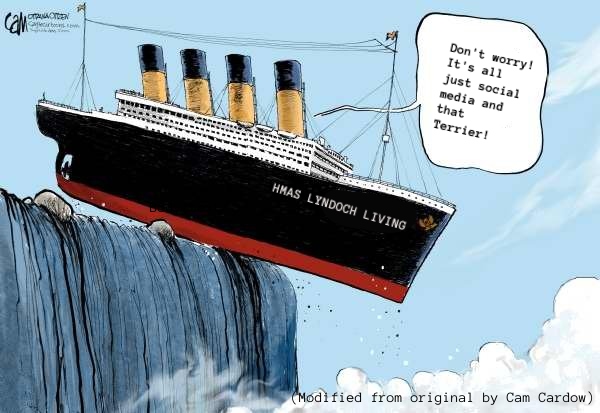
Speculation is mounting that financial concerns around Lyndoch raised more than 18 months ago – and ignored – are now coming home to roost. (Modified cartoon from original by Cam Cardow, Ottawa Citizen.)

Carol Altmann – The Terrier

The plot thickens around the departure of the Lyndoch Living CEO, Doreen Power, with speculation that Ms Power’s sudden exit up the Princes Highway is linked to financial issues surrounding Lyndoch that are now under investigation.

I’ve spent the past nine days digging into exactly why the axe fell so quickly on the CEO last Thursday week (Aug 4) after years of allegations about Ms Power’s management style fell on deaf ears and the Lyndoch board continued to back her to the hilt.

As was reported here, Ms Power was confronted by board chair Sue Cassidy and treasurer Kane Grant and, soon after, left her office armed with two bags of belongings.

As was also reported here, the day before Ms Power left, WorkSafe had received a long list of complaints about Lyndoch lodged by a law firm on behalf of the complainants.

This could have been the final blow.

But no.

I have since learned there is mounting concern about Lyndoch’s financial position, including whether information relied upon to build Lyndoch’s financial picture has been accurate.

These concerns include:

the financial impact of changes to the payment system for home care packages, with Lyndoch no longer having access to a big pot of home care funds ($2.5 million as of March 2021) that sat in its bank account;

whether this big pot of funds for home care packages was used to pay for other services – say, for example, toward the new medical clinic – in the hope it could be later topped up by home care clients (a Ponzi-style approach);

the financial impact of much greater competition in home care packages, which has gouged Lyndoch’s home client list;

the financial impact of having between 50 and 55 empty beds across Lyndoch and May Noonan Hostel – unprecedented;

concerns about the impact of rising interest rates on the $12 million borrowed by Lyndoch to fund its new $22m medical clinic;

concerns about the financial impact of having five apartments for sale in the Waterfront Living complex;

the difficulty of selling these apartments amid concerns about the deteriorating condition of their exteriors;

concerns Lyndoch must legally pay out the owners and/or estate of these apartments after a certain time, regardless of whether the apartment has sold;

concerns raised by residents within Waterfront Living about the location and use of their annual maintenance fee/sinking fund.

That’s a lot to take in, but it all comes down to cash flow: what Lyndoch expected to bring in, what it has to pay out.

And the terrible possibility facing the Lyndoch board is that all is not what it seemed.

Two important things to say here:

First is that residential accommodation bonds are guaranteed by the Federal Government, so – regardless of where this ends – these are protected by law and residents and their families can take comfort they are not at risk of losing their money.

Second is that the resignation of the most recent Chief Financial Officer was clearly yet another warning bell.

In fact four Chief Financial Officers leaving in four years is not just a warning bell, but a big loud hooter that wakes everyone in the night.

If what I am being told now is correct, and I believe it is, then what we have always feared is coming to pass.

We tried to warn the board and they didn’t listen.

Collectively, this house-of-cards scenario was raised more than 18 months ago on this page, by the Terrier, then by former Chief Financial officer Allan Conway, and then by the Keep Lyndoch Living group which formed because of unanswered questions over Lyndoch’s finances.

Mr Conway set the alarm bells off, but nobody listened.

The Keep Lyndoch Living team led by Jim Burke and Prof James Dunbar tried to raise the alarm, but nobody listened.

And The Terrier – 162 stories later – tried to raise the alarm, and nobody with the power to act, listened.

But the board is listening now and so it must, because they are responsible for not asking the hard questions.

It is now incumbent upon the board chair Sue Cassidy and treasurer Kane Grant to step up and tell us what is going on.

They need to assure the community that all is well, that none of what I have raised here is correct, that Lyndoch’s finances are exactly as they should be, and that Ms Power is on annual leave because she decided to take a holiday to Port Douglas.

Now is the time for plain speaking, not bullshite about annual leave.

Now is the time for absolute, rock solid, honest truth.


Shrinking or growing? Crunching the numbers on Lyndoch

Carol Altmann – The Terrier

Lyndoch Living is definitely getting bigger, but is it getting better? The numbers say no.

The reason I keep writing a lot about our community-owned aged care home is to put on the public record what is happening under the change of leadership and change of direction since 2015.

It’s important that we – as the community who own Lyndoch – keep track of what is going on, because nobody else is telling us.

We are the custodians of Lyndoch and the community will be here way past whoever happens to be in charge, so yes, we need to keep track of what is going on.

We owe it to Lyndoch, the residents, the staff, and those who helped create Lyndoch more than 50 years ago.

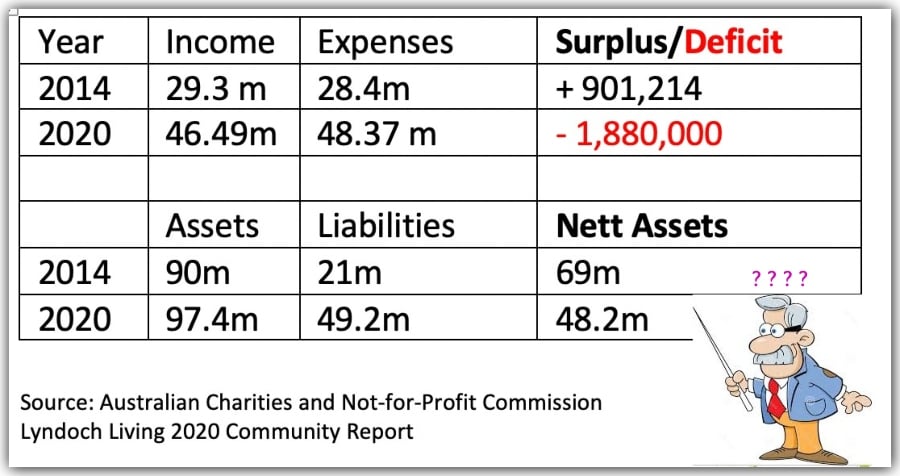
This is why tonight I am running this little chart, because it captures how Lyndoch is travelling financially.

It shows that before 2015, Lyndoch ran at a small profit/surplus or was break even.

This year, it posted its biggest loss – close to $2 million.

Lyndoch has run at a loss for five of the past six years. From my research, this is unprecedented in recent times.

At the same time, its assets have gone up, but so have expenses – they have more than doubled.

This has meant a $20m cut to its net assets in just six years.

Is this visionary? It is sustainable? And why, when it comes to cost cutting, do we hear of cuts at the coalface, and not in the corporate?

Speaking of which, it’s worth remembering that the very first thing to happen under the $100m masterplan now being rolled out by Lyndoch was an upgrade of the corporate area.

Out with former CEO Rhys Boyle’s old wooden furniture and in with the fingerprint resistant glass table.

We still don’t know how much that corporate re-vamp cost but it was an early sign of the shifting priorities.

We still don’t know, exactly, how much the Swinton Wing re-vamp and extension cost, but estimates are it blew out by $2m to $13 million.

And coming up next is a new two-storey medical clinic to be built next to Scoborio Reserve with, it is said, radiology, pathology, acute care and educational facilities alongside up to 20 GPs.

Lyndoch will bulldoze Tomlinson Wing and its gardens to make way for more glass and cement.

How much will that all cost to build and set up? We don’t know.

Is this all necessary? Is it all sustainable?

These are the questions I would like to ask the board – our eyes and ears at the table – and I am sure you would like to ask too.

In the face of their silence, we just keep pressing.


A record profit for WRC, so let’s leave Levy’s alone

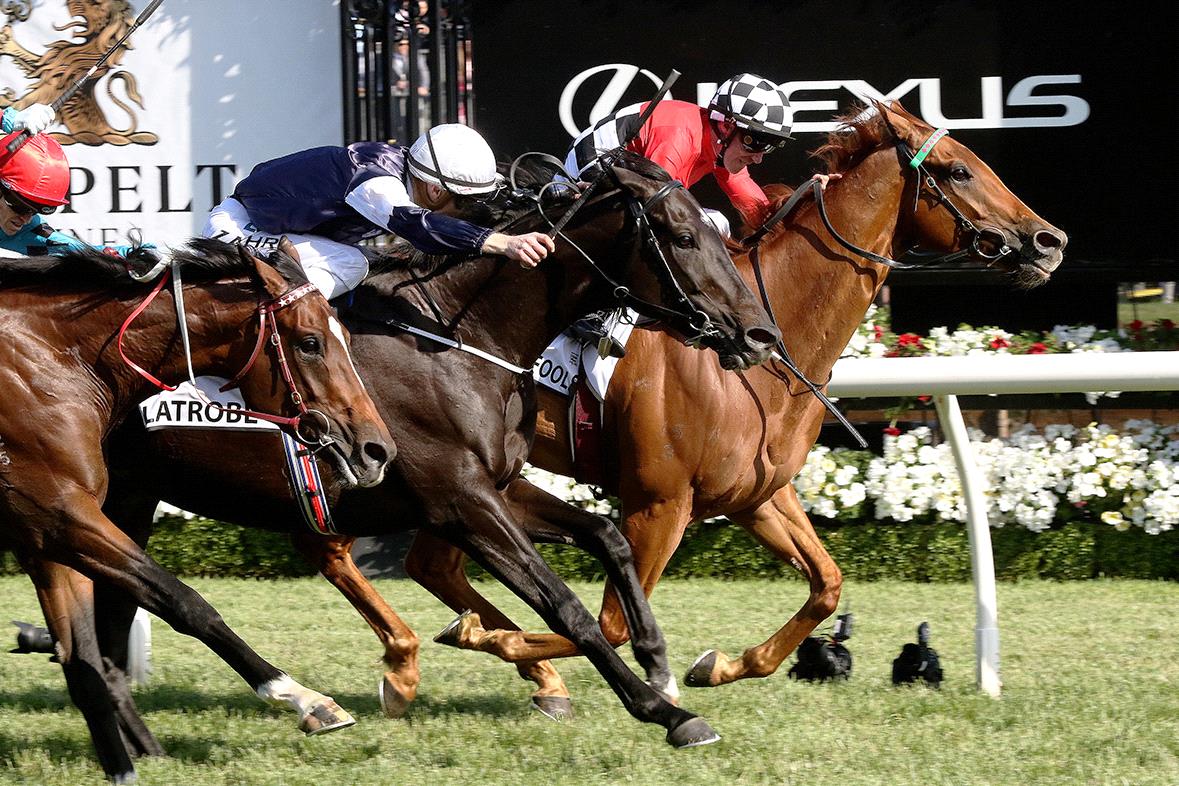
Trap for Fools, trained in Warrnambool by local trainer, Jarrod McLean, won the $2 million Mackinnon Stakes in 2018. Image: Darryl Sherer, www.racenet.com.au

Carol Altmann – The Terrier

Remember the doom-and-gloom, Chicken-Little-The-Sky-Is-Falling predictions for local racing if the big trainers weren’t allowed to run horses at Levy’s Beach?

Well the Warrnambool Racing Club has just notched up a record profit – its equity has gone from $8.5 million last year to a cool $10.1 million this year.

That’s right, far from falling in a deep dark hole, things have never looked so good.

“This has truly been an exciting year for the Warrnambool Racing Club,” enthuses chairman Nick Rule in his 2018-19 report to members.

Mr Rule goes on to wax lyrical about a “remarkable financial year” and, in particular, this year’s hugely successful May Racing Carnival: “Extremely strong crowds, record betting turnover and highly competitive jumps racing were the highlights…”

Hold your horses!

Wasn’t the May Racing Carnival under threat of collapse if hundreds of racehorses a week weren’t allowed to pound up and down the dune at Levy’s?

That’s what the racing industry told us, the State Government, and also the Warrnambool City Council which, by the way, still manages to find the money to be listed as a major sponsor of the WRC.

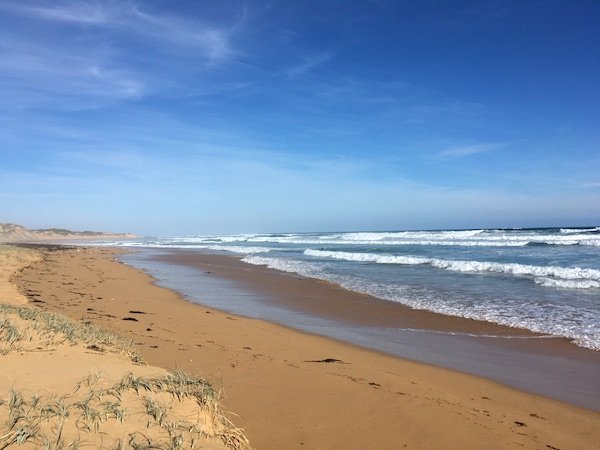
The long stretches of sand at Levy’s Beach, Warrnambool, which form part of the Belfast Coastal Reserve.

The truth of the matter is that no racehorse training has been allowed at Levy’s beach since the end of 2016.

And the sky hasn’t fallen in. That seductive old fox, Jobson Growth, hasn’t packed up and left town.

Darren Weir kept on winning, until he was exposed in January for the cheat that he is, with more charges – enough to make your hair curl – laid yesterday.

Local trainer Jarrod McLean also kept winning – including taking out the $2 million Mackinnon Stakes last year – until he, too, has found himself facing a raft of animal cruelty and corruption charges.

WA trainer Lindsey Smith has moved in to Weir’s stables at Warrnambool and is already racking up winners.

And the Warrnambool May Race Carnival has sailed on as one of the biggest events of the year on the Victorian racing calendar.

So much success and yet not one racehorse – officially at least – has trained on Levy’s Beach in three years.

The lure and magic of the Levy’s beach and dunes has been exposed as pure spin.


Cr Michael Neoh has also been crunching the numbers.

He now personally believes that racehorse access to Lady Bay should be enough.

With the Weir juggernaut no longer in the picture, the number of racehorses using Lady Bay has plummeted: Cr Neoh says it is now averaging 22 a day on the beach, and 14 in the water (April to July). It was close to 100 at its peak.

Lady Bay is where we “share” our public beach and that should be enough.

As it stands, the end of November is the deadline for the racing industry to move into Levy’s, but permits still need to be issued and roads and carparks need to be graded.

Behind the scenes, the traditional owners are also keeping up their fight to be heard, as they always have to do, because their connection to the land can’t be measured in turnover and totes.

The council, having just declared a climate change emergency, could step up right now and show it really does care for the most vulnerable parts of our coast.

Which way will this go in November? I don’t know, but the arguments that propped up the need for Levy’s are collapsing as fast as Weir’s career.

If you would like to support The Terrier, please consider throwing something in the tip jar.

Terrier Tip Jar