Lyndoch staffing slides backwards in wake of audit failings
Two months after being audited by the national watchdog, staff shortages at Lyndoch are reaching crisis point.

Carol Altmann – The Terrier

I know we are all still digesting the distressing fact that Lyndoch Living has slipped further in its duty of care to look after the elderly, but this is important:

Before breaking that story yesterday, I had planned to post these roster shortages for the Audrey Prider Centre and Lake Lodge – the two, high-care areas that make up what is called the “nursing home”.

These are the very same areas that were the focus of yesterday’s bombshell that Lyndoch had failed four more national standards of care.

These are the areas that were found by the Aged Care Quality and Safety Commission to be under stress from severe staff shortages.

That was based on the commission looking closely at Lyndoch in September.

September.

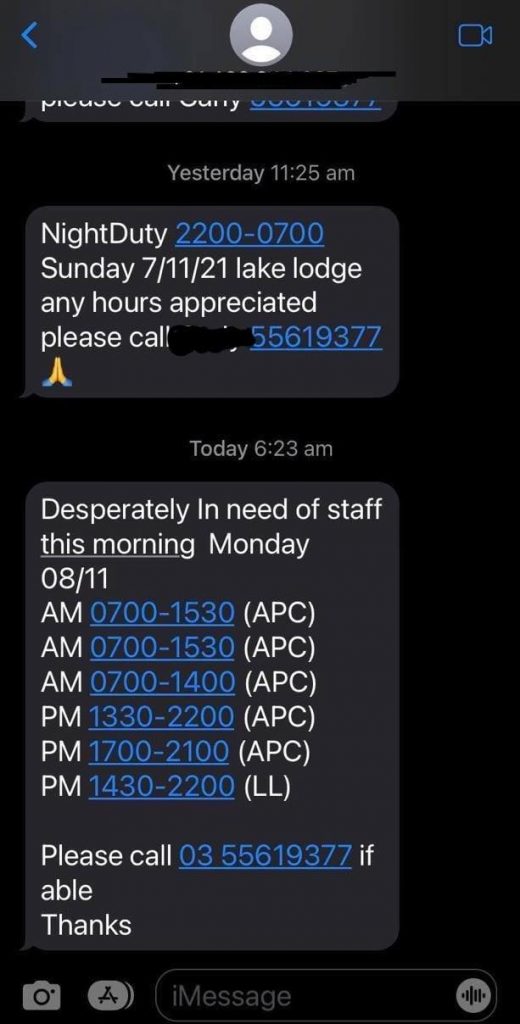
Yet here we are, and nothing has changed. These are the shift shortages for the past couple of days: it is dire.

So if things were grim in September, I can only imagine what the commission would report if it turned up now.

And I hope they do turn up, unannounced, very soon because this cannot wait until the reaccreditation at the end of February. The commission has the power to do this. It can apply sanctions at any time.
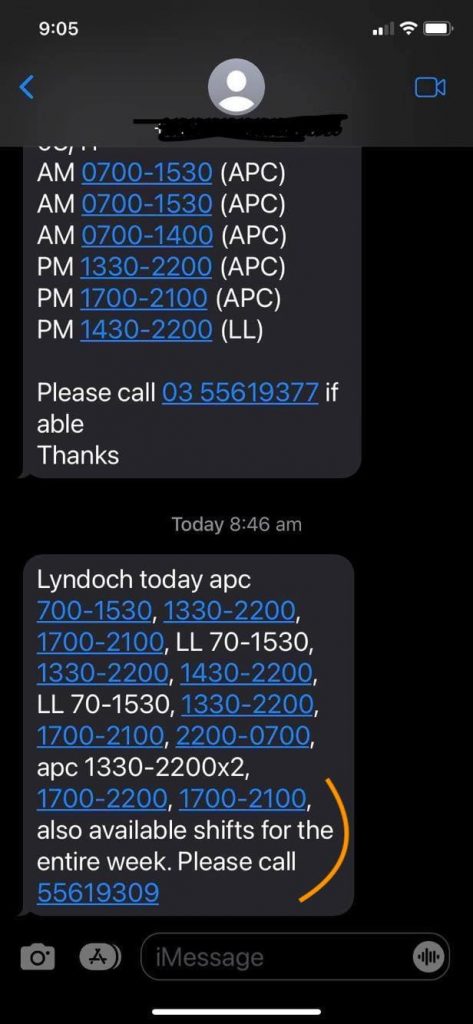
Roster call-outs reveal chronic shortages in the high-care areas of Lyndoch Living.

Our local Federal member Dan Tehan gave a statement to the local paper today which says the commission is still deciding what to do in response to the latest failings.

I hope they intervene, because these rosters show that we cannot hope that things will miraculously improve. They won’t.

A stream of experienced staff have gone on sick leave, stress leave or resigned since the commission’s last audit in September. They want to work at Lyndoch, but they can no longer tolerate what is going on.

This has nothing to do with national staff shortages, Covid, or the Royal Commission. It has everything to do with the Lyndoch culture and priorities.

We know it, the staff know it, and surely the commission is starting to catch on.

Yet while the walls crumble around them, Lyndoch once again shows no contrition or remorse for these failings. It once again tells the paper that it has “an action plan”. It said the same thing earlier this year.

Clearly, that action plan is not working and Lyndoch is going backwards, from failing one standard, to now failing four.

My hope is the commission does not wait for it to deteriorate even further before taking action, because at the centre of all this are real people, elderly, vulnerable people, beautiful people from our local community, who are not able to smile and laugh for the Lyndoch Facebook page, but who are instead in need of our help. We are there for them, and those who care for them.

Thankyou to every single one of you who is prepared to stay the course and fight this fight.



Crisis point: Lyndoch Living again fails aged care standards

The Lyndoch Living nursing home in Warrnambool has failed a second time this year to meet aged care standards.

Exclusive

Carol Altmann – The Terrier

The Lyndoch Living nursing home has again failed a string of care standards set down by the national aged care watchdog.

In another damning report released online today by the Aged Care Quality and Safety Commission (ACQSC), the nursing home has again failed to meet key measures in personal care and clinical care, staffing, and also governance. [Download the report here.]

The nursing home area is made up the two high-care units: the Audrey Prider Centre, for dementia residents, and Lake Lodge.

An ACQSC audit from September 8 to 15 revealed poor wound management, poor pain management, a lack of monitoring and documentation after resident falls, and inadequate staffing, with unfilled rosters, and remaining staff being unable to cope with the workload.

The extent and impact of understaffing at Lyndoch is graphically highlighted by the report.

It found the nursing home is unable to demonstrate that its current mix and qualifications of its workforce could deliver and manage safe and quality care and services.

“Rosters evidence that not all care shifts are filled when staff are deployed elsewhere within the service or when staff call in sick,” the report says.

“Personal care staff interviewed advised they do not always complete all tasks allocated to them.”

The report says Lyndoch management described how they are in the process of recruiting more nursing and care staff to cover current vacancies, but this has done little to address the concerns of residents and their families.

“Whilst the service was able to evidence improvements, four out of five consumer representatives expressed ongoing dissatisfaction with staffing levels within the service,” the report says.

Short staffing was also raised in regard to poor wound and pain management.

“(Lyndoch) did not demonstrate best practice clinical care in relation to wound and pain management,” the report says.

In particular, the commission found:

– Wound management plans did not always reflect wound reviews including dressing changes, photography and measurements.

– Inconsistent wound photographs and wound measurements are taken and recorded.

– The healing progress of each wound is not clearly demonstrated.

Nursing staff told the commission that staff shortages limited the ability of staff to attend to wounds as required, and to reposition residents to reduce pressure.

“Clinical staff described how wound care is impacted by staff shortages including delayed dressing and repositioning of consumers,” the report says.

The report also outlines failings in monitoring residents who had suffered falls.

Unwitnessed falls were not always documented in reports and a sample found that three out of four residents who had fallen were not effectively monitored afterward, including neurological observations and pain monitoring.

Not surprisingly, the nursing home also failed on risk management.

“The service did not demonstrate systems are in place to prevent harm from high impact or high prevalence risks such as falls,” the report says.

Despite hiring an adviser to help with its governance activities, the service “has not demonstrated current systems and processes are adequate in identifying and managing high impact or high prevalence risks”.

It is the second time this year that the Lyndoch nursing home has failed a ACQSC audit.

In July this year May Noonan Hostel in Terang, bought by Lyndoch in 2018, also failed seven out of the eight aged care standards.

The ACQSC is the peak federal body for assessing and accrediting aged care homes.

I will seek comment from Lyndoch this afternoon and update this story if or when a comment is received. In the meantime, I stand with the care staff and the poor residents.


Where did you go? Crunching the numbers on Lyndoch staff

Foxy takes a close look at the Lyndoch financial reports to flush out what is happening with staffing numbers.

Carol Altmann – The Terrier

I was lucky enough to have my Mum cared for by the fabulous staff of Lyndoch Living for 10 years before she died there in April (at the ripe old age of 94.9), but so many of the faces I used to see during those 10 years are no longer there.

Where did they all go?

One source told me between 70 and 80 people have left Lyndoch in the past couple of years.

Some retired, some retired early, some moved on to other jobs, some now work for themselves, and some, well, some allegedly left for reasons which indicate an “interesting” workplace culture and I have to tread carefully as I slowly unpick that picnic.

But I am unpicking it, piece by piece, having had dozens of people contact me over the past nine months.

Today, as part of my slow, deep dive into the changing world of Lyndoch, I have called on Foxy the Fact checker to crunch the staff numbers.

First, have 70 to 80 staff left Lyndoch in the past few years? I can’t say for sure, but I have sent that figure off to Lyndoch CEO Doreen Power and board president Kerry Nelson for confirmation and will see if a response is forthcoming.

What has definitely happened, however, is the Lyndoch staff mix is changing.

Let’s start at the top.

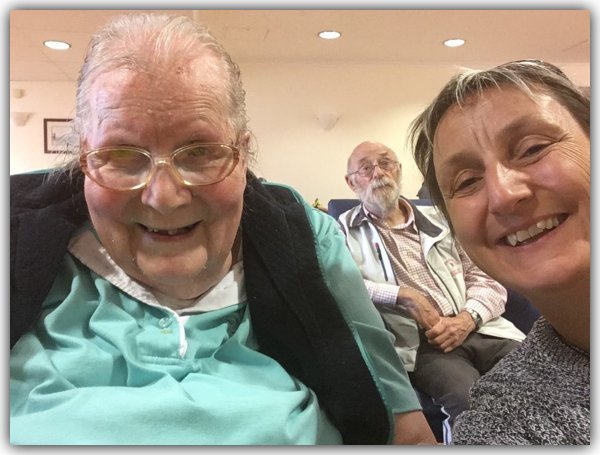
A very random photo of my Mum and I, with a lovely gent in the background, taken at Lake Lodge, Lyndoch in 2018.

The first thing Foxy found was a big jump in Lyndoch administration.

In 2016, there were 37 people in admin, in 2017 there were 41, and by last year it had grown to 59 – 19 more people than in 2016.

At the same time, the cost of “administration and other expenses” jumped by almost $1 million in 12 months, from $2.4m in 2017 to $3.31 million in 2018.

While admin numbers have gone up, the number of allied health workers employed by Lyndoch has gone south. (Q: What’s an allied health worker? A: Clever people who do things like occupational therapy and physiotherapy).

In 2016 there were 28 allied health professionals on staff at Lyndoch, but last year that dropped to just 12.

Allied health has largely been – oh, I dislike this word – “outsourced” and a Melbourne-based agency called Agestrong is the boss of the “outsourced” physio and o/t workers. (Agestrong, by the way, is owned by a private company called Designacare. Good grief.)

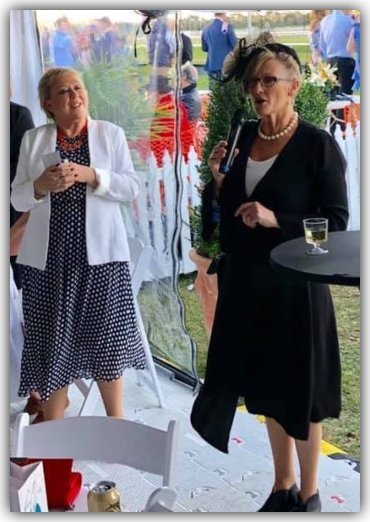
Lyndoch CEO Doreen Power and board chair Kerry Nelson at the 2019 Warrnambool May Racing Carnival. Photo: Lyndoch Living Facebook page.

What about the nursing staff, you ask? What is happening there? After all, these are the hard-working people at the very coalface of feeding, washing, dressing, nursing and cheering up the residents.

Well, using the numbers dug out from Lyndoch financial reports and Lyndoch annual reports, the picture from 2016 to 2018 looks like this:

the number of registered nurses (RN, senior nurses) has flatlined, from 32 in 2016 to 30 in 2018;

the number of enrolled nurses (EN, other qualified nurses) has climbed by 13% from 90 to 102;

the number of personal care workers (PCW) shot up 34% from 109 to 147;

a lot of these staff, especially PCWs, are part-time or casuals;

overall, the number of full-time-equivalent staff took a dive from 280 to 230 between 2017 and 2018.


What does this all say to a humble fact checker like Foxy?

It says that PCWs, the lowest paid workers, are picking up a lot of the workload for what can be a very tough gig.

At the same time, it suggests that the RNs and ENs must be working their backsides off with pretty much the same numbers that they had two years’ ago.

(As we speak, Fair Work Australia is nutting out a dispute between Lyndoch and the nurses’ union over proposed cuts to senior nursing levels.)

To be super clear, I am not suggesting Lyndoch Living is breaking any rules.

Indeed Ms Power told the local paper in July that Lyndoch Living “aligned with the Safe Patient Care Act and nursing ratios” and was working to increase full-time-equivalent numbers.

I also know that all nursing staff work very hard to make the residents’ lives comfortable and enjoyable and that this is their absolute first priority.

But what is filtering down to me from the 30-plus people I have now heard from is that Lyndoch is finding it tough to find and keep senior nursing staff, that there are often roster shortages that need to be filled at short notice, and that many people are starting to feel exhausted.

I take all this as a cry for help.

I am listening.

We, as a community, need to listen because we own and we love Lyndoch.

I have put a series of questions to Ms Power and Ms Nelson for a piece I am planning for Sunday.

See you for the next instalment then.

[The Lyndoch Living AGM is next Tuesday 29 October at 4pm at Lyndoch.]

If you would like to support the work of The Terrier, please consider throwing something in the tip jar.

Terrier Tip Jar


Lyndoch Living rolls out masterplan…and cuts nursing staff

Carol Altmann – The Terrier

I am interrupting our running story on credit cards to say there are angry stirrings at Lyndoch Living aged care which is rolling out its $100 million masterplan – and cutting nursing staff.

The Australian Nursing and Midwifery Federation has taken up the fight against plans by Lyndoch to blend its two highest acute care units, the 45-bed Audrey Prider Centre unit and the 39-bed Lake Lodge unit, even though they will remain physically separated by a room.

The union says the move will see just one full-time nurse unit manager in charge of the clinical care of 89 residents.

On top of this, the union says, there will be less associate unit managers – 7.5 full-time positions instead of 10 – that will oversee the unit when the nurse unit manager is not rostered on.

Staffing issues have been swirling around Lyndoch for months now, with many of the hard-working staff fearful of whether they will still have jobs.


There are also mounting reports of stress from the staff shortages that already exist. Unfortunately, with all the goings on at the W’bool City Council, I just haven’t had a moment to dig into it all.

I emailed Lyndoch CEO Doreen Power last Friday for a comment on the union statement, but I have had no response.

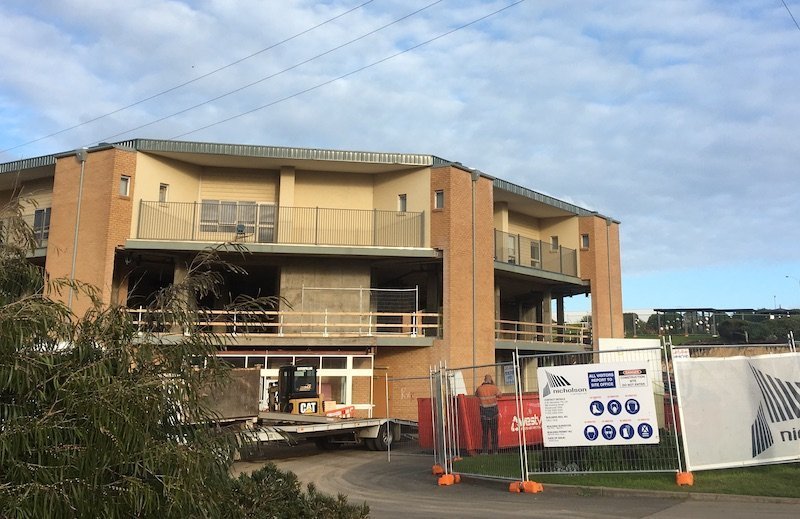
In the meantime, the first stage of the $100 million project will see the Warrnambool Medical Centre move on to the Hopkins Road site and new carpark up and running within two years.

I sense there will be much more to come on this story.