Lyndoch: champagne at the races, but no sheets and towels
Carol Altmann – The Terrier

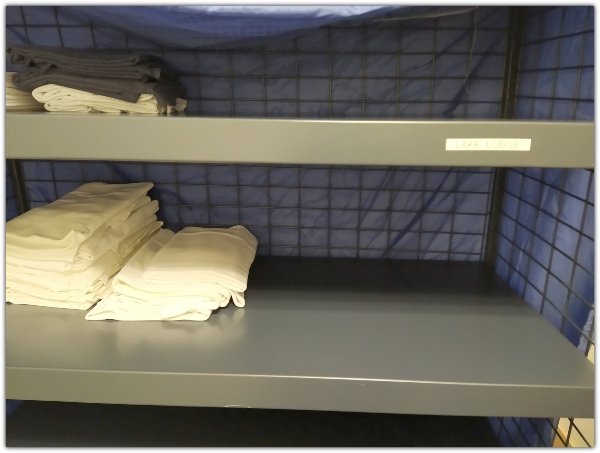
If there was ever a picture of how Lyndoch Living is losing touch with its priorities, it is this one.

This is a linen shelf that should be stacked with towels, sheets and face washers that is almost empty half way through a shift.

This is allegedly not unusual, despite Lyndoch  – a charity – getting geared up to spend millions of dollars to build a “super clinic” on its Hopkins Rd site as part of a $100 million masterplan.

Unbelievably, some nursing staff are cutting up old towels to use as flannels for showering and freshening up residents   – sorry, they are now called consumers – rather than rely on the back-up of wet wipes.

Other staff are hiding linen on Fridays so they have enough towels, sheets and face washers to get through the weekend.

Has it really come to this, you ask? Yes it has, and we need to know about it.

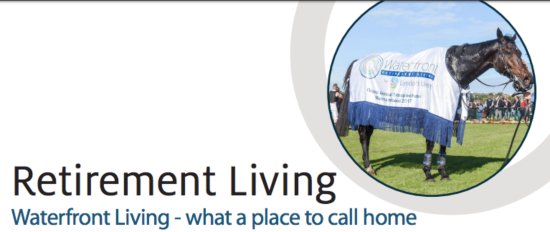
Lyndoch – a charity – has also just signed on to again sponsor the Grand Annual Steeplechase (at a cost of what, $70,000? $80,000?), yet a machine used to pulp cardboard urinal bottles has been out of action for months.

This means the cardboard bottles are carried by nurses across a dining room to another machine for disposal.

These are just some of the cracks that start to appear when a short-staffed system is under rising stress, and, my word, we need to know about it.
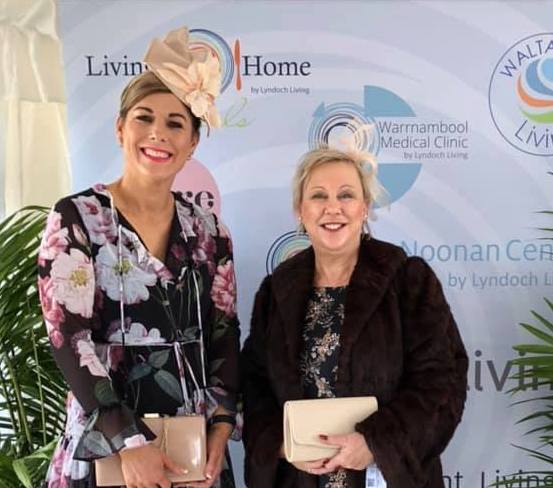
Lyndoch board member (and Warrnambool City Councillor) Sue Cassidy and Lyndoch CEO Doreen Power in the Lyndoch corporate tent at the 2019 May Races. Image: Lyndoch Living FB page.

In recent years Lyndoch has somehow lost sight of its core business, which is caring for the aged and infirm both in the nursing home and in-home care.

To most residents, this means tasty, nourishing food, having someone to talk to, and being cared for by nursing staff with the time, support and full resources to do their jobs properly.

This should be the number one and only priority for any aged care home, especially Lyndoch.

Lyndoch, we need to remember, is a not-for-profit, benevolent, charitable organisation that was set up more than 60 years ago by the Warrnambool community for the community.

We ultimately own Lyndoch, but it is run by a board on our behalf who, in turn, hire the CEO.

Lyndoch has plenty of money to fulfil its core business, receiving almost $30 million last year in government funds and another $6.1 million from client fees, with net assets worth $51.2 million.

You would think that every dollar would be directed toward the care and comfort of residents, including hiring and keeping quality nursing staff who are paid well, treated well and given all the resources they need to do their jobs well.

But no.

Instead, as I wrote last week, the staff are run off their feet and even when they do the best they can – like cut up towels for face washers – it is not enough.
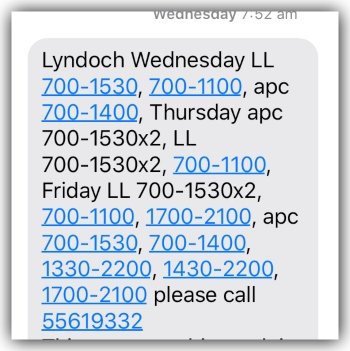
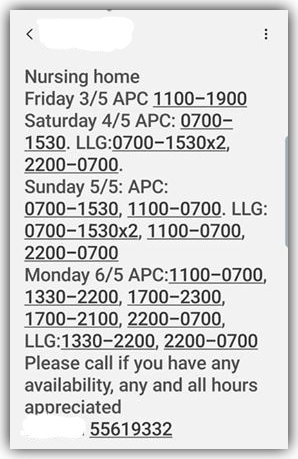
Roster shortages inside Lyndoch Living from last week.

At the same time, the Lyndoch board and CEO Doreen Power are pressing on with a $100 million masterplan, including borrowing money to build a multi-million dollar medical clinic on site for GPs, dental services and a chemist that nobody has proven is wanted or needed.

And at the same time, the number of admin staff at Lyndoch – a charity – has ballooned in the past three years from 37 to 59, with many having titles straight out of an episode of Utopia:

Director of People and Resilience; Social Inclusion and Entrepreneurial Manager; Operational Support and Improvement Manager; Project Manager Safety and Wellness.

All of those soapy titles and yet the culture is turning toxic and staff morale is sliding to rock bottom.

And then there is a revolving door of consultants who, between them, cost thousands for their expert advice.

I wish I could tell you exactly how much is being spent on consultants, but Lyndoch is yet to release its full financial figures and, given its new-found secrecy around such things, I doubt we will find the answers there.
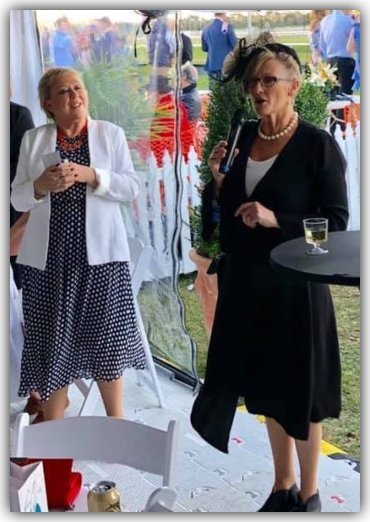
Lyndoch Living CEO Doreen Power and Lyndoch board chair Kerry Nelson in the Lyndoch corporate tent at the 2019 May Races. Image: Lyndoch Living FB page.

Lots of really wonderful people work at Lyndoch and terrific things happen there as a result of their efforts, but I also know that so many are struggling to hold it all together.

We can either hold our head in hands, or we can actually hold the Lyndoch board to account and ask “what is being done about it?”

Chair Kerry Nelson has not responded to my questions. There is silence from all the other board members: Sue Cassidy, Ron Page, Peter Downs, Lorraine Mielnik, Percy Eccles, Kane Grant and Andrew Paton.

Are they so bedazzled by Ms Power’s “big vision” that they are not asking the tough questions? Do any board members or Ms Power ever wander down to chat with nursing staff and ask how they are managing?

As I understand it, some nursing staff have never met the CEO after almost five years.

I have never met the CEO and she will not return my calls or my emails, so – again – I can’t tell you Ms Power’s response to any of the above.

This silence is familiar territory to me, but just as with the Warrnambool City Council credit card scandal, I am slowly building a picture and the questions will keep coming because the community created Lyndoch, we care for Lyndoch and we have every right to know what is really going on.

More soon.

If you would like to support the work of The Terrier, please consider throwing something in the tip jar.
Terrier Tip Jar


Staff morale slipping to rock bottom at Lyndoch Living

Carol Altmann – The Terrier

Hear that? Alarm bells are ringing and they are coming from inside Lyndoch Living.

What follows comes from talking to dozens of people who have all expressed the same fear: the Lyndoch culture is turning toxic.

Many of the staff at Lyndoch are under so much pressure from staff shortages or low morale that they are starting to crack under the strain, or have already left. Others have been allegedly pushed out.

The images posted here are just a slice of the ‘please help’ messages of the past nine months, desperately asking for nursing staff to fill roster gaps.

Note that these gaps include during the week of the May Racing Carnival, where Lyndoch had a corporate tent and sponsored the Grand Annual Steeplechase (and has signed on again for 2020).

I have to tread very carefully here, because I know each word will be read forensically, but I believe this issue goes far deeper than the staff shortages suffered by many aged care homes across Australia.

What I am hearing is that since CEO Doreen Power took over in 2015, there has been a complete change in workplace culture that has brought an upheaval way beyond what you expect with a new chief.

This upheaval also goes further than nursing staff and into areas like catering, kitchen, supplies, maintenance, finance and administration. I am told that, as a result, up to 80 people have left Lyndoch in the past two years – an extraordinary number by any measure.

For many people, Lyndoch is no longer a very happy place, despite the “good news stories”, #hashtag slogans and Facebook snaps that would have you think otherwise.

The brave people who talked to me took an enormous risk because of fears of reprisals, but they have done so because they care deeply about the residents and for each other.

Tonight I am giving them a voice, because it seems nobody within the Lyndoch executive or on the Lyndoch board is listening.

This is what we need to hear:

So many long-serving Lyndoch staff are no longer there, with some devoting 15, 20, 30 years of their lives to Lyndoch, only to find that they were no longer wanted.

This was not how they imagined Lyndoch would treat them after such service, but their careers ended in ways that left them feeling either disillusioned or, in some cases, devastated.

Many other staff, including experienced nursing staff, have left because they could no longer tolerate the stress and how it was starting to affect their personal lives.

I know the methods that can be used: the unreasonable workload, the nit-picking, the micro-managing, the criticism, the sudden outsourcing of your job, the constant fear of dismissal, the slow wearing down of confidence.

In that environment, people choose to leave, rather than tolerate one more day.

This is allegedly what happened to many long-serving staff at Lyndoch, and to others who thought they had a career path ahead of them, only to have it suddenly fall away.

The stories I have been listening to revealed the same management pattern over and over again and I believe them.

People talked of certain staff allegedly having “targets on their backs” and the fear of who would be next, which is exactly the sort of terror that is designed to keep people silenced.

Others told of distressed staff crying in the carpark as they left work, or as they prepared to enter it.

The old Lyndoch culture, with more warmth, empathy and understanding, appears to have become collateral damage toward a big corporate, pumped-up dream that someone decided was where Lyndoch needed to go.

From the hours of interviews I have now done, I can say the new Lyndoch culture appears to be one infused with bullying, intimidation, gaslighting and a poisonous game of divide-and-rule where some people are looked after at the expense of others.

In this world, not all staff suffer, only some: there are the insiders and the outsiders.

This is how a toxic culture works and it crushes people.

Worse, it can all filter down to the most vulnerable in this story: the residents.

Staff shortages following the days of the 2019 May Racing Carnival, where Lyndoch had a corporate tent and sponsored the steeplechase.

So many people I talked to were wracked with a sense of guilt and “feeling that I let the residents down”, because even if they worked themselves to the point of exhaustion, they felt it was not enough.

It was always the residents they worried about most.

It was not that they wanted more pay, or that they wanted less hours: they just desperately wanted more help.

I have been told there is often just one Registered Nurse on night duty for the entire Lyndoch building – around 200 residents. This nurse is also phoned by staff at the Lyndoch May Noonan Hostel in Terang, when there is often no RN on night duty at all.

I understand that there are only two unit managers for all of Lyndoch: there used to be four.

This means each unit manager is overseeing the care of 100-120 residents – including those with high needs such as dementia, psychosis and schizophrenia – plus overseeing all of the nursing staff.

It’s an impossible task.

Things can get missed, or not followed up, and the leadership that used to be there to support the nurses and care workers – to allow proper shift handovers, guidance and so on – falls away.

To try and cover the gaps, some senior nursing staff in the past 12 months have worked shifts for no pay.

One senior Registered Nurse, who worked part-time, worked for free on weekends at least three times during her contract, because there was nobody else available and it became her problem to fix.

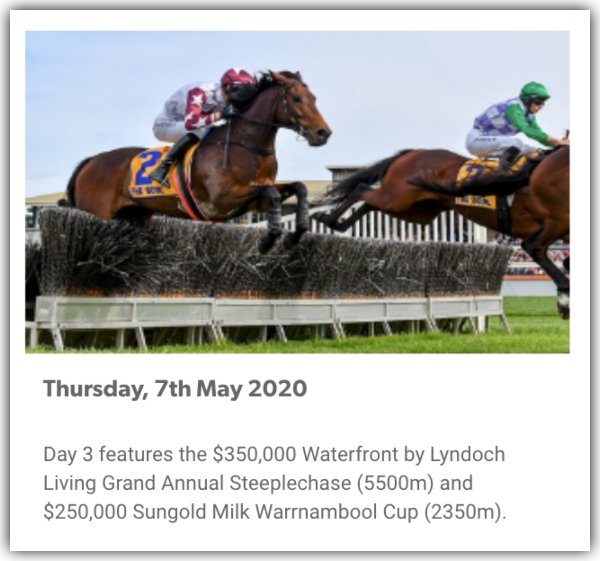
Lyndoch has again signed on as sponsor of the Grand Annual Steeplechase at the May Races. Former W’bool Racing Club CEO Peter Downs, who has relocated to Melbourne, remains on the Lyndoch board. Image: WRC.

Lyndoch says it is trying to hire more RNs and it is advertising a range of jobs, but word is now spreading that Lyndoch is not the place it used to be.

Highly qualified or experienced aged care staff can choose where they want to work, such is the demand for their skills, and many are not choosing Lyndoch.

They are, instead, choosing Moyne Health, or Mercy, or Southwest Healthcare.

I understand that four RNs hired by Lyndoch over the past 12 months each lasted barely more than a week before before moving on.

All of the above I have put to Ms Power, who, despite winning an award for aged care CEO of the year, refuses to talk to me about what is allegedly happening in the aged care facility she runs.

I have also asked questions of the board chair, Kerry Nelson, which have been similarly ignored.

This on top of its increasing secrecy makes me think that Ms Power and the nine-member board have forgotten that Lyndoch is a public institution, not a private company – at least not yet.

What is unfolding at Lyndoch is unfolding on our watch and we, as a community, need to be asking questions and demanding answers from Ms Power and the board.

To look away and just leave Lyndoch to it is not an option, so I am ringing the bell loudly and I am going to keep ringing it.

More soon.

If you would like to support the work of The Terrier, please consider throwing something in the tip jar.

Terrier Tip Jar


Where did you go? Crunching the numbers on Lyndoch staff

Foxy takes a close look at the Lyndoch financial reports to flush out what is happening with staffing numbers.

Carol Altmann – The Terrier

I was lucky enough to have my Mum cared for by the fabulous staff of Lyndoch Living for 10 years before she died there in April (at the ripe old age of 94.9), but so many of the faces I used to see during those 10 years are no longer there.

Where did they all go?

One source told me between 70 and 80 people have left Lyndoch in the past couple of years.

Some retired, some retired early, some moved on to other jobs, some now work for themselves, and some, well, some allegedly left for reasons which indicate an “interesting” workplace culture and I have to tread carefully as I slowly unpick that picnic.

But I am unpicking it, piece by piece, having had dozens of people contact me over the past nine months.

Today, as part of my slow, deep dive into the changing world of Lyndoch, I have called on Foxy the Fact checker to crunch the staff numbers.

First, have 70 to 80 staff left Lyndoch in the past few years? I can’t say for sure, but I have sent that figure off to Lyndoch CEO Doreen Power and board president Kerry Nelson for confirmation and will see if a response is forthcoming.

What has definitely happened, however, is the Lyndoch staff mix is changing.

Let’s start at the top.

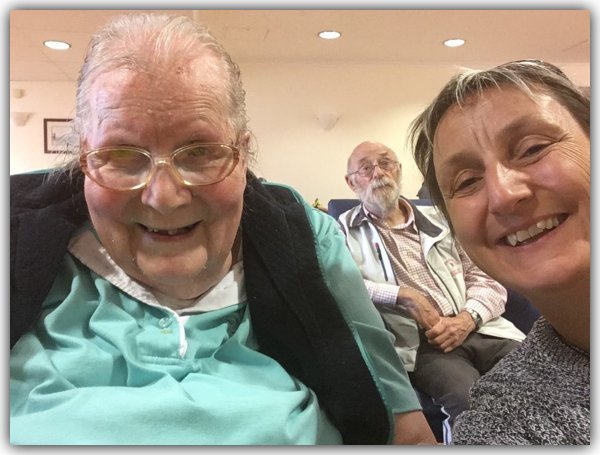
A very random photo of my Mum and I, with a lovely gent in the background, taken at Lake Lodge, Lyndoch in 2018.

The first thing Foxy found was a big jump in Lyndoch administration.

In 2016, there were 37 people in admin, in 2017 there were 41, and by last year it had grown to 59 – 19 more people than in 2016.

At the same time, the cost of “administration and other expenses” jumped by almost $1 million in 12 months, from $2.4m in 2017 to $3.31 million in 2018.

While admin numbers have gone up, the number of allied health workers employed by Lyndoch has gone south. (Q: What’s an allied health worker? A: Clever people who do things like occupational therapy and physiotherapy).

In 2016 there were 28 allied health professionals on staff at Lyndoch, but last year that dropped to just 12.

Allied health has largely been – oh, I dislike this word – “outsourced” and a Melbourne-based agency called Agestrong is the boss of the “outsourced” physio and o/t workers. (Agestrong, by the way, is owned by a private company called Designacare. Good grief.)

Lyndoch CEO Doreen Power and board chair Kerry Nelson at the 2019 Warrnambool May Racing Carnival. Photo: Lyndoch Living Facebook page.

What about the nursing staff, you ask? What is happening there? After all, these are the hard-working people at the very coalface of feeding, washing, dressing, nursing and cheering up the residents.

Well, using the numbers dug out from Lyndoch financial reports and Lyndoch annual reports, the picture from 2016 to 2018 looks like this:

the number of registered nurses (RN, senior nurses) has flatlined, from 32 in 2016 to 30 in 2018;

the number of enrolled nurses (EN, other qualified nurses) has climbed by 13% from 90 to 102;

the number of personal care workers (PCW) shot up 34% from 109 to 147;

a lot of these staff, especially PCWs, are part-time or casuals;

overall, the number of full-time-equivalent staff took a dive from 280 to 230 between 2017 and 2018.


What does this all say to a humble fact checker like Foxy?

It says that PCWs, the lowest paid workers, are picking up a lot of the workload for what can be a very tough gig.

At the same time, it suggests that the RNs and ENs must be working their backsides off with pretty much the same numbers that they had two years’ ago.

(As we speak, Fair Work Australia is nutting out a dispute between Lyndoch and the nurses’ union over proposed cuts to senior nursing levels.)

To be super clear, I am not suggesting Lyndoch Living is breaking any rules.

Indeed Ms Power told the local paper in July that Lyndoch Living “aligned with the Safe Patient Care Act and nursing ratios” and was working to increase full-time-equivalent numbers.

I also know that all nursing staff work very hard to make the residents’ lives comfortable and enjoyable and that this is their absolute first priority.

But what is filtering down to me from the 30-plus people I have now heard from is that Lyndoch is finding it tough to find and keep senior nursing staff, that there are often roster shortages that need to be filled at short notice, and that many people are starting to feel exhausted.

I take all this as a cry for help.

I am listening.

We, as a community, need to listen because we own and we love Lyndoch.

I have put a series of questions to Ms Power and Ms Nelson for a piece I am planning for Sunday.

See you for the next instalment then.

[The Lyndoch Living AGM is next Tuesday 29 October at 4pm at Lyndoch.]

If you would like to support the work of The Terrier, please consider throwing something in the tip jar.
Terrier Tip Jar


Lyndoch’s big spend-up powers on despite $1.77m deficit

Lyndoch Living last year recorded its third and most significant deficit in the past four years. The latest financial results will be released next Tuesday at its 2019 AGM.

Carol Altmann – The Terrier

Here’s a little figure that slipped by without too many people noticing: last year Lyndoch Living aged care recorded a deficit of $1.772 million – its largest loss in recent years.

You won’t find this figure in the Lyndoch 2018 annual report online, nor will you find it any media reports, but it can be sifted from a federal website that collects the financial records of charities. Such is my reading list.

It was here I learned that Lyndoch went from an $846,563 surplus in 2017, to a $1.772 million deficit in 2018. It is the third deficit in the past four years under CEO Doreen Power and her board. 

To be clear, Lyndoch Living is a not-for-profit, publicly funded body that is not designed – thankfully – to record fat surpluses on the back of caring for our infirm and elderly.

But nor is it intended to run at a loss without a detailed explanation.

As it happens, the 2019 Lyndoch AGM is next Tuesday (Oct 29), so I wanted to dive into last year’s figures before we find out how Lyndoch is faring this year.

And before I go any further, I also want to make it super clear that Lyndoch Living is full of terrific, hard-working staff who are devoted to making the lives of residents the best they can be. (Hello to you, staff! I know many of you read The Terrier, but are unable to comment. That’s okay, I see you.)

Lots of great stuff happens at Lyndoch.

But it is also blindingly obvious that Lyndoch Living is changing, and Ms Power has, since taking over in January 2015, had her foot to the pedal with big-buck projects and a very different management style.

Aiming high: A $100 million masterplan is now being rolled out at Lyndoch, but where is the money coming from?

In the past 12 months in particular, Lyndoch Living has been on a buying spree.

It bought the May Noonan Hostel in Terang, and the Warrnambool Medical Clinic practice, and the Health Spot practice in Warrnambool, and in the next couple of years, plans to build a new “super clinic” on Hopkins Rd as part of a full-blown, $100 million masterplan to be rolled out over the next eight years.

(Ms Power has a liking for “super clinics”, having overseen an $8 million one in her last job, at Plenty Valley.)

I’m all for a spruce up, but $100 million is serious money.

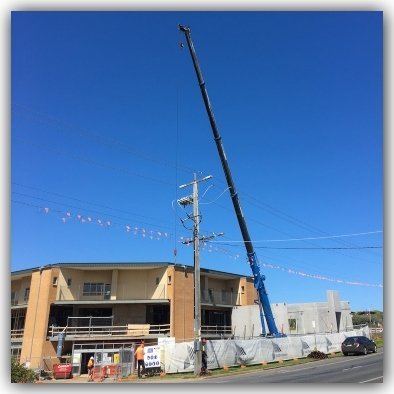
Lyndoch’s corporate area was first in line for an upgrade – funny how that happens – and now work on Swinton Wing is in full swing, at an expected cost of $11 million.

The simple question behind this head-spinning, full-throttle expansion is: where is the money coming from?

I want to be reassured, as I am sure others do, that this is not yet another case of corporate grandstanding, with big-ticket, capital works projects blitzing the basics like having enough qualified staff looking after our old folk.

(Watch the short Lyndoch Living video below for the full masterplan shebang.)

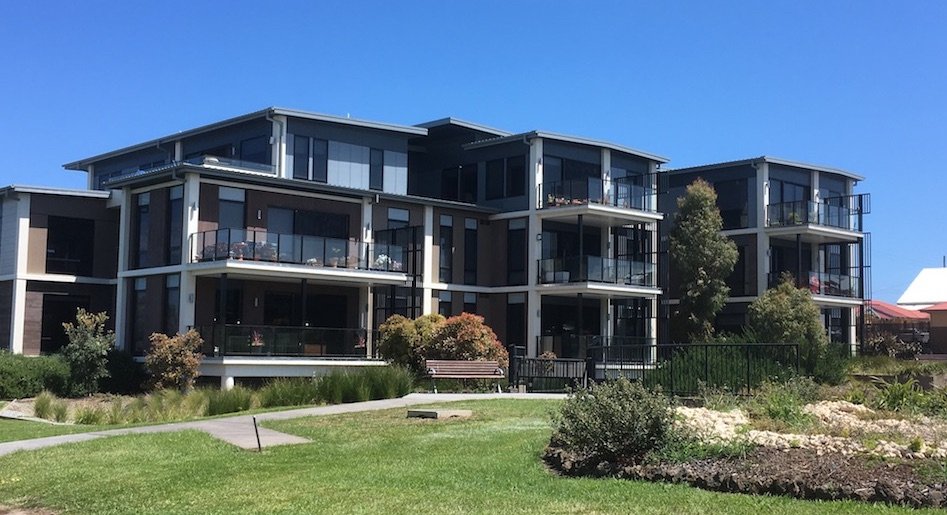
The Lyndoch Waterfront Living apartments, which are now five years old, are proof of where glamorous projects can stall.

Stage two of that multi-million dollar project has been put on ice after stage one failed to sell out and several apartments on the south side, facing Marfell Rd, remain empty.

Which brings me back to the deficit.

The deficit is just one part of Lyndoch’s big financial picture, but it is also a keyhole for us to peek through, to see what else is happening to our much-loved Lyndoch that has been a part of the local landscape for more than 60 years.

Here is some of what I have been able to unpick so far:

One of the reasons behind the $1.77 million deficit was the cost of “community based client services” going up by almost a third, or $1.2 million.

I emailed Ms Power and the Lyndoch board president, Kerry Nelson, last Wednesday for more detail about these services and the reason for the cost increase. I didn’t get a response.

It begs the question though, with growing demand for home-based care, why spend a fortune on a “super-clinic” and not these services?

Another reason for the deficit was a drop in the value of a Lyndoch building by $1.75 million.

I asked Ms Power and Ms Nelson more about this too, but there was no response.

Overall, Lyndoch last year had assets valued at a whopping $99.7 million – including $6.6 million in cash – and its liabilities were $36.9 million, leaving its overall position at $62.7 million.

That is a nice, fat cushion, but it is also the lowest bottom line in the past five years – in 2014, the total equity was $4 million higher at $68.9 million.

Sorry for so many figures, but it is the only way to pull this apart.

Lyndoch CEO Doreen Power has been all guns blazing since taking over in January 2015. Image: Lyndoch Living.

Here is one more interesting stat: the amount spent by Lyndoch each year on food for clients and residents.

In 2014, Lyndoch spent $1.021 million on food and in 2015 and 2016 it fell below the $1 million mark.

Last year, it spent $1.003 million on food, which is still less than it was five years ago in 2014. Why?

Has a contract changed? The cost of bulk groceries gone down? Are they being bought from elsewhere? Are chia seeds cheaper than homemade chicken soup?

(I was going to put these questions to Ms Power and Ms Nelson as well, but after not receiving any answers thus far, it seemed pointless.)

I will leave aside staffing figures, staff changes and staff morale for now – that is a whole separate story to come shortly – but having pored over a swag of Lyndoch financial reports and deficits, I still don’t know the answer to my simple question:

Where is the money for the $100 million masterplan coming from?

I did ask Ms Power and Ms Nelson this question, but there was no response.

Unfortunately I am going to be away on Terrier duties and unable to attend the Lyndoch AGM at 4pm next Tuesday, but perhaps someone will throw up their hand and ask this question because remember, Lyndoch belongs to us, the south-west community.

In the meantime, I am going to take a punt and say “the bank”, which means “loans”, which means “debt”.

If so, is wading into deep debt a good idea and will it vastly improve the daily lives of those in Lyndoch’s care? That, Terrier readers, is the $100 million question.

If you would like to support the work of The Terrier, please consider throwing something in the tip jar.
Terrier Tip Jar


Lyndoch apartments slow to move, despite race sponsorship

The Waterfront by Lyndoch Living apartments are still not fully sold after four years on the market and a sponsorship plug via the May Race Carnival.

By Carol Altmann

If ever I need reminding of how the horse racing industry permeates so much of Warrnambool life, I just read the monthly invoices that arrive from Lyndoch nursing home for my mother’s care.

“Proud sponsor of the Waterfront by Lyndoch Living Grand Annual Steeplechase”, it says at the bottom of each email.

Why on earth, I thought, would a publicly funded aged care home spend even money sponsoring a jumps race?

Why not spend the $50,000 or $60,000 or whatever it was on a new bus for the residents?

And has it been worth it?


The sponsorship was designed to help Lyndoch sell its luxury riverside apartments – Waterfront – that opened in 2014 with 17 apartments priced from $420,000 to $665,000.

As was reported by the local paper in early 2017, the three-year sponsorship deal was signed just a few months after the CEO of the Warrnambool Racing Club Peter Downs joined the Lyndoch board.

Lyndoch board chair Kerry Nelson told the paper Mr Downs excluded himself from any decision making around the sponsorship, as you would hope, but whose idea was it to sponsor the steeplechase in the first place?


In a series of emails and a follow up phone call, I asked Lyndoch CEO Doreen Power a whole bunch of questions about the sponsorship arrangement and the apartments. I also asked Ludeman Real Estate about the apartments, which they list.

Despite first asking these questions way back in July, Ms Power has chosen not to respond at all and, more recently, Ludeman Real Estate agent Mark Dwyer referred me back to Lyndoch.

In my profession, you can always tell when you are treading on uncomfortable ground by the depth of silence that follows your questions. If people feel good about a project, they can’t wait to tell you all about it. (And when a real estate agent declines to talk up a property, you really must be on to something!)


I still don’t know for sure who came up with the steeplechase sponsorship idea, but I do know that about a third of the apartments remain unsold and are proving hard to sell.

The prices for some apartments also appears to have dropped.

As mentioned earlier, the starting price listed in 2014 was $420,000, but according to the Waterfront website, one sold recently for $379,000.

Another was listed for sale on the Waterfront website at $559,000, but looks very similar to that listed by Ludeman Real Estate for $490,000.


As of today, six of the 17 apartments remain unsold and, from what I have been told,  there are two main reasons for that. The first is that the apartments are not the “cream of the crop” which were snapped up quickly and often at high prices.

The remaining apartments don’t have the same river views, or face to the south, rather than the sunnier north. 

The other reason is that Lyndoch was starting to talk about building Stage 2 of the development, when Stage 1 was still not fully sold.


What this means is that potential buyers would rather hold off and try to grab a “cream of the crop” apartment in Stage 2 than invest in what remains of Stage 1.

The problem is, of course, if Lyndoch forges ahead and builds Stage 2, it could repeat the same problem all over again: the top apartments sell and the others remain stagnant.

This is just the sort of dilemma faced by property developers everywhere and Lyndoch is now, effectively, a property developer with some fairly high priced real estate sitting empty.

Part of the sales pitch by Waterfront has been to lure retirees from elsewhere to Warrnambool, which was partly the point of slapping its logo all over the May Race Carnival, when there are lots of visitors to our city.

If the sponsorship deal hasn’t delivered rock solid results, however, then it has been a waste of money and I suspect when the deal expires after the 2019 event, Lyndoch won’t be placing the same bet again.

If you would like to keep seeing more pieces like this about local issues, please make a small contribution below.

Donate