Time to ask the tough questions of those in charge
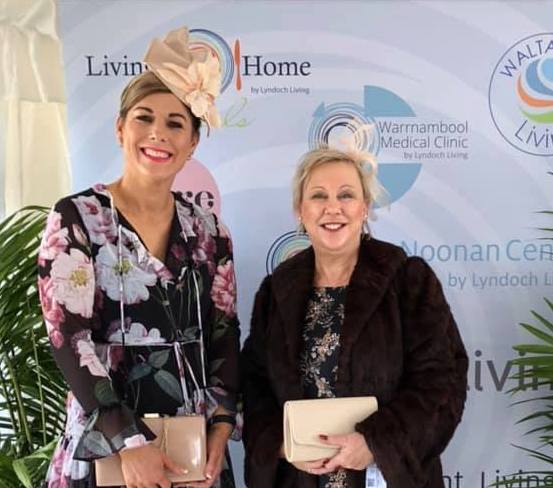
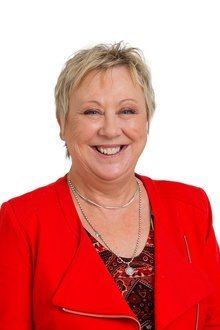
Powerhouses: Warrnambool City Councillor Sue Cassidy and Lydnoch CEO Doreen Power at the 2019 May Racing Carnival. Image: Lyndoch Living.
Carol Altmann – The Terrier
It’s a big week coming up for these two women.
One of them quietly holds a lot of power in Warrnambool and the other is Councillor Sue Cassidy.
Let’s start with Cr Cassidy, on the left, who tomorrow night will front the Warrnambool City Council and tell us why she should be Mayor.
Cr Cassidy becoming Mayor is the best thing that could happen to Warrnambool for the next 12 months, because she could finally break open the grip that has strangled the place for a decade.
Credit card abuses, bullying, boys’ clubs, budget blow-outs, over-the-top fees, fines and charges, and an assortment of other dodgy dealings don’t happen unless you have a majority of compliant councillors.
These are the ones more concerned about building their public profile, or not causing a fuss, or staying in sweet with the CEO.
Last week, Cr Cassidy told it like it is. No wonder former CEO Bruce Anson didn’t like her.
And it is for this very reason, of course, that she won’t be Mayor unless Tony Herbert pulls the pin and decides to rest and look after himself. I hope he does.
He is running for all the wrong reasons.
I disagree with many decisions that Cr Cassidy has made as a councillor, but if she can drag the bullshite into the light for the next 12 months, she has my vote.
Which brings me to the woman on the right, Doreen Power, the CEO of Lyndoch.
This Tuesday at 4pm, Ms Power will front Lyndoch’s 67th AGM at Lyndoch, not that you would know it, because I haven’t seen a word of it advertised.
But this is an important meeting.
We will be able to learn if the $1.77 million deficit recorded last year by Lyndoch has been turned around.
We will hopefully find out more about where the $100 million is coming from for the eight-year masterplan.
It’s also a chance to dig into where the money collected by Lyndoch from the residents and governments is actually going.
And it is a chance to learn how staff shortages, poor staff morale and the divide-and-rule work environment that has developed within Lyndoch over recent years is being handled.
I am building a series of stories on these things as we speak.
As it happens, Cr Cassidy is also on the board of Lyndoch.
I am counting on her to ask these questions with the same rigour and don’t-give-me-that-rubbish approach that she wants to apply to the WCC.
After all, we don’t want a Lyndoch board full of people more concerned about building a public profile, or not causing a fuss, or staying in sweet with the CEO.
Yep, it’s a big week and the bummer is that I won’t be at either meeting because I have been invited to a Google conference in Sydney to talk about the importance of things like The Terrier to small cities like Warrnambool.
I will pick it all up when I get back. See you then.
If you would like to support the work of The Terrier, please consider throwing something in the tip jar.
Where did you go? Crunching the numbers on Lyndoch staff
Foxy takes a close look at the Lyndoch financial reports to flush out what is happening with staffing numbers.
Carol Altmann – The Terrier
I was lucky enough to have my Mum cared for by the fabulous staff of Lyndoch Living for 10 years before she died there in April (at the ripe old age of 94.9), but so many of the faces I used to see during those 10 years are no longer there.
Where did they all go?
One source told me between 70 and 80 people have left Lyndoch in the past couple of years.
Some retired, some retired early, some moved on to other jobs, some now work for themselves, and some, well, some allegedly left for reasons which indicate an “interesting” workplace culture and I have to tread carefully as I slowly unpick that picnic.
But I am unpicking it, piece by piece, having had dozens of people contact me over the past nine months.
Today, as part of my slow, deep dive into the changing world of Lyndoch, I have called on Foxy the Fact checker to crunch the staff numbers.
First, have 70 to 80 staff left Lyndoch in the past few years? I can’t say for sure, but I have sent that figure off to Lyndoch CEO Doreen Power and board president Kerry Nelson for confirmation and will see if a response is forthcoming.
What has definitely happened, however, is the Lyndoch staff mix is changing.
Let’s start at the top.
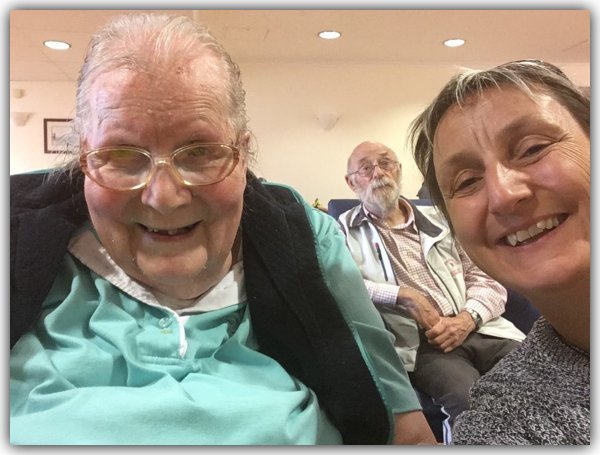
A very random photo of my Mum and I, with a lovely gent in the background, taken at Lake Lodge, Lyndoch in 2018.
The first thing Foxy found was a big jump in Lyndoch administration.
In 2016, there were 37 people in admin, in 2017 there were 41, and by last year it had grown to 59 – 19 more people than in 2016.
At the same time, the cost of “administration and other expenses” jumped by almost $1 million in 12 months, from $2.4m in 2017 to $3.31 million in 2018.
While admin numbers have gone up, the number of allied health workers employed by Lyndoch has gone south. (Q: What’s an allied health worker? A: Clever people who do things like occupational therapy and physiotherapy).
In 2016 there were 28 allied health professionals on staff at Lyndoch, but last year that dropped to just 12.
Allied health has largely been – oh, I dislike this word – “outsourced” and a Melbourne-based agency called Agestrong is the boss of the “outsourced” physio and o/t workers. (Agestrong, by the way, is owned by a private company called Designacare. Good grief.)
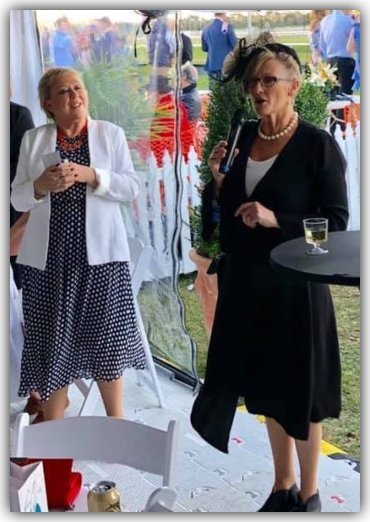
Lyndoch CEO Doreen Power and board chair Kerry Nelson at the 2019 Warrnambool May Racing Carnival. Photo: Lyndoch Living Facebook page.
What about the nursing staff, you ask? What is happening there? After all, these are the hard-working people at the very coalface of feeding, washing, dressing, nursing and cheering up the residents.
Well, using the numbers dug out from Lyndoch financial reports and Lyndoch annual reports, the picture from 2016 to 2018 looks like this:
the number of registered nurses (RN, senior nurses) has flatlined, from 32 in 2016 to 30 in 2018;
the number of enrolled nurses (EN, other qualified nurses) has climbed by 13% from 90 to 102;
the number of personal care workers (PCW) shot up 34% from 109 to 147;
a lot of these staff, especially PCWs, are part-time or casuals;
overall, the number of full-time-equivalent staff took a dive from 280 to 230 between 2017 and 2018.
What does this all say to a humble fact checker like Foxy?
It says that PCWs, the lowest paid workers, are picking up a lot of the workload for what can be a very tough gig.
At the same time, it suggests that the RNs and ENs must be working their backsides off with pretty much the same numbers that they had two years’ ago.
(As we speak, Fair Work Australia is nutting out a dispute between Lyndoch and the nurses’ union over proposed cuts to senior nursing levels.)
To be super clear, I am not suggesting Lyndoch Living is breaking any rules.
Indeed Ms Power told the local paper in July that Lyndoch Living “aligned with the Safe Patient Care Act and nursing ratios” and was working to increase full-time-equivalent numbers.
I also know that all nursing staff work very hard to make the residents’ lives comfortable and enjoyable and that this is their absolute first priority.
But what is filtering down to me from the 30-plus people I have now heard from is that Lyndoch is finding it tough to find and keep senior nursing staff, that there are often roster shortages that need to be filled at short notice, and that many people are starting to feel exhausted.
I take all this as a cry for help.
I am listening.
We, as a community, need to listen because we own and we love Lyndoch.
I have put a series of questions to Ms Power and Ms Nelson for a piece I am planning for Sunday.
See you for the next instalment then.
[The Lyndoch Living AGM is next Tuesday 29 October at 4pm at Lyndoch.]
If you would like to support the work of The Terrier, please consider throwing something in the tip jar.
Lyndoch’s big spend-up powers on despite $1.77m deficit
Lyndoch Living last year recorded its third and most significant deficit in the past four years. The latest financial results will be released next Tuesday at its 2019 AGM.
Carol Altmann – The Terrier
Here’s a little figure that slipped by without too many people noticing: last year Lyndoch Living aged care recorded a deficit of $1.772 million – its largest loss in recent years.
You won’t find this figure in the Lyndoch 2018 annual report online, nor will you find it any media reports, but it can be sifted from a federal website that collects the financial records of charities. Such is my reading list.
It was here I learned that Lyndoch went from an $846,563 surplus in 2017, to a $1.772 million deficit in 2018. It is the third deficit in the past four years under CEO Doreen Power and her board.
To be clear, Lyndoch Living is a not-for-profit, publicly funded body that is not designed – thankfully – to record fat surpluses on the back of caring for our infirm and elderly.
But nor is it intended to run at a loss without a detailed explanation.
As it happens, the 2019 Lyndoch AGM is next Tuesday (Oct 29), so I wanted to dive into last year’s figures before we find out how Lyndoch is faring this year.
And before I go any further, I also want to make it super clear that Lyndoch Living is full of terrific, hard-working staff who are devoted to making the lives of residents the best they can be. (Hello to you, staff! I know many of you read The Terrier, but are unable to comment. That’s okay, I see you.)
Lots of great stuff happens at Lyndoch.
But it is also blindingly obvious that Lyndoch Living is changing, and Ms Power has, since taking over in January 2015, had her foot to the pedal with big-buck projects and a very different management style.
Aiming high: A $100 million masterplan is now being rolled out at Lyndoch, but where is the money coming from?
In the past 12 months in particular, Lyndoch Living has been on a buying spree.
It bought the May Noonan Hostel in Terang, and the Warrnambool Medical Clinic practice, and the Health Spot practice in Warrnambool, and in the next couple of years, plans to build a new “super clinic” on Hopkins Rd as part of a full-blown, $100 million masterplan to be rolled out over the next eight years.
(Ms Power has a liking for “super clinics”, having overseen an $8 million one in her last job, at Plenty Valley.)
I’m all for a spruce up, but $100 million is serious money.
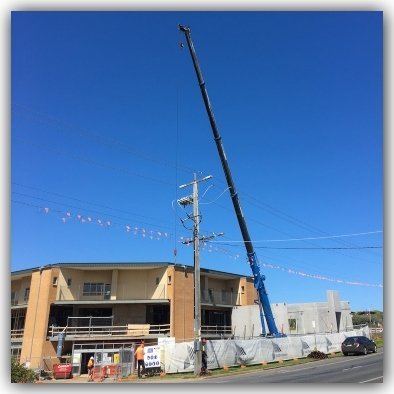
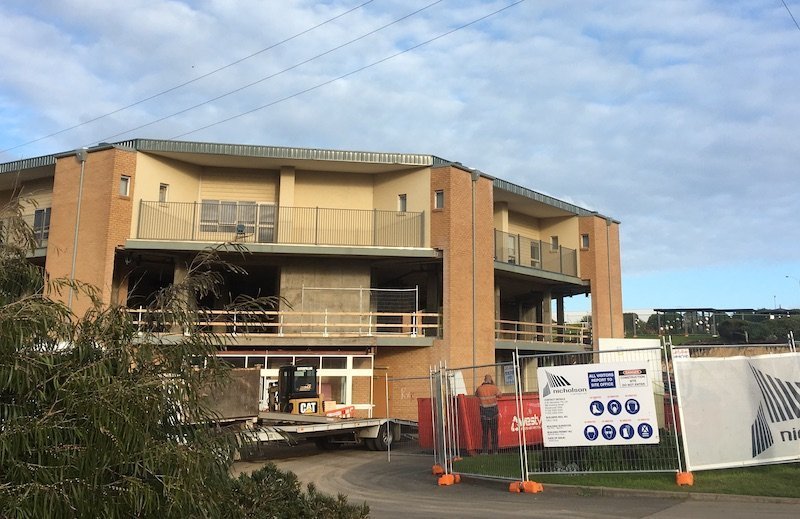
Lyndoch’s corporate area was first in line for an upgrade – funny how that happens – and now work on Swinton Wing is in full swing, at an expected cost of $11 million.
The simple question behind this head-spinning, full-throttle expansion is: where is the money coming from?
I want to be reassured, as I am sure others do, that this is not yet another case of corporate grandstanding, with big-ticket, capital works projects blitzing the basics like having enough qualified staff looking after our old folk.
(Watch the short Lyndoch Living video below for the full masterplan shebang.)
The Lyndoch Waterfront Living apartments, which are now five years old, are proof of where glamorous projects can stall.
Stage two of that multi-million dollar project has been put on ice after stage one failed to sell out and several apartments on the south side, facing Marfell Rd, remain empty.
Which brings me back to the deficit.
The deficit is just one part of Lyndoch’s big financial picture, but it is also a keyhole for us to peek through, to see what else is happening to our much-loved Lyndoch that has been a part of the local landscape for more than 60 years.
Here is some of what I have been able to unpick so far:
One of the reasons behind the $1.77 million deficit was the cost of “community based client services” going up by almost a third, or $1.2 million.
I emailed Ms Power and the Lyndoch board president, Kerry Nelson, last Wednesday for more detail about these services and the reason for the cost increase. I didn’t get a response.
It begs the question though, with growing demand for home-based care, why spend a fortune on a “super-clinic” and not these services?
Another reason for the deficit was a drop in the value of a Lyndoch building by $1.75 million.
I asked Ms Power and Ms Nelson more about this too, but there was no response.
Overall, Lyndoch last year had assets valued at a whopping $99.7 million – including $6.6 million in cash – and its liabilities were $36.9 million, leaving its overall position at $62.7 million.
That is a nice, fat cushion, but it is also the lowest bottom line in the past five years – in 2014, the total equity was $4 million higher at $68.9 million.
Sorry for so many figures, but it is the only way to pull this apart.
Lyndoch CEO Doreen Power has been all guns blazing since taking over in January 2015. Image: Lyndoch Living.
Here is one more interesting stat: the amount spent by Lyndoch each year on food for clients and residents.
In 2014, Lyndoch spent $1.021 million on food and in 2015 and 2016 it fell below the $1 million mark.
Last year, it spent $1.003 million on food, which is still less than it was five years ago in 2014. Why?
Has a contract changed? The cost of bulk groceries gone down? Are they being bought from elsewhere? Are chia seeds cheaper than homemade chicken soup?
(I was going to put these questions to Ms Power and Ms Nelson as well, but after not receiving any answers thus far, it seemed pointless.)
I will leave aside staffing figures, staff changes and staff morale for now – that is a whole separate story to come shortly – but having pored over a swag of Lyndoch financial reports and deficits, I still don’t know the answer to my simple question:
Where is the money for the $100 million masterplan coming from?
I did ask Ms Power and Ms Nelson this question, but there was no response.
Unfortunately I am going to be away on Terrier duties and unable to attend the Lyndoch AGM at 4pm next Tuesday, but perhaps someone will throw up their hand and ask this question because remember, Lyndoch belongs to us, the south-west community.
In the meantime, I am going to take a punt and say “the bank”, which means “loans”, which means “debt”.
If so, is wading into deep debt a good idea and will it vastly improve the daily lives of those in Lyndoch’s care? That, Terrier readers, is the $100 million question.
If you would like to support the work of The Terrier, please consider throwing something in the tip jar.
Lyndoch Living rolls out masterplan…and cuts nursing staff
Carol Altmann – The Terrier
I am interrupting our running story on credit cards to say there are angry stirrings at Lyndoch Living aged care which is rolling out its $100 million masterplan – and cutting nursing staff.
The Australian Nursing and Midwifery Federation has taken up the fight against plans by Lyndoch to blend its two highest acute care units, the 45-bed Audrey Prider Centre unit and the 39-bed Lake Lodge unit, even though they will remain physically separated by a room.
The union says the move will see just one full-time nurse unit manager in charge of the clinical care of 89 residents.
On top of this, the union says, there will be less associate unit managers – 7.5 full-time positions instead of 10 – that will oversee the unit when the nurse unit manager is not rostered on.
Staffing issues have been swirling around Lyndoch for months now, with many of the hard-working staff fearful of whether they will still have jobs.
There are also mounting reports of stress from the staff shortages that already exist. Unfortunately, with all the goings on at the W’bool City Council, I just haven’t had a moment to dig into it all.
I emailed Lyndoch CEO Doreen Power last Friday for a comment on the union statement, but I have had no response.
In the meantime, the first stage of the $100 million project will see the Warrnambool Medical Centre move on to the Hopkins Road site and new carpark up and running within two years.
I sense there will be much more to come on this story.
Lyndoch CEO and W’bool Racing Club chief share racing ties
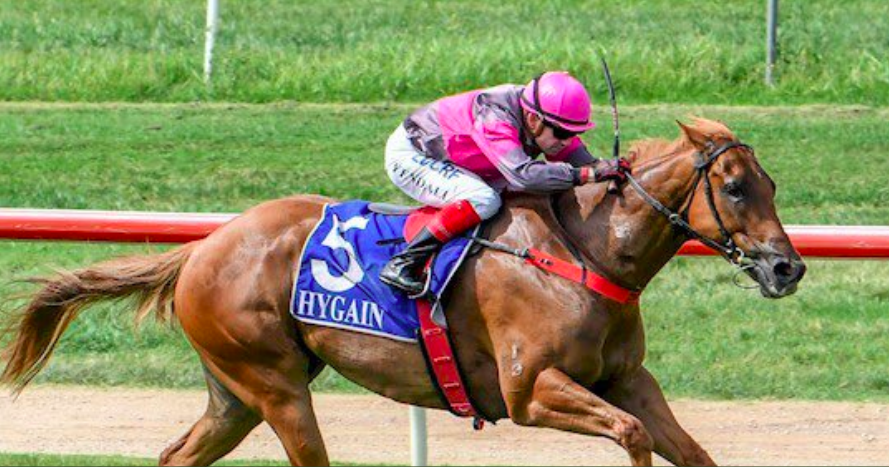
Locally trained racehorse, Strategic Force, the owners of which include Lyndoch CEO Doreen Power and Warrnambool Racing Club CEO Peter Downs, who is on the Lyndoch board. Racing.com
Carol Altmann – The Terrier
I recently learned that Lyndoch Living’s chief executive officer Doreen Power has shares in at least one racehorse with Warrnambool Racing Club chief executive officer, Peter Downs, who is also a member of the Lyndoch board.
Why is this of interest?
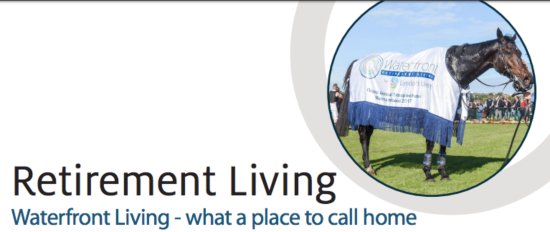
Because in early February 2017 – just four months after Mr Downs joined the Lyndoch board – Lyndoch’s Waterfront Living announced a three-year sponsorship deal for the naming rights to Warrnambool’s Grand Annual Steeplechase.
The deal is believed to have cost Lyndoch between $50,000 to $60,000. (A source has since told me the figure is closer to $70,000).
The always-murky circumstances around this Lyndoch-Warrnambool Racing Club sponsorship deal have just become a whole lot murkier, not least because Ms Power refuses to answer questions about it, or her co-ownership of the racehorse with Mr Downs and others.
Questions sent to Ms Power via email have gone unanswered.
The racehorse in question is a five-year-old, chestnut gelding called Strategic Force that is trained by top Warrnambool trainer Symon Wilde and has, to date, won about $20,000 in prize money. Ms Power and Mr Downs are among 13 owners, including Mr Wilde himself.
Mr Downs, far left, and Ms Power, third from left, with some of the other 13 owners who share in the Symon Wilde trained racehorse, Strategic Force. Image: Racing.com
As it happens, the horse has been nominated to run in three races at the May Racing Carnival this week.
I can’t tell you how long Ms Power has held shares in the horse, but given it was foaled in 2013, it is quite feasible that it has been for several years and includes the time when the Lyndoch sponsorship deal was struck by the board.
As CEO, Ms Power is not on the Lyndoch board, but Mr Downs is. So is another high-profile supporter of the local racing industry in Warrnambool City Councillor Sue Cassidy.
Most importantly, Ms Power’s connection to the racing industry and her connection to Mr Downs in particular, has never been declared by Lyndoch which, we must remember, is a public institution, not a private company.
This is why Ms Power’s investment in a racehorse with the CEO of the Warrnambool Racing Club is of public interest, rather than what might normally be considered a private arrangement.
When the Grand National Steeplechase sponsorship deal with Lyndoch Waterfront Living was first announced, Lyndoch board chair Kerry Nelson was at pains to point out that Mr Downs was at arm’s length and excused himself from all discussions.
Maybe so, but it still didn’t look good. Ms Power and Mr Downs holding shares in the same racehorse also doesn’t look good.
My Mum lived at Lyndoch for the past nine years, and I can’t speak highly enough of the hard-working staff who made her life so comfortable right up until her final breath, but I could count a dozen ways that $50,000 or $60,000 could be spent productively within Lyndoch rather than on a jumps race.
This is especially so when the point of the sponsorship – to help sell the Lyndoch Waterfront Living apartments – has not worked as hoped and several apartments remain empty. The entire second stage of the project is also on hold.
This is the final year of the steeplechase sponsorship deal and, no doubt, Lyndoch will be offered the opportunity to re-sign.
If it does, the circumstances surrounding the decision are now more transparent, even if the sponsorship itself is still questionable.
Would you like to support The Terrier? Toss what you like into the tip jar.