Near fatality exposes call system black spots inside Lyndoch
The potentially catastrophic failings of the internal nurse communication system at Lyndoch Living was exposed when a resident required CPR. Image: Stockfile

Carol Altmann – The Terrier

This time a year ago, a personal care worker at Lyndoch Living faced a nightmare scenario – a resident suffered a cardiac arrest and the nurse call system failed.

The care worker desperately tried to contact the on-duty Registered Nurse, who was in another part of Lyndoch – the new Swinton Wing – but the calls failed to go through.

The nurse-to-nurse comms system hit a black spot; a wireless dead zone that has plagued parts of Lyndoch for two years.

It was only when the RN moved out of the black spot that the frantic emergency calls came piling in from the care worker.

Fortunately, in the meantime, the care worker was helped by other staff to administer CPR and the resident survived.

Twelve months on, and the nurse-to-nurse call system is still failing. It is still not 100 per cent reliable across Swinton Wing and neither is the resident call bell system, or mobile phones.

All three are different systems, and all three suffer from the wi-fi black spots that can affect calls coming into Swinton Wing, going out of Swinton Wing, or between people inside Swinton Wing.

While the near fatality is the most serious incident that I am aware of from the past 12 months, there have been other red flags in more recent times.

In one case, a resident was left on a toilet for more than 40 minutes after the call bell failed to alert a nurse.

It’s hard to believe a nursing home is allowed to operate without a 100 per cent reliable call system for nurses and residents, but Lyndoch does.

It’s even harder to believe that the area with the black spots, Swinton Wing, re-opened last year after a $13 million makeover that, my sources tell me, failed to include an IT expert in the planning.

As of today, staff are still lodging ‘black spot’ complaints.

Part of the problem, apparently, is that a key piece of wireless equipment was destroyed by a lightning strike in 2019 and has not yet been replaced because it would cost around $500,000.

There are also compatibility issues between old technology and new technology across the different wings of Lyndoch.

Added to this is what has been a tumultuous time in Lyndoch’s IT department, including its Director of Technology, Strategy & Transformation, Dr Ed Rhode, resigning in April after less than two years, and the loss of two other staff more recently.

Before these resignations, there was some progress early this year when it was announced a new nurse-to-nurse call system would be rolled out from June to December although, according to one report, there were “no guarantees it will work”.

There were “no guarantees” because the new system could suffer the same issues as the old system, unless the underlying problems were resolved.

The roll-out hasn’t happened.

First the excuse was a supply problem.

Then the delay was blamed on Covid-19 preventing experts coming on site to install the equipment, even though it;s classed as an essential service.

But sources believe – and I am trying to confirm this from Lyndoch – that things have ground to a halt because Lyndoch is not prepared or is unable to spend the money.

A proper fix must include “back end” upgrades, equipment upgrades and ongoing maintenance, and all of that costs money.

And right now, Lyndoch is plunging its money and bank loans into the $22 million medical clinic being built just 100m from Swinton Wing.

A medical clinic that will have no discernible impact on improving the safety of the residents.

It’s not surprising that Lyndoch care staff are frustrated and angry.

As one put it, they are “sick of fighting for the basics, while they continue to pour money down the drain on this medical centre”,

Others are frightened, knowing they are unwilling players in a game of Russian roulette where the consequences for a resident could be fatal.

Again, this is not scaremongering, this is real and I, for one, find it both disturbing and frightening.

I asked Lyndoch and its chair Sue Cassidy for comment on these issues today. If any is forthcoming, I will publish it in full.


Lyndoch staffing slides backwards in wake of audit failings

Two months after being audited by the national watchdog, staff shortages at Lyndoch are reaching crisis point.

Carol Altmann – The Terrier

I know we are all still digesting the distressing fact that Lyndoch Living has slipped further in its duty of care to look after the elderly, but this is important:

Before breaking that story yesterday, I had planned to post these roster shortages for the Audrey Prider Centre and Lake Lodge – the two, high-care areas that make up what is called the “nursing home”.

These are the very same areas that were the focus of yesterday’s bombshell that Lyndoch had failed four more national standards of care.

These are the areas that were found by the Aged Care Quality and Safety Commission to be under stress from severe staff shortages.

That was based on the commission looking closely at Lyndoch in September.

September.

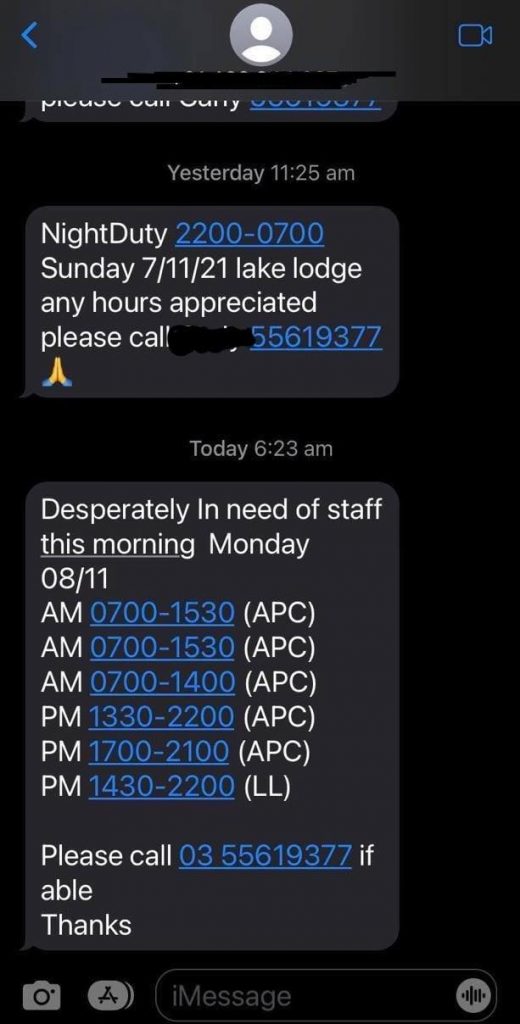
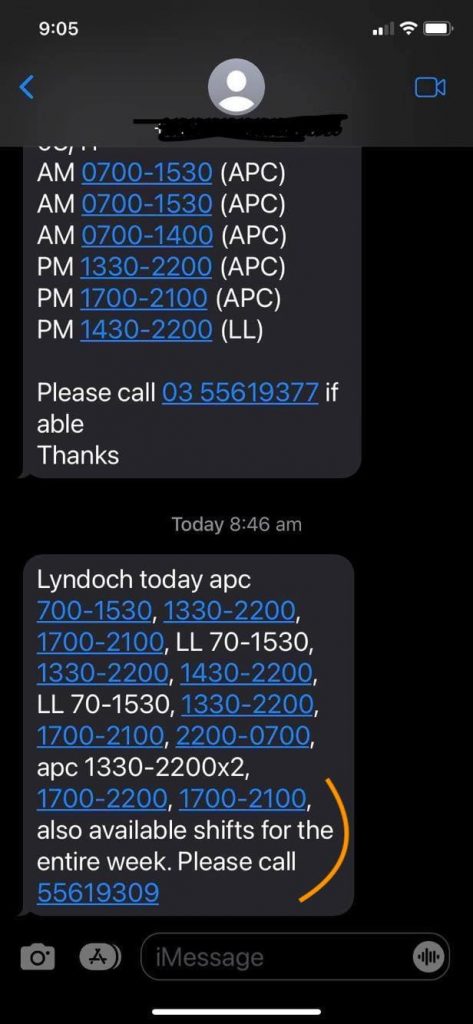
Yet here we are, and nothing has changed. These are the shift shortages for the past couple of days: it is dire.

So if things were grim in September, I can only imagine what the commission would report if it turned up now.

And I hope they do turn up, unannounced, very soon because this cannot wait until the reaccreditation at the end of February. The commission has the power to do this. It can apply sanctions at any time.

Roster call-outs reveal chronic shortages in the high-care areas of Lyndoch Living.

Our local Federal member Dan Tehan gave a statement to the local paper today which says the commission is still deciding what to do in response to the latest failings.

I hope they intervene, because these rosters show that we cannot hope that things will miraculously improve. They won’t.

A stream of experienced staff have gone on sick leave, stress leave or resigned since the commission’s last audit in September. They want to work at Lyndoch, but they can no longer tolerate what is going on.

This has nothing to do with national staff shortages, Covid, or the Royal Commission. It has everything to do with the Lyndoch culture and priorities.

We know it, the staff know it, and surely the commission is starting to catch on.

Yet while the walls crumble around them, Lyndoch once again shows no contrition or remorse for these failings. It once again tells the paper that it has “an action plan”. It said the same thing earlier this year.

Clearly, that action plan is not working and Lyndoch is going backwards, from failing one standard, to now failing four.

My hope is the commission does not wait for it to deteriorate even further before taking action, because at the centre of all this are real people, elderly, vulnerable people, beautiful people from our local community, who are not able to smile and laugh for the Lyndoch Facebook page, but who are instead in need of our help. We are there for them, and those who care for them.

Thankyou to every single one of you who is prepared to stay the course and fight this fight.


Crisis point: Lyndoch Living again fails aged care standards

The Lyndoch Living nursing home in Warrnambool has failed a second time this year to meet aged care standards.

Exclusive

Carol Altmann – The Terrier

The Lyndoch Living nursing home has again failed a string of care standards set down by the national aged care watchdog.

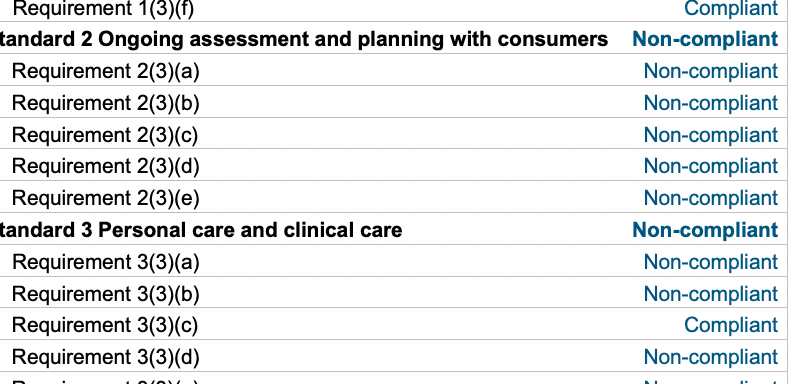
In another damning report released online today by the Aged Care Quality and Safety Commission (ACQSC), the nursing home has again failed to meet key measures in personal care and clinical care, staffing, and also governance. [Download the report here.]

The nursing home area is made up the two high-care units: the Audrey Prider Centre, for dementia residents, and Lake Lodge.

An ACQSC audit from September 8 to 15 revealed poor wound management, poor pain management, a lack of monitoring and documentation after resident falls, and inadequate staffing, with unfilled rosters, and remaining staff being unable to cope with the workload.

The extent and impact of understaffing at Lyndoch is graphically highlighted by the report.

It found the nursing home is unable to demonstrate that its current mix and qualifications of its workforce could deliver and manage safe and quality care and services.

“Rosters evidence that not all care shifts are filled when staff are deployed elsewhere within the service or when staff call in sick,” the report says.

“Personal care staff interviewed advised they do not always complete all tasks allocated to them.”

The report says Lyndoch management described how they are in the process of recruiting more nursing and care staff to cover current vacancies, but this has done little to address the concerns of residents and their families.

“Whilst the service was able to evidence improvements, four out of five consumer representatives expressed ongoing dissatisfaction with staffing levels within the service,” the report says.

Short staffing was also raised in regard to poor wound and pain management.

“(Lyndoch) did not demonstrate best practice clinical care in relation to wound and pain management,” the report says.

In particular, the commission found:

– Wound management plans did not always reflect wound reviews including dressing changes, photography and measurements.

– Inconsistent wound photographs and wound measurements are taken and recorded.

– The healing progress of each wound is not clearly demonstrated.

Nursing staff told the commission that staff shortages limited the ability of staff to attend to wounds as required, and to reposition residents to reduce pressure.

“Clinical staff described how wound care is impacted by staff shortages including delayed dressing and repositioning of consumers,” the report says.

The report also outlines failings in monitoring residents who had suffered falls.

Unwitnessed falls were not always documented in reports and a sample found that three out of four residents who had fallen were not effectively monitored afterward, including neurological observations and pain monitoring.

Not surprisingly, the nursing home also failed on risk management.

“The service did not demonstrate systems are in place to prevent harm from high impact or high prevalence risks such as falls,” the report says.

Despite hiring an adviser to help with its governance activities, the service “has not demonstrated current systems and processes are adequate in identifying and managing high impact or high prevalence risks”.

It is the second time this year that the Lyndoch nursing home has failed a ACQSC audit.

In July this year May Noonan Hostel in Terang, bought by Lyndoch in 2018, also failed seven out of the eight aged care standards.

The ACQSC is the peak federal body for assessing and accrediting aged care homes.

I will seek comment from Lyndoch this afternoon and update this story if or when a comment is received. In the meantime, I stand with the care staff and the poor residents.


Lyndoch’s May Noonan aged care fails national standards

Carol Altmann – The Terrier

Exclusive

Lyndoch Living has failed seven of the eight quality standards for its May Noonan Centre in Terang, after an audit by the national aged care watchdog.

The audit by the Aged Care Quality and Safety Commission in April found Lyndoch was non-compliant in almost half of the 42 benchmarks that make up the eight national standards.

In one standard – ongoing assessment and planning with consumers – the May Noonan aged care home failed on all five out of five benchmarks.

The damning report – released online this week – found a string of shortfalls, including that “staff do not understand what constitutes chemical restraint and actions do not minimise the use of chemical restraint”.

It also found the service “does not effectively manage high impact high prevalence risks including in relation to falls, medication, behavioural and weight management and urinary catheters.”

The audit also found staff do not act in a timely manner to deterioration or changes to a resident’s health.

In one example, a resident had been feeling unwell for several weeks and, despite documentation recording this and the resident’s representative telling staff repeatedly, no action was taken until the resident became feverish.

Only then was the resident assessed by an external registered nurse and found to have urinary retention.

The assessment team also found some information available was out of date and/or incomplete;

instances of directives made by health professionals and not acted upon by staff;

handover information does not include risks;

charting, assessments and care plans were not consistent or current for all residents sampled.

Staff were friendly, gentle and caring, but – once again – the report reveals that there is simply not enough of them.

Staff shortages and qualifications were captured in this pithy summary: “the number and mix of members of the workforce does not enable the delivery and management of safe and quality care and services.”

And this: “The Assessment Team found the service does not demonstrate staff have the knowledge to effectively perform their roles”.

This report follows a similarly damning audit of the Lyndoch nursing home in Warrnambool, reported here in June, which found Lyndoch was non-compliant in three out of four key measures for resident care and staffing.

[From my search of the commission website, Lyndoch is the only aged care home in Warrnambool and Port Fairy to have been found non-compliant in multiple areas.]

Lyndoch Living bought the 40-bed May Noonan hostel in late 2018.

At that time, it had passed accreditation by meeting all 44 of the 44 requirements and was due for reaccreditation in July 2021.

This has now been deferred by the commission until next January due to Covid-19.

This latest report says Lyndoch appointed a new manager to May Noonan in March and that many of the issues were now being addressed, including an audit of all residents, however the assessor determined that because this remedial action was “still in progress”, the home remained in breach.

[You can download the full report here]


Lyndoch Living failings in care didn’t get better, but worse

Lyndoch Living says it plans to fix failings identified by the national aged care watchdog, without publicly detailing how.

Carol Altmann – The Terrier

Lyndoch Living’s failure to care for the elderly and frail was kept under wraps for more than a year, during which things didn’t improve –  but got worse.

That little bombshell was wrapped up in MP Dan Tehan’s media statement issued in response to The Terrier exclusive on Tuesday night.

Mr Tehan said the nation’s top aged care watchdog visited Lyndoch in response to a complaint way back in February LAST year.

As a result, the Aged Care Quality and Safety Commission slapped Lyndoch with a non-compliance order for Personal and Clinical Care (aka, the very reason an aged care home exists).

Never fear, Lyndoch assured the commission at the time, they had a plan!

Fast forward 12 months to January 2021 and the commission re-visited Lyndoch to find the situation was not better, but far worse.

How is that allowed to happen?

As revealed exclusively here on Tuesday night, Lyndoch failed not one, but three out of four standards, including using chemical restraint without consent, and failing to appropriately monitor residents after serious falls.

And when it came to staffing, the commission could not have been more blunt: “(Lyndoch had) not ensured the delivery of safe care and services”.

If Lyndoch can’t get this right, what is it there for? To sponsor golf and horse racing?

Lyndoch’s three-year accreditation comes around again in August.

Lyndoch told the paper (it doesn’t respond to The Terrier) that it has an “action plan”, none of which has been detailed or publicly costed.

There is no mention of it on its website.

Once again, we are kept in the dark by a board and Lyndoch executive who are failing to deliver Lyndoch’s core business.

If The Terrier had not been tipped off about this latest report, nobody would know a thing about any of this.

“This” is the neglect that follows as a natural consequence of our nursing home not having enough staff, not having enough qualified staff, getting rid of experienced staff, and staff quitting because they are physically and emotionally exhausted.

At least 120 people have left Lyndoch in recent years, from very experienced and senior operators, down to those who only lasted a year or two.

These are the ever-growing band of alumni dismissed by Lyndoch as “disgruntled workers”, when in fact they are soldiers returned from the battlefield with warnings of what lies over the horizon.

“This” is a consequence of changing priorities where Lyndoch will overload itself with executives, but can’t fix the nurse call-bell system that is still unreliable.

“This” is a culture that will happily see Lyndoch go into massive debt for a new $24 million medical clinic based on an invisible business plan, rather than hiring more hands and hearts on the ground.

This is not the fault of the nursing and care staff: the moral collapse starts with the executive and board who set Lyndoch’s vision and priorities.

Don’t just take my word for it.

Take it from former Lyndoch Director of Nursing Penny Iddon who wrote this on the Terrier Facebook page after the breaking story:

“Poor standards of care are a direct result of poor and inadequate management oversight.

“The Board, the CEO and the senior nursing staff must take responsibility for this appalling result. The Board can no longer bury their heads in the sand and the CEO can’t keep passing the buck.

“After all, what the Auditors reported on regarding poor and outdated care practices has been allowed to continue under their watch which indicates a clear breakdown of systems, protocols and values.”

We have now seen in stark detail this week how Lyndoch is breaking down.

It has broken down in its duty of care.

And there are fears if the medical clinic goes ahead at the scale which is planned, it will break down financially.

How ironic, then, to see the Lyndoch CEO listed among the guest speakers jetting off to at an aged care forum next month in Sydney.

The topic?

Attracting and retaining new talent to revitalise your workforce.