Wannon Water fails to address concerns on plant upgrade
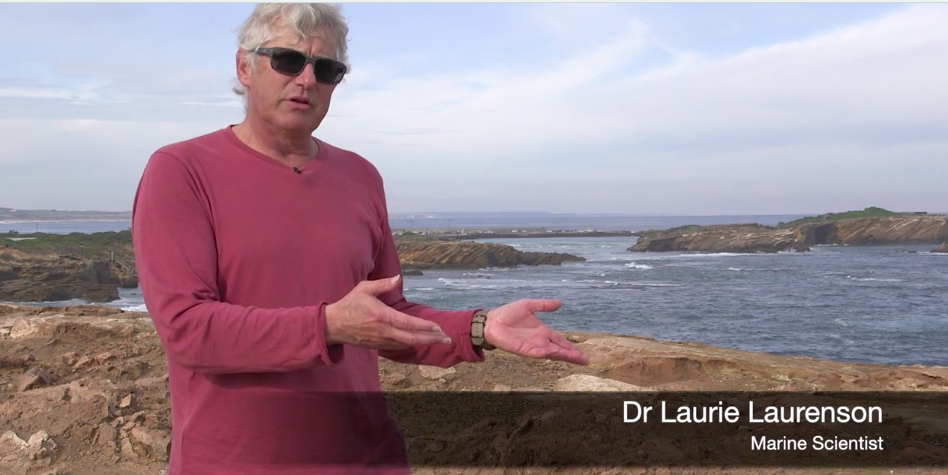
Dr Laurenson has been part of a community pushback against the the proposed Wannon Water treatment plant upgrade. Screenshot: Good Will Nurdle Hunting.

By Associate Professor Laurie Laurenson

[Dr Laurenson is a retired Deakin University academic with research expertise in fish and fisheries biology. He has published more than 70 scientific research papers since the 1980s on various aspects of shark biology, fish biology and remote sensing.]

It’s been a few months since we heard from Wannon Water regarding the sewage outfall upgrade, but recently the EPA released their responses to the public consultation program and we also heard from the Managing Director, Andrew Jeffers.

After reading what the Director had to say and reading through WW’s response to questions posed by the public consultation, I can summarise the situation pretty succinctly: WW’s response doesn’t represent new information nor significant changes to their initial proposal.

They have simply repackaged the original position, with one or two minor tweaks.

Why have I concluded this?

There’s lots of reasons, but I’ll give a few here starting with the pollution that they are discharging into the marine environments and how it mixes and disperses.

We asked WW why winds and currents were not included in their dispersal models (just waves were included) and also why they confined their study largely to 300m from the outfall.

None of these questions have been answered.

In fact, WW has simply stated that they conducted 3D modelling in the mixing zone and that the outcomes were acceptable.

This simply ignores the questions, and provides far less detail about what, where, why and how things were done.

The questions that WW were asked were very specific and the answers were fundamentally intended to lead into community health risk assessment. This is something that should have been done initially, but still is absent.

WW mentions using drones to help with assessing pollution in the mixing zone; this means focusing on the 300m area around the sewage outfall.  Newer drone technology can collect water samples and aerial imagery, but only in good weather.

Regardless, WW is only intending to trial drones, not actually committing to anything with respect to micro-plastic, chemical or biological pollution, and no mention of how often or how widespread the drones would be used.

One of the biggest criticisms we had of WW was the lack of consistent sampling of water quality and the marine ecosystem over time on the wider area towards Lady Bay.

This is likewise still absent in my view.

WW state they have historical data that they can use to answer these questions, but based on their initial upgrade proposal, no they don’t, otherwise they would have – or should have – used it.

Which gets me to community health.

WW have not shown any advances on their understanding of the potential impact of pollutants on the Warrnambool community.

It was pointed out to them that infectious biological contaminants, from their outfall, exceeded World Health Organisation standards under certain environmental conditions.

A reasonable response to this is also missing, but is critically important to us.

To be fair, WW’s response is an advance on their previous position, inasmuch as they are prepared to acknowledge that tertiary water treatment and bio-reactors, which will allow safe oceanic discharged or reuse, should be considered.

But their statements are promises into the future, with no timelines, and certainly a much greater cost burden on the community if left for some future date.

So what can I conclude?

WW is the polluting outlier in Australia, nobody else does what they do, and we should expect more of them.

Its disposal processes represent a clear and present danger to the health of the community that they serve and to the environment that we take for granted.

The response of WW to the public consultation does not represent new information, nor a significant change of position on their part, they have simply repackaged the original proposal, with one or two minor tweaks.

The EPA will make its decision on the Wannon Water proposal on 12 March.

LINKS:

 https://www.wannonwater.com.au/2021/january/updated-proposal-for-warrnambool-sewage-treatment-plant-upgrade.aspx).

Full Wannon Water docs: https://engage.vic.gov.au/epa-works-approvals/wannon-water



Consultants, lawyers and admin soak up Lyndoch millions

Consultants, lawyers and administration costs continue to soak up millions at Lyndoch Living. Image: Forbes

Carol Altmann – The Terrier

Lyndoch Living spent $1.2 million on consultants and lawyers in 2020, and at least another $3 million on its ever-expanding administration.

A deeper dive into the 2020 financial figures reported to the Australian Charities and Not for Profit Commission show Lyndoch has spent at least $1 million a year for the past three years – a total of $3.34 million – on legal fees, consultancies and auditors.

That $3.34 million over three years is more than the food budget for the 200 to 240 residents, but more on that shortly.

Behind the scenes at Lyndoch, a steady stream of consultants has been working on the $100 million masterplan, including – as I understand it – around $99,999 and 99 cents paid to one consultant for the business plan for the medical clinic that will be built on site later this year.

We haven’t seen that business plan, but we can only trust that it’s a good one, because Lyndoch is going into the uncharted waters of borrowing big to finance the estimated $23 million cost.

At the same time, Lyndoch’s administration costs are now more than $3 million a year, compared to $2.5 million in 2015.

The admin budget is hard to follow from year to year, because it keeps bouncing around the balance sheet like a bee in a bottle.

In 2018, it was $3.3m.

In 2019, it suddenly fell to $1.94m after an adjustment or “restatement”.

In 2020, it was back up to $3.07m.

While the figures are subject to the vagaries of various accounting methods, one thing we do know is that the number of admin staff at Lyndoch has gone up.

As has already been reported here, admin staff at Lyndoch shot up from 37 in 2016 to around 60 in 2018, and several other, highly paid souls have joined since.

(Since 2018, Lyndoch no longer publishes a staff breakdown of how many people work in each area.)

In addition to these costs, just under another $1 million has been spent in the past three years on advertising and marketing, including Lyndoch’s sponsorship of the grand annual jumps race at the Warrnambool May Races.

This sponsorship, which was renewed in 2019 and now runs until 2022, was designed to promote its Waterfront Living apartments.

I am yet to hear of anyone buying one of the apartments because they were at the races, but perhaps in between punts they were persuaded.

As it happens, the last of the apartments were sold at heavily discounted prices late last year so Waterfront could finally reach full occupancy.

But enough of the fascinators and corporate suits, what of the budget for residential care?

This brings us back to the kitchen.

I always like to check how much is being spent on food, given this – unlike the races – really is the core business of an aged care home.

In 2019, Lyndoch spent $1.2m on food for around 200 residents, or about $16.50 per resident, per day.

In 2020, this had risen to $1.44m, which looks good on paper, but Lyndoch has also since bought the May Noonan Hostel in Terang, so the number of residents has also increased to around 240.

This means the food budget works out to be the same – around $16.50 per resident, per day.

That is around $6000 in food per resident, per year.

(I suspect the various legal battles funded by Lyndoch against The Terrier have cost the equivalent of that per month.)

Again, I provide this information so the community, which owns Lyndoch, can keep an eye on its direction and priorities behind the marketing and public relations. If you wander over to the Australian Charities and Not for Profit Commission, you can check it all out for yourself.

In the meantime, we keep digging.

More soon.


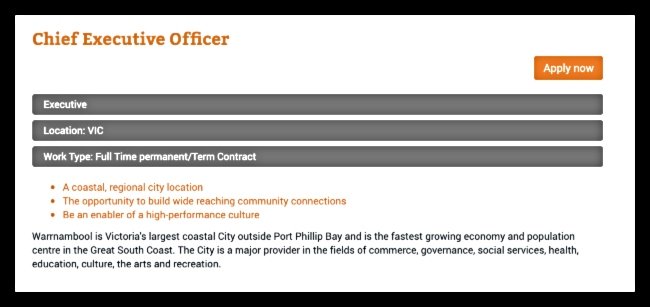
WCC advertises for new CEO as court hearing looms

Carol Altmann – The Terrier

Will it be a new face, or an old face? The Warrnambool City Council recruitment of a new CEO has officially begun.

The  job advert has gone out, just four days before a Supreme Court hearing which will decide whether the former CEO, Peter Schneider, could get his old job back.

The advert was posted online yesterday by top local government recruitment firm, McArthur, with applications closing on 15 February.

On Monday, however, the judicial review into Mr Schneider’s sacking begins and will sort out one way or the other whether he was denied natural justice when he was dumped by the former council in July last year.

If the judge rules in Mr Schneider ‘s favour, then the new council will have to decide whether they will rehire him.

No witnesses will be called for Monday’s hearing, with a judge instead deciding the case on the written evidence and affidavits put before them.

We can only hope the judgment is made quickly, for the sake of Mr Schneider, the new councillors who inherited this mess, and the good people of Warrnambool, all of whom have been sitting in the equivalent of a Jetstar flight circling over and over the airport, unable to land because of turbulence.

I asked the council spokesman and Mayor Vicki Jellie today how the council could start advertising for a new CEO, when the former CEO is still yet to learn his fate?

The response was that, under the Local Government Act, the WCC is legally bound to get things moving and must “…make a permanent appointment to the position of Chief Executive Officer as soon as practicable after a vacancy in the position occurs”.

“Given the then impending elections, and the intervening caretaker period, an earlier appointment was not a feasible option,” the statement said.

But, the statement added, ” the appointment of a CEO is a priority for the new councillors”.

I bet it is.

The whole process from here will be overseen by the council’s  CEO Employment Matters Committee, which will also have all new faces at the table, including Mayor Jellie, two councillors and an independent chair.

This chair is being recruited as we speak and will be in place after the 1 March council meeting.

Monday also marks the first council meeting for 2021 and, I feel, when the real work begins for this new council.

They have a lot to clean up: appointing a chief who can finally land that plane, get us all through customs, and get Warrnambool out into the fresh air is the first of them.

Only then can our city move on.


Lyndoch borrows big for $100m masterplan as deficit rises

Despite successive deficits, Lyndoch Living is borrowing big to fund its $100m masterplan. Original image: Disney.

Carol Altmann – The Terrier

Lyndoch Living, having recorded a fifth deficit in six years, is digging into residential bonds to fund its $100m masterplan.

And a warning – figures ahead, lots of figures – as we dive again into the swirling financials of Lyndoch Living.

One, two, three…jump!

When you bob up you will see that figures lodged by Lyndoch Living last week show an even greater loss – a $2.4 million deficit – than was reported at last October’s AGM (the one we were not invited to Zoom, but could watch later on YouTube).

The annual information statement lodged last week with the Australian Charities and Not for Profit Commission reveals a $600,000 increase on the $1.88 million loss reported at the AGM and in Lyndoch’s full financial statements to the commission.

The $2.4 m is the loss recorded by Lyndoch without taking into account the profit from the Warrnambool Medical Clinic, which it bought in 2019. Either way, it is the fifth deficit for Lyndoch in six years.

This doesn’t seem to trouble the board.

As reported here last November, Lyndoch’s overall asset base (assets minus its liabilities) also continues to slide and is now $47.6m down from $69m in 2015.

This doesn’t seem to trouble the board either.

There is a lot to digest in the 60-page financial statement, so I am going to break it into bite-sized chunks tonight and in follow-up pieces.

First, the report shows us that Lyndoch has funded at least part of its $13 million Swinton Wing expansion by doing something it has never done before, which is borrow money.

It has visited the bank and also borrowed a big chunk out of the $26 million it holds in residential bonds paid by residents.

From this $26 million in bonds, Lyndoch has thus far extracted $10,944,323.

By law, as long as an aged care provider can cover its residential bond refunds for the next 12 months, it can dig into the rest and repay it down the track.

If an aged care home defaults, the Federal Govt will pick up the tab, so it’s kind of a taxpayer-backed Ponzi scheme that relies on an aged care home doing the right thing.

It’s also cheap, interest-free money, but concerns about how these bonds are being used is one reason (among many) that the whole bond scheme is now under review as part of the Royal Commission into Aged Care.

The loans, of course, will need to be repaid at some point, including fairly substantial interest on the bank loans, despite low interest rates.

In 2018, Lyndoch paid zero interest on any loans.

In 2019, it paid $62,420.

In 2020, it paid $372,669.

As of 7 July 2020, Lyndoch signed up for another loan from the NAB for $3,386,000 which is due to be repaid by June 2022.

This was needed to fund the “redevelopment of a residential building” which, I assume, was the blowout in cost of the Swinton Wing.

That project, where residents are not allowed to hang any pictures on the walls despite paying huge bonds which helped fund it, grew from a budget of $10 million to $13 million.

Relying big on borrowed money is new territory for Lyndoch, which once upon a time used to spend only what it had, what the government gave it, and what it raised from the public.

But Lyndoch, as we know, is now a long way from those comfortable shores as it sails into a $100 million masterplan under the captaincy of a CEO and board that firmly believes you must spend money to make it.

This is why in 2019 Lyndoch bought the Warrnambool Medical Clinic, Health Spot and May Noonan Hostel, in Terang, for around $3.3 million.

(Lyndoch also recently hired JB Were – who will charge fees accordingly – to look after its complicated investment portfolio. We are not in Kansas anymore, Toto.)

The Warrnambool Medical Clinic last year turned over $3.8m in revenue, but had $2.8m in expenses.

According to the financials, the clinic returned a final profit of $539,249 to Lyndoch Living in 2020 which is not to be sneezed at… but $372,000 of this will be spent this year paying out the original owners of the clinic as the final instalment of the sale contract. Achoo!

The WMC was pretty much break even for last year.

As for this year, well this is when things get interesting, because Lyndoch has the wire fencing up and around its now-vacant Tomlinson Wing (built in 1991 with help from a generous donation from the Tomlinson family), all set for demolition to make way for a new, two-storey Lyndoch medical clinic to replace the existing WMC.

This clinic will have acute care, dentistry, an x-ray machine, up to 20 GPs, allied health, education rooms, a cafe, a chemist and no doubt wonderful indoor plants and a red-and-white colour scheme.

The cost? An estimated $24 million. Where is that money coming from?

The bigger question, however, is will Lyndoch Living thrive or dive under this grand expansion and multi-million dollar spend up? Time will tell.

More soon.


Setting sail on the good ship Terrier in 2021

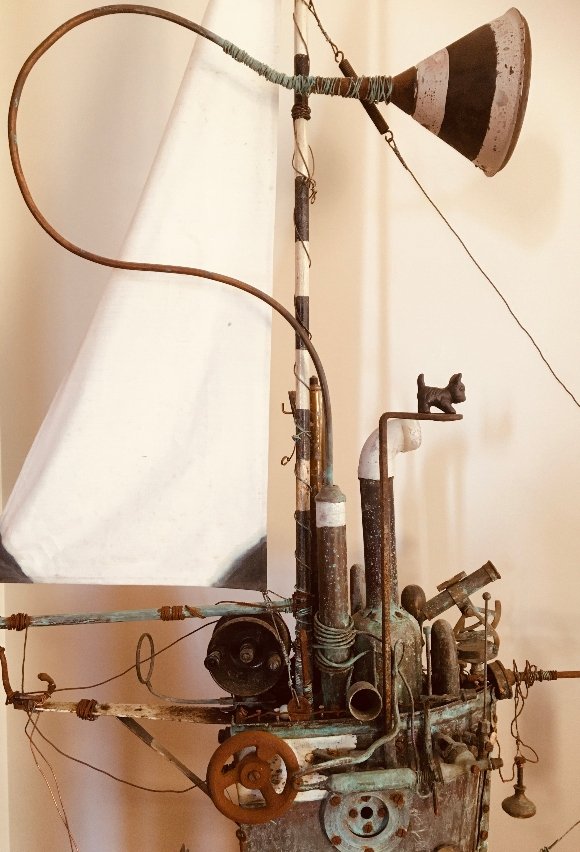
2021 will be a year of both diving deep into ongoing projects and setting sail into new ones – junk boat by Graeme Altmann; Terrier from a friend.

Carol Altmann – The Terrier

Ahoy there from the good ship Terrier and a Happy New Year + 17 days!

What lies ahead for The Terrier in 2021? New voices, a new project and tackling unfinished business.

I spent the summer break recovering from last year, which was exhausting and exacting and yet full of so much change, and also thinking a lot about this year.

After much thinking and sleeping and walking and talking and more thinking, I am ready for a year of diving deep into unfinished business and setting sail into new waters.

There are a couple of important stories that remain unfinished for me.

These stories take time, often a very long time, and I never know for sure where they might end, but I always know when I have reached the end, and I am not there yet.

There is also unfinished council business from last year, including the sacking of former Warrnambool City Council chief Peter Schneider, which goes before the Supreme Court on 1 February to determine if he was denied natural justice and should be reinstated.

Running alongside this is the Local Government Inspectorate investigation into the acting WCC CEO Vicki King being re-hired – by delegation – for another five years to her old job.

The outcome of both cases has the potential to change the face of the new council, and will tie off – one way or the other – the shadow that has lingered over 25 Liebig St since July last year when Mr Schneider was given the boot.

I plan to share other voices, including that of Jim Burke, who many of you will remember ran in the WCC election. Jim is a long-time council watcher and a guy with an overflowing bookshelf and a brain to match.

Jim will continue to write on his own Facebook page about council issues and analyse what it all means for Warrnambool with the intelligence and insight that comes from watching every  council meeting, and poring over the hundreds of pages of documents that lie behind every worthwhile story.

I am rapt that Jim has agreed to let me share his work as the new council is given a chance to settle and find its feet.

There are other writers I also hope to bring into the fold to help me tackle other unfinished business, such as the $40 million Wannon Water treatment plant upgrade near Thunder Point which has been on pause since the EPA responded to public concerns and demanded a raft of extra information.

I hope in 2021 that The Terrier can be a platform for many voices, not just my own, as we continue to dig into the issues and ask the hard questions and keep pressing for answers.

I also have a new project, which is actually a project I have been quietly working on for years, but this year it will finally come to the surface – the restoration of Alf Altmann’s kayak and my revisiting his journey for a book that I have been wanting to write for at least a decade.

Alf was my uncle who, in 1970, attempted to be the first person to row solo from Tasmania to Victoria in a kayak he built by hand here in Warrnambool. He nearly made it, drowning just 1.5 miles offshore from the Gippsland Lakes.

I now have his kayak and this year it will be restored by boatbuilder Garry Stewart in Port Fairy and, thanks to Dean Montgomery, will eventually be displayed in the Warrnambool Motor Museum at the former Fletcher Jones factory.

So this year I will also be spending some time in Tasmania, building and writing a story that is worth telling.

My younger brother and artist, Graeme Altmann, has donated one of his incredible “steam punk junk ships” (pictured above) to help me raise funds for the restoration which I will be documenting here. You will have a chance to own this gorgeous boat and be a part of this story.

Welcome to Terrier 2021.

It is so great to have you on board.