Reviving Alf Altmann’s epic adventure

Alf Altmann’s attempt to cross Bass Strait solo in a home-made kayak in 1970 is the stuff of legend. Bluestone has pieced together the full story about this Warrnambool man’s brave quest …
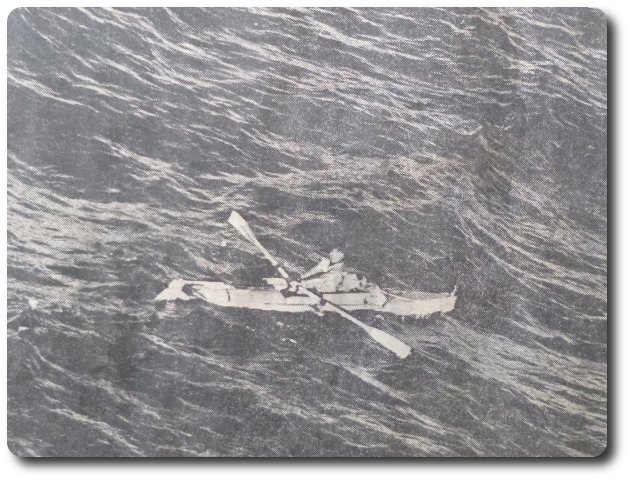
alf altmann_12
The last shot taken of Alf alive, photographed by The Herald and published on March 4, 1970, as he powers from Hogan to Cliffy islands – just 58km from the end of his 300km journey.

By Carol Altmann

The recent Bass Strait crossing by three men on paddleboards has revived memories of an epic feat by Warrnambool’s Alf Altmann, who became the first man to row solo across the same treacherous passage – at the cost of his life.

Precisely 44 years earlier, on the morning of February 25, 1970, Alf set out to do the same perilous journey.

He pushed off in his home-made, 4.5m kayak from Little Mussel Bay, north-east Tasmania, and headed out for what he thought could be up to a two-week journey to Port Albert, Gippsland, depending on the weather.

It was a trip for which Alf, a builder by trade, had meticulously prepared both mentally and physically, and followed many years of experience on the water.
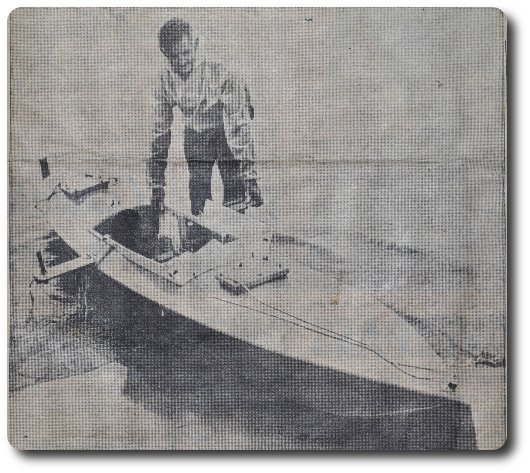
alf altmann_42
The kayak Alf made for his journey was plywood over a timber frame and declared by Alf to be unsinkable.

Indeed Alf, who was my uncle, had sailed for 18 years and had crossed Bass Strait eight times before in various motor-powered craft, many of which he built himself.

It was during one of these crossings that his engine failed and he was forced to row his boat to the safety of an island, after which he was so exhausted that he vowed to learn to row properly and promptly joined the Warrnambool Rowing Club upon his return.

Unlike the paddleboarders, who were all aged in their 30s, Alf Altmann was 56 years old – and a grandfather – when he decided to take on rowing across Bass Strait entirely on his own. There would be no support crew or anyone to rush to his aid if he struck trouble.

He also had none of the high-tech, water-resistant, fail-proof navigation and flotation equipment that is now commonplace in marine sports.
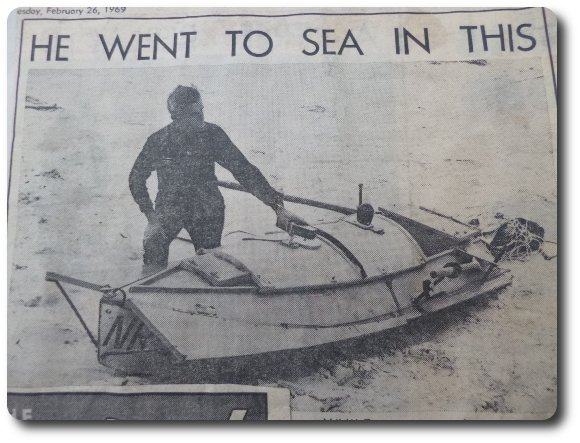
alf altmann_5
Boat maker: Prior to rowing his kayak across Bass Strait, Alf had crossed the strait eight times in various powered boats, including this home-made vessel.

Instead, Alf made his own bright-orange kayak from a timber frame and plywood shell, with a 30cm long, 27-kg steel keel and various sealed compartments so that if one area sprung a leak, it would not sink the boat.

His on-board equipment included a small sail and portable mast, a tent, flares, waterproof matches, a sea anchor, a radio transmitter, a compass and a life jacket that, by today’s standards, was more likely to leave you floating face down than face up.

No wonder everyone, including his wife, Isobel, thought he was mad to attempt to cross a stretch of water notorious for its high seas and battering winds.

Alf, however, was used to such scepticism and loved to live on the edge.

When he left from Melbourne in a powerboat to circumnavigate Tasmania in 1968 – a total distance of 1930km – the local fishermen thought he was crazy, but he simply responded: “what challenge is there in retracing common routes?”

Bass Strait is the ultimate challenge, even for those in maxi yachts, let alone a plywood, home-built kayak, but Alf was convinced that his kayak was unsinkable.

“This is a survival boat, not a luxury one,” he told reporters in the days before his departure.
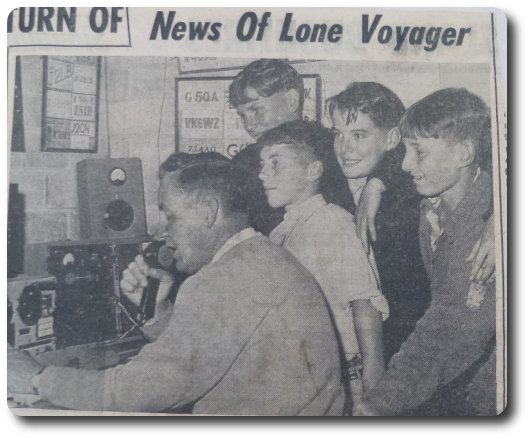
alf altmann_1
Everyone was gripped by Alf’s voyage, especially people from Warrnambool: here YMCA radio club leader Bill Wines tunes into an update, surrounded by eager listeners.

Alf arrived in Burnie, Tasmania, on board a trading ship and made his way with his kayak to the north-east of the state via train and then friendly locals who were prepared to give him a lift to Little Mussel Bay. Isobel, who was home with three of their four sons (the youngest, Philip, was 16), would meet him at the finish.

Once on the high seas, Alf – like the paddleboarders have done since – planned to island hop his way across the strait, from Cape Barren to Flinders, up the coast of Flinders and across to Deal, to Hogan, to Cliffy and then the 45km run home to Port Albert.

And while some of these islands were inhabited, if only by a lighthouse keeper, Alf intended to mostly camp and live off his supply of nuts, dried fruits, honey, powdered milk and special bran biscuits that Isobel always made for him.

It takes a special courage to push off into the ocean knowing that you will be utterly alone at sea, but the first days of Alf’s journey could not have gone more smoothly.

Setting off in beautiful weather, Alf ploughed through the water: far from taking up to two weeks, he was soon on track to make the crossing in a week.

Australians were riveted by the unfolding story as Alf checked in with lighthouse keepers at each island: first one, then another, then another…
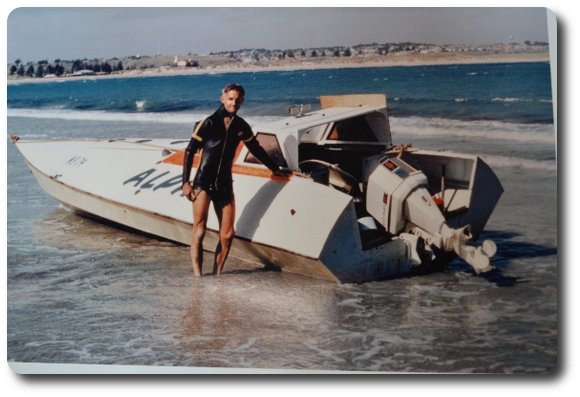
alf altmann_14
Although born in the bush, Alf adored the ocean and always set himself new sea-faring challenges, like circumnavigating Tasmania in this powerboat in 1968.

It was only when Alf reached Cliffy Island, the last island before home, that the weather began to turn sour. Despite being so tantalisingly close to the finish – so close that Isobel was already waiting on the wharf at Port Albert – Alf was forced to bunk down at the lighthouse for two nights.

The acting lighthouse keeper, Sjoerd Boontra, would later say that Alf, despite having just rowed more than 200km, helped with odd jobs around the lighthouse while itching to get back on to the ocean.

Come the morning of March 6, Alf was determined to start out early for the last 45km of his journey, even though the weather forecast suggested rough conditions for a kayak and Sjoerd urged him to wait.

“His reason for leaving was that he wanted to surprise his wife…who was not expecting him until 3pm,” Sjoerd later recalled.

“It will have to be pretty bad for something to go wrong now,” Alf said.

These were among his final words. A minor storm blew in an hour after he left Cliffy Island, whipping up 25 knot winds and 4m waves.

Alf failed to arrive at Port Albert by his expected time of 11.30am, and the crew of the Marjorie Phyllis, a lighthouse supply boat that was assigned to meet him offshore, began to worry.

By 1pm, the local police launched a full-scale air and land search, with Isobel still holding out hope that he had taken refuge on a scrap of an island.

But at 5.58pm, the Marjorie Phyllis received a crackled radio call from the search plane: “It’s all off”.
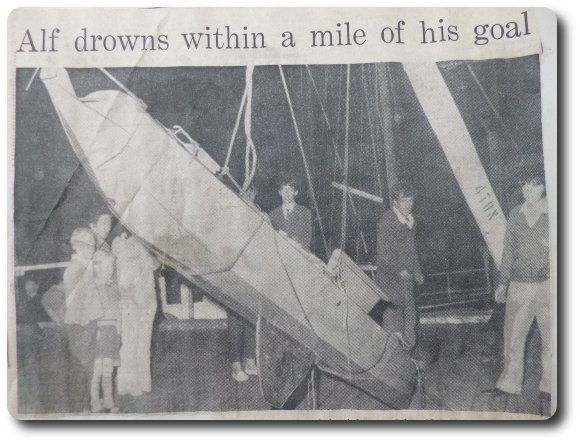
alf altmann_18
The adventure comes to a tragic end: Alf’s kayak was retrieved just 2km from land.

Alf’s body, wearing the top half of a two-piece wetsuit and a spray jacket, was spotted less than 2km from Snake Island, part of the Gippsland lakes. His kayak was found nearby, intact, but for the splintered oars: it really was unsinkable.

How Alf came to drown is still not known, but abrasions across his face suggest he capsized and was knocked unconscious by hitting his head, perhaps on one of the oars. From there, it was over. A life packed with determination, daring and adventure had come to an end.

More than 500 people crowded into the Warrnambool Presbyterian Church for Alf’s funeral, where he was described as a man of great courage and a “pilgrim adventurer”.

And Isobel, even within her own grief and that of her sons, Keith, Ken, Philip and Alan, reminded us that Alf would have wanted to die knowing he had pushed the boundaries.

“Where would we be if nobody had taken a risk?” he once told her.
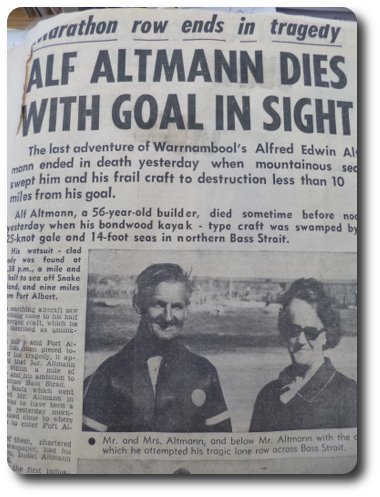
* * *
 Part II: Where is Alf Altmann’s kayak today?
Read Alf’s diary notes retrieved from the kayak

alf altmann_4

 * Bluestone Magazine would like to thank Alan and Philip Altmann for their assistance in researching this story. Other details have come from original media reports and documents housed in the Public Record Office Victoria. Alf’s widow, Isobel, passed away in 2003.
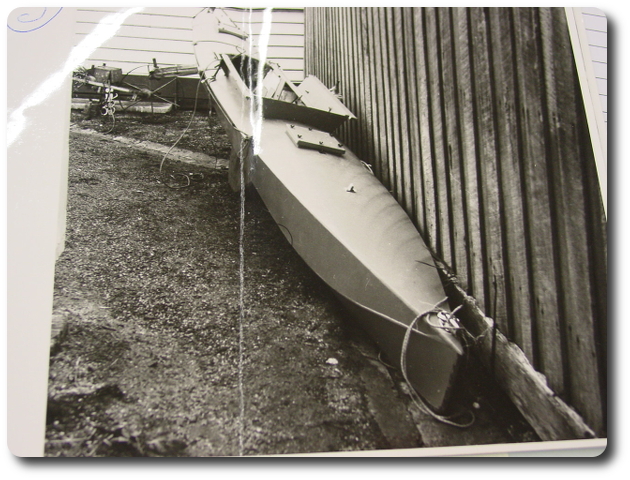

Where is Alf Altmann’s kayak now?

alf boat
Alf Altmann’s kayak shortly after it was retrieved from the sea on March 6, 1970, following his fateful attempt to cross Bass Strait. The kayak was in pristine condition, proving Alf’s theory that it was unsinkable.

By Carol Altmann

In revisiting Alf Altmann’s fateful effort to cross Bass Strait solo in his home-made kayak, one question inevitably arose: where is the boat now?

After Alf’s death, it is understood that the kayak was stored first at the Warrnambool Ski Club and later at Alf’s brother’s property in Warrnambool before Alf’s widow, Isobel, offered it to the new Flagstaff Hill Maritime Village (it opened in 1974).

Unfortunately, however, the kayak at that time was not considered historic enough for inclusion in the museum: after all, it had only been a few years since the Bass Strait crossing attempt.

Instead, the kayak apparently ended up on display at the now defunct Lancaster’s marine, on Raglan Parade, before being donated to the Warrnambool City Council in the early 1980s, where it was stored at the council depot.

And that was pretty much the last anybody heard or saw of it…until now.

alf altmann_42
Alf Altmann during a test run with his home-made kayak, prior to setting off from Tasmania on February 25, 1970.


After being contacted by Bluestone, the WCC’s communications manager, Nick Higgins, established that the kayak was no longer at the depot and may have been donated to the Warrnambool Triton Woodworkers club, housed in the old Fletcher Jones factory.

Bluestone called Triton club secretary Louis Seater, who used the opportunity of a club afternoon tea to spread the word and see if any members knew the whereabouts of the kayak. Despite his enthusiastic efforts, nobody did.

Just as the trail was about to run cold, Nick Higgins popped up again – not only with news, but a grainy photo of what looked like the kayak in storage at Flagstaff Hill.

And it was.

alf kayak_1
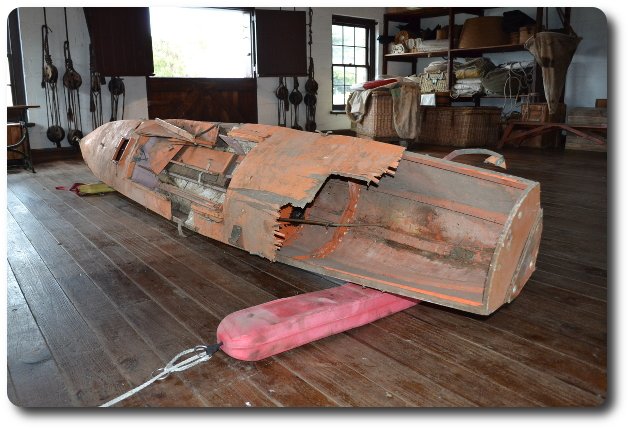
Showing the ravages of time: Alf Altmann’s kayak as it is today.

Flagstaff Hill manager Peter Abbott kindly organised for the kayak to be taken out of storage for us to confirm its heritage and to photograph it. Peter believes the kayak has been with the museum for at least the past 22 years, mainly for safekeeping, but that not a lot was known about its history.

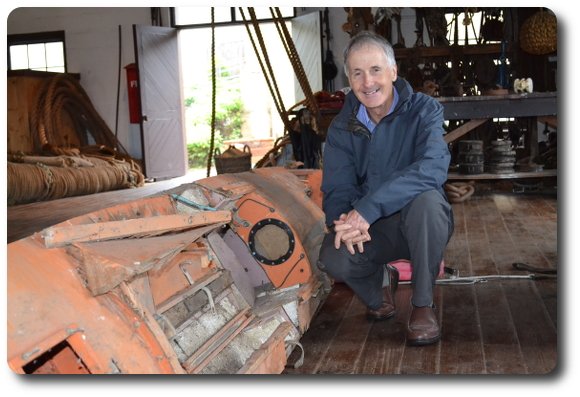
Alf’s second youngest son, Alan, joined us to see the kayak for the first time in at least 30 years and even though there are no immediate plans to put it on display (due to space), he was thrilled to know that at least something of his father’s kayak remained.

The boat is in poor condition, probably due to being moved so much in those early days, with some pieces missing and others falling apart, but it remains a very visual and emotional reminder of Alf’s extraordinary journey.

Perhaps the 50th anniversary of Alf’s voyage –  in 2020 – would be the perfect time to again reveal the “unsinkable” kayak and its story to the public.

For now, however, it is wonderful to know that what remains of the kayak is in safe hands.

alf kayak_6
Alan Altmann with his father’s kayak that he had not seen for more than 30 years before it was traced to a store room in Flagstaff Hill Maritime Museum.


Hunt on for ex-staff of Lady Bay Hotel


bouncers
The black tie bouncers at Warrnambool’s former Lady Bay hotel in the early 1990s. Nicole Lane (the only woman pictured!) is organising a staff reunion. Image courtesy of Nicole Lane.


If you ever lived in Warrnambool at any time up until around 2001, then these three words will mean something to you: Lady Bay Hotel.

The former Lady Bay Hotel, as opposed to the multi-storey resort that now stands in its place at the end of Pertobe Road, was one of the city’s most famous – and infamous – watering holes until it was demolished in 2001.

Moves are afoot to bring former workers at the Lady Bay Hotel back together for a reunion, including bar staff, kitchen staff, cleaners, managers and the unforgettable bouncers who at one point dressed in black tie.

The hotel was originally called the Bay View Hotel from 1890 until 1954, when it was refurbished, enlarged and renamed the Lady Bay Hotel, but quickly became known simply as “The Bay”.

While the original hotel no doubt had its share of wild times, the arrival of rock and roll in the 1960s and 70s saw The Bay transformed into a place for serious partying to some of Australia’s best bands: Cold Chisel, Midnight Oil, The Angels, Paul Kelly and the Coloured Girls, Icehouse, Australian Crawl, Hoodoo Gurus…and many more.


lady bay smaller
The Bay, as it used to be known, became one of Warrnambool’s most infamous watering holes.


An attached disco was also one of the most popular in town, where people would flock in the 1980s to drink fluffy ducks and tequila sunrises and dance to the Bee Gees until the small hours.

No wonder the staff who kept all of this unbridled energy, sexual tension and youthful exuberance under control shared a special bond.

One of the Bay’s few female bouncers, Nicole Lane, of Warrnambool, is the driving force behind the idea of a reunion and said she was inspired to try and pull together and event after one of the hotel’s most well-loved bouncers, Bob Kelly, passed away recently.

“When Bob passed away it made me think about how we are all getting older and how it would be great to try and get some of the old crew together to talk about old times,” Nicole said.

Nicole was 22 when she started “bouncing” at the hotel. She was given a chance to try her skills after the partner of another famous Lady Bay bouncer, Big Mal, left the job and the bouncing staff needed another woman.

“I ended up working as a bouncer at lots of places, but everyone has a memory of the Lady Bay,” Nicole said.

“Years later I was bouncing in a bar in Killarney, Ireland, and this woman points and me and says, ‘Oh no! It’s the bouncer from the Lady Bay!”‘ she laughed.

lady bay group
A group shot in the maritime themed room at the Lady Bay hotel with former managers Jim and Denise Ryan. Image courtesy of Nicole Lane.

A “Back to the Bay” celebration was held shortly before the original Lady Bay Hotel was pulled down, but that was mainly for former patrons. This reunion is specifically aimed at former staff.

“It is really in its first stages and I am not sure how much interest we will get,” Nicole said.

“We could end up with only a few and catch up over a cup of tea,” she laughed.

Some how, that seems unlikely.

lady bay aerial shot
Looking back at the Lady Bay Hotel from Pickering Point. The FJ silver ball can be seen on the skyline. Image courtesy of Nicole Lane.

[box] If you would like to know more about the Lady Bay Hotel staff reunion, contact Nicole at nic.nax@live.com or join the Facebook group.[/box]

newsletter Art Music Stones

You might also enjoy…


Lost history finds loyal following: Lost Warrnambool

Helping to mend broken family ties: Jenny Fawcett

Raise your glasses to this retro caravan

Old Holden just keeps on rollin’…

Don’t drop the ball on FJs silver icon


Fancy a lunch with the Farmer’s Wife?


farmers wife


CLOSED MARCH 23 – winner Louise Parlour

[dropcap style=”font-size: 60px; color: #A02F2F;”] W [/dropcap]e love to reward our Bluestone Club members (our wonderful paid subscribers) for supporting our online magazine and helping us to produce a quality read each week.

Already we have given away a number of great prizes and this week we are offering one paid subscriber two breakfast/lunch vouchers (valued at $28) from The Farmer’s Wife Harvest Cafe, Port Fairy thanks to owner, Jo O’Keefe.

All you need to do to be in the draw is be a paid subscriber – (that’s easy, just click here) – and you will be automatically in the running.

We will draw the winner at random next Wednesday March 26 and announce the winner on our Facebook page that night (and contact you!).

Keep your eye peeled under the “Win” tab for more great competitions that are open to all of our Bluestone Club members.

Winner: Louise Parlour.


Helping to mend broken family ties

jenny fawcett_8
Jenny Fawcett at home in her research library. Her research skills have helped to mend broken family ties.


[dropcap style=”font-size: 60px; color: #A02F2F;”] E [/dropcap]arlier this year, we revealed the full story behind the “Granny” of Granny’s Grave, in Warrnambool, with the help of volunteer researcher Jenny Fawcett.

What we didn’t tell you at the time, but have kept up our sleeve, is that Jenny has also used her substantial research skills to help some of the people affected by forced adoptions – or other family separation – to piece back together their family history.

In November 2009, then Prime Minister Kevin Rudd and Opposition Leader Malcolm Turnbull delivered a bi-partisan national apology to the more than half a million children – the so-called Forgotten Australians – who were raised in institutions, foster homes and orphanages where, more often than not, they suffered mental, physical or sexual abuse. Many of these children were forced child migrants from the UK who were told they were orphans, when in fact their parents were still alive.


apology
A poignant symbol of the effects of the forced adoption policy and the agony of not knowing. Image: The Age.


[dropcap style=”font-size: 60px; color: #A02F2F;”] A [/dropcap]nd in March 2013, the then Prime Minister Julia Gillard issued another, equally emotional, national apology to the parents and children at the centre of the nation’s forced adoption policies from the 1950s to the late 1970s. It is estimated up to 150,000 children were forcibly removed from their (usually single) mothers during this time.

Together, these two historical wrongs equate to a lot of hurt…and a lot of not knowing the truth.

And this is where Jenny comes in. Some of those affected by either of these wrongs have asked Jenny, of Warrnambool, for help in tracking their past.

While Jenny can’t personally track every family history, she has provided guidance on where to look for information and records, and how to interpret documents that can lead to more clues: this is the art of the researcher.

It is such important, healing work and, for this, Jenny is our very deserving Quiet Hero.

[box] Jenny will receive a pack of four coffee vouchers from The Pavilion Café in Warrnambool. Thankyou to owners Mary-Ellen and Jon Watson for supporting this week’s Quiet Hero.[/box]

 Pavilion-Inverse-small


newsletter Eat And Drink Stones Meet more of our Quiet Heroes… 


Lost history finds loyal following: Lost Warrnambool

Giving comes naturally: Virginia Marshall

Australia Day awards – did we forget someone? Vicki Jellie

Oh Possum, you’re a hero in the heat: Nalini Scarfe

Walking with strength and purpose: Susie Alexander