The beauty of bathing in goats’ milk
 

sharyn carmichae_7
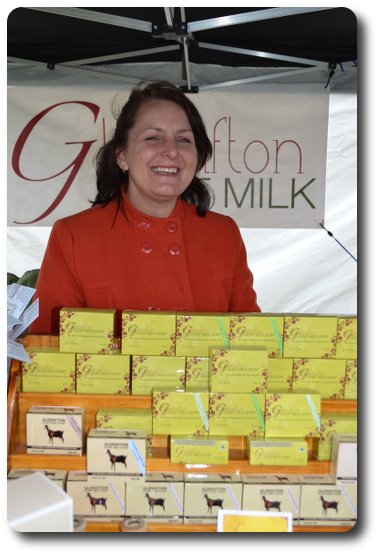
Sharyn Carmichael has operated an Anglo-Nubian goat stud at Woorndoo for 30 years, but, more recently, has started creating skincare products from the rich milk.

[dropcap style=”font-size: 60px; color: #DC943C;”] W [/dropcap]hen you climb into the bath with a goat’s milk soap made by Sharyn Carmichael, you will know whether you are lathering up with Charlee, or perhaps Tahli, because it says so right on the label.

It is this personalising of the product that says so much about how Sharyn, together with her husband Trevor, run their business – the goats always come first.

Sharyn has been breeding Anglo-Nubian goats for 30 years and began with a herd of just six animals that has since expanded into about 100 head that make up the Glenafton stud at Woorndoo, between Mortlake and Lake Bolac.

“I grew up in the Mallee and had severe asthma as a child where I nearly died a couple of times and once my parents had reached the limit of what traditional medicines could do, they bought a goat – ‘Nanny’ – to try goat’s milk, which reduces the inflammation of the throat,” Sharyn explains.

Goat’s milk helped to significantly reduce Sharyn’s asthma – and possibly even saved her life – so it is not surprising that she has always had enormous respect for the animal.

This respect, coupled with an interest in genetics and breeding, led her to start her own small stud of Anglo-Nubians: the breed with the gorgeous Roman noses and long, floppy ears that makes them look like they are wearing a winter hat with ear-flaps.


sharyn carmichae_3


[dropcap style=”font-size: 60px; color: #DC943C;”] N [/dropcap]ot only are they very personable creatures, with distinct personalities, but Anglo-Nubian does are also known for their long, high-quality milk production.

Hence, if you were to visit Sharyn’s stud website, you will see a lot of robust, shaved udders that have drawn high praise – and awards – from the experts who judge such things.

The Glenafton herd also includes descendants of the first Anglo-Nubians that were imported to Australia 50 years ago, keeping an important lineage alive.

Sharyn’s goats have been sold around Australia and exported in limited numbers overseas to hand-picked clients, but in more recent years, Glenafton has moved into creating skincare products from the herd’s milk.

What started as an unexpected off-shoot has continued to grow to about 60 lines, including lotions, scrubs, lip balms and 30 different varieties of soap. The home-based business has been so successful, in fact, that Sharyn gave up her “day job” of working in a bank about 18 months ago to focus on Glenafton full time.

“I didn’t set out to get into skincare, to be honest, but when I was working in the bank, my hands really suffered from handling money all day – which is very dirty – and I was always washing them,” she said.


TAHLI
Tahli the handsome Anglo-Nubian doe: she is one of 100 head on the Glenafton farm.


[dropcap style=”font-size: 60px; color: #DC943C;”] S [/dropcap]haryn made a lotion using her goat milk, which is rich in minerals and butterfat, and an entirely new career was born. She now spends her days creating her products and selling them to more than 30 outlets that have all come via word-of-mouth or customers who have met her on the market circuit in South-West Victoria.

Not only do many of her soaps have pet names on the label, her skincare products contain ingredients that are all sourced locally or through local farming connections. Even the lotion bottles are sourced – and made – in Melbourne, not overseas.

It is overseas, however, that is coming to Sharyn. She has recently been approached to consider exporting to Asia, but admits she is cautious about rushing into a much larger market.

“I am a very measured person and I need to do things slowly and carefully, so nothing will happen quickly, but if it does, I want to feel comfortable that I will be able to manage it here (on the farm) … the goats always come first,” she said.


sharyn carmichae_4
Tahli the soap. Okay, maybe it is not a direct likeness, but her milk is in there!

[box] Sharyn Carmichael was recently nominated for a Telstra Business Award. (We hope she wins!) In the meantime, you can visit her website and find her at a range of markets around Port Fairy, Warrnambool and districts. You can also order direct via scarmichael@optusnet.com.au[/box]

newsletter Why Not Stones You might also enjoy…


Meet “Nana” Sloan, the knitting nurse

No time limit on this wearable art: Helen Bunyon

Different life stages for pages: Joe Logan

Hot glass melts hearts: Robert Gatt and Freya Marriott


Abb, art and the immigrant journey

abb painter_8
Abb Marzouk at home in his Warranambool studio from where he still sells his sculptures. Art has remained a defining and comforting force in his life.


[dropcap style=”font-size: 60px; color: #DC943C;”] A[/dropcap]rtist Abb Marzouk represents all of the mental, physical and emotional challenges that face people who come to Australia in the hope of building a better life.

Not that 81-year-old Abb, of Warrnambool, intends to be a spokesman for the immigrant experience, far from it: he would prefer to talk about his art.

But the two cannot be separated – the art and the experience – and when Abb sits down to talk about his sculptures and paintings, he finds himself talking about growing up in Egypt, where he was an outsider, and emigrating to Australia in the 1950s, where he was even more of an outsider.

It is a painful and difficult story that pours out of him and, even after more than 50 years in Australia, Abb still struggles with finding a firm sense of identity and belonging.


abb painter_17
Abb prides himself on his highly detailed animal sculptures like this armadillo.


[dropcap style=”font-size: 60px; color: #DC943C;”] A [/dropcap]bb is a third-generation Egyptian, but he came from European ancestors who moved to Egypt when it was under colonial rule, so Egyptians of Arab descent considered his family to be Europeans.

“It didn’t matter that we had three generations born in Egypt, we were classed as European. But we weren’t considered by Europe to be European, so my family was stateless,” Abb explains.

Because of his heritage, Abb suffered constant bullying as a child, but it was as an adult, with a fine art degree under his belt and running his own tapestry design business, that the ground shifted under him.

The Egyptian revolution in 1952 saw Egypt shift from a monarchy to a republic and Abb’s status as an “outsider” was confirmed as the new government introduced crippling new laws that froze bank accounts and made it almost impossible for “Europeans” like Abb to make a living.

“I had a visa to go to America, but the Ku Klux Klan was on the rise there and I didn’t want to go to such a racist country. I decided to try Australia instead,” Abb said.


abb painter_11
Althought he has lived in Australia for more than 50 years, Abb’s Egyptian roots continue to provide inspiration for his sculptural work.


[dropcap style=”font-size: 60px; color: #DC943C;”] I [/dropcap]t took more than two years to secure an Australian visa, but Abb and his wife Sylvia arrived in Sydney with hopes of Abb using his fine art degree to teach, as his immigration officer had suggested.

Instead, he found himself in a country that was openly hostile to “wogs” and the only jobs he could find were cleaning and labouring.

“I would cry all the time. The discrimination was terrible. I wrote 63 letters trying to get work and there was nothing, so I took whatever I could just to make money,” Abb said.

It wasn’t until many years later that Abb, who has two sons, finally secured a teaching position as an art teacher, but the subtle and not-so-subtle discrimination and bullying continued. An angry jibe by a colleague about Abb being paid more than he finally sent him over the edge.

“I had a complete breakdown. I had to leave the education department after 25 years, without my super, without any of those things,” he said.

“It took me four years to come out of that depression and I still suffer from depression occasionally now.”

Abb never worked again, but found solace in his art. His intricate animal sculptures are exquisite, as are his mosaics. And in 2011, he was awarded the Warrnambool Art Society’s Judith Watson Trophy for best painting, for a Truck Full of Refugees.

The painting depicts a group of African refugees fleeing with whatever possessions they can carry.

On first glance, they look like a mound of rubbish, but on closer inspection, their faces emerge: staring out into an unknown future with a heart full of hope. And that, of course, is the message.

abb painter_33
Truck full of Refugees: the painting that took out the top prize in 2011 at the Warrnambool Artists Society annual exhibition.

[box type=”bio”] If you are interested in visiting Abb’s studio, please contact him on (03) 5561 2131.[/box]


newsletter Why Not Stones You may also enjoy… 


No shying away from social commentary: Megan Cheyne 

Smooth lines inspired by the ocean: Damian McDonald

Broken link prompts a fresh start: Jenny Altmann

The quiet contemplation of still life: Jan Allan

Art springs from the heart of Seaview: Heather Wood 


Reviving Alf Altmann’s epic adventure

Alf Altmann’s attempt to cross Bass Strait solo in a home-made kayak in 1970 is the stuff of legend. Bluestone has pieced together the full story about this Warrnambool man’s brave quest …

alf altmann_12
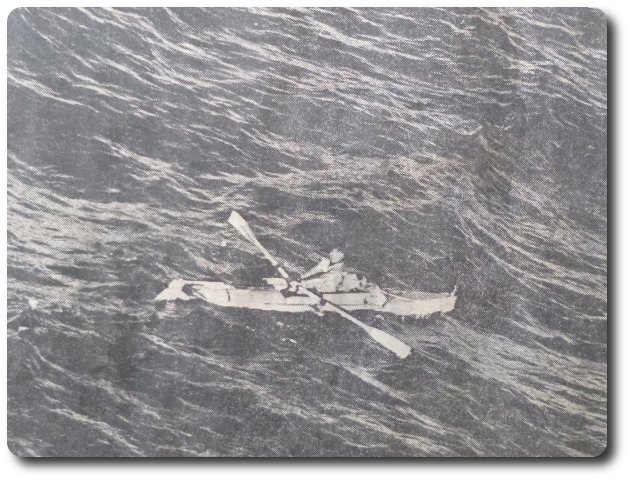
The last shot taken of Alf alive, photographed by The Herald and published on March 4, 1970, as he powers from Hogan to Cliffy islands – just 58km from the end of his 300km journey.

By Carol Altmann

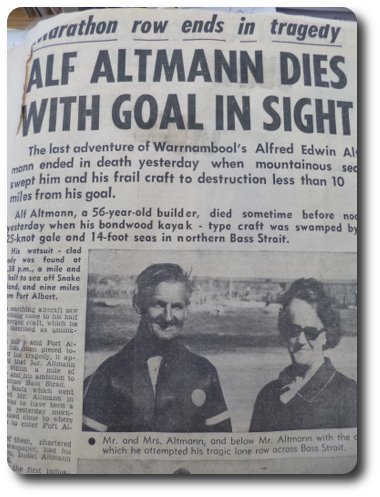
The recent Bass Strait crossing by three men on paddleboards has revived memories of an epic feat by Warrnambool’s Alf Altmann, who became the first man to row solo across the same treacherous passage – at the cost of his life.

Precisely 44 years earlier, on the morning of February 25, 1970, Alf set out to do the same perilous journey.

He pushed off in his home-made, 4.5m kayak from Little Mussel Bay, north-east Tasmania, and headed out for what he thought could be up to a two-week journey to Port Albert, Gippsland, depending on the weather.

It was a trip for which Alf, a builder by trade, had meticulously prepared both mentally and physically, and followed many years of experience on the water.

alf altmann_42
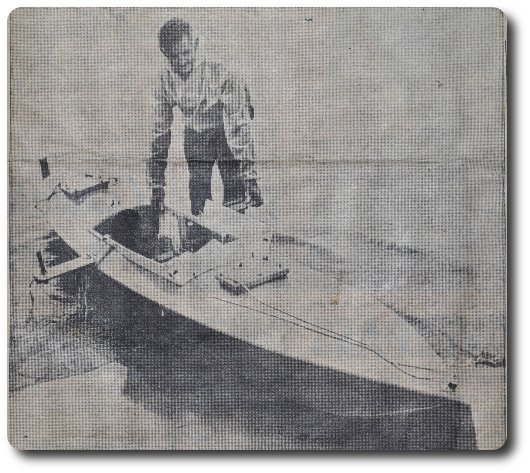
The kayak Alf made for his journey was plywood over a timber frame and declared by Alf to be unsinkable.

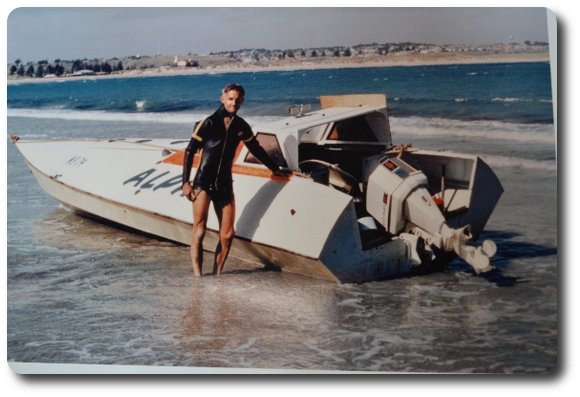
Indeed Alf, who was my uncle, had sailed for 18 years and had crossed Bass Strait eight times before in various motor-powered craft, many of which he built himself.

It was during one of these crossings that his engine failed and he was forced to row his boat to the safety of an island, after which he was so exhausted that he vowed to learn to row properly and promptly joined the Warrnambool Rowing Club upon his return.

Unlike the paddleboarders, who were all aged in their 30s, Alf Altmann was 56 years old – and a grandfather – when he decided to take on rowing across Bass Strait entirely on his own. There would be no support crew or anyone to rush to his aid if he struck trouble.

He also had none of the high-tech, water-resistant, fail-proof navigation and flotation equipment that is now commonplace in marine sports.

alf altmann_5
Boat maker: Prior to rowing his kayak across Bass Strait, Alf had crossed the strait eight times in various powered boats, including this home-made vessel.

Instead, Alf made his own bright-orange kayak from a timber frame and plywood shell, with a 30cm long, 27-kg steel keel and various sealed compartments so that if one area sprung a leak, it would not sink the boat.

His on-board equipment included a small sail and portable mast, a tent, flares, waterproof matches, a sea anchor, a radio transmitter, a compass and a life jacket that, by today’s standards, was more likely to leave you floating face down than face up.

No wonder everyone, including his wife, Isobel, thought he was mad to attempt to cross a stretch of water notorious for its high seas and battering winds.

Alf, however, was used to such scepticism and loved to live on the edge.

When he left from Melbourne in a powerboat to circumnavigate Tasmania in 1968 – a total distance of 1930km – the local fishermen thought he was crazy, but he simply responded: “what challenge is there in retracing common routes?”

Bass Strait is the ultimate challenge, even for those in maxi yachts, let alone a plywood, home-built kayak, but Alf was convinced that his kayak was unsinkable.

“This is a survival boat, not a luxury one,” he told reporters in the days before his departure.

alf altmann_1
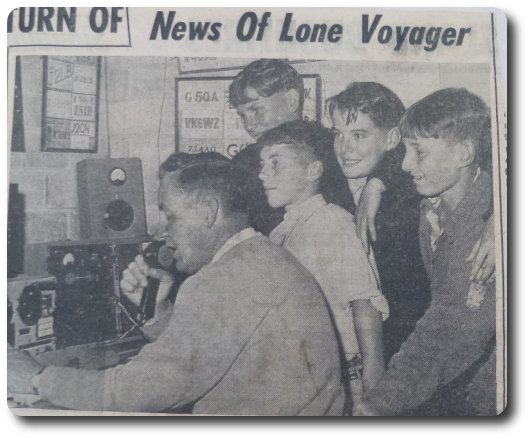
Everyone was gripped by Alf’s voyage, especially people from Warrnambool: here YMCA radio club leader Bill Wines tunes into an update, surrounded by eager listeners.

Alf arrived in Burnie, Tasmania, on board a trading ship and made his way with his kayak to the north-east of the state via train and then friendly locals who were prepared to give him a lift to Little Mussel Bay. Isobel, who was home with three of their four sons (the youngest, Philip, was 16), would meet him at the finish.

Once on the high seas, Alf – like the paddleboarders have done since – planned to island hop his way across the strait, from Cape Barren to Flinders, up the coast of Flinders and across to Deal, to Hogan, to Cliffy and then the 45km run home to Port Albert.

And while some of these islands were inhabited, if only by a lighthouse keeper, Alf intended to mostly camp and live off his supply of nuts, dried fruits, honey, powdered milk and special bran biscuits that Isobel always made for him.

It takes a special courage to push off into the ocean knowing that you will be utterly alone at sea, but the first days of Alf’s journey could not have gone more smoothly.

Setting off in beautiful weather, Alf ploughed through the water: far from taking up to two weeks, he was soon on track to make the crossing in a week.

Australians were riveted by the unfolding story as Alf checked in with lighthouse keepers at each island: first one, then another, then another…

alf altmann_14
Although born in the bush, Alf adored the ocean and always set himself new sea-faring challenges, like circumnavigating Tasmania in this powerboat in 1968.

It was only when Alf reached Cliffy Island, the last island before home, that the weather began to turn sour. Despite being so tantalisingly close to the finish – so close that Isobel was already waiting on the wharf at Port Albert – Alf was forced to bunk down at the lighthouse for two nights.

The acting lighthouse keeper, Sjoerd Boontra, would later say that Alf, despite having just rowed more than 200km, helped with odd jobs around the lighthouse while itching to get back on to the ocean.

Come the morning of March 6, Alf was determined to start out early for the last 45km of his journey, even though the weather forecast suggested rough conditions for a kayak and Sjoerd urged him to wait.

“His reason for leaving was that he wanted to surprise his wife…who was not expecting him until 3pm,” Sjoerd later recalled.

“It will have to be pretty bad for something to go wrong now,” Alf said.

These were among his final words. A minor storm blew in an hour after he left Cliffy Island, whipping up 25 knot winds and 4m waves.

Alf failed to arrive at Port Albert by his expected time of 11.30am, and the crew of the Marjorie Phyllis, a lighthouse supply boat that was assigned to meet him offshore, began to worry.

By 1pm, the local police launched a full-scale air and land search, with Isobel still holding out hope that he had taken refuge on a scrap of an island.

But at 5.58pm, the Marjorie Phyllis received a crackled radio call from the search plane: “It’s all off”.

alf altmann_18
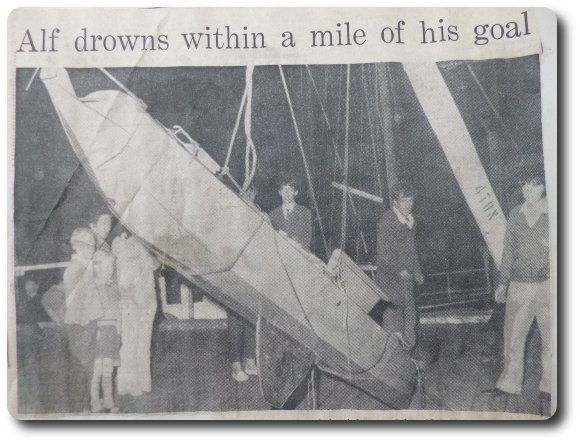
The adventure comes to a tragic end: Alf’s kayak was retrieved just 2km from land.

Alf’s body, wearing the top half of a two-piece wetsuit and a spray jacket, was spotted less than 2km from Snake Island, part of the Gippsland lakes. His kayak was found nearby, intact, but for the splintered oars: it really was unsinkable.

How Alf came to drown is still not known, but abrasions across his face suggest he capsized and was knocked unconscious by hitting his head, perhaps on one of the oars. From there, it was over. A life packed with determination, daring and adventure had come to an end.

More than 500 people crowded into the Warrnambool Presbyterian Church for Alf’s funeral, where he was described as a man of great courage and a “pilgrim adventurer”.

And Isobel, even within her own grief and that of her sons, Keith, Ken, Philip and Alan, reminded us that Alf would have wanted to die knowing he had pushed the boundaries.

“Where would we be if nobody had taken a risk?” he once told her.

* * *
 Part II: Where is Alf Altmann’s kayak today?
Read Alf’s diary notes retrieved from the kayak

alf altmann_4

 * Bluestone Magazine would like to thank Alan and Philip Altmann for their assistance in researching this story. Other details have come from original media reports and documents housed in the Public Record Office Victoria. Alf’s widow, Isobel, passed away in 2003.


Where is Alf Altmann’s kayak now?

alf boat
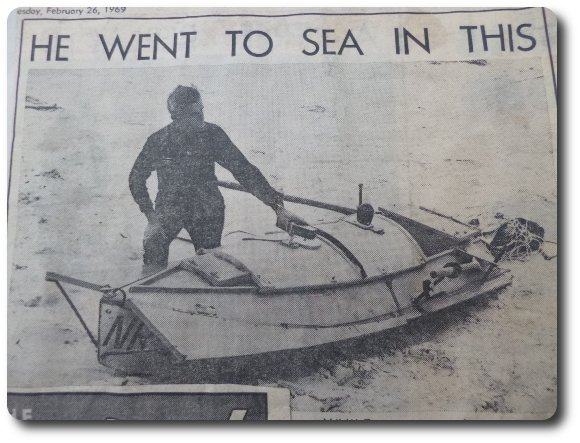
Alf Altmann’s kayak shortly after it was retrieved from the sea on March 6, 1970, following his fateful attempt to cross Bass Strait. The kayak was in pristine condition, proving Alf’s theory that it was unsinkable.

By Carol Altmann

In revisiting Alf Altmann’s fateful effort to cross Bass Strait solo in his home-made kayak, one question inevitably arose: where is the boat now?

After Alf’s death, it is understood that the kayak was stored first at the Warrnambool Ski Club and later at Alf’s brother’s property in Warrnambool before Alf’s widow, Isobel, offered it to the new Flagstaff Hill Maritime Village (it opened in 1974).

Unfortunately, however, the kayak at that time was not considered historic enough for inclusion in the museum: after all, it had only been a few years since the Bass Strait crossing attempt.

Instead, the kayak apparently ended up on display at the now defunct Lancaster’s marine, on Raglan Parade, before being donated to the Warrnambool City Council in the early 1980s, where it was stored at the council depot.

And that was pretty much the last anybody heard or saw of it…until now.

alf altmann_42
Alf Altmann during a test run with his home-made kayak, prior to setting off from Tasmania on February 25, 1970.


After being contacted by Bluestone, the WCC’s communications manager, Nick Higgins, established that the kayak was no longer at the depot and may have been donated to the Warrnambool Triton Woodworkers club, housed in the old Fletcher Jones factory.

Bluestone called Triton club secretary Louis Seater, who used the opportunity of a club afternoon tea to spread the word and see if any members knew the whereabouts of the kayak. Despite his enthusiastic efforts, nobody did.

Just as the trail was about to run cold, Nick Higgins popped up again – not only with news, but a grainy photo of what looked like the kayak in storage at Flagstaff Hill.

And it was.

alf kayak_1
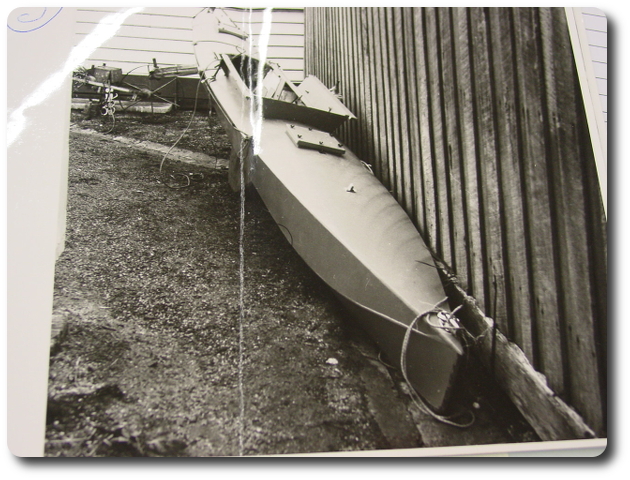
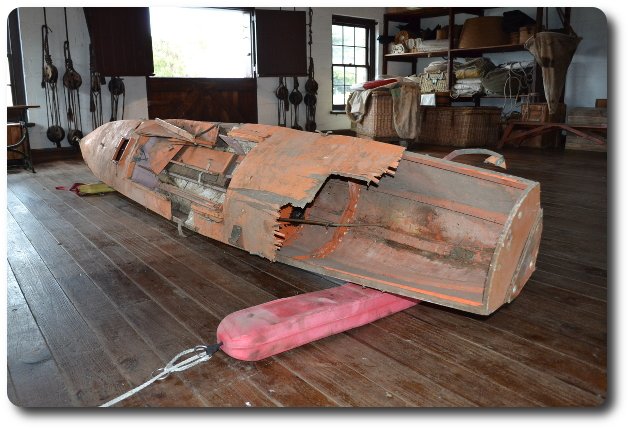
Showing the ravages of time: Alf Altmann’s kayak as it is today.

Flagstaff Hill manager Peter Abbott kindly organised for the kayak to be taken out of storage for us to confirm its heritage and to photograph it. Peter believes the kayak has been with the museum for at least the past 22 years, mainly for safekeeping, but that not a lot was known about its history.

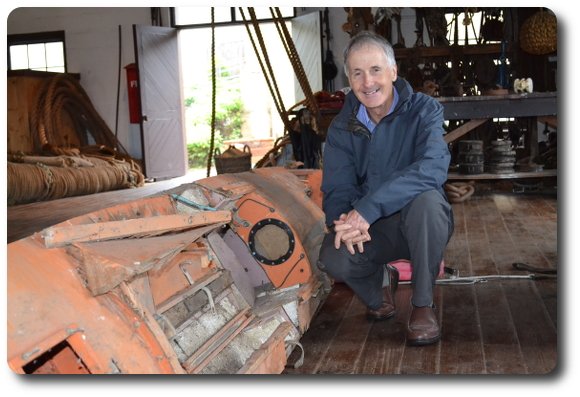
Alf’s second youngest son, Alan, joined us to see the kayak for the first time in at least 30 years and even though there are no immediate plans to put it on display (due to space), he was thrilled to know that at least something of his father’s kayak remained.

The boat is in poor condition, probably due to being moved so much in those early days, with some pieces missing and others falling apart, but it remains a very visual and emotional reminder of Alf’s extraordinary journey.

Perhaps the 50th anniversary of Alf’s voyage –  in 2020 – would be the perfect time to again reveal the “unsinkable” kayak and its story to the public.

For now, however, it is wonderful to know that what remains of the kayak is in safe hands.

alf kayak_6
Alan Altmann with his father’s kayak that he had not seen for more than 30 years before it was traced to a store room in Flagstaff Hill Maritime Museum.


Hunt on for ex-staff of Lady Bay Hotel


bouncers
The black tie bouncers at Warrnambool’s former Lady Bay hotel in the early 1990s. Nicole Lane (the only woman pictured!) is organising a staff reunion. Image courtesy of Nicole Lane.


If you ever lived in Warrnambool at any time up until around 2001, then these three words will mean something to you: Lady Bay Hotel.

The former Lady Bay Hotel, as opposed to the multi-storey resort that now stands in its place at the end of Pertobe Road, was one of the city’s most famous – and infamous – watering holes until it was demolished in 2001.

Moves are afoot to bring former workers at the Lady Bay Hotel back together for a reunion, including bar staff, kitchen staff, cleaners, managers and the unforgettable bouncers who at one point dressed in black tie.

The hotel was originally called the Bay View Hotel from 1890 until 1954, when it was refurbished, enlarged and renamed the Lady Bay Hotel, but quickly became known simply as “The Bay”.

While the original hotel no doubt had its share of wild times, the arrival of rock and roll in the 1960s and 70s saw The Bay transformed into a place for serious partying to some of Australia’s best bands: Cold Chisel, Midnight Oil, The Angels, Paul Kelly and the Coloured Girls, Icehouse, Australian Crawl, Hoodoo Gurus…and many more.


lady bay smaller
The Bay, as it used to be known, became one of Warrnambool’s most infamous watering holes.


An attached disco was also one of the most popular in town, where people would flock in the 1980s to drink fluffy ducks and tequila sunrises and dance to the Bee Gees until the small hours.

No wonder the staff who kept all of this unbridled energy, sexual tension and youthful exuberance under control shared a special bond.

One of the Bay’s few female bouncers, Nicole Lane, of Warrnambool, is the driving force behind the idea of a reunion and said she was inspired to try and pull together and event after one of the hotel’s most well-loved bouncers, Bob Kelly, passed away recently.

“When Bob passed away it made me think about how we are all getting older and how it would be great to try and get some of the old crew together to talk about old times,” Nicole said.

Nicole was 22 when she started “bouncing” at the hotel. She was given a chance to try her skills after the partner of another famous Lady Bay bouncer, Big Mal, left the job and the bouncing staff needed another woman.

“I ended up working as a bouncer at lots of places, but everyone has a memory of the Lady Bay,” Nicole said.

“Years later I was bouncing in a bar in Killarney, Ireland, and this woman points and me and says, ‘Oh no! It’s the bouncer from the Lady Bay!”‘ she laughed.

lady bay group
A group shot in the maritime themed room at the Lady Bay hotel with former managers Jim and Denise Ryan. Image courtesy of Nicole Lane.

A “Back to the Bay” celebration was held shortly before the original Lady Bay Hotel was pulled down, but that was mainly for former patrons. This reunion is specifically aimed at former staff.

“It is really in its first stages and I am not sure how much interest we will get,” Nicole said.

“We could end up with only a few and catch up over a cup of tea,” she laughed.

Some how, that seems unlikely.

lady bay aerial shot
Looking back at the Lady Bay Hotel from Pickering Point. The FJ silver ball can be seen on the skyline. Image courtesy of Nicole Lane.

[box] If you would like to know more about the Lady Bay Hotel staff reunion, contact Nicole at nic.nax@live.com or join the Facebook group.[/box]

newsletter Art Music Stones

You might also enjoy…


Lost history finds loyal following: Lost Warrnambool

Helping to mend broken family ties: Jenny Fawcett

Raise your glasses to this retro caravan

Old Holden just keeps on rollin’…

Don’t drop the ball on FJs silver icon