WCC spends thousands on Cape Schanck delegation despite pushing rate rise
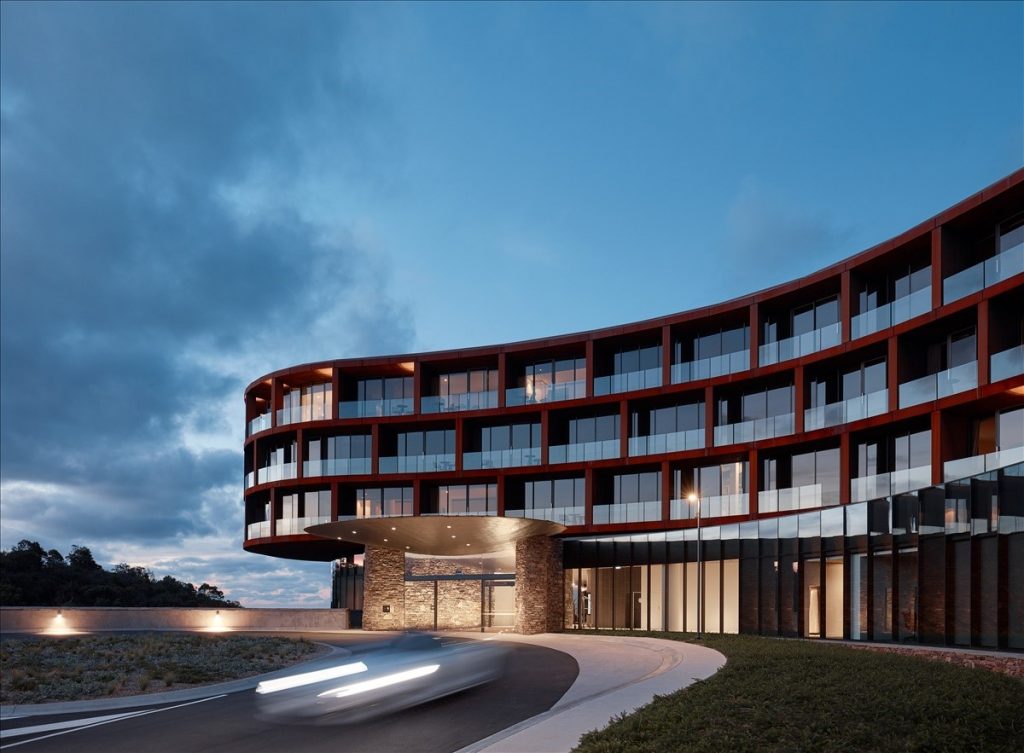
The RACV Cape Schanck resort which hosted the Victorian Tourism Industry Conference last July. Image: RACV/Business Events Mornington Peninsula.

Carol Altmann – The Terrier

The Warrnambool City Council is claiming its budget is tight, yet it spent more than $10,000 to send seven people – including the CEO of the Warrnambool Racing Club – to a tourism conference at a Mornington Peninsula resort last July.

The council has confirmed two councillors, WRC chief Peter Downs and four council staff attended the Victorian Tourism Industry Council annual conference held at the RACV Cape Schanck Resort from July 30-31.

The council has put the total bill for the conference at $9034, including $3934 in accommodation and $4830 in conference fees and only $270 in food.

I have received reliable information, however, that the final cost also included more than $1000 in drinks in the resort’s Lighthouse Lounge and more than $400 on meals and drinks in its cafe.


A council spokesman said “any food /drinks beyond (the $270) would have been settled by the individual(s) themselves as a personal expense”. Perhaps the big drinks bill was repaid, but I have not seen any evidence of that.

Those who attended the conference included now-mayor Tony Herbert, who is chair of the council’s Visitor Economy Advisory Committee, fellow committee member Cr David Owen (both funded their share through their councillor allowance), the council’s head of Visitor Economy, David McMahon, and three other council staff from Visitor Economy.

The final delegate was racing chief Mr Downs, who nominated and was chosen to join the council’s Visitor Economy Advisory Committee when it started in May 2017.

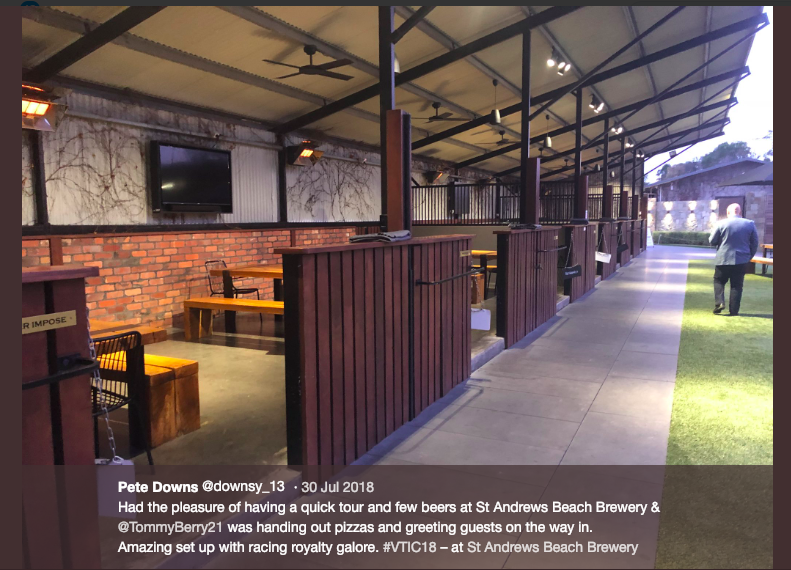
The conference, by the way, included sunset drinks at the St Andrews Beach boutique brewery which has been converted from first class racing stables and was worthy of a tweet from Mr Downs (see below).
There are two things about this story that don’t sit right.

First, as we know, the council is surveying ratepayers right now as part of a process to try and lift rates above the 2.5% cap.

The council is saying that it must save at least $700,000 a year for the next three years and the only two options we have been given are to either cut services, or raise rates.

Given this, what a double-standard – or perhaps a better word is insult – for the council to have sent seven people off to Cape Schanck to learn the latest in tourism trends, funded by an obviously healthy professional development budget.

The issue here is not only the money, but the mindset: while ratepayers have to expect cuts to services like childcare, council networking opportunities can roll on as normal.
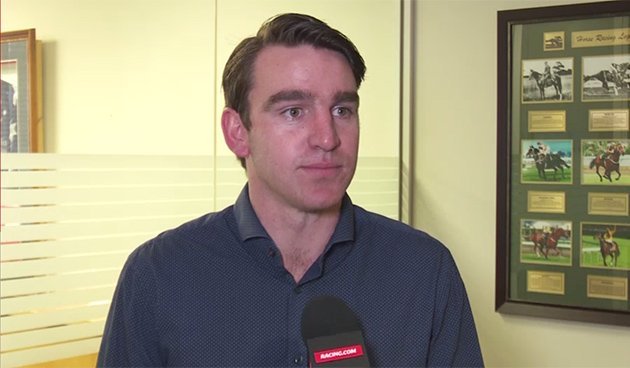
Warrnambool Racing Club CEO Peter Downs was among seven Warrnambool City Council delegates at the tourism conference last July. Image: Racing.com

The second unsettling aspect of this story is the inclusion of Mr Downs.

It is no secret that Mr Downs’, as CEO of the WRC, has been a major player in pushing for commercial racehorse training at Levy’s Beach, in the Belfast Coastal Reserve, and lobbying to make sure this happened.


In fact when Mr Downs was chosen for the council committee in 2017, it was just eight months after racehorse training was banned at Levy’s because of concerns raised by Aboriginal Victoria and the push by the WRC to get racehorses back on the beach was in full swing.

This council doesn’t seem overly fussed by potential conflicts of interest around the racehorse training issue, but I would have thought the decision to appoint Mr Downs’ to the visitor economy committee in the first place – given the political context – was questionable.

The issue here is not that Mr Downs has done anything wrong – he is only taking what is offered – but that the council considers all of it acceptable.

On any measure, Mr Downs has been given the sort of out-of-hours access to key members within council that others could only dream of, if they were lobbying in the same manner.

In this case, it has even paid the bill.
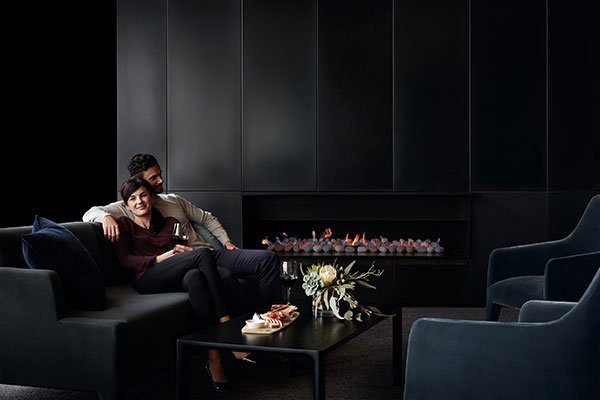
 

A promotional shot of the Cape Schanck Lighthouse Lounge where the WCC delegates spent more than $1000 on drinks across two days. Image: RACV.

According to a lengthy council statement in response to my questions, Mr Downs was chosen for the conference after the council asked for “expressions of interest” from all six community members of its visitor economy committee and only Mr Downs responded.

The statement also says it is appropriate that Mr Downs is on the council committee, because the WRC is a significant player in the local economy and tourism.

Further, the council says, nothing about racehorse training or the Belfast Coastal Reserve Management Plan has been raised in the committee meetings. Nothing at all? Really? What about before the meetings, or after?

By coincidence, the final Belfast Coastal Reserve Management Plan, which said racehorse training should resume, came out during the tourism conference.

Was this hot potato raised during drinks at St Andrews brewery or over dinner at Cape Schanck? We don’t know.


We do know, however, that Cr Tony Herbert – within three days of becoming Mayor on October 29 last year – placed sorting out the racehorse training issue at the very top of his to-do list.

You can read the full council statement on this whole issue here. 

In a nutshell it justifies the conference by saying the council values professional development opportunities, that the funds came out of a professional development budget and that there were several important outcomes, including: a follow-up meeting by VTIC in Warrnambool, a range of new marketing tactics, valuable networking and contacts, and passing on “key learnings” to other staff and councillors.

Worth every cent? I will leave you to decide.

(Mr Downs was contacted for comment last week on this piece. He is yet to respond.)

If you would like to see The Terrier keep digging up, sniffing out and chewing on local issues, please make a small contribution below.

Donate


Are we being told the truth about Flagstaff Hill?

By Carol Altmann

I have been looking at visitor numbers for Flagstaff Hill and, I have to tell you, there are worrying signs.

Before I go any further, I need to say three things:

The figures are from Sept 2017 to Feb 2018. The media unit at the Warrnambool City Council will not give me more recent ones. I don’t know why. It also refuses to answer any questions about the figures that have been released.

In the past 15 years, at least $15 million of public money has been poured into Flagstaff Hill to keep it alive. Most recently, $3 million was spent on a new light/sound show and other improvements that opened in June last year. A year on, I think we need to know how things are travelling.

None of what follows is a reflection of the hard work done by the volunteers and many WCC staff who, in recent years, have busted their guts for Flagstaff Hill.

So how are things going?

The expectation was that once the $3 million upgrade was launched in June 2017, visitor numbers would boom.

As the council CEO Bruce Anson said himself, the colonial village needed at least 80,000 paying visitors a year to break even. This would stop the WCC having to spend $500,000, $600,000 or $700,000 a year to help it cover costs.

It was a big ask. Three years ago, paid visitor numbers were below 55,000.

The head of WCC’s tourism arm, David McMahon, who two years ago was handed the whip to flog Phar Lap, remained optimistic. In June last year he told The Standard:

A 30% jump by January was a lofty goal, but here is an awful, ugly, unadulterated fact: the overall visitor numbers at Flagstaff Hill are going backwards.

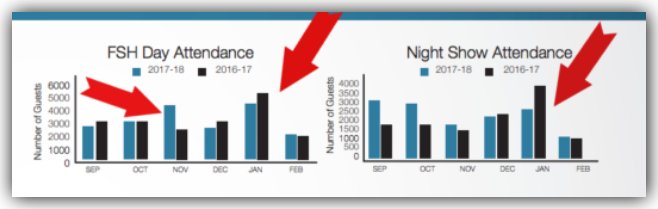
I have checked and re-checked the numbers and you can look at them yourself right here:

Let me take you through the red arrows:

  • In December and January of 2018 – our peak summer holiday season – less people went to Flagstaff Hill than the summer before.
  • The same applies to people who saw the new $2 million night show. After an initial spike in the months after the show opened, many more people actually went to the OLD show, in the summer of 2016-17, than they did in the summer just gone.
  • In February, when the weather was still warm, less than 2000 people showed up for the whole month, about the same as last February.

This is a shock.

Maybe the person who drew this graph for the council got their colours mixed up, but I don’t think so, because you can see a clear ‘spike’ around November last year.

Why was there a spike? I suspect because Flagstaff Hill had a free open weekend to celebrate its $3 million upgrade.

Did you see the word FREE in that sentence? This brings me to another very important point: how many have people actually paid to get in or paid for tickets to the night show since last Sept?

I don’t know. It’s one of the questions that those who have access to these figures – David McMahon, Flagstaff Hill manager Paul Pinkerton and WCC media head Nick Higgins – won’t answer.

But this question is critical to whether these figures are being fudged. Are these numbers a true reflection of what is going on, or is it even worse?

Free entries do not help the bottom line and if free entries are being included in these numbers, then we are being duped and that, to me, is very serious.

We have been here before, with Fun4Kids.

After many successful years as an annual winter event, Fun4Kids started to bleed money. Then it started to haemorrhage.

Here is David McMahon again being quoted by the paper during last year’s Fun4Kids:

Seven months later, the WCC dumped Fun4Kids.

The cut came without warning, without any fallback plan, without any replacement and, it must be said, without giving the scaled-back F4K festival a chance to see if it could do better than the big-budget stuff of years before.

This is not how we should be planning our future as a prime tourist destination.

We need honest, transparent conversations about how we are tracking, what we can expect and what, if anything, we need to change.

I have written many times before that a fake colonial village that opened in the 70s and still flies the Union Jack high above its premises is no longer appropriate to where Warrnambool is going today.

What could replace it is a topic I will wade into later, but for now we deserve to be told the full story.

If you would like to keep seeing more pieces like this about local issues, please make a small contribution below.
Donate


Tourism? We are missing out big time

Moyjil/Point Richie is one of three rich cultural and environmental sites in the south-west that could be maximised to form a major tourist attraction at the end of the Great Ocean Road.

The Terrier

A little statistic popped out of Parks Victoria about six weeks ago that should have had us all gasping and wondering what we are doing wrong in Warrnambool.

Here it is:

“A record daily peak of 11,000 national and international visitors made the trip to the Twelve Apostles during Chinese New Year celebrations”.

Please read that again, because it took me at least three reads to believe what I was reading: a record daily peak of 11,000 national and international visitors visited the Twelve Apostles during Chinese New Year (between January 28 and February 15) this year.

This was a 30% increase on last year. Thirty per cent!

And this is all happening less than an hour from Warrnambool – 72.7km down the road – yet we are seeing so little of the action here.

Why??

This is not a new question.

Over the years there has been much head-scratching, hours of discussion and piles of reports on how to encourage this lucrative market of cashed-up, eager travellers to travel just one more hour down the road to Warrnambool where, we would hope, they stay for more than 24 hours rather than passing through on their way to somewhere else, or turning around and travelling back to Melbourne.

To me, the answer starts here: give them something irresistible, something that they haven’t already seen or heard during their trek down the most popular coastal road in Australia.

And what might that be?

To me, the answer starts here: our incredible indigenous story.

I don’t know about you, but whenever I travel overseas, I can’t wait to immerse myself in the indigenous history, to read about it, see it and experience it through a tour, a trek, a talk, a meal or a spontaneous, random encounter.

Here in the south-west, and right here in Warrnambool, we are sitting on some of the richest indigenous stories in Australia, creating a natural ‘trail’ from Moyjil/Point Richie, to Tower Hill and out to Budj Bim (Mt Eccles/Lake Condah) near Heywood.

Budj Bim is on the cusp of a UNESCO World Heritage listing partly because of its stone eel traps that are 1500 years older than the Pyramids or Stonehenge.

And Moyjil, apart from being a geological wonder, has been a site of human occupation for at least 35,000 years and, pending the results of ongoing tests, could also be the oldest site of human habitation anywhere on the planet, dating back 80,000 years.

Why are we not celebrating and promoting this far and wide?

December 2016: The western walkway from Moyjil down to the beach.

Tower Hill, meanwhile, is where Great Ocean Roaders can see a koala, emu or a kangaroo while also learning about indigenous culture, but its full potential as a tourist attraction is far from realised, starting with the poorly signposted, pot-holed and dangerous entrance that must be the worst of any tourism attraction in Victoria.

To be fair, progress is being made at each of these sites to promote its significance (especially Budj Bim) and plans have been drawn up to manage their futures, but I cannot find any coordinated effort to promote the three locations as a not-to-be-missed tourism experience that would, in turn, create jobs and boost our local economy.

There is no single, one-stop-shop to find out about what should be a cultural and environmental gem of a self-guided tour: there is no one map, brochure, website, or app.

Try it yourself: visit the Visit Warrnambool website, click on “what to see and do” and see what you find.

The top listings alternate, but when I clicked, the first item was mini golf.

But back to Moyjil for a moment.

A 24-page conservation and management plan for this area was published in 2013, setting out how it should be cared for by the State Government (which owns it) and Warrnambool City Council (which manages it) but, four years on, there are worrying signs about the financial commitment needed to look after this precious piece of coast.

The western walkway from the carpark fell apart in early December last year, just before the start of the peak tourism season, and access to the beach was blocked.

It is now late April and the walkway is still busted although now, of course, there has been five months’ of people making their own path down the side of the walkway, as we do, and the erosion is obvious.

When it will be fixed, nobody knows.

April 2017: The western walkway from Moyjil down to the beach.

I contacted the state Environment Minister Lily D’Ambrosio and her spokesman said the council had applied last year for a slice of $730,000 in funding to fix the walkway as one of several work projects it had planned for the site.

It was not successful. (The $730,000 fund received applications totalling more than $3.1 million).

“DELWP is willing to look at how it can support Warrnambool City Council in fixing this walkway, and will discuss with Council how the department can assist,” he wrote.

I asked the council for its take on the situation and its spokesman said: “We will continue to seek funding from the State Government for maintenance. It will also be part of Council’s upcoming budget deliberations.”

And that was it. No passion. No prioritising. No real sense of urgency.

I can only wonder when a wooden walkway – a walkway – can’t be fixed (Triton woodworkers + youth unemployment project?), what the long-term future really holds for this magnificent site.

And in the meantime, the vast majority of the tens of thousands of tourists who are travelling to the Twelve Apostles each summer just turn around – or keep driving….


Once-proud “Rowitta” is now an abandoned ship

rowitta 1999 fred
The century-old steamer, “Rowitta”, as it appeared at the Flagstaff Hill Maritime Village in 1999 when it was considered a prize exhibit. Image: FredV45 via Flickr.

By Carol Altmann

[dropcap style=”font-size: 60px; color: #A02F2F;”] T [/dropcap]his is a tale of two, century-old, sister ships with two very different fortunes: one is about to undergo a million dollar restoration in Tasmania, while the other is being scrapped at Flagstaff Hill in Warrnambool.

The Rowitta and the Cartela are both wooden steamer ferries built in Hobart by Purdon & Featherstone, with the Rowitta the older of the pair, being built in 1909, followed by the Cartela in 1912.

They are now among only a handful of river steamers left in Australia and generate the sort of excitement among wooden boat enthusiasts that befit their rarity.

In the case of the Cartela, which has been converted from steam to diesel but has never been out of service, that excitement is only building.

A dedicated band of volunteers formed the Cartela Restoration Project Trust that lobbied for years to secure funding to restore the ferry to its original state, including its original 1912 steam engine. The project has come to fruition and, as of August last year, the Cartela restoration has been the centrepiece of the revitalisation of the port of Franklin, in the Huon Valley, as the home of wooden boat building.

For the Rowitta however, despite being one of the oldest vessels in the collection at the Flagstaff Hill Maritime Village, it is the end of the road.

rowitta - 1922 museum victoria1
Full steam ahead: The Rowitta plying the Tamar River, Launceston, in 1922. Image: Museum Victoria.

[dropcap style=”font-size: 60px; color: #A02F2F;”] H [/dropcap]aving been brought to the fledgling Flagstaff Hill back in the early 1970s as a hull, the Rowitta – which has also been known over its life as the Sorrento and Tarkarri – was the focus of a major restoration in 1989 under master boat builder, the late Ron Stewart, who’s son, Garry Stewart, continues the craft in Port Fairy today.

The Rowitta became a jewel in Flagstaff Hill’s crown, both as a popular venue for weddings, an educational tool for students and as a historic tourist attraction.

Tasmanian Irene Atkins wrote about her visit to Flagstaff Hill in 1998 and the thrill of seeing the boat she remembered from her childhood in Launceston being fully restored and taking pride of place on the lake.

“The first thing I said was ‘You have got the right colours’. They replied that they had gone down several coats of paint to establish that information,” she wrote in ‘On the Tide‘.

One of the people to show Irene around that day was boat builder Jeff McMurrich who is still the main boat builder at Flagstaff Hill and who, in 2008, gave a prescient interview to the ABC’s Jeremy Lee in which he warned that the Rowitta was in need of significant restoration work within 10 years, or it may not survive.

Sitting permanently in fresh water rotted the hull and required the Rowitta to be drydocked for proper repairs, which was difficult because it was part of the village’s Shipwrecked sound and light show *.

Instead, as Jeff explained, he did what he could with the “shoestring” budget Flagstaff Hill had to spend on such things. It was, he said, a case of “patching” rather than preventative maintenance – and this could only work for so long.

rowitta rotting
The rotting hull of the Rowitta, which has been off-limits to visitors to Flagstaff Hill Maritime Village for more than a year.

[dropcap style=”font-size: 60px; color: #A02F2F;”] D [/dropcap]espite these dire warnings, the 100th birthday of the Rowitta in 2009 was met with cheerful optimism by Flagstaff Hill, with manager Peter Abbott telling the local newspaper that the ship was still a popular drawcard.

“It’s a great venue for many types of functions and its also part of our sound and light show so the Rowitta’s definitely got plenty of years left in her yet,” he said.

In fact the boat would not see out another decade.

Faced with mounting losses at Flagstaff Hill, the Warrnambool City Council decided a couple of years ago to discontinue all maintenance of the Rowitta, which sealed her fate.

Alongside this decision has been a subtle reconfiguring of Rowitta’s place in the Flagstaff Hill story.

No longer is the ship historic, but referred to by Flagstaff Hill in its correspondence as a “replica”.

Similarly, the ship’s story is no longer considered relevant to the village, yet the South Australian built boat, the Reginald M, which arrived at Flagstaff Hill at about the same time, is.

The Rowitta’s transition from treasure to trash is perhaps best captured in this line from the council’s February 15 meeting:

Rowitta is a replica ship and deemed as surplus to the future of FHMV. Her removal will allow our limited wooden boat repair resources to focus on our real heritage vessels.”

Work on removing parts of the ship has already begun.

*The consolidation of the wooden boat fleet is part of a $3 million upgrade of Flagstaff Hill to start later this year, including a $2 million upgrade of the sound and light show.

[box]We asked former Flagstaff Hill director PETER RONALD, now living in Tasmania, for his view on the destruction of the Rowitta. Read his exclusive analysis piece here. Bluestone would also like to thank the Launceston Library for its assistance with the history of the Rowitta.[/box]

[button link=”http://the-terrier.com.au/subscribe-2/” type=”icon” icon=”heart” newwindow=”yes”]Bluestone needs at least 500 subscribers in 2015. Please support independent media, and subscribe here.[/button]

newsletter Why Not StonesYou might also enjoy…


 Little old shoe leads to a humble war hero

Unearthed: how the Warrnambool cemetery works

A fence full of happy souls at Tyrendarra: the ‘shoe fence’

Montgomery buys a slice of ‘Motang’ history


Sovereign Hill strikes gold as ‘Flaggy’ struggles

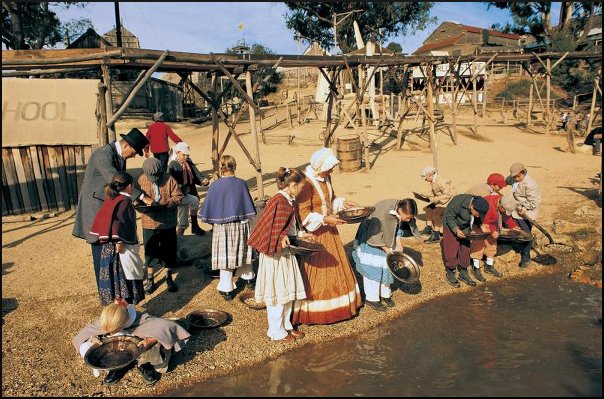
pan-for-gold-sovereign-hill-2880
Children dressed in period costume pan for gold at Sovereign Hill: just one of the many daily activities for visitors to the site. Image: Sovereign Hill.

Analysis: Carol Altmann

Why is Sovereign Hill in Ballarat still booming after 45 years and Flagstaff Hill in Warrnambool is struggling to survive?

Both are in regional Victoria, both opened in the early 70s and both rely on a mix of reality and fiction to capture our colonial past – yet their individual fortunes could not be more different.

The numbers for Sovereign Hill are simply staggering: in 2013-14 it recorded 731,000 visitors of which more than 100,000 came from overseas.

Flagstaff Hill recorded less than 60,000.

In 2013-14, Sovereign Hill turned over $24 million in revenue and recorded an operating profit of $775,000. It employs 360 staff and has 250 volunteers.

By contrast, Flagstaff Hill has gone from making a profit to running at loss of around $500,000 a year, it employs only 13.5 staff and has 135 volunteers.

The first response might be, oh, Sovereign Hill must receive more government funding. No, it relies on generating its own income to survive.

Oh, but it is only 90 mins from Melbourne! Yes, but Flagstaff Hill is only an hour from the 12 Apostles, one of the top tourist attractions in Australia.

Perhaps the entry fees are cheaper at Sovereign Hill? No, in fact they are more than double the entry fees to Flagstaff Hill at $49.50 adult/$22 child/$122 family.

To my mind, the difference comes down to two critical things: i) Sovereign Hill has aggressively and successfully gone after the lucrative Asian tourist market and ii) Sovereign Hill itself is full of life, characters and things to do.

Flagstaff hill
While Flagstaff Hill Maritime Village occupies one of the best spots in Warrnambool, it is a largely static museum whose fortunes are flagging. Image: Bluestone Magazine.

In his submission to a recent state parliamentary inquiry into heritage and eco tourism, Sovereign Hill Chief Executive Officer Jeremy Johnson laid out some startling facts.

Having sniffed the wind early on the growing Asian tourism market, Sovereign Hill now employs four staff in China to sell itself as a destination direct to the Chinese. (In January it hosted a hugely successful 1850 fashion show and competition in Shanghai. See here.)

It also hires 17 Mandarin and Cantonese speaking tour guides on site – and has used such guides for 20 years.

Incredibly, one in three Chinese tourists to Victoria now visit Sovereign Hill.

Of course Flagstaff Hill has known about the burgeoning Asian market too, but only now is it lumbering into life to do anything about it, with an upgrade of its sound and light show that will be multi-lingual.

When I visited Flagstaff Hill a few weeks ago, there were no multi-lingual maps or signage, and the introductory film shown to all visitors is in muffled and difficult “olde” English (being extracts from a colonial diary).

There were certainly no Mandarin-speaking guides about, in fact there were very few people (visitors or volunteers) about at all, despite it being the height of the school holidays.

Which brings me to the second point. Flagstaff Hill is more static now than it was 30 years ago.

Tourists love things to see, do, touch and listen to, and this is where Sovereign Hill leaves Flagstaff Hill in the shade.

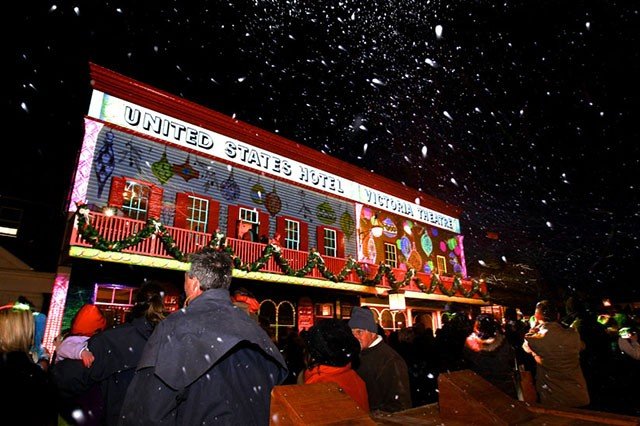
sovereign hill xmas july
The winter blues have been transformed into a tourism winner at Sovereign Hill with its “Christmas in July” event that taps into the White Melbourne light show theme. Image: Sovereign Hill.

It Sovereign Hill, visitors can pan for gold, have their name printed on a “Wanted” poster, buy some Raspberry drops from the boiled sweet shop, or watch a building “burn” down, and on it goes…

At Flagstaff Hill, the visitors walk into the re-created shops, bar and blacksmiths etc expecting to see someone doing something and – apart from one or two exceptions such as the boatbuilders – there is nobody doing anything.

One more example: Ballarat is freezing in winter, even colder than Warrnambool. But Sovereign Hill turned this down-time into an up-time by launching a two-week Christmas in July event across the school holidays.

Among other things, they light up buildings, create fake snow, run plays by the local theatre group and, last year, the crowds reached a record 42,000. In other words, almost as many people visited Sovereign Hill in those two weeks than for two-thirds of the year at Flagstaff Hill.

So what is Flagstaff Hill doing in response to its troubles?

Well, it is about to spend another $3 million (on top of the $5.7m spent in 2003) “refreshing” the sound and light show ($2m), adding a handful of holograms rather than real people to its buildings – which sounds like a maintenance nightmare – and upgrading the wharf and main entrance.

According to its own masterplan, a full makeover of the village will cost up to $15 million, so rather than throw $3 million into it for little impact, we could try to do more with what we already have.

For example, if the council is persisting with the Fun4Kids Festival, why not hold it at Flagstaff Hill, refocus it with a strong maritime theme (pirates, stowaways, shipwrecks…) move it to the early January school holidays when – compared to events in Port Fairy, Warrnambool is dead – and run special trains from Melbourne (The Shipwreck Express?) that deliver visitors virtually to the door.

And why not offer studio space at Flagstaff Hill to the many artists and crafts folk around the area who do metal work, wood work, glass work, textiles and so forth, so that they get exposure (and sales) and visitors can see people in action?

And why not consolidate all of our historical artefacts in one place, rather than have them spread between Flagstaff Hill and History House (that few visitors even know exists), so that people can see, touch and learn about them?

Flagstaff ingots_10
Despite having historic lead ingots from the Loch Ard on loan from the Federal Government, there is not one sign at Flagstaff Hill explaining what they are or where they come from. Image: Bluestone Magazine.

Lastly, and most importantly, why not make more of the treasures at Flagstaff Hill, such as the Loch Ard ingots which, according to a report in the local paper, Flagstaff Hill founding member John Lindsay thinks are no longer that important at all.

Despite having several hundred of these lead ingots on site, there is not one explanatory sign telling visitors what they are or where they came from.

During my last visit to Flagstaff Hill I was in the Reginald M, that houses some of these ingots, and a young boy asked his mother what they were. She didn’t know, so I said that they had come off the Loch Ard shipwreck and he should try and lift one to see how heavy it was.

His eyes opened wider and he tried to lift one end.

“Orrrrrr.”

History comes alive in those moments – and, as Sovereign Hill well knows, they don’t cost a fortune, but they are pure gold.