No bones about it, WCC pet rego fees are astronomical
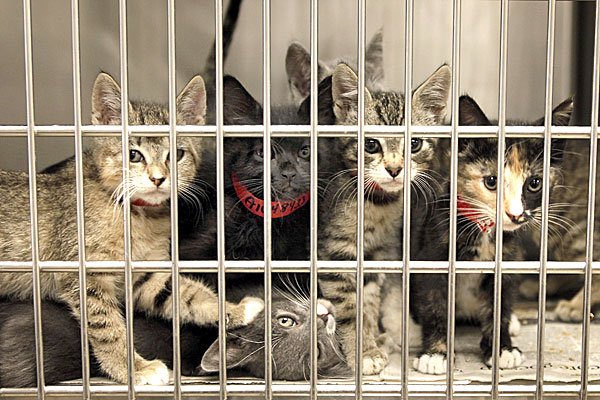
Pet registrations in Warrnambool are already the second highest in Australia and continue to climb. Stock image.
Carol Altmann – The Terrier
Well this is enough to make pet owners barking mad.
Tucked within the pages of the Warrnambool City Council draft budget is a little note that pet registration fees are set to rise – AGAIN.
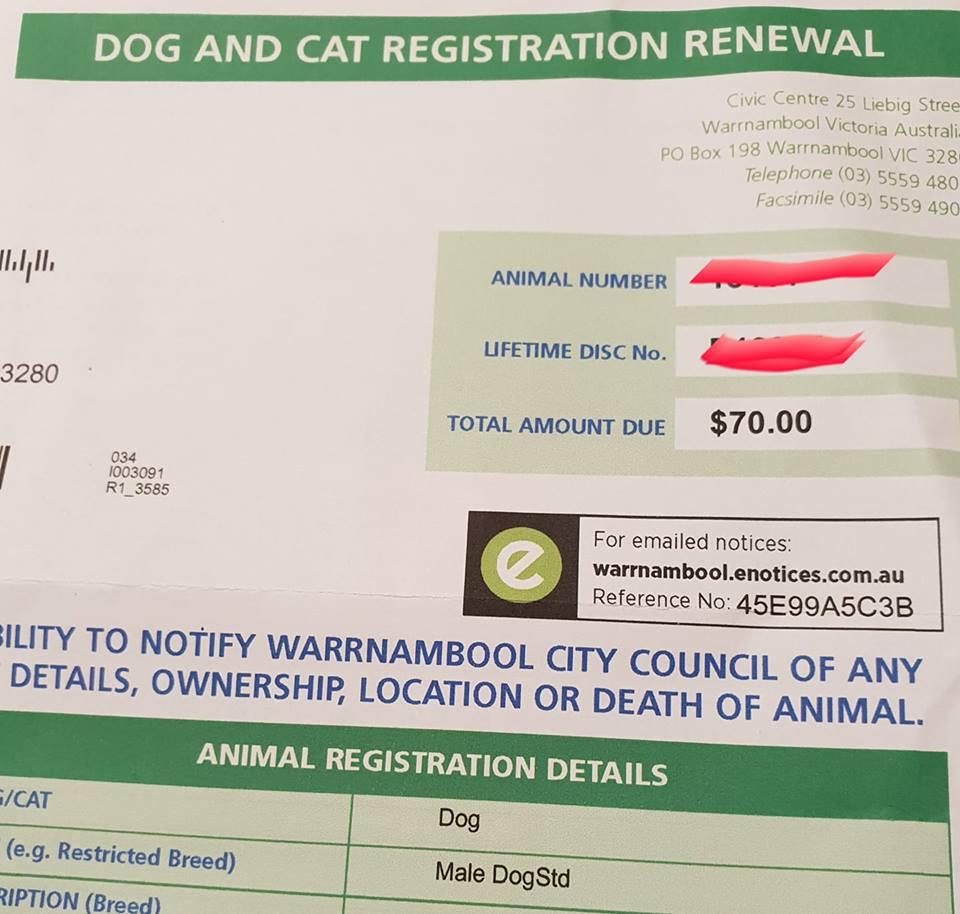
If this rise goes ahead – as I suspect it will – this time next year a single desexed dog or desexed cat will cost $72 to register, up from $70. It was $54 just a couple of years ago.
The CEO said at last Monday night’s meeting that our rego fees are, “not dissimilar to some other municipalities”.
This is untrue.
We now pay the second highest pet regos fees in Australia, behind only Brighton, in Melbourne.
In Ballarat, the fee is $40. In Traralgon, it is $43. In Portland, it is $35. Over in Port Fairy, it is $39…you get the drift.
The reason we are being fleeced, it seems, is that in 2017 the council signed on to a three-year deal with the RSPCA that saw an explosion in its fees for running the council pound – the cost tripled overnight.
Not only that, the cost of running the pound has risen astronomically for EACH year of the three-year deal.
The RSPCA charged the council $328,000 in 2018-19.
Next financial year, which is the last year of its contract, it will charge $425,000: almost half a million dollars!
Holy malooza! It’s enough to make you have kittens.
In response to a question from a ratepayer on Monday night, our CEO explained that the RSPCA is all about saving animals, rehousing them, returning them home etc all of which costs money and is supported by any animal lover, including me.
But here is the rub.
The RSPCA also runs the pound in Portland and they ain’t payin’ anywhere near $70 a dog or cat. Why not? Because, to put it simply, Glenelg Shire negotiated a better deal.
The RSPCA runs very few animal shelters in Victoria now and no doubt those they do run are top notch, but charging $425,000 a year for a city the size of Warrnambool?
I would rather see these funds used to subsidise desexing – of cats, in particular, as happens in South Australia.
As it also happens, the WCC has just advertised a tender to run the pound from 2021-22. Will the RSPCA be, again, the only one to apply?
Or maybe the council, post C19 when people need to be redeployed, could think about using that half a million bucks a year to run the pound again itself?
Unless we want to see pet regos go up and up and up, it could be the best option.
[The WCC draft budget is open for public comment and feedback until 3 June.]
Huge dog fines turning into a catastrophe for council
Carol Altmann – The Terrier
Why on earth is the Warrnambool City Council persisting with its decision to whack dozens of pet owners with $330 fines for failing to re-register their pets on time?
What possible justification can there be for demanding such an exorbitant fine – the maximum set by the state – even once the owner has paid the overdue bill?
One answer might be simple bloody mindedness and greed.
The council won’t talk about it, but I believe more than 250 pet owners – most of them dog owners because they are the easiest to catch – have been hit with these extraordinary fines and final demands for payment or the threat of court action.
If you do the math, this is around $82,000 the council stands to make in fines.
Those facing fines include the most vulnerable, including pensioners where the fine is almost 10 times the cost of the registration.
And pensioners have been hit.
As have new parents, and those who simply forgot, or those who were pre-occupied with other things in life and, of course, a few who decided they didn’t want to be fleeced $70 for having done the right thing and registered their pet in the first place.
Because this fine is not for failing to register your pet, but for failing to re-register it.
And bad luck if you have done the right thing for each of the past 10 years, sorry, that doesn’t count.
Warrnambool’s pet regos are now the second most expensive in Australia for a desexed pet.
So it doesn’t matter if you have desexed your pet, microchipped and registered it, if you failed to pay your rego on time, the $330 hammer will fall.
It is completely over the top and, worse, it is random.
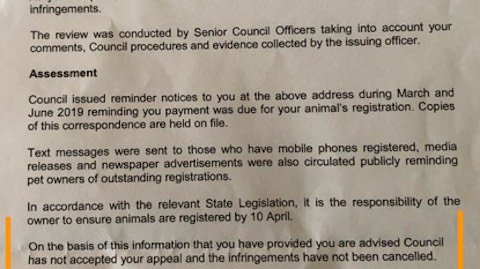
The pro-forma letter sent to pet owners who have pleaded their case. In this case, the appeal was pointless.
Some people have been lucky enough to plead their case successfully and had the fine wiped.
Others, who have equally compelling circumstances, have been told, sorry, mate, your lucky day is not today.
This is not how to treat a community.
If the council wonders why people are so angry, this is it – this heavy handed, bloody mindedness that comes on top of a 4.5% rate rise which nobody wants or deserves.
There are options.
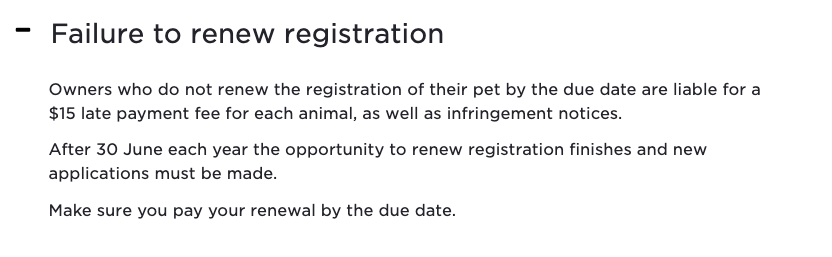
One is to do what Melbourne City Council does – that little town further east of us – and offer a late penalty of $15. That’s right, $15. See the snapshot for the MCC website below:
Perhaps, like what happens with your gas, and electricity, and rates, this late penalty could increase each month until you make payment.
(I have paid overdue power bills before and never has it cost me $330 in fines.)
The other thing the council could do, right now, is offer an amnesty.
Call a truce, wipe the slate clean and give people a chance – not only those who have already done the right thing and re-registered their pet, but those who haven’t.
It is the latter group that need the most incentive to sign on.
Drop the $330 fines. Encourage everyone to register their pet by making it affordable, if not free, for the rest of this year.
Introduce a $15 late penalty when re-registrations are due next year.
Throw in some free doggy bags, a leash, or a cat collar for those who pay on time.
In other words, create incentives to make the RSPCA less busy, not more.
As it stands, not only will the RSPCA be busy, but so will the Magistrates’ Court, where all 250-plus pet owners who have paid their rego but still been fined, could choose to challenge the point of it all. I reckon they have a good case.
And how would the WCC make up the shortfall from all of those juicy, $330, money-for-jam fines?
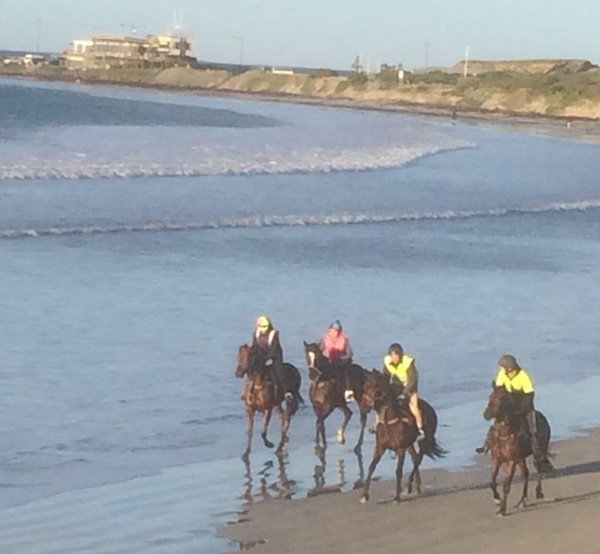
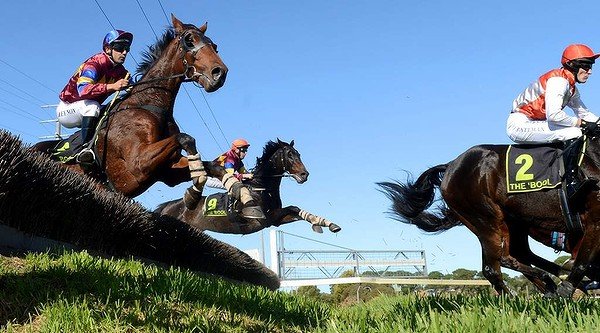
Well, here’s just one idea: look at the photo below.
That’s right, four racehorses in a row, who were barrelling along Lady Bay foreshore a couple of weeks ago, in breach of the rules, yet again (#notalltrainers).
Do you know how many fines have been issued to the Warrnambool Racing Club by the WCC despite multiple breaches of the rules since 2016?
None.
Zero.
Nada.
So there is one rule for the pet owners of Warrnambool and another for racehorses which, I think we could safely argue, are far more of a risk to public safety than Pixie the poodle hanging out on the couch.
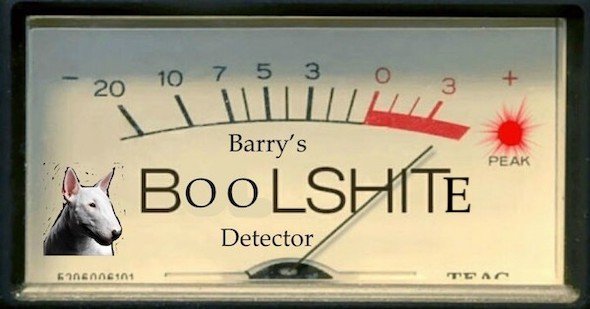
I asked Barry the Bull Terrier Boolshite detector what he thought of all this.
Barry gave it a perfect 10.
If you would like to support the work of the The Terrier, you can always throw something into the tip jar.
It’s official: Warrnambool is being fleeced for dog rego fees
Dog registration fees have skyrocketed in Warrnambool for reasons which are unclear. Image:Dog Health
Carol Altmann – The Terrier
Thanks to some great digging by all of the terriers out there, we now know that Warrnambool is the second most expensive place in the whole of Australia to register your desexed dog.
The most expensive place is Bayside Council, the council that covers the multi-million dollar suburbs around Brighton, Melbourne. It charges $78.
Our council will this year charge $70, up from $54 last year, because of a 300% increase in costs passed on by the RSPCA that runs the Warrnambool City Council-owned pound on behalf of the council.
In 2017, the council put out a tender to run the pound for the next three years and got only one response, which was the RSPCA.
Despite the RSPCA jacking up its fees by a whopping 300% this year to $331,918, this monopoly option was still chosen by the council as the best option.
As a result, we are now paying more than just about everyone, including councils the same size as Warrnambool:
Now look at how we compare with our neighbouring councils:
Moyne Shire: $39
Glenelg (Portland) Shire: $35
Until last year, Moyne Shire shared the costs of the Warrnambool pound, but decided a 300% increase was off the scale, so it looked elsewhere. It now uses the Southern Grampians Shire pound in Hamilton.
In Port Fairy, it costs $39 to register your desexed dog and in Hamilton, it costs $43.50.
Glenelg Council was similarly cost savvy. In 2016, the RSPCA in Portland told Glenelg Council it would have to increase its pound fees by 400%, The council effectively said “don’t be so ridiculous”, the RSPCA backed down and the council still uses the pound.
In Portland, it costs $35 to register your desexed dog: half of what Warrnambool is expected to pay just 90km down the road.
Let’s now go further afield.
Humane pound services are essential, but registration fees are also becoming a disincentive. Image: Lostdogs
Greater Bendigo Council this year announced it was taking back control of its pound from the RSPCA because of the rising costs over which, of course, it would continue to have no control. Bendigo charges $45 per dog.
There is an RSPCA shelter in Castlemaine, but the council there (Mt Alexander Shire) doesn’t use it and runs its own pound. It costs $46 to register your desexed dog in Castlemaine.
There is also a big RSPCA shelter in Burwood East, but the local council there (City of Whitehorse) switched from the RSPCA to Animal Aid in 2017. It costs $55 to register your desexed dog in Burwood.
There is also an RSPCA shelter in Wangaratta, but the council there uses the pound run by the city of Albury/Wodonga. It costs $43 to register your desexed dog in Wangaratta.
There is also an RSPCA shelter in Ballarat, but in 2017 the Ballarat council moved across to the new, government-run Ballarat Animal Shelter. It costs $43 to register your desexed dog in Ballarat.
There is another RSPCA shelter in the City of Casey, in Melbourne, but that council uses the Cranbourne Animal Shelter and Lost Dogs Home. It costs $54.50 to register your desexed dog in the City of Casey.
Do you see a pattern here? I don’t know what is going on within the RSPCA that has seen it move to a “full cost recovery model” for its pound services, but it hasn’t gone down well.
Except in Warrnambool, where we are sticking with the RSPCA and going solo. We didn’t even try and stare the 300% price hike down, like Glenelg.
The council did, apparently, look at the cost of running the pound again itself, but decided the RSPCA was the better option. Really? At the second highest cost anywhere in Australia?
We have to trust the council on this, because the cost of the alternative – running the pound itself – has not been made public.
Bill shock: W’bool dog owners who last year paid $54 are getting a surprise in the mail this year.
This year the cost is $70 per desexed dog, but that will most likely increase in the next two years, when the RSPCA will jack up the price again to $417,146 and then $429,666 in 2020-21.
On a simple measure of equity, it is grossly unfair that pet owners of Warrnambool who do the right thing and register their dogs will pay the second highest fees in Australia.
On a broader level, it exposes an inequity across Victoria, which is yet to follow the lead of WA, NSW and South Australia, where there is one set government fee, whether you live in Port Pirie or Port Adelaide.
In WA, a desexed dog costs $20. In SA it is $40 and in NSW, $57.
When you look at these fees, you can only conclude that we are paying far too much in Warrnambool and nobody has explained why. (You can sign an online petition via the link above).
There is also now zero incentive for anyone to register their new dog in Warrnambool. Why would you?
What this means is that instead of reducing the problem of unregistered dogs, this fee hike will only add to it, creating even more business for the pound. How ironic.
If you would like to see The Terrier keep digging up, sniffing out and chewing on local issues, please consider throwing something in the tip jar.
It will soon cost $70 to register your dog – and here’s why
More than 10,000 cats a year are left at the RSPCA across Victoria, part of the reason for a 300% increase in pound management fees. Image: Stockimage.
The Terrier – Carol Altmann
WARRNAMBOOL ratepayers are in for a shock next year (2019) when it comes to putting out their rubbish and registering their pet, as the rising cost of our throwaway society starts to bite.
As has been reported elsewhere, garbage collection fees in Warrnambool are set to climb by $70 to $356 a year, while in neighbouring Moyne Shire the fee is rising by $21 to $493 a year*.
On top of this, pet owners in Warrnambool are expected to see dog and cat registration fees rise by up to almost 40%.
If the draft Warrnambool City Council budget goes ahead, in 2019 it will cost $70 to register your desexed dog and $59 for a desexed cat. (Last year it cost $52 and $41.)
The fee for a non-desexed dog will rise from $166 to $210 and a non-desexed cat will cost $177, up from $130.
And herein lies the problem, because these fee hikes are directly connected to the cost of keeping animals that are either discarded, given up, or need to be rehoused via the Warrnambool pound.
(I hasten to add that not all animals passed to the RSPCA are ‘unwanted’, including those that need to be rehoused due to changing personal circumstances such as illness or divorce.)
While WCC owns the Braithwaite St pound, it has for many years been out-sourced to the RSPCA and late last year the RSPCA dropped a bomb: it was no longer going to run its pound services at a loss and its fees were going up by 300%.
300%!
As council spokesman Nick Higgins explained, the WCC was paying around $112,000 a year, but under its new contract with the RSPCA this will almost triple to $328,632 in the next financial year**.
The following year it will rise to $413,016 and by 2020-21 it will be around $425,000.
This is getting close to half a million dollars a year to run the pound and, it appears, the cost will only keep rising.
So while it might be $70 to register your dog next year, by 2020-21 it could feasibly be $100.
There is no doubt it is expensive to humanely care for and re-house animals and the RSPCA says it had little choice but to reflect this in its fees.
RSPCA Victoria Head of Operations, Tegan McPherson:
“Over the past two years, RSPCA Victoria has been carefully analysing every council pound contract we tender for, and submitting tenders with a pricing structure that reflects the true cost of caring for animals admitted from each municipality and shire.
This represents a change from our previous approach, which was to share the cost of care with councils.
We are committed to ensuring that we run every council pound contract on terms that enable us to provide outstanding animal welfare on a cost-neutral basis. This way, we can ensure our limited funds are best invested in reducing cruelty and neglect, and cutting the number of surrendered and homeless animals right across Victoria.”
So what is the answer here?
Do we keep upping the fees and fines in Warrnambool each year to cover what will soon be a half million dollar a year operation, or do we look at this problem more broadly, and find other ways to encourage registration and de-sexing?
Recycling is no longer seen as a long-term solution to our growing waste problem, as international markets dry up. Image: ABC Radio
AT the moment, it seems, those who do register their pets will be seriously subsidising those who don’t: animal registrations will bring in $270,000 this financial year and, with the fee increase, $445,000 in the next.
I can’t help but see the parallels between our seeming inability – as a wider community – to value animals enough to ensure they don’t end up producing litters of unwanted offspring or not getting a dog that we have no time to train, or buying a kitten that is ignored once it grows into a cat…and our producing increasing tonnes of garbage.
In both cases, we expect someone else to deal with what we discard.
Recently there has been a lot of talk about the recycling crisis and China refusing to take our recyclable plastics and paper.
To be precise, China has refused to take recyclables that are even slightly contaminated (ie.mixed in with other stuff).
But the question remains as to why we would want to keep relying on China, or any other country, to keep taking our waste? If they pull the pin, what do we do then?
The answer, which some states are taking more seriously than others, is to no longer see recycling as the God of waste management, but to stop the waste being produced in the first place.
Plastics are flooding our oceans and need to be stopped at the source by changing manufacturing and consumer habits. Image: Good Will Nurdle Hunting/Tangaroa Blue
THE WCC put out its waste management strategy last December, which reflects this idea and covers everything from reducing plastic bags to the simple act of picking up your dog’s poop. It will also shortly start a trial of the organics composting service, FOGO, which is already up and running in Moyne Shire and Bendigo and elsewhere.
As the wheels grind slowly within government, the good news is that good stuff continues to happen at a grassroots, community level.
Colleen Hughson, who I wrote about recently in a piece on the plastic pollution spill at Shelly Beach, is now part of a project involving the global environmental group Tangaroa Blue, and others, to look at the plastics turning up on our local beaches.
A series of public workshops will be held in Warrnambool and Portland from later this month to talk about where the plastics are coming from, and how we can help stop it at the source. You can find out how to get involved here.
Tackling environmental waste and animal welfare issues is not new, but the dramatic fee rises we are seeing at a local level provides a serious wake-up call that we all need to get involved with finding the solutions – or expect to pay a price.
* Less than half of Moyne’s ratepayers use the garbage collection due to their remote locations. The higher cost compared to WCC reflects a wide geographic area with fewer customers.
** Moyne Shire used to share the cost of the WCC pound but, following a request from WCC to contribute significantly more from 2018-19, is now using the Southern Grampians Shire pound.
We still have jumps racing? Can’t get over it
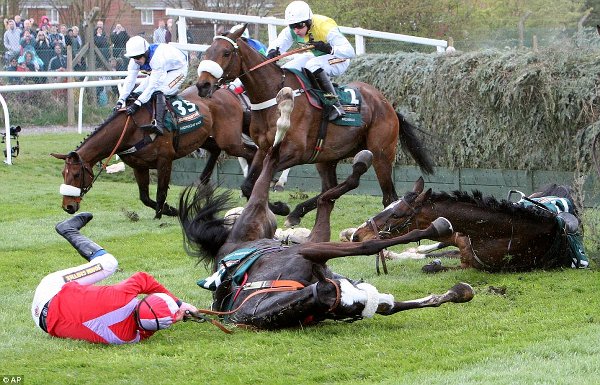
Regardless of the spectacle, the harsh reality is racehorses are continuing to die as a result of jumps racing in Victoria. Image courtesy of The Age.
As Victoria continues to buck the trend on placing a ban on jumps racing, we ask if steeplechasing really is integral to the success of the Warrnambool May Racing Carnival.
OPINION – Carol Altmann
Here we are at that awkward time of year again in Warrnambool when the city’s biggest local sporting event – the May Racing Carnival featuring the Grand Annual Steeplechase – is also the most difficult to embrace.
For no matter how we dress it up, the reality is that jumps racing is on the nose and has been for many years.
Despite this, the powerful figures that surround the “sport” continue to tell us that horses love jumping, that the local economy would wilt without the jumps races, and that those campaigning to have jumps racing stopped are just a bunch of lefty loopies without a sense of fun.
One of the most vocal “lefty loopies” is, of course, that highly radical and subversive organisation, the RSPCA, which has an ongoing campaign against the practice on the grounds of animal cruelty.
It appears that the RSPCA is welcome to tackle battery hens, sow stalls, duck shooting, puppy farms and run the cheerful Million Paws Walk, but if it dares to go near the sanctity of the steeplechase, it is accused of being “grandstanding hypocrites,” guilty of euthanasing thousands of unwanted cats and dogs each year.
That is how the former head of the Australian Jumps Racing Association, Rodney Rae, described the RSPCA president Dr Hugh Wirth in 2011, disregarding the fact that the RSPCA is the group that mops up the sad mess left behind by irresponsible pet owners around Australia.
The Grand National Steeplechase in the United Kingdom remains one of the most controversial races in the world due to a high number of horse fatalities. Image courtesy of The Huffington Post.
But let’s return to jumps racing.
As most people know, this is a sport that no longer exists in any other states except for Victoria and South Australia. Jumps racing finished in Queensland more than 100 years ago. It stopped in WA in 1941 and in NSW in 1997. Tasmania joined their ranks in 2007.
A Senate committee in 1991 suggested it be phased out across Australia over a three-year period and, in 2010, this is exactly where things were headed for Victoria – until the state election prompted local MP Dr Denis Napthine to pledge $2 million to assist the racing industry if the Coalition won office.
The Coalition won and Dr Napthine, who part-owns a racehorse with local Federal MP Dan Tehan*, would be not only the Minister for Racing but also, eventually, Premier. Talk about friends in high places.
Despite the $2 million having surely being spent by now, horses still die in jumps racing.
It is a nasty, unavoidable truth of the “sport”, even if we try and disguise it behind the green curtain that is hastily erected around the broken horses before they are euthanased on the track.
According to the RSPCA, four horses died in jumps racing last year and there is no doubt that this week, many punters will be watching the three main jumps events at Warrnambool with their hearts in their mouths, hoping all the horses (and riders) make it home, while feeling a deep sense of unease that the horses are being made to perform this way in the first place.
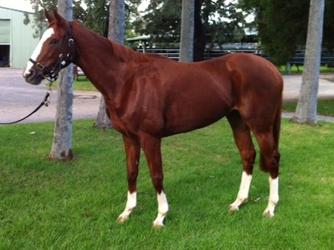
Spin the Bottle, part-owned by Premier Dr Denis Napthine and local Federal MP Dan Tehan. He is not a jumps racer.
The Warrnambool Grand Annual Steeplechase is 5.5 kilometres long – the Melbourne Cup is 2km shorter – and includes 33 jumps: the most of any steeplechase event anywhere in the world. That is a lot of running and a heck of a lot of jumping, even for a horse that “enjoys” it.
And for all of their Herculean efforts, hardly anyone remembers who wins. Can you name one winner of the Grand Annual Steeplechase? Or the Brierly Steeplechase? Or the Galleywood Hurdle?
At the end of the day, it all seems so cruel and so unnecessary, especially when such a small group of people has any significant investment in jumps racing and its immediate spoils.
The average punter, I believe, would be just as happy to go along to a three-day racing carnival at the beautiful Warrnambool racecourse and not see horses jump.
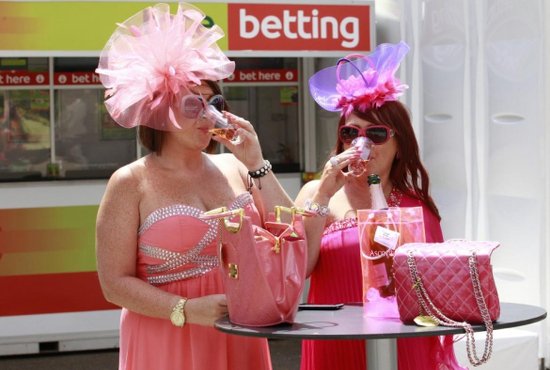
Some of the most popular – and charming – race carnivals in Victoria (think Dunkeld, Hanging Rock) attract thousands of people not because of the actual racing, but because of the atmosphere, and the chance to dress up and drink champagne for brunch.
Given the increasing awareness and activism around animal rights, especially among young people, it is only a matter of time until jumps racing is banned across Australia.
So why not cancel the jumps at Warrnambool, just for a year? Or maybe for three years, as happened during World War II when the Grand Annual Steeplechase was suspended because of more pressing matters than horse racing.
Then will we know whether the May Racing Carnival can truly stand on its own two legs, rather than relying on horses to stand on all four: despite all that is thrown at them.
*Since writing this piece, The Age has questioned the connections between Dr Napthine and Midfield Meats managing director Colin McKenna, another part-owner of Spin the Bottle.
Wouldn’t punters be just as happy wearing fancy clothes and sipping champagne trackside without the need for jumps racing?