A silent old shed speaks volumes about WCC waste
Carol Altmann – The Terrier

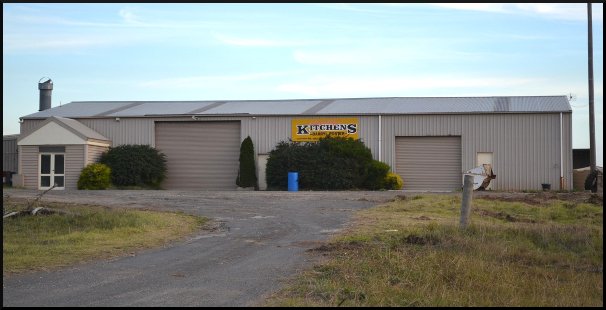
It isn’t pretty, but this old shed speaks volumes about the waste that has gone on within the Warrnambool City Council (#notallWCCstaff) over the past decade.

Long-time followers of this site may remember that this shed cost the council more than $100,000 in 2015: $40,000 to buy it and $63,000 to pull it down and relocate it from Wangoom Rd to west Warrnambool.

It is my understanding that it has since been sold off by the WCC for $2000.

$2000.

It has basically been reduced to scrap metal, at a loss of $101,000 to ratepayers.

That is $101,000 that could have been used far more productively elsewhere.

The back story to this shed is that it was supposed to become part of the WCC depot, but the cost of reassembling it, and its poor, rusty condition, saw that idea tossed out the rollerdoor before it had even rolled.
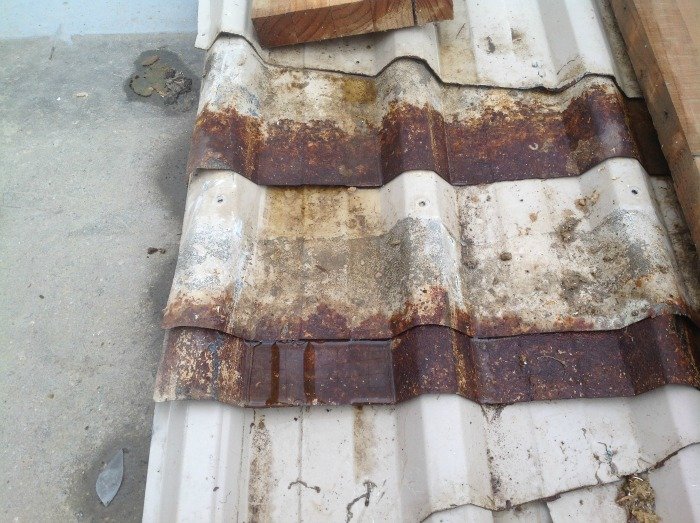
The condition of some of the panels removed from the former Wangoom Rd shed bought by the WCC in 2015.

The WCC tried to cut its losses early by auctioning off the shed before it was moved from Wangoom Rd, but it was passed in at $20,000 after failing to attract a single bid: nobody wanted to pay good money for a rusty old shed that would cost a mozza to move and re-assemble.

We – the poor old ratepayers – were stuck with it and have since taken a $101,000 hit.

How does this sort of waste happen? (#notallWCCstaff)

This is the question underpinning the push for a forensic look at all council spending from the last 10 years and the decision making and policies around this spending, because it is this decade of waste that is now coming home to roost.

It goes beyond the council’s 81 corporate credit cards, even though credit card spending is a full-colour, big-calorie category that leaps off the page.

It extends to rusty sheds, and roundabouts, and toilet blocks, and Flagstaff Hill upgrades, and $3 million blowouts on Liebig St, and trips to China, council marquees at the racecourse, endless conferences, blowouts on the Simpson St tunnel, the exorbitant contract to run the pound….you get the picture.

Ratepayers expect to pay rates.

But what ratepayers also expect is a clear return on their investment.

We want to see the council spend our money wisely and cautiously: every cent of it.

It doesn’t matter if the dollars are coming from ratepayers or taxpayers – it is all public money and this is why Ratepayers Victoria is taking such a close interest in what is happening in Warrnambool right now.
Ratepayers Victoria has written again to the council this week, in light of Mayor Tony Herbert saying he didn’t believe there was a need for an independent audit into the council, even though all the other councillors now agree that there should be one.

RV is joining the call for a full review of council spending, going back 10 years:

“We would respectfully suggest that unless council conduct a 10-year retrospective audit of all council staff and councillor expenditure and publish it fully and frankly then you will not sufficiently address the groundswell of community anger,” the letter says. (Read the letter in full here).

RV is spot on there.


At the end of the day, all ratepayers are asking for is transparency and accountability: two little words that roll off so many councillors’ tongues and turn up in so many council reports.

Transparency, accountability…and showing us value for money.

It’s not much to ask for, and the community is asking for it now.

If you would like to support the work of The Terrier, please consider throwing something in the tip jar.
Terrier Tip Jar


Snow White, the Seven Dwarfs and the city of WooBoo

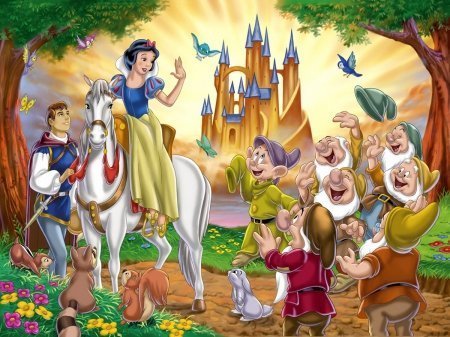
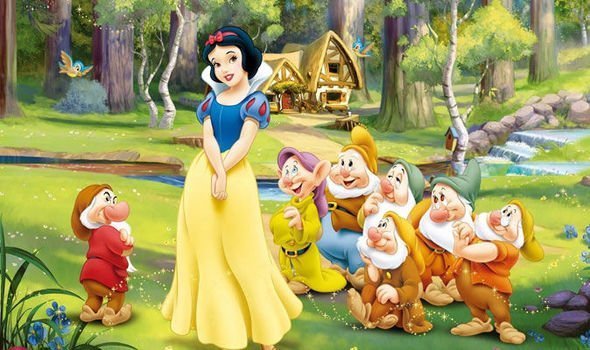
Snow White and the seven elected members of WooBoo, including Grumpy, all working to make life better for its citizens.

Carol Altmann – The Terrier

This is a budgetary fairytale based on fact. The numbers are real, the names are not.

Once upon a time, in the town of WooBoo, there was a town leader, Snow White, who was paid more than $310,000 a year to work for the seven dwarfs who had been elected by the people of WooBoo to look after WooBoo and help it prosper.

Exciting things were happening in WooBoo under Snow White’s leadership.

There was a big, money-losing festival for children, there was a maritime museum with few boats but a new $3 million sound-and-light show that promised to lure carloads of tourists, there were parties at the racecourse, new public toilets, new parking meters, pretty roundabouts and still lots of money left over for the WooBoo Council to spend on consultants, credit cards, conferences and staff development.

Most of the seven dwarfs were ecstatic, except for Grumpy. Every council has a Grumpy, and Grumpy was seen as a troublemaker.

“Can we afford all this?” Grumpy would ask. “Does this all add up? Why don’t some of these figures make sense?”

“Of course we can,” said Doc and Happy in unison. Unlike some of the other dwarfs, they had represented the Town of WooBoo for many years and had grown fond of Snow White and her team of highly paid helpers.

Mayor Sneezy was equally as enthusiastic: “WooBoo is aspirational, sophisticated and cosmopolitan and I wish people would stop being so negative!”

The spending went on. Sometimes it was on necessary but boring things, like $5.5 million for a drainage system to avoid parts of WooBoo flooding.

The glittering, shiny upgrade of Justice von Liebig St started at $15 million…..

And sometimes it was for sparkly things, and the biggest of all was the $15 million upgrade of the main street of WooBoo, with shiny new pavements, new trees, new lights, drinking fountains, more flowers and planter boxes and a much narrower road with so many pedestrian crossings that WooBoo drivers could no longer take their eyes off the road for a second.

The people of WooBoo were happy to see their tired main street being given the full Ritz treatment, even if they privately wondered what was going to happen to the other town streets with their peeling buildings and broken footpaths.

Don’t worry, they were told, celebrate the rise of wonderful Justice Von Liebig St!

Meanwhile, in the MelBoo office of the chief money watcher, the Victorian Auditor-General, a little red light was flashing.

It had been flashing quietly every year since 2014-15 and it warned a “high risk” situation was developing. This high risk was that the Town of WooBoo did not have enough money of its own to fund its operations, once it removed all the one-off gifts and grants from Grandma and Grandpa Government.

In particular, the Auditor General found WooBoo might have trouble paying to repair and replace things once they wore out, like footpaths and playgrounds and bridges.

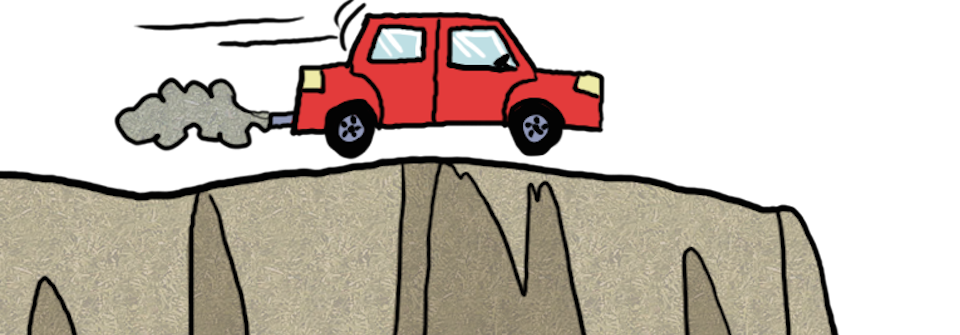
Excuse me, is that a cliff? No, surely not?

The red light blinked, but in the town chambers of WooBoo the party went on until, one day in late 2018, it stopped.

By then, Grandma Government had put her foot down and capped rates so councils could not just keep asking ratepayers for more. Instead, annual rate rises would be capped at between 2% and 2.5%.

By then, the money-losing WooBoo children’s festival had been axed abruptly. By then, it was becoming clear that the carloads of tourists were not going to the maritime museum.

The seven dwarfs had to absorb some hard truths.

One of these was that the WooBoo capital works budget for 2017-18 had blown out by a whopping $6 million from $17.6 million to $24.6 million.

A big part of this was dressing up Justice Von Liebig St, the cost of which had grown from $15 million to around $19 million, including $8 million that would need to come from the citizens of WooBoo.

The big drainage project had also been in trouble, with the first contractor going broke and the final cost still not known until it is all finished.

On top of this, recycling fees had skyrocketed, the cost of keeping a pet had shot up, parking in WooBoo was more expensive, rates would still rise, and there was still not enough money for all the old roads, pavements and playgrounds to be repaired.

Things were suddenly not so good.

Snow White at her farewell function before taking early retirement and moving to her seaside castle.

Grumpy thumped the table and yelled “I told you so!” and this time Mayor Sneezy agreed with him.

Happy and Doc, being astute in the art of public relations, told the people of WooBoo that they were committed to tackling a crisis that they had “inherited” and the only way to do this was to ask the people what they thought, ignore that, and then seek to bust the rate cap anyway.

The three other dwarfs, who were still trying to get their heads around it all, nodded in agreement.

And so, dear reader, hi-ho, hi-ho, off to the Essential Services Commission we go.

And what of Snow White?

Ah, she sensibly retired early to her castle by the seaside, from where she watches the hard-working people of WooBoo rise up and prepare to march past the empty grounds of the maritime museum, and down the glittering, gridlocked avenue of Justice Von Liebig St, named, as it so happens, for the German industrial chemist who invented fertiliser to replace cow dung.

The End.

[For those who want to go deeper, you can find the Auditor-General’s red light here on the WCC’s adjusted underlying result, page 79. The WCC 2018-19 budget is here. You can find the capital works details at item 4.5.1 on page 45.]


Adam Kempton: 12 reasons why not to break the rate cap

By Adam Kempton

Lawyer, former Liberal MLA for Warrnambool, provocateur, West Highland Terrier

1. Unfair burden: Rates are in essence a regressive tax. That means they affect people with lower incomes greater than high income earners . If you are a pensioner and the rate cost to you increases by one dollar, then the impact on you is greater than the millionaire whose rate increases by one dollar. This means the rate increase imposes a disproportionate tax penalty on low income people.

Does the council want to be a council for the rich?

This, in essence, is stealing from the poor to give to the rich.

2. There has been no increase in pensions or wages for many years, so why should council increase its revenue way ahead of the community?

3. Local council ( and other tiers of govt ) more or less have a guaranteed flow of revenue ( taxes/rates) , unlike other people and sectors of the economy.

4. The new Chief Executive needs to be given a go in finding savings in reforming council so no increase is necessary.

5. The results of the community consultation poll, which strongly opposed the rate increase, were discarded.

6. There is a federal election in May. The council does not know the positive or negative impacts of a change in Federal Government on its rate/revenue position.

7. It will be a massive embarrassment if the Minister or Essential Services Commission – to which the council applies for the increase – rejects your application for the increase.

8. The rate increase sends a bad signal to the community that says the council will always take the soft and easy approach by increasing its revenue, rather than seeking to find efficiencies.

9. Opposing a rate increase signals the council is applying the same principles that the private sector and households impose upon themselves in the same situation.

10. Is there, or has there been, a long-term (say 10 years ) strategy in which this rate increase would fit?

11. What consideration has this proposed rate rise being given in the context of the massive infrastructure proposed spend for this area? And what consideration has been given in the event that infrastructure spend does not occur?

12. What account has been taken of the economic downward pressure on the area through the milk price and cost pressure in the important dairy economy? This has serious effects right through all sectors of the local economy.

The Terrier is taking a closer look at how we went from budget stability to a budget emergency. It is a slog through some pretty dry data, but worth it. Stay tuned for updates.