Why is Lyndoch so paranoid about public scrutiny?
Lyndoch Living is owned by the community, but it appears that not all community members are welcome to join.

Carol Altmann – The Terrier

I have been asking this question for several months now, but what has Lyndoch Living got to hide?

The latest act of apparent paranoia is a blanket rejection of everyone who recently applied to become members of Lyndoch.

Not one person, it seems, made the cut.

Let’s be honest, my application was never going to be accepted, despite my own personal connection with Lyndoch as someone who had a parent in its care for 10 years, because I have made it clear through The Terrier that I intend to dig deep into its priorities, direction and its care for staff and residents.

But others have been rejected too.

In fact, from what I am hearing, those who had their applications rejected include a local GP, a retired business journalist, a former high school maths teacher, a former international school librarian, a former small business owner…

According to the Lyndoch board, not one of these people was considered up to scratch.
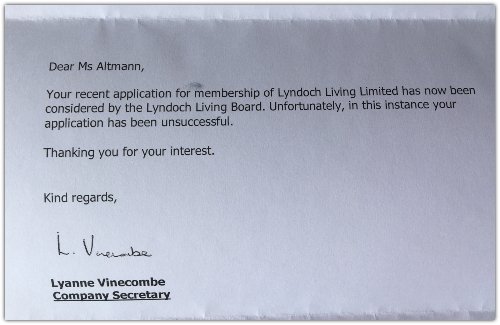
The Lyndoch rejection slip: expected in my case, but others have also failed to make the cut.

I am not sure what selection process was used, as the board is under no obligation to give its reasons for saying ‘no’, but the fact every single application was rejected suggests that there was no process.

Instead, it was most likely based on whether the applicant knew me, or liked The Terrier on Facebook, or commented on a story, because Lyndoch doesn’t want anyone creeping into the tent who may make life uncomfortable by asking tricky questions, or, heaven forbid, stand for the board.

That would mean a loss of control, and control, in the current climate at Lyndoch, is everything.

What we should have is a fully transparent organisation with a broad cross section of members – the more, the merrier – because Lyndoch is owned by the local community.

I will say it again: the community owns Lyndoch, not the small group of people who are now refusing to let anybody else in the door unless, it seems, they are hand-picked.
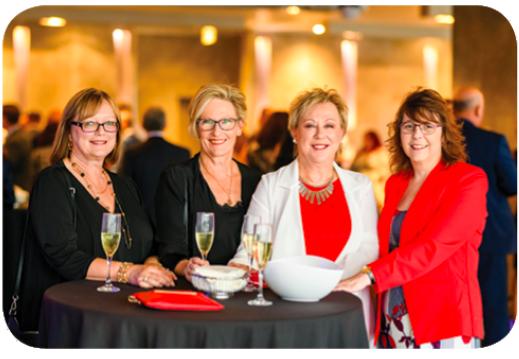
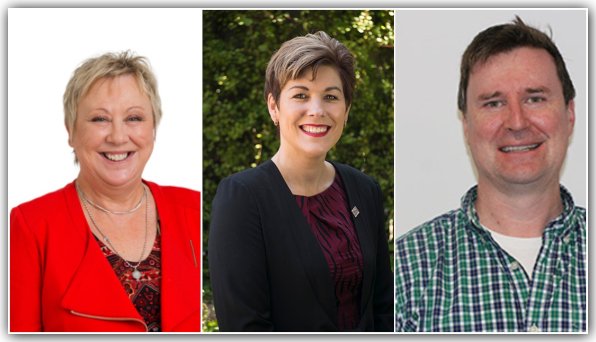
Among the existing 16 members of Lyndoch are company secretary Lyanne Vinecombe, chair Kerry Nelson, CEO Doreen Power and Director of Nursing Julie Baillie. Image: Lyndoch Living.

As it stands, there are just 16 members of Lyndoch, including the nine-member board, the CEO, some senior executive staff and a couple of life members.

This might be perfectly acceptable if other platforms of scrutiny had not been removed as part of recent changes to how Lyndoch operates.

These changes, of course, were approved by the existing members. Most of us didn’t even know it was happening, yet the way Lyndoch had operated for decades would be no more:

As of last year, the Lyndoch annual reports are no longer available online.

As of last year, the Lyndoch annual meetings are no longer advertised to the general public.

As of last year, vacancies on the Lyndoch board no longer have to be advertised.

We don’t even know, until Lyndoch is compelled to report to the Australian Charities and Not-for-Profits Commission later this month, whether it made a surplus or another deficit in 2019.


So much for being open and accountable to the community.

Inside the Lyndoch tent, the clamps are also coming down.

A new policy from the CEO Doreen Power prevents Lyndoch staff from approaching the board directly and declares all communication to the board must be made via the CEO.

Even then, staff can only talk to the board about policy matters.

Again, this might be fine except for when, hypothetically speaking, the problem is with the CEO.

What does a troubled staff member do then?

Well, they might come to The Terrier, where there is at least a place to be heard outside of the Lyndoch cabal.
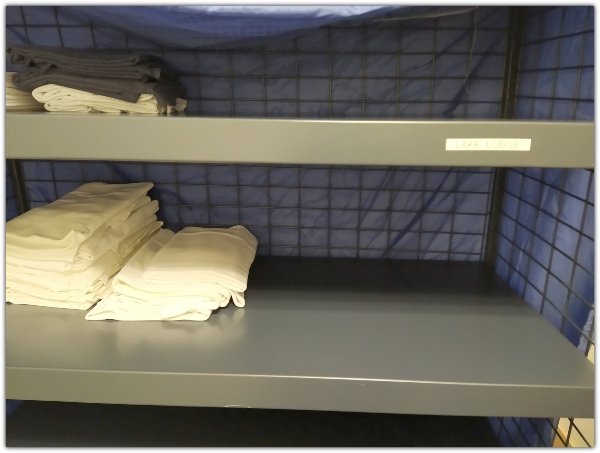
A shot of one of the depleted linen shelves inside Lyndoch last year. Some staff took to tearing up old towels to use for face washers.

As readers know, a lot of people concerned about Lyndoch have come to The Terrier to talk about all manner of things.

This includes the on-going shortage of staff – with one RN on night duty across the whole of Lyndoch – or the shortage of linen that saw staff cutting up old towels to use as face washers.

Or they have come with concerns around the huge number of staff that had left the organisation in the past four years – up to 80 people from right across Lyndoch, with many leaving distressed and disheartened.

Or they are worried about how Lyndoch could afford to buy two existing medical centres and have the funds to build and operate a brand new medical centre when, at the end of the day, it is supposed to be focussed solely on looking after the frail.

These are all good questions that deserve to be fully scrutinised and, with your help, that is exactly what I will continue to do in 2020.

Did you apply to become a member of Lyndoch? Send me a message to tell me how you fared. If you would like to apply, here is the form.

If you would like to help keep the Terrier typing, please throw something in the tip jar below. 

The Tip Jar


Lyndoch: a new company, complaints and potential conflicts

Lyndoch CEO Doreen Power and Lyndoch board members Cr Sue Cassidy and WCC City Growth manager Andrew Paton are the three directors of Lyndoch Healthcare Pty Ltd.

Carol Altmann – The Terrier

Picking up from last night, this is a story of a company, complaints, and potential conflicts of interest, all swirling around Lyndoch Living’s plan to build a multi-million-dollar medical clinic.

Let me start with the company, which leads neatly into the complaints.

As I wrote last night, Lyndoch Living Ltd last year set up a company called Lyndoch Healthcare Pty Ltd to oversee the building, running and managing of a medical clinic that is part of a $100 million masterplan being rolled out on Hopkins Road.

What you may not know is that the three directors of this company are Lyndoch CEO Doreen Power and two Lyndoch board members, Warrnambool City Councillor Sue Cassidy, and WCC manager City Growth, Andrew Paton.


It also has a company secretary, Lyanne Vinecombe, who was the executive assistant to Ms Power and former Lyndoch CEO Rhys Boyle before retiring earlier this year.

(As an aside, both Ms Power and Ms Vinecombe have Melbourne home addresses listed on documents from the Australian Securities and Investment Commission.)

The shares in this company are worth a grand total of $12.

To be absolutely clear, I am not suggesting for one micro second that the company directors or secretary are doing anything improper – the company set up is common and perfectly normal.

What this arrangement does raise, however, are concerns around potential or perceived conflicts of interest between Lyndoch Living and Lyndoch Healthcare Pty Ltd, with the three company directors all wearing two hats.


On one hand, the directors are responsible for making sure the medical clinic is not only built, but is sustainable, and on the other, they have to make sure Lyndoch Living delivers on looking after our aged and infirm.

In terms of seeking funding and allocating finances, which will be a priority?

This question is one of several concerns that has been raised with federal authorities over Lyndoch’s grand plan to expand into a medical clinic.

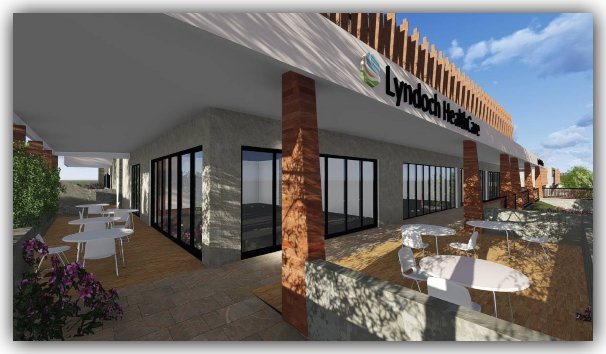
An artist’s impression of the new multi-million dollar medical clinic to be built at Lyndoch Living. Image: Lyndoch Living.

I am aware of at least three complaints being forwarded to the Australian Charities and Not For Profits Commission (ACNC), including two complaints lodged before my investigations in Lyndoch began.

Another has been lodged since.

On top of the questions around potential conflicts of interest, concerns have also been raised about whether a multi-million dollar medical centre fits with Lyndoch’s core business that saw it granted charity status many years ago.

As well as being a registered charity, Lyndoch has long been classified as a Public Benevolent Institution (PBI) and both attract significant tax concessions and other benefits.

To be a PBI, the main purpose of the charity must be to “relieve poverty and distress”.

Does building and running a medical centre fit with this?

And does it fit with Lyndoch originally being classed as a charity?

The ACNC will have to decide.


As we now know, Lyndoch last year changed its structure and its constitution to include a new core purpose, which is to “build, manage, maintain and/or otherwise be involved in multi-disciplinary health care facility” in Warrnambool.

In plain speak, this means building the medical clinic.

It is a massive undertaking and a major change for Lyndoch which, for more than 60 years, has been focussed entirely on aged care.

As to why the board decided to go this way, we may never fully know. (My questions to chair Kerry Nelson and Ms Power for this story went unanswered).

But is the ACNC fully aware of this dramatic shift?

Three complaints have been lodged with the ACNC in relation to Lyndoch’s plans to build and operate a medical clinic. Image: ACNC.

Lyndoch has lodged its new constitution with the ACNC, but with about 56,000 charities to monitor, the ACNC relies heavily on the public to raise concerns.

This has now happened.

I spoke to the ACNC and they are, unfortunately, bound by laws which prevent them from talking about a particular case, or even confirming whether a complaint has been received.

What they did say, however, is that they take concerns over charitable and PBI status very seriously and, if they decide a complaint is worthy of pursuit, it will be investigated fully.

All of this, because of the ACNC confidentiality laws, happens behind closed doors.


We shall just have to sit tight to see what, if anything, emerges.

In the meantime, I have two more stories on this whole Lyndoch saga to come, hopefully both within a week, before we pause  paws for Christmas.

In the meantime, I am starting a Foxy Fighting Fund for reasons which I can’t yet explain. If you would like to be part of it, you can do so below.

The Foxy Fighting Fund


Who’s paying? Lyndoch’s multi-million-dollar medical clinic

Coming to an aged care home near you: Lyndoch’s grand plan for a medical centre raises more questions than it answers. Image: Lyndoch Living.

Carol Altmann – The Terrier

Why would Lyndoch Living, as an aged care home, decide to build, run and maintain a multi-million-dollar medical clinic, using money from….where?

It seems few people other than the Lyndoch board, executive, and perhaps a few consultants knows the answer to these questions, as other than announcing that it’s going to happen, there has been very little transparency around the whole plan.

And what a plan it is.

The official spiel is that the “state-of-the-art healthcare centre” will have a GP practice, pharmacy, radiology and other medical services (a neurologist was apparently mentioned at one point, which would be a first for Warrnambool), plus a cafe, and an underground carpark for 120 vehicles.

What on earth has this got to do with looking after the old and frail?

The only benefit to them that I can see is a shorter distance to visit the doctor by appointment, assuming their GP is one of those contracted to the clinic.

It will also cost a mozza.

No specific cost has been given, but it’s somewhere between $10 million and $50 million, according to a planning permit lodged with the Warrnambool City Council back in February 2017 and approved the following October.

There are a stack of unanswered questions about this whole proposal and the first is, where is the money coming from?

The second is, is Lyndoch leaving itself exposed financially?

Lyndoch refuses to say. (My questions to chair Kerry Nelson and CEO Doreen Power have gone unanswered).

A question about the funding was put in writing to the AGM on 29 October and, after numerous follow ups, answered two weeks later with this response:

The costs of the Masterplan will be met by a combination of finance options“.

That’s the extent of the reply from Lyndoch.

What an insult.

I honestly think LyndochLand™ , apologies, I mean Lyndoch Living Inc, has forgotten its roots.

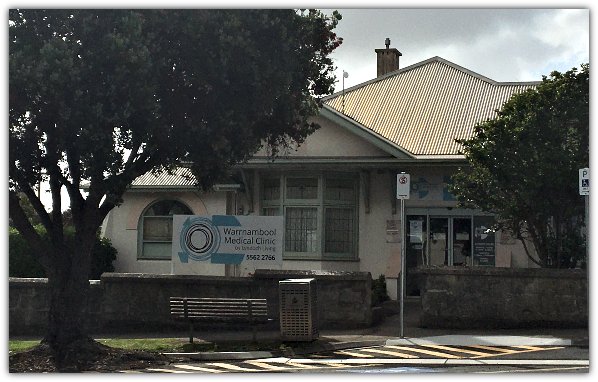
Lyndoch Living bought the Warrnambool Medical Clinic for an undisclosed price earlier this year. It will be relocated to Lyndoch as part of the $100 million masterplan.

We – the community – built, nurtured and have supported Lyndoch for more than 60 years, yet we are no longer encouraged to ask questions.

In this climate we have to guess where the money is coming from, and my guess is Lyndoch will be taking on debt as part of its “combination of finance options”.

Where is the business plan to justify this decision?

And what security is being offered by Lyndoch against any bank loan taken out for the project?

The over-arching question we should be asking is whether Lyndoch – our beloved Lyndoch – is at risk of creating a financial millstone.

A medical complex seems a million miles from Lyndoch’s core business and that’s because it was a million miles, until the Lyndoch board changed its constitution last year to include a medical centre as a key purpose. Why?

Warrnambool has plenty of medical clinics – I can count at least nine – including the two bought by Lyndoch these past 12 months for an undisclosed price: the Warrnambool Medical Clinic and the Health Spot.

A new medical clinic recently opened in King St, and another is planned for the old Caltex service station site on the highway near Foster St.

Building and fitting out a supercalifragilistic clinic at Lyndoch is also just the first, very expensive step.

Lyndoch also has to make it financially sustainable.

Lyndoch will own the clinic, via a new company it set up last year called Lyndoch HealthCare Pty Ltd, and it will contract doctors and hire out spaces to allied health workers, a cafe manager and the like.

But already, even before the clinic is built, it hasn’t all been plain sailing.

Two experienced GPs, who were working with the Warrnambool Medical Clinic, resigned virtually on the spot after a dinner with Lyndoch representatives in April, for reasons which I can’t go into here.

A third GP also considered going elsewhere.

An experienced nurse, who was employed part-time by the WMC and Lyndoch, also found herself out of a job after being told that, as a result of Lyndoch taking over, she had a “conflict of interest” by holding both positions. Update: five nurses have since resigned from WMC, including two in the past week. 


Running medical centres is not easy and just the accreditation process can be arduous.

Yet financing this new medical centre, building it, maintaining it, and sustaining it, will fall on the shoulders of Lyndoch Living that, until this year, was focussed entirely on caring for the old and frail.

I don’t want to sound like a hypochondriac, but all of this makes me have a case of the nerves.

Others are concerned too, because Lyndoch Living is a registered charity and a Public Benevolent Institution.

It was granted this charitable status to care for the aged and infirm, and running a public medical clinic seems at odds with this core aim.

Perhaps not surprisingly, complaints have been made right to the top, and that’s where this story goes next.

More soon.


Broken link for Artlink

artlink-jen
Artlink staff Gayle Clark, who has since resigned, and Jenny Altmann, with artist Alex Rees who is one of the program’s many success stories.

Analysis – Carol Altmann

[dropcap style=”font-size: 60px; color: #A5CECD;”] J [/dropcap]ust when things were looking up for Artlink – the unique art program for people with disabilities – it is being taken out of Warrnambool’s CBD and dropped into the industrial estate. From here, it will surely wither and die.

We wrote about Artlink late last year and, like others before us, were impressed by what a small, hard-working group of artists has achieved in bringing so-called “outsider” art into the mainstream.

Art by people with disabilities is a growing, global movement and the opportunity to create, display and sell art in a high-profile public space is critical to its commercial and personal success, otherwise we have not moved on from the dark days of such work being created in “sheltered workshops”; well away from the mainstream.

It makes sense, then, that the success of Artlink hinges on its high-profile location in the 124-year-old Ellerslie College building in Koroit St, which was leased by Western District Employment Access (WDEA) in 2010 and which it beautifully refurbished to create a light-filled gallery. (WDEA still uses this image on its home page).

The gallery had hosted several successful exhibitions, including the wonderful, annual Warrnibald portrait prize that was first held in 2012 and has shown the potential to become something very special for the city. Several Artlink artists have also developed their own following, such as Alex Rees, who has Down’s Syndrome, and whose work now hangs in many Warrnambool homes.

Things were gathering momentum, but now the wheels have fallen off.


artlink building
Home no more: Artlink has moved out of the beautiful Ellerslie College building and into the industrial estate.

wdea_2
The Albert St building where Artlink will be co-located with various WDEA work schemes.

[dropcap style=”font-size: 60px; color: #A5CECD;”] T [/dropcap]he three-year lease on the Ellerslie College building expired last December and, for reasons which are yet to be fully explained, WDEA decided not to continue there but to instead find another home for Artlink.

That new home was announced by media release as being 11 Albert St, Warrnambool: where Artlink was once 150 metres from the WDEA headquarters in Fairy St, it is now 150 metres from an abattoir.

Eleven Albert St is where WDEA operates many of its work programs that involve recycling e-waste, clothing, garden waste etc and it is appropriate that these be located in an industrial estate, but an art program and art gallery?

How many people will wander into an industrial estate to see an exhibition? How many drinks-and-nibbles openings can you host with the smell of the meatworks wafting in through the windows?

In its media statement, WDEA says it hopes the Artlink artists will have their work displayed in other galleries around the city, but if this was as easy as it sounds, surely there would have been no need for Artlink in the first place.

The official reason for moving out of Ellerslie was “high operational costs”, but when I asked what these costs were, I was told that WDEA CEO Mick White didn’t wish to give any more detail. How strange.


wdea_4
The $3.5 million WDEA headquarters in Fairy St, Warrnambool, that opened last year.

[dropcap style=”font-size: 60px; color: #A5CECD;”] S [/dropcap]o I can’t tell you what these high operational costs were, but I can tell you that there is a lot of money in disability: not necessarily for those with disabilities, most of whom struggle financially, but in the provision of services for the disabled and those in need.

In 2009, WDEA had a total income of $6.7 million, the majority of which is government funding for the various services WDEA provides. In 2013, that total income was almost $16 million: almost triple that of four years ago.

While more funding means more programs and therefore more people being assisted, what troubles me is that fast-growing organisations like WDEA can also become bloated and vast amounts of money are soaked up by bureaucracy and buildings, rather than on the very people they are intended to serve.

Shortly after WDEA secured the lease on Ellerslie, it bought a property at 52 Fairy St, hired talented local architect Dean Picken, and built an impressive $3.5 million office block that opened last July – six months before it broke the news to Artlink that it was moving out.

Here are some more of WDEA’s operational costs: staff costs have climbed from $3.3 million in 2009 to $9.2 million in 2013. In the same period, the value of its car pool has climbed from $697,000 to $1.34 million and the annual cost of running these cars each year has more than doubled to $236,518. Advertising and marketing costs have similarly climbed from $158,000 in 2009 to $338,825  in 2012.

WDEA has been hugely successful – it now operates out of a growing number of regional towns including Horsham, Ballarat, Ararat and Stawell – but has it become so big as to lose sight of why it first began in 1989?

When you are small, like Artlink, it is easy to get lost in the never-ending expansions.

It is up to us, as a community, to ensure that they are not forgotten.

Disclaimer: Artlink artist and staff member Jenny Altmann and I share the same surname because she was once married to my brother. We remain friends, but, like most of my friends and family, she would prefer I did not write articles that feature her. Sorry Jenny.

Logo Smile newsletter

More opinion pieces…


Losing sleep over a lot of rubbish

Close Flagstaff Hill; save Fletcher Jones

 A little less conversation, a little more action

When scrutiny is sub-standard, democracy suffers