WCC spends thousands on Cape Schanck delegation despite pushing rate rise
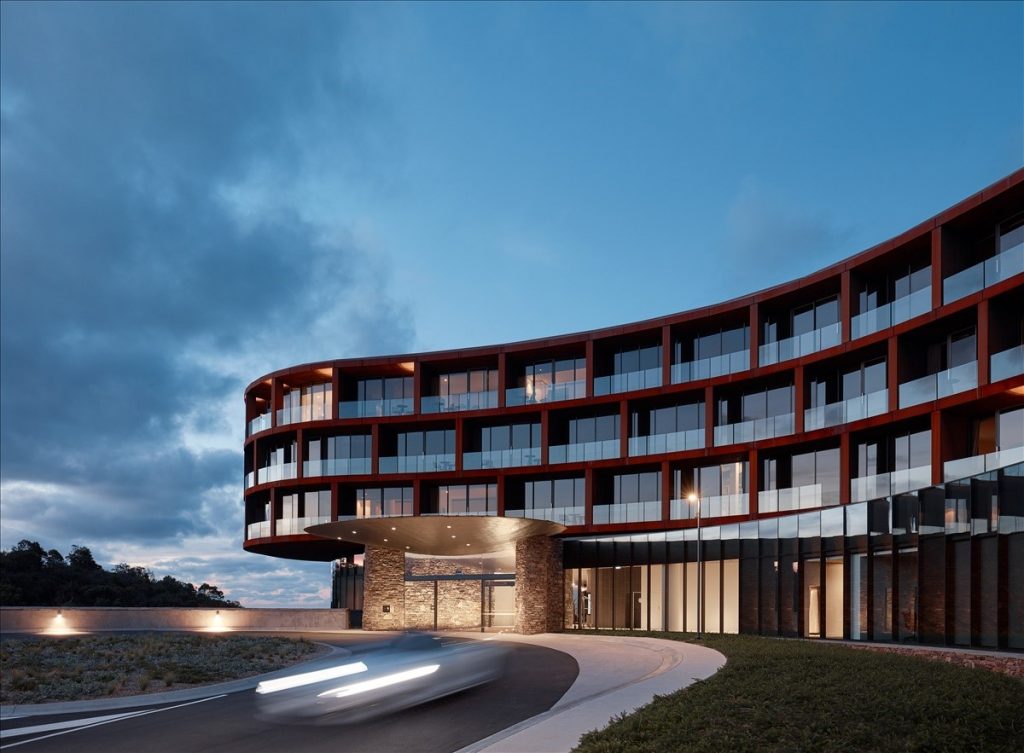
The RACV Cape Schanck resort which hosted the Victorian Tourism Industry Conference last July. Image: RACV/Business Events Mornington Peninsula.

Carol Altmann – The Terrier

The Warrnambool City Council is claiming its budget is tight, yet it spent more than $10,000 to send seven people – including the CEO of the Warrnambool Racing Club – to a tourism conference at a Mornington Peninsula resort last July.

The council has confirmed two councillors, WRC chief Peter Downs and four council staff attended the Victorian Tourism Industry Council annual conference held at the RACV Cape Schanck Resort from July 30-31.

The council has put the total bill for the conference at $9034, including $3934 in accommodation and $4830 in conference fees and only $270 in food.

I have received reliable information, however, that the final cost also included more than $1000 in drinks in the resort’s Lighthouse Lounge and more than $400 on meals and drinks in its cafe.


A council spokesman said “any food /drinks beyond (the $270) would have been settled by the individual(s) themselves as a personal expense”. Perhaps the big drinks bill was repaid, but I have not seen any evidence of that.

Those who attended the conference included now-mayor Tony Herbert, who is chair of the council’s Visitor Economy Advisory Committee, fellow committee member Cr David Owen (both funded their share through their councillor allowance), the council’s head of Visitor Economy, David McMahon, and three other council staff from Visitor Economy.

The final delegate was racing chief Mr Downs, who nominated and was chosen to join the council’s Visitor Economy Advisory Committee when it started in May 2017.

The conference, by the way, included sunset drinks at the St Andrews Beach boutique brewery which has been converted from first class racing stables and was worthy of a tweet from Mr Downs (see below).
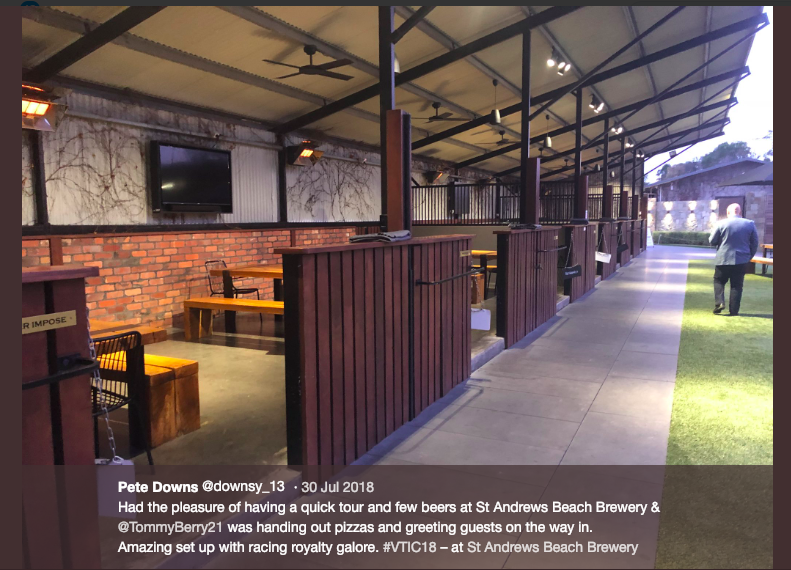
There are two things about this story that don’t sit right.

First, as we know, the council is surveying ratepayers right now as part of a process to try and lift rates above the 2.5% cap.

The council is saying that it must save at least $700,000 a year for the next three years and the only two options we have been given are to either cut services, or raise rates.

Given this, what a double-standard – or perhaps a better word is insult – for the council to have sent seven people off to Cape Schanck to learn the latest in tourism trends, funded by an obviously healthy professional development budget.

The issue here is not only the money, but the mindset: while ratepayers have to expect cuts to services like childcare, council networking opportunities can roll on as normal.
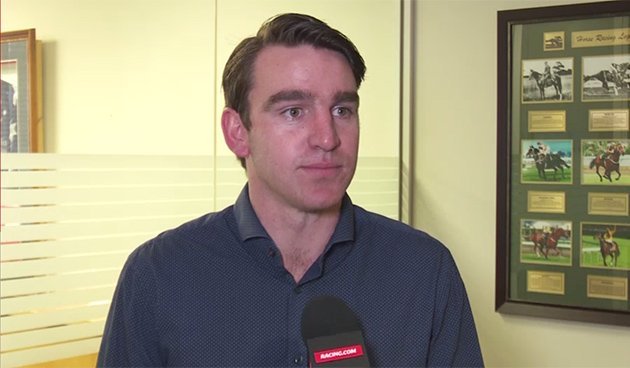
Warrnambool Racing Club CEO Peter Downs was among seven Warrnambool City Council delegates at the tourism conference last July. Image: Racing.com

The second unsettling aspect of this story is the inclusion of Mr Downs.

It is no secret that Mr Downs’, as CEO of the WRC, has been a major player in pushing for commercial racehorse training at Levy’s Beach, in the Belfast Coastal Reserve, and lobbying to make sure this happened.


In fact when Mr Downs was chosen for the council committee in 2017, it was just eight months after racehorse training was banned at Levy’s because of concerns raised by Aboriginal Victoria and the push by the WRC to get racehorses back on the beach was in full swing.

This council doesn’t seem overly fussed by potential conflicts of interest around the racehorse training issue, but I would have thought the decision to appoint Mr Downs’ to the visitor economy committee in the first place – given the political context – was questionable.

The issue here is not that Mr Downs has done anything wrong – he is only taking what is offered – but that the council considers all of it acceptable.

On any measure, Mr Downs has been given the sort of out-of-hours access to key members within council that others could only dream of, if they were lobbying in the same manner.

In this case, it has even paid the bill.
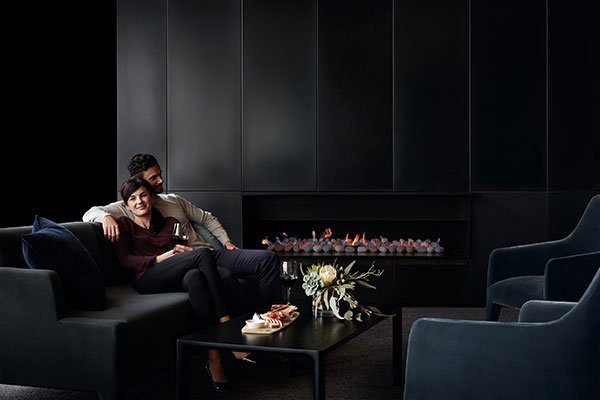
 

A promotional shot of the Cape Schanck Lighthouse Lounge where the WCC delegates spent more than $1000 on drinks across two days. Image: RACV.

According to a lengthy council statement in response to my questions, Mr Downs was chosen for the conference after the council asked for “expressions of interest” from all six community members of its visitor economy committee and only Mr Downs responded.

The statement also says it is appropriate that Mr Downs is on the council committee, because the WRC is a significant player in the local economy and tourism.

Further, the council says, nothing about racehorse training or the Belfast Coastal Reserve Management Plan has been raised in the committee meetings. Nothing at all? Really? What about before the meetings, or after?

By coincidence, the final Belfast Coastal Reserve Management Plan, which said racehorse training should resume, came out during the tourism conference.

Was this hot potato raised during drinks at St Andrews brewery or over dinner at Cape Schanck? We don’t know.


We do know, however, that Cr Tony Herbert – within three days of becoming Mayor on October 29 last year – placed sorting out the racehorse training issue at the very top of his to-do list.

You can read the full council statement on this whole issue here. 

In a nutshell it justifies the conference by saying the council values professional development opportunities, that the funds came out of a professional development budget and that there were several important outcomes, including: a follow-up meeting by VTIC in Warrnambool, a range of new marketing tactics, valuable networking and contacts, and passing on “key learnings” to other staff and councillors.

Worth every cent? I will leave you to decide.

(Mr Downs was contacted for comment last week on this piece. He is yet to respond.)

If you would like to see The Terrier keep digging up, sniffing out and chewing on local issues, please make a small contribution below.

Donate


Races, rates and rubbery figures

marquee
Budgets might be tight at the Warrnambool City Council, but there is still room for its annual May Race Carnival marquee. Judging by this shot, however, it was not an overly crowded affair.

Analysis – Carol Altmann

[dropcap style=”font-size: 60px; color: #A5CECD;”] T [/dropcap]here are two things which always go up each May: the Warrnambool City Council rates, and the council’s corporate marquee at the May Racing Carnival.

They make for a painful double.

Painful because ratepayers are again facing a 5.5% increase in their annual rate bill, following on from a 5.5% rise last year, which is more than double the inflation rate and amounts to an 11% increase in two years. (Glenelg Shire Council recently announced a 1.95% rate rise).

This means, for example, if you were paying $1700 in rates in 2013-14, you can expect to pay almost $1900 this financial year.

Cities the size of Warrnambool are not cheap to run and ratepayers collectively contribute around a third of the total $64 million operational budget, with the remainder coming from grants and user fees and charges, so every cent – and how it is spent – counts.

The council reminded us of this at its monthly council meeting (May 4) when it outlined where it had tried to make savings – by trying a different road building method, for example – and how some of the big-ticket items, like the drainage tunnel for Simpson St, were both necessary and costly.

“Times are tough”, “budgets are tight”, “things will only get harder when rates are capped”, are common mantras around the council at the moment, which is why a corporate tent at the May Racing Carnival seems like a complete waste of money and an insult to ratepayers.

Last year, the hospitality tent had a budget of around $25,000, but actually spent $17,000 on the 90 guests who attended out of 168 that were invited.

While $17,000 is small in an operational budget of $64 million, it is the perception that bites: the council’s corporate tent at the races is still considered “non negotiable” when it comes to savings.

(We asked, but have not been told, the budget or guest list for this year. Judging by the photo above, however, it may have at least been scaled back.)

It might be more palatable if the hospitality brought some tangible rewards, but based on last year’s event, the party is largely made up of council staff, councillors and members of the various boards, bodies and legal firms that the council already works with on a regular basis. In other words, it is a junket.

anson car
The “$10,000 car” provided to the council’s chief executive officer as part of a salary package: in reality it is a luxury Hyundai Genesis valued at around $60,000.

[dropcap style=”font-size: 60px; color: #A5CECD;”] P [/dropcap]erception also comes into play when we look at the vehicle provided to the Chief Executive Officer as part of a $288,000 annual salary package.

In the rubbery figure ways of corporate salary packages, this car is valued at $10,000, but don’t expect a car that is actually worth $10,000 – that is a reflection of the annual leasing cost.

In reality, the council provides its CEO with a sleek Hyundai Genesis that is worth around $60,000 and which sucks up 11.2 litres of fuel per 100km. Surely, in these cost-cutting times, something like a Toyota Prius would be a better choice and more environmentally friendly – if not as “corporate” – and send a message to ratepayers that everyone is doing their bit.

On the subject of rubbery figures, given the forensic nature of setting a budget and justifying where and why each dollar should be spent, it was extraordinary to learn earlier this week that some material provided to councillors has been cut and pasted from previous years.

Cr Peter Hulin made the discovery – which he shared at this month’s council meeting – after comparing what are called “service overviews” from previous budget papers to those provided in this year’s papers.

pool-general
Rubbery figures provided to councillors as part of budget papers showed attendance figures at Warrnambool’s Aquazone were exactly the same for three years in a row. Image: sportstock.com

[dropcap style=”font-size: 60px; color: #A5CECD;”] T [/dropcap]hese service overviews detail how an area has performed, and how much money it needs for the coming financial year, so, for example, Aquazone will detail how many people came through its doors, how many people enrolled in learn-to-swim classes etc.

Astonishingly, Cr Hulin found that the service overviews for at least 10 council areas – including Aquazone, Flagstaff Hill, the library, Lighthouse Theatre, art gallery and even environmental health services – had the same figures appearing year after year after year.

In the case of Aquazone, for example, precisely 213,377 people went through the gates and 19,596 people enrolled in learn to swim classes for three years straight.

Let’s be clear: these are figures presented to councillors as part of official budget documents and, irrespective of how much weight they carry in final deliberations, they are simply false. How does this happen?

CEO Bruce Anson could not provide an immediate answer to the meeting, although he did say that he believed the service overview sheets were not updated “for one year”.

“I will have to take the question on notice and get back to you,” he said.

The answer is certain to be interesting and underscores why, when it comes to budgets, it’s always worth reading the fine print.

[box]People can make written submissions on the proposed budget until Wed June 5. The budget will be formally adopted at the WCC meeting on June 22. You can download the draft budget here. [/box]

[button link=”http://the-terrier.com.au/subscribe-2/” type=”icon” icon=”heart” newwindow=”yes”]Bluestone needs at least 500 subscribers in 2015. If you wish to support independent media, please click here to become one.[/button]

Stones Smile newsletterYou can find more analysis here…


Why doesn’t Warrnambool have a major art prize?

W’bool City Council’s big shed shemozzle

Peter Ronald on the destruction of the 100-year-old Rowitta

Silencing councillors tightens grip on public right to know

The thinking behind A Big Life: Michael Barling & Sean Kenny


Council’s racing hospitality bill hard to swallow


Warrnambool+May+Racing+Carnival+oR6W9T2D91Ql
Revelations that the Warrnambool City Council spent $17,000 on a corporate hospitality tent at the May Races are hard to digest. Image source: Source: Vince Caligiuri/Getty Images AsiaPac 

OPINION

As Warrnambool ratepayers prepare to swallow a 5.5 per cent rate rise this year, revelations that the Warrnambool City Council spent $17,000 on a hospitality tent at the May Races will be hard to digest.

A request by Cr Peter Hulin for more information about the council’s marquee at the 2014 May Races has revealed that $17,036 was spent on wining, dining and entertaining 90 guests.

The breakdown includes $3762 for food, $1489 for drinks, $4950 for members reserve tickets and wristbands, $6610 for the marquee (including staff, decorations, chairs etc) and $225 for racebooks.

And the potential cost could have been as much as $25,000, as 168 invitations were issued but only 90 accepted.

The WCC’s policy on the event, which has been included in this week’s meeting agenda, says the hospitality is intended to show the council’s support for the May Racing Carnival, while also promoting the 142-year-old event to politicians, key bureaucrats and regional leaders.

It is also, apparently, a great place to do business: to discuss “strategic projects” (presumably in-between races), and to develop “organisation to organisation” relationships, whatever that might mean.

red wine flowing
Just weeks before the WCC passed a budget that included a 5.5% rate rise, the wine was flowing in its corporate hospitality tent at the May Racing Carnival.

I don’t know if you received an invitation to the marquee , but those who did included:

  • 24 members of council and their partners (including each councillor, the CEO, Mayor and directors);
  • 12 state and federal MPs,
  • 9 senior government bureaucrats,
  • 65 regional leaders (including South Coast Board members, Wannon Water executives, senior police, senior health executives, the Deakin University Vice-Chancellor and South-West TAFE CEO);
  • and two of Cr Brian Kelson’s business associates.

Another 56 people described as “groups and individuals working closely with council” were also extended the opportunity to enjoy a day by the track.

This group included representatives of Maddocks Lawyers, a Melbourne-based legal firm that describes itself as one of the top 20 law firms in Australia and who, presumably, represents the council. I am not sure why top-of-the-town lawyers need to be wined and dined as part of developing “organisation to organisation” relationships.

This final group also included the President of Commerce Warrnambool, a position currently held by Tony Herbert.

I find this intriguing for two reasons: first, that Commerce Warrnambool – at the time of the May Race Carnival – was deep in discussions with the council about its proposal to hit traders with a new compulsory levy to raise $3 million over five years to fund its activities. Indeed, the motion to set the levy in train was passed by the council just a fortnight later.

Being invited into the WCC hospitality marquee in the lead-up to that decision is the sort of access that traders fighting against the levy can only dream about.

Second, Commerce Warrnambool has argued that it needs funds from the levy to, among other things, act as a lobby group to council, but it appears that it is already well and truly “inside the tent”.

tighten belt


We don’t know, as yet, who actually made up the 90 people who attended the marquee and if they included Mr Herbert, who yesterday declined to say whether he accepted the invitation or not, or Cr Kelson’s two unnamed business associates.

But what we do know is that such corporate largesse is difficult to justify when so many people in the south-west are struggling to make ends meet.

And it is even harder to justify when rates are rising at almost double the rate of inflation and double the interest rate on most savings accounts.

Wining and dining has long been a part of how business operates, but we are not talking here about a commercial company like Coles, or Telstra or McDonalds: we are talking about a local council that has you as it shareholders (ratepayers) and which should be leading by example.

I find this sort of corporate partying (aka “networking”) particularly galling when, at the same time as the council’s guests are sipping champagne and nibbling on canapes, there are literacy programs, arts projects, history projects, health projects, environmental projects and many other small, but important community projects all struggling to secure funding from an ever-shrinking pool.

While it must be easy to lose perspective when you are dealing with tens of millions of dollars, as the council does, to each and every one of these community projects, $17,000 is still a lot of money.

No doubt those people who attended the race day had a marvellous time and perhaps even came away feeling a little more connected, inspired and ready to do business with the council, if they weren’t already.

But to me, the corporate marquee revelations are cause for a very bad case of indigestion.