Deadline passes for WCC defence docs in CEO sacking
The deadline for the WCC to lodge its affidavits in defence of sacking the CEO has passed without any documents being supplied. Image: ABC
Carol Altmann – The Terrier
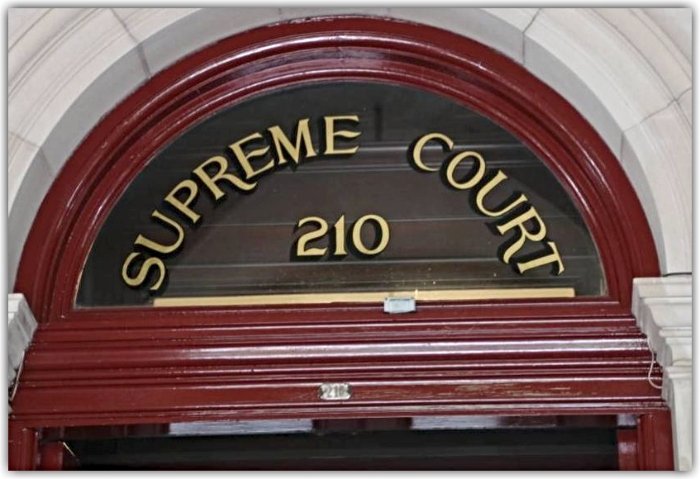
Update: The deadline for the Warrnambool City Council to lodge its sworn written evidence (affidavits) in defence of its sacking of former CEO Peter Schneider passed at 5pm tonight – and nothing has been lodged with the Supreme Court.
As far as I know, there has also been no request for a further extension.
What does this all mean? I am not a lawyer, but perhaps it means the matter will be settled out of court, or a judgment will be made purely on the sworn statements supplied so far by Mr Schneider and former Mayor Tony Herbert or….
The hearing date is set for 1 February 2021. A lot can and will happen between now and then, including, of course the election of a new Warrnambool City Council.
We shall wait to see how those final numbers fall, but word is that change is firmly in the air, if not an unprecedented number of new councillors being elected in one swoop.
WCC CEO’s dismissal relied on most expensive option
Former Warrnambool City Council chief Peter Schneider. Image: WCC.
Carol Altmann – The Terrier
I have learned that one of the options for sacking former Warrnambool City Council chief Peter Schneider would have cost ratepayers around $30,000, instead of more than 10 times that amount – $365,709.
If getting rid of the CEO just 18 months into his contract was such a matter of urgency, why did the councillors involved have to rely on the most expensive option?
It turns out Mr Schneider’s contract contained a number of clauses for termination, including two for instant dismissal.
The first of these two – let’s call it the “CEO Stuffs Up Big Time” clause – sets out a number of specific grounds for instant dismissal that, if proven, result in a much smaller payout.
The thrust of these grounds is as follows:
is negligent in carrying out his duties (ie. the responsibilities, duties and functions set out in his contract);
commits an act of serious misconduct;
seriously or persistently breaches a term of the contract;
breaches the council’s policies that apply to the CEO including occupational health and safety, privacy, anti-discrimination, and use of council IT’s systems;
engages in conduct that may cause imminent and serious risk to the health and safety of another person;
is declared bankrupt;
fails to immediately notify the council that he has been charged with or found guilty of any criminal offence;
is charged with a crime, or found guilty of a crime, that brings the council into disrepute;
is unable to work in Australia.
Under this clause, the CEO would only be entitled to his salary, holiday pay, sick leave and long service leave up to the time he was sacked.
As of 13 July 2020, when Mr Schneider was dumped, this total came to around $30k.
As we know, the four councillors who voted to sack Mr Schneider didn’t – or couldn’t – use this clause and I can only speculate as to why, given it contains the sorts of grounds that most of us would expect behind a CEO getting the boot.
The councillors instead used another clause in the contract, which I will call the “Not Telling” option.
Under this option – as we now know – the council could sack the CEO for “any reason or no reason”, which pretty much covers everything from leaving the hot tap running in the tearoom through to serious misconduct.
Not surprisingly, the payout for pulling the lever on this trapdoor is much higher: 12 months remuneration OR the remaining value of the contract, whichever is less.
With 30 months to go on Mr Schneider’s contract, the 12 month payout is what came to pass – $365,709.
The “Not Telling” option is the most expensive of all the options and, I can only assume, is used when the other “instant dismissal” option can’t be justified, or doesn’t apply.
All of this, I am afraid, only raises more questions and takes us further away from the answer that everyone is seeking about Mr Schneider’s rapid demise: why?
The full story will be slow in coming, if at all, as the dismissal heads to the Supreme Court in February.
Speaking of questions, one of I have left with the council today is whether it has acted on the recommendation of the Victorian Ombudsman to refer the misuse of a council credit card by former tourism manager, David McMahon, to police.
It is now 10 days since the Ombudsman’s eye-popping report on the ratepayer funded booze fest was made public, so I am sure an answer is imminent.
If you would like to support The Terrier, please consider throwing something in the tip jar.
Ombudsman urges WCC to address disunity and dischord
Carol Altmann – The Terrier
A final post on the Ombudsman’s report: the story does not end here.
One of the things picked up by the Ombudsman’s investigation was a strong sense of disunity and discord within the W’bool city Council, both among councillors and council officers.
A number of “concerns” about senior management’s handling of misconduct were raised with the Ombudsman during the investigation into the credit cards, but some were unfounded, some lacked substance and some were beyond the scope of this particular investigation.
These concerns may, however, still point to a broader problem that was most recently played out by the sacking of Peter Schneider (which rates a mention).
The Ombudsman, Deborah Glass, writes:
“While we did not find evidence of systemic abuse by Council officers or systemic failings by senior management…we did not deal with every allegation aired publicly or privately, and which continued during the investigation.
“Their prevalence and persistence suggest a disunity within Council which this investigation does not purport to deal with, but for the sake of ratepayers and the community must be addressed.
“Communities rely on their council to practice unified and strong civic leadership.”
No truer words have been spoken and none more timely.
I am now off to have a lie down, but before I do, I just want to say this:
Thankyou to all of the brave souls who have helped to bring the truth to the surface today, despite the denials, excuses and dismissals that go on from enablers, even as we speak.
I remember the day these brave souls came to me about the busted culture at the WCC, because they had nowhere else to go. They had tried the “internal systems” and they got nowhere. They had approached councillors for help, and they got nowhere.
Nobody would listen. But they are listening now.
It has been a long, slow and exhausting road but here we are. Change has come and change is coming.
On. We. Go.
Ombudsman reveals changes to WCC credit card rules
The W’bool City Council has made significant changes to its credit card policy following an external review in response to the scandal around misuse and largesse.
Carol Altmann – The Terrier
Update: The Ombudsman’s report reveals the 10 recommendations from the external auditor that were adopted by the council in March this year.
Why, oh why, were these rules around credit cards not in place in the first place? They seem so straight forward.
Here is the summary of the changes:
1. Provide fraud and corruption control training to all Council staff including reporting of actual or suspected fraud and corruption.
2. Review and update Fraud and Corruption Control Plan and Procedure to include fraud incident reporting protocols to the Council.
3. Establish a criterion to determine the need for a credit card by a staff member.
4. Review and update the existing Corporate Credit Card Procedures, including to stipulate the roles and responsibilities of an authoriser, create list of risk factors for authorisers to be aware and create guidelines on ‘taking face value explanations’ versus ‘appropriate inquiry’.
5. Provide training to authorisers with respect to approval of monthly credit card expenses.
6. Review and update the existing Fraud and Corruption Controls Procedure to include specific trigger points when an independent auditor should be brought in (i.e. the period after unusual/misuse has been identified to when possible fraud is suspected).
7. Implement a process wherein pre-approvals (except CEO) shall be required for expenses such as (but not limited to):
a. Business travel
b. Accommodation
c. Conferences
d. Seminars
8. Implement an approval process which aligns with the practice recommended by the Victorian Auditor General. The Council’s Chief Financial Officer or Director Corporate Strategies, shall approve CEO’s credit card expenditure, and table the full transaction history to the Audit and Risk Committee.
9. Implement ongoing reporting and monitoring processes that fosters continuous improvement of credit card processes (with suggested areas for improvements including implementing Breach reports and Repeat Offenders report)
10. Incorporate a process wherein Statutory Declarations are witnessed by one of the many people authorised to do so (outside the Council).
Ombudsman report reveals poor actions of WCC officials
WCC City Growth Manager Andrew Paton, former CEO Bruce Anson and recently sacked CEO Peter Schneider, who, between them, capture misplaced trust, poor decision making and being kept in the dark.
Carol Altmann – The Terrier
More on the Ombudsman’s report – some key names:
Former WCC tourism chief David McMahon: found by the Ombudsman to have clearly misused his credit card and has recommended the council investigate further and consider police action.
The council accepts this recommendation.
Mr McMahon, the report says, has since expressed remorse, regret and shame and admitted he had openly betrayed his manager, Andrew Paton.
—-
City Growth Manager, Andrew Paton: the report says Mr Paton felt deceived by Mr McMahon, whom he trusted.
Given Mr McMahon adjusted some of his receipts and invoices, Mr Paton “could be excused for some of his errors” in approving this spending and failing to pick up other excessive spending “was due to his own inadvertence”.
The report says Mr Paton was considered by former CEOs Bruce Anson and Peter Schneider to be “of the highest level of professionalism and integrity and that he accepted his mistakes”.
Even so, the report says, once Mr McMahon’s spending was first exposed in November 2018 (after the Cape Schanck function), a “more structured approach to addressing the problem should have been instituted … including revisiting credit card oversight processes”.
—–
Former CEO Bruce Anson: took Mr McMahon’s explanations at face value and considered a first and final warning to be an appropriate response after Mr McMahon repaid some of his spending in November 2018.
At that time, based on Mr McMahon’s explanations, Mr Anson did not believe Mr McMahon’s conduct was criminal or corrupt and did not report it to IBAC.
Given this was Mr Anson’s belief, the Ombudsman accepts Mr Anson was not legally required to report the matter to IBAC.
He should, however, have reported it to the council’s Internal Auditor for further investigation, the report says.
Mr Anson “acknowledged in retrospect there should have been an independent audit of David McMahon’s credit card transactions in accordance with Council policy.”
—- Former CEO Peter Schneider: was not aware of Mr McMahon’s credit card misuse – or the first and final warning in Nov 2018 – until inquiries by the media (The Terrier) in mid last year.
Mr Schneider met with Mr McMahon in early July last year and asked if there was anything else he should be aware of.
Mr McMahon said no.
After stories began to appear in The Terrier, Mr Schneider began his own inquiries on 8 July. Mr McMahon resigned on 16 July 2019, having repaid a further $3071.
Mr Schneider referred the matter to IBAC on 15 July, under mandatory notification. The council later hired an external auditor to assess the council’s credit card policies and make changes.
A memorable line from Mr Schneider in the report: “When asked by the investigation what a reasonable meal purchase under Council’s policies would be, Peter Schneider noted that a meal might be a ham and cheese sandwich, not ‘a T-bone steak washed down with a bottle of Grange”.

 Carol Altmann – The Terrier