WCC rate rise and May Racing Carnival corporate tent
The W’bool City Council’s corporate tent at the May Racing carnival has been a permanent fixture in its budget for at least 15 years. Image: Vinfolio
Carol Altmann – The Terrier
How to save $700,000 in seven days, instalment #6:
Today is another reminder rather than a revelation: for at least the past 15 years, the Warrnambool City Council has hosted a marquee at the final day of the May Racing Carnival at a total cost to ratepayers of around $225,000.
I am still waiting for a response on how much the council paid last year for this corporate networking tent, but in 2014 it spent more than $17,000.
For one day.
If we tally this up over 15 years, at an average, conservative cost of around $15,000 each time, we are suddenly up around a quarter of a million dollars.
This money has gone into hiring the marquee, the catering staff, the chairs, tables, decorations, hors d’oeuvres, alcoholic and non-alcoholic drinks, member’s reserve entry tickets and wristbands.
Ratepayers even paid for the race books.
I first wrote about this marquee in 2014, when it emerged the guest list was largely made up of members of council and their partners, local MPs, local executives, representatives from the council’s Melbourne law firm, Maddock’s, a couple of associates of then-councillor Brian Kelson, and current Mayor Tony Herbert, who was invited as the then chair of Commerce Warrnambool.
So much for it being a networking opportunity.
Networking is supposed to involve connecting with people you don’t already know.
The final day of the May Racing carnival is seen by the council as a networking opportunity. Image: Only Melbourne.
Cr Peter Hulin has long challenged the justification for the marquee, but it remains firmly in place.
Indeed when Cr Hulin again questioned its relevance in 2015, then Cr Jacinta Ermacora said the marquee was an important part of the council “supporting the local racing industry”.
This made thoroughbred horse racing sound like some form of charity rather than part of a multi-billion dollar enterprise based on gambling.
I am pretty sure the council could find far more needy causes who are out turning sausages in the carpark at Bunnings each Saturday.
And this is the bigger problem, because while $17,000 a year is not much in an $89 million council budget, it is still a lot of money to a majority of people: this is what the council loses sight of.
It can drop $17k of our money on one afternoon’s entertainment without batting an eyelid or producing one shred of evidence as to its value.
Because it is all about “networking”.
In this case, however, the networking is not working, especially now the council is asking ratepayers to either pay more in rates, above the 2.5% State Government cap, or face service cuts.
The final instalment tomorrow.
If you would like to see The Terrier keep digging up, sniffing out and chewing on local issues, please make a small contribution below.
Budgets might be tight at the Warrnambool City Council, but there is still room for its annual May Race Carnival marquee. Judging by this shot, however, it was not an overly crowded affair.
Analysis – Carol Altmann
[dropcap style=”font-size: 60px; color: #A5CECD;”] T [/dropcap]here are two things which always go up each May: the Warrnambool City Council rates, and the council’s corporate marquee at the May Racing Carnival.
They make for a painful double.
Painful because ratepayers are again facing a 5.5% increase in their annual rate bill, following on from a 5.5% rise last year, which is more than double the inflation rate and amounts to an 11% increase in two years. (Glenelg Shire Council recently announced a 1.95% rate rise).
This means, for example, if you were paying $1700 in rates in 2013-14, you can expect to pay almost $1900 this financial year.
Cities the size of Warrnambool are not cheap to run and ratepayers collectively contribute around a third of the total $64 million operational budget, with the remainder coming from grants and user fees and charges, so every cent – and how it is spent – counts.
The council reminded us of this at its monthly council meeting (May 4) when it outlined where it had tried to make savings – by trying a different road building method, for example – and how some of the big-ticket items, like the drainage tunnel for Simpson St, were both necessary and costly.
“Times are tough”, “budgets are tight”, “things will only get harder when rates are capped”, are common mantras around the council at the moment, which is why a corporate tent at the May Racing Carnival seems like a complete waste of money and an insult to ratepayers.
Last year, the hospitality tent had a budget of around $25,000, but actually spent $17,000 on the 90 guests who attended out of 168 that were invited.
While $17,000 is small in an operational budget of $64 million, it is the perception that bites: the council’s corporate tent at the races is still considered “non negotiable” when it comes to savings.
(We asked, but have not been told, the budget or guest list for this year. Judging by the photo above, however, it may have at least been scaled back.)
It might be more palatable if the hospitality brought some tangible rewards, but based on last year’s event, the party is largely made up of council staff, councillors and members of the various boards, bodies and legal firms that the council already works with on a regular basis. In other words, it is a junket.
The “$10,000 car” provided to the council’s chief executive officer as part of a salary package: in reality it is a luxury Hyundai Genesis valued at around $60,000.
[dropcap style=”font-size: 60px; color: #A5CECD;”] P [/dropcap]erception also comes into play when we look at the vehicle provided to the Chief Executive Officer as part of a $288,000 annual salary package.
In the rubbery figure ways of corporate salary packages, this car is valued at $10,000, but don’t expect a car that is actually worth $10,000 – that is a reflection of the annual leasing cost.
In reality, the council provides its CEO with a sleek Hyundai Genesis that is worth around $60,000 and which sucks up 11.2 litres of fuel per 100km. Surely, in these cost-cutting times, something like a Toyota Prius would be a better choice and more environmentally friendly – if not as “corporate” – and send a message to ratepayers that everyone is doing their bit.
On the subject of rubbery figures, given the forensic nature of setting a budget and justifying where and why each dollar should be spent, it was extraordinary to learn earlier this week that some material provided to councillors has been cut and pasted from previous years.
Cr Peter Hulin made the discovery – which he shared at this month’s council meeting – after comparing what are called “service overviews” from previous budget papers to those provided in this year’s papers.
Rubbery figures provided to councillors as part of budget papers showed attendance figures at Warrnambool’s Aquazone were exactly the same for three years in a row. Image: sportstock.com
[dropcap style=”font-size: 60px; color: #A5CECD;”] T [/dropcap]hese service overviews detail how an area has performed, and how much money it needs for the coming financial year, so, for example, Aquazone will detail how many people came through its doors, how many people enrolled in learn-to-swim classes etc.
Astonishingly, Cr Hulin found that the service overviews for at least 10 council areas – including Aquazone, Flagstaff Hill, the library, Lighthouse Theatre, art gallery and even environmental health services – had the same figures appearing year after year after year.
In the case of Aquazone, for example, precisely 213,377 people went through the gates and 19,596 people enrolled in learn to swim classes for three years straight.
Let’s be clear: these are figures presented to councillors as part of official budget documents and, irrespective of how much weight they carry in final deliberations, they are simply false. How does this happen?
CEO Bruce Anson could not provide an immediate answer to the meeting, although he did say that he believed the service overview sheets were not updated “for one year”.
“I will have to take the question on notice and get back to you,” he said.
The answer is certain to be interesting and underscores why, when it comes to budgets, it’s always worth reading the fine print.
[box]People can make written submissions on the proposed budget until Wed June 5. The budget will be formally adopted at the WCC meeting on June 22. You can download the draft budget here. [/box]
[button link=”http://the-terrier.com.au/subscribe-2/” type=”icon” icon=”heart” newwindow=”yes”]Bluestone needs at least 500 subscribers in 2015. If you wish to support independent media, please click here to become one.[/button]
Warrnambool City Council spent $17,000 on a corporate hospitality tent at the May Races earlier this year. Image source: Source: Vince Caligiuri/Getty Images AsiaPac
OPINION
[dropcap style=”color: #a5cecd;”] R [/dropcap]eaders will recall that earlier this year we revealed exclusively that the Warrnambool City Council spent $17,000 on hosting a corporate hospitality tent at the May Racing Carnival.
Today we can tell you who actually attended.
While the WCC has not revealed the names of those who accepted an invitation, they have released to Bluestone the positions of the 97 people who attended, which make for interesting reading.
I say interesting because, as we noted in our first story, the hospitality event is intended to do a number of things including: show support for the May Racing Carnival; promote it to senior politicians, bureaucrats and regional leaders; to discuss “strategic projects” and, lastly, develop “organisation to organisation” relationships.
Yet the guest list reveals that, of the 97 attendees, almost half (45) were connected to council either as employees, councillors (and their partners), or as members of the council’s various advisory committees.
Of the guests who accepted invitations to the marquee, half were connected to council either as staff, elected members of through advisory committees. Image: REUTERS/Victor Fraile
[dropcap style=”color: #a5cecd;”] W [/dropcap]annon MP Dan Tehan came along, as did all five State Members for Victoria, but of the nine senior government bureaucrats invited, only one – the regional manager for VicRoads – was able to make it.
Regional leaders made a better showing, with 10 representatives (including, I assume, some partners) of the Great South Coast Board attending, no doubt catching up with fellow board members Mayor Michael Neoh and Council chief executive Bruce Anson.
Opportunities to discuss “strategic projects” also looked very promising with the inclusion of 9 members of a Changchun delegation – Changchun being the Chinese sister-city to Warrnambool – but lost a little of its lustre when it was clarified that the delegation was one that would be travelling from Warrnambool to China, not the other way round.
So did we, as ratepayers, receive $17,036 worth of networking and promotional opportunities from this event, or should it be more correctly framed as an opportunity for the invitees to just relax and let their hair down? You can decide.
WARRNAMBOOL CITY COUNCIL MAY RACES HOSPITALITY MARQUEE 2014- ATTENDEES
1. WARRNAMBOOL CITY COUNCIL :
Warrnambool City Council Mayor & Councillors & Partners 16
Warrnambool City Council Chief Executive, Directors & Partners 5
2. STATE & FEDERAL GOVERNMENT POLITICIANS
Federal Member for Wannon 1
State Members for Western Victoria (there are five in total) 6
3. SENIOR STATE GOVERNMENT STAFF
VicRoads, Regional Manager 1
4.REGIONAL LEADERS
Great South Coast Board Members:
Corangamite Shire 2
Glenelg Shire 2
Moyne Shire 4
Three independent board members 2
Wannon Water:
Managing director 1
Chairman 2
Education:
Deakin University, Head of Warrnambool Campus 2
Regional Tourism Board Members:
Five independent board members 3
Regional Tourism Board 1
Barwon South-West RDA Committee:
Eleven board members 4
Police:
Inspector Local Area Commander Warrnambool, Moyne, Corangamite Police Service Area 2
Health:
CEO South-West Healthcare 2
CEO Lyndoch 2
CEO and President Western District Employment Access 1
Warrnambool Cheese and Butter:
Chief Executive Officer 1
5. GROUPS AND INDIVIDUALS WORKING CLOSELY WITH COUNCIL:
Maddocks Lawyers 1
Members of WCC Advisory Committees:
Audit Committee 6
City Landscape Committee 2
Livestock Exchange Advisory Committee 7
International Relations Advisory Committee 6
Flagstaff Hill Advisory Committee 2
City Health and Wellbeing Advisory Committee 1
Changchun delegation group (from Warrnambool to China):
10 members of delegation and partners: 9
Commerce Warrnambool:
President 1
6. OTHERS
Cr Kelson’s business associates 2
[/box]
[button link=”http://the-terrier.com.au/subscribe-2/” type=”icon” icon=”heart” newwindow=”yes”]If you would like early access to Opinion pieces, please subscribe to Bluestone.[/button]
Revelations that the Warrnambool City Council spent $17,000 on a corporate hospitality tent at the May Races are hard to digest. Image source: Source: Vince Caligiuri/Getty Images AsiaPac
OPINION
As Warrnambool ratepayers prepare to swallow a 5.5 per cent rate rise this year, revelations that the Warrnambool City Council spent $17,000 on a hospitality tent at the May Races will be hard to digest.
A request by Cr Peter Hulin for more information about the council’s marquee at the 2014 May Races has revealed that $17,036 was spent on wining, dining and entertaining 90 guests.
The breakdown includes $3762 for food, $1489 for drinks, $4950 for members reserve tickets and wristbands, $6610 for the marquee (including staff, decorations, chairs etc) and $225 for racebooks.
And the potential cost could have been as much as $25,000, as 168 invitations were issued but only 90 accepted.
The WCC’s policy on the event, which has been included in this week’s meeting agenda, says the hospitality is intended to show the council’s support for the May Racing Carnival, while also promoting the 142-year-old event to politicians, key bureaucrats and regional leaders.
It is also, apparently, a great place to do business: to discuss “strategic projects” (presumably in-between races), and to develop “organisation to organisation” relationships, whatever that might mean.
Just weeks before the WCC passed a budget that included a 5.5% rate rise, the wine was flowing in its corporate hospitality tent at the May Racing Carnival.
I don’t know if you received an invitation to the marquee , but those who did included:
24 members of council and their partners (including each councillor, the CEO, Mayor and directors);
12 state and federal MPs,
9 senior government bureaucrats,
65 regional leaders (including South Coast Board members, Wannon Water executives, senior police, senior health executives, the Deakin University Vice-Chancellor and South-West TAFE CEO);
and two of Cr Brian Kelson’s business associates.
Another 56 people described as “groups and individuals working closely with council” were also extended the opportunity to enjoy a day by the track.
This group included representatives of Maddocks Lawyers, a Melbourne-based legal firm that describes itself as one of the top 20 law firms in Australia and who, presumably, represents the council. I am not sure why top-of-the-town lawyers need to be wined and dined as part of developing “organisation to organisation” relationships.
This final group also included the President of Commerce Warrnambool, a position currently held by Tony Herbert.
I find this intriguing for two reasons: first, that Commerce Warrnambool – at the time of the May Race Carnival – was deep in discussions with the council about its proposal to hit traders with a new compulsory levy to raise $3 million over five years to fund its activities. Indeed, the motion to set the levy in train was passed by the council just a fortnight later.
Being invited into the WCC hospitality marquee in the lead-up to that decision is the sort of access that traders fighting against the levy can only dream about.
Second, Commerce Warrnambool has argued that it needs funds from the levy to, among other things, act as a lobby group to council, but it appears that it is already well and truly “inside the tent”.
We don’t know, as yet, who actually made up the 90 people who attended the marquee and if they included Mr Herbert, who yesterday declined to say whether he accepted the invitation or not, or Cr Kelson’s two unnamed business associates.
But what we do know is that such corporate largesse is difficult to justify when so many people in the south-west are struggling to make ends meet.
And it is even harder to justify when rates are rising at almost double the rate of inflation and double the interest rate on most savings accounts.
Wining and dining has long been a part of how business operates, but we are not talking here about a commercial company like Coles, or Telstra or McDonalds: we are talking about a local council that has you as it shareholders (ratepayers) and which should be leading by example.
I find this sort of corporate partying (aka “networking”) particularly galling when, at the same time as the council’s guests are sipping champagne and nibbling on canapes, there are literacy programs, arts projects, history projects, health projects, environmental projects and many other small, but important community projects all struggling to secure funding from an ever-shrinking pool.
While it must be easy to lose perspective when you are dealing with tens of millions of dollars, as the council does, to each and every one of these community projects, $17,000 is still a lot of money.
No doubt those people who attended the race day had a marvellous time and perhaps even came away feeling a little more connected, inspired and ready to do business with the council, if they weren’t already.
But to me, the corporate marquee revelations are cause for a very bad case of indigestion.
We still have jumps racing? Can’t get over it
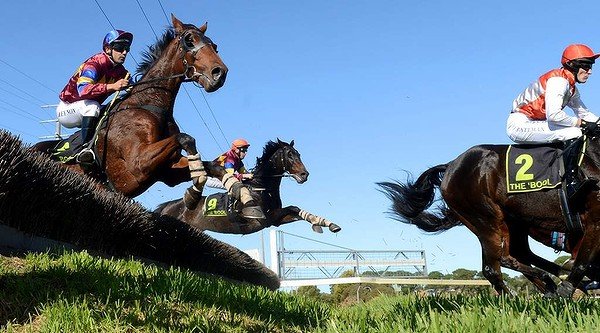
Regardless of the spectacle, the harsh reality is racehorses are continuing to die as a result of jumps racing in Victoria. Image courtesy of The Age.
As Victoria continues to buck the trend on placing a ban on jumps racing, we ask if steeplechasing really is integral to the success of the Warrnambool May Racing Carnival.
OPINION – Carol Altmann
Here we are at that awkward time of year again in Warrnambool when the city’s biggest local sporting event – the May Racing Carnival featuring the Grand Annual Steeplechase – is also the most difficult to embrace.
For no matter how we dress it up, the reality is that jumps racing is on the nose and has been for many years.
Despite this, the powerful figures that surround the “sport” continue to tell us that horses love jumping, that the local economy would wilt without the jumps races, and that those campaigning to have jumps racing stopped are just a bunch of lefty loopies without a sense of fun.
One of the most vocal “lefty loopies” is, of course, that highly radical and subversive organisation, the RSPCA, which has an ongoing campaign against the practice on the grounds of animal cruelty.
It appears that the RSPCA is welcome to tackle battery hens, sow stalls, duck shooting, puppy farms and run the cheerful Million Paws Walk, but if it dares to go near the sanctity of the steeplechase, it is accused of being “grandstanding hypocrites,” guilty of euthanasing thousands of unwanted cats and dogs each year.
That is how the former head of the Australian Jumps Racing Association, Rodney Rae, described the RSPCA president Dr Hugh Wirth in 2011, disregarding the fact that the RSPCA is the group that mops up the sad mess left behind by irresponsible pet owners around Australia.
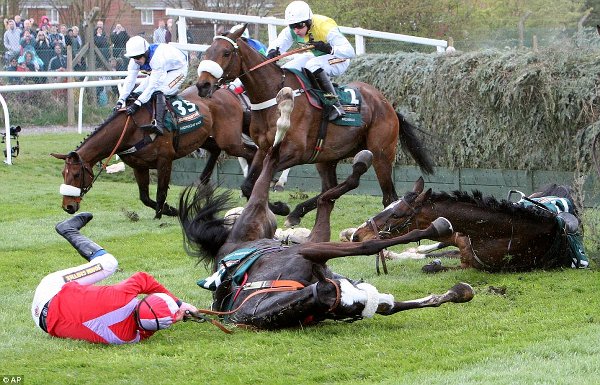
The Grand National Steeplechase in the United Kingdom remains one of the most controversial races in the world due to a high number of horse fatalities. Image courtesy of The Huffington Post.
But let’s return to jumps racing.
As most people know, this is a sport that no longer exists in any other states except for Victoria and South Australia. Jumps racing finished in Queensland more than 100 years ago. It stopped in WA in 1941 and in NSW in 1997. Tasmania joined their ranks in 2007.
A Senate committee in 1991 suggested it be phased out across Australia over a three-year period and, in 2010, this is exactly where things were headed for Victoria – until the state election prompted local MP Dr Denis Napthine to pledge $2 million to assist the racing industry if the Coalition won office.
The Coalition won and Dr Napthine, who part-owns a racehorse with local Federal MP Dan Tehan*, would be not only the Minister for Racing but also, eventually, Premier. Talk about friends in high places.
Despite the $2 million having surely being spent by now, horses still die in jumps racing.
It is a nasty, unavoidable truth of the “sport”, even if we try and disguise it behind the green curtain that is hastily erected around the broken horses before they are euthanased on the track.
According to the RSPCA, four horses died in jumps racing last year and there is no doubt that this week, many punters will be watching the three main jumps events at Warrnambool with their hearts in their mouths, hoping all the horses (and riders) make it home, while feeling a deep sense of unease that the horses are being made to perform this way in the first place.
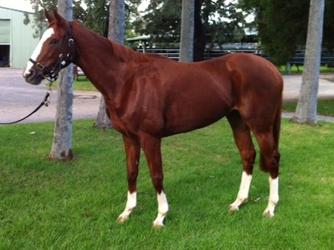
Spin the Bottle, part-owned by Premier Dr Denis Napthine and local Federal MP Dan Tehan. He is not a jumps racer.
The Warrnambool Grand Annual Steeplechase is 5.5 kilometres long – the Melbourne Cup is 2km shorter – and includes 33 jumps: the most of any steeplechase event anywhere in the world. That is a lot of running and a heck of a lot of jumping, even for a horse that “enjoys” it.
And for all of their Herculean efforts, hardly anyone remembers who wins. Can you name one winner of the Grand Annual Steeplechase? Or the Brierly Steeplechase? Or the Galleywood Hurdle?
At the end of the day, it all seems so cruel and so unnecessary, especially when such a small group of people has any significant investment in jumps racing and its immediate spoils.
The average punter, I believe, would be just as happy to go along to a three-day racing carnival at the beautiful Warrnambool racecourse and not see horses jump.
Some of the most popular – and charming – race carnivals in Victoria (think Dunkeld, Hanging Rock) attract thousands of people not because of the actual racing, but because of the atmosphere, and the chance to dress up and drink champagne for brunch.
Given the increasing awareness and activism around animal rights, especially among young people, it is only a matter of time until jumps racing is banned across Australia.
So why not cancel the jumps at Warrnambool, just for a year? Or maybe for three years, as happened during World War II when the Grand Annual Steeplechase was suspended because of more pressing matters than horse racing.
Then will we know whether the May Racing Carnival can truly stand on its own two legs, rather than relying on horses to stand on all four: despite all that is thrown at them.
*Since writing this piece, The Age has questioned the connections between Dr Napthine and Midfield Meats managing director Colin McKenna, another part-owner of Spin the Bottle.
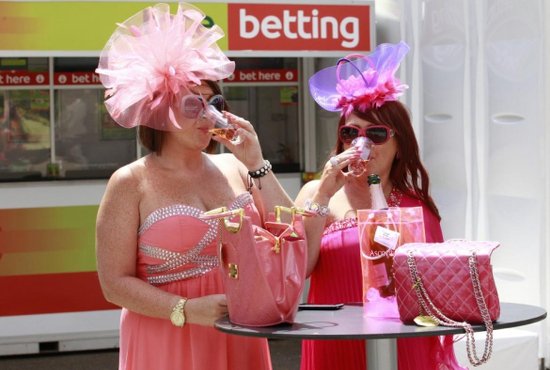
Wouldn’t punters be just as happy wearing fancy clothes and sipping champagne trackside without the need for jumps racing?



 You can find more analysis here…