Racehorse trainers abandon Levy’s: the battle is over
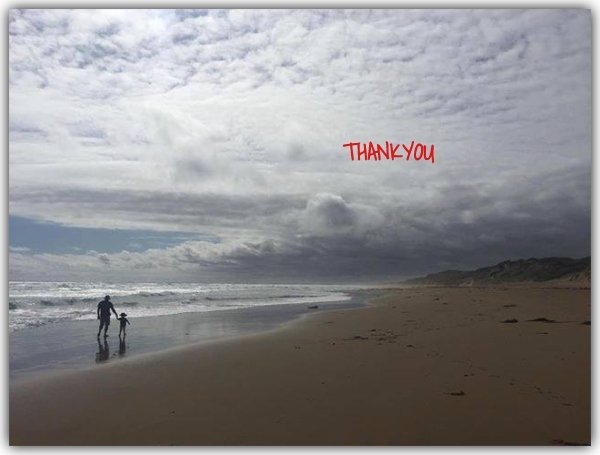
A four-year-battle to save Levy’s Beach from mass racehorse training is over. Image supplied.

Exclusive

Carol Altmann – The Terrier

A four-year battle to save Levy’s Beach/Tarerer coast from mass racehorse training is over, with a meeting of all trainers last night (Mon) voting to abandon the plan.

A meeting of about 40 SWOTRA* trainers was held to gauge opinion once and for all, and, according to a rock-solid source, it was decided by an overwhelming majority that they would no longer pursue access to Levy’s/Spookies Beach.

Trainers will instead use only Lady Bay, where numbers will be capped at 50 a day, down from 96.

The meeting, attended by an officer from the Warrnambool City Council, also agreed to lobby for better sand training facilities at the Warrnambool racecourse.

Hallelujah.

Common sense has prevailed, at last.

I could weep.

I could weep for that beautiful, wild beach, which finally has a chance to recover from decades of abuse and neglect and be nurtured.

It is time.

While the WCC is yet to formally vote on the plan, the trainers’ decision makes that vote a virtual fait accompli. It will happen quickly.

Last night’s meeting comes just three weeks after the council deferred making any decision on Levy’s so it could meet again with the main players, including trainers, and traditional owners who have been strongly against turning a precious slice of Country into an exercise park for racehorses.

Now it is done.

Now we will see an end to an ugly battle that has raged for years and savaged our community.

So many people – led by the steadfast Belfast Coastal Reserve Action Group – fought to stop the madness of allowing up to 120 racehorses a day, every day, to train along the beach, and another 40 a day to trample up and down the large dune.

This outrageous assault was going to be allowed all year round.

This was never a compromise: this was utter capitulation to the Darren Weir juggernaut that blew our community apart.

There are many things that I find unforgivable about Weir, and cleaving our community in two is one of them.
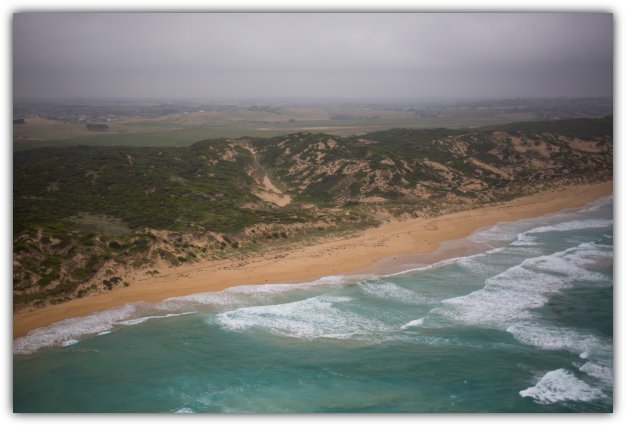
The stretch of Tarerer coast/Belfast Coastal Reserve, including the dune, that was to be opened up to racehorse training. Image: Chris Farrell.

The uncomfortable truth is that if Weir had not fallen into his own vat of troubles, we would still be at war, such was his power and influence over our star-struck council and the racing industry.

Who could forget that terrible, “urgent” council meeting held just four days before Christmas in 2018, when the anger and vitriol spilled over for all to see?

It was brutal and ugly and so damaging.

Warrnambool, which has long been a racing town, was forced to take sides and friendships and families have suffered.

Now, to pull out a cliche, the healing must begin.

Levy’s Beach has to be healed and the hoons booted out through proper, serious enforcement. If you are caught being a dickhead, you are fined $3000 on the spot – that sort of serious enforcement.

And the training rules of Lady Bay need to be enforced and be seen to be enforced.

No more slaps on the wrist, no more relying on the public to capture wrong-doings on their i-phones, but instead an independent monitor who will release monthly, public reports via the council.

I recently found out through Freedom of Information that Parks Victoria planned to charge the Warrnambool Racing Club a whopping annual licence fee of $62,400 to use Levy’s Beach, such is the privilege.

Using Lady Bay for racehorse training is an equal privilege.

It is our main beach and it is our compromise, but it can only work if there is respect for the rules on all sides.

We have a chance to get the balance back.

This exhausting battle is over and – I hope – the war is too.

————

[*Trainers must be a member of the South West Owners and Trainers Association to access local beaches. The group has about 40 members, from full-time professionals to hobbyists.]
Thankyou to the Walkley Foundation for funding part of my investigative work with this on-going story, including expensive and time-consuming Freedom of Information applications and other research tools. If you would like to help The Terrier keep digging, you can find the Tip Jar here.

Traditional Owners lift their voices, but will we ever listen?

The section of Tarerer coast (Belfast Coastal Reserve) and large dune that will be opened up to commercial racehorse training under plans still before the W’bool City Council. Image: Chris Farrell

Letter to Warrnambool City Councillors 2 Feb 2020

By Lee-Anne Clarke and on behalf of  Elder Aunty Julie Jose and Tom Clarke

Today we are writing to you, as we are aware that there is a Warrnambool Council Meeting
on the 3 February 2020. On your Agenda for this meeting, you have listed 5.2 Horses on
Beach – Land Manager Consent Spookys.

Our interest in the Agenda Item stipulated is to add our Cultural lens and views as
Traditional Owners of the Kirrae Whurrong/Peek Wurrung people. Our view on our Cultural
Landscape; our Traditional Lands of Eastern Maar people.

We do not want commercial horses on the BCR – Peek Wurrung Dune Country.

BCR – Peek Wurrung Dune Country:

Along this Coastline beginning around Port Campbell, The Twelve Apostles (Kirrae
Whurrong) and Point Ritchie – Moyjil (Peek Wurrung), Hopkins River, Thunder Point, Peek
Wurrung Dune Country, further down Tarerer, right through to Gunditjmara Budj Bim
Cultural Landscape (Now on the World Heritage Listing), we have thousands of years of
scientific evidence of First Nations occupation.

This part of our Country in which we as Eastern Maar call our Ancestral and Spiritual Homelands. This area in which has been
recorded where our people were quite heavily populated and utilizing this are for
Traditional Customs, enjoyment, economy and environment, Ceremony and trade over
many, many thousands of years. In fact Moyjil being investigated and dated as old as 80,000
to 120,000 thousand years. Moyjil is around 5 kms from our Dune Country.

Does this not tell you something?

In the Reserve, it has been well known that firstly the commercial horse training has begun
and continued illegally for years and never reprimanded or picked up as an Illegal activity on
the Reserve within your Council.

During this time, there has been unsurmountable damage that has occurred that is
irreparable within the HH Track area. Ancient sands damage and artefacts damaged with
riders and their horses.

Within these Dunes, we have Burial sites, artefacts, shell middens, hearth ovens and
ceremonial sites.

We also hold Dreaming Stories. Dreaming Stories are Creation stories of the Cultural
Landscape. Dreaming Stories are treasured and held in high regard across the whole of
Australia.

We also have a healthy native wildlife and birdlife there who consider this place their home.
These animals and birds whom we are connected to via our Totems and incorporates our
Ceremonial dance, our way of working in synchronicity with Country; to sustain healthy
country.

We would like you to consider Peek Wurrung Dune Country to be delicately nurtured in way
of supporting Traditional Custodians and wider Community to care for Country.

Protection of Cultural Heritage:

In caring for Country, we would envisage, seeking governmental support, and funding for
this area. We would expect there to be a demand of Tourism in the area as there are rising
interests in Aboriginal Culture as is well received across other places of interests regarding
Aboriginal Culture.

We would believe the protection of Cultural Heritage needs to be recognized in this area,
for First Nations, and be given the opportunity to create an infallible foundation in looking
after this amazing reserve, and give the respect it deserves.

For the Protection of Cultural Heritage versus commercial horse training on sand dunes and
beaches these two are in direct conflict. There is greater support for the protection of
Cultural Heritage and Tourism.

We believe in investing in long term Cultural Heritage, as tourism is the future.

As to the industrialization of horses, training on our highly sensitive Dune Country and
highly concentrated Aboriginal Cultural Heritage our artefacts submerged within the ever so
sensitive BCR – Peek Wurrung Dune Country, would implicate further destruction through
this type of abuse within this area.

We are extremely concerned about the irresponsible destruction, damage and interference
the proposed activity will undoubtedly bring to our little and remaining Cultural Heritage.

We consider this our natural environment our Cathedral, our Church.

Our unyielding love for this Country has our Elders terribly upset, concerned, and have cried openly for Country
such is the love and raw emotion that genuinely attaches us to Dune Country.
It would be irresponsible for us not to speak out as next of kin of our Ancestral and Spiritual
homelands.

As a lure from the Gambling Industry, a consideration of a yes vote, would invoke serious
implications of the whole of the reserve as time goes on.
Please shut the gate on this now and save the little remaining pristine area that we have
left, the Belfast Coastal Reserve – Peek Wurrung Dune Country.

The statistics show the horses do not need this Reserve to use for their personal gain in the
racing industry.

As Traditional Custodians, in dignity, we would like to ask you to, please do not allow
commercial racehorses on Belfast Coastal Reserve – Peek Wurrung Dune Country.

Wurruk.


Racehorses: respecting Country and a crucial council vote

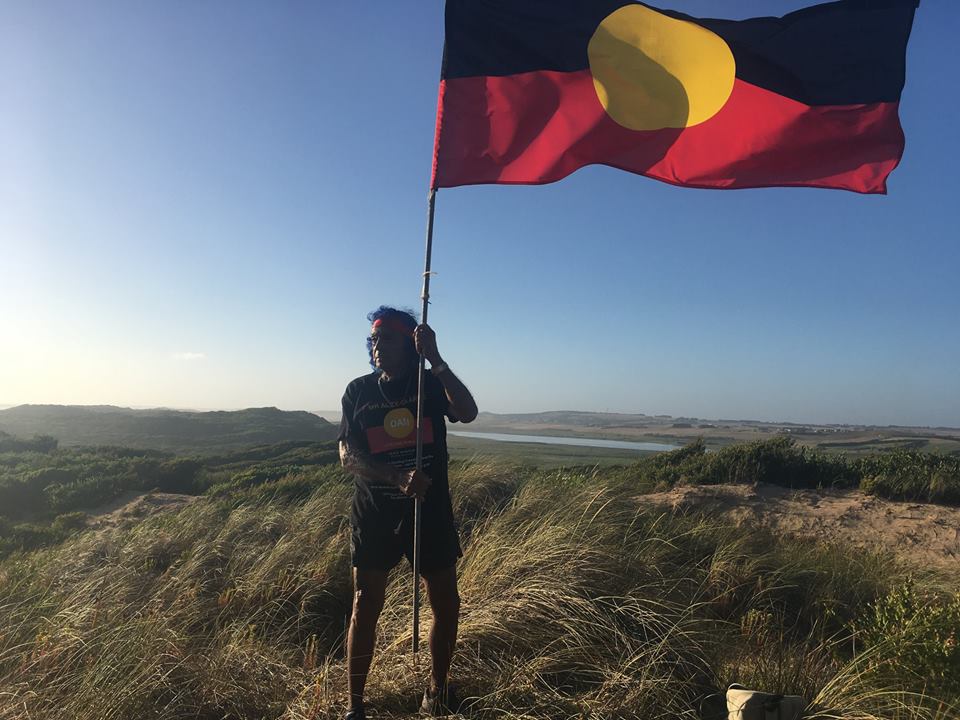
Uncle Alby Clarke is among the traditional owners who are fighting to stop large-scale racehorse training on the Tarerer coast (Levy’s Beach). Image: Shane Howard.

Carol Altmann – The Terrier

The push to allow large-scale racehorse training at Levy’s Beach will return to the Warrnambool City Council again next Monday night (3/2) for a crucial vote that goes far beyond horse racing.

It is, instead, a line in the sand: a time to decide whether Warrnambool is prepared to step into a new way of thinking – a bold Warrnambool – or to remain stuck in the past, as an old Warrnambool.

On the surface, the seven councillors will effectively be asked again whether they support or reject large numbers of racehorses – up to 120 a day on the beach and 40 on a dune – being able to train in the coastal reserve at Levy’s Beach/Spookies Beach all year-round. (This would be in addition to training at Lady Bay for nine months of the year.)

But this vote is also a test of whether, in 2020, we, as a city, are prepared to continue to ignore the wishes of the traditional custodians, the Eastern Maar peoples, for whom the coast around Levy’s is known as Tarerer.

I find it incomprehensible that the council would even consider such a move when traditional custodians are against it, as was first made clear when the consultation process began more than two years ago.

We are all living on Aboriginal land and yet we still find this concept discomforting, rather than a privilege.

Indeed one of the arguments used by Racing Victoria is that horse training on Warrnambool’s beaches goes back to the 1800s – and this is supposed to be a persuasive argument – yet the indigenous connection to this coast stretches back at least 60,000 years and possibly 120,000 years.

Think about that for one second.


Despite this incredible history, it is the European connection through racehorses, a mere speck of sand by comparison, that is held up as evidence of a rich tradition, a deep heritage and a right of passage.

How demeaning this is to the traditional custodians; how gutting.

Like so much of south-west Victoria, Warrnambool has a shocking history around the treatment of indigenous peoples and the destruction of an ancient culture, none of which we learnt about at school, and which contributed to local, white kids like me growing up with a fear and suspicion of Aboriginal people.

I knew nothing until I was old enough to read this history for myself and to learn about the full impact of dispossession and discrimination.

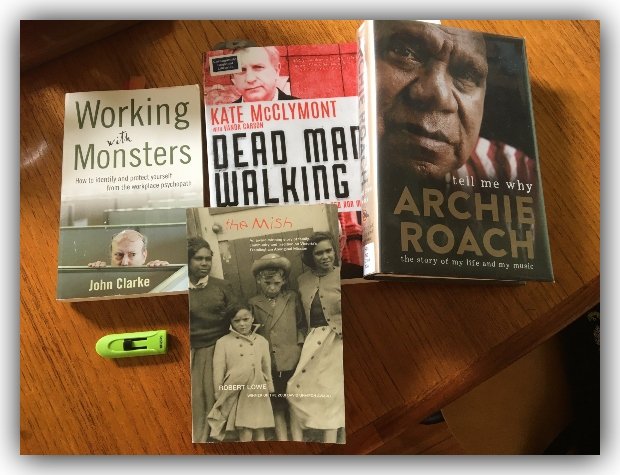
Part of the summer reading list included unforgettable books by Archie Roach and Robbie Lowe Snr.

I am still reading. Over the Christmas holidays I devoured Archie Roach’s magnificent autobiography, Tell Me Why, and Robbie Lowe Snr’s book, The Mish, which spoke of a Warrnambool where I grew up, but barely recognised, because as a middle-class, white kid, I had no idea how life was for those living in Framlingham, just 20kms from Warrnambool, but as far away from my daily life as Mars.

We can no longer use the excuse of ignorance and say that we don’t know, or don’t understand, the indigenous connections to Country.

Times are changing.


Indeed our council includes a Welcome to Country at civic events, and a smoking ceremony at its Australia Day function, and takes great pride in paying its respects to indigenous elders (“past and present”) at the start of each council meeting.

How can our councillors accept all of the above, yet fail to listen to the elders trying to protect and restore a precious slice of Tarerer coast that, even under council laws, is classed as a coastal reserve?

It’s not enough to fly the Aboriginal flag outside the council chambers in Liebig St, or to have a striking Adnate mural of Bernice Clarke and Rylan Miller on the side of South-West TAFE.

These are all important, symbolic gestures that make us feel good, but unless we are prepared to change our thinking around our decision-making, that is all they will be: symbolic.


The Eastern Maar have been fighting to be heard and surely now is the time to listen and to act or we will remain stuck under the heavy shadow of colonialism that has burdened Warrnambool for so long.

Monday night will be a critical test of where we stand as a city and where we are headed, and I, for one, am not going to miss it.

The meeting is at the WCC chambers, 25 Liebig St, starting at 5.45pm.

This article is part of an ongoing series supported by the Walkley Foundation, including funding Freedom of Information applications and other research tools.

If you would like to support the Terrier, you can throw something in the tip jar below. 

The Tip Jar


FOI: Digging into the numbers behind the Daz and Jaz show

Former racing king pins Darren Weir and Jarrod McLean dominated the training numbers at Lady Bay. Image: Racing.com

Carol Altmann – The Terrier

Horse racing is all about numbers and here is a set that reveals just how dominant disgraced trainer Darren Weir and his suspended side-kick Jarrod McLean were in turning our beaches into racehorse training tracks.

The figures, released as part of a Freedom of Information application to the Warrnambool City Council, relate to the number of trainers and racehorses that used Lady Bay each month from the first day of Autumn to the first day of Summer in 2017 and 2018.

The numbers, collected by the Warrnambool Racing Club, show that more than 1000 racehorse workouts a month were happening up and down Lady Bay, spread out between 21 trainers.

The reality is, however, that the vast majority of horses were from the stables of just two of the 21 trainers: Weir and McLean.

Here is a snapshot:

In August 2018, when Weir was at the height of his powers in Warrnambool, 1141 racehorses ran up and down Lady Bay and 877 of these – or 76 per cent – were workouts by horses trained by Weir or McLean.

In September 2018, there were 1123 horse workouts on Lady Bay and 838 – 74 per cent – were trained by Weir or McLean.

In October, there was a whopping 1299 horse workouts, of which the pair trained 951 – 73 per cent – and in November 2018, there were 1339 horses and their share was 909 horses – 67 per cent.


Between them, Weir and McLean had almost 1000 horse workouts a month at Warrnambool’s main beach, for a mere cost of $1.50 per horse (no GST) paid to the council for the privilege.

Such was Weir’s dominance and influence that, as we know, the quivering council voted 6/1 in December 2018 to open up Levy’s Beach to racehorse training because Weir threatened to go elsewhere unless he had access to Warrnambool’s beaches 365 days a year.

The threat, of course, was that without Weir, Warrnambool’s racing industry would collapse and, without access to the beaches, all the other trainers might pack up and leave too.

Neither has happened.

Levy’s Beach has been closed to racehorse training since late 2016 and remains closed as the WRC continues to work through various approvals.

I had a look through the list of the other 19 trainers using Lady Bay and not one of them, from what I can see, has left Warrnambool because they haven’t been able to access Levy’s Beach.

(Both Weir and McLean have gone as they, between them, face a raft of serious charges for animal cruelty and other offences.)

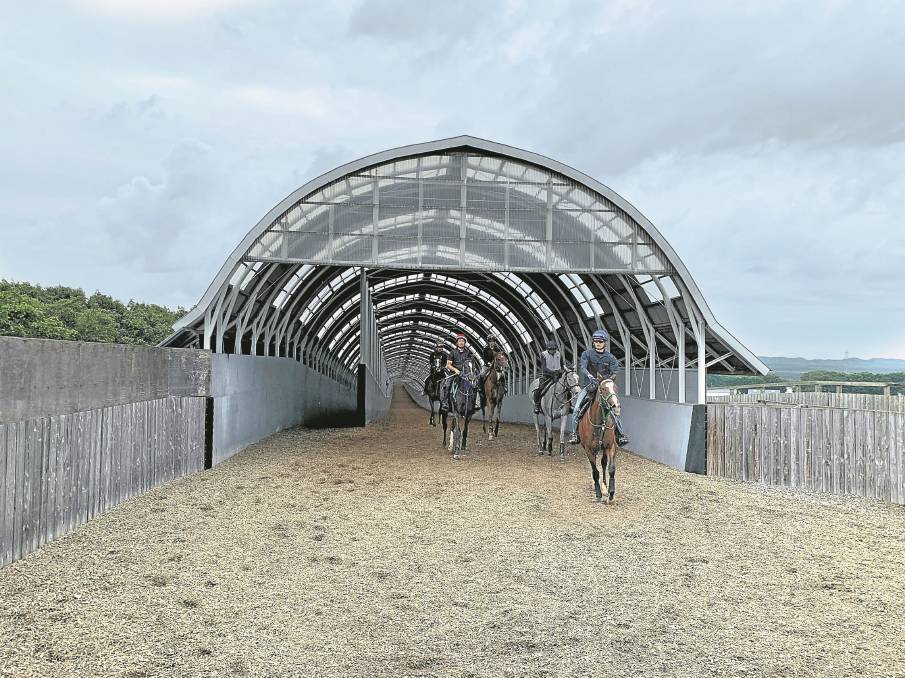
The Ballarat Turf Club is planning to build one of these: an all-weather, uphill training track based on a model used in Japan. Digitally altered image via Ballarat Courier story which you can read here.

In the meantime, the Ballarat Turf Club is forging ahead with investing millions in state-of-the-art, all-weather training facilities at its racetrack, making it a magnet to top trainers moving out of Caulfield and Flemington.

The State Government has decided both Caulfield and Flemington need to hand over more of what is actually public (Crown) land for public use.

Our public beaches, meanwhile, remain a battleground. Ah, the irony.

I will be writing more from the results of this FOI request, which sought all correspondence between the council, the Warrnambool Racing Club and Racing Victoria for the period September 1, 2016 and March 14, 2019, relating to racehorse training at Levy’s, Spooky’s Beach and Lady Bay. It took nine months and produced more than 500 pages of documents (including lots of spreadsheets) at a cost of $292.

The FOI would not have been possible without a grant from the Walkley Foundation Public Fund which supports investigative journalism.


Shifting sands on racehorse access to coastal reserve

The area of Long Dune, Tarerer coast/Spooky’s Beach, Belfast Coastal Reserve that will be opened up to large-scale racehorse training. Image:Chris Farrell Photography.

Carol Altmann – The Terrier

Cracks in the resolve:
 
Following on from last night’s post, I can tell you that at least two W’bool City councillors have changed their minds about dozens of racehorses training at Spooky’s Beach in the Tarerer coast/Belfast Coastal Reserve.
 
The fallout from the Weir/McLean saga is starting to bite.
 
Cr Peter Hulin is no longer in support of up to 40 racehorses a day using a long dune known as “Hoon Hill”.
 
(Doesn’t that disgraceful name speak volumes about how this area has been treated over the years? I am going to start calling it Long Dune.)
 
And Cr Michael Neoh now believes Lady Bay should be enough, given an average of only 22 racehorses a day are now using the main beach.
 
Here is part of what Cr Hulin said via email:
 
“In light of recent uncovered abuse of racehorses, I have changed my thoughts of the horses being ridden up “Hoon Hill”.
 
“Not only could this type of training be detrimental to the horse, but also the environment due to the erosion of the dune system. I cannot see how this could be avoided.
 
“Access to the beach may be also problematic.”
 
Cr Hulin made clear he was still a strong supporter of the local racing industry and believed horse training could still happen along the Spooky’s foreshore, provided all the rules and safeguards were followed.
 
Cr David Owen has always been dead against the idea of allowing 160 horses a day into a coastal reserve, so where does this leave Crs Kylie Gaston, Robert Anderson, Tony Herbert and Sue Cassidy?
 
Do they still think it is a good idea?
 
Does it still fit with the focus of a council that has declared a climate change emergency, or was that just more rhetoric?
 
Aren’t we supposed to be aiming for clean and green and looking after our coastal environment?
 
I don’t know what the other Crs think, as none of them responded. (#itsjustablip)
 
I do know, however, that it is getting harder and harder to justify why the racehorses need to be there. Weir has gone. McLean has gone. The Warrnambool Racing Club this year made a record profit….
 
I hope Crs Neoh, Hulin and Owen can convince the council to revisit this issue now, not after the damage is done to Long Dune and that precious wild beach that makes Warrnambool such a special place.
 

Thankyou to the Walkley Foundation for funding part of my investigative work with this on-going story.

If you would like to support the work of The Terrier, please consider throwing something in the tip jar.

Terrier Tip Jar