Heritage Vic to take no action against Flagstaff Hill

Copper Sheets-2
Some of the copper sheets stored at Flagstaff Hill in the Bond Store, including the one showing a severe cut from right to left.

ANALYSIS – Carol Altmann

[dropcap style=”font-size: 60px; color: #A5CECD;”] H[/dropcap]eritage Victoria has finished a three-week investigation into missing and damaged artefacts at Flagstaff Hill Maritime Village in Warrnambool and found it has no case to answer.

Instead, any responsibility for the missing artefacts and damage to relics from the wreck of the Loch Ard (1878), has been sheeted home to former management of the village.

As first reported in Bluestone Magazine, Heritage Victoria launched a formal investigation into the cutting of copper sheets from the Loch Ard, with a 10x10cm piece taken from one, while another had a large slice removed, allegedly for use as a sculpture or trophy.

Such damage to relics is an offence under the Commonwealth Historic Shipwrecks Act.

In addition, Heritage Victoria was investigating how the museum had lost track of at least 129 items from its collection, including the brass ship’s bell from the wreck of the Newfield (1892) that was once displayed in the Great Circle Gallery, and more than 200 lead ingots from the Loch Ard.

A spokesperson for Heritage Victoria today issued a two-sentence statement to Bluestone Magazine, saying the investigation was finished and there would be no further action, as “most” of the issues had happened more than a decade ago.

Here is the statement in full:

“Heritage Victoria has completed its investigation into suggestions of problems with the management of the collection at Flagstaff Hill Maritime Museum and determined that no action is required.

“Heritage Victoria noted that professional systems highlighting collection management and an internal audit process had been instigated under the present management and that most of the issues raised had occurred more than a decade ago under previous management.”

No other information was available and is unlikely to be available in the future, as Heritage Victoria does not reveal the details of its investigations.

1-loch ard ingots_1
The arrival of the Loch Ard ingots and copper sheets was worthy of front page news in 1984.

[dropcap style=”font-size: 60px; color: #A5CECD;”] S[/dropcap]o what happened to the copper sheets and who cut them?

And where is the missing Newfield bell, among other items?

Even after this investigation we are none the wiser and, from the sound of it, probably never will be.

The outcome of the investigation is not a surprise, however, in light of comments by Warrnambool City Council chief executive officer Bruce Anson to the February 2 council meeting.

At that time, and in response to questions from Cr Brian Kelson who first raised concerns about the missing artefacts, Mr Anson said “we are confident that our discussions with Heritage Victoria will not find any significant issues at all.”

“We have an ongoing and very positive relationship with Heritage Victoria,” he said.

When asked directly by Cr Kelson who cut the copper sheets, Mr Anson said one had been pierced by a nail, while on loan, and another had a corroded edge from lying in water.

The nailed sheet was in fact a drill hole, added to a sheet now on display at the Port Campbell Tourist Information Centre, so that it could be secured to the wall where it was formerly housed (the people responsible apologised to Flagstaff Hill in 1993 for their mistake.)

Mr Anson made no mention of the sheet that has had a large slice removed, or the sheet with a missing 10x10cm piece, but did say some of the cuts were “hearsay”.

Perhaps more will be ultimately revealed by the council, with Mayor Michael Neoh telling the same meeting that he would be happy for Director City Growth Bill Millard to do a full and formal report back to the council on these issues.

Let’s hope so, because as it stands we still don’t know what happened to precious artefacts that were given to our city by the Federal Government for safe keeping.

subscribe

 Stones Smile newsletter More Analysis can be found here…

Veil of secrecy over salary of the WCC’s top job

The changing landscape under Midfield Meats

Abbott actions reveal toxic culture in council

Investigation launched into Flagstaff Hill

When scrutiny is sub-standard, democracy suffers


Investigation launched into Flagstaff Hill

Flagstaff ingots_18
Flagstaff Hill in Warrnambool is under investigation after revelations of missing and lost items, and damage to Loch Ard artefacts. Image: Bluestone Magazine.

EXCLUSIVE: Carol Altmann

[dropcap style=”font-size: 60px; color: #A5CECD;”] T [/dropcap]he Flagstaff Hill Maritime Village in Warrnambool is under formal investigation by Heritage Victoria over missing items from its collection and damage to relics from the wreck of the Loch Ard.

As recently reported in Bluestone Magazine, two of the 10 copper sheets from the Loch Ard (1878) that were loaned to Flagstaff Hill by the Federal Government have been cut.

It is believed that a large slice was taken from one of the sheets in recent years for use as a sculpture or trophy, while the other has had a 10 x 10cm piece removed.

The Loch Ard, arguably Australia’s most famous shipwreck, is listed as a wreck of state and Commonwealth significance.

It is an offence under Section 13 of the Commonwealth Historic Shipwrecks Act to “destroy or cause damage to a historic shipwreck or historic relic” and can lead to a fine of up to $10,000 or imprisonment for an individual, or a $5000 fine for a body corporate.

In addition, Flagstaff Hill manager Peter Abbott recently confirmed in a letter to the local newspaper that the museum had lost track of at least 129 items from its collection, including the brass ship’s bell from the wreck of the Newfield (1892) that was once displayed in the Great Circle Gallery.

Heritage Victoria told Bluestone Magazine late Friday that, as a result of the revelations, it had opened an investigation into the collection practices at Flagstaff Hill.

“Tim Smith, Executive Director, Heritage Victoria confirmed Heritage Victoria is investigating the care and storage of items at Flagstaff Hill Maritime Museum,” a spokeswoman said via email.

Mr Smith was unavailable for further comment.

Heritage Victoria is responsible for the initial investigation into any potential breaches of the federal law governing historic shipwrecks. It is also responsible for investigating if there have been any breaches of the Victorian Heritage Act, which carries its own penalties.

Copper Sheets-2
An image of the copper sheets from the Loch Ard which clearly shows the bottom sheet severed from right to left.

[dropcap style=”font-size: 60px; color: #A5CECD;”] F [/dropcap]lagstaff Hill, which is accredited by the museum governing body, Museums Australia, has had the spotlight turned on its collection management processes after questions late last year by Warrnambool City Councillor Brian Kelson.

Mr Kelson’s probing about gaps in the museum’s online collection database led to revelations that 220 lead ingots from the Loch Ard could not be accounted for.

Flagstaff Hill was given custody of 872 lead ingots in 1984 as part of the same federal loan agreement that governed the copper sheets.

Mr Abbott and council chief executive officer Bruce Anson have both since given assurances that the bulk of the missing ingots are in the hull of the derelict Rowitta ferry, although there has been no official count due to the poor condition of the vessel.

The ferry, which sits on the pond at Flagstaff Hill, is scheduled for demolition later this year.

Mr Abbott has recently been caught up in a separate scandal, after he was named by the local newspaper as the author of several anonymous comments made to its online forums, in which he made personal attacks against Cr Kelson and Cr Peter Hulin.

Cr Hulin has since indicated he will move a motion of no confidence against CEO Mr Anson at the first council meeting of the year on February 2, citing his handling of Mr Abbott’s behaviour as an example of why the Local Government Minister should be asked to intervene.

 [button link=”http://the-terrier.com.au/subscribe-2/” type=”icon” icon=”heart” newwindow=”yes”]Bluestone needs at least 500 subscribers in 2015. If you wish to support independent media, please click here to become one.[/button]

Stones Smile newsletterYou might also enjoy…

Flagstaff Hill: a museum in transition, or a mess?

Are missing Loch Ard ingots the tip of the iceberg?

The changing landscape under Midfield Meats

Sucking the wind out of Portland’s sails

Granny’s Grave buried in bureaucracy

All words, no funding, for Fletcher Jones story


Abbott actions reveal toxic culture in council

Peter_Abbott, Michael Neoh, Denis Napthine
Flagstaff Hill manager Peter Abbott, right, with Mayor Michael Neoh and former Premier Denis Napthine. Mr Abbott has been exposed for writing critical, anonymous comments about councillors in an online forum. Image: Warrnambool City Council.

OPINION – Carol Altmann

The exposure of senior Warrnambool City Council manager Peter Abbott as the author of anonymous comments to the local newspaper attacking some councillors has revealed a toxic culture developing within its walls.

The local newspaper has today named Mr Abbott, who is the head of the council’s tourism services and manager of the Flagstaff Hill Maritime Village, as the author of a string of comments to its online forum in which he regularly targeted Crs Peter Hulin and Brian Kelson while hiding behind a pseudonym.

This is not the actions of some junior staff member, over-excited by the opportunities of social media to air his spleen anonymously.

It is the actions of an experienced, highly-paid council manager who has set out to systemically discredit two of the people elected to represent ratepayers.

Mr Abbott cannot claim to have had a single rush of blood to the head.

Instead, he has carefully differentiated between commenting under his real name and making up a string of names such as Robinhood, Trash and Smallman to accuse Cr Kelson, in particular, of making false claims, getting his facts wrong, and failing to attend meetings.

These are highly personal attacks, designed to diminish the public’s view of elected members that – as representatives of the people – Mr Abbott is paid to serve.

If he was a senior public servant within the state or federal government making anonymous, critical attacks on MPs, he would have been dismissed for behaviour that is unethical, unprofessional and totally inappropriate.

The question is, how did Mr Abbott come to think that his behaviour was acceptable and, now that it has been exposed, how has he survived in his position?

brian kelson
Cr Brian Kelson was one of the councillors in Mr Abbott’s sights for personal attacks. Image: Warrnambool City Council.

Mr Abbott’s actions are indicative of a toxic culture that has been allowed to flourish within the council that considers some people – in particular Crs Kelson, Hulin and Sycopoulis – to be fair game.

It is a culture fed by a misguided belief that a council should be passive by not asking too many questions, not rocking the boat and agreeing to every decision as a united front.

Those who refuse to fit this mould are considered troublemakers who need to be discredited or, even better, removed from council altogether.

With this in mind, Mr Abbott no doubt thought that he was doing his bit.

The council’s chief executive Bruce Anson knows a lot about the potential problems of attacking councillors behind pseudonyms when he was scrutinised – and cleared – of any involvement in a series of letters to the newspaper written by his son under the pseudonym of Wilma Wright.

These letters, written over a period of four years, included personal attacks on Crs Sycopoulis, Hulin and then-councillor Jennifer Lowe during the 2012 election campaign.

Given this recent history, I would have expected Mr Anson to come down heavily on a senior staff member who has been exposed for such extraordinary and unprofessional behaviour.

Instead, Mr Anson has backed Mr Abbott to the hilt.

bruce anson abc
Despite the revelations, council’s chief executive officer Bruce Anson has thrown his full support behind Mr Abbott. Image: ABC Radio.

In his statement to the paper, Mr Anson said while “staff” should not engage in political debate online, he stood by “the excellent work” Mr Abbott had done at Flagstaff Hill and that he would  “be heavily involved” in the upgrade of the site.

Indeed Mr Anson even feels sorry for Mr Abbott: “It’s always a challenge, when you work as a public servant, to weather the criticism that comes with the job.” (I am sure the people who Mr Abbott has attacked would agree).

So Mr Abbott is going nowhere and will suffer no professional consequences for his actions.

I am trying to imagine the CEO’s response if Mr Abbott’s anonymous, public criticisms were aimed at Mayor Michael Neoh or, indeed, himself?

Would it be considered okay to continue in your position if you publicly criticised the two top civic officials you worked for?

Or what if Mr Abbott had used his anonymous comments to undermine the two women councillors, Crs Gaston and Ermacora? Would he (quite rightly) be taken to task then?

This should not be about individuals, but standards. Unfortunately what we have seen unfold today indicates that our local council has a long way to go in not only setting the highest standards for its staff, but enforcing them.

Note: It was Cr Brian Kelson who exposed the extent of the problems with the collection management system at Flagstaff Hill that has since revealed more than 130 missing artefacts, damage to Loch Ard relics and inadequate to non-existent record keeping. You can read our two earlier pieces on this issue here and here.


Flagstaff Hill: a museum in transition or a mess?

Flagstaff hill
The cracks in Flagstaff Hill’s museum collection are being revealed as a result of persistent questioning by those concerned about missing items. Image: Bluestone Magazine.

OPINION – Carol Altmann

[dropcap style=”font-size: 60px; color: #A5CECD;”] W [/dropcap]arrnambool’s Flagstaff Hill Maritime Village has finally admitted that it has lost more than 100 items from its collection in what is a clear indication that all is not well down on the hill.

Privately, people who have had a long association with the village either as former staff members, volunteers, or long-term supporters are questioning how has it all gone so wrong and, more importantly, can it be fixed?

In response to my piece last weekend in which I asked if the missing Loch Ard ingots were the tip of the iceberg (they were), FHMV manager Peter Abbott wrote a letter to the local newspaper in which he confirmed that at least 129 items donated to the museum could no longer be accounted for.

This is not about a clerical error on a database, this is about losing irreplaceable items that were given to Flagstaff Hill for protection. Put simply, despite being an accredited museum, Flagstaff Hill has no idea where these objects are because of years of poor record keeping and poor storage.

As to be expected, Mr Abbott used his letter to downplay the issue, referring to a missing bar of soap and a “small tin”, but even a single button can be valuable depending on who wore it: that’s what museums are about.

The 129 missing objects are not a comprehensive list.

Bluestone has since learned, for example, that the very first items donated to Flagstaff Hill back in 1973 are also missing. They are a lamp that is believed to have come from the Loch Ard, and a police lamp, believed to have been used in the search for survivors from the Loch Ard.

These are not insignificant items.

Copper Sheets-2
Copper sheets salvaged from the wreck of the Loch Ard have been damaged since coming into the possession of Flagstaff Hill, including a large cut to one sheet in the Bond Store.

[dropcap style=”font-size: 60px; color: #A5CECD;”] I [/dropcap]t should also come as a shock to learn that while the copper sheets from the Loch Ard (1878) are not missing, some have been cut up.

As I wrote last week, these 10 sheets were given to the village by the Federal Government in 1984 and were supposed to be housed under a loan agreement that, until recently, had been forgotten about.

The online listing for the copper sheets confirms: “One sheet appears cut or severed in a diagonal line downwards from its top left hand corner. One sheet has a 10cm X 10cm square cut out of its top right hand corner.”

The sheet that has been virtually sliced in half can be found inside the Bond Store.

When asked about these two sheets, Mr Abbott referred me to a third sheet, now housed at the Port Campbell Tourist Information Centre, that had a small drill hole added so that it could be secured to the wall (the people responsible apologised to Flagstaff Hill in 1993 for their mistake.)

Mr Abbott didn’t explain why these more recent and much larger cuts were made, but it has been suggested that at least one piece was used to create a copper sculpture.

FHMV also considers it acceptable to store some of the remaining sheets – those twisted by the blast during their salvage – outside in the weeds near the Barracks, as if they were storing bits from Bunnings, rather than relics from the Loch Ard.

loch ard copper
Buckled copper sheets (centre) from the wreck of the Loch Ard are “stored” among the weeds and an assortment of other items outside the Barracks. Image: Bluestone Magazine

[dropcap style=”font-size: 60px; color: #A5CECD;”] M [/dropcap]r Abbott also used his letter to confirm that the brass bell from the wreck of the Newfield (1892) has disappeared after being removed during renovations in 2002 – 13 years ago.

Bluestone has been told that Flagstaff Hill was alerted to the missing bell back in 2009, but did nothing: there was certainly no public call for its return.

In fact the whistleblower who first raised concerns about the security and integrity of the collection management process has since left Flagstaff Hill in frustration.

None of this, it must be said, is the fault of the volunteers who provide countless hours of unpaid labour to try and fix problems that have been years in the making. They are doing their best and I saw that first-hand during a visit last Friday.

The volunteers, however, are history enthusiasts, not experts. Mr Abbott, similarly, comes from a tourism management background rather than a curatorial one.

Indeed one of the few people on staff who had a qualification in cultural heritage management, Helen Sheedy, has this year left Flagstaff Hill to work elsewhere in the council.

It is hard to imagine the Warrnambool Art Gallery being managed with so few expert hands and I can just imagine the outcry if it lost more than 100 artworks along the way.

In the meantime, Flagstaff Hill has gone from being a profitable venture – where it made money for the council – to one that now loses about half a million dollars a year.

Whether Flagstaff Hill is given the resources it needs to operate a well-oiled museum like it did in the 70s, 80s and 90s remains to be seen, but the cracks are starting to show and, for those who donated their items in good faith, the revelations of the past few days will be shocking.

[box]If you would like to do a Flagstaff Hill back-of-house tour of your own, you can join the free tour this Wednesday Jan 14 at 11.30am and 6pm. [/box]

[button link=”http://the-terrier.com.au/subscribe-2/” type=”icon” icon=”heart” newwindow=”yes”]To help Bluestone continue its work with Opinion, please subscribe here for just $85 a year.[/button]

Stones Smile newsletterYou can find more Opinion here…


Are missing Loch Ard ingots the tip of the iceberg?

The changing landscape under Midfield Meats

Street artist secures W’bool mural project

Sucking the wind out of Portland’s sails

Granny’s Grave buried in bureaucracy

All words, no funding, for Fletcher Jones story


Where is Alf Altmann’s kayak now?

alf boat
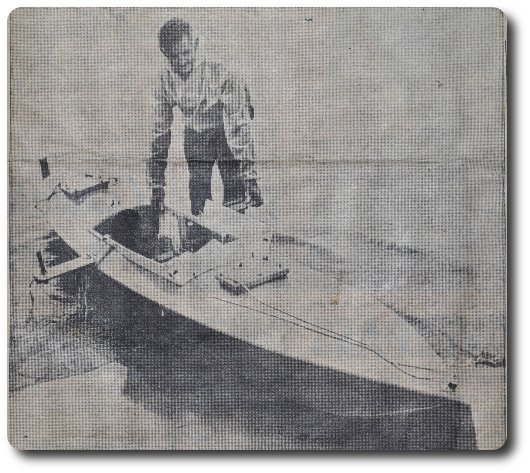
Alf Altmann’s kayak shortly after it was retrieved from the sea on March 6, 1970, following his fateful attempt to cross Bass Strait. The kayak was in pristine condition, proving Alf’s theory that it was unsinkable.

By Carol Altmann

In revisiting Alf Altmann’s fateful effort to cross Bass Strait solo in his home-made kayak, one question inevitably arose: where is the boat now?

After Alf’s death, it is understood that the kayak was stored first at the Warrnambool Ski Club and later at Alf’s brother’s property in Warrnambool before Alf’s widow, Isobel, offered it to the new Flagstaff Hill Maritime Village (it opened in 1974).

Unfortunately, however, the kayak at that time was not considered historic enough for inclusion in the museum: after all, it had only been a few years since the Bass Strait crossing attempt.

Instead, the kayak apparently ended up on display at the now defunct Lancaster’s marine, on Raglan Parade, before being donated to the Warrnambool City Council in the early 1980s, where it was stored at the council depot.

And that was pretty much the last anybody heard or saw of it…until now.

alf altmann_42
Alf Altmann during a test run with his home-made kayak, prior to setting off from Tasmania on February 25, 1970.


After being contacted by Bluestone, the WCC’s communications manager, Nick Higgins, established that the kayak was no longer at the depot and may have been donated to the Warrnambool Triton Woodworkers club, housed in the old Fletcher Jones factory.

Bluestone called Triton club secretary Louis Seater, who used the opportunity of a club afternoon tea to spread the word and see if any members knew the whereabouts of the kayak. Despite his enthusiastic efforts, nobody did.

Just as the trail was about to run cold, Nick Higgins popped up again – not only with news, but a grainy photo of what looked like the kayak in storage at Flagstaff Hill.

And it was.

alf kayak_1
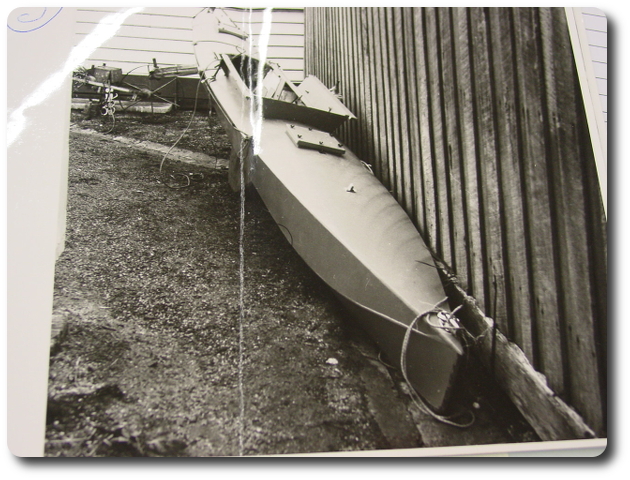
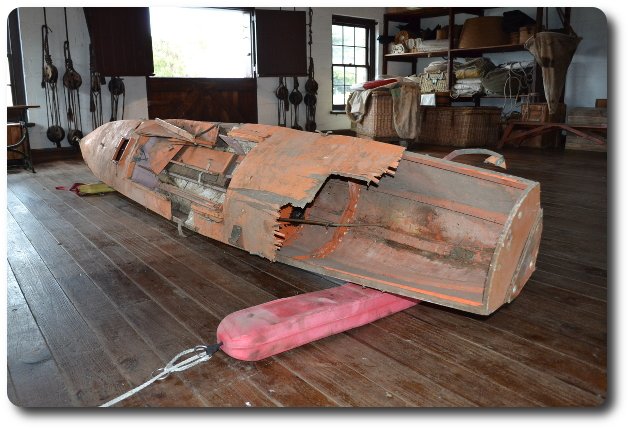
Showing the ravages of time: Alf Altmann’s kayak as it is today.

Flagstaff Hill manager Peter Abbott kindly organised for the kayak to be taken out of storage for us to confirm its heritage and to photograph it. Peter believes the kayak has been with the museum for at least the past 22 years, mainly for safekeeping, but that not a lot was known about its history.

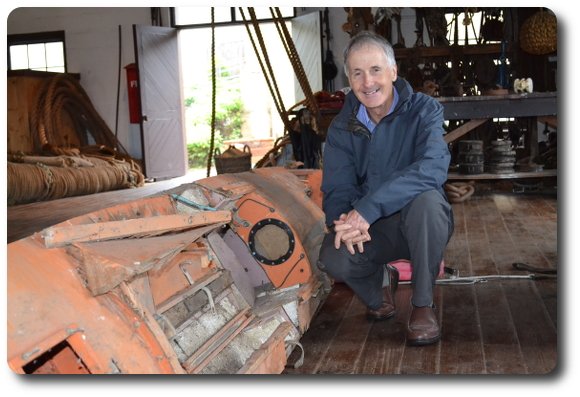
Alf’s second youngest son, Alan, joined us to see the kayak for the first time in at least 30 years and even though there are no immediate plans to put it on display (due to space), he was thrilled to know that at least something of his father’s kayak remained.

The boat is in poor condition, probably due to being moved so much in those early days, with some pieces missing and others falling apart, but it remains a very visual and emotional reminder of Alf’s extraordinary journey.

Perhaps the 50th anniversary of Alf’s voyage –  in 2020 – would be the perfect time to again reveal the “unsinkable” kayak and its story to the public.

For now, however, it is wonderful to know that what remains of the kayak is in safe hands.

alf kayak_6
Alan Altmann with his father’s kayak that he had not seen for more than 30 years before it was traced to a store room in Flagstaff Hill Maritime Museum.