Huge changes afoot as Midfield Meats makes it move
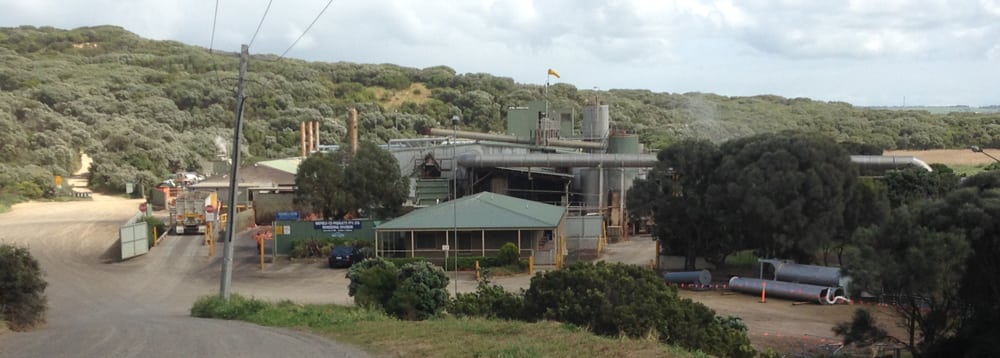
The Midfield Meat rendering plant at Levy’s Point will be shut down and its operations moved to Scott St, Merrivale, under plans officially released today. Image: B&R Enclosures.

By Carol Altmann

Midfield Meats is again shaking the earth around Merrivale and beyond with plans – officially released today (29/8/18) – to shut its rendering plant at Levy’s Point and build a new, $18 million plant next to its abattoir in Scott St.

This is a momentous move, with implications all round.

On the upside, if the relocation is approved by the EPA and Warrnambool City Council, it will free up the Levy’s Point land for the first time in 53 years and shut down what is one of the greatest assaults to the senses ever encountered by cyclists innocently peddling along the rail trail.

The place stinks and when the big gate is open, it is a horror show.

It was only three years ago that Midfield fought and won a long battle to remain at Levy’s Point, but the conditions around that approval – it seems – will cost more in the long run than moving to a new, purpose-built, super-dooper plant at 24 Scott St.

Except…

24 Scott St is near houses – the residential zone is just 250m away.

And 24 Scott St is near a primary school – just 400m away.

These are the two things that Merrivaleans, and others, pointed out when Midfield decided in 2014 that it wanted to build a powdered milk factory in Scott St.

After a huge battle, that project was also approved, but has not yet been built.

Merrivaleans must be exhausted from fight after fight, but it is not only those who live there who need to get their heads around this plan, it is all of us, because it signals a major and permanent change to a part of Warrnambool that is a lot closer to town that Levy’s.

You can read the whole 27-page plan here but here’s a quick summary from the EPA:

– two processing lines, processing up to 400 tonnes a day;

– operating hours will be between 7pm-12am weekdays and 1–5pm on Saturdays, but it will have the capacity to operate 24 hours a day, seven days a week

–  a new, purpose built bio-filter;

– processing carried out in an enclosed building;

– wastewater from the plant and abattoir will be combined and pretreated at the recently upgraded onsite wastewater treatment facility before discharging to the sewer;

– improved energy efficiency, less transport movements and water consumption and eliminate amenity impacts when compared with the existing facility;

– key environmental issues are odour emission control and Q-fever risk management;

– other issues are stormwater management and noise controls.


Nobody can argue against building a better plant, but just like the milk powder factory before it, the concern is not only with what is being built, but where it is being built.

The best rendering plant in the world is still a rendering plant, and I am not sure if that is what we want a stone’s throw from houses, a school and less than 2km from the Warrnambool Base Hospital.

While Scott St is an industrial zone, Warrnambool’s growth has caught up with it. What was once on the edge of town is now within it.

There is no doubt Midfield is an important player in Warrnambool but it has changed too: it now operates on a global scale and, in 2017, was ranked number 769 out of the top 2000 companies in Australia.

According to IbisWorld, Midfield Meat International generated a total revenue of $510,270,000 in 2017. That’s not all profit, of course, but not a bad turnover for just one year.


Given the huge success of Midfield, perhaps it is time to ask why it can’t invest in moving its entire operations right out of town, away from wetlands and houses and schools and our ever-expanding suburbs.

Surely this would provide a solution that works not just for the next 10 or 20 years, but for the next 100, and both Midfield – and Merrivale – could rest easier.

A public information session on the plan will be held from 4pm-6pm, 18 September, Archie Graham Centre, Timor St, Warrnambool.


If you would like to support local, independent journalism, please make a small contribution below.

Donate


Can the Maremmas save Flagstaff Hill?

MeetMaremmaFlagstaffhill
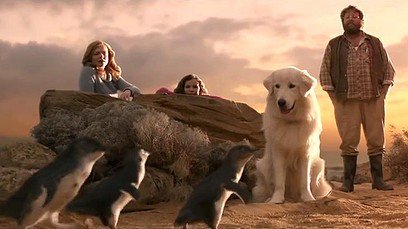
The Maremma dogs are flavour of the month at Flagstaff Hill, but can they really help turn the village around? Image: Warrnambool City Council.

Comment – Carol Altmann

WE all know the ever-vigilant Maremma dogs have saved the population of little penguins on Warrnambool’s Middle Island, but it’s doubtful they can save the Flagstaff Hill Maritime Village.

The 40-year-old tourist village made itself Maremma headquarters ahead of the national release of the movie Oddball, which gives a largely fictionalised version of the Maremma-penguin story and was filmed partly in Warrnambool.

Indeed visitors to Flagstaff Hill can, if they are there at the right time, meet the dogs and buy a made-in-Indonesia stuffed toy to help continue the Maremma program.

Flagstaff Hill manager and head of tourism for the Warrnambool City Council Peter Abbott has also been particularly active – and successful – in trying to generate media coverage for Oddball and its links to our city. (How we stop enthusiastic tourists from wading across to Middle Island itself is another matter).

But behind the scenes, Flagstaff Hill has just recorded its worst visitor numbers in a decade and it’s a long climb back to prosperity.

According to the council, Flagstaff Hill had 54,469 visitors in 2014-15 (excluding functions).

This compares to 60,000 in the previous year and continues the downward slide from the 81,000 that was recorded in 2003-04.

As council CEO Bruce Anson has said before, 80,000 is a break-even position.

This means at least another 25,000 people need to come through the front doors of Flagstaff Hill each year – not to show growth, but to catch up to where it was a decade ago and stop it bleeding around half a million dollars a year.

The “meet the canine stars of Oddball” is part of that plan. The other, even more significant part, involves another movie, if not quite as Hollywood as Oddball.

vd-oddball-408x264
Warrnambool tourism authorities are banking on ‘Oddball’, the movie, to bring more visitors to the city and Flagstaff Hill. Image: Sydney Morning Herald.

This is the $2 million being spent on updating the very-dated Shipwrecked sound and light show as part of a $3 million upgrade of the village.

What this new sound and light show will focus on has not been revealed, despite initial hopes to have the project up and running by now.

When Bluestone recently checked with the council, the project was still at the “expressions of interest” stage, which suggests it has not been easy to find the right people for the job, or perhaps $2 million is not enough to deliver what was hoped for.

In the meantime, the council is ploughing ahead with reconfiguring the front entrance (from memory, this is the third renovation of the entrance since the village opened) to blend the visitor information centre into the complex and improve access to Pippies restaurant.

The difficult truth, however, is that window-dressing the entrance and banking on movies to draw more people does not change the fact that the village itself will remain largely static.

This remains it’s biggest failing and the most common complaint from those who pay their entrance fee to find there is not much happening at all inside the cute buildings.

At best, Oddball will provide a visitor spike to Flagstaff Hill while the movie is fresh, and the new $2 million sound and light show may draw another 17,000 people a year until it, too, becomes dated.

Tower Hill_7
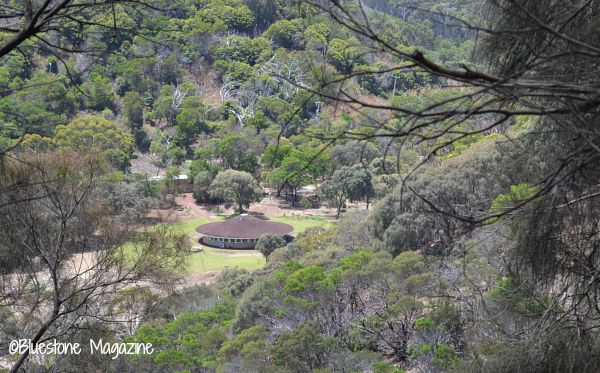
Tower Hill has been named time and again as a potential tourism gem, but struggles for funding.

The short use-by date of these attractions is why I would rather see the millions that are being spent on Flagstaff Hill plunged into our unique, permanent attractions that don’t date.

I am talking about our incredible natural environment and rich indigenous heritage.

We live on one of the most accessible and spectacular coastlines in the world with a rich indigenous history that is only now beginning to be taken seriously by tourism authorities, although there is still a long way to go.

Imagine what Tower Hill could do with $2 million of state funds? A fabulous bush foods cafe/restaurant might be a start.

Imagine how far $3 million would go in developing and promoting a trail linking Point Richie/Moyjil, to Tower Hill and on to the Budj Bim landscape around Lake Condah, Mt Eccles and Tyrendarra? The Budj Bim area is considered so special, it is on the verge of gaining World Heritage status and we should be ready.

If Warrnambool wants to pull tourists further along the Great Ocean Road, then this is how to do it: by becoming the jumping off point to an enduring and unique landscape and culture that fascinates people from around the world.

Tie this culture and landscape to quality accommodation, food and wine trails, biking and hiking and you have an attraction that is much more dynamic and organic than a static village.

This is the sort of long-term thinking required if we really want to see cameras and action, rather than a “spike” that lasts about as long as the popcorn.


Community vision needs to extend city wide

sandilands2
The imminent sale – and at least partial demolition – of the former Sandilands Hotel/Maddens Lawyers building in W’bool is expected to pave the way for new apartments in the CBD.


OPINION – JULIE EAGLES

A vision without a task is but a dream.  A task without a vision is drudgery.  But a vision and a task are the hope of the world.  – Church in Sussex England, 1730.

[quote]

[dropcap style=”color: #a02f2f;”] I [/dropcap]n 2008, over several months, a great process of community consultation involving hundreds of people developed a community vision for the Warrnambool CBD called the Warrnambool City Centre Structure Plan.  The vision was for an ‘alive, thriving, culturally rich city heart.’

We not only developed a community vision for the CBD, but also community values, community goals, preferred development scenarios and five future directions with strategic objectives – in other words – amazingly, we came up with a detailed framework to work towards achieving our community vision!

The people who facilitated this process were incredibly skilled and experienced. The process was fun, creative and interesting and there were lots of ways to participate.

Perhaps most amazingly – because I had never experienced it in Warrnambool before – was the ongoing and detailed feedback and updates to participants and to the whole community throughout the process.

It was, to quote Tanya Egan, (The Warrnambool City Council’s Business Support Manager)  “the most exhaustive public planning process ever undertaken by Warrnambool City Council……in collaboration with the community.”

It was developed in response to a recognition that people were often “frustrated in the past because they hadn’t been asked for input from the beginning”  – underpinned by the principle “that if a community is to own the plans that will shape their future, then it has to participate in developing them from the outset – not somewhere along the way.”

Very big tick.

laneway festival tafe
The series of W’bool laneway events, like this print workshop run by South-West TAFE Creative Arts students, show what can happen when a community works together.

[dropcap style=”color: #a02f2f;”] I [/dropcap] felt very satisfied with that visioning and planning process six years ago. I am sure I’m not alone, however, in being frustrated that nothing much seemed to happen for a long time afterwards.  Or was it that the communication lines seemed to falter and then stop?

After all, we’ve had the wonderful Lighthouse theatre re-development and then the fantastic laneways festival led by The F Project and supported by Council.

Most recently, in the past month, there’s been a follow up, and by all accounts also a very good, community planning process that honed in on re-designing the streetscape for two blocks of Liebig St stretching from Koroit St to Raglan Pde.

This time I chose not to take part, but I’m glad lots of other people did.  I couldn’t quite understand how this process linked to what we’d done six years ago and so either the communication didn’t convey this clearly enough or I missed it.

It could be that I was just not that interested in redesigning two blocks of Liebig St – we don’t all have to be involved in every plan!


fletcher-gardens_21
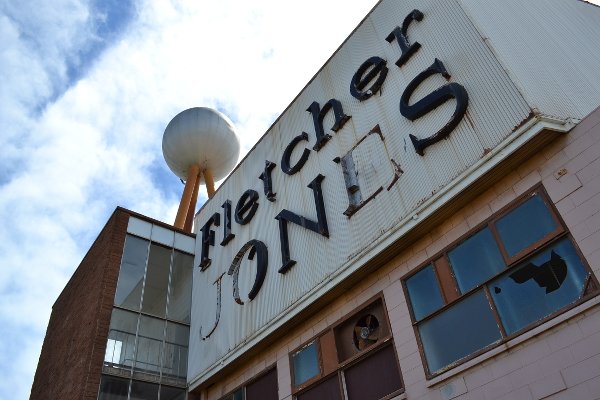
The campaign to Save the Silver Ball and Fletcher Jones Gardens grew from concerns about the loss of iconic buildings and structures in Warrnambool.


[dropcap style=”color: #a02f2f;”] I [/dropcap]n 2009, just after the community visioning process for the CBD, I joined the council’s City Development Advisory Committee where we received lots of information and requests for our input into all sorts of plans.

All of these plans were important at various levels, but I got lost in the detail and I couldn’t see the guiding vision and values that held them all together: I was interested in seeing the community vision, values and goals that guided all of these plans.

And this is what I would still love to see and what I think we really need: a community vision that inspires, guides and drives all our plans for development in Warrnambool (and our town centres of Woodford, Dennington and Allansford).  

A community strategic plan, a city wide structure plan… whatever ‘planning speak’ might label it.

Developing a city-wide community vision is about shaping our future within the context of the changing and challenging global, national, regional and local worlds in which we exist.  The people who ran the CBD visioning process six years ago understood this.

One of the questions they asked was – what are the external trends and issues affecting the City Centre today that may influence the future?  The facilitators believed that within any community all the skills, knowledge, passion and capacity necessary to progress already exist.

They were guided by a set of principles for “helping groups move from uncertainty to purpose.”

These include that:

  • Council is part of the broader community team and not the fount of all knowledge and power.
  • Council’s role is to show leadership by bringing people together in an environment where everyone feels secure about sharing their hopes, aspirations and views and that, in a safe space, people will focus on common ground, not on difference.
  •  For things to happen, Council must work collaboratively with all the players in that complex network of organisations and individuals that make the community function every day.

I was always thinking during that process – wouldn’t it be great if we were doing this not just for the CBD, but for the whole of our city!

city warrnambool
A revamp of the northern end of Liebig St is the first major project to grow from the community driven CBD plan developed six years ago.

[dropcap style=”color: #a02f2f;”]A [/dropcap] city wide visioning process would allow community debate and discussion about our strengths and what we think are the key issues and challenges facing our city now and in the future.

It would allow us to talk about our aspirations and dreams and what we most value about our community and our natural and built environments.  To talk about what give us our sense of place and belonging?  What do we want to preserve, what do we want to create, what do we want to change?

Community visioning projects are now fairly commonplace across municipalities around Australia (and the world).  The community visioning process for the CBD, that began 6 years ago, deserves to be replicated to a city wide plan.

In many ways, we can’t afford not to do this.

As somebody said to me recently “if you don’t know where you’re going, you’ll probably end up anywhere.”

[box] Julie Eagles has been a leader of the Warrnambool Planning and Heritage Group (WPHG) since 2006. ‘Save the Silver Ball and Fletcher’s Gardens’ campaign is an offshoot of WPHG and their work to highlight issues that contribute to demolition by neglect of important heritage places.[/box]

[button link=”http://the-terrier.com.au/subscribe-2/” type=”icon” icon=”heart” newwindow=”yes”] Did you enjoy this story? Please subscribe here to help Bluestone thrive.[/button]

newsletter Eat And Drink StonesFind more Opinion pieces here…


Ignore Shaw and focus on the real issues: Roy Reekie

Scrap trader levy and start over

Motor museum to revive Fletcher Jones

Traders are right to be asking questions

Be all things, or stick to the basics?

What is holding Portland back?


The sculptor who helped save the snipe

don stewart1
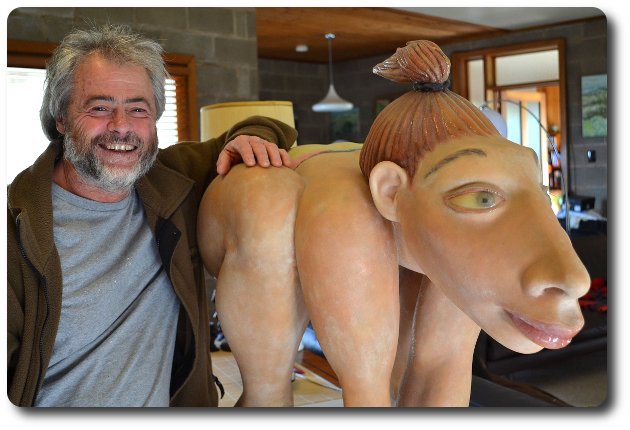
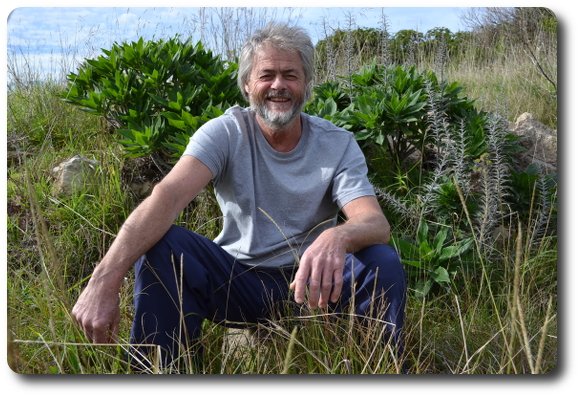
Port Fairy sculptor Don Stewart with one of his creations. Lately it has been his activism, as much as his art, that has propelled him into the headlines.

By Carol Altmann

On first appearances, Don Stewart looks more like the artist that he is and much less like the robust activist he has become.

Yet the slightly-built, soft-spoken, always-smiling sculptor from Port Fairy has been a central figure in one of the longest-running planning sagas to hit the town and which has only just been resolved.

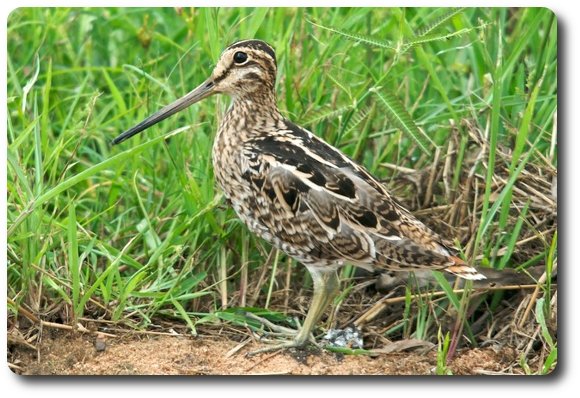
In a battle which stretches back 14 years, Don – and a small group of determined, like-minded souls – has fought to protect the habitat of a migratory bird called Latham’s Snipe that arrives between August and April each year from its breeding sites in Japan to rest up at the Powling St wetlands.

The wetlands are just a short walk from Don’s home and studio near Port Fairy’s South Beach, where Don is usually immersed in creating his wonderful fibreglass sculptures that capture a sense of character and fun.

There has been less fun, however, around the tug-o-war that developed when a large portion of Moyne Shire council-owned land adjacent to the wetlands was sold in 1998 to a former council engineer, since retired, John Bock.

lathams snipe
Worth fighting for: the Powling Street Wetlands in Port Fairy are home to one of the largest congregations of Latham’s Snipe in Australia.

“Mr Bock”, as Don always calls him, had hopes of converting the 3.5ha space into 43 building blocks but this would, Don explains, have spelt disaster for the snipe which relies on the protection of tall grass and the sustenance of the nutrient-rich wetlands.

Powling St is one of the few sites in Australia where the snipe still congregates in large numbers.

“In my view, nothing should be built there, because there are only about 36,000 of these birds left in the world and we have one of the largest habitats right here,” Don says.

Indeed, a congregation of 18 migratory birds is considered to be of national significance and 360 birds is of international significance: the Powling St wetlands has recorded up to 430 Latham’s Snipes.

Don, his wife Sherril, who is a retired art teacher, and their neighbour, author Jodie Honan, were founders of the South Beach Wetlands and Landcare Group that was set up in 1999 in response to the Moyne Shire Council’s decision to sell-off part of the site and they began to actively monitor and care for the wetlands area.

Using their first-hand knowledge, backed by expert opinion about bird habitats, the group mounted not one, but two challenges through the Victorian Civil and Administrative Tribunal (VCAT) against Mr Bock’s proposals.

don stewart2
Don on a patch of the Powling Street Wetlands that has been at the middle of an intense battle about its future.

The first, in 2008, resulted in Mr Bock having to revise his plans, which he did, reducing the subdivision to 32 blocks, including one allotment that would be given back to the council and added to the wetlands. The revised plans were put to the council last year and approved.

Most people would have given up there, but Don Stewart and the South Beach Wetlands and Landcare Group are not like most people. Just as it takes time and enormous patience to create a life-size figure in fibreglass, Don knew it would take patience to protect the snipe.

Don and Jodie, this time represented by Environmental Justice Australia (formerly the Environmental Defenders Office), returned to VCAT this year and argued that 32 blocks was still too many. VCAT agreed and reduced the number to 23, with a number of conditions, including that a protective fence be built around the snipe’s habitat. It was a significant victory for the Landcare group.

“It is a good decision and probably the best decision we could hope for, but whether the birds actually stay around once the development goes ahead, we won’t know until it is built,” Don says.

latham snipe1
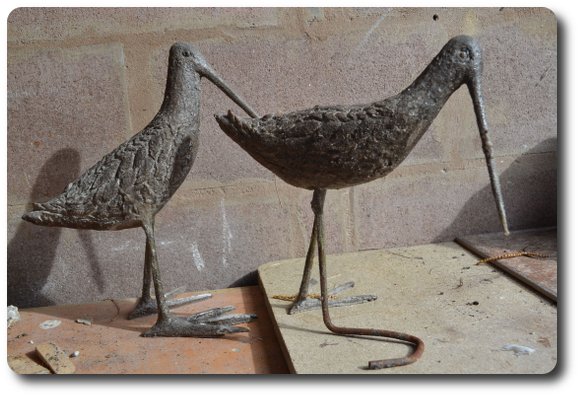
Don has created fibreglass versions of Latham’s Snipe: “Jodie says the legs are a bit too long.”

Don suggests we wander out to see the wetlands and guides me through a wire fence and onto an invisible council “road” that cuts through the private land owned by Mr Bock. As long as we stay on the “road”, he explains, we are not trespassing.

As it happens, Mr Bock – who no longer lives in Port Fairy – is down for a few days to mow his land and he spots us in the distance. I wave (what else do you do?) and he takes the opportunity to glide over on his ride-on mower to say hello.

Suddenly, I am standing between the two antagonists in what has been a long and no-doubt often heated battle, and for the first few minutes neither looks at the other as they talk. (Gulp.)

But then, Mr Bock – who I remember from his days at Belfast Shire Council – says two extraordinary things. The first: “you can’t cry over spilt milk”. The second, this time looking directly at Don: “I saw one of your snipes today”.

Don, now looking directly at Mr Bock, replies: “Really? Wow, that is late (in the season). I will have to make a note of that.”

And in that single moment – after 14 years, two VCAT hearings, endless legal argument and a lot of anxiety and stress on both sides – it felt like something of a truce.

don stewart3
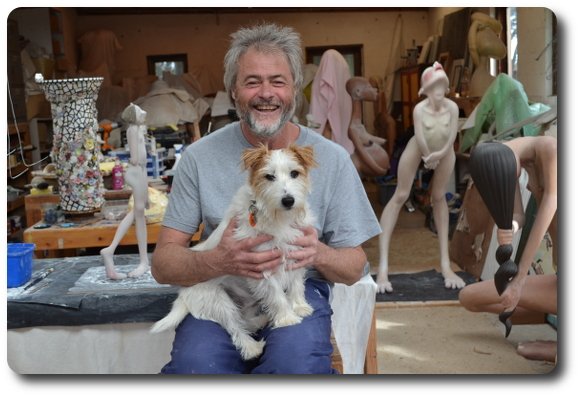
Don at home in the studio, with dog Tuff: “It’s a good decision and probably the best decision we could hope for.”

The South Beach Wetlands and Landcare Group holds regular stalls at the Port Fairy Farmers Market to raise funds to pay its legal bills from the VCAT battles. Don Stewart and Jodie Honan both contribute work for sale.


Our quiet heroes: those looking after nature

Ann and Stella from Warrnambool Coastcare Landcare.

[dropcap style=”font-size: 60px; color: #8F9F59;”] O [/dropcap]ne of the many beautiful things about living in South-West Victoria is the wild environment that surrounds us, from the ocean, to the rivers, the estuaries and the native bush.

While we are so fortunate to have access to such natural beauty, there is a legion of volunteers who are doing their bit to keep it that way and to reduce the environmental impact of humans.

South-West Victoria is home to several well-established and active environmental groups, including Friends of Merri Marine Sanctuary, Making a Difference for the Merri, Friends of Ralph Illidge Sanctuary and the Warrnambool Coastcare Landcare Group.

It is the latter that we have chosen as our hero of the week after finding two of its members – Ann and Stella – hard at work digging out weeds and knee-high grass from an area known as Harris on Merri, near the Rail Trail in South Warrnambool.

We reckon that getting down on your hands and knees and weeding for several hours in order to make a public space more beautiful is worthy of reward: if only the small one that we offer. Thankyou Ann and Stella, and all those like you.

If you would like to know more about landcare groups in the area, the Basalt to Bay Landcare Network is a great place to start. Check their website here.

[box] Bluestone Magazine is donating a voucher for coffee and cake to each of our quiet heroes. This week it will be Lozzar’s Lounge Cafe, 52A Kepler St, Warrnambool.[/box]

Logo Smile newsletterWho are our other quiet heroes?


The artist

The face behind Fifteen Minutes of Fame

Embracing diversity

The musician