Former Cr Neoh says sacked CEO showed “dog video” for report
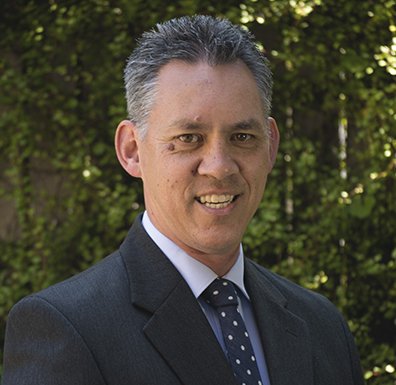
Former Warrnambool City Councillor Michael Neoh. Image: WCC

Carol Altmann – The Terrier

Former Warrnambool City councillor Michael Neoh claims sacked CEO Peter Schneider showed councillors a dog video as a progress report, and that it was hard to “pinpoint any strengths” in his performance.

Mr Neoh is the third of the four councillors who voted to sack Mr Schneider on 13 July to submit a sworn affidavit to the Supreme Court defending his actions in the face of a civil claim by Mr Schneider that he was denied natural justice.

In his eight-page affidavit lodged today – two days after the revised 3o October deadline – Mr Neoh denied claims by Mr Schneider that the responses of four councillors to a “360 survey” of his performance had been vindictive and spiteful.

Instead, Mr Neoh claims, “…it was difficult to identify areas in which Mr Schneider came close to exceeding average and it was difficult to pinpoint any strengths he had demonstrated.”

“This was my honest assessment and was consistent with the general view of the Councillors that they were unable to identify a single area in which Mr Schneider excelled.”

The affidavit then gives a specific example of what Mr Neoh claims were Mr Schneider’s inadequacies, involving – of all things – a dog video.

“…during Mr Schneider’s review, after six months at the Council, he was asked to report on progress to-date to the full Council. He presented a dog video and said his partner provided afternoon tea for some volunteers.

“I waited for the rest of his presentation but there was nothing else. I found it very disappointing that such a presentation would be deemed, by a CEO of a regional city, to be adequate,” the statement says.

Mr Neoh said, as with most new staff, “I allowed Mr Schneider some leeway so that he could adjust and become familiar with the organisation” but alleged Mr Schneider’s performance did not improve.

“As such, I accepted some business as usual, but I did not expect that settling-in period to prevent Mr Schneider from demonstrating leadership, vision, energy, networking and engagement with key stakeholders.”

In line with the affidavits of former Crs David Owen and Sue Cassidy, which I have published earlier today, Mr Neoh alleges Mr Schneider failed to resource the Warrnambool 2040 plan, despite it being a clear priority.

Staff survey results and community satisfaction survey results were also extremely poor.

“…the staff surveys disclosed that the bullying (being experienced by some staff) and a lack of direction by management were the main issues which concerned the staff.

“Contrary to the assertion by the Mayor (Tony Herbert), these were not restricted to legacy issues, in particular, the concern about the lack of direction”.

As with Ms Cassidy, Mr Neoh said he signed off on Mr Schneider’s pay rise in March, as it was linked to CPI, “rather than performance”.

The evidence also, for the first time, sets out Mr Neoh’s involvement in seeking legal advice on Mr Schneider’s dismissal.

This advice included a series of emails between Mr Neoh and the council’s lawyers, Maddocks, between 12 June and 28 June.

Mr Neoh said he sought advice from Maddocks, following verbal advice from Alison Lyon, General Counsel of the Municipal Association of Victoria.

He then “either forwarded the emails from, or the wording of the resolutions drafted by, Maddocks to Cr Gaston” as she was submitting the draft motions to Mr Schneider to be accepted on the notice paper.

Mr Neoh then discussed that advice with Crs Gaston, Cassidy and Owen in the lead up to the meeting on 13 July 2020.

The evidence also claims Mr Schneider did not meet “expectations” when he failed to report David McMahon’s credit card abuse to the council’s Audit and Risk Committee – of which he and Ms Cassidy were members –  although Mr Neoh concedes there was no obligation for a CEO to do so.

The affidavit also reveals that an external audit of the council’s credit card policies was never endorsed by the Audit and Risk Committee (and therefore not the council), as it failed to address when Mr Schneider was first told about the credit card abuse.

Mr Neoh tried to raise this with the Ombudsman as part of her investigation into the abuse, but was told by the Ombudsman’s office on 28 September that his submission was too late and too close to the council election.

As with former Crs Owen and Cassidy, Mr Neoh denied that his actions in sacking the CEO “have resulted in any damage to Mr Schneider’s reputation as alleged or at all”.

Former Cr Gaston has, to date, not submitted sworn evidence in the case, which is due to be heard on 1 February next year.

If you would like to keep The Terrier typing, please consider throwing something in the tip jar.
Terrier Tip Jar


Former Cr Cassidy on WCC chief: “what does he do all day?”

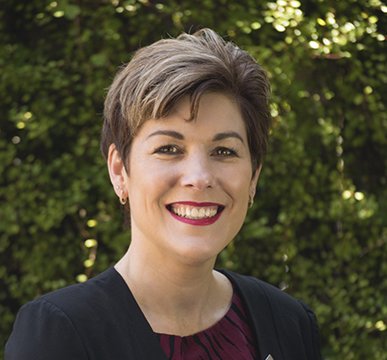
Former W’bool City Councillor Sue Cassidy. Image: WCC

Carol Altmann – The Terrier

Former Warrnambool City Councillor Sue Cassidy has lodged an affidavit defending her decision to sack CEO Peter Schneider, including – at one point – asking the Mayor what the former CEO “did all day”.

Ms Cassidy’s 10-page affidavit was lodged in the Supreme Court earlier today in response to Mr Schneider’s civil action against the council, in which he claims he was denied natural justice when he was sacked on the vote of four councillors on 13 July this year.

Ms Cassidy’s evidence reaffirms many of the claims made by former Cr David Owen in his affidavit which I wrote about earlier today, but contains detail of other allegations, including that all councillors (other than Cr Peter Hulin who had resigned) met with Mr Schneider on 21 February and raised a number of concerns about his performance.

These included:

complaints made by staff about bullying;

concerns of staff about the lack of action in filling vacancies;

lack of positive engagement with the media;

stopping work on the Queens Rd fishing pontoon without a Council resolution;

a failure to fill staff vacancies including the Governance Manager; and

the overly close relationship between Mr Schneider and the then Mayor Tony Herbert.


Ms Cassidy said after Mr Schneider left the meeting, the Mayor was told to inform the former CEO that he had one month to improve.

Ms Cassidy alleges that two days after this meeting, on 23 February, she attended a meeting at Mr Schneider’s private home organised by Mr Herbert and “we informed Mr Schneider that he had a month to address the concerns. Mr Schneider assured us that he would take steps to address those problems”.

It was because of this assurance, Ms Cassidy says, that she agreed to the recommendation (from an independent member of the CEO employment committee) that Mr Schneider receive his CPI pay rise in March.

Ms Cassidy says the councillors continued to raise their concerns regularly with Mr Schneider during briefings, but her evidence suggests he continued to fail to meet their expectations.

“Whenever I asked the Mayor, ‘what does he do all day’ he replied that he did not know what Mr Schneider did,” the affidavit says.

“It was not until the last week of Mr Schneider’s employment that the Mayor attempted to explain to the councillors what Mr Schneider did.”

Ms Cassidy also claims that the former CEO failed to act on claims of bullying, despite showing an early willingness to do so, including allowing staff who had been subject to bullying to contact him on his private mobile.

When Ms Cassidy followed up these claims with Mr Schneider in May, he allegedly told her that “there were no bullies at the council and that it was just their personalities and staff had to learn how to deal with these personalities”.

“It was then I realised that Mr Schneider was not capable of improving the culture at the Council,” the affidavit says.

Ms Cassidy’s affidavit also raised concerns about the uncertainty around the outcome of the staff review and fears that staff would continue to leave,  jeopardising the future of projects including the Reid Oval redevelopment.

Intriguingly, Ms Cassidy’s evidence also provides more detail of Mr Schneider’s psychometric test that was leaked to her in the mail. 

According to Ms Cassidy, she received an anonymous envelope in her letterbox on 23 December last year which contained a sheet of paper with the names of all the applicants who had applied for the position of CEO, together with their psychometric test results.

Ms Cassidy said she was surprised to receive the document and didn’t know what to do with it, but as it was Christmas, she put the information aside.

It was only in the new year that Ms Cassidy showed the information to the chair of the Audit and Risk Committee, Rob Wallis, who advised her not to do anything with it, then Mr Schneider, who was “shocked” that she had the information, and also to Cr Peter Hulin at a breakfast meeting in January.

In April, former Cr Robert Anderson asked for an investigation into the leak: “At the time of swearing this affidavit, I had not been informed of the outcome of that investigation”.

Ms Cassidy’s evidence gives further insight into the mood of the 13 July meeting where Mr Schneider was sacked and where, allegedly on legal advice, the four councillors behind the sacking declined to answer questions from the other three councillors.

Ms Cassidy claims former Cr Peter Sycopoulis used language that “was intended to bully and intimidate” the four councillors including words to the effect of:

“we would lose our houses and anything else we had because of what we were going to do” and “he would not want to be in our shoes” and “we were going to fuck the city he loved”.

The case is due to go before the Supreme Court on 1 February.


Former Cr Owen outlines reasons for sacking WCC chief

Former W’bool City Councillor David Owen. Image: WCC.

Carol Altmann – The Terrier

Just in: Sworn evidence by former Warrnambool City Councillor David Owen sheds some light on why he was one of the four councillors who voted to sack CEO Peter Schneider.

The five-page affidavit was received by the Supreme Court at 6.30pm last Friday 30 October, which was the revised deadline for the Warrnambool City Council to lodge any affidavits in defence of Mr Schneider’s claim that he was denied natural justice when he was sacked on 13 July.

Mr Owen claims in his affidavit that, among other things, Mr Schneider:

was slow to act on decisions of the council;

had failed to replace a key staff member who had resigned in September last year (former Manager Community Policy and Planning Lisa McLeod);

had stalled the building of a fishing pontoon on the Merri River after unfounded complaints from former councillor Peter Hulin;

and that Mr Schneider was “sidelining” the Warrnambool 2040 plan.

The affidavit also claims that a staff survey had revealed “poor morale amongst staff due to a lack of direction from the CEO” and that “workplace bullying was also an issue”.  Mr Owen also alleges that, after the credit card scandal, staff felt nervous to use their credit cards “around Mr Schneider because he repeatedly told them that he was going to investigate them all”.

Mr Owen rejected claims by Mr Schneider that his responses  to a “360 review” of Mr Schneider’s performance had been “vindictive” and “spiteful”, but instead “accurately indicated my perception of his level of performance”.

“I have worked with many CEOs in the photographic industry. I scored Mr Schneider on his merits in the 360 degree survey as I had previously done when assessing the performance of these other CEOs.

“Someone who is earning $1000 a day must deliver a level of performance that justifies that level of public expenditure,” the statement says.

Mr Owen said he also participated in the six and 12 month reviews of Mr Schneider’s performance on the basis that they were “intended to help Mr Schneider, who was new to the role of CEO, to find his feet”.

Mr Owen claims that he had approached Mr Schneider over a number of months asking that he replace Ms McLeod, who was a key driver of the Warrnambool 2040 plan which aimed to “address the effects of climate change and other challenges”, but Mr Schneider failed to do so.

“…it became clear to me that he (Mr Schneider) was sidelining the Warrnambool 2040 Plan,” the statement says.

“…Mr Schneider was very slow to act on anything and, consequently, a number of important projects like the Warrnambool 2040 Plan did not proceed as they should have or just stalled”.

Mr Owen said he considered that “Mr Schneider’s performance had been of  a standard which warranted the termination of his employment” and the four councillors acted upon the advice of the council lawyers, Maddocks, to terminate his contract without providing a reason.

“(I) deny that my actions have resulted in any damage to Mr Schneider’s reputation, alleged or at all,” the affidavit says.

Mr Owen also responds to claims made under oath by former Mayor Tony Herbert that the four councillors refused to mediate or negotiate with Mr Schneider just prior to his dismissal, and refused to answer questions from the other three councillors on the night of the sacking.

Mr Owen says that by 14 June, a month before the sacking, “Crs Gaston, Neoh, Cassidy and I were beyond discussion or mediation with Mr Schneider”.

He then goes on to say that all four councillors were “acting on legal advice, received from Maddocks, including the advice conveyed to us by Cr Neoh, that we should avoid discussing Mr Schneider’s performance.

“Accordingly, I did not respond to any of the questions put to us at the meeting on 13 July 2020, regarding Mr Schneider’s performance.

“During the meeting, I said “let’s get this done Tony, so we can all go home”. I did not say “when will the meeting be finished as I want to go home.”

Mr Owen also denied that at any time he spoke to Community Services Manager Vikki King about her becoming the Acting CEO.

The affidavit also claims the recruitment process for the CEO was flawed, as nine applications were later found to have gone missing. Access to Mr Schneider’s psychometric test – which was later leaked to Cr Sue Cassidy in the mail – would have also changed Mr Owen’s mind about Mr Schneider’s suitability for the job.

“…had the psychometric test results been submitted to councillors during the recruitment process, I would not have supported the appointment of Mr Schneider…the decision to employ Mr Schneider may not have been made”.

Mr Owen is, to date, the only councillor of the four who voted to dismiss Mr Schneider to submit sworn evidence. Acting CEO Vikki King also submitted an affidavit.

The case, in which Mr Schneider is seeking reinstatement, is due to be heard on 1 February next year.


Red zone: Lyndoch posts $1.9m deficit, assets slide by $20m

Despite a 2019 spending spree which included buying the Warrnambool Medical Clinic, Lyndoch’s overall asset base is going south.

Carol Altmann – The Terrier

Lyndoch Living last financial year recorded a $1.88 million loss – its fifth deficit in five years – and its bottom line has gone backwards by $20 million since 2015.

This, unlike what was reported in the local paper after last Tuesday’s invitation-only Annual General Meeting, is the reality behind the spin.

Here is the nub: Lyndoch is not growing, but going backwards, and we need to know why, especially as it pushes on with a $100 million masterplan funded mostly through loans.

We also need to ask why, in the face of such losses, Lyndoch continues to hire more executives on executive salaries, but more about that later.

First to the numbers, which are so easy to spin.

What Lyndoch pushed in the newspaper, and in a piece of puffery it produced for the AGM called a “Community Report”, was a measure called an “underlying profit” of $2.18m.

As has been pointed out by Deloitte, underlying profit is one measure that can be “useful” to judge financial performance, but can also be “misleading if used to mask bad news”.

And Lyndoch had some bad news.

The thing is that Lyndoch’s $2.18m “underlying profit” doesn’t take into account expenses such as interest on loans, depreciation, under-performing investments, and taxation.

These are real costs and when these costs are factored in, Lyndoch’s “profit” vanishes.

In fact these costs chewed up more than $4 million and Lyndoch ended the financial year not in surplus, but $1.88 million in the red.

This is the figure we should be looking at.

This is the  “total comprehensive income” – and it is not good news.

Even more troubling, however, is the slow and steady decline in Lyndoch’s bottom line (its net assets) over the past five years.

This has fallen by a staggering $20 million from $69m in 2015 down to $48m in 2020.

Despite Lyndoch last year buying the Warrnambool Medical Clinic, the Health Spot clinic and the May Noonan hostel in Terang for a cost of around $3.3m, its asset base has not improved, but gone backward.

As one learned accountant said to me last week, “this is a company that is diminishing, not growing”.

Again, this is not good news.

Like last year, we will have to wait until late January to see the line-by-line figures reported by Lyndoch to the Australian Charities and Not-for-Profits Commission, because these days Lyndoch provides just a simple snapshot at its AGM.

Only by seeing the line-by-line figures will we see the full picture.

Nobody asked a single question at the AGM (test: try and find the video buried on its website here), which is not surprising, given Lyndoch does not allow any outsiders to become members let alone board members.

To me, the fact Lyndoch now has a new, fast-tracked president in hairdressing salon owner Sue Cassidy, who has no experience or qualifications in health, disability or aged care, is troubling.

But the lack of any open and robust accountability around Lyndoch in real-time is frightening.

I do, however, know this: just three days after posting a $1.88m deficit, Lyndoch advertised for yet another high-paid executive to join its ever-expanding executive team.

This newly created position for a “Director of Enterprise, Research and Education” is being advertised internally only and applications close in less than two weeks, which suggests someone is already being lined up for the role.

(My tip is the Acting Director of People and Resilience, Julie Bertram, a retired director of South-West TAFE, who has been filling a maternity leave position.)

It’s a powerful role and includes acting as CEO when the CEO is on leave, which previously fell to the Director of Nursing.

Five years ago, when Lyndoch hired its new CEO Doreen Power, Lyndoch had 37 people in administration. By 2019 it had 59.

All indications are that it is now above 60.

I wonder how the nurses and personal care workers and “hands-on” staff caring for the residents across Lyndoch feel about that?

As always, I wait for the board or our local MPs to ask the hard questions on our behalf and, in the meantime, we all just keep chipping away.

If you would like to support the work of The Terrier, please consider a small monthly tip into the tip jar.

Terrier Tip Jar


Acting CEO King denies knowing plan to sack WCC chief

Acting W’bool City Council chief Vikki King and the four councillors behind the sacking of the former CEO Peter Schneider. Images: WCC

Carol Altmann – The Terrier

Just in: The Supreme Court has just released an affidavit lodged late yesterday (30/10/20) by acting Warrnambool City Council CEO Vikki King in relation to the sacking of CEO Peter Schneider.

The five pages of sworn evidence responds to claims made by Mr Schneider and former Mayor Tony Herbert in their affidavits lodged last month.

The evidence does not shed any light on the motivation or justification for Mr Schneider’s sacking, but sets out Ms King’s working relationship with the councillors involved.

In particular, Ms King denies claims by Mr Herbert that she was privy to the move to sack Mr Schneider on 13 July and had been in discussions with Michael Neoh, Kylie Gaston, Sue Cassidy and David Owen about his removal.

This speculation that she “…had been involved in discussions with all or, one or other, of Councillors Gaston, Neoh, Cassidy or Owen” is entirely without any foundation,” the statement says.

“I had not been privy to any discussions about Mr Schneider’s position with any Councillor and had not been given any indication or been “sounded-out”, about acting as the CEO.”

Ms King also denied the inference in Mr Schneider’s affidavit “that I had, or presently have, any close, personal relationship with any of the Councillors and say that during my 11 years in local government, I have never socialised with any Councillors or staff on a personal level, let alone maintained any such friendship or other close personal relationship”.

Ms King said she had worked closely with Crs Neoh and Gaston during their times as Mayor and when she was previously acting CEO – just as Mr Herbert, as Mayor, had worked closely with Mr Schneider.

“Such a working relationship was “unremarkable and common place” in local councils, the statement says.

Ms King also denies any particularly close relationship between the former Manager of Governance and Risk, Anne-Marie Neal, and the four councillors, saying it would be “impossible” for anyone to perform this role “without working very closely with all the Councillors”.

“I, otherwise, say that Ms Neal’s conduct, to the best of my knowledge, gave me no reason to doubt that her interaction with all the Councillors was entirely professional,” the statement says.

Claims by Mr Herbert that Crs Gaston and Neoh were close to former CEO Bruce Anson are also denied:

“…my observation of the relationship between Mr Anson and Crs Gaston and Neoh, from August 2015 to late 2018 (when Mr Anson retired) was not as alleged by Cr Herbert but was entirely professional and consistent with the close working relationship which is both necessary, and unavoidable, between a CEO and mayors (and Councillors),” the statement says.

Ms King’s affidavit also includes a recollection from the night of Mr Schneider’s sacking, where she learned she would be Acting CEO:

“Cr Herbert telephoned me after the special council meeting on 13 July 2020 and, to the best of my recollection, said words to the effect that, “Council sacked Peter tonight and you’re CEO for now”.

“After a long sigh, Cr Herbert said words to the effect that, “I suppose we should meet in the morning” and he said, in response to my question, that the meeting would be at 9am. The call was extremely brief.”

“The Terrier” also makes a cameo appearance, with Ms King rejecting a claim by Mr Schneider that he only learned of the credit card scandal after reading The Terrier, and had not been previously briefed on the matter.

“…insofar as Mr Schneider appears to suggest that he did not know of the credit card issue until the publication of the material by “The Terrier”, Mr Schneider had been briefed by me about that issue, on 11 February 2019, in the course of the hand-over to him upon his commencement as the CEO.”

Ms King’s affidavit, to date, is the only sworn evidence that has been lodged with the Supreme Court in defence of Mr Schneider’s claim of being denied natural justice and seeking reinstatement.

No affidavits have been lodged by the four councillors.

The revised deadline for these affidavits was yesterday at 5pm, after lawyers representing the WCC requested more time.

A hearing has been scheduled for 1 February 2021, where a judge will make a decision based on the evidence provided – there will be no witnesses called.

The saga rolls on.