Hang on, where did the W’bool City Council just find a cool $1 million – okay $985,000 – for major works at the Aquazone?
The 2018-19 budget set aside $540,000 for a new water treatment plant at Aquazone. That’s on the record.
But the proposed 2019-20 budget – the one we are chewing over now – doesn’t mention Aquazone works at all.
I also don’t recall major Aquazone works being included in any council conversations around raising rates next year by 4.5%, as it hopes to do.
Despite all of this, the paper today says $985,000 will be spent on water treatment and improving air quality at the pool.
So where is the extra $440,000 coming from?*
It is also worth mentioning that the council has flagged that Aquazone, which is less than 20 years old (it opened in 2002), is almost at capacity and will need to be expanded and seriously upgraded in the near future.
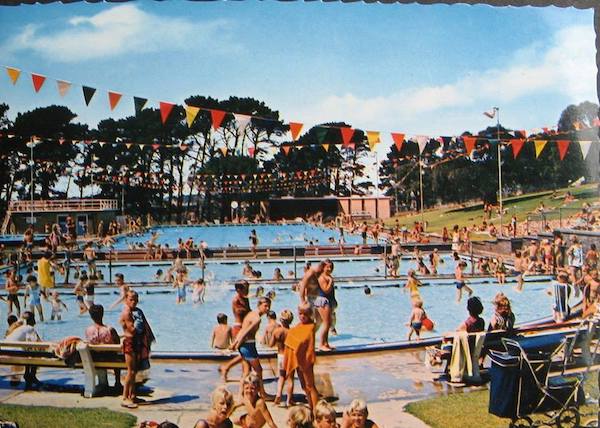
By contrast, the old pool it replaced (warning: nostalgia alert) was built in the 1960s and served tens of thousands of Warrnamboolians.
Our original old pool needed updating, and pools are expensive to maintain, but I have a sinking feeling that the $1 million plunge into Aquazone this year is just the beginning. Do you?
(*I will attempt to get an answer to this tomorrow, it is my birthday today. Don’t ask how old I am in dog years, it is scary.)
Terrier titbits: 30kph zones, old trees and an election
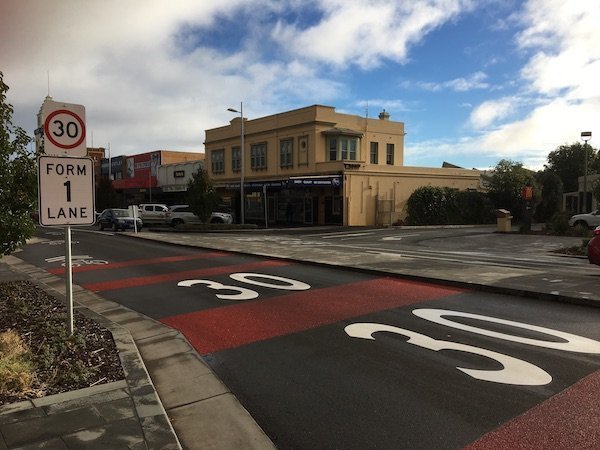
Life in the slow lane: 30kph zones are being introduced around the CBD.
Carol Altmann – The Terrier
Three interesting things and a question:
Titibit #1: If you were wondering why a series of red bars have suddenly started popping up on intersections around the CBD, here’s the answer: the introduction of a 30kph speed limit.
The new, slower speed limit was one of the many things bundled into the now $18 million upgrade of Liebig St but, as far as I can see, it hasn’t been mentioned or discussed widely since it was first raised as an idea for Liebig St in 2014.
From what I have found, Warrnambool is the only place in Victoria outside certain parts of Melbourne to introduce a 30kph zone and the idea, of course, is to slow the traffic down to make life safer for pedestrians.
There is nothing wrong with that concept, but given the amount of traffic controls now in place in Liebig St – with more zebra crossings, roundabouts and speed humps than you can count – is it really necessary?
And is it necessary to extend it from Liebig St to other parts of the CBD where the limit is 50kph?
I haven’t seen any statistics on the number of pedestrian injuries around Kepler St/Raglan Pde, for example, or Banyan/Timor St, which are just two of the intersections now getting the red stripe treatment.
Driving at 30kph really is snail’s pace – it’s 10kph slower than for school zones – and I can’t see people sticking to it outside of the main street where the speed is already restricted by design.
The annual losses on Flagstaff Hill are now reaching an eye-watering range of more than $750,000.
Titbit #2: The draft Warrnambool City Council budget/s and its submission to the Essential Services Commission to ask for a 4.5% rate rise contains so many gems, I am not sure where to start, but I will list a few during this week, starting from today.
First, according to the ESC submission, Flagstaff Hill – my old hobby horse – and the Visitor Centre ran at a loss of $1.79 million in 2016-17 and $859,061 last financial year.
It is expected to run at a loss of around $750,000 each year for the next three years, which is $100k more than anticipated and getting close to double the losses of around 10 years ago.
This is eye watering.
By the way, it is worth mentioning that Colac Shire Council is raising its rates by a mere .5% this year. They were thinking of going for 2%, the same as last year, but that was knocked back by a majority of councillors. It is also worth mentioning, again, that out of 79 councils in Victoria, only two are applying to break the rate cap and we are one of them.
Despite a recommendation they be saved, two 115-year old Moreton Bay figs on Raglan Pde are still not safe from the axe.
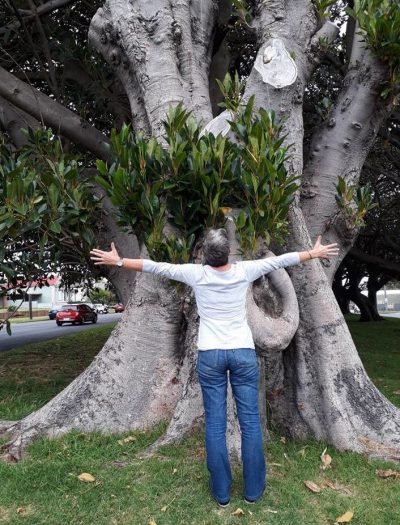
Titbit #3: Enormous public pressure and several thousand signatures on a petition saw council staff recommend recently that the two 115-year-old Moreton Bay figs at the corner of Banyan St and Raglan Parade be saved.
Yay! Sanity prevails.
But wait…
No, they are not saved, yet, because the councillors deferred making a decision so they could – once again with feeling – look at the whole Banyan St streetscape and – once again – try to find out how much it would cost to plant coastal banksias down the southern end because Infrastructure head Scott Cavanagh had no real idea.
Good grief, the people of southern Banyan St have been waiting for five years to get this sorted. Five years.
Worryingly, as part of the debate Cr David Owen – he who loves trees – described the two Moreton Bay figs as “freaks” because of their bad pruning and said should be removed.
Why, as has been said elsewhere, do councillors ignore most petitions unless they give them the answer they wanted in the first place?
And a question….
Speaking of petitions, how ironic that the WCC is part of a petition for better roads in our area.
Judging by the years of neglect in road funding so far, the council might find its own petition efforts are also ignored.
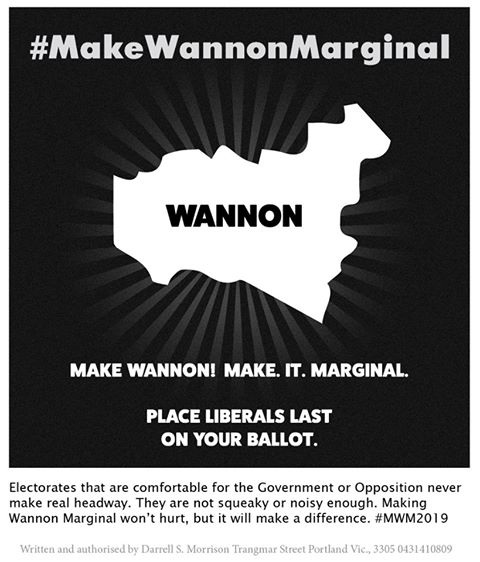
Unless…unless…we will actually make Wannon a marginal seat at the federal election on May 18.
Are we brave enough?
Over to you….
If you would like to see The Terrier keep digging up, sniffing out and chewing on local issues, please consider throwing something in the tip jar.
Snow White, the Seven Dwarfs and the city of WooBoo
Snow White and the seven elected members of WooBoo, including Grumpy, all working to make life better for its citizens.
Carol Altmann – The Terrier
This is a budgetary fairytale based on fact. The numbers are real, the names are not.
Once upon a time, in the town of WooBoo, there was a town leader, Snow White, who was paid more than $310,000 a year to work for the seven dwarfs who had been elected by the people of WooBoo to look after WooBoo and help it prosper.
Exciting things were happening in WooBoo under Snow White’s leadership.
There was a big, money-losing festival for children, there was a maritime museum with few boats but a new $3 million sound-and-light show that promised to lure carloads of tourists, there were parties at the racecourse, new public toilets, new parking meters, pretty roundabouts and still lots of money left over for the WooBoo Council to spend on consultants, credit cards, conferences and staff development.
Most of the seven dwarfs were ecstatic, except for Grumpy. Every council has a Grumpy, and Grumpy was seen as a troublemaker.
“Can we afford all this?” Grumpy would ask. “Does this all add up? Why don’t some of these figures make sense?”
“Of course we can,” said Doc and Happy in unison. Unlike some of the other dwarfs, they had represented the Town of WooBoo for many years and had grown fond of Snow White and her team of highly paid helpers.
Mayor Sneezy was equally as enthusiastic: “WooBoo is aspirational, sophisticated and cosmopolitan and I wish people would stop being so negative!”
The spending went on. Sometimes it was on necessary but boring things, like $5.5 million for a drainage system to avoid parts of WooBoo flooding.
The glittering, shiny upgrade of Justice von Liebig St started at $15 million…..
And sometimes it was for sparkly things, and the biggest of all was the $15 million upgrade of the main street of WooBoo, with shiny new pavements, new trees, new lights, drinking fountains, more flowers and planter boxes and a much narrower road with so many pedestrian crossings that WooBoo drivers could no longer take their eyes off the road for a second.
The people of WooBoo were happy to see their tired main street being given the full Ritz treatment, even if they privately wondered what was going to happen to the other town streets with their peeling buildings and broken footpaths.
Don’t worry, they were told, celebrate the rise of wonderful Justice Von Liebig St!
Meanwhile, in the MelBoo office of the chief money watcher, the Victorian Auditor-General, a little red light was flashing.
It had been flashing quietly every year since 2014-15 and it warned a “high risk” situation was developing. This high risk was that the Town of WooBoo did not have enough money of its own to fund its operations, once it removed all the one-off gifts and grants from Grandma and Grandpa Government.
In particular, the Auditor General found WooBoo might have trouble paying to repair and replace things once they wore out, like footpaths and playgrounds and bridges.
Excuse me, is that a cliff? No, surely not?
The red light blinked, but in the town chambers of WooBoo the party went on until, one day in late 2018, it stopped.
By then, Grandma Government had put her foot down and capped rates so councils could not just keep asking ratepayers for more. Instead, annual rate rises would be capped at between 2% and 2.5%.
By then, the money-losing WooBoo children’s festival had been axed abruptly. By then, it was becoming clear that the carloads of tourists were not going to the maritime museum.
The seven dwarfs had to absorb some hard truths.
One of these was that the WooBoo capital works budget for 2017-18 had blown out by a whopping $6 million from $17.6 million to $24.6 million.
A big part of this was dressing up Justice Von Liebig St, the cost of which had grown from $15 million to around $19 million, including $8 million that would need to come from the citizens of WooBoo.
The big drainage project had also been in trouble, with the first contractor going broke and the final cost still not known until it is all finished.
On top of this, recycling fees had skyrocketed, the cost of keeping a pet had shot up, parking in WooBoo was more expensive, rates would still rise, and there was still not enough money for all the old roads, pavements and playgrounds to be repaired.
Things were suddenly not so good.
Snow White at her farewell function before taking early retirement and moving to her seaside castle.
Grumpy thumped the table and yelled “I told you so!” and this time Mayor Sneezy agreed with him.
Happy and Doc, being astute in the art of public relations, told the people of WooBoo that they were committed to tackling a crisis that they had “inherited” and the only way to do this was to ask the people what they thought, ignore that, and then seek to bust the rate cap anyway.
The three other dwarfs, who were still trying to get their heads around it all, nodded in agreement.
And so, dear reader, hi-ho, hi-ho, off to the Essential Services Commission we go.
And what of Snow White?
Ah, she sensibly retired early to her castle by the seaside, from where she watches the hard-working people of WooBoo rise up and prepare to march past the empty grounds of the maritime museum, and down the glittering, gridlocked avenue of Justice Von Liebig St, named, as it so happens, for the German industrial chemist who invented fertiliser to replace cow dung.
The End.
[For those who want to go deeper, you can find the Auditor-General’s red light here on the WCC’s adjusted underlying result, page 79. The WCC 2018-19 budget is here. You can find the capital works details at item 4.5.1 on page 45.]
WCC rate rise and spending more than $900k on consultants
The Warrnambool City Council spent more than $900,000 on consultants in 2017-18, but whether this figure is higher or lower than previous years remains unknown. Image: Fidelis.
Carol Altmann – The Terrier
How to save $700,000 in seven days, instalment #2:
When Warrnambool Mayor Tony Herbert revealed last December, without a hint of irony, that up to $30,000 would be spent on consultants to test how ratepayers felt about a rate rise, it raised an obvious question: how much does the Warrnambool City Council spend each year on consultants?
The answer for 2017-18 is close to a million dollars, or $927,000 to be precise.
Unfortunately that is about as precise as I can be, as the council has not provided any significant detail on what these consultancies entailed or how this figure compares to other years.
What this means is I can’t tell you if $927,000 is normal in one year, or lower, or much higher than for other years.
I am going to take a punt that other years would not be lower, based on the number of council reports, masterplans and projects that have been rolled out in recent years.
The only breakdown provided for the $927,000 was this from council spokesman Nick Higgins:
“Examples of consultants used in 2017-2018 include: valuation of the Warrnambool Art Gallery collection (necessary for insurance), participation in the Community Satisfaction Survey (required by the State Government), arterial road assessment (for advocacy to improve roads managed by VicRoads), heritage advice and for the management of the community solar bulk buy program.”
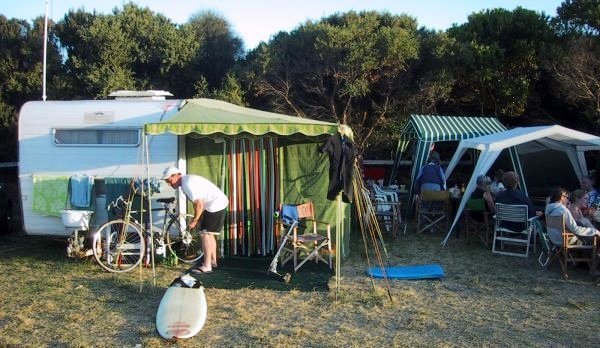
Consultants were hired to prepare a plan for the future use of the Warrnambool foreshore caravan parks. Image: Camping Victoria.
I had a line-by-line look at the council’s annual report for 2017-18, and learned consultants were also hired to prepare a strategic plan for the foreshore caravan parks, prepare the kerbside recycling contract, and for a valuation of the council’s land and buildings.
Mr Higgins said via email – quite correctly – that all councils use consultants.
“Warrnambool City Council’s use of consultants and the expenditure on consultants would be unexceptional,” he added.
This may be true, but in an environment where ratepayers are being asked what services they are prepared to see cut to avoid a rate rise, I think we could do with some more detail, don’t you?
At a state and federal government level, spending on consultants is included in the annual Auditor General’s report and is picked over by political journalists to determine where the dollars are going.
No such transparency is enforced at the local government level.
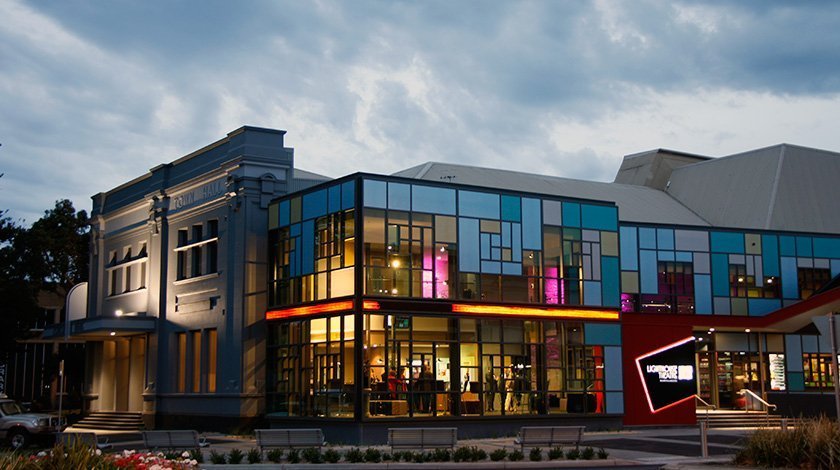
Consultants were also used to provide a valuation of council owned land and buildings like the Lighthouse Theatre. Image: Basso Project Management.
It may well be, as Mr Higgins explained, that “consultants are used because they have specific expertise or knowledge that council does not have” and hiring short-term consultants is cheaper than permanent staff.
(It is worth remembering that there are 731 people working at Warrnambool City Council – full time, part time and casual – and last financial year the cost to ratepayers was $31.5 million.)
Again, however, we have no way of being able to make that assessment or, to be frank, keeping an eye on how much is spent each year in total.
It is a figure that is simply not reported in any of the council’s financial statements or annual reports.
Instead, the $927,000 for this year is treated as an unavoidable expense and one that, I note, didn’t make it into the ratepayer survey that closed earlier this month.
Is there any fat to be trimmed on that figure? Do we, for example, really need a consultant to tell us what to do with our caravan parks? And how many consultants’ reports end up going no further?
Before there is any attempt to push rates above the rate cap, these questions deserve to be answered.
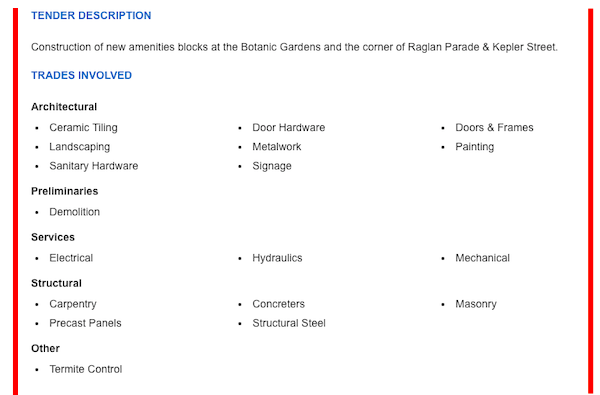
A builder contact, however, said while he wasn’t sure about that particular tender, which he agreed seemed high, there were often less obvious costs with construction work including:
architect fees 20-40k, engineer 15-30k, feasibility study 10k, land surveyor 10k, legal fees 10-20k, traffic engineer 5-10k, fire engineer 5-10k, town planning 5-10k, building permits 10k, Wannon Water fees $50-$80k, council project management 30-60k, Aboriginal heritage study 30-40k, demolition 10-20k, associated paths 50-80k, landscaping 20-20k, safety management plan 5-15k, site safety 15-25k, traffic control 10-20k.
As to how many of these actually applied to the toilets in the botanic gardens and Swan Reserve, we will never know but I am still at a loss as to how they could cost more than a whole new home.
If you would like to see The Terrier keep digging up, sniffing out and chewing on local issues, please make a small contribution below.
W’bool City Council rate rise and the Taj Mahal of toilets
Your rates at work: the Swan Reserve toilets are one of two new toilet blocks that are costing the Warrnambool City Council more than $770,000.
Carol Altmann – The Terrier
The Warrnambool City Council says it must cut $700,000 a year from its budget for the next three years to avoid a rate rise, so I am going to find $700,000 in savings in just seven days – starting with toilets.
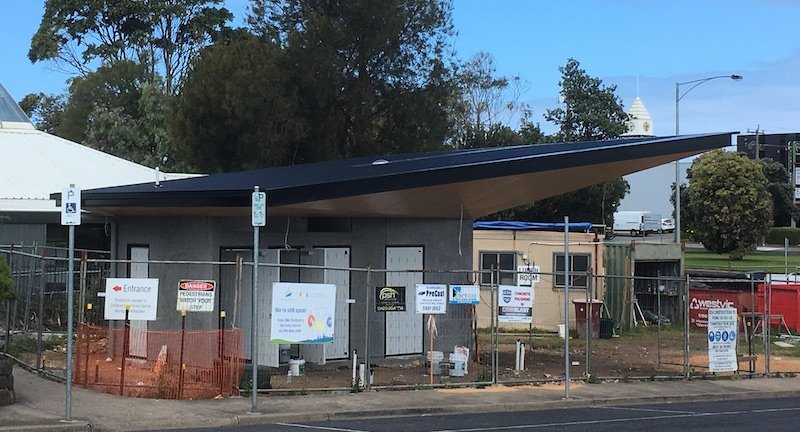
Not just any toilets, mind you, but the Taj Mahal of toilets that is being built near what was once the Tourist Information Centre at Swan Reserve, on the corner of Raglan Parade and Kepler St.
This is one of two new public toilet blocks in the city – the other is near the giraffe swing at the Warrnambool Botanic Gardens – which are costing the council a total of $775,610 including GST.
There was no doubt the run-down old toilets at the gardens and Swan Reserve both needed replacing, but how do two toilet blocks cost more than three quarters of a million dollars?
Does anybody know?
I have emailed a couple of builders this question today, and hopefully they will be able to explain the secret, but to me it seems over the top.
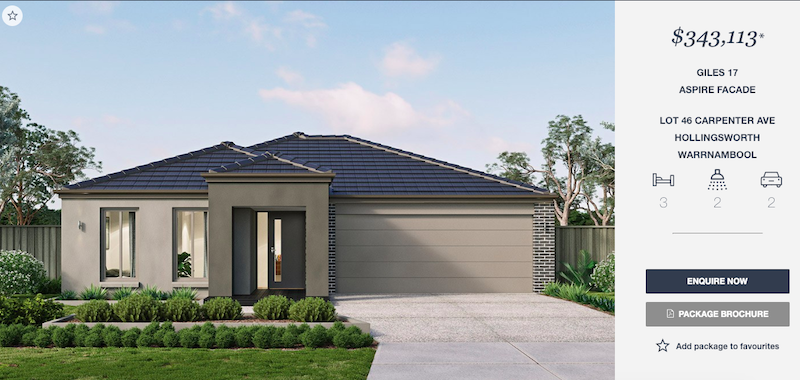
A three-bedroom, two-bathroom Metricon house and land package costs less than the toilet blocks. Image: Metricon Homes.
By way of comparison, for $775,000 you could buy not one, but two house and land packages from Metricon homes.
A neat $343,113 (excluding landscaping) can buy you the Giles design, featuring an “Aspire” facade, on a 602sq/m block at Lot 46 Carpenter Avenue, that comes complete with two bathrooms, three bedrooms, a two-car garage, concreted driveway, all carpets, stainless steel appliances and a 20mm stone benchtop in the kitchen!
(You would even have money left over for some landscaping plants from Bunnings.)
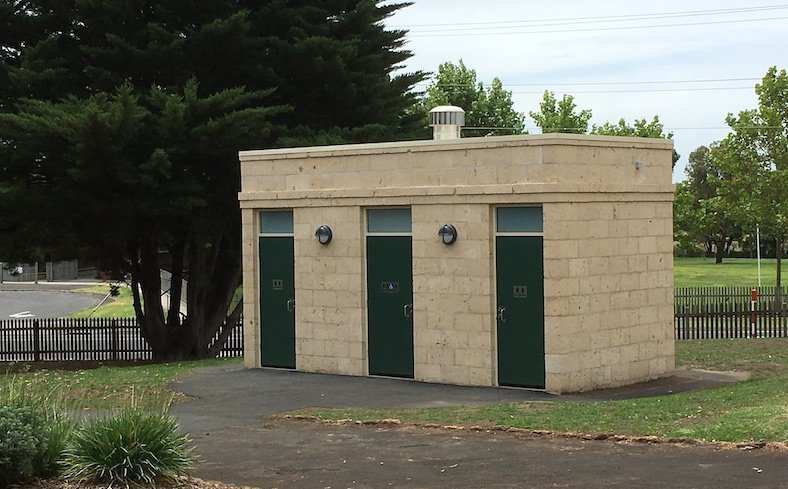
So, again, how does it cost an average of $387,000 for just one toilet block, even if it features a dramatic ski-slope roof on top of the cast concrete?
It might make sense if an entire new sewerage system had to be installed, but there were toilets already in place about 15m from the new block at Swan Reserve and the Botanic Gardens location was also chosen because it was close to the existing underground pipes.
The three-cubicle sandstone toilet block recently completed at the Warrnambool Botanic Gardens for around $350,000.
Funnily enough, when the council hired a consultant to put together its public toilet plan in 2013 (yes, such a document does exist), the estimated cost for the two toilet blocks at Swan Reserve and the Botanic Gardens was around $764,500 (including GST), but again with no explanation as to why.
Five years later, the winning tender was around $600,000 (including GST) before that tender fell through and the council had to go with the second tender of $775,610.
I am not an expert on tendering, but why does a council put a price tag on a project before it seeks tenders?
Wouldn’t it be better to start like we all do when we are doing home renovations and say to a tradie, I would like a big new beautiful bathroom, what do you think it is going to cost? Woah, that much! Okay, forget the super-sized bath and porcelain hand basin, what can you do for $15,000?
This seems to make so much more sense than saying, we have $350,000 to spend, what can you come up with? (See below for the unremarkable tender details for the two toilet blocks).
Given times are apparently tight and the council wants to break the rate cap, I can’t help but wonder what a $250,000 toilet block at Swan Reserve would have looked like, or a $150,000 model for the Botanic Gardens. There are more toilets that need upgrading, so perhaps it is time to revisit the template.
Even the ever-optimistic Mayor Tony Herbert was quoted by the paper as saying he was stunned at the final cost, but added that at least the builders were local and it was “going to activate that part of the gardens”.
That certainly is one way to put it. Another might be to ask just how much bang we are getting for our buck.
More tomorrow.
If you would like to see The Terrier keep digging up, sniffing out and chewing on local issues, please make a small contribution below.