Huge changes afoot as Midfield Meats makes it move
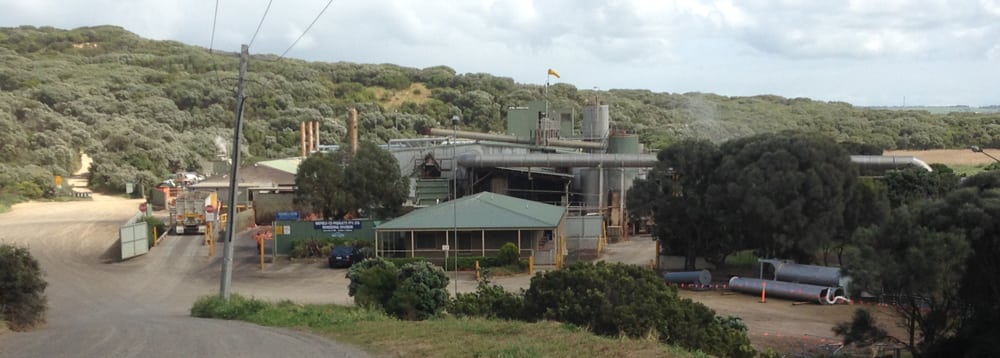
The Midfield Meat rendering plant at Levy’s Point will be shut down and its operations moved to Scott St, Merrivale, under plans officially released today. Image: B&R Enclosures.

By Carol Altmann

Midfield Meats is again shaking the earth around Merrivale and beyond with plans – officially released today (29/8/18) – to shut its rendering plant at Levy’s Point and build a new, $18 million plant next to its abattoir in Scott St.

This is a momentous move, with implications all round.

On the upside, if the relocation is approved by the EPA and Warrnambool City Council, it will free up the Levy’s Point land for the first time in 53 years and shut down what is one of the greatest assaults to the senses ever encountered by cyclists innocently peddling along the rail trail.

The place stinks and when the big gate is open, it is a horror show.

It was only three years ago that Midfield fought and won a long battle to remain at Levy’s Point, but the conditions around that approval – it seems – will cost more in the long run than moving to a new, purpose-built, super-dooper plant at 24 Scott St.

Except…

24 Scott St is near houses – the residential zone is just 250m away.

And 24 Scott St is near a primary school – just 400m away.

These are the two things that Merrivaleans, and others, pointed out when Midfield decided in 2014 that it wanted to build a powdered milk factory in Scott St.

After a huge battle, that project was also approved, but has not yet been built.

Merrivaleans must be exhausted from fight after fight, but it is not only those who live there who need to get their heads around this plan, it is all of us, because it signals a major and permanent change to a part of Warrnambool that is a lot closer to town that Levy’s.

You can read the whole 27-page plan here but here’s a quick summary from the EPA:

– two processing lines, processing up to 400 tonnes a day;

– operating hours will be between 7pm-12am weekdays and 1–5pm on Saturdays, but it will have the capacity to operate 24 hours a day, seven days a week

–  a new, purpose built bio-filter;

– processing carried out in an enclosed building;

– wastewater from the plant and abattoir will be combined and pretreated at the recently upgraded onsite wastewater treatment facility before discharging to the sewer;

– improved energy efficiency, less transport movements and water consumption and eliminate amenity impacts when compared with the existing facility;

– key environmental issues are odour emission control and Q-fever risk management;

– other issues are stormwater management and noise controls.


Nobody can argue against building a better plant, but just like the milk powder factory before it, the concern is not only with what is being built, but where it is being built.

The best rendering plant in the world is still a rendering plant, and I am not sure if that is what we want a stone’s throw from houses, a school and less than 2km from the Warrnambool Base Hospital.

While Scott St is an industrial zone, Warrnambool’s growth has caught up with it. What was once on the edge of town is now within it.

There is no doubt Midfield is an important player in Warrnambool but it has changed too: it now operates on a global scale and, in 2017, was ranked number 769 out of the top 2000 companies in Australia.

According to IbisWorld, Midfield Meat International generated a total revenue of $510,270,000 in 2017. That’s not all profit, of course, but not a bad turnover for just one year.


Given the huge success of Midfield, perhaps it is time to ask why it can’t invest in moving its entire operations right out of town, away from wetlands and houses and schools and our ever-expanding suburbs.

Surely this would provide a solution that works not just for the next 10 or 20 years, but for the next 100, and both Midfield – and Merrivale – could rest easier.

A public information session on the plan will be held from 4pm-6pm, 18 September, Archie Graham Centre, Timor St, Warrnambool.


If you would like to support local, independent journalism, please make a small contribution below.

Donate


It will soon cost $70 to register your dog – and here’s why

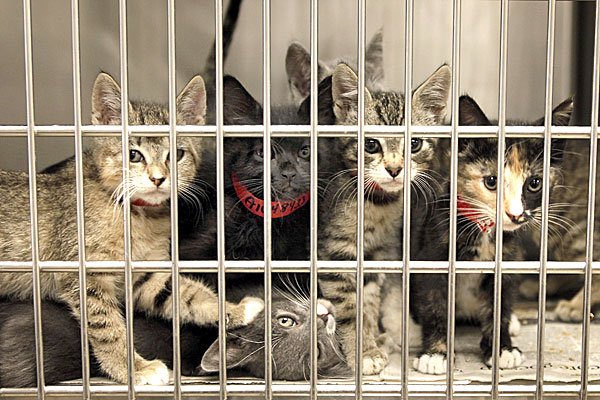
More than 10,000 cats a year are left at the RSPCA across Victoria, part of the reason for a 300% increase in pound management fees. Image: Stockimage.

The Terrier – Carol Altmann

WARRNAMBOOL ratepayers are in for a shock next year (2019) when it comes to putting out their rubbish and registering their pet, as the rising cost of our throwaway society starts to bite.

As has been reported elsewhere, garbage collection fees in Warrnambool are set to climb by $70 to $356 a year, while in neighbouring Moyne Shire the fee is rising by $21 to $493 a year*.

On top of this, pet owners in Warrnambool are expected to see dog and cat registration fees rise by up to almost 40%.

If the draft Warrnambool City Council budget goes ahead, in 2019 it will cost $70 to register your desexed dog and $59 for a desexed cat. (Last year it cost $52 and $41.)

The fee for a non-desexed dog will rise from $166 to $210 and a non-desexed cat will cost $177, up from $130.

And herein lies the problem, because these fee hikes are directly connected to the cost of keeping animals that are either discarded, given up, or need to be rehoused via the Warrnambool pound.

(I hasten to add that not all animals passed to the RSPCA are ‘unwanted’, including those that need to be rehoused due to changing personal circumstances such as illness or divorce.)

While WCC owns the Braithwaite St pound, it has for many years been out-sourced to the RSPCA and late last year the RSPCA dropped a bomb: it was no longer going to run its pound services at a loss and its fees were going up by 300%.

300%!

As council spokesman Nick Higgins explained, the WCC was paying around $112,000 a year, but under its new contract with the RSPCA this will almost triple to $328,632 in the next financial year**.

The following year it will rise to $413,016 and by 2020-21 it will be around $425,000.

This is getting close to half a million dollars a year to run the pound and, it appears, the cost will only keep rising.

So while it might be $70 to register your dog next year, by 2020-21 it could feasibly be $100.

There is no doubt it is expensive to humanely care for and re-house animals and the RSPCA says it had little choice but to reflect this in its fees.

RSPCA Victoria Head of Operations, Tegan McPherson:

Over the past two years, RSPCA Victoria has been carefully analysing every council pound contract we tender for, and submitting tenders with a pricing structure that reflects the true cost of caring for animals admitted from each municipality and shire.

This represents a change from our previous approach, which was to share the cost of care with councils.

We are committed to ensuring that we run every council pound contract on terms that enable us to provide outstanding animal welfare on a cost-neutral basis. This way, we can ensure our limited funds are best invested in reducing cruelty and neglect, and cutting the number of surrendered and homeless animals right across Victoria.”

So what is the answer here?

Do we keep upping the fees and fines in Warrnambool each year to cover what will soon be a half million dollar a year operation, or do we look at this problem more broadly, and find other ways to encourage registration and de-sexing?

Recycling is no longer seen as a long-term solution to our growing waste problem, as international markets dry up. Image: ABC Radio

AT the moment, it seems, those who do register their pets will be seriously subsidising those who don’t: animal registrations will bring in $270,000 this financial year and, with the fee increase, $445,000 in the next.

I can’t help but see the parallels between our seeming inability – as a wider community – to value animals enough to ensure they don’t end up producing litters of unwanted offspring or not getting a dog that we have no time to train, or buying a kitten that is ignored once it grows into a cat…and our producing increasing tonnes of garbage.

In both cases, we expect someone else to deal with what we discard.

Recently there has been a lot of talk about the recycling crisis and China refusing to take our recyclable plastics and paper.

To be precise, China has refused to take recyclables that are even slightly contaminated (ie.mixed in with other stuff).

But the question remains as to why we would want to keep relying on China, or any other country, to keep taking our waste? If they pull the pin, what do we do then?

The answer, which some states are taking more seriously than others, is to no longer see recycling as the God of waste management, but to stop the waste being produced in the first place.

Plastics are flooding our oceans and need to be stopped at the source by changing manufacturing and consumer habits. Image: Good Will Nurdle Hunting/Tangaroa Blue

THE WCC put out its waste management strategy last December, which reflects this idea and covers everything from reducing plastic bags to the simple act of picking up your dog’s poop. It will also shortly start a trial of the organics composting service, FOGO, which is already up and running in Moyne Shire and Bendigo and elsewhere.

As the wheels grind slowly within government, the good news is that good stuff continues to happen at a grassroots, community level.

Colleen Hughson, who I wrote about recently in a piece on the plastic pollution spill at Shelly Beach, is now part of a project involving the global environmental group Tangaroa Blue, and others, to look at the plastics turning up on our local beaches.

A series of public workshops will be held in Warrnambool and Portland from later this month to talk about where the plastics are coming from, and how we can help stop it at the source. You can find out how to get involved here.

Tackling environmental waste and animal welfare issues is not new, but the dramatic fee rises we are seeing at a local level provides a serious wake-up call that we all need to get involved with finding the solutions –  or expect to pay a price.

* Less than half of Moyne’s ratepayers use the garbage collection due to their remote locations. The higher cost compared to WCC reflects a wide geographic area with fewer customers.

** Moyne Shire used to share the cost of the WCC pound but, following a request from WCC to contribute significantly more from 2018-19, is now using the Southern Grampians Shire pound.


My child, how can I protect you?

Carly Cram Photography: Tree Fingers Carly Cram Photography

This piece was submitted by a local woman who signed the petition to remove the Rolf Harris mural from the Lighthouse Theatre in Warrnambool. I have kept her name anonymous, but want to thank her for her courage.

Last month I had a dream about Donald Trump. In this dream we were deep in conversation at a crowded function and I was trying to impress him with my intelligence. Mid-conversation, however, he leant across and grabbed me on the breast.

In shock, I pulled away and started shouting ‘he grabbed my breast, he grabbed my breast’. Expecting the room to react with outrage, my calls were instead met with deathly silence, before everyone returned to what they were doing.

Business as usual.

I burst into tears and was led outside by my best friend and confidante where, with such weary sadness, I cried ‘I’m just so tired of fighting.’

This dream encapsulated a lot for me. It summed up my lifelong battle with sexual assault and abuse. From fighting off men at the pub, to keeping secrets hidden for 15 years. From being told ‘you shouldn’t have let him do that to you’, to my fight with PTSD, depression and anxiety. From the heartbreaking story of a friend who held her secret for another 20 years after being told she was ‘making it up’, to the deafening silence that followed after I screamed at a man at a crowded market for following me and relentlessly pinching my bum.

Two things had just happened around the time of my Trump dream. The #metoo campaign had gathered steam, and while I was interested and a little excited, I was largely cynical and reluctant to take part.

I wasn’t convinced that putting myself out there and making myself vulnerable was going to change anything. After all, we have known for a long time now that one third of all girls will be sexually assaulted by the time they are eighteen, but what steps have we made to address this? What difference would this campaign make? And why should abused women have to lead the charge?

Around the same time, my eight year-old daughter was sexually assaulted. An older man on the street reached out and grabbed her on the vagina, right in front of me. He seemed to see her as some kind of sexual delight, and not as our gorgeous, creative and intelligent kid who embraced life with all her kind heart.

My heart broke for my daughter that day, and I still don’t know if it will ever fully heal. While I knew the statistics, I still believed I held a powerful weapon with my past experience and knowledge of sexual assault. I wanted so much to believe that my passion for protecting her from what I had to endure would be enough to get her through. If I educated her well, if I gave it to her straight and didn’t hush it up or try to gloss over it, she would get through life unscathed.

It turns out I couldn’t even get her to double figures.

The harsh reality of the pervasiveness of sexual assault this time brought me to my knees. In quiet moments to myself I sobbed so hard I didn’t think I would ever stop. The injustice of growing up a female suddenly became very real, and very personal.

It was my response to the incident that plagued me afterwards. Because how did I respond? With silence.

I walked her calmly away and did not confront this man for fear of making it worse for my daughter. And in the days to come it dawned on me that this is what we have done as women. We have stayed silent, to keep the peace, for the families sake, for the community’s sake, to make it in a man’s world.

And in turn, silence has been internalised as some totem of virtue or stoicism in women. The more silent a woman in her pain, the stronger she is. Instead of voicing our outrage, we have used all our collective energy to heal the victims, to sit with them through their confusion, sadness and pain.

But while we have stayed silent, we have left a gaping hole in the ability to challenge men for their behaviour, or to challenge them to be leaders in the change we so desperately need.

Eventually it was a counsellor who helped me to see the tiny speck of positive in our experience. Carrying all the guilt in the world on my shoulders, she allowed me to see that the response we gave our daughter after her sexual assault could be vital in her recovery.

Immediately after it happened I took her to a safe place, gave her a big cuddle and told her that it was nothing about her, or her behaviour, that made him do that. I told her that it was his sick behaviour that was the problem, and that unfortunately stuff like that just happens sometimes, but that she will be ok.

I also told her that we were here for her any time she needed us. The psychologist assured me that our past history of openly communicating with our daughter since she was born, like talking about the hard stuff when it came up, and never letting silence linger, would ensure she knew she could approach us at any time.

Her words also reinforced what I had learnt from the fabulous Professor Caroline Taylor, who has spent years researching and working with children who had been through the court system for sexual abuse and assault.

While only a tiny three percent of cases ever make it to conviction, she found that the process, regardless of the outcome, could be a cathartic one for young people as long as they felt supported and that their story was heard by someone, be it a police officer, lawyer, or family member.

Indeed, the power of hearing a person’s story and sharing their pain can never be underestimated. As a telephone counsellor, I cannot count the times people have said they just need someone to hear their pain, not solve their problems.

So while we chip away at a society that has allowed men too much privilege for too long, and while many of us will be faced with the cold hard fact that we cannot always protect our children no matter how hard we try, perhaps we can take a little comfort in knowing that responding to an abused child with listening, support and unconditional love can be hugely powerful, even if it is at the wrong and sad end of the sexual assault spectrum.

Despite our incredibly painful experience, I am still increasingly hopeful for the future. I do feel a change in the air.

Since the #me too campaign, another sexual predator in Don Burke has been outed, and now allegations against Donald Trump are finally being taken seriously.

I have hope that our daughters will live and flourish in a time where a sexual predator who thinks that ‘grabbing women on the pussy’ is part and parcel of money and fame is not elected by men and women as the leader of the most powerful country on earth.

We need to keep reinforcing to women and girls that speaking up and speaking out is brave, and that silent stoicism, while once a coping technique, is no longer necessary.

And we need to meet this bravery with corresponding support and outrage. I have hope that if ever my daughter was to dream about being outraged by her sexual assault, the whole function room would stand up and shout ‘ME TOO’.


Inside: A home for Mozart by the sea

[printfriendly]

Chatenay 2016
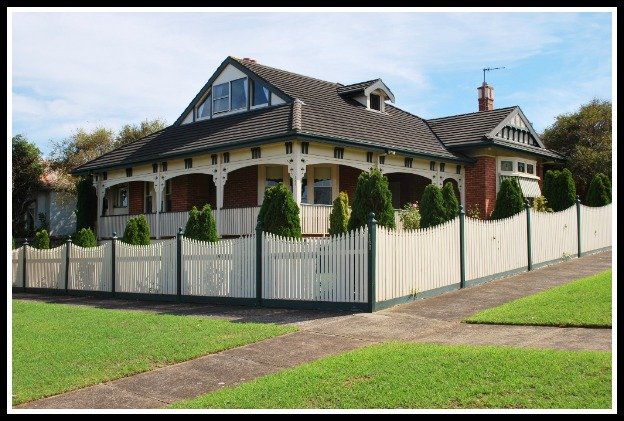
Chatenay was built around 1914 – believed to be for the Juke family – and still commands a strong street presence from up high in Warrnambool.

Bluestone columnist and architect CLINTON KRAUSE previously worked in Daylesford before relocating his business to Warrnambool. Clinton explores the architectural styles that gives our region so much character. Visit his website here.

Words and photos by Clinton Krause

Early on in my conversation with the current owners of  ‘Chatenay’, a charming Edwardian house in Warrnambool, I am bemused to hear that a literal interpretation of the home’s French name is ‘Castle’.

As a bastion for the vast repository of art, furniture, china and glassware contained within the house,  I can see that it is a fitting title for this property.

Chatenay was built around 1914 and with its commanding position, was designed to take in the expansive ocean views that can still be enjoyed from the wide deep verandahs or within the home.

join us2

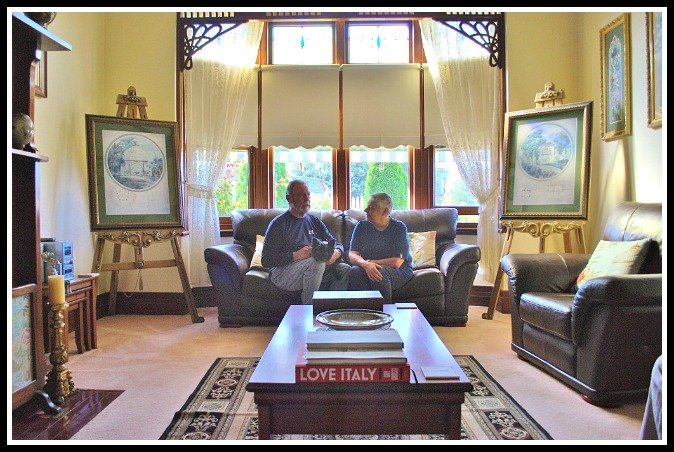
Paul Wilson and Sue Glaisher became the current custodians of the property in 2008, following a succession of owners dating back to the first owners – believed to be the Jukes family for whom Jukes St is named.

Paul Wilson, Sue Glaisher and Archie the Cairn terrier at home in the 'Grande Salon'.
Paul Wilson, Sue Glaisher and Archie the Cairn Terrier relaxing at home in the ‘Grande Salon’.

Originally from Essendon, the couple had already enjoyed the challenge of owning and renovating a traditional early Victorian worker’s cottage and a family inheritance of substantial period furniture ensured that the interior décor reflected the architecture of this era.

Sue’s academic background with interests in history and art and her passion for period architecture meant that it some ways the purchase of Chatenay was predestined.

After enjoying a coffee in Liebig street and spotting the house in an agent’s window, an inspection was made on Tuesday, and papers signed Thursday.

Sue’s partner, Paul, quips that it was the dearest coffee he has ever bought!

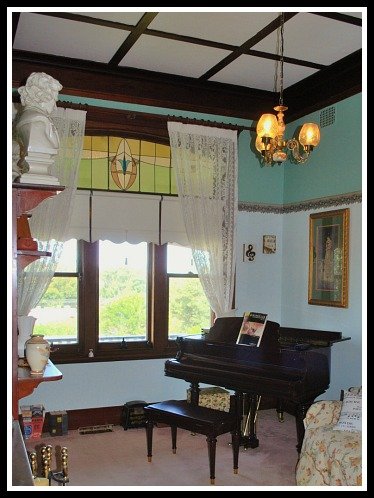
The Masters keep a watchful eye in the music room which reflects Sue's passion for history, antiques and art.
The Masters keep a watchful eye in the music room which reflects Sue’s passion for history, antiques and art.

Apart from some minor works including the installation of central heating – a considerable challenge given the labyrinth of stone walls below floor level – little else was required and it is refreshing to find that many of the buildings original features have remained  intact.

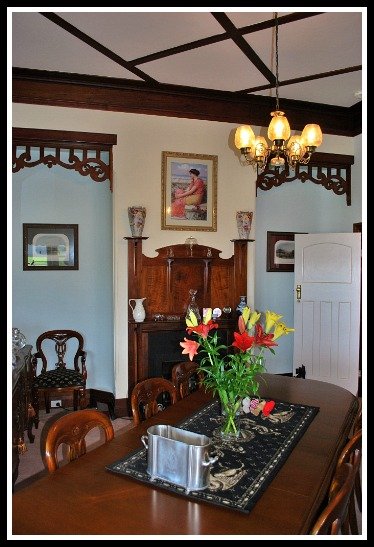
Original carved timber fireplace mantles, delightfully intricate fretwork arches and window bays and battened timber ceiling panels are tangible reminders of a time when a craftsman’s decorative skills were an essential part of a home’s personality.

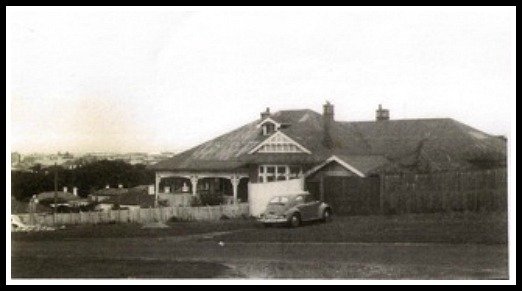
Externally, the house appears much the same as early photos depict.

Chatenay as it looked around 1966, complete with the humble VW in the driveway. Image supplied by Sue Glaicher.
Chatenay as it appeared around 1966, complete with the humble VW in the driveway. Image supplied by Sue Glaicher.

Apart from replacement of the tin roof with terracotta tiles and the sensitive addition of a glazed window gable to the attic (all by previous owners) the property with its gardenesque setting and picket fencing is a portrait of Edwardian period living.

Inside, too, the original décor of the rooms is enhanced with the couple’s collections of period mahogany sideboards, dining suites, glassware and china.

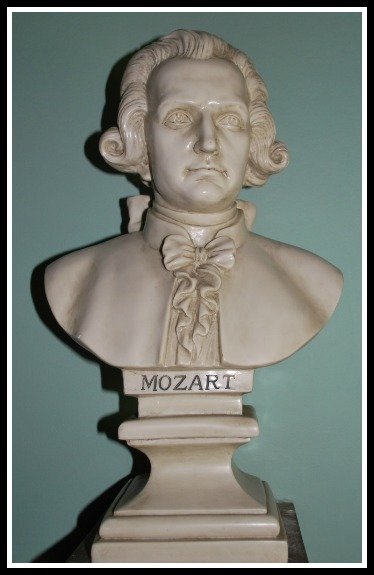
A baby grand in the music room is complemented with the accoutrements of themed cushions, metronomes, a framed print of a  J. Harold Henry composition cover and even imposing busts of the classical masters Beethoven and Mozart looking on from  above.

Decorative fretwork and battened timber ceilings are a feature througout the home.

As we continue the tour, it becomes apparent that there is one décor element that prevails throughout the house – it may be possible that Sue’s collection of framed prints could rival a regional art gallery!

No wall is safe (I count six in the guest toilet alone) and in some rooms larger works are displayed on attractive carved timber easels – presumably because of lack of wall space.

Sue confesses that her ‘guilty pleasure’ began back in Melbourne, and was fuelled by an art framer/ friend that she met. Seemingly innocent at first, it was not long before an interest became an obsession – to the point where her friend began sourcing and supplying artwork to feed a growing ‘addiction’!

The relocation to Warrnambool brought this relationship to an end, with the sad fact that Sue could no longer have regular and ready access to her ‘fixer’.

Despite a few relapses with a local art framer, Sue assures me that she is on the road to recovery.

I too feel that she is now back in control – after all, I can’t see that there is a wall free anywhere in the house that could provide the space for another picture!

mozart
The musical maestro himself keeps a watchful eye on proceedings in the music room.

Clinton-Krause


“By the Winged Feet of Hermes”

roads-rail_3

By Joseph Buller

By the Winged Feet of Hermes: A Tale in Two Parts

Part One:

Oh, such horrors,
I shall bestow upon you all this night!
A tale of fear, sorrow, joy and loss.
The fear of my own life,
The sorrow of humanity,
The joy of survival,
And the loss of innocence.

You are correct,
Purveyors of my impending doom.
This night, I shall relay my survival
Aboard the economy carriage
On the Victorian Country train-line!

First, I’ve to purchase my fare,
But not for the train ride alone, no.
This fare is that which is paid to the ferryman,
So that I may cross over with my soul intact.
Oh, if only that were so!

I stumble on my own foul words,
‘A ticket, please sir, for the five-thirty train.’
My hesitation apparent, the ticket master,
Master of tickets corrects me, ‘Thirty-five.’

‘Pardon, sir?’ I query, yet to pay.
‘The train leaves at five thirty-five.’
His dominance, like that of the fabled Mr. Grey,
Is earth shattering, but alas, no pleasure envelopes me.
Could this man be God? On an office-stool throne?
If so, then his angels adorn buttoned shirts and navy slacks,
Serving food on ‘B’ carriage.
I may be wrong.

Regardless, I pay and board the railed shuttle.
Shuttle? Am I to reach the stars?
Or do I get off at Birregurra?
My ticket announces a departure at Melbourne.
My journey to the stars must wait.

What is this? A letter and number,
Coinciding with a carriage and a seat.
I am an honourable man, therefore I shan’t stray,
And take my rightful place at B53.
(SILENCE)
Who are you? Are we both to share this chair?

This cannot be true, I insist,
‘Sir, this seat belongs to me, as says my parchment!’
With a heavy heart, he vacates the position
I had been allocated.

I look closer, his hat,
This young man’s hat,
Words. (Pause) ‘Cocaine and Caviar’,
Surely this cannot be a healthy diet.
I sit.

By the Winged Feet of Hermes: A Tale in Two Parts

Part Two:

I am surrounded by other weary travellers,
Partaking in this unrelenting quest,
And as seats that were once claimed,
are taken by their rightful heirs,
My surroundings change.
Old faces make way for new.

Each face floods my environment
With individual personas.
I spy a young lady, my pardons,
I hear a young lady, her monologue,
Endless and without pause.

Another deep in cellular discussion,
Analysing the story of her dear mother,
Hinting at a possible return,
To a corrective institution.

I check how much time has passed,
By the winged feet of Hermes! Five minutes!
Another three hours await me.
I search for a distraction on the passing horizon,
To aid me in my journey.

(SILENCE)

Perhaps I shall rest my eyes altogether,
As I recline, my limbs ensnare my belongings,
To prevent the theft of my premium leather wallet wielding my savings and identity.

As I drift, I awaken again to the sound,
Of another passenger entering our carriage.
The raw sound of the engine penetrates my lobes.
Oh, this cannot be.

Void of hope, I stare deep in the abyss,
Frequently subject to the sounds of others.

The breathless one continues until her stop,
The young man,
Mr. Caviar and Cocaine,
Disappeared not long after I sighted him,
Maybe the catering cart was not satisfactory.

I know not more of the convict parent,
Though her daughter left alongside me,
Our into the skyline of Melbourne City,
Void of space, and old faces.

(PAUSE)

I’m sorry, that is too poignant,
Even for me.
But I shall never return by economy,
At least till tomorrow’s evening.

There, dear listeners, take heed,
And learn from my mistakes,
Your sanity only costs a few dollars more,
The same amount to upgrade to first class.

You can return to our story on Joseph Buller here.