W’bool wakes up and smells the coffee

rough diamond
Henry Bird has started his own small cafe, Rough Diamond, in a 1970s building that inspired the name.

Words and photos Carol Altmann

[dropcap style=”font-size: 60px; color: #DC943C;”] B [/dropcap]luestone took a short winter’s break recently and when we returned, we found not one, but two fabulous and funky new cafes had sprung up in Warrnambool.

Both – Graze, and Rough Diamond – have slotted in to what is fast becoming the most vibrant and interesting part of the CBD, around Kepler, Koroit and Fairy streets, where the historic shopfronts are being restored, long-empty buildings are slowly filling and, perhaps most importantly for small businesses, the rents are much cheaper than in the city centre.

This combination was irresistible to Henry Bird, a familiar face around the Warrnambool cafe scene since his early involvement in Brightbird Espresso (which also serves some of the best coffee in town), who together with his wife, Katherine, is behind Rough Diamond.

Henry and Katherine have gutted and refitted what was surely one of the most uninspiring buildings in Koroit St; a dark, 1970s, low-profile brick place opposite the former Warrnambool Standard building that has had many incarnations, most recently as a Coca Cola office.

rough diamond_3
Henry and Katherine Bird have brought their individual talents to their new cafe.

[dropcap style=”font-size: 60px; color: #DC943C;”] T [/dropcap]he Birds have give the building an entirely new look and feel with recycled timber furnishings (made by Port Fairy craftsman Jordan Small using timber salvaged from renovations on Henry and Katherine’s home), plenty of natural light pouring in, and a cute patio area with fake grass and milk crate tables.

“That’s where the name of the cafe from, actually, because this place was such a rough diamond,” Henry explains.

“It was perfect for us, though, because we wanted to be off Liebig St, not only because it is more affordable, but because of what is happening around Fairy St and Kepler St.

“There are a lot of people putting themselves out there and giving things a go, which is creating a whole new feel to this area.”

Such is Henry’s reputation for knowing what “works” with a cafe, Rough Diamond featured in The Age Good Food section just three days after opening, (you can read the review here),  all of which adds to the sense that Warrnambool’s cafe culture is gathering cred.

graze_2
Moria Aberline and Paul Riley have relocated back to Warrnambool from the UK to open Graze.

[dropcap style=”font-size: 60px; color: #DC943C;”] J [/dropcap]ust an espresso shot away from Rough Diamond is Graze, a combination cafe and gourmet deli that replaced the long-standing Lozzar’s in Kepler St.

“This is something we have wanted to do for a long time, to have our own business and to run our own cafe,” says owner Moira Aberline, who recently returned to Warrnambool after 10 years in the UK, where she met partner Paul Riley.

Both Moira and Paul worked in hospitality, with Paul a former chef’s consultant in several fine dining restaurants that were known for their “rosettes” as opposed to the “chef’s hat” system used in Australia.

Like so many other ex-pats of her generation, Moira felt the time was right to return home and the pair wasted no time in applying what they had learnt overseas to Warrnambool. The completely remodelled cafe is both cosy and modern and, even on a mid-Winter’s day, busy.

“It has been fabulous: we have been really overwhelmed by the support we have received and to be part of the buzz that is happening around here,” Moira said.

day kitty cafe
Day Kitty remains one of the most popular cafes in the Kepler St strip, with Victoria Carey, left and Rebekah Conheady keeping the coffee flowing.

[dropcap style=”font-size: 60px; color: #DC943C;”] A [/dropcap] lot of that buzz can be traced to Day Kitty, right next door to Graze, which about 18 months ago moved into the tired shop once occupied by Flaherty’s chocolates and turned it into a gorgeous space of marine ply and white tile.

The purely organic focus of the cafe became its very appealing point of difference and owner Victoria Carey is in the process of taking that one step further by offering organic groceries and fresh food.

With the pioneering Wyton’s across the road and Bohemia, another early arrival, a little further along toward the highway, Kepler St is barely recognisable from the days when pretty much the only cafe on offer was the quaint Kepler Kettle.

“Oh, I used to love the Kepler Kettle! It was just gorgeous,” Moira says with a laugh.

Now, however, it’s the espresso machines that are giving Kepler St and its surrounds a full head of steam.

[box]You can find Rough Diamond (M-F, 7-2) on Facebook here. Find Graze Urban Cafe and Deli, (M-F, 7-5; Sat 7-3) on the web here. Day Kitty is on Facebook here and Bohemia Cafe and Bar here.[/box]

[button link=”http://the-terrier.com.au/subscribe-2/” type=”icon” icon=”people” newwindow=”yes”] Become a Bluestone supporter by subscribing here.[/button]

newsletter Why Not StonesYou might also enjoy these cafes…


A really bright move – and it’s all about coffee: Brightbird 

A Front Paddock just perfect for grazing

Koroit, coffee and the three-song commute

Cafe Bagdad pops up in Penshurst

Room with a view at The Pavilion

Silver serves coffee gold at Slitti


Picking up our road tour of retro beauties

1hobbitt house
The ‘Hobbit’ house in Walter Crescent. A quirky ensemble of traditional and contemporary design elements, including an attention grabbing oversized porthole window. Image: Clinton Krause.

Bluestone columnist and architect CLINTON KRAUSE previously worked in Daylesford before relocating his business to Warrnambool. Clinton explores the architectural styles that gives our region so much character. Visit his website here.

You may remember last month we started a tour of some of Warrnambool’s retro design beauties and this month we pick up where we left off with a visit to Walter Crescent in central Warrnambool.

This estate, as the name suggests, was established by the Walter family in the early 1930’s and showcases a number of architect Tag Walter’s earlier designs.

The prevailing residential style of this time was the English worker’s cottage and houses generally incorporated the romantic stylistic design features of this era.

Steep pitched terracotta rooves, bay windows, decorative gable ends, red clinker brickwork and timber windows with beaded glass sash panels were all adopted with abandon, giving the streetscape a nostalgic prim and proper ‘British’ feel.

These houses were designed by Tag during his transitional period – and one house in particular provides an interesting  hint of what lies ahead.

No. 24 Walter Crescent is the oddball in a street of well-mannered conservative dwellings. A hybrid mix of conventional stylistic details, juxtaposed with a hint of some new, cutting-edge ideas this house is an intriguing  and important exception.

1DSC_4985
What better way to tour one of Warrnambool’s most interesting streets – Walter Cr – than in a 1957 Zephyr which was right at home outside the so-called “Hobbit house”. Image: Clinton Krause.

The owner fondly describes her home as the “Hobbitt House’’ – a reference to the oversized porthole window in the front façade which would definitely appeal to Bilbo Baggins.

Built in 1949, this house begins to reveal some of the mid-century devices of the impending international style: large expanses of glazing span from floor to ceiling, the extension of base brickwork to form a planter box as a decorative feature for the entry, a glazed screen to the porch is obliquely angled in contrast with the more regular lines of the building elsewhere.

My travelling companion, local car enthusiast Harry Droste, selected a 1957 Zephyr for our tour and it looks right at home against the kerb outside #24.

We continue on our tour to 60 Jukes street, built just 10 years later than the Hobbit house, but light years from the prevailing architecture of the street we have just left.

2jukes street
The house at 60 Jukes St built and designed by young draftsman Don Hunt. A celebration of the emerging new language of the modern vernacular. Image: Clinton Krause.

Designed by Don Hunt a young draftsman employee of Tag Walter and Bruce Auty, the excitement and eagerness to embrace the emerging zeitgeist is immediately evident.

Walls of glass wrap around all three sides of rooms that orientate towards the ocean views. For its day this would have been unprecedented and only seen in commercial shopfronts.

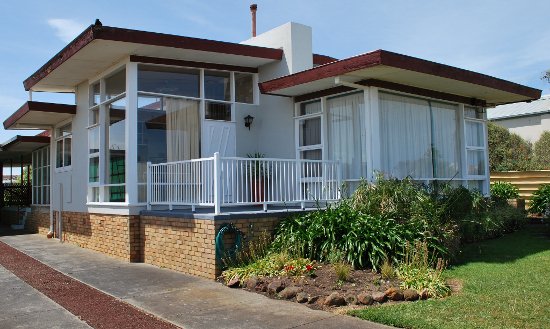
Flat rooves with deep eaves and wide fascias appear to ‘ground’ the building – as if to prevent the glass shell from floating away and there are hints of crazy paving and innovative cabinetry to the interior.

This house is currently proposed for inclusion in Warrnambool City Council’s Heritage Register and is a worthy and unique example of mid-century architecture and culture.

For the final leg of our tour, we make a quick visit past some other homes that will be subject to further investigation in the future – it is clear that there are still many great retro houses out there waiting to be rediscovered!

3nelson street
A glorious two-storey ‘bauhaus’ influenced Tag Walter designed city townhouse. Image: Clinton Krause.

2DSC_3882
Another example of a ‘crossover’ house – fusing the old and new design language of this transitional period in architecture. Image: Clinton Krause.

Postscript: We have since had contact with the family members of a house featured in last month’s column – 48 Botanic Road, Warrnambool. We plan to return and explore more of the story behind  this wonderful mid-century home in the near future.

Next Month: Breathing new life into some mid century marvels.

Clinton-Krause


A really bright move – and it’s all about coffee

1-bright birds_12
Chef Jimmy Buscombe, left, with Brightbird Espresso owners Mark and Katrina Brightwell, who are taking coffee and donuts to a whole new level in their Warrnambool cafe.

By Carol Altmann

[dropcap style=”font-size: 60px; color: #DC943C;”] I [/dropcap]f you want to see Mark Brightwell animated, get him talking about coffee.

Together with his wife, Katrina, Mark operates the highly successful Brightbird Espresso in Warrnambool (founding partner Henry Bird has since moved on to other ventures) which has developed a reputation for not just serving great coffee, but taking coffee drinkers on an adventure.

This means urging customers to not only try different coffee styles that go beyond the normal latte, cappuccino and short black, but to experiment with and learn about the beans themselves.

“We are pushing the boundaries and it is a big risk, but it is one we wanted to take,” says Katrina.

“That’s right,” adds Mark, “it’s about talking with customers about the coffee and educating them, teaching them, about the coffee.”

And there is much to learn.

As Mark explains, coffee drinking in Australia has followed a similar trajectory to wine, with a growing awareness of different coffee regions, the ethical and organic origins of the coffee beans, how they are roasted, brewed, and the ever-expanding range of flavours based on all of these elements.

Take, for example, this description of the cup character of the Yirgacheffe bean, grown in the Rift Plateau of Ethiopia: “Raspberry! Crisply but lushly sweet and fruit toned. Flowers, blueberry, peach. Softly crisp acidity: full, lively mouthfeel.”

flavour wheel
Going way beyond 43 beans in every cup: coffee is now deserving of its own flavour wheel, based on the many varieties of beans and roasting techniques. Image: Counter Culture Coffee, US. 2013.

[dropcap style=”font-size: 60px; color: #DC943C;”] Y[/dropcap]irgacheffe is one of the many varieties supplied to Mark and Katrina from Cartel Coffee Roasters Australia, a boutique coffee roaster based in Geelong that sources ethically grown, small-batch coffee direct from the farmers and their families in Ethiopia and Columbia.

Brightbird hooked up with Cartel Coffee Roasters about four months ago and Mark has been relishing the opportunity to bring a dash of inner-urban coffee culture to the country.

“Coffee bars are huge in Melbourne and we love to get down there, see what is happening and bring it back here to try,” he said.

“It is what keeps us interested and inspired because it is always changing and evolving. It keeps us fresh.”

[box] Mark’s four essentials for a great coffee in a cafe:

1. the quality of the beans

2. the quality of the equipment ($15,000 for an espresso machine; $3000 for a grinder)

3. the maker – well trained, passionate about coffee and able to work consistently well under pressure. [/box]

bright birds_3
The science of coffee: a slow filtered brew is served in individual glass beakers. Image: Bluestone Magazine.

[dropcap style=”font-size: 60px; color: #DC943C;”] A [/dropcap]s part of the educational experience, Mark occasionally hosts “cupping” sessions on a weekend with the team from Cartel Coffee Roasters who give participants the equivalent of a wine tasting, except with different coffee beans and brews.

Coffee connoisseurs can sample and sip and savour the flavours that run from chocolate to fruit to spicy and earthy. They can also learn about different ways of brewing and serving coffee, from 12-hour, cold-brewed (delicious served chilled on an ice-cube) to slow-filtered coffee served in a tall beaker.

It is not surprising to find that Mark, who is British-born and has worked in hospitality his whole career, was once a sommelier and also worked in a wine store.

“I have done lots of things in my time in hospitality, but this is a new challenge for me – the focus has become the coffee and I find it fascinating,” he says.

It is also a way to keep Brightbird Espresso from ever becoming predictable. The cafe started four years ago when Mark and Katrina moved from Melbourne to Katrina’s hometown (she grew up as a Malseed, in Woolsthorpe) to raise their children.

donuts brightbird
Jimmy Buscombe sets out his donut creations for the week – sold only on Thursdays, they have created their own following. Image: Courtesy of Brightbird Espresso.

[dropcap style=”font-size: 60px; color: #DC943C;”] N[/dropcap]ot only has the cafe built up a loyal following in that time – including a couple of elderly gents on zimmer frames who have been customers for years – but its expansion into speciality coffee has attracted a whole new clientele.

Pairing the coffee with gourmet donuts, created by chef Jimmy Buscombe and served only on Thursdays, has also created somewhat of a frenzy.

“We have people almost elbowing each other out of the way to get to those donuts before they sell out,” Katrina laughs.

“There is no doubt that we are even busier than we were before…and there is still not a day that I don’t love coming to work,” Mark says.

[box]Brightbird Espresso is at 157 Liebig St, Warrnambool. Find them on Facebook here and the web here. Also keep an eye out for their small barista training classes. (The February class is already full.)[/box]

subscribe

newsletter Why Not StonesYou might also enjoy…


Tea-totallers welcome at Panmure pub

Buffalo cheese a Shaw thing at Yambuk

Thriving on flower power at Naringal

Small is beautiful at Newton’s Ridge

Dip into the fishy world of aquaponics


A life behind the lens: Jack Wilkins

1-jack wilkins_8
Photographer and artist Jack Wilkins in his Warrnambool studio with a treasured Mamiya 23 press camera, one of the many he has collected – and used – throughout a career spanning almost 50 years.

By Carol Altmann

I last saw Warrnambool photographer and painter Jack Wilkins about 25 years ago when he had long hair, a moustache and an inimitable sense of humour.

Today, he is balding, clean shaven and riding the rollercoaster that comes with a recent diagnosis of prostate cancer – but the sense of humour is still very much intact.

Exhibit A:

(Me): “You have spent a lot of your life documenting your fellow artists, haven’t you?”

(Him): “Yeah, all the freaks, art students, art lecturers and weirdos – actually they’re all weirdos – all of those weirdos I have been hanging out with for years.”

Jack, whose name is actually John but nobody calls him that, is a hybrid of the late gonzo journalist Hunter S Thompson and Vogue photographer Annie Leibovitz, with a spritz of Ricky Gervais thrown in for good measure: a heady mix of story telling, mimicry, sardonic humour and huge artistic talent.

jack wilkins young
A much younger Jack Wilkins during his time at Deakin University, Warrnambool, where he taught photography for 16 years. Image courtesy Graeme Altmann.

For almost 50 years Jack has been capturing the faces and places of the Warrnambool art scene – from its infancy in the late 1960s, when a two-year art certificate was offered at the technical college that would become the Warrnambool Institute of Advanced Education and later TAFE, through to the heady days of the 80s and 90s based around the School of Art & Design at Deakin University – and into its current, some might say, more subdued phase.

“I was very interested in the strong personalities and the social scene of Warrnambool at the time, which was huge and based around places like the Western (Hotel), and the Lady Bay hotel,” Jack says.

“It was a very big scene; there were about 300 young people around Warrnambool who all hung out together, who all knew each other, made art, had sex, played pool.

“We would all pile into the Western (across the road from South-West TAFE) and when that closed at 10pm, someone would yell out ‘where’s the party?’ and we’d all move on to someone’s house, or head down to the beach and light a fire.”

Jack then launches into two or three side stories about some of the big personalities of the time, complete with gestures and voices that make you laugh out loud.

“That’s all gone now. We still have artists doing their thing, and young people doing their thing, but it’s very fragmented. Student life is a very different life.”

art hills d
One of the highly theatrical images from the early days of Art Land, when Jack captured the early art scene of the south-west. Image: John Wilkins Photographic Art Warrnambool.

Jack’s images of this time and now, which he collectively calls Art Land, have always been theatrical.

In the early days, he and his art colleagues would create scenarios, complete with costumes, that were part spaghetti western, part Woodstock and part colonial Australia.

“We would have a lot of fun, staging gun fights and all sorts of weird scenarios, just for the hell of it,” Jack explains.

Today, the theatrics are more in establishing the “set” for a portrait, using settings or objects to capture the essence of the individual.

To date, Jack has self-published two books, each of 100+ pages, featuring special friends like Jenny Claven, Peter Clayfield and Mick Sirriani, with one copy held by the Warrnambool Art Gallery.

He is now working on two special projects that, he says, will draw a line under a photographic career that started when his father, the late photographer Alex Wilkins, gave him his first camera.

The first is a book of 28 portraits of artists with strong connections to South-West Victoria, with words by WAG director John Cunningham.

At the time of our meeting, Jack had photographed 26.

“It’s been intriguing and absolutely fascinating.

“What a privilege to be able to meet artists in their private spaces, their homes and studios, talking and photographing what they are on about. It has been very rewarding,” he said.

(Slideshow: a sample of Jack’s Art Land portraits from across the years.)


[slideshow_deploy id=’12254′]

Alongside the book is a survey exhibition at WAG scheduled for later this year, which is a retrospective of sorts, capturing the different themes in Jack’s work over the years.

While Jack has embraced the technological changes in photography and some of his latest work is an overt display of digital manipulation, he believes modern photography has lost its magic.

“Nearly everyone has a camera now and the quality of images is getting better and better, so it has made it easy for Mr Average to – at times – do some amazing work because the technology allows it to happen.

“You can be a great photographer today without knowing much about photography at all,” he said.

It is perhaps not surprising then to see Jack turning his attention back to his first love: painting.

“My photography is coming to an end as I come to the end of my life, so I am devoting the time I have left to painting.

“I have always loved painting. It is hands on. At this stage of my life I find it very enjoyable and very therapeutic.

“I have always got more out of painting than photography, so much more. There are no pixels, just paint.”

1-jack wilkins_14
As health issues bring life into sharp focus, Jack is returning to his first love of painting, which he describes as very therapeutic, working with paint, rather than pixels.


Montgomery buys a slice of ‘Motang’ history

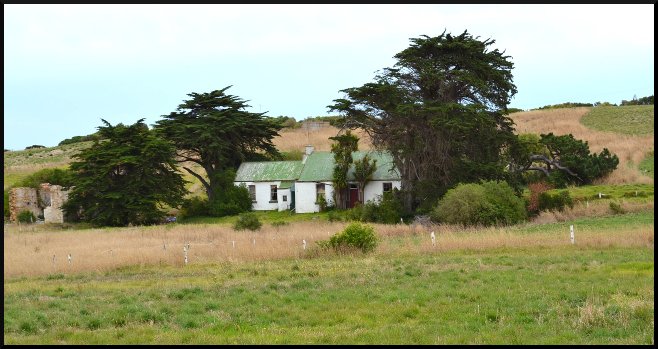
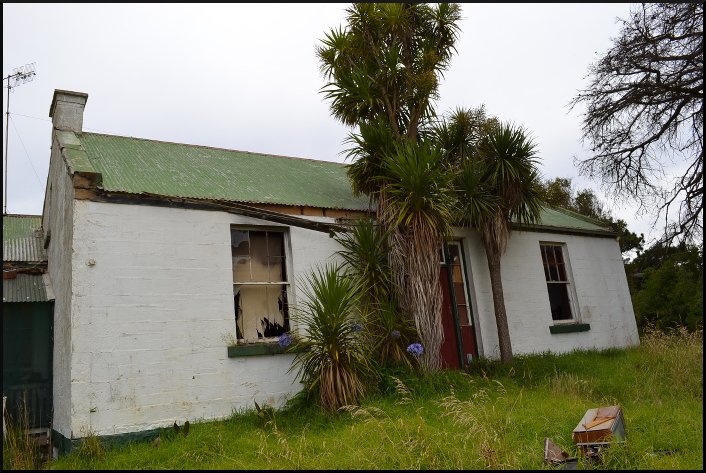
The original sharefarmer's cottage on the 'Motang' estate, Hopkins Point Road, which has been bought by Fletcher Jones factory owner, Dean Montgomery. Image: Bluestone Magazine.
The original sharefarmer’s cottage on the ‘Motang’ estate, Hopkins Point Road, which has been bought by Fletcher Jones factory owner, Dean Montgomery. Image: Bluestone Magazine.

[dropcap style=”font-size: 60px; color: #8F9F59;”] H [/dropcap]aving changed the future of one Warrnambool landmark with his purchase of the former Fletcher Jones factory, Hong Kong-based businessman Dean Montgomery has bought another significant property.

Bluestone has learnt that Mr Montgomery is the new owner of the 140-year-old ‘Motang’ stone house and surrounding 58-acres that occupies a slice of prime land between the beach and Hopkins Point Road, at the eastern entrance to Warrnambool.

The homestead dates back to the 1870s and was originally owned by the pioneering Thomas Manifold, who in the 1850s bought several hundred acres that made up the ‘Motang’ estate on both sides of Hopkins Point Road.

According to historians Helen Doyle, Louise Honman and Richard Aitken*, Thomas and his wife, Jane Manifold, may have used the property as a summer retreat, but the house itself was most likely built by a sharefarmer tenant at the Manifold’s expense, as was a common arrangement at the time.

montgomery-manifold
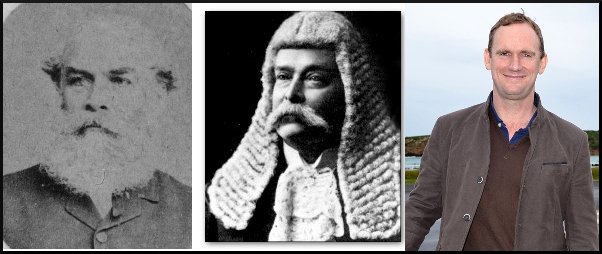
Dean Montgomery, right, may have to grow a handlebar moustache if he wishes to follow the tradition of former ‘Motang’ owners Thomas Manifold, far left, and son, Sir Walter. Images: Australian Dictionary of Biography/Bluestone Magazine.

[dropcap style=”font-size: 60px; color: #8F9F59;”] S [/dropcap]ir Walter Synnot Manifold, the son of Thomas, inherited the property after the death of his parents, but apparently never lived there.

He instead resided in the family home at Wollaston, from where he maintained his busy life as a state politician representing the Western Province in the Legislative Council. Like Sir Fletcher Jones, Sir Walter was a man of the people and well-respected for his inclusive approach to business.

Sir Walter, who died in 1928, put the entire ‘Motang’ estate up for auction in 1906 at a reserve of £40 an acre. It was passed in, but sold shortly after to John Wilson Younger, from Younger’s store fame in Warrnambool, who was also a former mayor.

The property has since been progressively divided up and held by different owners over the years, with farming brothers Edward and William Tomlinson among those to own the portion that included the eight-room homestead and outbuildings.

They auctioned off 100 acres in 1934 to the Ryan family, when the asking price for the “marine frontage” was £1 an acre! The Ryan family later used the property to raise racehorses.

motang_4
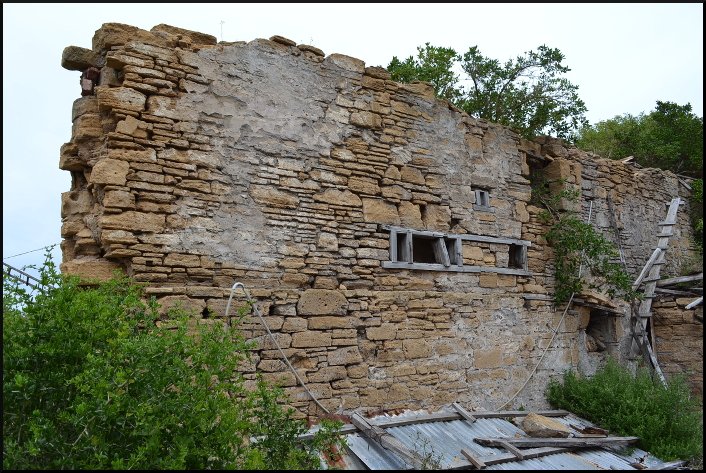
A magnificent sandstone wall is about all that remains of the original barn on the property. Image: Bluestone Magazine.

[dropcap style=”font-size: 60px; color: #8F9F59;”] M [/dropcap]r Montgomery could not be contacted for comment, but it is understood he intends to retain and restore as much of the original homestead and outbuildings as possible.

The white-washed homestead is derelict and, like the Fletcher Jones building, has suffered at the hands of squatters, but still retains much of its character.

Historians suggest it was modelled on Scottish/Irish farmhouses of the time, and built from stone quarried on the land.

A sandstone wall is just about all that remains of the original barn, but it also still captures the building techniques of the period.

As it happens, another significant chunk of the Manifold’s original ‘Motang’ property is for sale across the road from Mr Montgomery’s purchase.

That 70-hectare property is owned by the family of the late Dan Madden, a Warrnambool solicitor, and – unlike the homestead portion – falls within the town boundary for subdivision.

The asking price is believed to be around $20 million: a little more, to say the least, than the £40 per acre that Sir Walter was asking for…

motang_1
The derelict stone house has been vacant for many years, but will eventually be restored. Image: Bluestone Magazine.

[box]*Helen Doyle, Louise Honman and Richard Aitken, ‘Warrnambool Heritage: A report on selected sites in Allansford, Bushfield, Farnham and Woodford’, prepared for Warrnambool City Council, November 2001.[/box]

Bluestone Magazine would like to thank historian Dr Helen Doyle (Context) and Steve Myers (Warrnambool City Council) for their invaluable help in retrieving a copy of the above report which provided the historical information for this story.

[button link=”http://the-terrier.com.au/subscribe-2/” type=”icon” icon=”heart” newwindow=”yes”]Bluestone needs at least 500 subscribers in 2015. We need your support. It’s how we survive: subscribe here[/button]

newsletter Art Music StonesYou might also enjoy…


Capturing the story of FJ’s silver ball

Subscribers only: rare images of the silver ball emerge

Who is the ‘Granny’ behind Granny’s Grave?

Art is the heart of old Hawkesdale home

Behold this bluestone beauty: Fennessy’s at Rosebrook

Secrets of an old shoe