Hot off the presses: Deakin plan

[box]This is the media release in full just issued by Deakin University:[/box]

warrnambool deakin campus
Warrnmabool Deakin Campus: Image, Deakin University.

DEAKIN WARRNAMBOOL HERE TO STAY

 Monday, 3 October 2016

[dropcap style=”color: #a5cecd;”]D[/dropcap]eakin University has today announced a proposed ongoing, long-term and more sustainable model for its Warrnambool Campus that will see it continue its role as the region’s higher education provider.

Vice-Chancellor Professor Jane den Hollander said it was not possible for Deakin to remain in Warrnambool on a business as usual basis, in the face of declining enrolments and increasing annual losses.

“If something does not change these losses are predicted to rise and the campus is increasingly unsustainable,” Professor den Hollander said.

Professor den Hollander today met with Warrnambool Campus staff and students to confirm the University’s commitment to the region and discuss proposed key changes to the current Campus model which will:

  • ensure a student experience at Warrnambool consistent with Deakin’s LIVE the future strategy and equivalent in quality to student learning outcomes at other Deakin campuses;
  • fulfil Deakin’s public purpose; and
  • address the financial losses of the Campus.

Deakin will continue to explore opportunities to grow and sustain the campus into the future, including the consideration of a new Bachelor of Agribusiness unique to the Warrnambool Campus.

Professor den Hollander said Agribusiness could be an exciting new course that plays to the region’s agricultural strengths.

“We will work with the community to explore whether there is sufficient demand to get this new Bachelor of Agribusiness up and running,” she said.

Jane-Den Hollander
Deakin Pro Vice Chancellor Jane Den Hollander. Image: Deakin University.

Deakin will continue to identify other opportunities and create strategies for new and expanded offerings at the Warrnambool Campus, including increased work integrated learning and internships, expanded use of Trimester 3, exploring the international markets, both for in-bound students and on campus international programs, potential expansion of Associate Degrees, maximisation of pathways with South-West TAFE, VCE extension studies and potential opportunities for development of Deakin’s Institute of Koorie Education programs.

“Deakin will further consult with the Victorian Government, SW TAFE and regional schools to ensure community and industry support for higher education and Deakin University in South West Victoria,” Professor den Hollander said.

“We will focus on the courses for which there is demonstrated demand and strong graduate employment outcomes,” Professor den Hollander said.

Under the proposal, Deakin will continue to offer Nursing, Midwifery, Health Sciences, Psychological Sciences, Education (Primary), Commerce, Environmental Science (Marine Biology), Law and Commerce/Law at the Warrnambool Campus. Deakin will also continue to offer the Associate Degree of Education and several PhD courses.

Professor den Hollander emphasised that all students currently enrolled in non-ongoing courses at the Warrnambool Campus will be able to complete their studies at the Campus.

”A reduction in staff numbers as a result of the proposed decreased course offering would be necessary, but this will be worked through compassionately and via a period of consultation with staff, beginning today, Professor den Hollander said.

The consultation process will help to determine how the reduction in staff numbers will occur, including the option for a voluntary separation process.

Other aspects of the proposed model include closure of the Warrnambool Corporate Centre and rezoning of parts of the Campus that the University does not require. Professor den Hollander said Deakin acknowledged the State Government for its support of the proposed rezoning.

In addition to its Warrnambool Campus, Deakin’s strong presence in the South West region will continue, including through the School of Medicine’s Clinical School at South West Healthcare, Deakin Rural Health’s integrated program of research, education, the Centre for Farmer Health and the Centre for Rural Emergency Medicine.

Professor den Hollander acknowledged the financial support promised by the Federal Government to support Deakin’s transition to the proposed new Campus model.

“Deakin appreciates the work of the Member for Wannon, the Hon Dan Tehan, who has facilitated this support,” she said.

“We look forward to the active support of local industry, education institutions and the community in general to help ensure the success of the proposed new Campus model. Support will hopefully include provision of student work placements, internships and scholarships.

We look forward to working with the community to grow a new model that better suits the current era and the growing knowledge economy. This model will include both face to face and digital learning experiences so that those who study at Warrnambool receive an education that enables them for the jobs of the future. That is our focus.”


From a rock to our best-known sculpture

original piece of stone- ulmann
From this – a massive piece of bluestone weighing more than 10 tonnes… (Image courtesy of Glenn Morgan via the late David Jones).

By Carol Altmann

One of the many great things about Bluestone Magazine has been our recording of the revival of the Fletcher Jones factory and gardens in Warrnambool (having been part of the campaign to save it in the first place) and the many wonderful stories that have emerged about its past.

One of those wonderful stories is this one: the making of the bluestone sculpture commissioned by the Jones family as a tribute to the late Sir Fletcher, created by the late artist Robert Ulmann.

ulmann sculpture at fjs
To this…..the completed Robert Ulmann sculpture that pays tribute to the ethos of the late Sir Fletcher Jones. (Image courtesy of Glenn Morgan via the late David Jones).

[dropcap style=”font-size: 60px; color: #A02F2F;”] T[/dropcap]he sculpture, which is now a prominent and much-loved feature of the Pleasant Hill gardens, was hewn from two massive pieces of bluestone selected by Robert from the Panmure quarry.

The two pieces together weighed more than 20 tonne and, over the course of four months from July to October 1977, Robert reduced them to two pieces weighing five tonne.

This meant, of course, hacking away 15 tonnes of solid rock in a make-shift workshop at his Naringal property (later lost in the Ash Wednesday fires).

In our March edition we revealed a rare archive of images from the personal files of David Jones, son of Sir Fletcher, who gave them to local artist Glenn Morgan eight years ago for use as inspiration in his quirky works.

Within these more than 100 images are those capturing the making of the Ulmann sculpture and most likely taken by the Ulmann family (see our slideshow a little further on in this story).

ulmann starts work
Putting his back into it: the late artist Robert Ulmann gets stuck into the bluestone with a jack hammer at his Naringal property, later lost in the Ash Wednesday fires. (Image courtesy of Glenn Morgan via the late David Jones).

[dropcap style=”font-size: 60px; color: #A02F2F;”] S[/dropcap]uch was the excitement around the commissioning of the sculpture – which came just a few months after Sir Fletcher’s death in February 1977 – a memo and photographs were sent around all of the Fletcher Jones factories and shops to keep staff updated.

The finished sculpture may look like a hand holding a sewing needle, which fits with the Fletcher Jones story, but in fact it represents a germinating seed.

Working Drawings2
Robert Ulmann’s preliminary sketches for the sculpture that represents a germinating seed. (Image courtesy of Glenn Morgan via the late David Jones).

The plaque next to the sculpture explains more:

“Viewed from the ends, the form suggests the shape of a seed – the germination of an idea and the inspired determination to develop it.”

The three-metre long “needle” points to limitless potential.

“The horizontal lines of the straight stone suggest infinite potential for exploration and expansion of the initial ideals,” the plaque reads.

The sculpture will be 40 years old next year and stands as solid and true (and as popular with climbing kids) as it did on the day it was unveiled while a new chapter of the Fletcher Jones factory unfolds around it.

Watch our one-minute slideshow of the sculpture being created below:


 newsletter Eat And Drink StonesYou might also enjoy…


Remembering the art of Robert Ulmann

Questions and stories arising from clay

Recycled timber shapes a new life: Sarah Carrucun

Taking a walk on the wild side: Brett Jarrett


Fascinating images from FJ archive

[box]We would like to thank Warrnambool artist Glenn Morgan for sharing these extraordinary images of the Fletcher Jones’ story with Bluestone Magazine. The images, given to Glenn by the late David Jones, capture the FJ manufacturing story from the early 1900s through to the 1980s. Here follows just a sample from the dozens of images provided to Glenn. You can return to that story here.[/box]

Opening 3
Sea views: The grand opening of the Fletcher Jones factory at Warrnambool in 1948.

Between Mt Gambier and Penola 1923
Just begging to be interpreted by Glenn Morgan: Fletcher Jones on the road between Mt Gambier and Penola 1923.

join-us2

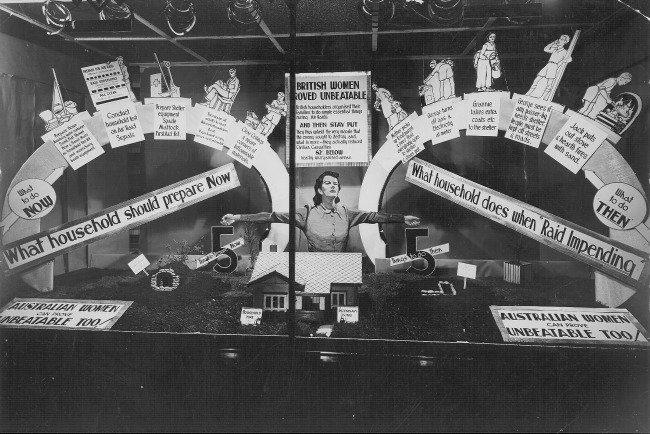
WW 2 Window III
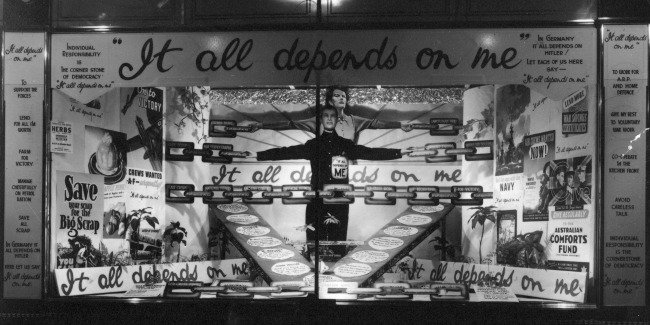
A classic World War II window display in the Fletcher Jones Man’s Shop.

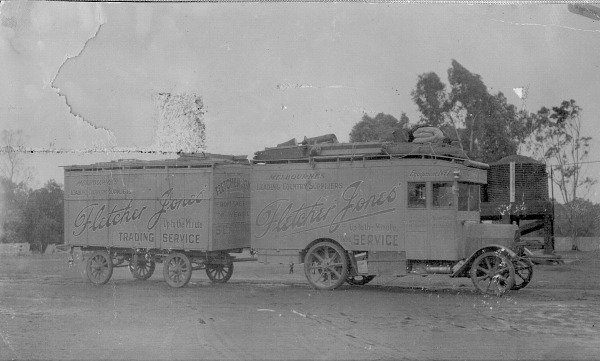
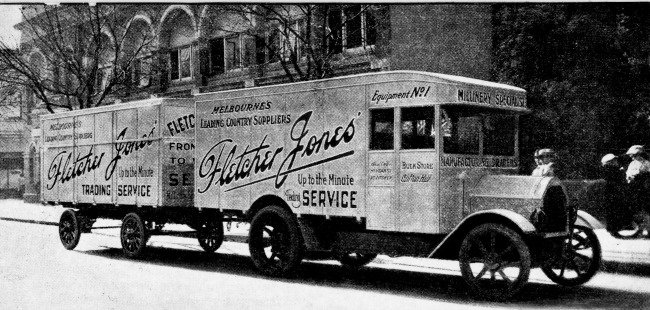
Truck 1920
On the road in 1920: Fletcher Jones began his clothing empire as a travelling salesman.

Parade 30s - 2
Scenes from a Fletcher Jones fashion parade in Warrnambool in the 1930s.

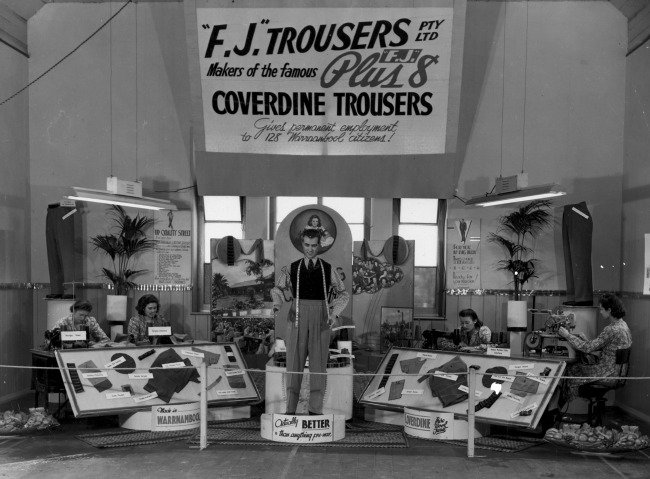
Trade Exhibition
The Fletcher Jones display at a Melbourne trade exhibition: and the models are real!

B ball Team 1946
The Fletcher Jones basketball team in 1946. Do you recognise any of these faces? If so, Glenn Morgan would love to know!

Garden 1954
Smaller than today, but radiant. The Fletcher Jones factory and gardens at Pleasant Hill in 1954.

WW2 window
Another ‘call to action’ window display in the Fletcher Jones Man’s Shop during World War 2.

Jan 1960 - 2
Mad Men eat your heart out: an advertising image from Fletcher Jones in the 1960.

Window - 6
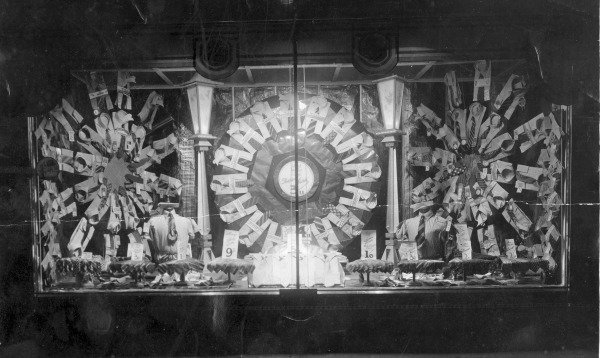
What you can do with a well presented shirt…or several. The window displays in the Man’s Shop were as memorable as the clothing itself.

B Ball Premiers 45
Premiers: The Fletcher Jones basketball team took the crown in 1945. Do you know any of these faces?

Window - 4
Pure style. A striking display of men’s evening wear at the Man’s Shop.

Main Sewing Room
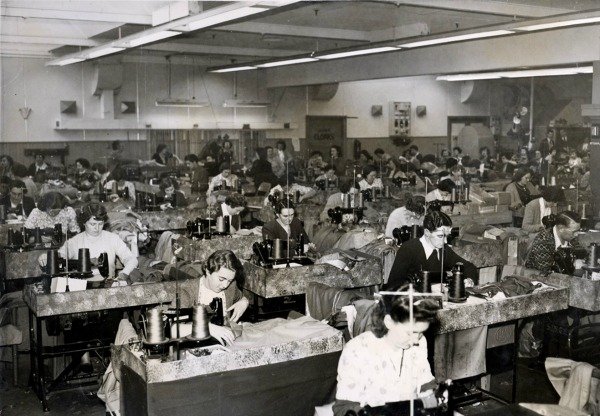
Heads down in the main sewing room at the newly opened Fletcher Jones factory, Pleasant Hill, in the late 1940s.

Minstrel Party 50s
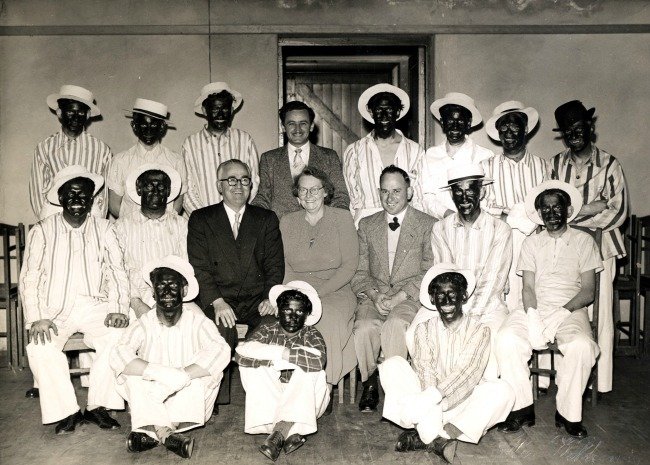
Minstrel parties were quite common in the 1950s – Fletcher and Rena Jones are pictured in the centre of this staff photo from 1950.

Jack Grayson - Wbool Shop
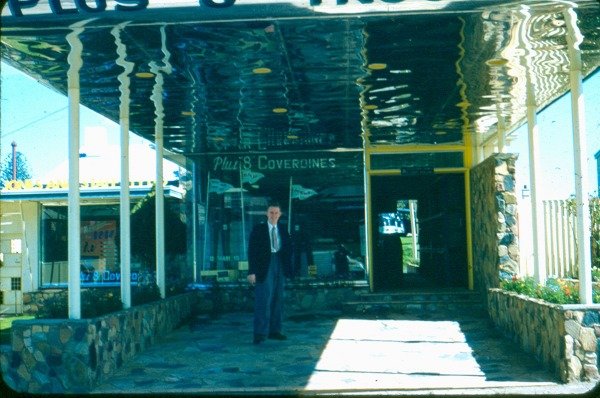
A man identified as Jack Grayson outside the former Fletcher Jones shop on Raglan Parade, Warrnambool. The stylish shop unfortunately no longer exists.

MC room 1948
Young migrants were among the earliest workers at the Fletcher Jones factory after it opened in 1948.

Xmas Part 1950 II
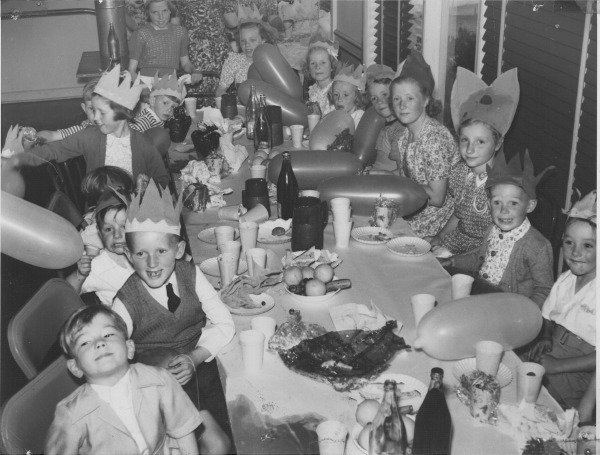
The annual Fletcher Jones’ Christmas party became legendary: here is a snap from the 1950 event. Do you recognise any of these faces? Most would now be aged in their 60s and 70s.

jones gardens
Picture perfect: the Fletcher Jones gardens, factory and silver ball looking at their best in the early 1970s. The ball is 50 years old next year.

[box]If you can help identify any of the people in these photos, please drop a comment in the comments box below and we can pass the information on to Glenn. [/box]


The fashionable world of Suzi Walter

[printfriendly]

suzi walter_smaller
Suzi Walter, the fashion designer behind the Sweezy label, has successfully revived a career that once saw her named among the best young designers in Australia.

Words and photos by Carol Altmann

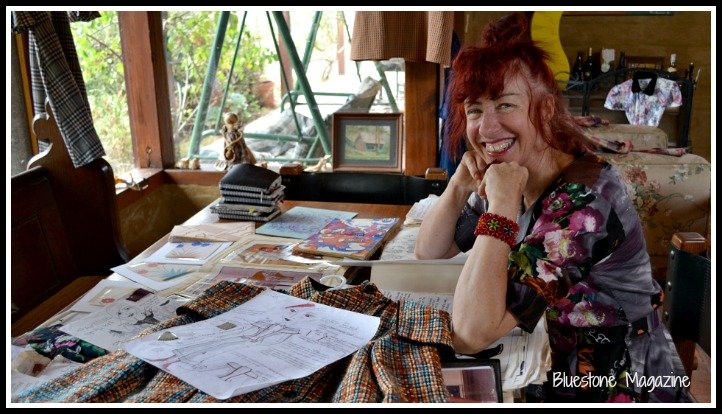
[dropcap style=”font-size: 60px; color: #DC943C;”] ‘W [/dropcap]e are so lucky, aren’t we? Doing jobs we love,” says Warrnambool fashion designer Suzi Walter as she spreads out the scrapbooks and patterns, drawings and diaries, samples and swatches, from a lifetime of work that has unfolded in two chapters.

Chapter 1, for Suzi, who owns the Sweezy label, began as a teenager living in Adelaide in the 1960s, when she was Sue Bell and sewing her own clothes using popular patterns from big names like Butterick, Simplicity, Vogue and McCalls.

join us2

“I would take one of these patterns and tweak it a bit because I didn’t like the collar, or how the pleat fell or something like that,” she laughs, which is something Suzi does often, and infectiously.

These tweaks revealed an early talent for design and turning a standard pattern into a striking original.

suzi young
A 16-year-old Sue Bell, right, who was still a student at Seacombe High School when she won a competition to design three outfits for 60s pop star, Bev Harrell, left.

Her first real ‘break’, however, came when the young Suzi entered a competition to design three outfits for 1960s pop singer Bev Harrell (you can see Bev in action on Youtube here) and won. The prize opened up the opportunity to work with Adelaide-based designer Bruce Westwood, so at 16, Suzi quit school and did just that.

Westwood saw her potential early: “She always had a flair for designing..always,” he was later quoted as saying.

“She has her own flair, she will go a long way,” he said.

And he was right.

suzi walter dress
Suzi’s winning design for the label, Emma, on the right, took out the Australian Wool Award ahead of a design by fashion giant, Norma Tullo, centre.

[dropcap style=”font-size: 60px; color: #DC943C;”] S [/dropcap]uzy enjoyed a career trajectory that would see her work in the heart of the thriving fashion industry around Flinders Lane in Melbourne during the vibrant early 70s when women like Prue Acton, Norma Tullo and Adele Palmer were taking Australian designs to another level.

“I worked on the Emma range that was sold through Myer, and Sportsgirl and pretty much had free rein to design what I wanted, but a particular favourite was hotpants,” Suzi laughs.

In 1971, although still a relative newcomer to the fashion scene, Suzi won the top Australian Wool Fashion Award – the “Golden Ram” – with an Emma Aztec-printed hooded bean pole dress, beating a Norma Tullo designed dinner dress.

Where does a young, world-at-their feet designer go from there? London, of course!

“I had some money from another prize I won (the Adelaide Festival of Arts Fashion Award) which I knew would pay for my fare, so off I went,” Suzi explained.

I assumed she meant by plane. But no. She and seven other adventurous souls bought a Kombi van and drove it to Perth, where they loaded it onto a ship and sailed across to India from where they drove to London.

“We travelled through Nepal, India, Madras, Pakistan, Afghanistan, Istanbul, Iran…all the way through Europe and across, finally, to London,” Suzi says, showing me the notebooks she kept along the way that are jammed with sketches and jottings: the mind of an artist at work.

“These little books became my bibles for ideas,” she says.

suzi walter desk
Suzi decided to get back into fashion after designing a dress that drew multiple compliments during a visit to Bali: “It got me thinking that, hey, I can still do this.”

[dropcap style=”font-size: 60px; color: #DC943C;”] S [/dropcap]uzy spent three years in London as a freelance designer, including working for Jane Carlin, in Bond Street, on high-fashion items destined for places like George’s in Collins St, Melbourne. This was a world where zips and hems were hand-stitched, and some garments were taken by Suzi to the Queen’s beader.

After meeting the man who would become her husband, Andy Walter, Suzi returned to Australia – via a road trip through Africa – and the pair settled in Melbourne to start a furniture business and a family. It would be another 25 years – in 2005 – before Suzi, as Sweezy, would return to fashion.

“It really began again with a design I called my ‘shoplifting’ dress,” Suzi says, before going on to explain that she made a one-off dress with a large bustle, that drew dozens of compliments during a trip to Bali.

“It got me thinking that, hey, I can still do this – I can still make really interesting clothing that people are drawn to.”

Suzi and Andy saw an opportunity to not only revive Suzi’s fashion skills, but to also help the Indonesian people.

suzi walter_7
Up close: just a small sample of the designs and swatches Suzi prepares to send to her team in Indonesia where they are created into garments.

[dropcap style=”font-size: 60px; color: #DC943C;”] H [/dropcap]ow it works is this: Suzi and Andy travel to Bali twice a year to select high quality, eye-catching and beautiful fabrics, often the whole stock if they love it enough, as Andy did with a fine red-and-black Japanese silk.

They then work with two Balinese men who, it is easy to see, have become a very special part of Suzi’s life: Gunter who cuts the patterns from her unique designs she sends to him via email, and Made, who does the sewing.

“When we first met Gunter, he had an old sewing machine out on his verandah and when it rained he would pull the whole lot in,” Suzi says.

Guntur has since built a new house, on the back of his work for several designers, including Suzi.

The Sweezy label (which is Andy’s nickname for Suzi) produces between 400-500 garments a year sold through Melbourne, Ballarat and Warrnambool and has built what Suzi describes as a “beautiful story” between the Walter’s and their Indonesian friends.

“When I first said I wanted to get back into fashion, I was warned not to, that it was no longer what is used to be. Well, of course, that only made me more determined to do it,” Suzi laughs.

suzi walter_35
Suzi with a dress made from the stunning Japanese silk fabric her husband, Andy, spotted on one buying trip to Indonesia: “He took the lot!”

[box]The Sweezy Emporium is located in Warrnambool at the end of Ozone Walk, off Koroit St. You can also find Sweezy on Facebook here. Suzi can be contacted on 0439 415 713. [/box]

newsletter Why Not StonesYou might also enjoy…


No cutting corners: designer Jack Hancock

Powerful family ties behind every stitch: Sue Ferrari

A softie at heart: Megan Nicolson

Reviving classic Australian furniture by hand: Be Seated


FJ Markets no longer stalled, but racing

fj market_di smaller
Life can be a laugh: Fletcher Jones market stall volunteer Dianne Gaetani, with Jax, and stallholder Lisa Austin whose stall specialises in “garage-nalia”.

By Carol Altmann

[dropcap style=”font-size: 60px; color: #A02F2F;”] F[/dropcap]or a dedicated op-shopper and sucker for the secondhand like me, walking into the Fletcher Jones Markets is overwhelming to the senses.

And I am not the only one.

Since Bluestone Magazine moved into a small office above the markets, I have been privy to the comings and goings of the dozens of people who venture in for a look around. And they all do what I did on my first visit: stop, stare and sort of slowly exhale when they realise this is second-hand heaven, market Mecca, op-shop overload.

join us2

“When I first saw the place, I fell in love with the place,” says stallholder Eric van der Wal, a retired federal public servant who has collected antiques all of his life and is now selling off a few pieces as a hobby.

Eric is one of 26 different stall holders who, between them, have filled two levels of what was once the Fletcher Jones factory floors with an eclectic and colourful variety of collectables, antiques, clothing, vintage, vinyl records, ephemera, furniture, dining wear, trinkets, soaps, wind chimes, musical instruments, artworks and a mind-boggling array of bits and bobs.

“People can wander through here and find something whether they are a serious collector, or whether they are just looking for some nice little piece to take home that is cheap,” Eric says.

But it wasn’t always as alluring.

fj market eric
Stallholder Eric van der Wal who joined the markets after retiring to Warrnambool: “When I first saw the place, I fell in love with the place”.

[dropcap style=”font-size: 60px; color: #A02F2F;”] M[/dropcap]any of the stallholders remember the “difficult days” when the markets were part of the Mill Markets group, run by the then-owner of the Fletcher Jones complex, Ian Ballis, whose company went into administration in mid-2012.

While the future of the Fletcher Jones site hung in the balance, the markets stalled and then barely clung on as the derelict factory began to continue to fall apart around them.

But then businessman Dean Montgomery, who hails from Geelong but now lives in China, bought the 2.3ha site in early 2014 and began an entirely new chapter for the factory.

Fears the markets would be “moved on” were not only put to one side, but the entire space has seen significant amounts of money spent on repairs and making the markets look clean, water-tight and professional.

As one stallholder says, snapping her fingers, “we were so used to being told things would get done and they would never happen, to now being told something will get done and it happens like that!”

fj market_4
A feast for the eyes: every nook and cranny at the markets is filled with an eclectic array of collectables, gifts and goods.

[dropcap style=”font-size: 60px; color: #A02F2F;”] O[/dropcap]n-site manager Troy Kelly, who began 12 months ago, said the markets were part of the long-term vision for the complex, which will centre on the Warrnambool Motor Museum that is now under construction at the far eastern end.

“We would hope to continue to make the markets bigger and better as part of a mix that will bring a whole variety of different people here, and who can make a day of it,” Troy explained.

That mix will include the car museum, scheduled to open in 2016, the markets, the art studios at Factory Arts, and the new Outlaw Gallery, all overlooking the refurbished Pleasant Hill gardens that now have the help of paid gardeners provided through Western District Employment Agency (WDEA).

“In just the time I have been here we are starting to see a real increase in foot traffic and that is only going to get better,” Troy said.

Eric has noticed the same shift.

“Everything is looking and feeling a lot better,” he says.

“There is so much enthusiasm around what can be done and it is great to be a part of that.”

fj market_1
Original vinyl: from gramophone records to retro records, the turntable is still very much in vogue at the markets.

[box]The FJ Markets are at the western end of the Fletcher Jones factory, Flaxman St, Warrnambool. Open seven days from 10am -5pm. You can also find them on Facebook here.[/box]

newsletter Eat And Drink StonesYou might also enjoy…


Discovering another gem of an op-shop – Cobden

Bag a bargain in an old-style op-shop – Koroit

Uncovered: Rena Jones’ lovely letter to the people

True love: backyard hens and the egg factor