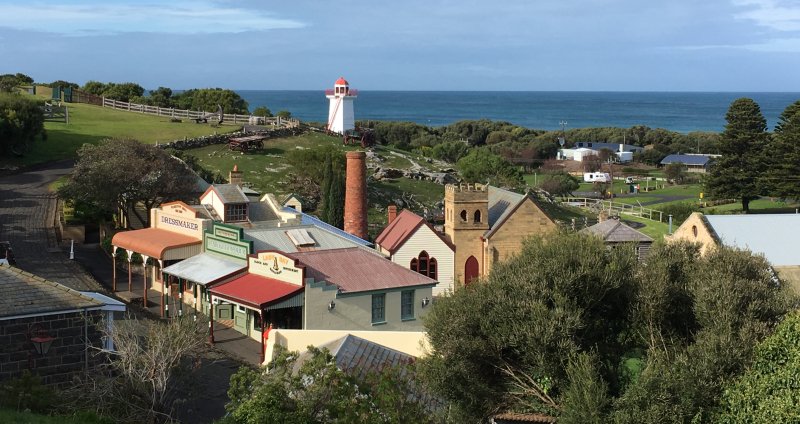
Are we being told the truth about Flagstaff Hill?
By Carol Altmann

I have been looking at visitor numbers for Flagstaff Hill and, I have to tell you, there are worrying signs.

Before I go any further, I need to say three things:

The figures are from Sept 2017 to Feb 2018. The media unit at the Warrnambool City Council will not give me more recent ones. I don’t know why. It also refuses to answer any questions about the figures that have been released.

In the past 15 years, at least $15 million of public money has been poured into Flagstaff Hill to keep it alive. Most recently, $3 million was spent on a new light/sound show and other improvements that opened in June last year. A year on, I think we need to know how things are travelling.

None of what follows is a reflection of the hard work done by the volunteers and many WCC staff who, in recent years, have busted their guts for Flagstaff Hill.

So how are things going?

The expectation was that once the $3 million upgrade was launched in June 2017, visitor numbers would boom.

As the council CEO Bruce Anson said himself, the colonial village needed at least 80,000 paying visitors a year to break even. This would stop the WCC having to spend $500,000, $600,000 or $700,000 a year to help it cover costs.

It was a big ask. Three years ago, paid visitor numbers were below 55,000.

The head of WCC’s tourism arm, David McMahon, who two years ago was handed the whip to flog Phar Lap, remained optimistic. In June last year he told The Standard:
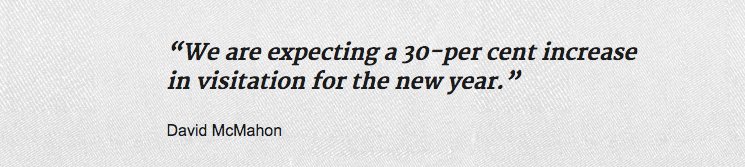
A 30% jump by January was a lofty goal, but here is an awful, ugly, unadulterated fact: the overall visitor numbers at Flagstaff Hill are going backwards.

I have checked and re-checked the numbers and you can look at them yourself right here:
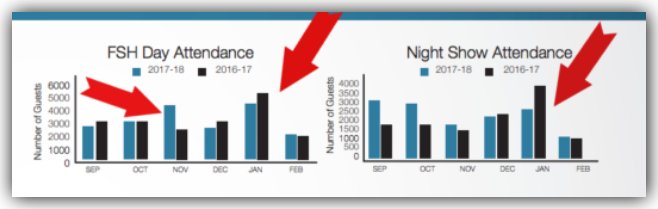
Let me take you through the red arrows:

  • In December and January of 2018 – our peak summer holiday season – less people went to Flagstaff Hill than the summer before.
  • The same applies to people who saw the new $2 million night show. After an initial spike in the months after the show opened, many more people actually went to the OLD show, in the summer of 2016-17, than they did in the summer just gone.
  • In February, when the weather was still warm, less than 2000 people showed up for the whole month, about the same as last February.

This is a shock.

Maybe the person who drew this graph for the council got their colours mixed up, but I don’t think so, because you can see a clear ‘spike’ around November last year.

Why was there a spike? I suspect because Flagstaff Hill had a free open weekend to celebrate its $3 million upgrade.

Did you see the word FREE in that sentence? This brings me to another very important point: how many have people actually paid to get in or paid for tickets to the night show since last Sept?

I don’t know. It’s one of the questions that those who have access to these figures – David McMahon, Flagstaff Hill manager Paul Pinkerton and WCC media head Nick Higgins – won’t answer.

But this question is critical to whether these figures are being fudged. Are these numbers a true reflection of what is going on, or is it even worse?

Free entries do not help the bottom line and if free entries are being included in these numbers, then we are being duped and that, to me, is very serious.

We have been here before, with Fun4Kids.

After many successful years as an annual winter event, Fun4Kids started to bleed money. Then it started to haemorrhage.

Here is David McMahon again being quoted by the paper during last year’s Fun4Kids:
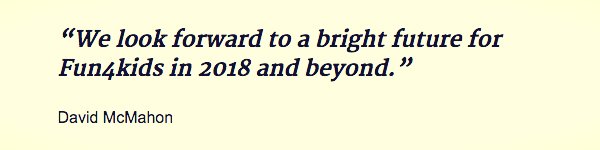
Seven months later, the WCC dumped Fun4Kids.

The cut came without warning, without any fallback plan, without any replacement and, it must be said, without giving the scaled-back F4K festival a chance to see if it could do better than the big-budget stuff of years before.

This is not how we should be planning our future as a prime tourist destination.

We need honest, transparent conversations about how we are tracking, what we can expect and what, if anything, we need to change.

I have written many times before that a fake colonial village that opened in the 70s and still flies the Union Jack high above its premises is no longer appropriate to where Warrnambool is going today.

What could replace it is a topic I will wade into later, but for now we deserve to be told the full story.

If you would like to keep seeing more pieces like this about local issues, please make a small contribution below.

Donate


Taking a stand: “But Carol, where will it end?”

No small irony: Large posters promoting the #16Days of Activism to end violence against women on prominent display at the Lighthouse Theatre, Warrnambool, which also houses a Rolf Harris mural.

I met two unforgettable people last week while collecting signatures to erase the mural by sexual predator Rolf Harris at the Lighthouse Theatre in Warrnambool.

Both of them, one a man, the other a woman, were survivors of child sexual abuse and were, as they described it, “finding their voice” to talk about such a personal atrocity and do everything they could to ensure that no other child would suffer what they had.

They talked quietly, often looking into the middle distance, because the middle distance is a safe space when re-visiting a place of such hurt, such confusion and such silence.

The silence. The being told – constantly – that you must not say anything, that you must not cause trouble, that you must not ruin things, or make things uncomfortable for others by speaking up and out.

But as the man said to me, “you just want to be heard and for someone to do something”.

He was doing something.

That very day as he signed the petition on a wobbly card table on the Civic Green, the Royal Commission into Institutional Responses to Child Sexual Abuse delivered its final report.

This was a devastating report that has been five years in the making and to which this man had given hours of evidence.

Despite having made a contribution to this highest level of investigation, this man still turned up during his lunch hour to sign a little petition to remove a small mural in Warrnambool because he is not done yet.

None of us should be done yet.

And this was how the woman who told me her story, a story she is only now starting to fully articulate, went from talking to me about why removing the Rolf Harris mural didn’t really make a difference, to deciding that it did.

She had come to the Civic Green not to sign the petition, but to explain why she felt covering it up was enough.

We talked about the symbolism of covering things up, about the hard-to-hear argument of separating the sexual abuser from the person, and about this mural – this mural – being a chance for our council to follow the lead of others who painted over their Harris murals right after his conviction two years ago.

After 20 minutes or so she said “I am going to sign”, and she did.

These are the strong faces I see in my mind when people roll out the arguments as to why the mural must stay.

“But Carol, where will it end?” they say.

Apparently if we erase a Rolf Harris mural in Warrnambool, soon we will be pulling down churches and trashing Caravaggios and banning people from watching films and throwing  all manner of books, artworks and music onto a giant pyre, because if we don’t, well, we are being insincere and inconsistent.

Ironically, this fear-mongering and muddying of the waters is what the “yes” voters endured during the same-sex marriage debate.

A simple question – can two people of the same sex marry – descended into a frenzy about ending freedom of speech, people marrying goats, and children being taught in primary school how to use sex toys.

If you said yes to same sex marriage, you were saying yes to all these things too – get it?

Fortunately most of us in Warrnambool were smarter than that.

But we, as a city, own a Rolf Harris mural and it is through this mural we can again make and take a stand. We must make a choice. We either own it fully, and pull down that Perspex, or we roll over it as a symbolic gesture that we stand with survivors 100 per cent: not 50 per cent or 20 per cent.

“But Carol, where will it end?”

Well, I can tell you that for the survivors of predators like Rolf Harris, who use their power and position to abuse children, it never does.

And as the women and men now speaking out around the globe have shown, we are not done yet.

In fact we are just getting started.

The physical petition has closed with more than 100 signatures in five days, which was my goal. The online petition also closed on Wednesday 13/12 at 9am.

The petition will go to Warrnambool City Council for consideration at its first meeting for 2018 in February.


Embracing the winds of change in Warrnambool

Bill Abrahams: “It’s 2:20am, I’m wearing my pearls out in Warrnambool and I haven’t even been gay bashed!”

I am so glad that the postal vote on same-sex marriage happened while I was living here in Warrnambool, because I needed to make peace with this town.

Growing up here in the 70s, 80 and 90s was not easy for those who knew they didn’t fit the mainstream, but couldn’t articulate why, other than knowing to talk about it would lead to trouble.

Even for those of us who had long family ties here, there was a pervasive sense of not belonging to the main tribe, of being an outsider.

I used my humour to get through my years at Warrnambool High School when I knew I had an attraction to girls, but didn’t know what that meant, or what it was, or how it would be, and it scared me and I knew I had to hide by fumbling my way through a string of boyfriends and side-stepping the deb ball.

I have since learned that we were all hiding – all of us – Glenn, David, Michelle, Julie, Damien, me – there are probably many others, because to not hide was to face exclusion, to feel ashamed, to be hurt by those who were stronger and more powerful.

Most of us had to run away from Warrnambool to find out who we were. I was gone for 25 years.

This is why the postal vote on same-sex marriage penetrated so deep into the psyche and the skin of those who were at the centre of the poll: we have been there before, except this time it wasn’t just a small country town judging us, but the entire nation, as to whether we were worthy of the same rights as everybody else.

And that is why the significance of this vote went well beyond the right to marry, which is something many LGBTQI people still feel ambivalent about. This was a vote on equality and whether, at last, we could stop feeling ashamed and excluded.

Last Wednesday at 10am, we all held our breath.

And then came the sweet release of a YES.

YES. YES. YES. YES.

Two thirds of our corner of the world voted YES.

YES pulls up windows and let’s the breeze blow in.

YES opens the doors on our hearts.

YES turns down the volume on hate and ramps up the volume on kindness.

No wonder most of us spontaneously cried when the result came through – including warhorses like Senator Penny Wong and writer David Marr – because a “NO” vote would have been unbearable.

The temptation for many of us living in Warrnambool was to head to Melbourne and await the results on the steps of the State Library together with thousands of others, then – we hoped – party long into the night.

But as my friend Bill Abrahams said later, “it was important to be here” and he was right.

Heading out to the YES party in Warrnambool.

It was important on Wednesday night to be able to stand in what was, when I was growing up, Brebner’s Paint Shop – now the Dart and Marlin bar – and wave a huge rainbow flag while people from all walks of life in Warrnambool joined in the celebration.

Twenty years ago, maybe even ten, this would have been inconceivable. Somebody would have been hurt.

As horrific as the postal vote process was, I am glad it happened, because it gave Warrnambool a chance to grow in ways that I suspect will become even more apparent over time. From the rainbow flag flying above the Warrnambool City Council, to the extraordinary events at the temporary Haven space within the Warrnambool Art Gallery, to the ongoing presence of Yumcha at Brophy, we have shown we were ready for this.

A few days after the vote was announced, Bill posted a photo on Facebook of him sitting in a Warrnambool bar just after 2am. His hair is in an Elvis coiff and he is wearing pearls and a fake fox fur while, behind him, a bouncer dressed in black leans on the bar, gazing off into the middle distance.

“Donna please take a photo. It’s 2:20am, I’m wearing my pearls out in Warrnambool and I haven’t even been gay bashed!” he wrote.

This is the new Warrnambool – a better Warrnambool – and we can all live with that.


Can W’bool break its coffee cup habit?

The environmental message is clear: we need to ditch paper cups, even recyclable ones. Image: Responsible Cafes.

By Shane Wilson*

Walk down Liebig Street from 8.30am on every weekday, and come to think of it weekends, and you will see the hastened step of the army of coffee addicts. Head down, almost caressing the plastic lid of their disposable coffee cup, infused by caffeine.

I will be clear, this piece is not about bagging out coffee lovers. That would be hypocritical, as I love my morning and lunch time coffee from my favourite café. There’s plenty of vices out there and if yours happens to be coffee, then there is no argument from this corner.

But, and I think this a big BUT, coffee drinkers are becoming an environmental scourge, the equivalent of those despicable nicotine addicts who think it is their right to flick butts on to the footpath and by stubbing it out with their foot, it will disappear.

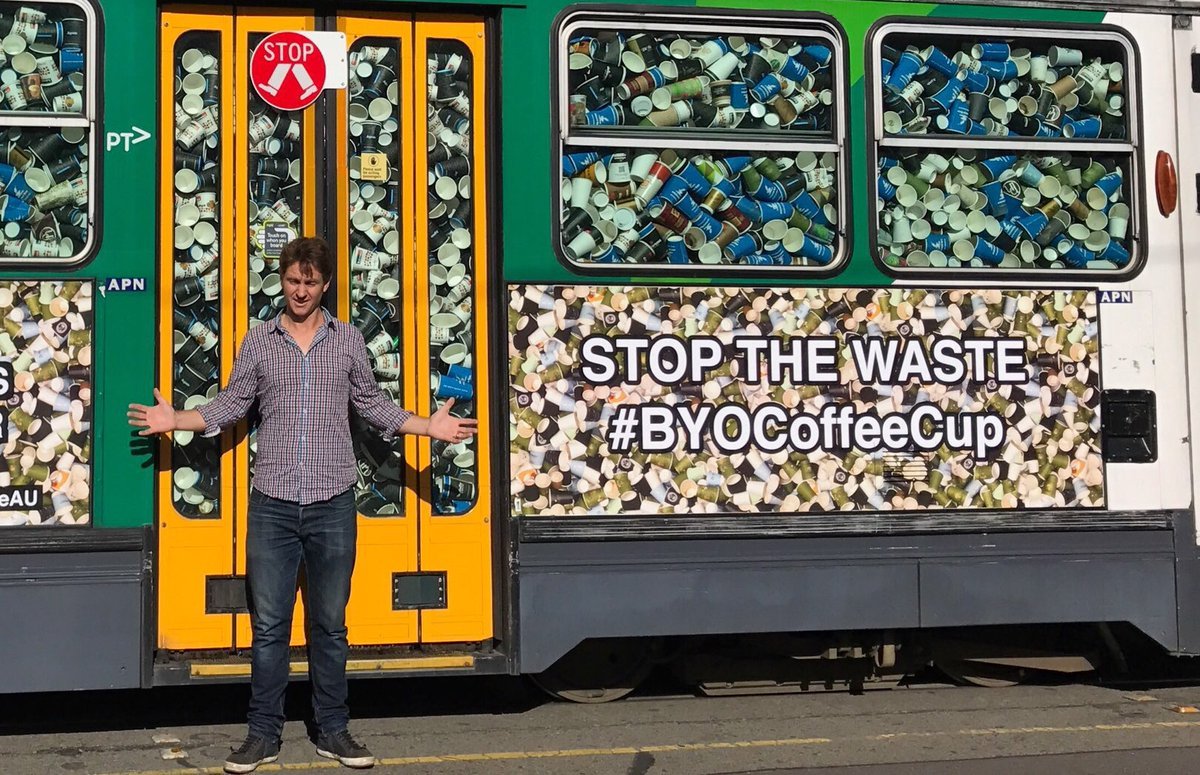
Former Chaser rascal Craig Reucassel reports in his recent ABC documentary War on Waste that it takes 50,000 coffee cups to fill a Melbourne tram. An interesting stat, but even more so when he makes the point that this is the number of coffee cups Aussies dispose of each half hour.

The cups are typically plastic lined and not bio-degradable: 50,000 every 30 minutes, one billion a year, destined for landfill.

Activist and comedian Craig Reucassel made a strong visual point by filling a Melbourne tram with the number of coffee cups thrown away every half hour in Australia. Image @craigreucassel, Twitter.

[dropcap style=”font-size: 45px; color: #8cc7d0;”] T [/dropcap]his coffee-sipping generation has been hammered in one ear about global warming and in the other about living and eating clean and green.

It’s not as if the environmental message is not being delivered. It’s just that it is not being heard. Or perhaps, Generation Now would rather promote their own immediate needs – a craving for caffeine – over a little bit of social responsibility.

But does it have to be this way.

Our town with a little good fortune (a regular, cleansing sea breeze and frequent rains) presents as a clean tidy green village.

We can build on this.

So let’s all support the push by the Leadership Great South Coast (LGSC) to completely phase out non-reusable coffee cups.

The LGSC has been urging local cafes to join the national Responsible Cafes campaign that goes further than recycling cups.

The campaign suggests, and I agree, that single-use cups be banned altogether and we bring our own, reusable cup.

If this sounds unachievable, just think for a moment on how we now all carry our own shopping bags (unless I leave them in the car!) to reduce the use of plastic bags.

As a city, we can all get behind the byo coffee cup campaign: promote it on the banners at roundabouts in the town. Bang the message out on Facebook. Talk to the schoolkids and let them know why the adults are doing this. For once, our generation can lead by example!

In our town, with leadership and meaningful discussion with our cafes, I am sure we can succeed.

The war on one-use coffee cups is going global – and Warrnambool could lead the way. Image: Beevoz

[dropcap style=”font-size: 45px; color: #8cc7d0;”] S [/dropcap]ome Warrnambool cafes, including Country Life cafe, Brightbird Espresso and Piccolo Coffee Roasters, are already taking on the environmental message by offering bio-degradable cups, selling re-usable cups and offering discounts to those who remember to bring their cup.

Warrnambool City Council is also one of the few councils which recycle coffee cups.

But recycling is not the only answer.

Unless coffee cups are disposed into recycle bins and are then appropriately recycled, it all counts for nought.

Bio-pak, which makes bio-degradable cups, state that if their cups go into landfill, they do not break down. Oxygen is required and unless the cups go into the right bins and the council ensures that the cups are correctly recycled, it’s all just more landfill.

In this day and age, with issues such as Adani’s Carmichael coal mine, the degradation of the Great Barrier Reef, and the enormity of climate change generally, people tune out.

It’s all too hard and such issues are typically outside an individual’s field of influence. On this issue, however, Warrnambool can make a difference and be an example for other towns to aspire to and in the process do good.

Yes, it’s difficult, but let’s cut to the nub of this challenge: no more single-use coffee cups in Warrnambool.

Next time you buy a coffee at your local café, take it with a teaspoon of social responsibility and I bet it will taste even better.

[author] [author_image timthumb=’on’]http://www.the-terrier.com.au/wp-content/uploads/2017/07/wilson.jpg[/author_image] [author_info]Shane Wilson is a Warrnambool solicitor, a cyclist, an activist and a coffee nut. He will write occasionally on local issues that stir discussion.[/author_info] [/author]


Tourism? We are missing out big time

Moyjil/Point Richie is one of three rich cultural and environmental sites in the south-west that could be maximised to form a major tourist attraction at the end of the Great Ocean Road.

The Terrier

A little statistic popped out of Parks Victoria about six weeks ago that should have had us all gasping and wondering what we are doing wrong in Warrnambool.

Here it is:

“A record daily peak of 11,000 national and international visitors made the trip to the Twelve Apostles during Chinese New Year celebrations”.

Please read that again, because it took me at least three reads to believe what I was reading: a record daily peak of 11,000 national and international visitors visited the Twelve Apostles during Chinese New Year (between January 28 and February 15) this year.

This was a 30% increase on last year. Thirty per cent!

And this is all happening less than an hour from Warrnambool – 72.7km down the road – yet we are seeing so little of the action here.

Why??

This is not a new question.

Over the years there has been much head-scratching, hours of discussion and piles of reports on how to encourage this lucrative market of cashed-up, eager travellers to travel just one more hour down the road to Warrnambool where, we would hope, they stay for more than 24 hours rather than passing through on their way to somewhere else, or turning around and travelling back to Melbourne.

To me, the answer starts here: give them something irresistible, something that they haven’t already seen or heard during their trek down the most popular coastal road in Australia.

And what might that be?

To me, the answer starts here: our incredible indigenous story.

I don’t know about you, but whenever I travel overseas, I can’t wait to immerse myself in the indigenous history, to read about it, see it and experience it through a tour, a trek, a talk, a meal or a spontaneous, random encounter.

Here in the south-west, and right here in Warrnambool, we are sitting on some of the richest indigenous stories in Australia, creating a natural ‘trail’ from Moyjil/Point Richie, to Tower Hill and out to Budj Bim (Mt Eccles/Lake Condah) near Heywood.

Budj Bim is on the cusp of a UNESCO World Heritage listing partly because of its stone eel traps that are 1500 years older than the Pyramids or Stonehenge.

And Moyjil, apart from being a geological wonder, has been a site of human occupation for at least 35,000 years and, pending the results of ongoing tests, could also be the oldest site of human habitation anywhere on the planet, dating back 80,000 years.

Why are we not celebrating and promoting this far and wide?

December 2016: The western walkway from Moyjil down to the beach.

Tower Hill, meanwhile, is where Great Ocean Roaders can see a koala, emu or a kangaroo while also learning about indigenous culture, but its full potential as a tourist attraction is far from realised, starting with the poorly signposted, pot-holed and dangerous entrance that must be the worst of any tourism attraction in Victoria.

To be fair, progress is being made at each of these sites to promote its significance (especially Budj Bim) and plans have been drawn up to manage their futures, but I cannot find any coordinated effort to promote the three locations as a not-to-be-missed tourism experience that would, in turn, create jobs and boost our local economy.

There is no single, one-stop-shop to find out about what should be a cultural and environmental gem of a self-guided tour: there is no one map, brochure, website, or app.

Try it yourself: visit the Visit Warrnambool website, click on “what to see and do” and see what you find.

The top listings alternate, but when I clicked, the first item was mini golf.

But back to Moyjil for a moment.

A 24-page conservation and management plan for this area was published in 2013, setting out how it should be cared for by the State Government (which owns it) and Warrnambool City Council (which manages it) but, four years on, there are worrying signs about the financial commitment needed to look after this precious piece of coast.

The western walkway from the carpark fell apart in early December last year, just before the start of the peak tourism season, and access to the beach was blocked.

It is now late April and the walkway is still busted although now, of course, there has been five months’ of people making their own path down the side of the walkway, as we do, and the erosion is obvious.

When it will be fixed, nobody knows.

April 2017: The western walkway from Moyjil down to the beach.

I contacted the state Environment Minister Lily D’Ambrosio and her spokesman said the council had applied last year for a slice of $730,000 in funding to fix the walkway as one of several work projects it had planned for the site.

It was not successful. (The $730,000 fund received applications totalling more than $3.1 million).

“DELWP is willing to look at how it can support Warrnambool City Council in fixing this walkway, and will discuss with Council how the department can assist,” he wrote.

I asked the council for its take on the situation and its spokesman said: “We will continue to seek funding from the State Government for maintenance. It will also be part of Council’s upcoming budget deliberations.”

And that was it. No passion. No prioritising. No real sense of urgency.

I can only wonder when a wooden walkway – a walkway – can’t be fixed (Triton woodworkers + youth unemployment project?), what the long-term future really holds for this magnificent site.

And in the meantime, the vast majority of the tens of thousands of tourists who are travelling to the Twelve Apostles each summer just turn around – or keep driving….