New column: Exploring our retro architecture
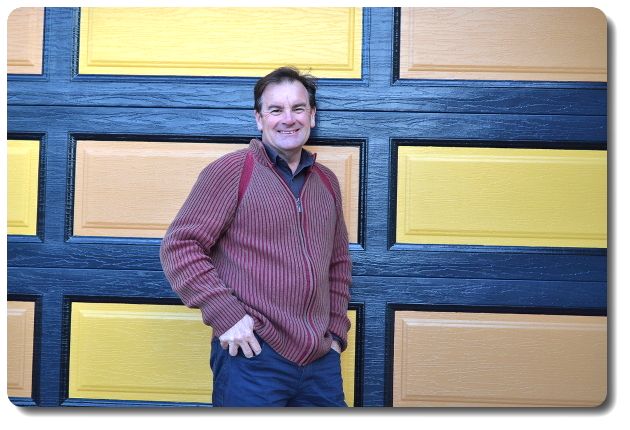
Architect Clinton Krause has a particular passion for mid-century architecture, as reflected in his own Warrnambool home: the fifth Krause family home he has either built or renovated.

We are delighted to welcome a new monthly columnist, architect CLINTON KRAUSE, who previously worked in Daylesford before relocating his business to Warrnambool. Clinton will explore the mid-century architecture that gives our city so much character, but about which most of us know very little…

A casual Sunday drive around the suburban streets of Warrnambool will often lead to the discovery of one of our best kept secrets: our city is endowed with a wonderful collection of intact, mid- century (1950s-60s) residential architecture.

Often complemented with matching landscape and décor, these unique houses are still much loved by their owners and provide an enticing glimpse into an exciting era of architectural optimism and innovation.

I intend to explore the story behind some of these homes – including my own – as part of my new monthly column with Bluestone Magazine.

With all things Retro back in vogue, the ‘Old-Modern’ houses of the late 50’s / early 60’s are enjoying the renewed attention of a whole fresh crop of designers, owners and ‘movers and shakers’.

So where did the distinctive styling of these homes come from?
clinton house small
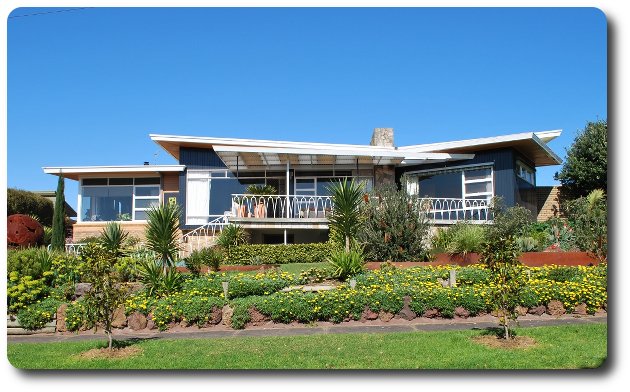
The Krause house in Altmann Ave, formerly owned and built by John Downie, is a stunning example of mid-century architecture in Warrnambool.

The cutting edge prototypes for the modern mid-century family home originated in post-war America, arising from the need to house the growing populations attracted to the job opportunities and climate of the beautiful west coast.

Talented architects and designers fleeing war-ravaged Europe made their way to California to resume business and, together with the catalyst of the upwardly mobile avant garde, an explosion of creative innovation spread rapidly out across the country.

Eventually ripples of this new design movement found their way to our shores where daring architects, builders and owners began experimenting with entirely new interpretations of the beloved family home.

The priorities for the modern home of this time departed radically from the status quo of English bungalows and triple-fronted brick veneers.
jarrett house
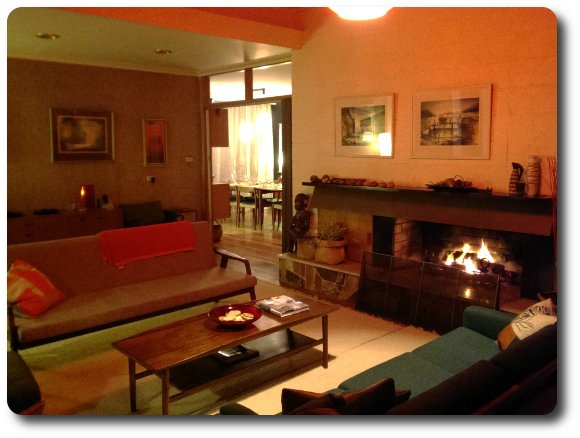
Furnishings in keeping with the style of the mid-century homes is an important part of the equation (and addictive!). This is the interior of the Portland home of Meg Jarrett and Jack van Roo, from Be Seated.

Relaxation of social standards meant that internal spaces became increasingly more informal. Open planning dissolved the boundaries between dining, living and kitchen areas. Huge expanses of glazing opened up the views, natural light and solar warmth, and often took in garden vistas, creating a visual flow between inside and out.

These new kids on the block announced their bravura with bright ‘pop’ colour schemes, a mash up of exterior claddings and cocky rooflines that jutted into the air and hovered impossibly above the ground.

Striped timber lining boards, op-art garage doors and expanses of crazy “crazy paving” all competed for the attention of the casual onlooker.

Furnishing the interiors of these sculptural show-offs also demanded special attention: Grandma’s heavy Victorian heirloom sideboard was just not going to cut it…
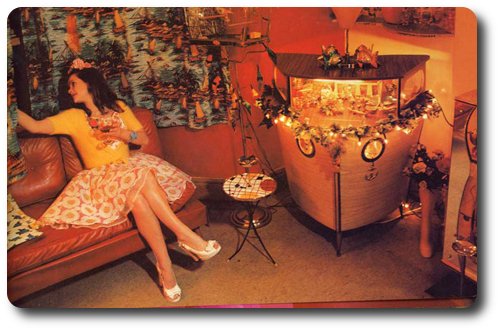
cocktail bar
Cocktail bars either commanded attention or were tucked away in one of the intriguing nooks and crannies within the house design. Image: ladyluckrulesok.com

In response, many mid-century homes incorporated ingenious designs for storing the detritus of the modern consumer (a bit like the architectural equivalent of an SUV).

Feature walls not only provided warmth to the décor and screening for privacy, but often concealed a multitude of storage nooks and crannies to house cocktail bars, entertainment systems, glassware and even seating.

An added benefit was that furniture did not dominate or diminish the sculptural interiors and the clean open spaces ensured that all attention was focussed on the garden outlooks, the abundant natural light and the carefully selected and placed groovy furniture.

The architects of this era brought affordable and innovative good design to the masses. Over the coming months, local examples of this unique era in architecture will be explored and celebrated in recognition of an important and unique period of Warrnambool’s built heritage.

Clinton

A bit more about Clinton: Graduated Deakin Uni 1985 ( hons). Practiced in Geelong , Melbourne and Daylesford. Specialising in residential work with 20 years of service in Daylesford and surround. You can find him on the web here.

Clinton-Krause


Lack of schooling a ticking bomb

bored hoods

OPINION – Carol Altmann

[dropcap style=”color: #a02f2f;”] T [/dropcap]here is a ticking bomb under south-west Victoria called a lack of education and it is set to blow up in our faces unless we start to do something about it.

For a variety of reasons that are still being nailed down, hundreds of teenagers in the south-west are dropping out of school and either doing nothing, having babies, drifting, or falling into a nasty, destructive spiral that – once they have tumbled in – is extremely hard to climb out of.

The numbers are chilling.

The six councils that make up the Great South Coast Group (stretching from Corangamite to the South Australian border and up to Hamilton) have reported that only 57 per cent of all school kids in our area are finishing Year 12 or its equivalent.

In some areas, such as in and around Portland and Heywood, is it a lowly 51 per cent.

For boys, the figures are like those from a bygone era: 44 per cent in Glenelg, 46 per cent in Corangamite and 48 per cent in Moyne.

As one member of the Great South Coast Group put it, we are teetering “on third world standards”.

Pregnant boy milwaukee
Teenage pregnancy is among the issues facing the south-west community that are connected to school drop out rates. Image: onemilwaukee.org

[dropcap style=”color: #a02f2f;”] T [/dropcap]hese dreadful figures come amid news that youth unemployment among 15-19 years olds is at its highest level in Victoria since 1997, with 20 per cent of kids in this age bracket having absolutely nothing to do when they get up every day.

In short, we are failing the next generation by selling them the great lie that if they don’t finish secondary school, they can still have a good future.

They won’t, because the sort of jobs that we might have picked up with a Year 9 or Year 10 education are going or gone.

Thousands will be left out and condemned to an under-class that struggles financially, emotionally and socially for their entire lives.

And if they fall behind, south-west Victoria will fall behind and become a welfare-basket backwater that can no longer cut it on a national, let alone international scale.

If this all sounds grim, it is because it is and it is happening right before our eyes and we, as a community, are contributing to the problem unless we help to fix it.

fj factory floor
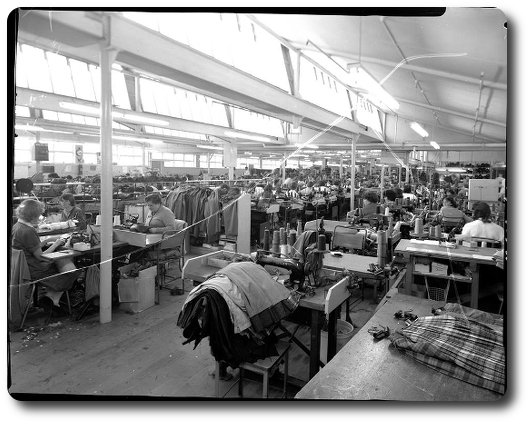
Jobs that once filled the gaps are now going or gone. (Fletcher Jones factory floor, Warrnambool. Image: Ralph Illidge, via David Owen, Save the Silver Ball and Fletchers Gardens.)


[dropcap style=”color: #a02f2f;”] T [/dropcap]he Great South Coast Group set up a working party which has spent almost three years trying to get their heads around the enormity of the problem and what to do about it.

At times, one member said, it felt like an almost overwhelming task and no wonder, because in order to really make a change, everything has to change.

After months of research, thinking and talking, the working group has come up with a broad-scale plan that challenges us to do things differently and to step away from our old ways of thinking.

Take, for example, the thinking that “the government” will step in and fix it. We have tried that, and it is not working.

What has happened, instead, is that multiple government departments are all tackling the same problem, in their own ways, without talking to each other, without being allowed to talk to each other and some kids end up with 12 separate case workers and no long-term solution.

(There is a great anecdote from a homelessness program in Woollomooloo, Sydney, where 52 “service providers” were all helping the homeless without knowing how many homeless they were helping. It turns out there were 90 people sleeping rough and this turned the issue on its head to become the “90 homes for 90 lives” project.)

kids playing footy
While sporting prowess is highly valued in our community, academic ability attracts far less comment.

[dropcap style=”color: #a02f2f;”] T [/dropcap]ake, as another example, our thinking that the problem starts in early primary school, when kids learn to read and write and do sums.

Wrong. The working party argues that it begins at conception.

The minute that little sperm penetrates that egg, a whole suitcase of potential – or lack of – flips open for that child: is the mother an addict? Is the father? Are they comfortably well-off or poor? Literate or illiterate? Supported or isolated?

And what about the community mindset that worships all forms of sporting prowess, especially football, above academic ability?

This needs to change too.

The working party has based its approach on what is called a Collective Impact model – snappy title, right? – but it is exciting and has worked very successfully in places like Sweden, Canada and the US, but is only now catching on in Australia.

In a nutshell, it involves motivating the community as a whole – politicians, parents, teachers, employers, philanthropists, business owners, the elderly, service clubs, sporting clubs, you and me – to work for real change.

Instead of operating in our own little corners, or doing nothing at all, we are urged to work collaboratively and collectively. “That is not my area,”  or “that is not my problem,” won’t be part of the language.

centrelink

[dropcap style=”color: #a02f2f;”] T [/dropcap]he first step, and it is happening as we speak, is the Great South Coast Group setting out a community action plan for each council area, because each has its own challenges.

Beautiful little Mortlake, for example, is doing its best not to become a welfare ghetto in the face of low-cost housing, poor services, poor public transport and the sheer boredom of those who have been located there by “the system”.

The action groups aim to get people talking about the problem – like we are now – and set down steps for change that we can all be involved in, even if it is something as simple as listening to a child read.

It will take years to turn around a mind-set that has been years in the making, but I think this is the best approach I have seen in a long time and I can’t wait to see it unfold.

Are we all prepared to help?

[box] The Great South Coast working party members include: Helen Bayne (South West PCP), Helen Durant (Great South Coast Early Years Network), Karen Foster (Great South Coast), Toni Jenkins (South-West LLEN), Marcus McCormick (South-West LLEN), Vicky Mason (W’bool City Council), Anne Murphy (Glenelg & Southern Grampians LLEN), Mary Pendergast (Dept of Education and Early Childhood Development) and Kaye Schofield (RMIT Hamilton). You can read more about the project here.[/box]

[button link=”http://the-terrier.com.au/subscribe-2/” type=”icon” icon=”heart” newwindow=”yes”] Would you like to have early access to our Opinion pieces? Please subscribe here.[/button]

newsletter Eat And Drink Stones Read more Opinion pieces here…


Trader levy deal…and the Jennifer Lowe factor

Council’s racing hospitality bill hard to swallow

Reekie to challenge Napthine at state election

Forget cover ups, roll right over Rolf

Community vision should extend city wide: Julie Eagles

Flagstaff Hill at $15 million crossroad

Scrap trader levy and start over

What is holding Portland back?


The twists and turns of textiles: Ruby Richardson

ruby richardson2_2
Textile artist Ruby Richardson at home in her Warrnambool studio which is a calm place full of fabric and creativity.

[dropcap style=”color: #8f9f59;”] T [/dropcap]extile artist Ruby Richardson has had a life full of twists and turns, but joining a circus was perhaps the least expected.

It was while Ruby, from Warrnambool, was studying costume design at Swinburne University in the late 1990s that she secured a work placement with The Women’s Circus, based in Footscray, and not only created some of their wonderful outfits, but ended up being part of the show.

“I learnt to do static trapeze, which is where you do various swings around the trapeze but don’t leap from it, and acrobalance,” she explains.

“I was so strong back then!”

womens circus
Members of the Women’s Circus demonstrate the art of acrobalance as part of their show, Out of the Box, using a combination of strength, poise and balance. Image: Women’s Circus.

[dropcap style=”color: #8f9f59;”] A[/dropcap] circus was the perfect – if unpaid – world for Ruby, who was entranced by “the sheer visual spectacle” of costume design and human movement that allowed for so much more experimentation than mainstream fashion.

“One of my lecturers at the time used to ban the ‘f’ word and say, ‘we make outfits for characters – not for the masses!”’, Ruby recalls with a laugh.

During her course, Ruby learnt the tricks of the costume trade – from millinery to creating “fat suits” – and also tried her hand at screen-printing for the first time.

Despite her love for the field, however, the opportunities for paid work were (and remain) limited, so Ruby also became a personal care worker for the City of Yarra, before deciding to return to south-west Victoria in 2002.

It was here that all the threads of her past and present life began to combine.

ruby richardson_6
Screenprinting is one of many of Ruby’s skills and she now teaches others at TAFE and occasionally at The Artery, Warrnambool.

[dropcap style=”color: #8f9f59;”] A [/dropcap]s a child growing up in Woolsthorpe, Ruby had always been a “good drawer” at school but hated sewing classes, until she decided to try her hand at sewing her own clothes at home.

Her father, a shearer, had a sewing machine in the house to make the calico bags he used to store fresh meat: it was not unusual for old-time farmers to know how to use a needle and thread.

“I bumped him off the machine and yeah, there was a fair bit of swearing about that,” Ruby laughs.

Ruby began to make and wear her own clothes; shirts without collars, skirts without hems, a kind of rustic chic .

“It was very rough, but also quite fashionable at the time, so I could get away with it,” she says.

Ruby went on to study art and design at TAFE, before completing a Bachelor of Fine Art at Deakin University, during which refined her drawing and design skills and began to explore printmaking.

After returning from Melbourne, Ruby re-enrolled at TAFE to study screenprinting under the guidance of Donna Dixon and, a year later, began her own label, Pattern & Print,that combined her printing and sewing skills.

“I decided to start making things from what I was printing, little bags, cushion covers, that sort of thing,” she explains.

ruby richardson2_16
The raw and the complete: some of Ruby’s collection of fabrics, including many sourced in Japan, a printmaking cut-out and a completed, hand-stitched felt bag.

[dropcap style=”color: #8f9f59;”] A [/dropcap] decade on and Pattern & Print is well known for its bold, geometric designs and colours that are inspired by Ruby’s deep love of the natural world.

“I can spend hours just looking at a plant, examining it and looking at its structures and colours,” she says.

“If you look closely, you can see how all the tiny pieces of a plant form into one piece and this is repeated over and over: I love that.”

Retro images from the 1950s are another common theme and, again, Ruby uses bold, monchromatic colours and repetition to create her own unique “look”.

These days Ruby has also moved from being the pupil to the teacher, and, three years ago, replaced Donna Dixon as the screenprinting lecturer at TAFE. She also continues to work in personal care, at Lyndoch, where she is known by her first name of Alison (Ruby is one of two middle names).

Like any artist, her work continues to evolve and Ruby is currently working on her first ever collaboration, with ceramacist Clare (Claybody) Fennessy, that will lead to an exhibition of “Prints and Clay” at TAFE on October 20.

“I am loving the process of working with Clare, who’s work I have always admired, and experimenting with different techniques to see what works and what doesn’t,” she says.

Ruby is also keen to produce larger wall hangings of her work, where the print is viewed as a work of art in itself, rather than as part of a functional object such as a cushion or bag.

“I see it as part of a natural evolution, working through processes, trying different things and not really knowing how it may end up: that is the exciting and enjoyable part.”

ruby richardson2_5
The eye-catching simplicity of Ruby’s designs are captured in this backdrop that reflects patterns and images that were popular in the 1950s.

[box] Ruby’s work is available at the Warrnambool Art Gallery gift shop, The Artery gift shop, the Little Yellow Owl hair salon, W’bool, and at her home by appointment. Commissions upon request. e: ruby.rich@yahoo.com.au [/box]

[button link=”http://the-terrier.com.au/subscribe-2/” type=”icon” icon=”heart” newwindow=”yes”] Did you enjoy this story? Please subscribe here to help Bluestone thrive.[/button]

 You might also enjoy…


Inspired by clay: Clare Fennessy

A sculptor with the heart of a Lyon: Jon Dixon

Family ties behind every stitch: Sue Ferrari

The quiet contemplation of still life: Jan Allan

Home is where the art is: Karen McKenzie


What about more fun for grown-ups?


civic green_2
The Fun4Kids festival in Warrnambool is gone for another year – and the grass re-growth begins …


OPINION

[dropcap style=”color: #a02f2f;”] A [/dropcap]s Warrnambool restores the grass on the Civic Green after another whirlwind Fun4Kids festival, I can’t help but wonder when we will turn our attention to more permanent attractions for grown-ups.

As one local put it, “Warrnambool is great for kids and great for the elderly, but there is not a lot for people in the middle” – and she is spot on.

Most regional cities in Victoria are coming up with new ways to attract the cashed-up, time-poor, middle-aged, middle class who want to spend their dollars on unique experiences and personal indulgence, but Warrnambool persists with “big things” that lose money.

Two of our attractions – Fun4Kids and Flagstaff Hill – cost the Warrnambool City Council around $1 million a year to prop up. In a queer kind of logic, we continue to subsidise the cost of these attractions to ensure their survival, but still consider them successful and necessary.

It would be understandable if these attractions were just starting out and trying to find their feet, after all, every new concept needs time to establish itself. But Fun4Kids is in its 14th year – 14th! – and still doesn’t break even despite the valiant efforts of all those involved and how much fun there is to be had.


groovy-penguin-03
Quirky shops and cafes – like this little cafe in the town of Penguin, Tasmania (popln 3924) – are what put a town (or city) on the tourist map.


[dropcap style=”color: #a02f2f;”] A [/dropcap] report commissioned by the council last year was upbeat in its assessment of Fun4Kids. It found the event created direct expenditure of around $1.9 million and that this, in turn, stimulates even more economic activity which – based on a series of sums and guesstimates – brings the total benefit to an estimated $3.69 million.

These figures, however, are always hard to quantify – where does this $3.7 million, if it exists, actually go?

From the council report, it appears local accommodation is a big winner through filling more beds in winter, but other traders are less affected.

Of the 95 traders who responded to a council survey, 50 per cent said their turnover remained about the same for this time of year and only nine (10 per cent) said it was significantly higher.

Some may consider $450,000 a year a small price to pay for an injection of winter tourists, but if we add up the total cost over 14 years – around $6 million – you start to wonder what we have to show for the money.

Perhaps the $6 million would have been better spent helping to establish a series of experiences that run all year round?

You only have to look at any of the recent Victorian tourism reports to see where the future lies: eco-tourism, food, wine, art, culture, boutique/quirky shops and unique, luxury experiences. In other words, fun for grown ups who may, or may not, also want to take their kids along.


merrijig_28
Tanya Connellan and Liz Foreman from the Merrijig Inn are part of a new artisan food trail that has started around the Port Fairy district.

[dropcap style=”color: #a02f2f;”] O [/dropcap]nce again, Port Fairy is leading the way. It is hard to believe today, but 30 years ago Port Fairy was a very cheap place to live because it was considered a dumpy backwater.

Since then, it has reinvented itself spectacularly by tapping into its natural assets – its seaside location, history, charming buildings (see our story this week on Coffin Sally’s bar) and its access to the rich, fertile soils that support a boutique food and wine industry.

The same week as Fun4Kids started, for example, Port Fairy used its Winter Warmer Weekends to launch an artisan food trail.

Shane Clancey, from Basalt Wines, Killarney, has teamed up with the Merrijig Inn, Port Fairy, and Shaw River Buffalo Cheese, at Yambuk – among others – to showcase the fantastic food and wine that is produced in the area.

I can see Melbourne folk salivating already at the thought of driving down the Great Ocean Road, taking in the 12 Apostles, winding their way through the 12 Apostles Gourmet Food Trail that incorporates the Timboon Distillery, Newton’s Ridge, Apostle Whey Cheeses and others, then zooming on to Port Fairy to do more of the same, before retiring for the night in a gorgeous 1800’s cottage with a crackling fire.

Why would they bother to linger in Warrnambool?


tower hill - travel vic
Warrnambool has an ecological, environmental and cultural gem on its doorstep with Tower Hill, but does little to capitalise on its potential. Image: Travel Victoria.

[dropcap style=”color: #a02f2f;”] I [/dropcap] have written before about how frustrating it is that Warrnambool does not make more of its natural advantages. We have one of the most spectacular and accessible coastlines in south-west Victoria, but is there even one classy restaurant with sea views?

We have Tower Hill on our doorstep, which has already been identified as a potential tourism mecca, but what are we doing to help capitalise on its appeal to bushwalkers, birdwatchers and international visitors who appreciate our indigenous heritage far more than we do?

We have a city centre full of historic intact buildings – those that have not burnt down or been demolished – but what are we doing to assist those people trying to convert them into cafes, galleries, cosy wine bars, jazz clubs and boutique shops?

We have an incredible whale nursery, but is there a fun, interactive place for visitors to go and hear a whale sing, or to touch its ‘skin’, or learn about how and why they come to Warrnambool each year?

And we have an art gallery that was one of the best in regional Victoria when it opened in 1986, but has not seen any meaningful funds spent on it since – there isn’t even a cafe – and it now relies increasingly on corporate events and weddings for income.

Imagine, just for a moment, if we didn’t spend $450,000 a year on subsidising 8 days of Fun4Kids, but instead divided this money to help kickstart great ideas – food trails, artisan studios, laneway cafes, cosy bars, boutique shops, a bush tucker cafe at Tower Hill and the like.

Perhaps then Warrnambool would have some enduring funk – as well as fun – for people of all ages.

the-whale-museum
The Whale Museum in Friday Harbor, Washington State, is devoted to orcas and shows that a museum does not have to be big, to be interesting.

[button link=”http://the-terrier.com.au/subscribe-2/” type=”icon” icon=”heart” newwindow=”yes”] Did you enjoy this story? Please subscribe here to help Bluestone thrive.[/button]

newsletter Eat And Drink Stones Read more Opinion pieces here…


Council’s racing hospitality bill hard to swallow

Trader levy shaping for for legal showdown

Traders levy takes a new twist

Forget cover ups: roll right over Rolf

Community vision should extend city wide: Julie Eagles

Flagstaff Hill at $15 million crossroad

Scrap trader levy and start over

Motor museum to revive Fletcher Jones


Forget cover ups: roll right over Rolf

Rolf Harris
Convicted pedophile Rolf Harris happens to paint: does this mean his art is worth more than sending a strong message to sexual abuse survivors? Image: The Guardian.

OPINION

[dropcap style=”color: #a5cecd;”] T [/dropcap] wo very unsettling things have emerged from the debate over whether a mural by convicted pedophile Rolf Harris should be kept in Warrnambool’s Lighthouse Theatre, and neither offer any comfort to victims of sexual abuse.

The first was a comment by Warrnambool City Council chief executive officer Bruce Anson in which he compared Harris’s systemic abuse of minors to an artistic “foible” – a weakness, a blemish on his character, a minor flaw.

Here is the quote in full, as taken from the Warrnambool Standard report of July 2:

“I’m not justifying in any way what has happened (but) I don’t think we should destroy art as a result of inappropriate behaviour.

“Many of our great artists had foibles.”

A dirty old man in a rain coat who sexually abuses children is seen as the predatory pervert that he is, whereas an entertainer who fooled the world with his charm and natty dress sense –  and who also sexually abuses children – is considered to have a “foible”?

I waited for the torrent of outrage against Mr Anson’s comments, but there was barely a trickle, despite Mr Anson holding one of the most influential positions in our city.


bruce anson abc
Warrnambool City Council CEO Bruce Anson earlier this week described Harris’s behaviour as a “foible”, but the outrage was saved for the Rolf Harris mural. Image: ABC Radio


[dropcap style=”color: #a5cecd;”] T [/dropcap]he outrage was instead saved in response to calls by some – including Bluestone Magazine via our Facebook page – that the Rolf Harris mural be painted over. Bluestone supports this move in order to send a clear message that the work of a convicted pedophile should not be honoured via public display in a public building.

If the Rolf Harris work was on a canvas, instead of a wall, it would be removed immediately (as is happening elsewhere in Australia), but because it is on a wall, we need to be even braver and bolder in our response and this is where we have become weak-kneed.

Despite Harris painting this mural in the very same year as he was actively abusing minors, the artwork is seen by some as separate to the artist, as if one Rolf Harris is the jocular painter, and “another” Rolf Harris is the pedophile.

This is a false comfort, as the hand that held the brush that created this mural is the same hand that could not keep itself off children – the art and the artist are inseparable.

There is also an argument that because Harris happens to be a visual artist, his “work” immediately deserves higher status and preservation than, say, the work of a pedophile priest, teacher or judge who – once exposed for their crimes – are stripped of all public honour.

Imagine if the Lighthouse Theatre decided to stage a musical tribute to pedophile and Harris associate, Jimmy Savile? Would we be as forgiving of the need to preserve his talents as an entertainer?


Jimmy Savile
Would we tolerate a musical tribute at the Lighthouse Theatre to the late entertainer, and pedophile, Jimmy Savile? Image: The Guardian.


[dropcap style=”color: #a5cecd;”] B[/dropcap]y keeping the Harris mural in place, we are sending a message to every victim of sexual abuse that a piece of art is worth more than them: that we, as a community, value the work of a convicted, systemic abuser more than we value them.

We can argue around it, through it and over it, but that is is the bottom line.

If we keep the mural, we must also be prepared to argue that a recent work by a convicted pedophile is more precious to our collective community consciousness than standing up for the one in three girls and one in six boys who are sexually abused in Australia.

But wait, some say, the history of art is littered with examples of child abusers having their work celebrated in public, such as Caravaggio’s erotic paintings of young boys painted in the 17th Century.

I would like to think we have come a long way as a society in four centuries and understand – fully and painfully – the lifelong ramifications of child sexual abuse that, in the case of Harris, is clear cut.

I am also still struggling to find an artist who is a convicted pedophile and is still feted by the public – Caravaggio included.


child-sex-abuse
In Australia, one in three girls and one in six boys are sexually abused before they turn 18. Image: Courier Mail.


[dropcap style=”color: #a5cecd;”] S[/dropcap]o why not just cover the mural up, as has been suggested?

Because that, to me, is a cop out. It says we are frightened to make the tough call and that one day, when we all “get over it”, the cover will come down again. Otherwise, what is the point?

Collectors can keep all of their Rolf Harris’s in their private collections and galleries – although it appears that the Queen has disposed of her portrait – but there is only one thing to do with our Harris mural: run a paint roller right over it.

Gather a group of women who have suffered sexual abuse (you won’t have to look far) and invite them to reinterpret the mural as a work of defiance: a work that says, loudly, we will not tolerate or condone this man’s disgraceful behaviour, no matter how well he paints.

With this work, we have the opportunity to make a very clear statement about a living, breathing sexual predator who happens to be an artist, and we at Bluestone are dumbfounded as to why it is proving so hard.

[button link=”http://the-terrier.com.au/subscribe-2/” type=”icon” icon=”heart” newwindow=”yes”] Did you enjoy this piece? Please subscribe here to help Bluestone thrive.[/button]

Stones Smile newsletterRead more Opinion pieces here…

Community vision should extend city wide: Julie Eagles

Flagstaff Hill at $15 million crossroad

Scrap trader levy and start over

Motor museum to revive Fletcher Jones

Traders are right to be asking questions

Be all things, or stick to the basics?