Scrap trader levy and start over

city warrnambool
An attempt to unite Warrnambool traders through a new marketing levy has run off the rails: perhaps it is time to start fresh?

OPINION:

[dropcap style=”color: #a02f2f;”] A [/dropcap] ballot will soon be held on whether Warrnambool traders should pay a special levy to fund a $600,000 marketing plan by Commerce Warrnambool, but the main game – to unite the traders as one – has already been lost.

Traders for and against the annual levy are deep in their trenches and, no matter how the ballot falls, there will be bitterness on at least one side.

Even the ballot process itself is fundamentally negative: rather than relying on enough traders to vote for the levy, it will go ahead unless enough traders vote against it. Hence there is now a very active and growing grassroots campaign by the Warrnambool Traders Action Group asking traders to be sure they object.

Given this no-win situation, I would suggest it is time to scrap the levy idea and start over.

It is three weeks since Bluestone Magazine exposed the full extent of the plan by Commerce Warrnambool (a chamber of commerce) to ask the Warrnambool City Council to attach a levy to 1346 commercial and industrial properties based on their capital improved value.

The levy, which would rise by 5 per cent each year for the next five years, would fund Commerce Warrnambool to operate as a major promotional and marketing body for the city.

Of the $600,000 to be raised, around $200,000 will be used for administrative and professional development costs, $100,000 will go toward an annual infrastructure project, and the remainder will be used for a range of promotional and marketing activities.

Regardless of its intent, however, the roll-out of the levy plan has so far been a dismal failure.


object logo
The slogan produced by the Warrnambool Traders Action Group.

[dropcap style=”color: #a02f2f;”] D [/dropcap]espite Commerce Warrnambool saying it had contacted hundreds of people about the idea, a large number of traders, including several high-profile businesses, said they knew nothing about it until they read it in Bluestone, on Facebook, or after it was tabled as a fait accompli at the May 19 council meeting.

These traders fall into two broad camps:

i) those who object to paying any more than what they already do in council rates and various tourism levies;

ii) those who might support the concept, but fear Commerce Warrnambool will only duplicate what is already being done by Warrnambool City Councilthe Great South Coast Group and the Great Ocean Road Regional Tourism Board.

Last week, the city of Geelong was held up as an example of how a trader levy for marketing and promotion can work very well, but the Geelong model is run completely differently to that being proposed for Warrnambool.


geelong centre
The City of Geelong has operated a trader levy since 2001, but it is a very different model to that proposed for Warrnambool. Image: www.g21.com.au


[dropcap style=”color: #a02f2f;”] I [/dropcap]n taking a closer look at Geelong, there is a template for how things could work here.

First, the Geelong Chamber of Commerce has nothing to do with the special levy: it does not collect it, spend it, administer it or receive a cent from it.

Instead, the Geelong Chamber of Commerce – which has been running for about 160 years – is an independent body funded through memberships, corporate partners and fundraising events and does all of the things that a business group aims to do, such as networking and lobbying.

Second, the Central Geelong marketing levy, as it is called, is collected by the City of Geelong Council and is administered by a special committee set up within the council.

The Central Geelong Marketing Committee is made up of 12 volunteer representatives from local businesses and sectors, plus one councillor, and supported by a four-person executive team that is employed by the council, including CEO Jodie Reyntjes. (You can read more here).

The committee manages a levy that in 2012-13 raised $671,000 and the process appears entirely transparent and fully accountable: they hold monthly public meetings, upload their monthly minutes and produce an annual report.

Indeed, in 2009, Ms Reyntjes wrote an interesting presentation that underscored the importance of being able to measure the success of the levy in real and meaningful ways: right down to counting the number of pedestrians in the city on a given day.

Such an approach avoids unnecessary duplication of staff and projects, and sits the levy within an established civic framework rather than trying to replicate this framework outside the council and from the ground up.

The Central Geelong levy has been running since 2001 – although not without its detractors – but its ongoing survival and successes indicates that it is doing something right.

Could we learn something from our coastal cousins?

newsletter Eat And Drink Stones More Opinion pieces…


Traders are right to be asking questions

New levy to raise $600k for what?

Be all things, or stick to the basics?

What is holding Portland back?

We still have jumps racing? Can’t get over it.


Traders are right to be asking questions

[The promotional video above was made by the Warrnambool City Council in 2011. It reflects the type of work that Commerce Warrnambool now wants to be paid to do.]


OPINION

[dropcap style=”color:#A02F2F;”] S [/dropcap]hortly after we started Bluestone Magazine last year, I wrote a piece about the importance of transparency, accountability and a preparedness to ask the hard questions of those tasked with running our city.

At that time, I lamented the fact that people who were prepared to put their head above the sand dunes and ask the prickly questions were often howled down as being trouble makers, out-of-touch, or holding the city back.

Judging by the response to the Warrnambool traders who have stood up and challenged a proposal to hit them with a new levy, little has changed.

The men in suits have again rallied to remind the rest of us of who they think should run this city and that we best shut up and let them get on with it.

That has certainly been the tenor of the argument as to why Commerce Warrnambool, a volunteer body of around only 100 members, should be allowed, via the Warrnambool City Council, to whack every trader with a special fee to raise $600,000 for promotions and marketing.

The proposed fee, which is based on property values, would run for five years and increase by 5 per cent each year.

Traders have every right to ask questions – and lots of them – especially when the finer details about this levy have been so vague.


t&G
Most traders are more concerned about the high overheads of doing business, not adding to those expenses.


[dropcap style=”color:#A02F2F;”] A [/dropcap]s was revealed when we first wrote about this issue last week, numerous traders, including several high-profile business operators, said they knew nothing about the levy until it was presented to council as a virtual fait accompli.

Instead of questions being asked of Commerce Warrnambool as to why its communications strategy had obviously fallen short, the guns were turned on the traders.

In its editorial on Friday, the local newspaper spoke of the perils of conservatism, of traders ‘tying themselves in knots’ and failing to embrace change, and that, as a city, Warrnambool really needed to grow up. (As an aside, the paper has failed, thus far, to mention that its General Manager, Tim Lewis, is a general board member of Commerce Warrnambool. Update: a new board has since been elected and no longer includes Mr Lewis. He does, however, remain a member of the organisation.)

These traders are the same people who have busted their guts renovating the often rundown CBD properties that they are forced to rent at prices which can be on par with those charged in suburban Melbourne. (Indeed I know of one hairdressing salon that floods each time it rains, but the property owner refuses to upgrade the plumbing.)

These traders have stripped back floors, painted walls, installed tearooms, hired staff, filled out myriad paperwork for everything from an A-frame to window signage and now, for their sins, they work long and exhausting hours in the belief that they have something to offer Warrnambool: and they do.

But apparently they could do being doing even better, if only they each paid another tax.


Wonderful_Warrnambool_Green
The Wonderful Warrnambool campaign is among those already funded by the WCC. Image: Warrnambool City Council.


[dropcap style=”color: #A02F2F;”] S [/dropcap]o let’s look at how this $600,000 would be used and how many innovative ideas it might fund.

According to Commerce Warrnambool documents, it is broken down into something like this:

  •  $150,000 for an executive officer and associated costs
  • $110,000 for “branding” of Commerce Warrnambool and a website
  •  $70,000 for professional development
  • $10,000 to attend the Regional Living Expo (currently attended by WCC)
  •  $25-30,000 for the annual business awards (currently run by WCC and sponsored by Powercorp)
  •  $130,000 for local promotional events – from speedway, to whales, to Christmas decorations
  • $100,000 for an annual infrastructure project of some description.
  • (plus, although it is not specifically mentioned, an extra $15,000 for WCC to handle the levy)

Using these figures, just over a third of the levy – $230,000 – will be spent each year on local promotions and physical works. So far, I can see little difference from what is already being done via the WCC, the Great South Coast Group and the Great Ocean Road Regional Tourism Board.

No wonder traders want to ask a lot more questions and three that come to the top of my mind immediately, are:

i. who will decide how the money is spent?

ii. what are their qualifications or experience to do so?

iii. how will the success of the projects be measured and by whom?

Commerce Warrnambool (and some councillors) have pointed to Swan Hill as a shining example of how the levy can work, so let’s have a closer look at that.


swan-hill-012
The city of Swan Hill is being used as an example of how the levy can work, but it has not been all smooth sailing.


[dropcap style=”color: #A02F2F;”] P [/dropcap]eter McNabb and Associates, who were paid a large chunk of the $35,000 in public funds that Commerce Warrnambool received last year, developed the Swan Hill levy model, so it mirrors what is planned for Warrnambool.

The levy has been in place in Swan Hill since 2002 to support a group called Swan Hill Inc, but that doesn’t mean it is popular.

In fact it was described by the Swan Hill local paper just two months ago as “controversial“, with the Swan Hill Rural City Council holding a Special Meeting on April 1 to discuss if the levy should continue for another five years.

The council received more than 380 written submissions, including 318 from people directly affected by the impost. Of the 318, 177 people (24%) supported it, and 141 (19%) didn’t – hardly an overwhelming endorsement.

The council went ahead with the levy, but not without its internal critics, such as Cr Gary Norton who was quoted by the local paper as saying:

“Swan Hill Inc has been operating for 10 or 12 years and what have they achieved? Lots of shops and businesses? Lots of empty shops?”

Cr Norton said Swan Hill Inc had not been effective enough in what he believed was a difficult financial climate for local business in Swan Hill.

“If we’re going to attract new businesses we need to reduce our overheads,” he said.

“High rates are killing the region. I urge council to squash this.”

You could swap the words Swan Hill for Warrnambool and the sentiment, for some, would be the same as Cr Norton’s.

So here’s an idea: why not tax the property owners, rather than traders who are being charged a levy based on a property value for a building that – in most cases – they don’t even own?

Then we might get a sense of how popular this idea really is among those with power.

[button link=”http://the-terrier.com.au/subscribe-2/” type=”icon” icon=”heart” newwindow=”yes”] Did you enjoy this story? Please subscribe here to help Bluestone thrive.[/button]

newsletter Eat And Drink Stones  You might also enjoy…


New business levy to pay $600,000 for what?

A little less conversation, a little more action

Be all things, or stick to the basics?

What is holding Portland back?

We still have jumps racing? Can’t get over it.


New business levy to raise $600k for what?

public-art-2
A proposed new levy will raise $600k to promote Warrnambool, but would it not be better spent on actual projects, like funky public art such as this in London?


OPINION

[dropcap style=”color: #abccab;”] I [/dropcap]t’s a rare day when businesses ask other businesses to pay more – not less – council rates, but that is exactly what is happening in Warrnambool.

A group called Commerce Warrnambool has asked the Warrnambool City Council to introduce a special levy that would see 1300 commercial and industrial businesses each pay between $100 and up to $6000 a year for the next five years, with the first year expected to raise $600,000.

The levy, based on capital improved property value*, would rise by 5 per cent each year for the next 5 years.

And what would all this money be used for?

Well, according to the Commerce Warrnambool business plan, the first $200,000 will be used to employ a chief executive ($90,000) and associated support staff ($110,000), with the remaining $400,000 being spent on what can best be described as a huge public relations exercise.

Commerce Warrnambool, which started as a voluntary organisation in 2010 and has about 100 members, effectively wants to professionalise its role in promoting Warrnambool as “a great place to live, work and invest” (the same old mantra) and be paid to do so.

There are already at least three other marketing and public relations bodies that are funded to perform this task, including within the Warrnambool City Council, the Great South Coast Group and the Great Ocean Road Regional Tourism Board, but Commerce Warrnambool clearly feels there is room for even more.


artery-nathanpye_19
Instead of spending more money on trying to convince people to invest in Warrnambool, why not invest in the things – like public art – that make a city appealing?


[dropcap style=”color: #abccab;”] T [/dropcap]he group will also, among other things, lobby the council (in other words, the council will collect a levy that will be partly used to lobby itself) and help to promote events such as the May Racing Carnival, Port Fairy Folk Festival, Fun for Kids and the Allansford Speedway.

From from what I have seen, these events already have significant marketing budgets and, between them, attract tens of thousands of people.

Given the record number of empty shops in downtown Warrnambool, a proposed 5.5 per cent hike in council rates, and the economic times that trouble most traders, I thought the idea of forking out money for yet another public relations and marketing project would be shot down in flames.

But no.

Commerce Warrnambool says it has contacted at least 900 businesses and received between 250-300 letters of support. This means that only a third of those surveyed like the idea, but I am stunned that it is even that high.

The council, sensing an opportunity to partially outsource another of its functions, has seized on the idea and recommended that the special levy go ahead: the councillors will vote on it Monday night (May 19).

But let’s think about this for a moment.

Do we really need a special levy to promote how wonderful Warrnambool is? Why not spend the money – if we are going to travel down this path – to improve what people actually see and experience when they come here?

Perhaps, for example, some of the $600,000 could be used to help sustain The Artery, which has given a heartbeat back to the lower end of Timor St, but is largely funded by volunteers and artists paying what little they make to hire an exhibition or studio space.

Or maybe it could be used as a building restoration fund, where property owners are given an incentive to freshen up the many tired, peeling and grubby shop facades around the city.


streets_3
Telling people to work, live and invest in Warrnambool is one thing, but ensuring the city looks fresh and inviting is quite another.


[dropcap style=”color: #abccab;”] O[/dropcap]ne of the Commerce Warrnambool arguments is that other regional cities have set up a business fund, so why don’t we? It lists Ballarat, Shepparton, Swan Hill and Mildura among its examples of similar schemes, yet if we pick just one of these – Mildura – there is a cautionary tale to be heard.

The Mildura Rural City Council collects a special levy on behalf of the Mildura Development Corporation and Mildura Tourism – both of which are subsidiaries of the council – to be used for the very sort of activities outlined by Commerce Warrnambool.

Last year, however, the council swiped $100,000 from the special levy fund to use for other purposes so that it could keep its overall rates down. Ouch.

Imagine, for a moment, if instead of Commerce Warrnambool fronting up with this levy idea, it was The F Project – the local artists’ collective that started in 2008 and has around 150 members.

I am trying to picture the F Project president, instead of Commerce Warrnambool president Tony Herbert, asking the council to tax every business owner for a special public art fund that would raise $600,000 a year.

This fund, instead of being used for promotion and lobbying, would be used to commission artists from around South-West Victoria to create new works of public art (including murals, street furniture, sculptures etc) that would be installed around the the city each year.

Such a fund would buy a lot of public art and produce tangible, highly-visual results, yet there is little doubt The F Project would be laughed out of the council offices for suggesting such an “indulgence”.

Yet it is the tangible things – not just more words – that will ultimately make a difference to people wanting to visit, or move, to Warrnambool. There is no small irony in the council spruiking its Liebig St renewal plans from an empty shop in Liebig St, which is next to another empty shop, which is a few doors from another empty shop…

Money needs to be injected urgently into physical projects that will bring the city back to life – and we don’t need to pay $600,000 a year for somebody to tell us that.

[*The original version of this piece said the levy was based on 3 per cent of property value, which is incorrect. The levy will be calculated as a rate in the dollar based on CIV.]

[button link=”http://the-terrier.com.au/subscribe-2/” type=”icon” icon=”heart” newwindow=”yes”] Did you enjoy this story? Please subscribe here to help Bluestone thrive.[/button]

 Stones Smile newsletter You might also enjoy…


A little less conversation, a little more action

Be all things, or stick to the basics?

What is holding Portland back?

We still have jumps racing? Can’t get over it.

Having a year of your life back

David Jones Jr on the future of the FJ site


David Jones Jr on the future of the FJ site


silver ball, fletcher jones, mark rashleigh
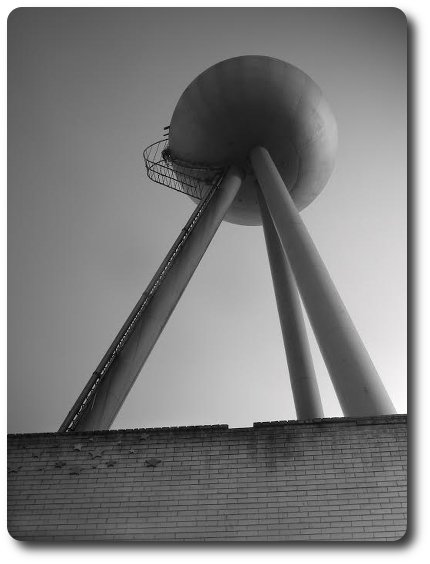
This stunning image of the Fletcher Jones’ silver ball was taken by Deakin University fine art academic Mark Rashleigh who has kindly given us permission to reproduce it here. It depicts the tower with its ladder and railings intact.


OPINION

[dropcap style=”font-size: 60px; color: #ABCCAB;”] A [/dropcap]s Heritage Victoria prepares to inspect the dilapidated Fletcher Jones factory in Warrnambool next Monday (7/4), the grandson of Fletcher Jones said his family would be delighted to see something “creative” happen with the site.

In so saying, however, David Fletcher Jones Jr said that his family fully appreciated the complexity of the situation that has developed since the current owner, Daramking (owned by failed Geelong businessman Ian Ballis), went into receivership in 2012.

“I am anxious to stress that we recognise how challenging this all is,” Mr Jones said in an exclusive interview with Bluestone.

Mr Jones is the son of the late David and Isobel Jones and lived in Warrnambool until his teenage years. As a result, he is keenly aware of the connection that many people feel to the Fletcher Jones factory site because of the high esteem in which his grandfather was held.

“How the site looks today is very sad,” he said.

“Everyone would like to see something better done with it.”


old fj gardens shot
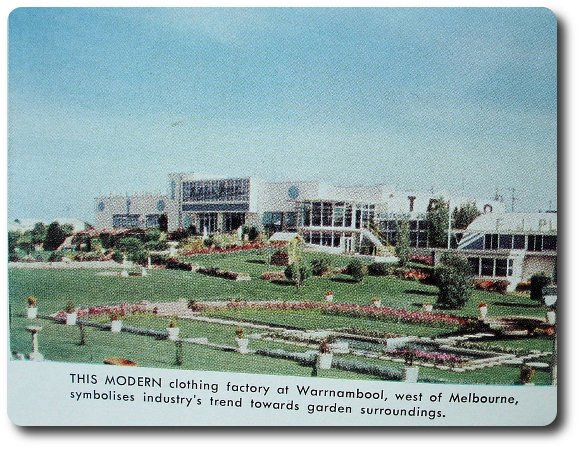
Fletcher Jones factory, Warrnambool circa 1950’s. Photo source: Land of the Southern Cross Australia. Published by The Australian Publicity Council. Private collection.


[dropcap style=”font-size: 60px; color: #ABCCAB;”] M [/dropcap]r Jones, who with his sisters, Susan and Anne, oversees the philanthropic FJ Foundation, said the debate around the future of the site reinforced that there was no easy answer and a solution would require a “thorough engagement with the council and the community”.

“Quite a complex and thoughtful solution is going to be needed,” he said.

“And we would be excited if something thoughtful and appropriate could be done.”

While Mr Jones did not wish to specify what sort of development he would like to see on the site, he agreed that a project that linked to the broader community would certainly reflect the values of his grandfather.

The Jones’ family have had no direct involvement in the FJ factory site since the company was sold in 1995, but the personal links remain strong.

The water tower was designed by Fletcher Jones’ son, Ralph, who was a consulting engineer and is now aged in his 80s. The Pleasant Hill gardens, meanwhile, were designed by Fletcher Jones’ brother-in-law Darby Boucher.

The heritage-listed water tower, gardens and other key elements of the iconic site have been central to recent discussions between Heritage Victoria, the Warrnambool City Council, the administrators and the mortgagors as to who has responsibility for maintaining these historic elements.

A Save the Silver Ball and Fletcher Jones Gardens group has also added a strong element of grassroots community activism.


inside fjs

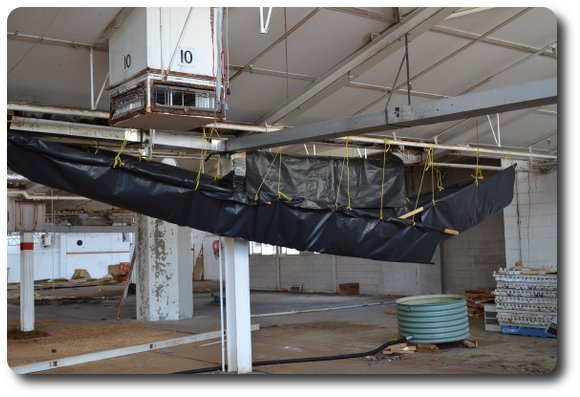
[dropcap style=”font-size: 60px; color: #ABCCAB;”] I [/dropcap]n the meantime, the various tenants occupying different parts of the building are still paying rent and, in most cases, repairing what they can as the building continues to crumble around them.

The Triton Woodworkers Club, for example, pays around $9000 a year for a space directly under the silver ball that is substantial in size, but leaks like a sieve whenever it rains.

The club has rigged up an improvised internal drainage system that keeps most of the rain off their equipment – if not the floor –  but an outsider can’t help wondering why they are being charged anything at all, especially as a not-for-profit community group who, simply by being there, help to keep the vandals out.

So where does the long-term solution to the site lie?

Hopefully a constructive plan will emerge from the talks between the various parties, but, in the meantime, it is worth revisiting a key recommendation of the 2003 consultants’ report, commissioned by the council, into the site’s future.

It suggested the council, even if it no longer owned the site, keep the dialogue open between the community, any developer and the council to ensure its future life was in keeping with community expectations.

To date, this has not happened. This may change and, if it does, we may be on our way to the “thoughtful and appropriate” solution that such a high-profile and important site deserves.

[box] Postscript: According to the Warrnambool City Council, it spent almost $160,000 on the Fletcher Jones site between 2002 and 2008. A breakdown of this figure was unavailable, but it included repairs on the silver ball after an assessment in 2004.[/box]

newsletter Art Music Stones More on the Fletcher Jones campaign…


Who will step up for Fletcher Jones?

Close Flagstaff Hill; save Fletcher Jones

Don’t drop the ball on FJ’s icon

Mini FJ’s silver ball to shine again for festival

Fletcher Jones site taken off the market 

The Save Fletcher Jones campaign


Be all things or stick to the basics?

council plan
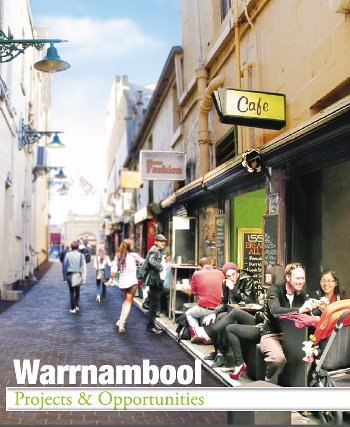
The dream: an image of bustling cafes built into the sides of Warrnambool’s laneways graces the cover of the council’s recently released priority ‘wish list’.


[dropcap style=”font-size: 60px; color: #A5CECD;”] C [/dropcap]ouncils were once primarily responsible for rates, roads and rubbish: my, how times have changed.

The 16-point list of advocacy priorities released by the Warrnambool City Council suggests that the council must now be all things to all people, fixing everything from school retention rates, to unemployment, to developing the region’s food export industry…right down to upgrading the stormwater drains. But is this what ratepayers really want or expect?

Sixteen points is a lot of priorities for a council covering only 32,000 people and they can’t possibly all be met, especially when we struggle to get the public toilets right.

I say this because as I was walking back from a media briefing on the plan last week, I wandered past the vandalised portable toilet box on Gilles St, across the road from the heritage precinct of the former police station and court house.

Having only been back in Warrnambool a relatively short time, I thought these toilets must have been installed for the comfort of the workmen repairing the former post office nearby.

A google search, however, revealed the eyesore is considered a public toilet and has been sitting there since 2011 while the council finalises its public toilet strategy.

My heart sank. If it takes more than three years to sort out the public lavatories, what hope is there of achieving the bulk of the 16 priorities that had just been outlined to the media by Mayor Michael Neoh and CEO Bruce Anson?

Moreover, do we need to have 16 priorities? What about focussing on five, securing the funding for these, and doing them really, really well? (We will list our top five later).

toilet_19
The reality: the ‘temporary’ toilet block on Gilles St indicates that making progress on some projects can take years.


[dropcap style=”font-size: 60px; color: #A5CECD;”] W [/dropcap]hile there is nothing wrong with thinking big and aiming high, we have three levels of government for the simple reason that each one looks after different levels of responsibility.

Ratepayers, I suspect, want a local council to focus on maintaining and improving their local amenities, to ensure that their city is a good looking and vibrant place where people want to live, work or visit for an unforgettable holiday.

Given this, it was heartening to hear Mr Anson list the revitalisation of the CBD as the number one priority, but there was scant detail on how this would be done, and by when. (*Since this piece was written, WCC has announced it is seeking an architect to redesign the portion of Liebig St between Koroit St and Raglan Parade).

The gradual rejuvenation of some of the city’s laneways – a wonderful council project –  is an example of what can happen, yet the F Project artists behind all of this hard work are scrimping and scraping to develop their art space down at The Artery, in Timor St.

The Artery has the potential to utterly transform what was a bland part of the CBD and to draw tourists in droves, but unfortunately this simple project has received very little council money.

At the same time, the council says in its latest document that it hopes to secure $100,000 for a “comprehensive study” into food production in south-west Victoria and potential export markets. Why? Isn’t this the domain of the State Government and, more particularly the local member, Denis Napthine? Or perhaps it is even better suited to the Federal Government, and our local member, Dan Tehan?

bluestone2_29
The Artery artists’ hub in Timor St has the potential to be a magnet for tourists and locals alike.


[dropcap style=”font-size: 60px; color: #A5CECD;”] L[/dropcap]obbying the other two tiers of government is part of what local councils do, but do we really want to secure and spend $100,000 on another study in the process?

Even a portion of this money would go a long way toward, for example, The Artery being able to open its retail space, gallery and studios – heck, they might even be able to get their signwriting done.

To be fair, the council’s priority list does contain some good, grassroots project such as upgrading the dated public swimming pool and working on a plan to improve the equally dated and tiny library, but it also contains a chunk of ‘priorities’ that have been around for so long now, most of us have forgotten when they were first announced, such as sorting out the future of the Fletcher Jones site, Flagstaff Hill and the railway station precinct.


bluestone2_25
Warrnambool will receive a longer airport runway, but the trains will still be slow, unreliable and crowded.

[dropcap style=”font-size: 60px; color: #A5CECD;”] S[/dropcap]peaking of the railway, improving the inadequate train service to Melbourne has been another, long-standing priority that has again been wish-listed by the council, yet it is the extension of the Warrnambool airport runway that is taking precedence for $4.5 million in state and federal funding.

The number of people who use this runway will be minuscule compared to the number of train commuters who already struggle to find a seat on a service that operates only three times a day and lumbers along at a Cobb-and-Co-like speed of 74 kph.

We should be outraged, especially as our compatriots in Bendigo, Ballarat and even Traralgon each have more than a dozen services a day, including a number of express trains.

A fast, reliable commuter service between Warrnambool and Melbourne is also critical to tourism, yet there is no indication that the service will receive another cent from either the state or federal governments.

The council has developed an enormous amount of strategic plans and strategies – the latest one brings the total to 32 in the past 10 years – but my fear is that it is spreading itself too thin, that it expends too much time and money reaching for the stars rather than dealing with the basics, and that, like the toilet box in Gilles St, it will ultimately struggle to be flush with success.

[box] Below are Bluestone’s five funding priorities (what are yours?):[/box]

  • Secure and save the best of the Fletcher Jones site and gardens and lobby for state funds to make it happen. This site is critical to creating a sense of ‘arrival’ to Warrnambool and has the potential to be something very special.
  • Fix the train service with more frequent, faster and reliable trains that include express services.
  • Revitalise the CBD by, for example, offering incentives to restore and repair the heritage buildings, remove the parking meters and create a true restaurant precinct.
  • Finish the sensational foreshore bike path by, as previously suggested by the council, linking it back through Lake Pertobe to the railway station. People would travel to Warrnambool (on a fast train) just to ride this path – I have already met some.
  • Upgrade the whale watching precinct into the world-class attraction that it should be.

Logo Smile newsletter More opinion pieces…


Who will step up for Fletcher Jones?

Time for a fresh start with Australia Day

Broken link for Artlink

Losing sleep over a lot of rubbish

Close Flagstaff Hill; save Fletcher Jones

When scrutiny is sub-standard, democracy suffers