Trader levy deal…and the Jennifer Lowe factor

Sale-signs
The controversial Warrnambool traders levy is set to be revised and relaunched in late September as a compromise.

OPINION

[dropcap style=”color: #a5cecd;”] A [/dropcap]s the proposed Warrnambool traders levy rolls into another month without a resolution between the two sides, there is a burning question that remains unanswered: why is the council persisting with it?

Bluestone has been looking for clues.

As we know, more than 100 angry traders crammed into the Warrnambool City Council chambers for its last meeting and demanded that it quash moves to raise $3 million over five years for Commerce Warrnambool via a compulsory levy on businesses.

Despite this show of dissatisfaction, Mayor Michael Neoh used his casting vote to give Commerce Warrnambool more time – until the end of September – to try and negotiate a deal with traders.

What this means is that, behind the scenes, the push is on to split the levy between traders and the council and call it a “compromise”.

As we wrote last month, instead of traders paying the full $600,000 a year, they will be asked to pay less –  say, $450,000 – and the council will chip in the remaining $150,000 because it has decided it really wants to help Commerce Warrnambool along.

The council’s enthusiasm is where we have our first clue about what we believe is really going on.

It is a rare day that the council finds a group that is willing to tax its own members to pay for things that the council should be doing, ie. supporting businesses and promoting the city.

If this $3 million fund goes ahead, the council can justifiably shift the bulk of the cost (and responsibility) of marketing, promotions and supporting businesses on to Commerce Warrnambool and have the traders fund it.

Initially, the council thought it would not have to pay a cent (more about that in a moment), but even if it contributes $150,000, all it needs to do is cut a couple of people from its marketing department and “voila!”  it has broken even.


city warrnambool
It’s a rare day when a lobby group agrees to tax its own members to raise funds for work previously done by the council.


[dropcap style=”color: #a5cecd;”] F [/dropcap]or the council’s beancounters, this is a sweet deal in the making, even if not quite as sweet as the traders being hit with the full $600,000 a year, it is an excellent start.

Angry traders, of course, will be told that they can still vote “no” to stop the levy, but if the pressure on opposing traders is considerable now, I can only imagine what it will be like when they are seen to be objecting to a “compromise”.

Given the levy idea has created such a toxic split in the business community, why didn’t Commerce Warrnambool just ask the council for $150,000 in the first place and start small? Well, it did.

Bluestone has learned that since Commerce Warrnambool began in 2010, it has approached the council many times to see if it would provide seed funding (something like $80,000-$100,000 a year for three years) until it found its feet and became financially independent.

At that time, Commerce Warrnambool was primarily a business advocacy, network and support group, which is what chambers of commerce are all about, rather than focussing on the much larger role of promoting and marketing the whole city.

It was knocked back each time.

So what has changed?

We believe the clues lie in a series of events late last year.


jennifer lowe
Former outspoken Warrnambool City Councillor Jennifer Lowe, who was a key player in Commerce Warrnambool.


[dropcap style=”color: #a5cecd;”] B [/dropcap]y that time, Commerce Warrnambool had in its hands a proposal prepared by consultants Peter McNabb and Associates which, in the face of the council’s persistent knock backs, detailed how a business levy could not only fund its activities, but widen them substantially.

The business levy would not be a seed fund for Commerce Warrnambool until it attracted memberships and corporate sponsorships, but virtually its entire fund. Its budget would no longer be around $300,000 over three years, but $3 million over five years.

Some (but not all) members of Commerce Warrnambool got very excited and now the council was also listening – for the cost-saving reasons mentioned earlier. But there was still a sticking point.

Commerce Warrnambool, at that time, was still operating under its original board of management including secretary Jennifer Lowe.

It’s no secret to those who have watched the council for a long time that Ms Lowe, who is a former city councillor, was not universally embraced by fellow councillors and council staff during her term (that ended in 2012) because of her outspoken stand on many issues.

Imagine if Commerce Warrnambool learned that the council liked its big, bold levy idea to raise $3 million from traders, but it didn’t like Ms Lowe holding a key role in an organisation that was set to become much more influential. The money, or the secretary?

Whatever the scenario, Ms Lowe suddenly stepped down in late November, together with two other founding board members in Darren Harris and Peter Watson.

From there, the levy proposal was rolled out in something of a rush.

Within a few months, a new Commerce Warrnambool board of management was elected – with Tony Herbert replacing Richard Montgomery as president – a business plan went to council, the levy was ticked off at its May meeting, the public notices were being prepared…and then an increasing number of traders realised that they would have to pay for it and the wheels began to fall off.

As it stands, the traders are holding off on their threatened legal action pending more discussions which may or may not see Ms Lowe back at the negotiating table.

It is understood that, privately, she has made her feelings about the levy debacle well known to her Commerce Warrnambool colleagues, but is also among those keen to see the impasse resolved.

Whether somebody left outside the tent can now clean up the mess within it, remains to be seen.

[button link=”http://the-terrier.com.au/subscribe-2/” type=”icon” icon=”heart” newwindow=”yes”] Did you enjoy this story? Please subscribe here to help Bluestone thrive.[/button]

Stones Smile newsletter Read more Opinion pieces here…


What about more fun for grown-ups?

Council’s racing hospitality bill hard to swallow

Trader levy shaping for for legal showdown

Forget cover ups: roll right over Rolf

Community vision should extend city wide: Julie Eagles

Flagstaff Hill at $15 million crossroad

Scrap trader levy and start over


Council’s racing hospitality bill hard to swallow


Warrnambool+May+Racing+Carnival+oR6W9T2D91Ql
Revelations that the Warrnambool City Council spent $17,000 on a corporate hospitality tent at the May Races are hard to digest. Image source: Source: Vince Caligiuri/Getty Images AsiaPac 

OPINION

As Warrnambool ratepayers prepare to swallow a 5.5 per cent rate rise this year, revelations that the Warrnambool City Council spent $17,000 on a hospitality tent at the May Races will be hard to digest.

A request by Cr Peter Hulin for more information about the council’s marquee at the 2014 May Races has revealed that $17,036 was spent on wining, dining and entertaining 90 guests.

The breakdown includes $3762 for food, $1489 for drinks, $4950 for members reserve tickets and wristbands, $6610 for the marquee (including staff, decorations, chairs etc) and $225 for racebooks.

And the potential cost could have been as much as $25,000, as 168 invitations were issued but only 90 accepted.

The WCC’s policy on the event, which has been included in this week’s meeting agenda, says the hospitality is intended to show the council’s support for the May Racing Carnival, while also promoting the 142-year-old event to politicians, key bureaucrats and regional leaders.

It is also, apparently, a great place to do business: to discuss “strategic projects” (presumably in-between races), and to develop “organisation to organisation” relationships, whatever that might mean.

red wine flowing
Just weeks before the WCC passed a budget that included a 5.5% rate rise, the wine was flowing in its corporate hospitality tent at the May Racing Carnival.

I don’t know if you received an invitation to the marquee , but those who did included:

  • 24 members of council and their partners (including each councillor, the CEO, Mayor and directors);
  • 12 state and federal MPs,
  • 9 senior government bureaucrats,
  • 65 regional leaders (including South Coast Board members, Wannon Water executives, senior police, senior health executives, the Deakin University Vice-Chancellor and South-West TAFE CEO);
  • and two of Cr Brian Kelson’s business associates.

Another 56 people described as “groups and individuals working closely with council” were also extended the opportunity to enjoy a day by the track.

This group included representatives of Maddocks Lawyers, a Melbourne-based legal firm that describes itself as one of the top 20 law firms in Australia and who, presumably, represents the council. I am not sure why top-of-the-town lawyers need to be wined and dined as part of developing “organisation to organisation” relationships.

This final group also included the President of Commerce Warrnambool, a position currently held by Tony Herbert.

I find this intriguing for two reasons: first, that Commerce Warrnambool – at the time of the May Race Carnival – was deep in discussions with the council about its proposal to hit traders with a new compulsory levy to raise $3 million over five years to fund its activities. Indeed, the motion to set the levy in train was passed by the council just a fortnight later.

Being invited into the WCC hospitality marquee in the lead-up to that decision is the sort of access that traders fighting against the levy can only dream about.

Second, Commerce Warrnambool has argued that it needs funds from the levy to, among other things, act as a lobby group to council, but it appears that it is already well and truly “inside the tent”.

tighten belt


We don’t know, as yet, who actually made up the 90 people who attended the marquee and if they included Mr Herbert, who yesterday declined to say whether he accepted the invitation or not, or Cr Kelson’s two unnamed business associates.

But what we do know is that such corporate largesse is difficult to justify when so many people in the south-west are struggling to make ends meet.

And it is even harder to justify when rates are rising at almost double the rate of inflation and double the interest rate on most savings accounts.

Wining and dining has long been a part of how business operates, but we are not talking here about a commercial company like Coles, or Telstra or McDonalds: we are talking about a local council that has you as it shareholders (ratepayers) and which should be leading by example.

I find this sort of corporate partying (aka “networking”) particularly galling when, at the same time as the council’s guests are sipping champagne and nibbling on canapes, there are literacy programs, arts projects, history projects, health projects, environmental projects and many other small, but important community projects all struggling to secure funding from an ever-shrinking pool.

While it must be easy to lose perspective when you are dealing with tens of millions of dollars, as the council does, to each and every one of these community projects, $17,000 is still a lot of money.

No doubt those people who attended the race day had a marvellous time and perhaps even came away feeling a little more connected, inspired and ready to do business with the council, if they weren’t already.

But to me, the corporate marquee revelations are cause for a very bad case of indigestion.


Forget cover ups: roll right over Rolf

Rolf Harris
Convicted pedophile Rolf Harris happens to paint: does this mean his art is worth more than sending a strong message to sexual abuse survivors? Image: The Guardian.

OPINION

[dropcap style=”color: #a5cecd;”] T [/dropcap] wo very unsettling things have emerged from the debate over whether a mural by convicted pedophile Rolf Harris should be kept in Warrnambool’s Lighthouse Theatre, and neither offer any comfort to victims of sexual abuse.

The first was a comment by Warrnambool City Council chief executive officer Bruce Anson in which he compared Harris’s systemic abuse of minors to an artistic “foible” – a weakness, a blemish on his character, a minor flaw.

Here is the quote in full, as taken from the Warrnambool Standard report of July 2:

“I’m not justifying in any way what has happened (but) I don’t think we should destroy art as a result of inappropriate behaviour.

“Many of our great artists had foibles.”

A dirty old man in a rain coat who sexually abuses children is seen as the predatory pervert that he is, whereas an entertainer who fooled the world with his charm and natty dress sense –  and who also sexually abuses children – is considered to have a “foible”?

I waited for the torrent of outrage against Mr Anson’s comments, but there was barely a trickle, despite Mr Anson holding one of the most influential positions in our city.


bruce anson abc
Warrnambool City Council CEO Bruce Anson earlier this week described Harris’s behaviour as a “foible”, but the outrage was saved for the Rolf Harris mural. Image: ABC Radio


[dropcap style=”color: #a5cecd;”] T [/dropcap]he outrage was instead saved in response to calls by some – including Bluestone Magazine via our Facebook page – that the Rolf Harris mural be painted over. Bluestone supports this move in order to send a clear message that the work of a convicted pedophile should not be honoured via public display in a public building.

If the Rolf Harris work was on a canvas, instead of a wall, it would be removed immediately (as is happening elsewhere in Australia), but because it is on a wall, we need to be even braver and bolder in our response and this is where we have become weak-kneed.

Despite Harris painting this mural in the very same year as he was actively abusing minors, the artwork is seen by some as separate to the artist, as if one Rolf Harris is the jocular painter, and “another” Rolf Harris is the pedophile.

This is a false comfort, as the hand that held the brush that created this mural is the same hand that could not keep itself off children – the art and the artist are inseparable.

There is also an argument that because Harris happens to be a visual artist, his “work” immediately deserves higher status and preservation than, say, the work of a pedophile priest, teacher or judge who – once exposed for their crimes – are stripped of all public honour.

Imagine if the Lighthouse Theatre decided to stage a musical tribute to pedophile and Harris associate, Jimmy Savile? Would we be as forgiving of the need to preserve his talents as an entertainer?


Jimmy Savile
Would we tolerate a musical tribute at the Lighthouse Theatre to the late entertainer, and pedophile, Jimmy Savile? Image: The Guardian.


[dropcap style=”color: #a5cecd;”] B[/dropcap]y keeping the Harris mural in place, we are sending a message to every victim of sexual abuse that a piece of art is worth more than them: that we, as a community, value the work of a convicted, systemic abuser more than we value them.

We can argue around it, through it and over it, but that is is the bottom line.

If we keep the mural, we must also be prepared to argue that a recent work by a convicted pedophile is more precious to our collective community consciousness than standing up for the one in three girls and one in six boys who are sexually abused in Australia.

But wait, some say, the history of art is littered with examples of child abusers having their work celebrated in public, such as Caravaggio’s erotic paintings of young boys painted in the 17th Century.

I would like to think we have come a long way as a society in four centuries and understand – fully and painfully – the lifelong ramifications of child sexual abuse that, in the case of Harris, is clear cut.

I am also still struggling to find an artist who is a convicted pedophile and is still feted by the public – Caravaggio included.


child-sex-abuse
In Australia, one in three girls and one in six boys are sexually abused before they turn 18. Image: Courier Mail.


[dropcap style=”color: #a5cecd;”] S[/dropcap]o why not just cover the mural up, as has been suggested?

Because that, to me, is a cop out. It says we are frightened to make the tough call and that one day, when we all “get over it”, the cover will come down again. Otherwise, what is the point?

Collectors can keep all of their Rolf Harris’s in their private collections and galleries – although it appears that the Queen has disposed of her portrait – but there is only one thing to do with our Harris mural: run a paint roller right over it.

Gather a group of women who have suffered sexual abuse (you won’t have to look far) and invite them to reinterpret the mural as a work of defiance: a work that says, loudly, we will not tolerate or condone this man’s disgraceful behaviour, no matter how well he paints.

With this work, we have the opportunity to make a very clear statement about a living, breathing sexual predator who happens to be an artist, and we at Bluestone are dumbfounded as to why it is proving so hard.

[button link=”http://the-terrier.com.au/subscribe-2/” type=”icon” icon=”heart” newwindow=”yes”] Did you enjoy this piece? Please subscribe here to help Bluestone thrive.[/button]

Stones Smile newsletterRead more Opinion pieces here…

Community vision should extend city wide: Julie Eagles

Flagstaff Hill at $15 million crossroad

Scrap trader levy and start over

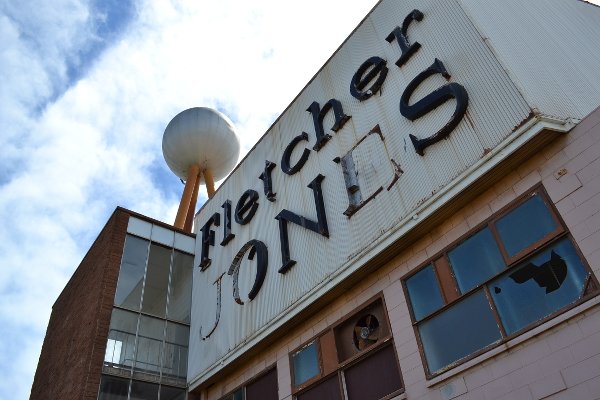
Motor museum to revive Fletcher Jones

Traders are right to be asking questions

Be all things, or stick to the basics?


Community vision needs to extend city wide

sandilands2
The imminent sale – and at least partial demolition – of the former Sandilands Hotel/Maddens Lawyers building in W’bool is expected to pave the way for new apartments in the CBD.


OPINION – JULIE EAGLES

A vision without a task is but a dream.  A task without a vision is drudgery.  But a vision and a task are the hope of the world.  – Church in Sussex England, 1730.

[quote]

[dropcap style=”color: #a02f2f;”] I [/dropcap]n 2008, over several months, a great process of community consultation involving hundreds of people developed a community vision for the Warrnambool CBD called the Warrnambool City Centre Structure Plan.  The vision was for an ‘alive, thriving, culturally rich city heart.’

We not only developed a community vision for the CBD, but also community values, community goals, preferred development scenarios and five future directions with strategic objectives – in other words – amazingly, we came up with a detailed framework to work towards achieving our community vision!

The people who facilitated this process were incredibly skilled and experienced. The process was fun, creative and interesting and there were lots of ways to participate.

Perhaps most amazingly – because I had never experienced it in Warrnambool before – was the ongoing and detailed feedback and updates to participants and to the whole community throughout the process.

It was, to quote Tanya Egan, (The Warrnambool City Council’s Business Support Manager)  “the most exhaustive public planning process ever undertaken by Warrnambool City Council……in collaboration with the community.”

It was developed in response to a recognition that people were often “frustrated in the past because they hadn’t been asked for input from the beginning”  – underpinned by the principle “that if a community is to own the plans that will shape their future, then it has to participate in developing them from the outset – not somewhere along the way.”

Very big tick.

laneway festival tafe
The series of W’bool laneway events, like this print workshop run by South-West TAFE Creative Arts students, show what can happen when a community works together.

[dropcap style=”color: #a02f2f;”] I [/dropcap] felt very satisfied with that visioning and planning process six years ago. I am sure I’m not alone, however, in being frustrated that nothing much seemed to happen for a long time afterwards.  Or was it that the communication lines seemed to falter and then stop?

After all, we’ve had the wonderful Lighthouse theatre re-development and then the fantastic laneways festival led by The F Project and supported by Council.

Most recently, in the past month, there’s been a follow up, and by all accounts also a very good, community planning process that honed in on re-designing the streetscape for two blocks of Liebig St stretching from Koroit St to Raglan Pde.

This time I chose not to take part, but I’m glad lots of other people did.  I couldn’t quite understand how this process linked to what we’d done six years ago and so either the communication didn’t convey this clearly enough or I missed it.

It could be that I was just not that interested in redesigning two blocks of Liebig St – we don’t all have to be involved in every plan!


fletcher-gardens_21
The campaign to Save the Silver Ball and Fletcher Jones Gardens grew from concerns about the loss of iconic buildings and structures in Warrnambool.


[dropcap style=”color: #a02f2f;”] I [/dropcap]n 2009, just after the community visioning process for the CBD, I joined the council’s City Development Advisory Committee where we received lots of information and requests for our input into all sorts of plans.

All of these plans were important at various levels, but I got lost in the detail and I couldn’t see the guiding vision and values that held them all together: I was interested in seeing the community vision, values and goals that guided all of these plans.

And this is what I would still love to see and what I think we really need: a community vision that inspires, guides and drives all our plans for development in Warrnambool (and our town centres of Woodford, Dennington and Allansford).  

A community strategic plan, a city wide structure plan… whatever ‘planning speak’ might label it.

Developing a city-wide community vision is about shaping our future within the context of the changing and challenging global, national, regional and local worlds in which we exist.  The people who ran the CBD visioning process six years ago understood this.

One of the questions they asked was – what are the external trends and issues affecting the City Centre today that may influence the future?  The facilitators believed that within any community all the skills, knowledge, passion and capacity necessary to progress already exist.

They were guided by a set of principles for “helping groups move from uncertainty to purpose.”

These include that:

  • Council is part of the broader community team and not the fount of all knowledge and power.
  • Council’s role is to show leadership by bringing people together in an environment where everyone feels secure about sharing their hopes, aspirations and views and that, in a safe space, people will focus on common ground, not on difference.
  •  For things to happen, Council must work collaboratively with all the players in that complex network of organisations and individuals that make the community function every day.

I was always thinking during that process – wouldn’t it be great if we were doing this not just for the CBD, but for the whole of our city!

city warrnambool
A revamp of the northern end of Liebig St is the first major project to grow from the community driven CBD plan developed six years ago.

[dropcap style=”color: #a02f2f;”]A [/dropcap] city wide visioning process would allow community debate and discussion about our strengths and what we think are the key issues and challenges facing our city now and in the future.

It would allow us to talk about our aspirations and dreams and what we most value about our community and our natural and built environments.  To talk about what give us our sense of place and belonging?  What do we want to preserve, what do we want to create, what do we want to change?

Community visioning projects are now fairly commonplace across municipalities around Australia (and the world).  The community visioning process for the CBD, that began 6 years ago, deserves to be replicated to a city wide plan.

In many ways, we can’t afford not to do this.

As somebody said to me recently “if you don’t know where you’re going, you’ll probably end up anywhere.”

[box] Julie Eagles has been a leader of the Warrnambool Planning and Heritage Group (WPHG) since 2006. ‘Save the Silver Ball and Fletcher’s Gardens’ campaign is an offshoot of WPHG and their work to highlight issues that contribute to demolition by neglect of important heritage places.[/box]

[button link=”http://the-terrier.com.au/subscribe-2/” type=”icon” icon=”heart” newwindow=”yes”] Did you enjoy this story? Please subscribe here to help Bluestone thrive.[/button]

newsletter Eat And Drink StonesFind more Opinion pieces here…


Ignore Shaw and focus on the real issues: Roy Reekie

Scrap trader levy and start over

Motor museum to revive Fletcher Jones

Traders are right to be asking questions

Be all things, or stick to the basics?

What is holding Portland back?


“Flaggy” at a $15 million crossroad

flagstaff-hill-8
Warrnambool’s Flagstaff Hill is at a crossroads and requires a long-term commitment of $15million to prosper. Image: letsgotravelaustralia.com

OPINION

With all the excitement around the sale of the Warrnambool Fletcher Jones site, important details on the future of another prominent site in the city – Flagstaff Hill Maritime Village – have slipped by virtually unnoticed.

But despite the distractions, we do need to talk about Flagstaff Hill – or “Flaggy” as it is called by those closest to the action – because unlike the FJ site, which was privately owned, this one is costing us money.

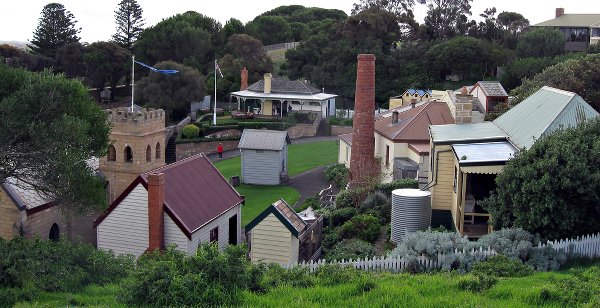
At the moment, the Warrnambool City Council is absorbing an annual deficit of around $500,000 for the 40-year-old Flagstaff Hill Maritime Museum due to falling visitor numbers that have tumbled from 80,000-plus a year to below 60,000. As I have written before, the village needs at least 80,000 visitors a year to break even.

While profit is not everything when it comes to community assets, something significant needs to be done to turn things around, or – it has now been confirmed – the site will cost the council (ie. ratepayers) almost $9 million in “losses” over the next 20 years.

It is crunch time and the crunch is that almost $15 million must be spent in the next three years on Flagstaff Hill to make any real difference to its future.

This is the conclusion reached by consultants, Coffey Sport and Leisure, who were paid $90,000 to prepare a masterplan that mapped out how to turn the site around and whose final report was recently made public.

flaghill-plan
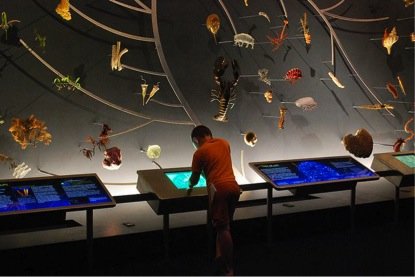
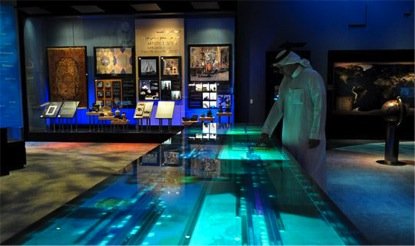
The masterplan includes images of what a new interactive discovery centre might look like at Flagstaff Hill.

The masterplan set out a number of scenarios – from do nothing, which would eventually see the site close – through to an all bells-and-whistles affair that would cost almost $26 million.

The report ultimately recommended a middle ground that would cost $14.8 million over three years and, potentially, turn the site into a profitable venture by doubling the number of visitors over the next 20 years.

The “middle ground” plan includes broadening the whole theme of the centre to the Great Southern Ocean (which, to some extent, has already begun); building a new, sexy interactive discovery centre that captures the stories of the Great Southern Ocean (from indigenous history, to whales, to shipwrecks); upgrading the existing sound and light shows; giving free access to the colonial village; adding another cafe and introducing food/wine events; and linking the whole site up with Lake Pertobe and Cannon Hill.

To make it happen, the council would need to chip in 25% of the total cost – ie. around $4 million – and the remainder come from state and federal funds, which, given the harsh cuts within the last Federal Budget, would be difficult.

The most important point, however, is that the report makes it clear that this plan is the very least that is required if Flagstaff Hill is to remain relevant and viable.

In other words, unless we are able to find almost $15 million in combined ratepayer and taxpayer funds, we are pretty much wasting our time and delaying the inevitable.

flag-hillnew2
Another image from the masterplan report that shows how Flagstaff Hill might improve its displays which were described as “uninspiring and static”.

The council knows this, but it also knows that trying to find a spare million or two in its budget right now is almost impossible.

As a result, it recently agreed to contribute $500,000 in 2014-15, and another $500,000 the following financial year toward a $3 million upgrade of the very-dated Shipwrecked sound and laser night show, plus some other minor improvements. It hopes the state and federal governments will at least chip in another $2 million between them.

It is a Band-Aid on an oozing knee, but the council somewhat optimistically hopes that this will lift visitors to its night show by 30%.

I say optimistically, because sound and light shows were a big deal in 2002  – when Shipwrecked began – but people now have access to such technology in their own lounge rooms and will expect something pretty special.

Still, it is a start, but the conversation that still needs to be had is whether the community wishes to see up to $15 million spent on the site over the next three years.

dean montgomery
Cashed up private investors like Dean Montgomery, who recently bought the Fletcher Jones site, may prove critical to the long-term survival of Flagstaff Hill.

The council sought public feedback on the masterplan last year, and while the 145 people who responded said they wanted to see Flagstaff Hill continue, it is only now being laid out in black and white as to what funds will be required to make that happen in any robust way.

Indeed, the total cost of the long-term plan is rarely mentioned at all, but instead its is framed as a “staged development”. (There was certainly no mention of $14.8 million in the council’s most recent media release on the issue.)

There is also regular reference to the council seeking private investment for the site, in the hope that – once again – a cashed up white knight will come and save the day for Warrnambool.

Unfortunately a Dean Montgomery only comes along once in a blue moon and he has grabbed hold of the Fletcher Jones site where, unlike Flagstaff Hill, the conversation became very public, very frank and, ultimately, very productive.

So, do we spend $15 million on Flagstaff Hill in the next three years to turn its fortunes around, or not?

Over to you.