A life behind the lens: Jack Wilkins

1-jack wilkins_8
Photographer and artist Jack Wilkins in his Warrnambool studio with a treasured Mamiya 23 press camera, one of the many he has collected – and used – throughout a career spanning almost 50 years.

By Carol Altmann

I last saw Warrnambool photographer and painter Jack Wilkins about 25 years ago when he had long hair, a moustache and an inimitable sense of humour.

Today, he is balding, clean shaven and riding the rollercoaster that comes with a recent diagnosis of prostate cancer – but the sense of humour is still very much intact.

Exhibit A:

(Me): “You have spent a lot of your life documenting your fellow artists, haven’t you?”

(Him): “Yeah, all the freaks, art students, art lecturers and weirdos – actually they’re all weirdos – all of those weirdos I have been hanging out with for years.”

Jack, whose name is actually John but nobody calls him that, is a hybrid of the late gonzo journalist Hunter S Thompson and Vogue photographer Annie Leibovitz, with a spritz of Ricky Gervais thrown in for good measure: a heady mix of story telling, mimicry, sardonic humour and huge artistic talent.

jack wilkins young
A much younger Jack Wilkins during his time at Deakin University, Warrnambool, where he taught photography for 16 years. Image courtesy Graeme Altmann.

For almost 50 years Jack has been capturing the faces and places of the Warrnambool art scene – from its infancy in the late 1960s, when a two-year art certificate was offered at the technical college that would become the Warrnambool Institute of Advanced Education and later TAFE, through to the heady days of the 80s and 90s based around the School of Art & Design at Deakin University – and into its current, some might say, more subdued phase.

“I was very interested in the strong personalities and the social scene of Warrnambool at the time, which was huge and based around places like the Western (Hotel), and the Lady Bay hotel,” Jack says.

“It was a very big scene; there were about 300 young people around Warrnambool who all hung out together, who all knew each other, made art, had sex, played pool.

“We would all pile into the Western (across the road from South-West TAFE) and when that closed at 10pm, someone would yell out ‘where’s the party?’ and we’d all move on to someone’s house, or head down to the beach and light a fire.”

Jack then launches into two or three side stories about some of the big personalities of the time, complete with gestures and voices that make you laugh out loud.

“That’s all gone now. We still have artists doing their thing, and young people doing their thing, but it’s very fragmented. Student life is a very different life.”

art hills d
One of the highly theatrical images from the early days of Art Land, when Jack captured the early art scene of the south-west. Image: John Wilkins Photographic Art Warrnambool.

Jack’s images of this time and now, which he collectively calls Art Land, have always been theatrical.

In the early days, he and his art colleagues would create scenarios, complete with costumes, that were part spaghetti western, part Woodstock and part colonial Australia.

“We would have a lot of fun, staging gun fights and all sorts of weird scenarios, just for the hell of it,” Jack explains.

Today, the theatrics are more in establishing the “set” for a portrait, using settings or objects to capture the essence of the individual.

To date, Jack has self-published two books, each of 100+ pages, featuring special friends like Jenny Claven, Peter Clayfield and Mick Sirriani, with one copy held by the Warrnambool Art Gallery.

He is now working on two special projects that, he says, will draw a line under a photographic career that started when his father, the late photographer Alex Wilkins, gave him his first camera.

The first is a book of 28 portraits of artists with strong connections to South-West Victoria, with words by WAG director John Cunningham.

At the time of our meeting, Jack had photographed 26.

“It’s been intriguing and absolutely fascinating.

“What a privilege to be able to meet artists in their private spaces, their homes and studios, talking and photographing what they are on about. It has been very rewarding,” he said.

(Slideshow: a sample of Jack’s Art Land portraits from across the years.)


[slideshow_deploy id=’12254′]

Alongside the book is a survey exhibition at WAG scheduled for later this year, which is a retrospective of sorts, capturing the different themes in Jack’s work over the years.

While Jack has embraced the technological changes in photography and some of his latest work is an overt display of digital manipulation, he believes modern photography has lost its magic.

“Nearly everyone has a camera now and the quality of images is getting better and better, so it has made it easy for Mr Average to – at times – do some amazing work because the technology allows it to happen.

“You can be a great photographer today without knowing much about photography at all,” he said.

It is perhaps not surprising then to see Jack turning his attention back to his first love: painting.

“My photography is coming to an end as I come to the end of my life, so I am devoting the time I have left to painting.

“I have always loved painting. It is hands on. At this stage of my life I find it very enjoyable and very therapeutic.

“I have always got more out of painting than photography, so much more. There are no pixels, just paint.”

1-jack wilkins_14
As health issues bring life into sharp focus, Jack is returning to his first love of painting, which he describes as very therapeutic, working with paint, rather than pixels.


Unravelling the mystery of public art commissions

scottie neoh mural
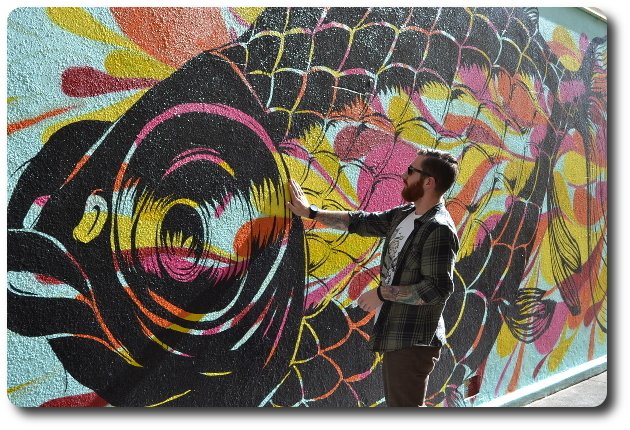
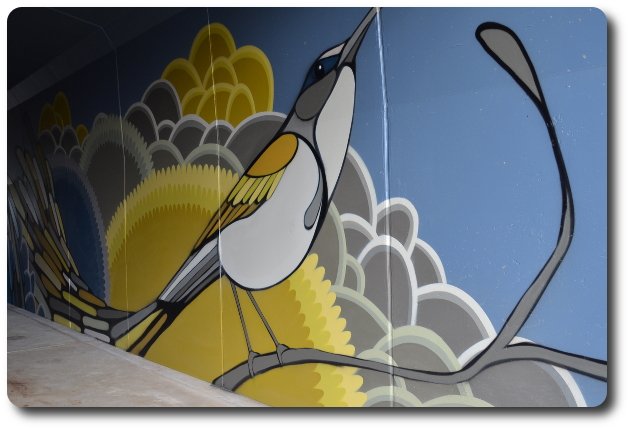
Part of the Mortlake Rd pedestrian tunnel mural by Drysdale artist Scottie “Bonsai” Neoh for which he was paid $15,000 by the Warrnambool City Council.

OPINION

If you are an artist living in south-west Victoria, the chance for a big commission only comes along once in a while, so why do so many of Warrnambool’s most lucrative public art projects go to artists who live elsewhere?

The answer appears to be that the pool of local talent is not yet deep enough, or that artists don’t know about the projects in the first place.

Our interest in this question was piqued by the Warrnambool City Council’s recent unveiling of the Mortlake Rd pedestrian tunnel mural painted by Drysdale professional mural artist Scottie “Bonsai” Neoh, who grew up in Warrnambool.

There is no doubt it is a spectacular work, but what is surprising is that only a handful of people within the local arts community appeared to know about the impending project, despite the commission being worth $15,000.

Bonsai was paid another $2000 for a separate mural at Lake Pertobe that he also completed recently.

The selection of Bonsai follows the awarding of a $20,000 commission to Melbourne artist Ewan Coates in 2010 for his sculpture The Three Pillars of Gratification, on the corner of Liebig and Koroit streetsand another $20,000 commission in 2011 that was won by Ballan artist Velislav Georgiev for his work Chance Encounter, that sits on the corner of Lava and Liebig streets.

In both of those cases, however, and unlike the $17,000 paid to Bonsai, the commission was open to expressions of interest and the winner was chosen by the council’s City Art Advisory Committee. This committee, made up of council and non council people, was disbanded in May last year after running for more than 20 years*.

So what has happened on the ground since?

artery-nathanpye_19
Warrnambool artist Nathan Pye with his fish mural, painted as part of the laneways festival, for which he received $1500 plus the cost of materials.

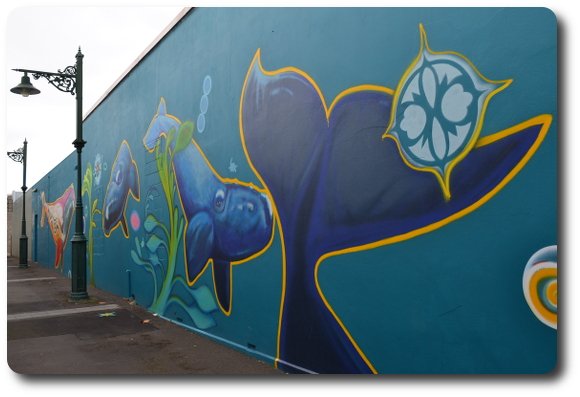
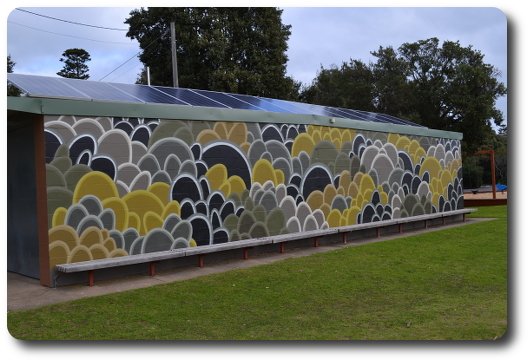
Well, a string of murals have popped up around Warrnambool in the past eight months thanks to the work of members of the The Artery/The F Project art collective, but these were far from lucrative commissions: they were more like labours of love.

The F Project received $30,000 in council funds to run the Hidden Histories Laneways Festival made up of 10 separate events, including the painting of five murals.

You can do the math, but $30,000 split between 10 events and five murals does not equal a big budget, but, even so, The F Project called for expressions of interest and selected a range of local artists to complete works of various sizes and complexity.

The three smallest murals, in Ozone Walk, were completed for about $1000, while one of the largest, in Patloch Lane by Nathan Pye, had a budget of $1500 plus materials.

The largest of all – a 25 m wall off Timor St – was completed by David Higgins for $2000 (including paints) with another $2000 chipped in by the owner of the wall to help cover costs.

All up, these five murals cost around $5000 in public funds, thanks to the generosity and community spirit of the artists prepared to effectively donate a lot their time.

So how did Bonsai end up with $17,000 for two murals without any call for expressions of interest?

murals_1
The grand-daddy of them all: the 25m mural by Warrnambool artist David Higgins, which took a couple of weeks to complete, at a cost of $4000 including $2000 donated by the owner of the wall.

Gareth Colliton, the Warrnambool Art Gallery’s curator of exhibitions and outreach, is more than happy to explain, because he played a major role.

It should be said that Gareth, who is an artist himself and one of those who completed a laneway mural for little charge, is seen as a major supporter of the local arts community, was a key figure in establishing The Artery, and is a very affable and popular person in the arts scene.

His involvement in the Bonsai project falls in line with the powers that he has been given in his role with WAG and the council.

As he explains it, the Bonsai project is part of a new way of approaching community art projects that he believes will be of long-term benefit to the 250 local artists on the council’s database.

First, the mural was funded as part of civic infrastructure – the building of the Mortlake Rd drain – and Gareth hopes that public art will be included in more infrastructure projects, such as the design of a roundabout, for example, and that local artists will see more commissions, not less.

For this particular project, Gareth says, Bonsai was considered the best choice: he had the skills, the availability and the local connection (he is also a cousin of Mayor Michael Neoh, but Gareth says Mayor Neoh was completely removed from the process. The selection was made by Gareth, WAG director John Cunningham and Infrastructure head Peter Robertson).

Second, the commission was a “carrot” for Bonsai to run a series of workshops later in the year for local artists who wish to learn from a top street artist. The council is seeking funding to pay Bonsai for the workshops, so that they can be offered free or at low-cost.

murals_3
The Lake Pertobe mural recently completed by Drysdale artist Scottie “Bonsai” Neoh for $2000.

But why not call for expressions of interest, just to see who and what pops up?

Gareth put it this way:  “In the short term, that would be like giving a man a fish or teaching him to fish.”

“We could have given someone this opportunity immediately and it would have been done (but) there are also only a few people in town who have the technical skills to do a work of that scale.

“Far more important is teaching all of those other artists how to do this. Rather than see only the two, three or four that are out there at the moment, I want to see 30 or 40…”

Maybe so, but there are also artists keen to be considered for the talents that they already have.

As one said in an email to Bluestone this week: “I would jump at $15,000. I have been painting for years and have never been paid that much…us local artists seem to find out (about these opportunities) once the bloody project is up.”

(* The council has since confirmed that WAG is investigating setting up a new industry advisory group to provide expert advice on the delivery of its programs and its five-year plan.)


Revealing the eye of the tiger: Peter Clayfield

peter clayfield
Photographer – and collector – Peter Clayfield in his mini musuem of a lounge room: “I have always been what you might call acquisitive”.

[dropcap style=”color: #a5cecd;”] P[/dropcap]hotographer Peter Clayfield lives on the edge of a cliff which, on a clear day, has the sort of view that stretches all the way to Tasmania – well, almost.

The invisible thread that connects his home overlooking the Southern Ocean to the rugged coastline of north-west Tasmania is symbolic, as Peter has a self-confessed obsession with the thylacine (Tasmanian tiger) and has devoted a large part of his life to collecting imagery of the animal.

“It started when I was about 15 and my parents bought me a book about the thylacine and from that point I was hooked,” he says.

Peter now owns more than a dozen books on the subject and, perhaps more importantly, a couple of hundred pieces of thylacine imagery including lithographs, 19th Century etchings, hand-coloured engravings, antique prints and more modern incarnations that he has collected from around the world.

“The thylacine is a very potent symbol of the environmental movement and this is part of its appeal to me, that symbolism,” he explains.


peter clayfield_16
The poster to be used for Peter’s collection of thylacine material that will be exhibited at the Warrnambool Art Gallery later this month.


[dropcap style=”color: #a5cecd;”] A[/dropcap] substantial chunk of Peter’s collection is now with the Warrnambool Art Gallery in preparation for his exhibition that opens on July 25 and will run concurrently with the Glenn Morgan retrospective.

Recapturing the tiger: a personal collection of thylacine imagery from past and present” is a departure from what most people have come to expect from Peter’s exhibitions, which normally showcase his exquisite photography.

An alumni of the now defunct Warrnambool Institute/Deakin University Diploma of Visual Art, Peter has exhibited over the past 30 years in just about every gallery in Warrnambool – past and present – and is known for his ability to transform every day urban landscapes, people and objects.

“Those art classes in the 80s opened up a new world to me about the possibilities with photography, especially by being exposed to the great photographers and artists in the US and Europe,” he explains.

Peter recalls, in particular, how the head photography lecturer Ian Cosier would stock the campus library with books by photographers that came to be major influences on his work, including Diane Arbus, Henri Cartier Bresson and the wonderfully named Ralph Eugene Meatyard.


peter clayfield_14
Peter’s photography is known for capturing the unusual in the usual, like these topiaries draped in protective netting.


[dropcap style=”color: #a5cecd;”] P[/dropcap]eter now has a collection of books by these same artists, among many others, that line the walls of his cosy lounge-room which is, in itself, a work of art because of the many rare and beautiful objects that he has accumulated. Thylacines are only a part of it.

“I have always been what you might call acquisitive,” he says with a soft laugh.

It is difficult to describe the scope and diversity of what has caught Peter’s eye over the years, but imagine squashing the Smithsonian Institute into a small cottage and you are getting close.

Among his eclectic tastes are tribal masks and carvings, delicate silver spoons, palm-sized ceramic bowls, select pieces of Australian pottery, charms, chimes and dozens of animal and religious bells that create the most wonderful sounds.


peter clayfield_32
Peter’s house on the edge of the world where, on a good day, you can almost spot Tasmania.


[dropcap style=”color: #a5cecd;”] T[/dropcap]he complete Peter Clayfield Collection may well be an exhibition of the future, and deservedly so, but for the moment the spotlight will remain on the thylacine which, some believe, still exists in parts of north-west Tasmania.

Does Peter?

He pauses to consider his answer.

“Definitely in the 60s and 70s, yes, but those areas in which it was living have since been heavily logged,” he says.

“I guess I have a faint hope that it might still be surviving in those very remote areas, but it is only a faint hope.”

[box] Recapturing the tiger will be officially opened at the W’bool Art Gallery on July 25 by Dr Carol Freeman, author of Paper Tiger: a visual history of the thylacine.[/box]

[button link=”http://the-terrier.com.au/subscribe-2/” type=”icon” icon=”heart” newwindow=”yes”] Did you enjoy this story? Please subscribe here to help Bluestone thrive.[/button]

Stones Smile newsletter You might also enjoy…


A sculptor with the heart of a Lyon: Jon Dixon

Shaking the ocean to see what falls out: Carmel Wallace

An intricate webb: the art of Ella Webb

Inspired by clay: the face behind Clare Claybody

Family ties behind every stitch: Sue Ferrari


Close Flagstaff Hill; save Fletcher Jones

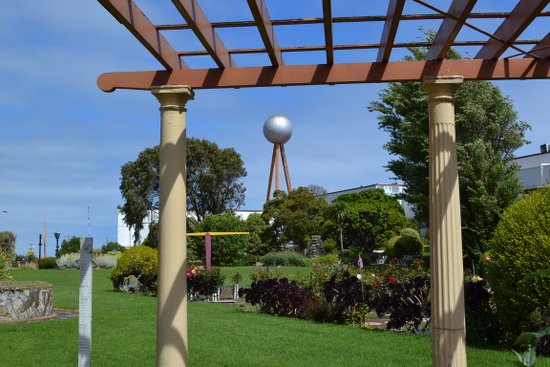
fletcher-gardens_21
Our history: while all hands are on deck to revive the recreated village of Flagstaff Hill, the authentic Pleasant Hill is slowly rotting away.

Analysis – Carol Altmann

It is supremely ironic that so much time and effort is being devoted to reviving the flagging Flagstaff Hill Maritime Museum, when a critical slice of our authentic history is being left to rot.

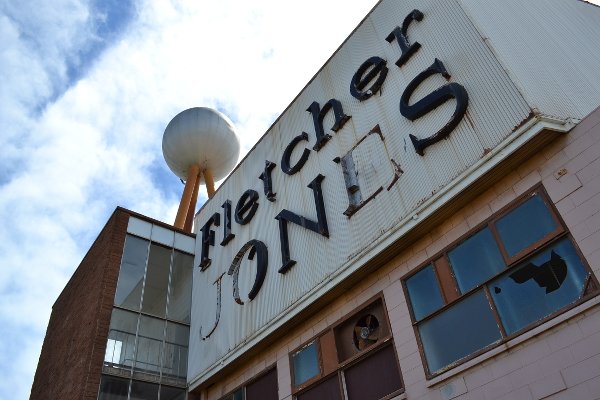
Unlike Flagstaff Hill, which was built in the 1970s as a pseudo-colonial tourist attraction popular in that era, the Fletcher Jones factory, silver ball water tower and spectacular gardens have occupied a special place in the hearts and minds of the people of Warrnambool for almost 70 years.

Sir Fletcher Jones was one of our greatest philanthropists and Pleasant Hill was his special gift to the city; a gift that, I am certain, he thought would remain in perpetuity.

But if he were alive to see the site today, his heart would break.

That’s because Pleasant Hill is being ‘preserved’ in the way that Warrnambool seems to do best: coat a run-down heritage property with complex planning conditions, wait for a cashed-up developer to buy the site and then watch as they slowly go broke – or lose interest – because of these same conditions, and, in the final act, see the neglected site bulldozed or burnt down in a mysterious fire.


fletcher-gardens_39
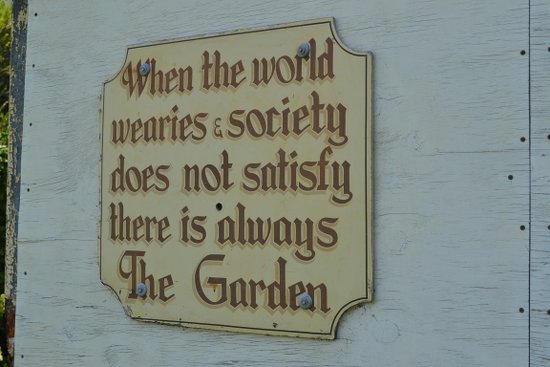
Some Fletcher Jones wisdom: if he could see his vision today, his heart would break.


We have seen this happen in recent years with the Criterion Hotel, the Grand Hotel, and the ill-fated cottage at 94 Merri St*, yet we still haven’t learnt that the only way to save our icons is to work together: for government bodies (including Heritage Victoria and the Warrnambool City Council), developers and the community to have a clear vision of what should happen with a site as precious as Pleasant Hill and to be prepared to share the cost of its preservation to make sure that it is, in fact, preserved.

And Pleasant Hill is precious because, unlike Flagstaff Hill, the Fletcher Jones story is our story.

As much as we would like to claim the sea-shanty tales captured in Flagstaff Hill as our own, Warrnambool was primarily a place of industry, farming and commerce.

The whaling story belongs to Portland and Port Fairy. The Loch Ard Gorge story belongs to Port Campbell and the entire shipwreck mythology is one that has been built around ships that, for the most part, were passing by Warrnambool on their way to somewhere else.

Hence we don’t have locals sharing tales of their sea-faring great grandfathers, but instead we talk about the Woollen Mill, Swintons, Crammond and Dicksons, Nestles, the cordial makers, millers and brewers, the dairy farmers, potato growers, butchers, bakers and bullock drivers and, of course, Fletcher Jones.


fletcher-gardens_40
The Fletcher Jones story is our story: generations have grown up under the ‘Silver Ball’.


This is why there is a disconnect between Flagstaff Hill and the local community who, it seems, have stopped visiting or who don’t visit nearly enough.

And tourist numbers are also falling. I suspect one problem is that reconstructed, theme-park style villages have lost their lustre, despite the valiant efforts of the many volunteers involved.

In the face of fading popularity, a review is being held into the future of Flagstaff Hill, with warnings that it could cost between $13-15 million to redevelop.

I have a better idea: close it down.


fletcher-gardens_29
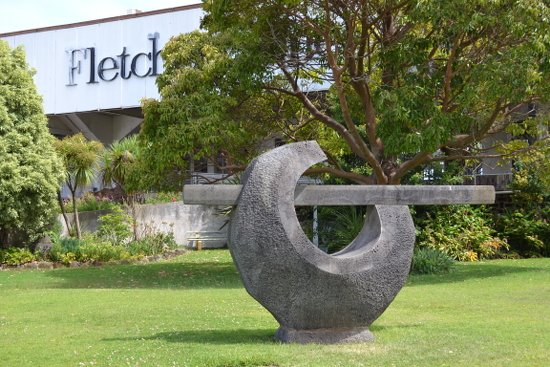
This tribute to Fletcher Jones by Robert Ulmann sets the scene for what could be a magnificent sculpture garden.


The cold-shower moment is to accept that Flagstaff Hill has had its day and will only continue to chew up funds as it recreates itself to fit changing tourism tastes.

The site could be returned to open space and the $13-15 million directed toward restoring and preserving Pleasant Hill, but as what? The suggestions so far include – god forbid – more housing, retail, offices, or even an aged care facility. How boring.

What about this: transform Pleasant Hill into a combined Warrnambool Art Gallery and Museum. Given FJ’s support for the arts, it is a perfect fit.

The already-squeezed art gallery in Timor St could be relocated and stretch out, including into the gardens that would become an outdoor sculpture park.

The best of the Flagstaff Hill collection could be housed in the museum, which would also include a tribute to Fletcher Jones and artefacts from the factory (much of which, unbelievably, ended up in skip bins before being retrieved by art students).


fletcher-gardens_31
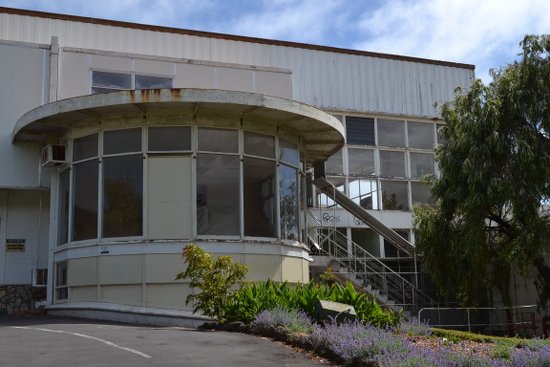
A table for two please: the ‘Round room’ could be converted into a restaurant or cafe.


The Tourist Information Centre would fit nicely, and the ‘Round Room’ – once part of the FJ canteen – would be perfect as a restaurant/cafe called Fletcher’s. The silver ball can just remain the silver ball: restored and shining.

There is more than ample – and completely unused – parking in the Raglan Parade median strip and a pedestrian overpass would solve the issue of crossing a busy highway.

It will take money, it will take vision and it will take commitment, but in 20 years time, which do you think will have the more enduring appeal: a “recreated” maritime village where people are strolling around in gingham caps and hooped dresses, or a dynamic art gallery and museum housed in one of our most iconic buildings?

We don’t need a crystal ball to predict the outcome: just a silver one.

*The Warrnambool Planning and Heritage Group wrote a report 18 months ago that warned Fletcher Jones faces the same fate as 94 Merri St, which was right across the road from Flagstaff Hill, unless action was taken now. The Warrnambool City Council’s response to the group’s 15 recommendations was tabled at its meeting last Monday: see pp 181-185 of agenda 9/12/13.  Or you can see a summary here.