Flushing out the truth about Wannon Water’s fatberg failure
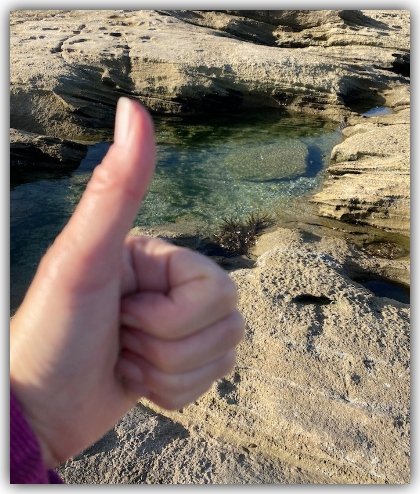
The Shelly Beach rockpools have been the cleanest they have been in years thanks to sustained pressure for better screening at the Wannon Water treatment plant. Image: Pick Up Sticks FB page.

Carol Altmann – The Terrier

That is eco-activist Colleen Hughson’s thumb and that is one very clean rock pool at Shelly Beach, near Thunder Point and both are worth a special mention tonight.

I want to acknowledge a small moral victory by Colleen, (who doesn’t know I am writing this, but who is surely one of the most determined people on this planet), and the diligent beach clean up crew who have been pushing for years for Wannon Water to clean up its act.

Ever since zillions of plastic nurdles landed in the ocean via the sewerage system in 2017 by some assbob who has never been held to account, Colleen and other like-minded souls have been pressing Wannon Water to lift its game.

This is because it wasn’t only nurdles, but a whole pile of other gunk that was making its way through the Wannon Water treatment plant and out into the ocean.

Cotton buds, tossed down the toilet by other, unthinking assbobs, are one major offender.

Another is a delightful thing called a fatberg, which is a stinky, smelly, fatty, hairy blob that forms in the scum of the Wannon Water treatment plant and – if not caught – ends up floating in the rockpools of Shelly Beach.

The Pick Up Sticks and Good Will Nurdle Hunting crew knew this stuff must have been coming via Wannon Water, but Wannon Water ducked and weaved and pretty much denied it was doing anything other than an exemplary job at catching the smelly gunk before it was flushed out to sea.

Wannon Water’s take on it was that fatbergs and any other gunk showing up at Shelly Beach must have been from elsewhere or it was “old” stuff being flushed back to shore. (Spin, rinse, repeat).

Rarely did their screening system fail, they said, when I toured the plant last October.

Except Colleen and the beach clean-up crew knew it was failing.

They could see the screens failed when they became completely blocked and overflowed (just like any sieve or kitchen drain).

And it failed every time the two screens, including a fine screen, had to each be taken out manually, scraped into a wheelbarrow or vacuumed, and put back again.

How such a clunky system involving a wheelbarrow and a vacuum cleaner was ever considered good enough in the 21st century is beyond me, but it was, for years and years.
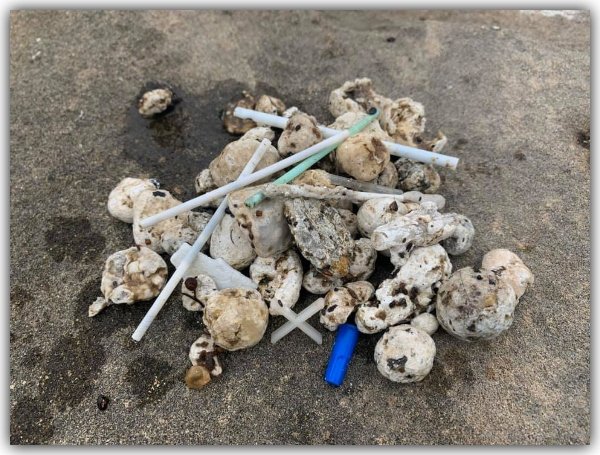
Some of the fatbergs, plastics, cotton buds and other assorted junk collected from Shelly Beach in February this year, before the new screens were added to the Wannon Water plant. Image: Pick up Sticks FB page.

After the nurdle spill in November 2017, Wannon Water announced plans to improve the screening system as part of its plant upgrade, but these changes were slow in coming.

A second, manual fine screen was finally added earlier this year, and a fully automated, $1.1 million screen was installed in April …. and no wonder.

Because what happened in between times was a big, fat pollution abatement notice was issued to Wannon Water by the EPA in February.

This notice confirmed what was always suspected: the manual screens were not always doing their job.

In fact when the EPA visited the treatment plant last November, the screens were 100% blocked and effluent, it said, may have flowed over the top.

Whats more, the EPA went back to the plant in January this year and actually saw the effluent overtopping the screens.

Not only that, the EPA visited the rock pools at Shelly Beach that same day and, guess what?

They found five fat balls and many smaller pieces of fat in just one rockpool: slam dunk proof of a failing system.


This is a story that I wanted to write two months ago, but it got bumped in the Covid 19 news whirl.

But it’s an important vindication of the hard work and pressure and activism by Colleen and the dozens of other activists who form the clean up crews: they were right all along, and now the EPA notice proved it.

The EPA notice ordered Wannon Water to fix its screening system by no later than 15 June this year, which it has done, and the Shelly Beach rockpools are the cleanest they have been in years.

There is no doubt in my mind that the sustained pressure of Colleen and the beach clean up crew has helped this to happen.

And yet, even now, Wannon Water can’t quite bring itself to say just that.

“The manual screening system, installed in November 2017, has performed extremely well and has been very effective,” managing director Andrew Jeffers said to me via email.

No, actually, it didn’t perform “extremely well” and it should have been improved years ago.

The fight to clean up our beaches from plastics and pollution goes on, but the small victories and vindications are worth celebrating and so, as Rod Stewart would say, tonight’s the night.


Aquazone soaking up big dollars for improvements

Carol Altmann – The Terrier

Hang on, where did the W’bool City Council just find a cool $1 million – okay $985,000 – for major works at the Aquazone?

The 2018-19 budget set aside $540,000 for a new water treatment plant at Aquazone. That’s on the record.

But the proposed 2019-20 budget – the one we are chewing over now – doesn’t mention Aquazone works at all.

I also don’t recall major Aquazone works being included in any council conversations around raising rates next year by 4.5%, as it hopes to do.

Despite all of this, the paper today says $985,000 will be spent on water treatment and improving air quality at the pool.

So where is the extra $440,000 coming from?*

It is also worth mentioning that the council has flagged that Aquazone, which is less than 20 years old (it opened in 2002), is almost at capacity and will need to be expanded and seriously upgraded in the near future.

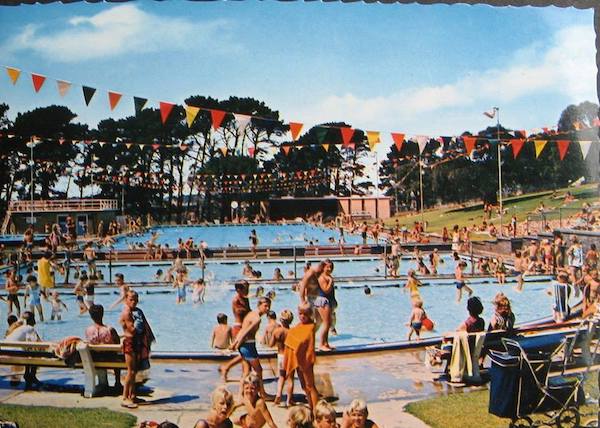
By contrast, the old pool it replaced (warning: nostalgia alert) was built in the 1960s and served tens of thousands of Warrnamboolians.

Our original old pool needed updating, and pools are expensive to maintain, but I have a sinking feeling that the $1 million plunge into Aquazone this year is just the beginning. Do you?

(*I will attempt to get an answer to this tomorrow, it is my birthday today. Don’t ask how old I am in dog years, it is scary.)


WCC rate rise and a $450,000 roundabout makeover

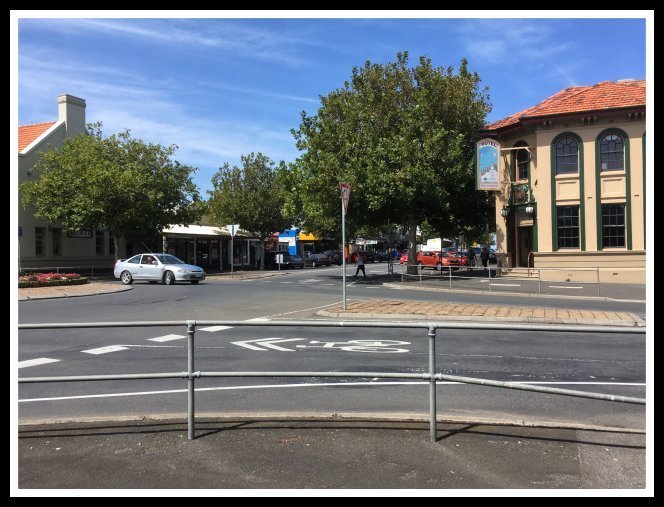
The Kepler St-Koroit St roundabout is in line for a $450,000 makeover later this year, in addition to new zebra crossings like those now operating in Liebig St.

Carol Altmann – The Terrier

How to save $700,000 in seven days, instalment #5:

On the same night Warrnambool City councillors decided to explore breaking the rate cap – on December 3 last year – they also agreed to spend $450,000 to spruce up a single city roundabout.

That’s almost half a million dollars to beautify just one roundabout – at the corner of Kepler and Koroit streets – and they did it without a hint of irony.


Not one of the five councillors who supported potentially raising rates above 2.5% (Cr Peter Hulin voted against and Cr David Owen was absent) seemed concerned that they expect ratepayers to choose between paying more for services, or having services cut, while they plunge money into non-essential projects.

Like dressing up a roundabout.

Mayor Tony Herbert was a strong supporter of the upgrade, saying Kepler St was the most important CBD street after Liebig St. Image: WCC

The council will draw $450,000 from the city parking fund – putting that fund into deficit – to upgrade the roundabout by the end of this year.

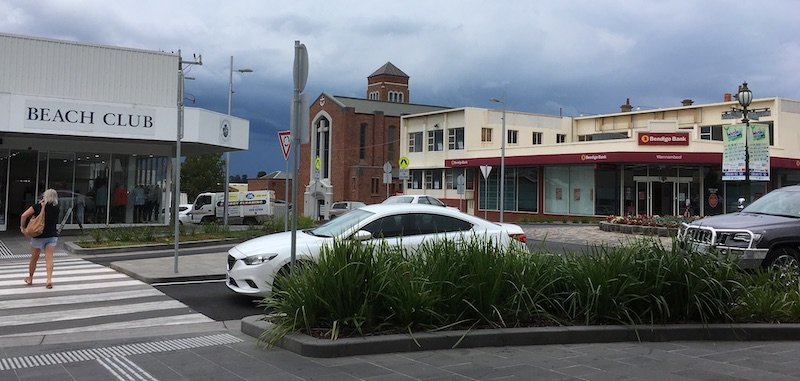
This is the busy roundabout outside the Warrnambool Hotel and Ishka etc, which is no doubt unfriendly to pedestrians in its current state.

But improving pedestrian safety (more about that in a moment) and a $450,000 makeover are two separate issues here.

Mayor Tony Herbert was particularly enthusiastic about the improvements because, he says, Kepler St is “the next most important” CBD street after Liebig St.


“It doesn’t matter who occupies businesses there, but I believe that is the next street to get the work done,” he told the meeting.

As it happens, Mr Herbert does occupy a business there, with his office smack bang in the middle of Kepler St, in the Wyton’s cafe precinct.

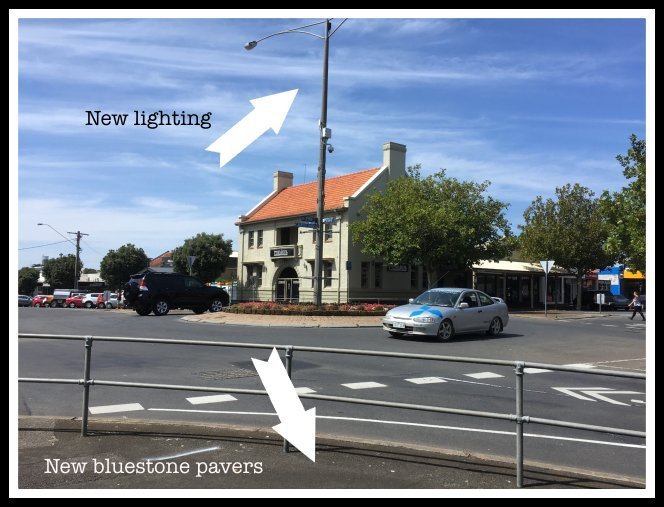
The $450,000 makeover at the Kepler St intersection will include bluestone pavers on each corner and new lighting in the centre of the roundabout.

Until last year, this intersection wasn’t even part of the city renewal plan, but it is now.

Now it will have bluestone paving wrapped around each corner foothpath and central lighting poles that allow for banners and decorations. (See the plan here).

The council calls this “high end aesthetic treatment” and there is no doubt it will be swish compared to boring old bitumen and basic lighting, but is it really necessary in a cost-cutting environment?

It’s a bit like fixing the electrical wiring in your house – for safety – and digging into your savings to replace all the light shades at the same time.


Because what started the momentum for this makeover was money from the Transport Accident Commission (TAC) to make the CBD safer for pedestrians.

The TAC will fund almost half of a $1.67 million upgrade to three CBD intersections, including the Kepler St/Koroit St roundabout.

The council will use that money to replicate those painful zebra crossings that are now in Liebig St and which make drivers give way to pedestrians as they enter and exit a roundabout.

(VicRoads, by the way, say this style of zebra crossing can work, but they also create a greater potential for rear-end accidents. But I digress…)

Love ’em or hate ’em, you’re getting more of them. The same style zebra crossings in Liebig St will be replicated at the Kepler/Koroit streets intersection and two others around the CBD.

Having secured money to build the crossings, the council decided to go one step further.

It rummaged around behind the couch and found a neat $450,000 to throw into beautifying the Kepler St/Koroit St roundabout.

Importantly, such a makeover would also create a distraction from the fact the council has run out of money for Stage 3 of the CBD renewal along Koroit St, which is not surprising given the other two stages blew out by more than $3 million.


So from not being part of the CBD renewal, the Kepler/Koroit intersection now has star billing.

In fact it will probably be all that happens along Koroit St between Kepler and Liebig St for some time.

Even so, can new pavers and lamps really be a priority when the council says it must save $700,000 a year from its budget?

It’s too late to ask that question because the beautification is going ahead.


Your input, via the council’s online consultation that opened last Friday, is to decide what else you might like to see added to the works and when you would prefer the 12-week project to start.

There is no option to say, um, we don’t want that style of fender-bender zebra crossing and, by the way, can we also save the $450,000 for something more important?

There is actually no mention of the $450,000 cost of the “high end aesthetic treatment”.

This figure remained buried inside the council agenda and minutes: until now.

More tomorrow.

If you would like to see The Terrier keep digging up, sniffing out and chewing on local issues, please make a small contribution below.

Donate


Patloch Lane an opportunity gone begging

patloch lane
Warrnambool’s Patloch Lane has had a makeover, but nothing like what was originally proposed and remains largely unused. Image: Bluestone Magazine.

Analysis – Carol Altmann

[dropcap style=”font-size: 60px; color: #A02F2F;”] B[/dropcap]efore I write one word about the upgrade of Patloch Lane – the first of what is intended to be several lane upgrades around the Warrnambool CBD – let me say this: all of the artists involved have done great work.

It is not their fault that the rushed job that became the laneway upgrade is nothing like what was originally proposed and does not address some of the fundamental issues that were raised for this thoroughfare, including that very few people used it, and they still don’t.

I doubt, for example, that many people have sat on the two stunning, spotted gum seats hand-crafted by Lillier Fine Furniture. These bench seats are totally wasted by being stuck at the very end of the lane: they should be in one of the main streets – Liebig, Lava, Timor or Koroit streets – where the seating is metal, peeling and plain ugly.

gift subscription pic

Warrnambool City Council, for all of its grand plans, has a tendency to go for near-enough-is-good-enough and what is often promised is rarely delivered in full or at a level of quality where it can work well for years.

This applies to the big things – such as the upgrade of the Warrnambool railway station precinct which in 2010 was flagged to become a “public space that the city can be proud of” but remains a pedestrian/traffic nightmare – right down to one of Cr Peter Hulin’s favourite topics, the $100,000 disabled access ramp at the main beach which is regularly buried in sand.

It is one thing to bring in the experts to help develop inspiring plans, but it is another to actually deliver these plans through a combination of lobbying state and federal governments for funding, combined with clever decision making and prioritising at a council level.

Which is why I am writing this piece, because there are lessons to be learned from the microcosm of Patloch Lane as Warrnambool waits patiently for the long-awaited upgrade of Liebig St that has been years in the making and is now expected to start in 2017,  a year later than hoped.

If we can’t get one laneway just right, what are the hopes of getting an entire street upgrade right without the temptation of cutting corners, or by-passing the input of the experts? Both of these things happened with Patloch Lane.

Let me explain.

sand removal
Council workers were last week again removing sand from the disabled access ramp at Lady Bay which has been a constant problem since it was added in 2011. Image: Bluestone Magazine.

[dropcap style=”font-size: 60px; color: #A02F2F;”] T[/dropcap]hrough a combination of Freedom of Information applications, questions to council and talking directly with people involved in the original Patloch Lane project, Bluestone has been able to piece together a picture of a lost opportunity to do something truly special for the city.

In a nutshell, Patloch Lane was to be a functional and striking art project that grew from the council’s Hidden Histories project, a series of art events that tapped into the lesser-known stories of our city. (The State Government provided $150,000 for the Hidden Histories project, including the laneway works).

Patloch Lane was intended to show what was possible, while at the same time becoming the first link in a chain of integrated laneway upgrades across the CBD, rather than a mish-mash.

liebig st_6
Potholes pock-mark the southern “restaurant” end of Liebig St, just a short walk from Patloch Lane. The long-awaited upgrade of Liebig St is now expected to start in 2017. Image: Bluestone Magazine.

[dropcap style=”font-size: 60px; color: #A02F2F;”] T[/dropcap]o this end, in late 2013 the council invited the highly regarded Professor Paul Carter and his team from the School of Architecture and Design at RMIT University* to oversee the Patloch Lane design as part of a wider brief to develop a “Hidden Histories” public art strategy for the CBD. (*RMIT was paid $53,625 for its work on the Hidden Histories project).

In consultation with the council and community stakeholders, Prof Carter and his team developed a concept – ‘Breaking Wave’ – that included a canopy structure down Patloch Lane, new paving that could be engraved as an artwork, light sculptures and an audio installation that would recreate the sound of a wave breaking as you walked through the lane, giving people a huge incentive to use it.

It was bold and exciting and was budgeted at around $90,000 – which is what the council had earmarked for the laneway – excluding engineering works and new paving to replace the cracked concrete which, as Prof Carter had pointed out, was a basic necessity for any upgrade in Patloch Lane.

breaking wave
An artist’s impression of the ‘Breaking Wave’ canopy structure over Patloch Lane that would have included an audio installation and light sculptures. Image: Material Thinking.

[dropcap style=”font-size: 60px; color: #A02F2F;”] T[/dropcap]he council was inspired enough to ask Prof Carter to provide a detailed breakdown of costs. That was in late 2014 and Prof Carter, in turn, asked if the council could provide an estimated cost for the engineering works and paving.

It was never provided, so Prof Carter suggested developing a scaled down version of ‘Breaking Wave’ at the laneway entrance, which would be a much cheaper option, but still a ‘lure’ for passersby.

Again, this went no further, so Prof Carter submitted his Hidden Histories public art strategy in early 2015 which included recommendations on how ‘Breaking Wave’ could be developed, and left it there.

What Prof Carter didn’t know was that the council in late 2014, around the time he was asking for engineering costs, had already hired another consultant (One Design Collective) to help bring a different version of Patloch Lane to life.

The “upgrade” itself was all done within about three weeks from early June and, despite being involved since 2013, Prof Carter was told nothing about it.

patloch lane2
Hello? Patloch Lane photographed on a typical Friday afternoon. Image: Bluestone Magazine.

[dropcap style=”font-size: 60px; color: #A02F2F;”] A[/dropcap]nd while the Patloch Lane artists – including Fiona Clarke, Kate Gane, Jessica Meggs – have done a great job with the “ocean” brief they were given, the final $52,000 project was ultimately done in a rush and on the cheap.

(By comparison, as Bluestone has written this week, $178,000 is being spent re-tiling the Aquazone changerooms…)

The whale etching, for example, is engraved into cracked old concrete that will eventually have to be replaced, and there is still no incentive for anyone to actually use the laneway. It is already looking unloved.

All of these same artists could have been involved in bringing something truly special to life: what a wasted opportunity.

In the meantime, Prof Carter remains hopeful his ‘Breaking Wave’ will still show up somewhere in the CBD renewal.

I hope he is right.

[box]The full breakdown of the Hidden Histories $150,000 project fund: $29,536 – Patloch Lane physical works; $22,827 – commissioning artists work in Patloch Lane; $8690 – One Collective Urban Design Studio, Patloch Lane upgrade consultancy in Jan/Feb 2015 ; $53,625/$4950 – RMIT University/Material Thinking for “Hidden Histories: A Public Art and Spaces Strategy” and development of concept plan for Patloch Lane, both overseen by Prof Paul Carter, Aug 2013-Feb 2015; $32,000 – The F Project, Hidden Histories Laneway Festival Jan-May 2014 including a Patloch Lane mural.[/box]

newsletter Eat And Drink StonesMore reading – Have you seen what’s in The Vault?


The WCC’s big shed shemozzle, part 2 

Behind the scenes of an ugly pre-selection battle or ‘How Michael Neoh lost Liberal support’


The Vault: emails on cost of swimming pool tiles

[author] [author_image timthumb=’on’]http://the-terrier.com.au/wp-content/uploads/2015/11/vault3.jpg[/author_image]Welcome to The Vault – this is where Bluestone will place all sorts of subscriber-access-only material, including information on local politics that should be in the public domain, but isn’t. It is a place where you can also have a look behind the scenes of Bluestone, including our Freedom of Information applications, some email exchanges (where appropriate and when dealing with official spokespeople, not our private sources) and anything else we think you might find interesting. If you have something you would like to submit, please email us at editor@bluestonemagazine.com.au[author_info][/author_info] [/author]

This email exchange between Bluestone and the Warrnambool City Council relates to our piece on the $178,000 cost of upgrading the changerooms at the Warrnambool pool (Aquazone), which included retiling, replacing mirrors and toilet partitions:

——————

Is it correct that:

1. The cost of the tiling and associated works in the male and female changerooms has escalated from $120,000 to more than $180,000?
If so, what is now the expected cost of these works?
(See story from Nov 2014 which refers to $120,000 project: http://www.standard.net.au/story/2709187/temporary-change-rooms-for-aquazone-pool-upgrade/)

No. The contract awarded to (name removed by Bluestone) last year was $178,000 for stages 1 and 2.

(Figure provided to Standard a year ago is likely to have referred to an earlier estimate)

2. Has the contractor had to go back and repair or change work in the male changerooms already completed as part of the contract?

Yes. Some rework on the male changerooms was carried out and work deferred on stage 2 until this was completed.

3. Who is the contractor completing this work?

(name removed by Bluestone)

4. When is the project expected to be completed?

Stage 2 will be completed by the end of November.

—————–

Thankyou.
I just want to clarify, if possible, when the $120,000 budget figure quoted in the Nov 14 story changed to $178,000?
The reason I ask is because, obviously, when this story was published, the work was already underway.
– Cheers,
Carol
—————-

Hello Carol,

The contract was always $178,000.

I can’t recall the explanation for the $120,000 quoted at the time but it is likely that it was either an old figure or it might have related to a component of the project eg cost of materials or cost of labour, or it could have been me not reading correctly my scrawled notes.

My mistake, shouldn’t have responded to the question at the time without double checking but the reporter at the time had said the story was focused on addressing concerns around the inconvenience of the temporary changerooms, not about the cost of the project.

The figure in the Standard story is wrong but it was not the fault of the reporter.

—————-
Thanks for that clarification – and I know how these things can happen. Just a final question on this, is it still on budget at $178,000? ie. is that the final figure given the project is coming to an end shortly?
Cheers –
Carol
————–

Hello Carol,

Final settlement has yet to be made with the contractor and won’t be until the project is completed and our engineers are satisfied with the work.

————-
Got it. Thankyou.
– Cheers, Carol