Opinion: Deakin Uni can afford to stay

[printfriendly]
toni jenkins
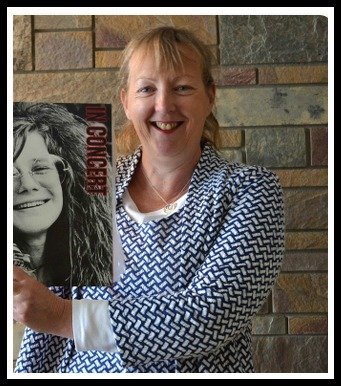
Education campaigner Toni Jenkins, CEO of the South West Local Learning and Employment Network. File image.

OPINION

With Deakin University still to decide its long-term future in Warrnambool, TONI JENKINS* asks whether its priority should be making a profit, or serving the people:

[dropcap style=”font-size: 60px; color: #A02F2F;”] D[/dropcap]uring the recent Federal election I watched many political interviews and began to wonder if I lived on a different planet to the politicians.

In particular, I was and still am most concerned about the state of education in Australia.

Donate $10 here.
Donate

According to the OECD, we are slipping globally from a well-regarded, high-ranking country to a very mediocre, middle-ranking country with falling results in literacy, numeracy and the sciences.

By the end of the election – after the results rolled in – I was left with the question I started with. It’s a vexing question and one that I know I don’t ask alone: is education a service, or are our educational institutes corporate profit making entities?

Jane-Den Hollander
Deakin University Vice Chancellor Jane Den Hollander. Image: Deakin University.

[dropcap style=”font-size: 60px; color: #A02F2F;”] M[/dropcap]y work for the past 13 years has been focused on improving education outcomes for the young people of our region.

It is thankless and goes largely unnoticed as we work behind the scenes brokering changes, developing projects, highlighting trends and in many cases, cajoling other service providers to change what they do to better address the needs of young people.

There are very few wins in this work, so when we recently scrambled to develop a partnership to keep Deakin as the university provider in Warrnambool, I couldn’t believe the audacity or the attitude of Deakin Vice Chancellor Jane Den Hollander telling our community that we ‘had no appetite for higher degrees’.

What rubbish.

To top it off, we had a look at Deakin’s balance sheet and there it was, with millions upon millions of dollars derived from providing education services at a handsome profit. Putting it nicely, they’re rolling in it.

Our community, so it seems, is no longer a community which ‘suits the Deakin business model’.

No, they can’t make enough profit down this way: in fact we cost the corporation money. Imagine that…… an education service costing money!!! WOW!

warrnambool deakin campus
While the Deakin Warrnambool campus is struggling, the university overall is making significant profits. Image: Deakin University.

[dropcap style=”font-size: 60px; color: #A02F2F;”] I[/dropcap]n 2014, the Victorian Auditor General produced a report about the Department of Education’s ability to meet the needs of rural and regional Victorians.

It cited many instances where the department had failed to understand and respond correctly to the needs of rural and regional Victorians. It went further still, to say that policy needed to be developed that reflected the real needs of rural and regional communities. Spot on!

They’ve just discovered what we have known for a very long time: the proliferation of policy, structural adjustment initiatives and bureaucratic edicts that purport to support education in our communities but in fact do more damage than good is staggering.

Even good policy, by the time it trickles down to the local level, has little chance of being implemented before it is changed OR altered along the way to suit the bureaucracy of the day.

So how about we simplify things here and now? How about we draw a line in the sand?

Here’s the deal: we get State and Federal Departments of Education to agree to a few basic rules:

1.     Offer and provide the same level of education service to ALL young people regardless of postcode;

2.     Give ALL young people the opportunity to access education across the breadth of provision in a mode that suits their needs;

3.     Make sure that education is affordable to everyone;

4.     Provide value for money for the tax payer by ensuring that education services paid for by the government are spent on education services and not accumulated like a corporation. Caps on equity and assets, over the cap is reinvested into EDUCATION SERVICES;

5.     Make sure that NO SCHOOL is operating in deficit and stop punishing them for having too many senior teachers on their payrolls – a ridiculous imposition. Either give them real autonomy and stop regulating every breath they take OR go back to the State run system that didn’t burden the local balance sheets of these individual schools.

Then Deakin University, or any other University who cares to act with humanity, can put education provision above profit.

They can develop and thrive in the south west, leveraging off a community that highly values ‘learning for life’ and its young people with an economy that feeds the nation a good portion of its protein, leads the way in renewable energy, and promises to thrive in a future where water is scarce and land, a non-renewable commodity.

Just imagine all the schools developing programs and services out of educational need rather than the need to balance the books.

How about a systemic approach, making sure that every young person, at every step along the way is supported as needed?

To quote John Lennon, yes, I’m a dreamer, but I’m not the only one. In fact Finland, Norway and Sweden are living the dream by providing free education to every citizen from pre-school to higher education.

In the words of scientist Karl Kruszelnicki, “education is not an intolerable burden upon a society, but rather an investment in the future”.

[box]Toni Jenkins cares deeply about country students having the same opportunities in education as city students. As CEO of the South West Local Learning and Employment Network, Toni has campaigned on this critical issue for many years. You can visit the SWLLEN website here. [/box]

newsletter Eat And Drink StonesYou might also enjoy:


Lack of schooling a ticking bomb

Sucking the wind right out of Portland’s sails

Community vision should extend city-wide


The beat goes round and round for Spinners

spinners_3
It’s all about the vinyl: Toni Jenkins is among a group of Spinners in Warrnambool who meet four times a year to share their love of music…played on record players.

[dropcap style=”color:#DC943C;”] I [/dropcap]t began as a good idea for a housewarming party that has taken on a life of its own as a regular rug-twisting, hip-swinging, good-time-guaranteed-get-together for a group of friends who love LPs.

If you know what the acronym LP stands for, then you are off to a good start to be a “Spinner”: a person who loves listening to actual vinyl records rather than CDs, MP3s or digital downloads.

“It is the sound – the richness and quality of the sound – and when you hear it again after not having heard it for a long time, it is wonderful,” explains the founder of the Spinners in Warrnambool, Claire Jennings.

Claire inadvertently started the Spinners when planning her housewarming party in 2011 – a year after she had moved in – and decided that because she was a year late with the festivities, the party had better be something out of the ordinary. Why not set up a stereo and play some records?

“But I didn’t have a record player and I didn’t have any records – I had nothing,” Claire throws out her hands and laughs.

Capricon-Records-9-2014

[dropcap style=”color:#DC943C;”] T [/dropcap]he solution was to borrow a couple of turntables and ask the guests to bring along their favourite records to “spin a set” in a seamless transition between one turntable and the other, just as DJs used to do when Claire and her friends were in their teens.

“I organised for a bit of a practice-run a month before the actual party, just to see how it would work, and the few people I invited ended up dancing all night…I basically ended up having two housewarming parties,” Claire says.

Like all memorable nights, the talk the next day was all around “we must do that again!”

So they did.

And then they did it again.

And now a core group of around 12 people meet four times a year, with other “Spinners” included by invitation-only, to play their 25-minute “sets”, enjoy some food and, if they feel like it (which they usually do), to dance.

“To hear Smoke on the Water again on vinyl after so many years, well, it’s just magical,” Claire says, adding that she loves rock and roll and is a mad Beatles fan.

cake stand
The record-breaking cake stand that is used by the host of each Spinners’ night to serve the snacks.

[dropcap style=”color:#DC943C;”] S [/dropcap]pinner Toni Jenkins said the group reignited her passion for music – she has eclectic taste from The Cure, to Janis Joplin, Bette Midler and just about anything from the 80s – and that there is a particular joy that comes from hearing great songs.

“There are still songs out there that you have never heard before and, every now and then, someone will come up with an absolute gem,” she says.

Toni admits she has her favourite Spinners – Roy Reekie, Paul Sheehan – who can keep her on the dance floor for most of the night.

“To dance through a whole set of about 10 songs is not for the faint hearted,” she laughs.

A few rules have been added in recent times, such as playlists being written down rather than chosen at random, and each Spinner bringing their own glass and taking their shoes off at the door, just to save on dishes and floor damage.

In the end, however, it is still all about the music.

“The songs represent a particular time and a particular era – it is our history – and there is great joy in being completely immersed in that again,” Toni says.

Songs and artists from another era are brought back to vivid life through the Spinners nights in Warrnambool.

[box] The Spinners are hosting a farewell and tribute night to Warrnambool’s legendary Capricorn Records and owner Mick Fitzgerald (who is a Spinner) on Sept 20 at the Ozone Room, Warrnambool Hotel. Tickets are $10 from Long Gone, 115 Fairy St, Warrnambool. [/box]

[button link=”http://the-terrier.com.au/subscribe-2/” type=”icon” icon=”heart” newwindow=”yes”] Did you enjoy this story? Please subscribe here to help Bluestone thrive.[/button]

newsletter Why Not StonesIf you enjoyed this story, you might enjoy…


Brady James strikes a chord with YouTube epic

A lot to like about these Celts

Tracing the trajectory of artistic talent

Illustrating the point in Port Fairy

Night to celebrate legendary Capricorn Records


Lack of schooling a ticking bomb

bored hoods

OPINION – Carol Altmann

[dropcap style=”color: #a02f2f;”] T [/dropcap]here is a ticking bomb under south-west Victoria called a lack of education and it is set to blow up in our faces unless we start to do something about it.

For a variety of reasons that are still being nailed down, hundreds of teenagers in the south-west are dropping out of school and either doing nothing, having babies, drifting, or falling into a nasty, destructive spiral that – once they have tumbled in – is extremely hard to climb out of.

The numbers are chilling.

The six councils that make up the Great South Coast Group (stretching from Corangamite to the South Australian border and up to Hamilton) have reported that only 57 per cent of all school kids in our area are finishing Year 12 or its equivalent.

In some areas, such as in and around Portland and Heywood, is it a lowly 51 per cent.

For boys, the figures are like those from a bygone era: 44 per cent in Glenelg, 46 per cent in Corangamite and 48 per cent in Moyne.

As one member of the Great South Coast Group put it, we are teetering “on third world standards”.

Pregnant boy milwaukee
Teenage pregnancy is among the issues facing the south-west community that are connected to school drop out rates. Image: onemilwaukee.org

[dropcap style=”color: #a02f2f;”] T [/dropcap]hese dreadful figures come amid news that youth unemployment among 15-19 years olds is at its highest level in Victoria since 1997, with 20 per cent of kids in this age bracket having absolutely nothing to do when they get up every day.

In short, we are failing the next generation by selling them the great lie that if they don’t finish secondary school, they can still have a good future.

They won’t, because the sort of jobs that we might have picked up with a Year 9 or Year 10 education are going or gone.

Thousands will be left out and condemned to an under-class that struggles financially, emotionally and socially for their entire lives.

And if they fall behind, south-west Victoria will fall behind and become a welfare-basket backwater that can no longer cut it on a national, let alone international scale.

If this all sounds grim, it is because it is and it is happening right before our eyes and we, as a community, are contributing to the problem unless we help to fix it.

fj factory floor
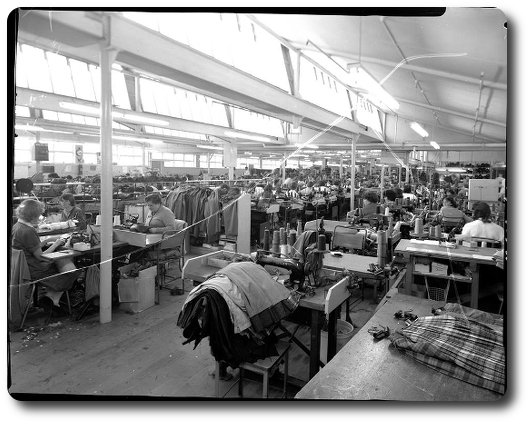
Jobs that once filled the gaps are now going or gone. (Fletcher Jones factory floor, Warrnambool. Image: Ralph Illidge, via David Owen, Save the Silver Ball and Fletchers Gardens.)


[dropcap style=”color: #a02f2f;”] T [/dropcap]he Great South Coast Group set up a working party which has spent almost three years trying to get their heads around the enormity of the problem and what to do about it.

At times, one member said, it felt like an almost overwhelming task and no wonder, because in order to really make a change, everything has to change.

After months of research, thinking and talking, the working group has come up with a broad-scale plan that challenges us to do things differently and to step away from our old ways of thinking.

Take, for example, the thinking that “the government” will step in and fix it. We have tried that, and it is not working.

What has happened, instead, is that multiple government departments are all tackling the same problem, in their own ways, without talking to each other, without being allowed to talk to each other and some kids end up with 12 separate case workers and no long-term solution.

(There is a great anecdote from a homelessness program in Woollomooloo, Sydney, where 52 “service providers” were all helping the homeless without knowing how many homeless they were helping. It turns out there were 90 people sleeping rough and this turned the issue on its head to become the “90 homes for 90 lives” project.)

kids playing footy
While sporting prowess is highly valued in our community, academic ability attracts far less comment.

[dropcap style=”color: #a02f2f;”] T [/dropcap]ake, as another example, our thinking that the problem starts in early primary school, when kids learn to read and write and do sums.

Wrong. The working party argues that it begins at conception.

The minute that little sperm penetrates that egg, a whole suitcase of potential – or lack of – flips open for that child: is the mother an addict? Is the father? Are they comfortably well-off or poor? Literate or illiterate? Supported or isolated?

And what about the community mindset that worships all forms of sporting prowess, especially football, above academic ability?

This needs to change too.

The working party has based its approach on what is called a Collective Impact model – snappy title, right? – but it is exciting and has worked very successfully in places like Sweden, Canada and the US, but is only now catching on in Australia.

In a nutshell, it involves motivating the community as a whole – politicians, parents, teachers, employers, philanthropists, business owners, the elderly, service clubs, sporting clubs, you and me – to work for real change.

Instead of operating in our own little corners, or doing nothing at all, we are urged to work collaboratively and collectively. “That is not my area,”  or “that is not my problem,” won’t be part of the language.

centrelink

[dropcap style=”color: #a02f2f;”] T [/dropcap]he first step, and it is happening as we speak, is the Great South Coast Group setting out a community action plan for each council area, because each has its own challenges.

Beautiful little Mortlake, for example, is doing its best not to become a welfare ghetto in the face of low-cost housing, poor services, poor public transport and the sheer boredom of those who have been located there by “the system”.

The action groups aim to get people talking about the problem – like we are now – and set down steps for change that we can all be involved in, even if it is something as simple as listening to a child read.

It will take years to turn around a mind-set that has been years in the making, but I think this is the best approach I have seen in a long time and I can’t wait to see it unfold.

Are we all prepared to help?

[box] The Great South Coast working party members include: Helen Bayne (South West PCP), Helen Durant (Great South Coast Early Years Network), Karen Foster (Great South Coast), Toni Jenkins (South-West LLEN), Marcus McCormick (South-West LLEN), Vicky Mason (W’bool City Council), Anne Murphy (Glenelg & Southern Grampians LLEN), Mary Pendergast (Dept of Education and Early Childhood Development) and Kaye Schofield (RMIT Hamilton). You can read more about the project here.[/box]

[button link=”http://the-terrier.com.au/subscribe-2/” type=”icon” icon=”heart” newwindow=”yes”] Would you like to have early access to our Opinion pieces? Please subscribe here.[/button]

newsletter Eat And Drink Stones Read more Opinion pieces here…


Trader levy deal…and the Jennifer Lowe factor

Council’s racing hospitality bill hard to swallow

Reekie to challenge Napthine at state election

Forget cover ups, roll right over Rolf

Community vision should extend city wide: Julie Eagles

Flagstaff Hill at $15 million crossroad

Scrap trader levy and start over

What is holding Portland back?