Lyndoch board: Seymour sounds a warning on staying silent

One of the many letters written to the local newspapers about the crisis at Seymour hospital that came to a head during the tenure of former CEO Doreen Power.

Carol Altmann – The Terrier

If we need a canary in the coal mine about what is unfolding at Lyndoch Living, it’s what happened at the Seymour hospital earlier this decade.

Seymour hospital was plagued with problems in the early 2000s, with a string of doctors resigning, a loss of birthing services, a dysfunctional board, and four official inquiries into the mess in less than two years.

Into this crisis came Doreen Power, who was appointed CEO of Seymour Health in 2007 and left in 2012, during which time the hospital saw many changes and the small town of 7000 people virtually imploded.

Ms Power, who is now CEO of Lyndoch Living, was hired by the Seymour hospital to get things done and she did: birthing services were resumed, the doctors came back to work, and the hard-working staff at the hospital continued to provide the best services that they could.

But behind the scenes of all this “success” was a human train wreck of broken, dis-spirited people, many of whom were allegedly treated so appallingly that they are only just starting to recover and some say they never will.

A record crowd poured into the Seymour football clubrooms in July 2012 to hear what would be done about multiple problems at the hospital.

I have spoken to many people from Seymour about this period and the same stories are repeated over and over:

staff being bullied, losing their jobs for no reason, being “marched off the premises” without warning, hounded over minor issues, feeling disempowered, afraid, depressed and having “nowhere to turn” because the board either wouldn’t listen, or wasn’t told.

This sounds frightening familiar to what is now allegedly unfolding at Lyndoch Living.

“People became severely depressed and traumatised and felt there was nobody who could help them,” said one Seymour woman who spoke on the condition of anonymity.

“There was a sense the board had been hand-picked and they wouldn’t help. You were told if you approached the board, you would be dismissed…if you wanted to keep your job, you had to shut up.”


In desperation, some staff organised a Seymour version of an underground resistance by wearing green ribbons to work as a sign that they were a “safe” person to approach if you were being bullied.

Can you imagine?

The terrible reality for these Seymour staff is nobody from the hospital board stepped up, staff were too scared to speak up, and the damage rolled on until the wider community was alerted to what was happening.

A portion of the anonymous letter drop sent to residents of Seymour in 2012.

An anonymous letter drop was circulated throughout Seymour in early 2012 and local state MP Cindy McLeish, now deputy Opposition leader, was bombarded by people pleading for her to intervene.

Ms Power resigned as CEO in May 2012, just two months before Ms McLeish organised a public meeting that was held in the local footy clubrooms before a capacity crowd of more than 300 people. Nobody from the hospital executive showed up.

Neither Ms Power or the executive, however, escaped the wrath of the crowd.

“The meeting saw pent-up community frustration released about perceived high staff turnover at the hospital, allegations of bullying, a “toxic” workplace, former chief executive Doreen Power and the change from a community hospital to a ‘bean counter mentality’ among other things,” the Seymour Telegraph reported.

Seymour GP Dr Elliot Jarman was among the passionate speakers in the audience. He was quoted by the paper as saying:

“Over 25 years Seymour Hospital has evolved to provide first-class services. I’m proud of that. What I am not proud of is staff absolutely in tears, intimidated…what’s happening is (wrong).

“I’ve been to the courts, I’ve been to Worksafe…(they’re) unable to help. I’ve been seeing patients and my fellow colleagues in tears. It’s just not right. Our services are being damaged by the current management style.”
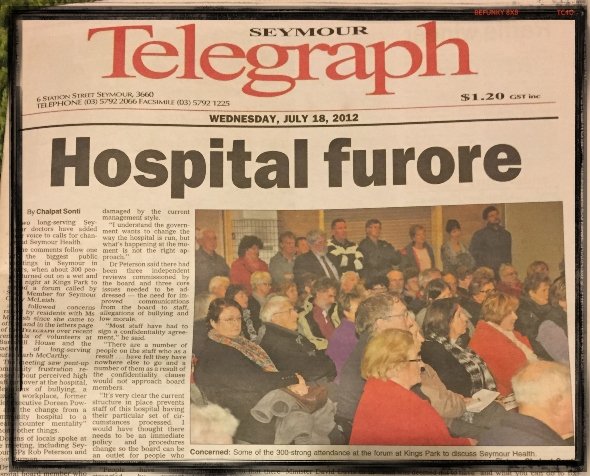
Another Seymour GP, Dr Rob Peterson, told the meeting that three core issues needed to be addressed immediately: improved communications from the board to staff, allegations of bullying, and low staff morale. Bang, bang, bang.

By the time of the town meeting, it’s understood up to 50 staff had left the hospital, either from being pressured or being fired, and a string of Fair Work claims that followed – I believe up to 14 or 15 –  have only recently been finalised.

“It broke this town and I don’t think it has ever fully recovered,” said one Seymour source.

Seymour ultimately had an intervention, with a ministerial appointment made to the hospital board to report back to then Health Minister David Davis.

By the end of 2012, the hospital chair had resigned and most of the executive team had been cleaned out after their positions became untenable.

As a local blogger, Seymour Dreaming, wrote: “why has the board been conspicuously silent when the community expressed concerns over controversial events for which is was ultimately responsible?”

Why indeed?

And then this, a heart-felt letter to the paper from resident, Janet McKenzie, which says it all:

“The (hospital) board…and past and present executive staff need to be accountable for the shame, hurt, stress and humiliation that has been placed on these staff and their families.

They deserve so much better treatment, as do volunteers who have so generously given their time…

These staff and volunteers must receive an unconditional apology and compensation/reinstatement for the treatment they have received at the hands of (the hospital).

It is not acceptable that is ignored as these are staff and volunteers who have given many years of unblemished, caring and passionate service..

Finally, I, like many other family members of the above staff will be there to give support, assistance and much needed emotional care to those that the (hospital) has abandoned.”


The canary is coughing at Lyndoch Living and I hope the board is listening, because this management style hasn’t happened just once before, but twice.

Next: Plenty Valley.

If you would like to support the work of The Terrier, please consider throwing something in the tip jar.
Terrier Tip Jar


Inside Lyndoch Living and why we need to be worried

Just weeks after the resignation of then Seymour Health CEO Doreen Power, a record crowd of more than 300 people turned out to a public meeting held in Seymour to address the many troubles of the hospital.

Carol Altmann – The Terrier

This Lyndoch Living story has gone to places that I never expected it to go and that includes wading into the work history of CEO Doreen Power which, to be frank, is why I am so troubled by what is unfolding here.

I will write more about Ms Power’s back story in the near future, but for now I just want to lay out the context for my concern and why I am latching on to this story for the long haul.

In the seven years before Ms Power became CEO of Lyndoch in December 2014, she held three senior positions:

First as CEO of Seymour Health for almost five years before resigning in May 2012 in the face of a virtual uprising by the small town of 7000 people.

Then as CEO of Plenty Valley Community Health for less than two years, before an interim CEO was appointed in December 2013.

And, lastly, working briefly as Director of Nursing at Tweddle Child and Family Health Service until that role was taken over by another person in February 2014.

I have spent many hours researching and talking to people about Ms Power’s time at Seymour and Plenty in particular and a disturbing pattern has emerged, one which I believe is being replicated at Lyndoch:

– a culture of bullying and dismissal

– extremely low staff morale

– a compliant board or attempts to create one

– an impact on residential care and services

– a culture of secrecy and a lack of transparency


Journalists, I can tell you, don’t have either the time or inclination to go digging into people’s work history unless it is relevant to a story unfolding now.

Ms Power’s back story is absolutely relevant and it is why I am committed to writing all that I know – based on a huge amount of research and dozens of interviews – because you need to know.

We need to know because Seymour Health and Plenty Valley Community Health, in particular, are the red flags.

Both took years to recover.

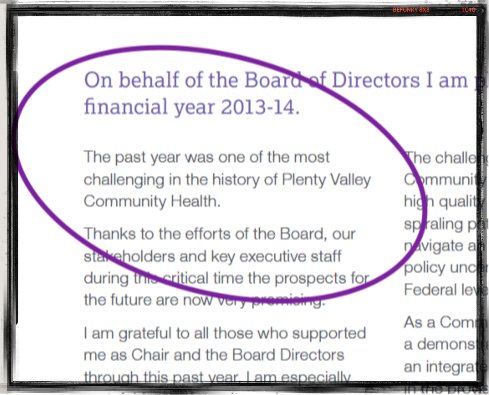
The opening sentence of the chair’s annual report to Plenty Valley Community Health, the year after Ms Power left the organisation. Ms Power was less than two years in the position.

Thanks to your help, I am going to pick apart what is happening at Lyndoch – all of it – because Lyndoch was set up by the community, to care for some of the most vulnerable in our community. Full stop, end of story.

Over the coming weeks, I am going to write about:

where Lyndoch is heading, its priorities, the breaking down of resident care, its venture into building and running a commercial medical clinic, who is paying for what, who is running what, who is in charge of what, whether Lyndoch is still primarily a charity and public benevolent institution, how the board is handling complaints, the change of the Lyndoch constitution, how the board is chosen, how the public can become members, the lack of transparency around its full financials, its support for gambling via a horse race, other sponsorship deals, potential conflicts of interest, who is involved in the new company Lyndoch HealthCare, and anything else worthy of forensic examination.

I will also be telling you much more about Ms Power’s time at Seymour Health, and Plenty Valley Community Health, and explore how she became employed by Lyndoch.

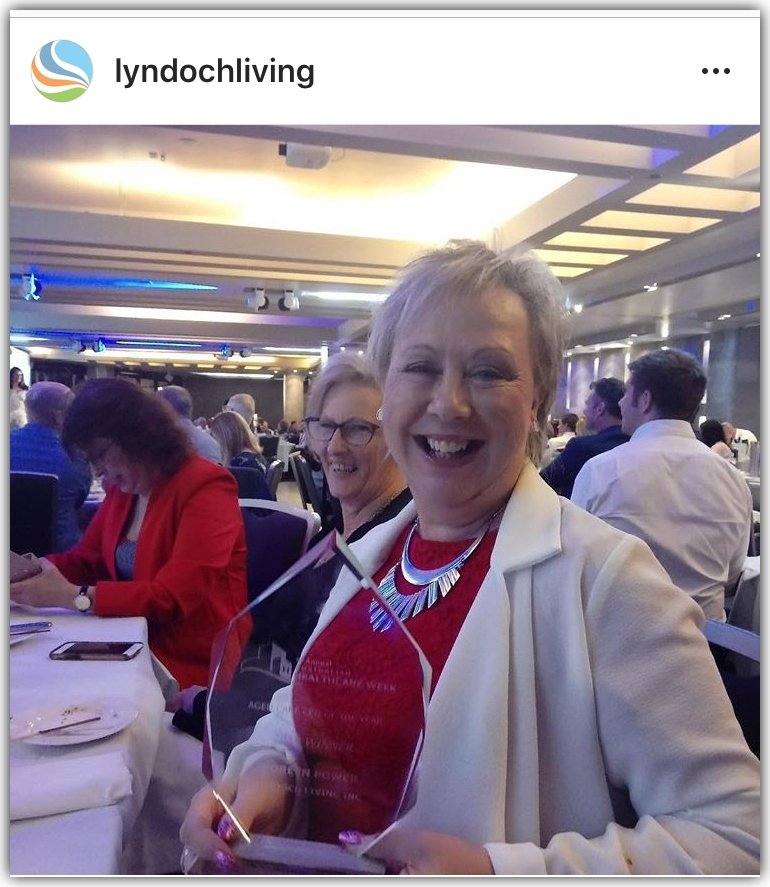
Lyndoch CEO Doreen Power having won the inaugural Aged Care CEO of the Year by Australian Healthcare Week awards in 2019. Lyndoch chair Kerry Nelson and Director of Nursing Julie Baillie also attended the Sydney event. Image: Lyndoch Living.

It’s going to be a long, slow haul, but it is an essential one.

It’s going to be tiring work, but we have done this before, you and I – the terriers and The Terrier – and we know we can make a difference.

We can be a voice for the workers (past and present) and the residents and for the Lyndoch we know and love, and together we can step up to where the majority of the board seemingly refuses to go.

If there is one thing I have learnt from my research around Seymour and Plenty Valley, it is that we need to start now.

Strap yourselves in and on we go.

More soon.

If you would like to support the work of The Terrier, please consider throwing something small in the tip jar.

Terrier Tip Jar


Lyndoch Living pulling down the shutters on scrutiny

Lyndoch Living can’t wait to talk about all the good stuff happening, but digging into the financials is getting harder.

Carol Altmann – The Terrier

What the heck is happening at Lyndoch?

It’s behaving more and more like a private corporation than a community owned home for our elderly and infirm.

Its unadvertised, annual general meeting held earlier this week was, by all accounts, one big self-congratulatory, PR exercise rather than a critical analysis of the last 12 months.

While it’s terrific to celebrate the good stuff, we also want to know the nitty gritty behind the growing “brand”, because Lyndoch is now very much a brand.

So where are the financials?

How are the Lyndoch board and CEO Doreen Power spending our money, be it via residents’ fees, taxpayer dollars or donations?

Was there a surplus or a deficit like the $1.77 million loss of last year?

How many staff have come and gone?

How much is being spent on food for the residents? On medical and health items? How are the public donations going?

And – I ask, one more time with feeling – where is the $100 million coming from for the eight-year masterplan?

The annual report released this week answers none of these questions, in fact, it deliberately avoids them.

The financial statements have been reduced to three, very basic graphs and about 125 words of text – that’s it – for a multi-million-dollar, publicly funded, not-for-profit organisation that is fully accountable to the public.

Well, it used to be.


Things have changed dramatically since Lyndoch changed its corporate structure late last year.

Now, trying to get any detailed information is like prising open the jaws of Barry the Bull Terrier.

I am still trying to get a copy of Lyndoch’s constitution, which it is zealously guarding like a first-edition copy of Harry Potter.

Even old annual reports that were posted on the Lyndoch website were pulled down yesterday.

Maybe this is because I actually read them and crunched the numbers and found a rather large skeleton lurking in the closest: Lyndoch last year recorded its largest deficit in recent years at $1.77m.

Thankfully I took notes and kept copies of the annual reports that could be downloaded, and took screenshots of those that couldn’t.

Good grief, when did it get this hard to find out basic information about our much-loved aged care home?

What on earth is there to hide?

Perhaps it’s because, as I believe, Lyndoch recorded another deficit in 2019, which would be its fourth deficit in the past five years.


I am not an accountant by any stretch, but using the scant details released this week, and my earlier notes, I think Lyndoch Living recorded another operating deficit, this time of around $750,000 and that’s before any other unusual items – if there were any – are added.

Please, Lyndoch, correct me if I am wrong.

The back page of the Lyndoch annual report for 2019 reflects its growing business model.

Using my same, very high-tech accounting methods, I believe its net assets also dropped by a whopping $11 million in the past year from $62.7 million down to $51.2 million.

Hmm, could that be because Lyndoch just borrowed $11 million from the bank to pay for the first stage of the masterplan?

Please, please, Lyndoch, correct me if I am wrong.

There is no question that Lyndoch needed to freshen up some spaces, try different things, move with the times, but surely when big decisions are made and millions are being spent, it must all be open to rigorous scrutiny?


As it sits, to get even close to the full story, we will have to wait until early next year for the full financial reports and all of the gritty details to be released via a government website that oversees charities.

In the meantime, this Terrier is just going to keep digging. More soon.

If you would like to support the work of The Terrier, please consider throwing something in the tip jar.
Terrier Tip Jar


The Vault: trees, transparency and truth

foreshore trees1
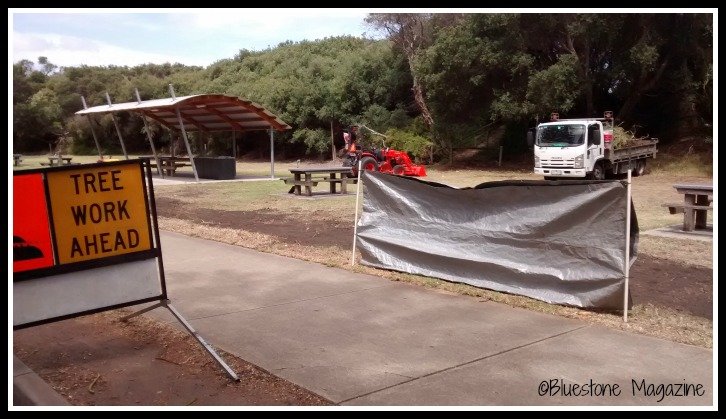
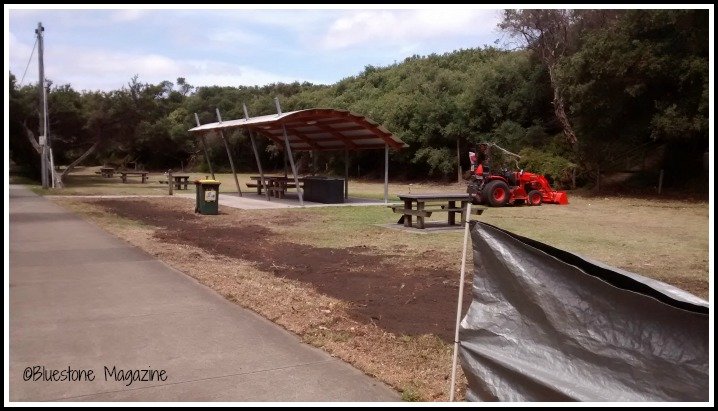
The sudden removal of a row of established tea tree along Pertobe Rd by the W’bool City Council sparked a passionate response from the Warrnambool community.

The Vault – Carol Altmann 

What began as a simple question to the Warrnambool City Council about the removal of some trees has gone on to reveal a much deeper concern that strikes right at the heart of the public’s right to know.

The last 24 hours has confirmed that there is now a two-tier system in place: those people and media organisations who meet the council’s approval and those who don’t. Those who acquiesce will be accommodated and those who dare to dig deeper or question further will be ignored.

In a one-newspaper, regional city with close ties and connections, this is a deeply troubling attack on one of the fundamental parts of a democracy where people have a right to expect an open, transparent and accountable government on all levels. The media, including new media outlets like Bluestone Magazine, are critical to this expectation being met.

First, some brief background for those of you who may not be on Facebook or Twitter, which is where Bluestone revealed the removal of a row of well-established tea-tree from Pertobe Rd this week.

In the scheme of things this might be seen as a small story, but more than 6500 people saw our post and many reacted passionately, asking why the trees had been taken out and that they were saddened, disappointed and even horrified at the loss of this native vegetation.

The WCC issued a tweet to its followers after Bluestone had made public that the trees had been removed, saying: “Old tea trees removed along Pertobe Rd for safety following inspection by arborist. Replacements to be planted in autumn.”

Safety? Inspection by an arborist? We wanted to know more.

tea trees2
The council says the tea tree was removed after an inspection by an arborist, but the arborist’s report is yet to surface.

We emailed WCC communications officer Nick Higgins, Mayor Kylie Gaston and all the councillors to see if we could find out more detail.

Cr Brian Kelson said he was unaware of the removal of the trees, but questioned why the council’s guideline of only removing one-third of the height had not be applied. (note: an earlier version of this story said only Cr Gaston responded to our questions. Cr Kelson also responded.)

Mayor Gaston also responded and the relevant part of her email is here:

“Not all the trees have been removed as people thought may happen this morning which is a good thing.  The young man returned this morning to finish the stumps only.
I believe the trees cut down were assessed as high risk due to cracks and a certain worm being detected in the trees.  
The remaining trees are believed to be fine and will be watched.  No one wishes them to be cut down.
It was recently pointed out to us by our auditor that since the sad accident when the child was killed by a tree in Bendigo this year, councils are being a lot warier of the risk.  This would be a case in point I suppose.”

Leaving the death of the child in Bendigo to one side for a moment (we will get back to that tragedy), we than asked to see the arborist’s report that led to such a dramatic response for a row of worm-infected tea tree.

Mayor Gaston was on the road by this time, so we emailed media manager Mr Higgins yesterday – as is council protocol – and asked directly:

Hello Nick,
As Mayor Gaston is on the road, I am writing to ask you directly if the WCC can forward a copy of the arborist’s report on the tea trees removed from Pertobe Rd.
Regards,
Carol​

Three hours later, having obviously scoured our Facebook page to gauge public feedback on this issue, we received this reply at 5.26pm yesterday:

Hello Carol,

We will decline the invitation to have further input into your commentary.

Comments on your Facebook page which describe council staff as “environmental rapists” and “grubs” are offensive.

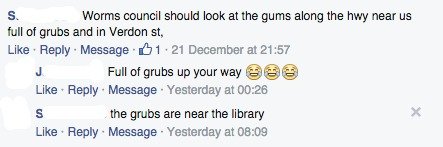
Actually, what was said on the page was this:

facebook message

And this:

facebook2

Passionate, yes. But no individual WCC staff member was named and certainly not defamed.

While we closely monitor our Facebook page to remove potentially defamatory comments and offensive language, we also believe members of the public who are prepared to express an opinion (however passionately) under their real names is what a free and robust discussion is all about.

We also find the council’s refusal to comment to us on this basis particularly interesting given a senior member of its own staff, tourism manager Peter Abbott, was this year exposed for attacking some councillors under a pseudonym to the local newspaper.

Here is our response to Mr Higgins:

Hello Nick,
It is not an invitation, but a request for information that should be in the public domain, given it was stated as the reason for the removal of the trees.
Just to be clear, are you saying the WCC is with holding this information because of a comment/s by a third party – under their own name/s – on our Facebook page that does not in any way attack an individual but perhaps, instead, expresses the clear frustration and disappointment at the decision to remove this vegetation?
Strong words, certainly, but we believe in allowing people who are brave enough to have a say publicly, under their own name, to actually have a say.
I wish to point out that Bluestone Magazine has made no such comments and has instead raised an issue that was brought to our attention by readers wanting to know why and how the decision was made to remove the tea tree. We also pondered why the council had not chosen to make this information public before the trees were removed, as is recommended in its own tree removal policy.
Despite this, you are saying that this information will not be supplied.
I can only ponder if the same restrictions applied to the Warrnambool Standard when, until recently, it regularly permitted such criticism and attacks on both council and councillors not only on social media, but on its website, including – as you know – comments written by WCC senior staff under pseudonyms.
If this is the chief executive’s ruling, then we will be lodging an FOI for this information, as is becoming the way that the council demands we do business when seeking documents that should and could be in the public domain.
Regards,
Carol

And Mr Higgins’ reply?

I am out of the office from 22/12/2015 05:15 PM until 11/01/2016 08:30 PM.
Hello,
I am on leave from December 23, returning January 11, 2016. If the matter is urgent call 0466 199 511.

banyan trees
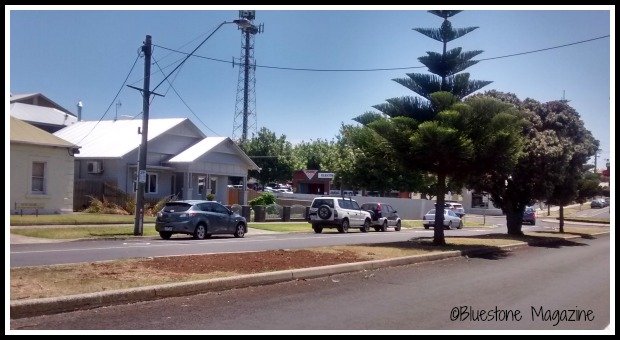
After the removal of the tea trees, a reader contacted us to highlight the removal of several New Zealand Christmas trees along Banyan St, again without public notification.

We are still waiting for the arborist’s report, if in fact one exists. We are, pardon the pun, going out on a limb to say that it doesn’t.

But this is about more than trees.

This is also, in our view, about the council trying to shut down public criticism and scrutiny by scraping social media, and it’s about an attempt to “choke” an organisation like ours that cannot be “media managed”.

You, our followers, will know that this is not the first time. We have still not received answers to our questions on the Porter’s shed, or a copy of the report on the results of the 2015 Fun4Kids festival, or whether, indeed, if all of the missing Loch Ard lead ingots have ever been recovered.

But we will keep asking.

[box]The death of a child from a falling tree limb in Bendigo in 2013 led to a coronial inquiry where the council was found not liable. The tree, in that tragic case, was a 90 year old Grey Box gum and the branch that broke was an 18m long limb that dropped from 4 to 6 metres. The coroner set down eight recommendations about council tree management, including installing a computer based management system detailing what trees it owns, a risk assessment and maintenance schedule; a formalised tree inspection protocol; that all assessments be done by an experienced arborist; and that the assessments include the root system and canopy. There is no suggestion that all damaged trees be removed, but that pruning may also be an option. You can read the full report here. You can also read the WCC tree policy here.[/box]

Meanwhile, on the subject of public liability, click here to see a case that actually is just waiting to happen within the Warrnambool CBD.