Once-proud “Rowitta” is now an abandoned ship

rowitta 1999 fred
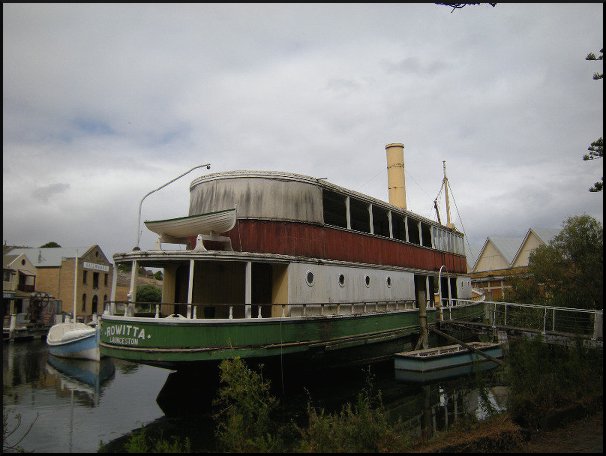
The century-old steamer, “Rowitta”, as it appeared at the Flagstaff Hill Maritime Village in 1999 when it was considered a prize exhibit. Image: FredV45 via Flickr.

By Carol Altmann

[dropcap style=”font-size: 60px; color: #A02F2F;”] T [/dropcap]his is a tale of two, century-old, sister ships with two very different fortunes: one is about to undergo a million dollar restoration in Tasmania, while the other is being scrapped at Flagstaff Hill in Warrnambool.

The Rowitta and the Cartela are both wooden steamer ferries built in Hobart by Purdon & Featherstone, with the Rowitta the older of the pair, being built in 1909, followed by the Cartela in 1912.

They are now among only a handful of river steamers left in Australia and generate the sort of excitement among wooden boat enthusiasts that befit their rarity.

In the case of the Cartela, which has been converted from steam to diesel but has never been out of service, that excitement is only building.

A dedicated band of volunteers formed the Cartela Restoration Project Trust that lobbied for years to secure funding to restore the ferry to its original state, including its original 1912 steam engine. The project has come to fruition and, as of August last year, the Cartela restoration has been the centrepiece of the revitalisation of the port of Franklin, in the Huon Valley, as the home of wooden boat building.

For the Rowitta however, despite being one of the oldest vessels in the collection at the Flagstaff Hill Maritime Village, it is the end of the road.

rowitta - 1922 museum victoria1
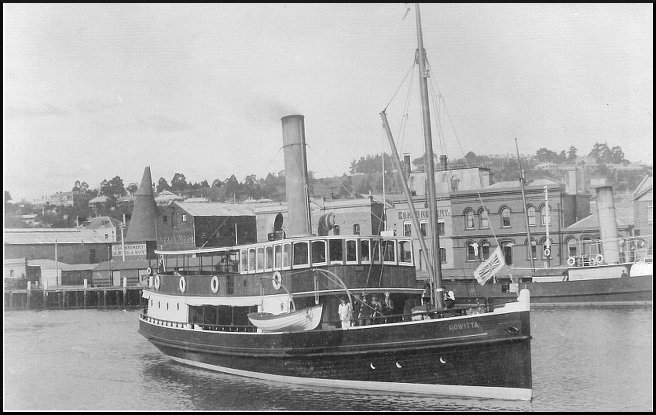
Full steam ahead: The Rowitta plying the Tamar River, Launceston, in 1922. Image: Museum Victoria.

[dropcap style=”font-size: 60px; color: #A02F2F;”] H [/dropcap]aving been brought to the fledgling Flagstaff Hill back in the early 1970s as a hull, the Rowitta – which has also been known over its life as the Sorrento and Tarkarri – was the focus of a major restoration in 1989 under master boat builder, the late Ron Stewart, who’s son, Garry Stewart, continues the craft in Port Fairy today.

The Rowitta became a jewel in Flagstaff Hill’s crown, both as a popular venue for weddings, an educational tool for students and as a historic tourist attraction.

Tasmanian Irene Atkins wrote about her visit to Flagstaff Hill in 1998 and the thrill of seeing the boat she remembered from her childhood in Launceston being fully restored and taking pride of place on the lake.

“The first thing I said was ‘You have got the right colours’. They replied that they had gone down several coats of paint to establish that information,” she wrote in ‘On the Tide‘.

One of the people to show Irene around that day was boat builder Jeff McMurrich who is still the main boat builder at Flagstaff Hill and who, in 2008, gave a prescient interview to the ABC’s Jeremy Lee in which he warned that the Rowitta was in need of significant restoration work within 10 years, or it may not survive.

Sitting permanently in fresh water rotted the hull and required the Rowitta to be drydocked for proper repairs, which was difficult because it was part of the village’s Shipwrecked sound and light show *.

Instead, as Jeff explained, he did what he could with the “shoestring” budget Flagstaff Hill had to spend on such things. It was, he said, a case of “patching” rather than preventative maintenance – and this could only work for so long.

rowitta rotting
The rotting hull of the Rowitta, which has been off-limits to visitors to Flagstaff Hill Maritime Village for more than a year.

[dropcap style=”font-size: 60px; color: #A02F2F;”] D [/dropcap]espite these dire warnings, the 100th birthday of the Rowitta in 2009 was met with cheerful optimism by Flagstaff Hill, with manager Peter Abbott telling the local newspaper that the ship was still a popular drawcard.

“It’s a great venue for many types of functions and its also part of our sound and light show so the Rowitta’s definitely got plenty of years left in her yet,” he said.

In fact the boat would not see out another decade.

Faced with mounting losses at Flagstaff Hill, the Warrnambool City Council decided a couple of years ago to discontinue all maintenance of the Rowitta, which sealed her fate.

Alongside this decision has been a subtle reconfiguring of Rowitta’s place in the Flagstaff Hill story.

No longer is the ship historic, but referred to by Flagstaff Hill in its correspondence as a “replica”.

Similarly, the ship’s story is no longer considered relevant to the village, yet the South Australian built boat, the Reginald M, which arrived at Flagstaff Hill at about the same time, is.

The Rowitta’s transition from treasure to trash is perhaps best captured in this line from the council’s February 15 meeting:

Rowitta is a replica ship and deemed as surplus to the future of FHMV. Her removal will allow our limited wooden boat repair resources to focus on our real heritage vessels.”

Work on removing parts of the ship has already begun.

*The consolidation of the wooden boat fleet is part of a $3 million upgrade of Flagstaff Hill to start later this year, including a $2 million upgrade of the sound and light show.

[box]We asked former Flagstaff Hill director PETER RONALD, now living in Tasmania, for his view on the destruction of the Rowitta. Read his exclusive analysis piece here. Bluestone would also like to thank the Launceston Library for its assistance with the history of the Rowitta.[/box]

[button link=”http://the-terrier.com.au/subscribe-2/” type=”icon” icon=”heart” newwindow=”yes”]Bluestone needs at least 500 subscribers in 2015. Please support independent media, and subscribe here.[/button]

newsletter Why Not StonesYou might also enjoy…


 Little old shoe leads to a humble war hero

Unearthed: how the Warrnambool cemetery works
A fence full of happy souls at Tyrendarra: the ‘shoe fence’

Montgomery buys a slice of ‘Motang’ history


Peter Ronald on the destruction of 100-year-old ‘Rowitta’

rowitta-blog
Fading away: the 100-year-old wooden steamer, Rowitta, is being pulled apart after it was decided by Flagstaff Hill to discontinue all maintenance. Image: Amanda Turnidge-Jones.

Bluestone invited the former director of Flagstaff Hill, PETER RONALD, to write on the imminent destruction of the Rowitta, one of the oldest vessels at the Flagstaff Hill Maritime Village:

ANALYSIS – Peter Ronald

The Rowitta has involved some difficult decisions for Flagstaff Hill over the years, but it seems the vessel will soon no longer exist. (*The WCC has since announced the removal of the Rowitta began on April 20, 2015.)

The destruction of historic ships is an unusual pursuit for maritime museums and accordingly, I have been asked by Bluestone Magazine to contribute my opinion on the issue.

I do so with some reluctance, but perhaps it is timely to put some matters on the record. I have always sought to grace an honest question with an honest answer; that is simply my aim here. Anybody seeking my views on this issue would have received precisely this same answer.

The vessel’s hull was originally purchased and moved onto the site with the idea of creating the impression of a sailing ship as the centrepiece of the village. This initial concept was – without any disrespect to those responsible – primarily about creating atmosphere rather than the noble goals of maritime heritage conservation.

As I attempted to steer Flagstaff Hill from “maritime village” to “Maritime Museum”, it became essential to reassess the role and significance of this primary centrepiece: the Rowitta hull. Options for the hull were clear; to pursue the “atmospheric” notion, restore the vessel to its original configuration, return it to the ocean (for sale/use elsewhere), or just let it rot (a “caged” shipwreck on the Shipwreck Coast).

I suspect that these may have been the sorts of options reconsidered by current Flagstaff Hill management. The underlying question however is, why?

Why, some 20 years after the decision to restore and preserve the vessel, was the matter revisited? Why does total destruction of the Rowitta now seem like a good idea? The answers are clear, but it is not a pretty story.

rowitta launceston
The Rowitta in her prime as a steamer on the Tamar River, Launceston, shortly after her launch in 1909. Image: On the Tide (Vol 1), reproduced courtesy of Launceston Reference Library.

Historic ship preservation is a well practised activity around the world and typically involves a period of extensive restoration, followed by meticulous maintenance. Through the research, hard work, and amazing skills of the late Ron Stewart, the hull was ultimately restored to its former glory as the historic steamer, Rowitta.

When I left Flagstaff Hill, the restoration was largely complete (the reconstructed aft cabin being used as an education centre/classroom) and maintenance was ongoing.

What happened next, in my view, is that Flagstaff Hill entered a “dark age” from which it is yet to recover.

Let’s be clear, under the planned and precise direction of the City’s then Administrators (and followed by subsequent Councils), the ethical constraints of the museum philosophy which had guided development for a decade, were abandoned in favour of a “tourist” focus.

The logic was that a change in emphasis from museum to tourist facility would herald even higher levels of economic success. Well, the scores are now on the board in relation to that failed experiment, and the Rowitta is symbolic of the collateral damage.

No longer an historic object in the care of a Maritime Museum, maintenance lapsed under the new direction. The high standard of restoration that had been achieved was simply eroded through neglect. That splendid work, so diligently accomplished by Ron Stewart, apparently deteriorated to the point that it was no longer even safe to enter the vessel.

rowitta rotting
The rotting Rowitta: the boat has been off-limits to Flagstaff Hill visitors for some time after it was considered unsafe to board. Image: Bluestone Magazine

The debate around “historic” ship or mere replica, raises a relevant and well studied aspect of historic ship preservation. It is true that any historic vessel preserved in an open-air environment will, as the result of basic maintenance, require the replacement of original fabric.

Over time, the percentage of original fabric present in any such vessel will therefore, effectively diminish: this is particularly true of timber vessels. In the Rowitta’s case, the hull is of completely original configuration and, I would argue, of primarily original fabric.

The deck has been renewed and the upper-works have been replicated. The end result of this equation, however, and by the standards of international maritime museum practise, is that the Rowitta was – and remains – an historic vessel.

To suggest otherwise is simply an argument of convenience used to justify a predetermined outcome.

Curiously, if the vessel was positioned just 350 metres to the south (ie. on the beach) it would now automatically be afforded the full protection of Historic Shipwreck legislation.

With the above background, I can only sympathise with present management. I believe the current manager is again pursuing museum goals for Flagstaff Hill, and for this I commend him, but the policy decisions of the past make the task a truly formidable one.

It should never have come to this: Flagstaff Hill’s “dark age” was unnecessary and, in any case, lasted far too long.

In the Rowitta example, the cost of the failed experiment will now be born by future generations through the loss of a piece of Australia’s maritime heritage: a 100-year-old historic ship.

I observe with sadness that Warrnambool’s maritime museum has been taken to the point of “burning the furniture”; one of it’s oldest and largest historic artefacts. Flagstaff Hill may never recover from the “dark age”, but there are foundational lessons to be learned from this current humiliating predicament.


Are missing Loch Ard ingots the tip of the iceberg?

loch ard ingots_3
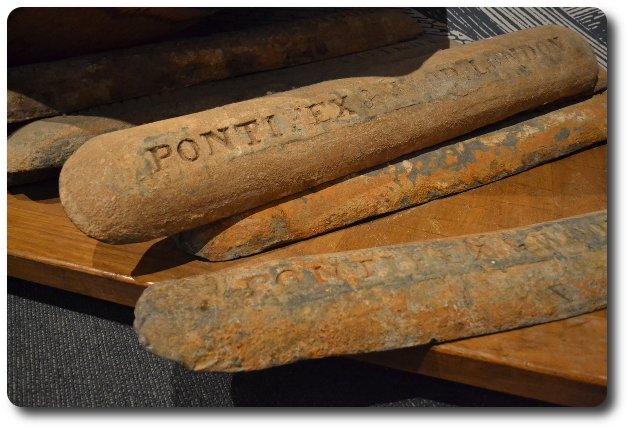
Ten of the original 872 lead ingot weights from the Loch Ard that were loaned to Flagstaff Hill by the Federal Government in 1984: more than 200 have since gone missing. Image: Bluestone Magazine


OPINION – Carol Altmann

[dropcap style=”font-size: 60px; color: #5C747D;”] H [/dropcap]ow did Warrnambool’s Flagstaff Hill Maritime Village lose track of more than 200 lead ingots that were part of the most famous shipwreck in Australia – the Loch Ard – given to it by the Federal Government for safe keeping?

This is a question that has the Warrnambool City Council scrambling for answers but – so far – the explanations have only raised even more questions about how the maritime collection has been managed and whether more irreplaceable items may have fallen through the gaps. (*Update: Flagstaff Hill has since confirmed more than 130 items are missing from its collection, including the Newfield bell from 1892.)

Cr Brian Kelson started asking about the location of all the Loch Ard (1878) ingots late last year and the information that has been provided since has been surprising, in terms of how loose the record keeping and storage has been around relics that should be considered precious.

In a written report to council at its December 1 meeting, the Flagstaff Hill advisory committee revealed that 872 lead ingots and 10 copper sheets from the Loch Ard were loaned to the village by the Federal Government in 1984.

They have a written agreement to prove it, but unfortunately it would be almost 30 years – yes, 30 years – before Flagstaff Hill did a full count of the ingots, each of which weighs around 60kg but, because of their French-stick shape, can be carried by two people.

That count was in 2012 and they could only find 728 of the 872, meaning 144 had somehow vanished, which is not surprising given there was no proper audit for almost three decades.

Some of the Loch Ard ingots stacked alongside the Flagstaff Hill lake.
Some of the Loch Ard ingots stacked alongside the lake at Flagstaff Hill in Warrnambool. Image: Bluestone Magazine

[dropcap style=”font-size: 60px; color: #5C747D;”] T [/dropcap]he advisory committee admits that this number – 728 – wasn’t cross-checked, but it was still added to the Flagstaff Hill database.

Another count was done in 2014 and could only locate 652 of the 728, meaning another 76 ingots were added to the already missing 144, bringing the total now missing to 220.

Oddly, however, Flagstaff Hill has brushed off the missing 144, saying it could have been an error in the original loan agreement, which I would say is unlikely, given it was an official government document that was dealing with maritime treasures. (Update: see former FHMV director Peter Ronald’s comment at the end of this piece, confirming the initial intake.)

There has also been no mention of the 10 copper sheets – does Flagstaff Hill still have them?

The copper sheets were listed as item no. 3078 on its public database – that was until last November, when the listing disappeared. (Update: the copper sheet listing has been reinstated, together with a copy of the federal loan agreement. You can see both here.)

The council’s focus has been narrowed to finding the 76 ingots missing from the 2012 count, and this is where things have become quite bizarre.

Flagstaff ingots_10
Some of the 286 ingots that are stored inside the Reginald M moored on the lake at Flagstaff Hill. Image: Bluestone Magazine

[dropcap style=”font-size: 60px; color: #5C747D;”] F [/dropcap]irst, at the same December 1 council meeting, council CEO Bruce Anson gave a verbal update to Cr Kelson in which he said that another count had been taken and 64 of the missing ingots had been found in a false floor of the Reginald M: one of two boats in the Flagstaff Hill lake.

A false floor? We took a look inside the Reginald M at the weekend and counted 286 ingots – the same number in the advisory committee report – and there were no signs of any ingots in a false floor (but, as an aside, plenty of signs of a rotting floor filling up with water).

Mr Anson went on to say that any remaining missing ingots were inside the hull of the nearby derelict Rowitta.

This reassurance was repeated in the local newspaper on December 23, although Flagstaff Hill manager Peter Abbott said it was too unsafe to actually count the ingots in the Rowitta, but his people could “peer in”.

Mr Abbott then revealed that some ingots could also be in the mud at the bottom of the lake, thrown there by night-time intruders. What? When did this happen and were police notified of a break-in at Flagstaff Hill?

More slivers of the puzzle came to light at the weekend when the local newspaper reported that some ingots were being used in Port Fairy while another, not necessarily from Flagstaff Hill, may have been sold at a local clearing sale.

A close-up of the Loch Ard ingots, each of which bear the maker's mark.
A close-up of the Loch Ard ingots, each of which bear the maker’s mark. These are among 10 on display in the Great Circle Gallery at Flagstaff Hill in Warrnambool. Image: Bluestone Magazine

[dropcap style=”font-size: 60px; color: #5C747D;”] S [/dropcap]o how many Loch Ard ingots have we actually got on display, in storage and in the mud at Flagstaff Hill?

I don’t know, I am lost, but I counted a total of 647 when I was there on Saturday.

To throw a final curve ball into the mix, the council’s director of city growth, Bill Millard, who sits on the Flagstaff Hill advisory committee, sent a memo to all councillors on December 10 saying that “the most recent count” identified the location of 802 ingots and he was “confident” that the ingot collection was intact.

Mr Millard may be confident, but the rest of us have a right to be utterly confused.

By any account, the audit of the Loch Ard ingots is an embarrassing mess caused by years of inaction to update the paper-based (yes, paper-based) collection system at Flagstaff Hill.

It is now being left to Peter Abbott – who, in what must be a vast role, is also head of council’s tourism services – and his team of largely volunteers to untangle it.

Perhaps most troubling, however, is how many more precious objects have “gone missing” from the thousands collected by or donated to Flagstaff Hill over the last 40 years?

There are already rumblings about items such as Newfield bell, which once hung in the Great Circle Gallery at Flagstaff Hill, but no longer even appears on its collection database.

While the analogy may be more suited to the Titanic  than the Loch Ard, I fear that the missing ingots may prove to be just the tip of the iceberg.

[button link=”http://the-terrier.com.au/subscribe-2/” type=”icon” icon=”heart” newwindow=”yes”]If you would like see Bluestone survive, please subscribe here for just $85 a year.[/button]

Stones Smile newsletterYou can find more Opinion here…


The changing landscape under Midfield Meats

Street artist secures W’bool mural project

Sucking the wind out of Portland’s sails

Granny’s Grave buried in bureaucracy

All words, no funding, for Fletcher Jones story