Lyndoch Living pulling down the shutters on scrutiny
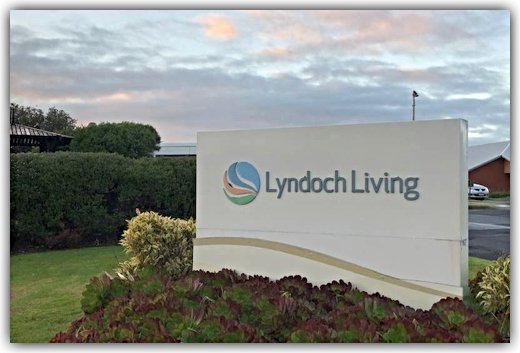
Lyndoch Living can’t wait to talk about all the good stuff happening, but digging into the financials is getting harder.

Carol Altmann – The Terrier

What the heck is happening at Lyndoch?

It’s behaving more and more like a private corporation than a community owned home for our elderly and infirm.

Its unadvertised, annual general meeting held earlier this week was, by all accounts, one big self-congratulatory, PR exercise rather than a critical analysis of the last 12 months.

While it’s terrific to celebrate the good stuff, we also want to know the nitty gritty behind the growing “brand”, because Lyndoch is now very much a brand.

So where are the financials?

How are the Lyndoch board and CEO Doreen Power spending our money, be it via residents’ fees, taxpayer dollars or donations?

Was there a surplus or a deficit like the $1.77 million loss of last year?

How many staff have come and gone?

How much is being spent on food for the residents? On medical and health items? How are the public donations going?

And – I ask, one more time with feeling – where is the $100 million coming from for the eight-year masterplan?

The annual report released this week answers none of these questions, in fact, it deliberately avoids them.

The financial statements have been reduced to three, very basic graphs and about 125 words of text – that’s it – for a multi-million-dollar, publicly funded, not-for-profit organisation that is fully accountable to the public.

Well, it used to be.


Things have changed dramatically since Lyndoch changed its corporate structure late last year.

Now, trying to get any detailed information is like prising open the jaws of Barry the Bull Terrier.

I am still trying to get a copy of Lyndoch’s constitution, which it is zealously guarding like a first-edition copy of Harry Potter.

Even old annual reports that were posted on the Lyndoch website were pulled down yesterday.

Maybe this is because I actually read them and crunched the numbers and found a rather large skeleton lurking in the closest: Lyndoch last year recorded its largest deficit in recent years at $1.77m.

Thankfully I took notes and kept copies of the annual reports that could be downloaded, and took screenshots of those that couldn’t.

Good grief, when did it get this hard to find out basic information about our much-loved aged care home?

What on earth is there to hide?

Perhaps it’s because, as I believe, Lyndoch recorded another deficit in 2019, which would be its fourth deficit in the past five years.


I am not an accountant by any stretch, but using the scant details released this week, and my earlier notes, I think Lyndoch Living recorded another operating deficit, this time of around $750,000 and that’s before any other unusual items – if there were any – are added.

Please, Lyndoch, correct me if I am wrong.

The back page of the Lyndoch annual report for 2019 reflects its growing business model.

Using my same, very high-tech accounting methods, I believe its net assets also dropped by a whopping $11 million in the past year from $62.7 million down to $51.2 million.

Hmm, could that be because Lyndoch just borrowed $11 million from the bank to pay for the first stage of the masterplan?

Please, please, Lyndoch, correct me if I am wrong.

There is no question that Lyndoch needed to freshen up some spaces, try different things, move with the times, but surely when big decisions are made and millions are being spent, it must all be open to rigorous scrutiny?


As it sits, to get even close to the full story, we will have to wait until early next year for the full financial reports and all of the gritty details to be released via a government website that oversees charities.

In the meantime, this Terrier is just going to keep digging. More soon.

If you would like to support the work of The Terrier, please consider throwing something in the tip jar.

Terrier Tip Jar


Historic trees could have been saved

Opinion/Analysis by Carol Altmann

[dropcap style=”font-size: 35px; color: #8cc7d0;”] D [/dropcap]o you remember the two giant Norfolk pines that were cut down at the Warrnambool Police Station late last year?

I do, because I couldn’t believe the Warrnambool City Council didn’t try harder to save them – but, as I have since learned, they actually ignored their own advice to let the chainsaws in.

Here is a photo of what we are talking about, taken after the limbs were cut off in preparation for their full removal last August:

The two mature Norfolk pines being prepared for removal in August 2016.

These weren’t just any old trees.

The pair had historical links to the beautiful Church of England property next door (built in 1855) and were considered so important by the council that they were specifically mentioned in the planning permit issued in 1996 for the new Warrnambool Police Station in Koroit St.

In particular, the trees were not to be “removed, destroyed or lopped” without written consent from the council.

The new station opened in 1999 but, it appears, had immediate problems with drainage and flooding which to me says more about a poor build in the first place rather than the position of the two trees.

In 2005, a member of Victoria Police – I don’t know who, because names have been redacted from the Freedom of Information documents I received from the council – sent the council an email, saying the pine trees were continuing to cause water damage to the new building and needed to go.

“All advice we have and our own observations tell us that out problems will continue whilst the trees remain in place. I seek approval to remove both of them forthwith,” he/she wrote.

Two weeks later in November 2005, a council officer wrote a detailed response on behalf of the council’s Built Environment Committee.

The most important paragraph of that letter is this:

“…the trees have a positive contribution to the streetscape, have demonstrated historical links with the church property next door, clearly the intention of the endorsed plans is to retain the trees and therefore the removal of the trees should only be considered as a last resort.” (my emphasis)

Crucially, the council also recommended the police obtain a Structural Engineer’s report on what could be done to either the building (eg. adding more gutters) or to the trees (eg. root barriers) to fix the problem.

The council even offered the police a free arborist service and access to its Heritage Advisor.

But neither happened. In fact, nothing happened.

Fast forward five years to 2010 and the police wrote to the council again and – again – asked how it could get rid of the trees.

This time, however, there was no detailed response, but a six-line letter from a different council officer to that who responded in 2005.

And this time, the historic trees were suddenly considered dispensable because they might – might – cause problems.

“Given the retention of the trees is likely to be problematic, Council does not object to their removal,” he/she wrote. (My emphasis).

It is hard to get a sense of the size of the remaining tree stumps, but you could stand on them and stretch out your arms and your fingertips. I hope that helps.

I am not sure when a written permit expires, but it took a further six years before it was used to cut down two Norfolk pines that were apparently causing so much trouble.

No wonder so many people were shocked – at no time has there been any public information or discussion about the trees, despite their significance.

Instead, a six-year-old permit, issued behind closed doors and by a different group of councillors (if they knew about it at all), was enough.

I have tried to talk to the police about why they removed the trees now, more than 10 years after they were considered a dire problem. They didn’t respond.

As such, I am unable to confirm one story doing the rounds that the space will be used for extra car parking.

Surely not.

Now some of you will be shrugging your shoulders and saying, oh, they were just trees, but to me this sequence of events reveals so much about the weakness of our planning laws, the way decisions are made in private and then how they are pitched to the public.

As custodians of our natural and built heritage, we can surely do better than this.

[box]You can see all of the Freedom of Information documents relating to this story here and here.[/box]

This is the first of three Terrier pieces that will be free to access. If you would like continued access, please become a paying supporter by clicking the box below.

Donate