Love birds flock to Portland gannet colony

1-mel wells_14
Marine biologist and self-confessed seabird nut Melanie Wells will lead a tour of the Point Danger gannet colony at Portland on January 25. Image: Bluestone Magazine.

By Carol Altmann

[dropcap style=”font-size: 60px; color: #DC943C;”] M [/dropcap]elanie (Mel) Wells is beside herself with excitement: not only are the glorious Australasian Gannet seabirds back at Point Danger, near Portland, but they have guests.

“We have counted three Cape Gannets (from South Africa) and two have had chicks,” she says with a level of enthusiasm that makes you instantly want to grab your binoculars and go for a peek.

“It is rare to have them coming here, and they have never bred before.”

Mel, from Warrnambool, will be sharing all that she knows about the gannet – and that is plenty – during a free, guided “gawk and talk” at Point Danger on January 25 (see details at the end of story), where people may be lucky enough to see the South African tourists. (Update: unfortunately the Cape Gannets have since abandoned the nest and their chick died, edit.)

aus&cape
Love birds: an Australasian Gannet (left) and Cape Gannet get cosy at Point Danger. The Cape Gannet has a white iris, pale blue eyelids and a longer black stripe on its throat. Image: Mel Wells.

[dropcap style=”font-size: 60px; color: #DC943C;”] M [/dropcap]el, a marine biology honours student at Deakin University, has had a fascination with the Australasian Gannet since first spotting one from the Warrnambool breakwater.

“I had always liked birds ever since I was a little kid – I remember going for a walk around Melbourne with my Dad and coming home to write down all the birds I had seen,” Mel laughs.

“But my first love has always been the ocean, so when I started to study marine biology, it was seabirds that came to be my thing.”

Gannets are a superb seabird. A broad wing span (it can extend up to 2 metres) and a dynamic flight pattern that is part kite, part racing car and part dive-bomber, make for a spectacular sight.

But spotting them is usually not easy, as they spend the majority of their lives on the ocean, only coming to land to breed.

“They are perfectly designed for a life at sea and once they have fledged, they will stay out at sea for the first five years of their life,” Mel explains.

gannets mel wells
Mel on location at Pope’s Eye, near Queenscliff, where the nesting birds have become familiar with human company. Image: Mel Wells.

[dropcap style=”font-size: 60px; color: #DC943C;”] S [/dropcap]outh-west Victoria is particularly privileged, as Point Danger is the only mainland gannet colony in Australia where people can see the birds without needing a boat.

They arrive in their hundreds from September each year to take advantage of the bonney upwelling – a natural phenomena where nutrient rich waters are pushed to the surface from deep below, providing a sort of drive-through cafeteria for a range of marine animals, including seabirds.

“Gannets mate for life and will keep coming back to the same place each year to breed,” Mel says, adding that she knows of one female gannet at Pope’s Eye, off Queenscliff, that is 24 years old.

[button link=”https://www.dropbox.com/sh/udkjpwn3fhhzhi6/AABm0cognIL4GK7JDwDO-7koa/pointdanger.MOV?dl=0″ newwindow=”yes”] If you have Dropbox, you can watch a 1 min video of the Point Danger gannets here.[/button]

The species is also a great believer in gender equality, with both the male and female taking turns to look after the chick, of which they have only one each year.

“They are so gentle and loving toward each other, it is really beautiful to watch, but when they are breeding, they can be super aggressive to anything else,” Mel says.

In fact Mel and her fellow researchers strap plastic chopping boards to their shins when walking among the Pope’s Eye colony to avoid having their legs pecked to pieces.

gannets on head
Not quite a fascinator for the Melbourne Cup…Mel has an unexpected head-to-head during a research trip to Pope’s Eye. Image: Mel Wells.

[dropcap style=”font-size: 60px; color: #DC943C;”] M [/dropcap]el has been studying the feeding habits of the Australasian Gannet since last July as part of her honours thesis, under the guidance of lead researcher Associate Professor John Arnold.

The work involves attaching a tiny camera and GPS to the tail of the gannet which records where the birds are feeding and how their diet varies according to their location.

“Some of the images we are getting back are just amazing – David Attenborough stuff,” Mel says.

It appears to be both fascinating and fun work and Mel hopes to specialise in such research after she finishes her thesis in April.

In the meantime, she is thrilled to be able to use the Summer by the Sea guided walks to share her passion for gannets, before they start to take flight again in February.

gannet chick
Gannets have just one chick which, once fledged, will remain at sea for the first five years of its life before returning to breed. Image: Mel Wells.

[box]The Gannets Gawk and Talk is on Sunday, January 25 at 10am. Meet at the Point Danger Gannet Colony Car Park, off Madeira Packet Road, Portland (near the Alcoa smelter). Free, but numbers are limited, so you must reserve your place here. Find full details here.[/box]

[button link=”http://the-terrier.com.au/subscribe-2/” type=”icon” icon=”heart” newwindow=”yes”]Bluestone is aiming for at least 500 subscribers in 2015. If you enjoyed this story, please click here to become one![/button]

newsletter Why Not Stones If you enjoyed this story, you might enjoy…


Horses rocking into old age at Hawkesdale

Just the kit for Portland culture

Cooking up a seachange at Cape Bridgewater

Farms, faces and wide open spaces: Peta Jolley

Sharing the secrets of a simpler life: Janis Bennett


Sucking the wind right out of Portland’s sails

portland-july14_83
Portland is still waiting for its economic ship to come in. Street art on the side of the Julia St Creative Space, Portland.

OPINION

What is the long-term future for the beautiful seaside town of Portland and, moreover, does anybody care?

It appears that even when you have the Premier as your local member, it’s hard to get people to sit up and take notice that Portland – Victoria’s birthplace – is not growing, but going backwards.

The town’s population has failed to grow beyond 11,000 and, in 2001, it slipped below 10,000. It currently sits at around 10,700.

The harsh reality for this proud and robust community is that house prices are stagnant, the Year 12 attainment level is among the lowest in the state (49 per cent of students in the Glenelg area don’t complete Yr 12) and unemployment is consistently higher than for the rest of the south-west.

And while it cannot be declared to be dying, Portland’s hopes of building a strong future on the back of one bright hope – the renewable energy industry – are eroding.

Wind tower manufacturer Keppel Prince Engineering, which is the town’s second biggest employer after Alcoa, has been forced to rip 100 people from its 360-strong workforce because of changes to the federal Government policy on the Renewable Energy Target (RET).

The RET, in a nutshell, is the carrot to urge energy companies to invest in renewable energy rather than fossil fuels. Such a carrot means that companies like Keppel Prince, who make wind turbines, can attract more customers and therefore employ more workers.

But judging by what is happening in Canberra, the RET is about to be slashed, making the carrot far less carroty.  As a result, Keppel Prince (as it has been warning for months) has had to lay people off.

house prices
House price growth in Portland (green line) has been on a downward trend for the past 8 years. Source: Australian Property Monitors.

One hundred job losses out of a population of 10,700 is huge, especially when there are not a lot of options to find other work in the town.

It is not unreasonable to suggest that a fair portion of these 100 – and their families – will leave Portland to find jobs elsewhere.

The good people of Portland have known for many years that, if they hope to have a strong future, they need to reinvent themselves and broaden their horizons from the “old” industries of aluminium smeltering and forestry.

Last year’s closure of Alcoa’s Port Henry aluminium smelter  provided a reality check on Portland’s vulnerability if it continues to rely on Alcoa as its largest employer, no matter how good it has been for the town in the past, or how important it remains.

Renewable energy was seen as a potential goldmine for the town, with even the Committee for Portland describing it as a “big kicker”, but now the momentum is being lost.

The loss of 100 jobs just weeks out from a state election would normally leave a local member rushing to explain what he or she was going to do about it, for fear they would face an electoral backlash.

Yet despite facing an election on November 29, local member and Premier Denis Napthine has emerged from the news unscathed, apart from impassioned words from locals like Neville Dennert, a Keppel Prince worker who will lose his job and who took to Facebook to air his spleen.

portland-july14_75
Portland had been hoping for a significant role in the renewable energy industry, but the loss of 100 jobs at Keppel Prince is a major setback.

Dr Napthine holds his seat by an almost 12 per cent margin and one of the great disadvantages of living in such a safe seat is that your local MP doesn’t have to fight too hard for your vote: this applies whether the seat is held by Liberal, Labor or anybody else.

So Dr Napthine was able to manage the Keppel Prince disaster by firstly blaming others – in particular, wind energy companies – for buying their wind turbines from China, rather than shopping local. He then suggested Keppel Prince might do well out of other infrastructure projects that the Coalition has promised, such as the East-West link.

Sorry, but surely Portland deserves more certainty than that.

The state government, for example, could commit to introducing a state RET which was one of the ideas pushed at the renewable energy forum held in Portland in August. That idea was supported by none other than former federal Liberal leader Dr John Hewson, who was a guest speaker.

The Member for Wannon, Dan Tehan, has also avoided any serious backlash, despite his party being the one messing around with the RET.

Mr Tehan says he is hoping for a “middle ground outcome” where both “old” industry – such as aluminium smelting, which soaks up enormous amounts of electricity –  and “new” renewable energies can both thrive.

The reality so far, however, is that renewable energy projects are collapsing before they even get off the ground because of the uncertainty around the RET. Just last week,  it was reported that wind projects for Ararat and Penshurst are also under a cloud for the same reason.

Portland is being told to keep the faith, but for those 100 workers who have already been ‘let go’, it must sound like a load of hot air.

[box]Note: The Labor candidate for the seat of South-West Coast, Roy Reekie, penned an open letter to Keppel Prince workers after the announcement of the 100 job cuts. You can download it here. You can also find The Greens candidate Thomas Campbell’s updates on the issue via his Facebook page here. The Australian Wind Alliance website is here. [/box]

newsletter Eat And Drink StonesYou can read more Opinion here…


What is holding Portland back?

Granny’s Grave buried in bureaucracy

All words, no funding, for Fletcher Jones story

Grappling with the work of a predator

Unravelling the mystery of art commissions

Lack of schooling a ticking bomb in south-west


Just the kit for Portland culture

culture kit_12
Simon Greening decided the only way to fix the problem of their being few funky shops for young people in Portland was to open his own with his brother, Jason.

By Carol Altmann

[dropcap style=”color: #dc943c;”] I [/dropcap]f you are young and living in the country, there are two ways to approach a lack of groovy shops in your town: either keep feeling depressed about it, or try and do something to change it.

Simon and Jason Greening are two Portland brothers who are taking the latter approach and have decided to pursue their long-held dream of owning a business, while also catering for a clear gap in the town by opening a very cool comic and art-based gift shop, Culture Kit.

“We grew up here and wanted to stay in Portland, but a lot of the younger people here say there is nothing to do, so we decided to create something a bit different,” Simon explains.

“At first we thought about an upmarket bookshop, but we can see how hard it has been for The Little Bookshop (which closed at the end of last month), so we went for the comics and graphic art,” he says.

Simon, 27, has a graphic art and design background, and it shows in the shop’s interior decorating, which has transformed a former florist on the corner of Julia and Percy streets into a uber-cool space with bright yellow walls, marine ply display cases, a stack of empty milk crates and two couches on either side of a communal jigsaw puzzle.

Add some chillout tunes fresh from the ipod and the space is just the sort of place people would like to linger. At least that is the plan.

“We are ready to do the slow, hard climb,” Simon says.

“We have tried to keep our overheads as low as we can, and our level of debt as low as we can, so it stays manageable while we grow.”

SONY DSC
Part-owner Jason Greening tries the chillout lounge in Culture Kit which specialises in comics and art-inspired gifts.

[dropcap style=”color: #dc943c;”] J[/dropcap]ason, 30, has accountancy skills and worked in a variety of jobs before joining his brother with Culture Kit. Both he and Simon continue to work in low-pressure jobs elsewhere in Portland, just to keep the income ticking over while the business builds.

Jason, who was unfortunately away at the time Bluestone dropped in for a spontaneous visit, has a night-time cleaning job, while Simon works at the local IGA supermarket.

Eventually, of course, the pair hope to be living off their comic sales and what Simon describes as “short run, high-quality, hand-made” gifts, such as screenprinted cushions, art magazines and personal care products aimed at discerning men.

Culture Kit took its first risk by opening at the start of winter – on the Queen’s Birthday long weekend – but despite the often challenging weather, it is slowly building a loyal clientele.

culture kit_28
Some of the characters that can be found hanging around the building, reflecting the changing face of comic culture.

[dropcap style=”color: #dc943c;”] C[/dropcap]omics, in case you hadn’t noticed, have come a long way from the days of the being a disposable read that would keep the kids quiet on the train.

Now there is an entire industry aimed at the late-teen or adult reader, with many based on television shows or movies, some from Asian (particularly Japanese) culture, or simply a niche market – like zombies – that has its own cult following.

And then there are those comics that are purely for collecting.

“Some people buy them to read, while other people order in a particular comic and don’t even open them,” Simon says.

Serious comic buffs will also buy the same comic several times if it is released with alternate covers.

“We try and look after everyone, from the comic nerds to those who just want the more traditional stuff like Superman and so far that seems to be working,” Simon says.

[box] Culture Kit is at 40 Percy St, Portland. You can find them on the web here or follow them on Facebook here. [/box]

[button link=”http://the-terrier.com.au/subscribe-2/” type=”icon” icon=”heart” newwindow=”yes”] Did you enjoy this story? Please subscribe here to help Bluestone thrive.[/button]

newsletter Why Not StonesYou might also enjoy…


Reviving classic Australian furniture by hand

Cooking up a seachange at Cape Bridgewater

Farms, faces and wide open spaces: Peta Jolley

The twists and turns of textiles: Ruby Richardson

Spring picnic for Fletcher Jones Gardens


Lack of schooling a ticking bomb

bored hoods

OPINION – Carol Altmann

[dropcap style=”color: #a02f2f;”] T [/dropcap]here is a ticking bomb under south-west Victoria called a lack of education and it is set to blow up in our faces unless we start to do something about it.

For a variety of reasons that are still being nailed down, hundreds of teenagers in the south-west are dropping out of school and either doing nothing, having babies, drifting, or falling into a nasty, destructive spiral that – once they have tumbled in – is extremely hard to climb out of.

The numbers are chilling.

The six councils that make up the Great South Coast Group (stretching from Corangamite to the South Australian border and up to Hamilton) have reported that only 57 per cent of all school kids in our area are finishing Year 12 or its equivalent.

In some areas, such as in and around Portland and Heywood, is it a lowly 51 per cent.

For boys, the figures are like those from a bygone era: 44 per cent in Glenelg, 46 per cent in Corangamite and 48 per cent in Moyne.

As one member of the Great South Coast Group put it, we are teetering “on third world standards”.

Pregnant boy milwaukee
Teenage pregnancy is among the issues facing the south-west community that are connected to school drop out rates. Image: onemilwaukee.org

[dropcap style=”color: #a02f2f;”] T [/dropcap]hese dreadful figures come amid news that youth unemployment among 15-19 years olds is at its highest level in Victoria since 1997, with 20 per cent of kids in this age bracket having absolutely nothing to do when they get up every day.

In short, we are failing the next generation by selling them the great lie that if they don’t finish secondary school, they can still have a good future.

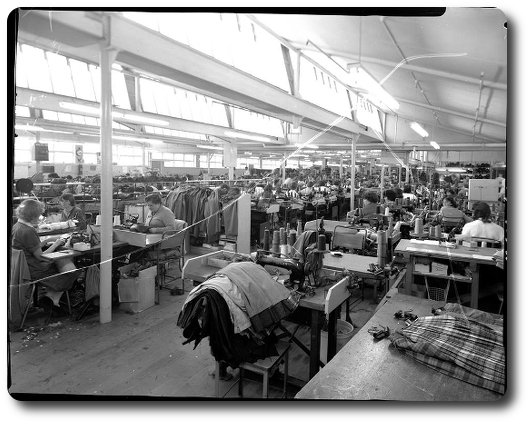
They won’t, because the sort of jobs that we might have picked up with a Year 9 or Year 10 education are going or gone.

Thousands will be left out and condemned to an under-class that struggles financially, emotionally and socially for their entire lives.

And if they fall behind, south-west Victoria will fall behind and become a welfare-basket backwater that can no longer cut it on a national, let alone international scale.

If this all sounds grim, it is because it is and it is happening right before our eyes and we, as a community, are contributing to the problem unless we help to fix it.

fj factory floor
Jobs that once filled the gaps are now going or gone. (Fletcher Jones factory floor, Warrnambool. Image: Ralph Illidge, via David Owen, Save the Silver Ball and Fletchers Gardens.)


[dropcap style=”color: #a02f2f;”] T [/dropcap]he Great South Coast Group set up a working party which has spent almost three years trying to get their heads around the enormity of the problem and what to do about it.

At times, one member said, it felt like an almost overwhelming task and no wonder, because in order to really make a change, everything has to change.

After months of research, thinking and talking, the working group has come up with a broad-scale plan that challenges us to do things differently and to step away from our old ways of thinking.

Take, for example, the thinking that “the government” will step in and fix it. We have tried that, and it is not working.

What has happened, instead, is that multiple government departments are all tackling the same problem, in their own ways, without talking to each other, without being allowed to talk to each other and some kids end up with 12 separate case workers and no long-term solution.

(There is a great anecdote from a homelessness program in Woollomooloo, Sydney, where 52 “service providers” were all helping the homeless without knowing how many homeless they were helping. It turns out there were 90 people sleeping rough and this turned the issue on its head to become the “90 homes for 90 lives” project.)

kids playing footy
While sporting prowess is highly valued in our community, academic ability attracts far less comment.

[dropcap style=”color: #a02f2f;”] T [/dropcap]ake, as another example, our thinking that the problem starts in early primary school, when kids learn to read and write and do sums.

Wrong. The working party argues that it begins at conception.

The minute that little sperm penetrates that egg, a whole suitcase of potential – or lack of – flips open for that child: is the mother an addict? Is the father? Are they comfortably well-off or poor? Literate or illiterate? Supported or isolated?

And what about the community mindset that worships all forms of sporting prowess, especially football, above academic ability?

This needs to change too.

The working party has based its approach on what is called a Collective Impact model – snappy title, right? – but it is exciting and has worked very successfully in places like Sweden, Canada and the US, but is only now catching on in Australia.

In a nutshell, it involves motivating the community as a whole – politicians, parents, teachers, employers, philanthropists, business owners, the elderly, service clubs, sporting clubs, you and me – to work for real change.

Instead of operating in our own little corners, or doing nothing at all, we are urged to work collaboratively and collectively. “That is not my area,”  or “that is not my problem,” won’t be part of the language.

centrelink

[dropcap style=”color: #a02f2f;”] T [/dropcap]he first step, and it is happening as we speak, is the Great South Coast Group setting out a community action plan for each council area, because each has its own challenges.

Beautiful little Mortlake, for example, is doing its best not to become a welfare ghetto in the face of low-cost housing, poor services, poor public transport and the sheer boredom of those who have been located there by “the system”.

The action groups aim to get people talking about the problem – like we are now – and set down steps for change that we can all be involved in, even if it is something as simple as listening to a child read.

It will take years to turn around a mind-set that has been years in the making, but I think this is the best approach I have seen in a long time and I can’t wait to see it unfold.

Are we all prepared to help?

[box] The Great South Coast working party members include: Helen Bayne (South West PCP), Helen Durant (Great South Coast Early Years Network), Karen Foster (Great South Coast), Toni Jenkins (South-West LLEN), Marcus McCormick (South-West LLEN), Vicky Mason (W’bool City Council), Anne Murphy (Glenelg & Southern Grampians LLEN), Mary Pendergast (Dept of Education and Early Childhood Development) and Kaye Schofield (RMIT Hamilton). You can read more about the project here.[/box]

[button link=”http://the-terrier.com.au/subscribe-2/” type=”icon” icon=”heart” newwindow=”yes”] Would you like to have early access to our Opinion pieces? Please subscribe here.[/button]

newsletter Eat And Drink Stones Read more Opinion pieces here…


Trader levy deal…and the Jennifer Lowe factor

Council’s racing hospitality bill hard to swallow

Reekie to challenge Napthine at state election

Forget cover ups, roll right over Rolf

Community vision should extend city wide: Julie Eagles

Flagstaff Hill at $15 million crossroad

Scrap trader levy and start over

What is holding Portland back?


Reviving classic Australian furniture by hand

be seated
Take a seat: Meg Jarrett and partner Jack van Roo are the creative force behind Be Seated, in Portland, where they revive classic mid-century Australian furniture.

[box]A warning: by the end of this story, you will probably remember all of the stunning Australian-made furniture that you either threw away, saw poking out of a skip, or gave to a flatmate in the 1980s, and may end up in tears.[/box]

[dropcap style=”color: #dc943c;”] D [/dropcap]espite working all day surrounded by chairs, stools and couches in various states of repair and disrepair, Jack van Roo and partner Meg Jarrett rarely have time to put their feet up.

Since opening their two-person business – Be Seated – early last year, the pair has been tapping into the huge demand for original, mid-century Australian furniture (1950s and 60s) that has been restored to its beautiful, retro glory.

Names like Fred Lowen (Tessa and Fler brands), Grant and Mary Featherston, Fred Ward and Clement Meadmore have become the ultimate in collectable cool – not to mention quality – and their original furniture pieces have become hotly sought after both nationally and internationally.

It seems more than a little odd, then, to find Jack and Meg operating not from a high-profile shop in inner-suburban Melbourne, where they used to live, but a shed in the Portland industrial estate, half way between the port and the aluminium smelter.

“It started with our own house,” is how Jack explains it.

“We bought Meg’s grandparents house about 10 years ago, supposedly for holidays, and we decided we liked it so much that we would move into it,” he says.


Avonmore 1
It began with a house: the Tag Walter’s designed 1960s house that Meg’s grandmother owned in Portland and which she and Jack moved into 10 years ago.

[dropcap style=”color: #dc943c;”] T [/dropcap]he Portland house is a 1960s original designed by legendary Warrnambool architect “Tag” (William) Walter with the long clean lines, large windows and open fireplaces surrounded by stone that became his hallmark.

Jack and Meg couldn’t help but slowly fill the place with furniture from the era and so began their love affair with mid-century design and designers.

It wasn’t until early last year, however, that they combined their skills to open a furniture restoration business that can cater for all eras, but specialises in mid-century pieces.

“There is nothing made of timber, in my view, that can’t be fixed,” says Jack, who has spent most of his life working in and around the furnishing and upholstery industry.

“We had one lady who brought a chair in and an arm dropped off in transit, so we replaced the arm and it was impossible to tell the original from the replacement,” he says by way of example.

Meg has a background in interior design and fashion retail and uses her skills and contacts to source and select top quality, natural fabrics from around Australia to use for re-covering.

Between them, they have created a slice of Mad Men heaven, with a shed full of classic pieces that have been either found in their travels, or brought in by others to be reupholstered, re-stitched, re-stained, or whatever other painstaking method is required to bring it back to life.


be seated_23
Jack with a work in progress – an early colonial chair – which, like with all of his work, is painstakingly restored by hand.

[dropcap style=”color: #dc943c;”] T[/dropcap]heir clients, similarly, come from far and wide, and include some of Melbourne’s top architecture and design academics, but also local graziers.

“We have seen some very, very tired furniture that has been dragged out of the shearing shed or wherever and brought in here, sometimes literally in pieces,” Meg says.

“And it is not just about how much a piece might be worth, but how much people love it. If they love it, they want to see it brought back to life.”

All of Jack and Meg’s work is done by hand – they don’t use acid dips or harsh machinery to take short-cuts – and one piece can take many, many hours to complete.

“It can be very dirty and it is very time consuming, but it is also incredibly rewarding,” Meg says.


be seated_27
Meg comes from a background in interior design during which she developed a knowledge and love of quality fabrics.

chairs
A pile of ugly wooden school chairs – destined for the tip – have been given a new splash of colourful life.

[dropcap style=”color: #dc943c;”] J[/dropcap]ack has handled hundreds of pieces of furniture, but admires the simplicity of the classic Australian designs – Clement Meadmore and Featherston are among his favourites.

Unfortunately to own an original, pristine Feathertson lounge suite could cost around $20,000 compared to several hundred pounds when they were first sold.

Perhaps Jack and Meg might stumble across a wad of cash hidden in the springs of a secondhand chair picked up at an auction?

“I’ve never come across anything like that so far,” Jack says with a laugh.

“The best I can offer are two rings that look like they come from a member of a bikie gang.”

[box type=”bio”] Be Seated is at 22 George St, Portland. Ph: Meg 0419 579 896. Follow them on Facebook here. [/box]