Tourism? We are missing out big time
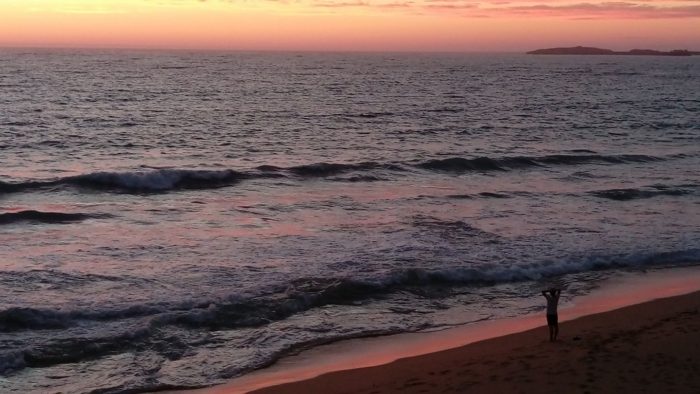
Moyjil/Point Richie is one of three rich cultural and environmental sites in the south-west that could be maximised to form a major tourist attraction at the end of the Great Ocean Road.

The Terrier

A little statistic popped out of Parks Victoria about six weeks ago that should have had us all gasping and wondering what we are doing wrong in Warrnambool.

Here it is:

“A record daily peak of 11,000 national and international visitors made the trip to the Twelve Apostles during Chinese New Year celebrations”.

Please read that again, because it took me at least three reads to believe what I was reading: a record daily peak of 11,000 national and international visitors visited the Twelve Apostles during Chinese New Year (between January 28 and February 15) this year.

This was a 30% increase on last year. Thirty per cent!

And this is all happening less than an hour from Warrnambool – 72.7km down the road – yet we are seeing so little of the action here.

Why??

This is not a new question.

Over the years there has been much head-scratching, hours of discussion and piles of reports on how to encourage this lucrative market of cashed-up, eager travellers to travel just one more hour down the road to Warrnambool where, we would hope, they stay for more than 24 hours rather than passing through on their way to somewhere else, or turning around and travelling back to Melbourne.

To me, the answer starts here: give them something irresistible, something that they haven’t already seen or heard during their trek down the most popular coastal road in Australia.

And what might that be?

To me, the answer starts here: our incredible indigenous story.

I don’t know about you, but whenever I travel overseas, I can’t wait to immerse myself in the indigenous history, to read about it, see it and experience it through a tour, a trek, a talk, a meal or a spontaneous, random encounter.

Here in the south-west, and right here in Warrnambool, we are sitting on some of the richest indigenous stories in Australia, creating a natural ‘trail’ from Moyjil/Point Richie, to Tower Hill and out to Budj Bim (Mt Eccles/Lake Condah) near Heywood.

Budj Bim is on the cusp of a UNESCO World Heritage listing partly because of its stone eel traps that are 1500 years older than the Pyramids or Stonehenge.

And Moyjil, apart from being a geological wonder, has been a site of human occupation for at least 35,000 years and, pending the results of ongoing tests, could also be the oldest site of human habitation anywhere on the planet, dating back 80,000 years.

Why are we not celebrating and promoting this far and wide?

December 2016: The western walkway from Moyjil down to the beach.

Tower Hill, meanwhile, is where Great Ocean Roaders can see a koala, emu or a kangaroo while also learning about indigenous culture, but its full potential as a tourist attraction is far from realised, starting with the poorly signposted, pot-holed and dangerous entrance that must be the worst of any tourism attraction in Victoria.

To be fair, progress is being made at each of these sites to promote its significance (especially Budj Bim) and plans have been drawn up to manage their futures, but I cannot find any coordinated effort to promote the three locations as a not-to-be-missed tourism experience that would, in turn, create jobs and boost our local economy.

There is no single, one-stop-shop to find out about what should be a cultural and environmental gem of a self-guided tour: there is no one map, brochure, website, or app.

Try it yourself: visit the Visit Warrnambool website, click on “what to see and do” and see what you find.

The top listings alternate, but when I clicked, the first item was mini golf.

But back to Moyjil for a moment.

A 24-page conservation and management plan for this area was published in 2013, setting out how it should be cared for by the State Government (which owns it) and Warrnambool City Council (which manages it) but, four years on, there are worrying signs about the financial commitment needed to look after this precious piece of coast.

The western walkway from the carpark fell apart in early December last year, just before the start of the peak tourism season, and access to the beach was blocked.

It is now late April and the walkway is still busted although now, of course, there has been five months’ of people making their own path down the side of the walkway, as we do, and the erosion is obvious.

When it will be fixed, nobody knows.

April 2017: The western walkway from Moyjil down to the beach.

I contacted the state Environment Minister Lily D’Ambrosio and her spokesman said the council had applied last year for a slice of $730,000 in funding to fix the walkway as one of several work projects it had planned for the site.

It was not successful. (The $730,000 fund received applications totalling more than $3.1 million).

“DELWP is willing to look at how it can support Warrnambool City Council in fixing this walkway, and will discuss with Council how the department can assist,” he wrote.

I asked the council for its take on the situation and its spokesman said: “We will continue to seek funding from the State Government for maintenance. It will also be part of Council’s upcoming budget deliberations.”

And that was it. No passion. No prioritising. No real sense of urgency.

I can only wonder when a wooden walkway – a walkway – can’t be fixed (Triton woodworkers + youth unemployment project?), what the long-term future really holds for this magnificent site.

And in the meantime, the vast majority of the tens of thousands of tourists who are travelling to the Twelve Apostles each summer just turn around – or keep driving….
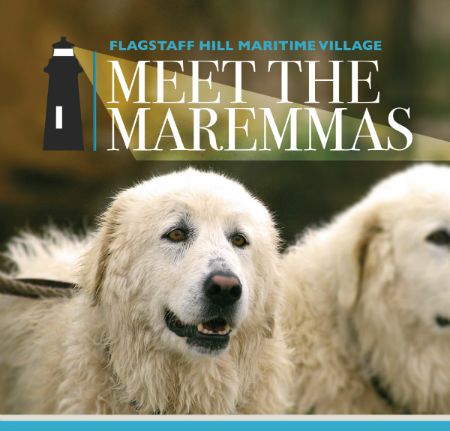

Can the Maremmas save Flagstaff Hill?

MeetMaremmaFlagstaffhill
The Maremma dogs are flavour of the month at Flagstaff Hill, but can they really help turn the village around? Image: Warrnambool City Council.

Comment – Carol Altmann

WE all know the ever-vigilant Maremma dogs have saved the population of little penguins on Warrnambool’s Middle Island, but it’s doubtful they can save the Flagstaff Hill Maritime Village.

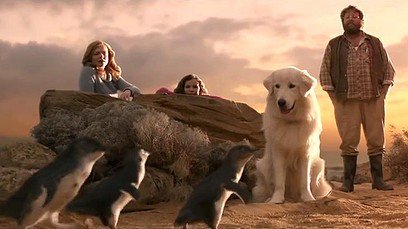
The 40-year-old tourist village made itself Maremma headquarters ahead of the national release of the movie Oddball, which gives a largely fictionalised version of the Maremma-penguin story and was filmed partly in Warrnambool.

Indeed visitors to Flagstaff Hill can, if they are there at the right time, meet the dogs and buy a made-in-Indonesia stuffed toy to help continue the Maremma program.

Flagstaff Hill manager and head of tourism for the Warrnambool City Council Peter Abbott has also been particularly active – and successful – in trying to generate media coverage for Oddball and its links to our city. (How we stop enthusiastic tourists from wading across to Middle Island itself is another matter).

But behind the scenes, Flagstaff Hill has just recorded its worst visitor numbers in a decade and it’s a long climb back to prosperity.

According to the council, Flagstaff Hill had 54,469 visitors in 2014-15 (excluding functions).

This compares to 60,000 in the previous year and continues the downward slide from the 81,000 that was recorded in 2003-04.

As council CEO Bruce Anson has said before, 80,000 is a break-even position.

This means at least another 25,000 people need to come through the front doors of Flagstaff Hill each year – not to show growth, but to catch up to where it was a decade ago and stop it bleeding around half a million dollars a year.

The “meet the canine stars of Oddball” is part of that plan. The other, even more significant part, involves another movie, if not quite as Hollywood as Oddball.

vd-oddball-408x264
Warrnambool tourism authorities are banking on ‘Oddball’, the movie, to bring more visitors to the city and Flagstaff Hill. Image: Sydney Morning Herald.

This is the $2 million being spent on updating the very-dated Shipwrecked sound and light show as part of a $3 million upgrade of the village.

What this new sound and light show will focus on has not been revealed, despite initial hopes to have the project up and running by now.

When Bluestone recently checked with the council, the project was still at the “expressions of interest” stage, which suggests it has not been easy to find the right people for the job, or perhaps $2 million is not enough to deliver what was hoped for.

In the meantime, the council is ploughing ahead with reconfiguring the front entrance (from memory, this is the third renovation of the entrance since the village opened) to blend the visitor information centre into the complex and improve access to Pippies restaurant.

The difficult truth, however, is that window-dressing the entrance and banking on movies to draw more people does not change the fact that the village itself will remain largely static.

This remains it’s biggest failing and the most common complaint from those who pay their entrance fee to find there is not much happening at all inside the cute buildings.

At best, Oddball will provide a visitor spike to Flagstaff Hill while the movie is fresh, and the new $2 million sound and light show may draw another 17,000 people a year until it, too, becomes dated.

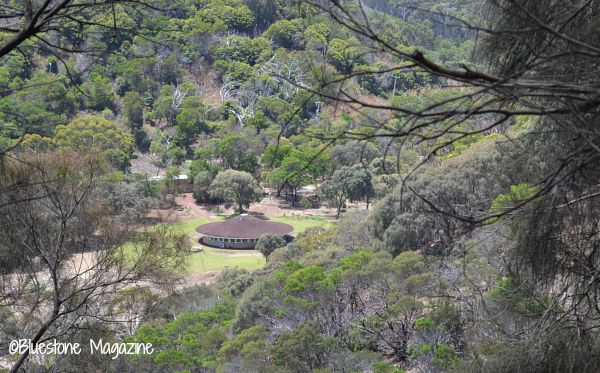
Tower Hill_7
Tower Hill has been named time and again as a potential tourism gem, but struggles for funding.

The short use-by date of these attractions is why I would rather see the millions that are being spent on Flagstaff Hill plunged into our unique, permanent attractions that don’t date.

I am talking about our incredible natural environment and rich indigenous heritage.

We live on one of the most accessible and spectacular coastlines in the world with a rich indigenous history that is only now beginning to be taken seriously by tourism authorities, although there is still a long way to go.

Imagine what Tower Hill could do with $2 million of state funds? A fabulous bush foods cafe/restaurant might be a start.

Imagine how far $3 million would go in developing and promoting a trail linking Point Richie/Moyjil, to Tower Hill and on to the Budj Bim landscape around Lake Condah, Mt Eccles and Tyrendarra? The Budj Bim area is considered so special, it is on the verge of gaining World Heritage status and we should be ready.

If Warrnambool wants to pull tourists further along the Great Ocean Road, then this is how to do it: by becoming the jumping off point to an enduring and unique landscape and culture that fascinates people from around the world.

Tie this culture and landscape to quality accommodation, food and wine trails, biking and hiking and you have an attraction that is much more dynamic and organic than a static village.

This is the sort of long-term thinking required if we really want to see cameras and action, rather than a “spike” that lasts about as long as the popcorn.